Inspiration
We met an elderly couple at a café, one with Alzheimer's and the other who was a loyal caretaker. Their companionship was beautiful but, more than anything, it was ideal. Seeing the couple initiated a conversation--what are Alzheimer's patients who lack the blessing of a readily available caregiver meant to do to take care of themselves? Taking care of an Alzheimer's patient can be a huge responsibility that, even if one is willing to take on, may be totally unfeasible given financial, location, or other constraints. Our "what if" questions led to our idea: Watchful.
What it does
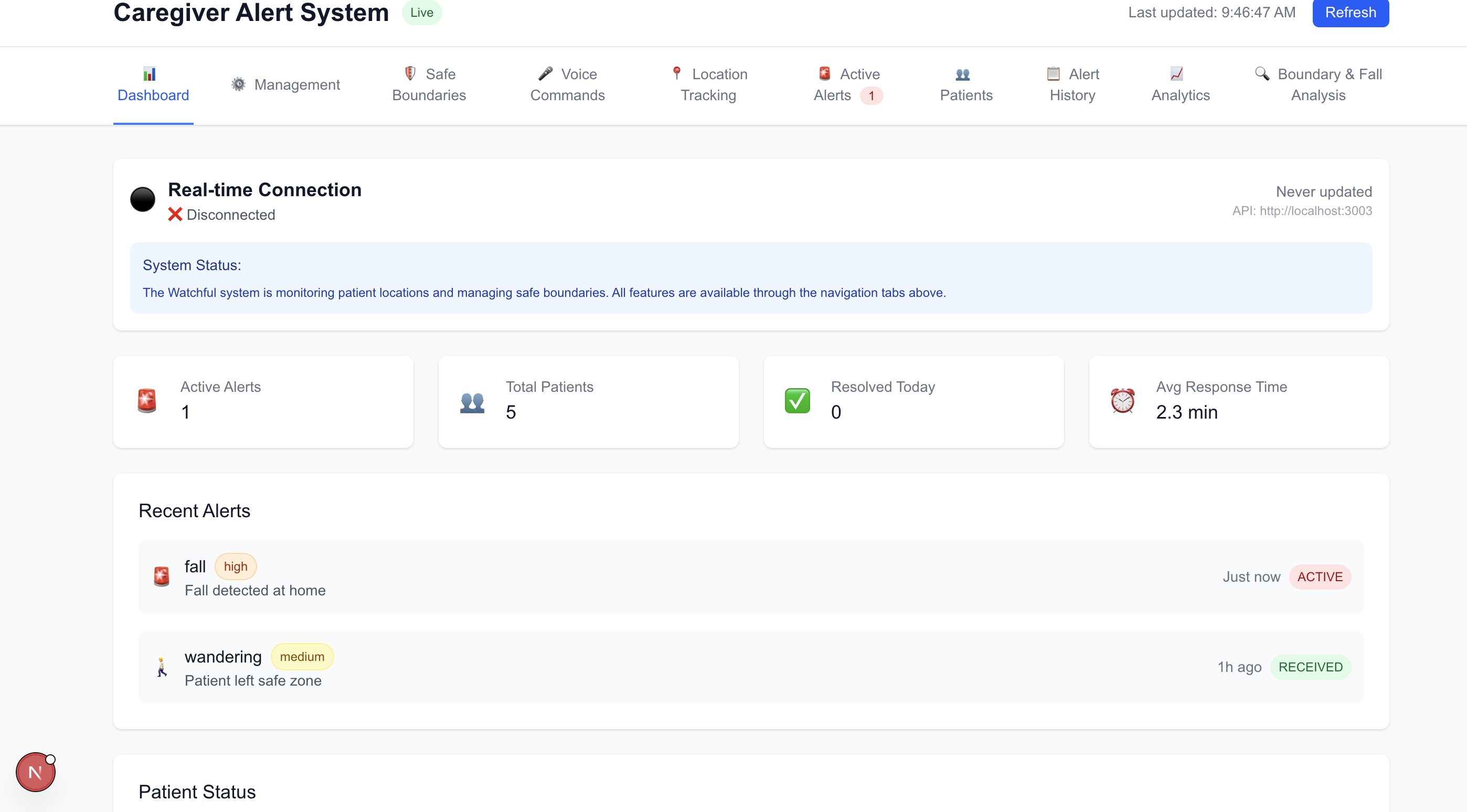
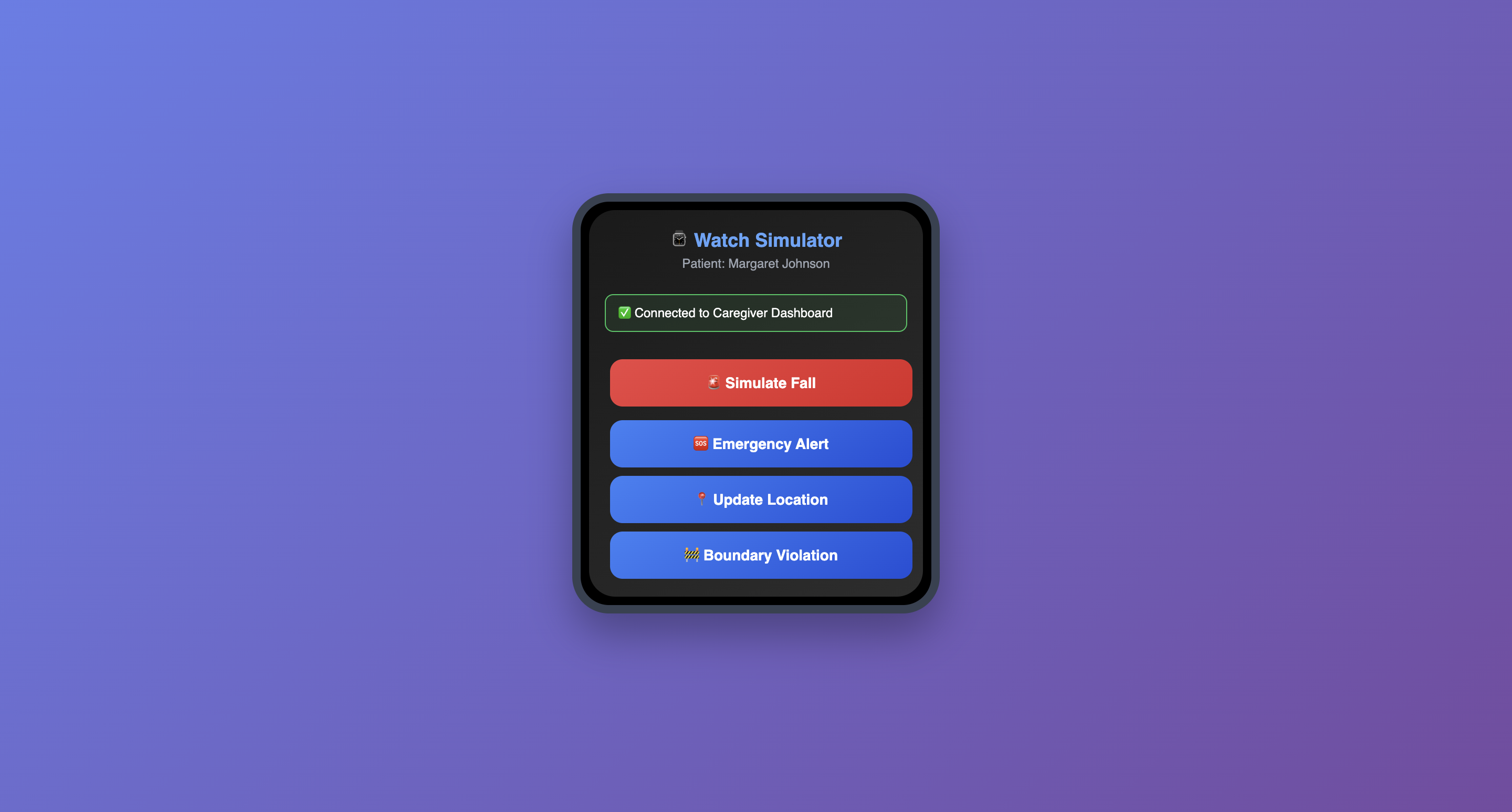
Our app enables caretakers to help their loved ones, even if dedicating all of their time seems unfeasible. Essentially, it monitors the Alzheimer's patient and gives live updates to their caretaker. These updates include 24/7 location tracking, which leads to a notification if the patient leaves a "safe zone," predetermined by the caregiver. After receiving this notification, the caregiver can initiate voice-guided directions, received by a patient's smartwatch, to redirect them to a "safe zone." If the patient is to fall, caregivers will receive smartwatch-gauged fall alerts and patients will have an accessible call system that gives them the option to initiate an audio call to either their caregiver or emergency authorities.
How we built it
We built Watchful using a JavaScript-based tech stack with a Next.js frontend and a Node.js + Express backend. We connected this a Firebase database for real-time updates. The caregiver's web application was developed in Next.js, which communicates with the backend to manage user data, safe zones, and alerts. The patient’s smartwatch interface was simulated through the backend, which processes location data and fall detection events.
Challenges we ran into
One of our biggest challenges was integrating the navigation feature. Combining Google Maps and text-to-speech APIs to deliver real-time audio directions proved to be difficult, especially when syncing route updates with voice playback. We also faced issues connecting the UI simulator to our backend logic for fall detection and navigation, which required extensive debugging. As the project grew quickly, maintaining organized file structures and a consistent workflow became increasingly challenging.
Accomplishments that we're proud of
We are proud of being able to independently create and then integrate the frontend and backend together, especially considering the time crunch we were under.
What we learned
We learned to prioritize organization of our files and features. We improved our coding collaboration practices since our team primarily worked on independent projects prior to this hackathon.
What's next for Watchful
We hope to expand the features to allow multiple caregivers to connect with their patient and vice versa. We see great potential in watchful, especially if we improve the UI and even add AI for predicting falls or escaping safe zones. We also want to add more memory-related features where the patient can access a web app detailing people in their lives or going through notable events they have experienced.


Log in or sign up for Devpost to join the conversation.