-
-
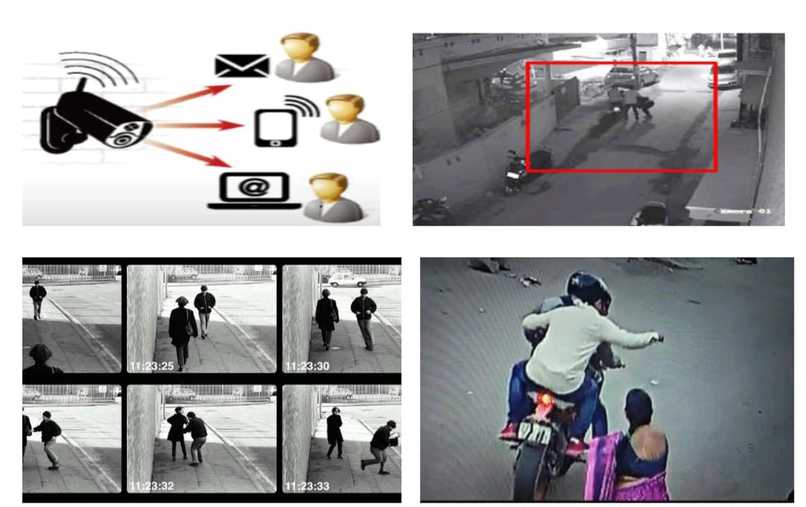
Watchful Guardian
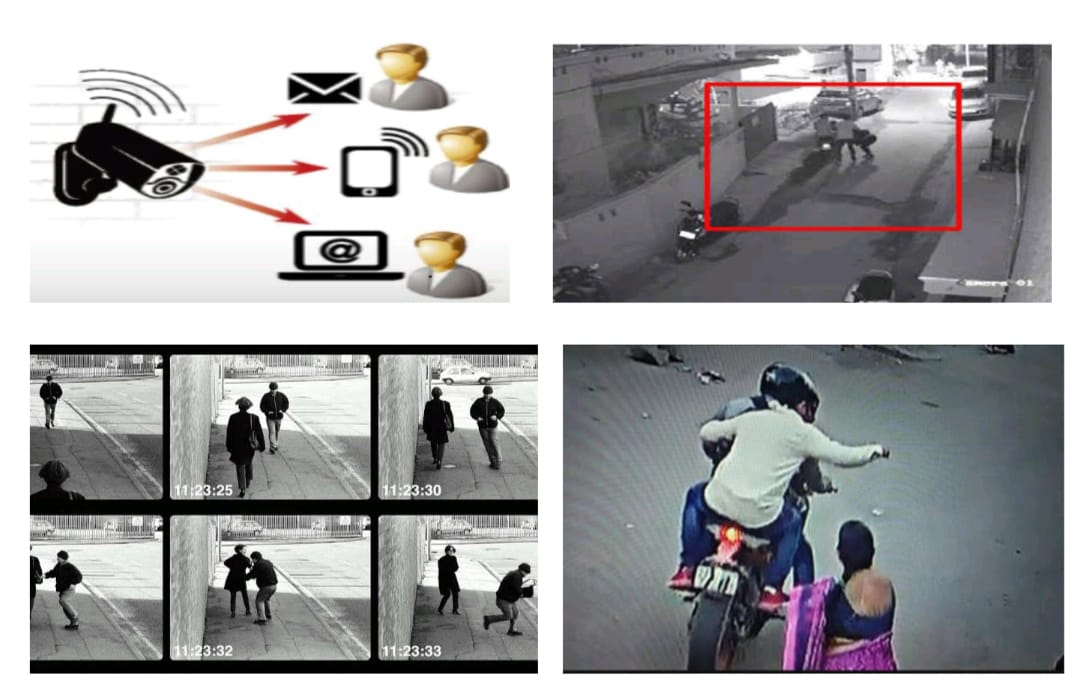
Inspiration
The inspiration behind the Deep Learning-based Real-Time Crime Detection Technique using CCTV likely stems from the pressing need to address the increasing crime rates and concerns about public safety. The desire to proactively detect and deter illicit activity before it occurs has driven the exploration of cutting-edge technologies, such as Deep Learning and Computer Vision, to enhance the effectiveness of surveillance systems.
The limitations of human supervision, including the difficulty of monitoring multiple screens simultaneously and the possibility of human error, likely prompted the idea of developing an automated system that can analyze real-time CCTV footage and identify aggressive behavior without relying solely on human oversight.
Additionally, the potential of Artificial Intelligence and Deep Learning to track movements, classify behaviors, and provide real-time alerts aligns with the goal of creating safer environments and contributing to crime prevention efforts.
Ultimately, the inspiration for this project is driven by the collective aim to utilize advanced technology to enhance public safety, provide timely responses to potential crimes, and create a safer and more secure environment for individuals and communities.
What it does
The Deep Learning-based Real-Time Crime Detection Technique using CCTV aims to automatically analyze real-time footage captured by surveillance cameras to detect aggressive behavior in public spaces. The system utilizes cutting-edge technologies like Deep Learning and Computer Vision to track the movement of people and classify it as either aggressive or nonviolent.
When the model identifies aggressive behavior in the CCTV footage, it triggers an immediate alert that is sent to nearby supervisors or law enforcement personnel. This real-time alert system enables timely intervention and response to potential crimes, contributing to the deterrence of illicit activities and enhancing public safety.
In summary, the system actively monitors CCTV feeds, detects aggressive behavior, and promptly alerts relevant authorities, creating a more proactive and efficient approach to crime prevention in public spaces.
How we built it
To build the Deep Learning-based Real-Time Crime Detection Technique using CCTV, the process typically involves several steps:
Data Collection: Gather a large dataset of real-world CCTV footage that contains examples of both aggressive and nonviolent behaviors. This dataset will be used for training the Deep Learning model.
Data Preprocessing: Clean and preprocess the collected data to remove any noise or irrelevant information. This step ensures that the data is in a suitable format for training the model.
Deep Learning Model Selection: Choose an appropriate Deep Learning architecture for the task, such as Convolutional Neural Networks (CNNs) for image analysis and Object Detection models like YOLO (You Only Look Once) or SSD (Single Shot Multibox Detector) for identifying and localizing objects in real-time.
Model Training: Train the selected Deep Learning model on the preprocessed dataset using techniques like transfer learning to leverage pre-trained models on large datasets.
Behavior Classification: The trained model will be able to classify behaviors into aggressive or nonviolent categories based on patterns learned from the training data.
Real-Time Analysis: Implement a system that captures live CCTV footage and processes it in real-time using the trained model for behavior classification.
Alert Mechanism: Integrate an alert mechanism that triggers whenever aggressive behavior is detected. This could involve sending notifications to nearby supervisors, law enforcement, or security personnel.
Continuous Improvement: Keep collecting new data and periodically retrain the model to improve its accuracy and adapt to changing behaviors and environments.
Building such a system requires expertise in Deep Learning, Computer Vision, and Software Engineering. Collaboration between experts in these fields is crucial to ensure the success of the project and address various challenges that may arise during development.
Challenges we ran into
During the development of the Deep Learning-based Real-Time Crime Detection Technique using CCTV, several challenges may have been encountered:
Data Collection and Quality: Gathering a diverse and representative dataset of real-world CCTV footage with labeled examples of aggressive and nonviolent behaviors can be challenging. Ensuring the data is of high quality, balanced, and free from biases is crucial for training an effective model.
Model Complexity: Deep Learning models, especially those used for real-time object detection and behavior classification, can be computationally expensive and require powerful hardware for real-time processing.
Real-Time Processing: Achieving real-time performance for analyzing live CCTV footage can be challenging, as it demands high processing speed and low latency to promptly detect and alert about potential crimes.
Handling Variability: CCTV footage may vary significantly in lighting conditions, camera angles, and the presence of occlusions. Ensuring that the model is robust to such variations is essential for accurate behavior classification.
False Positives and Negatives: The model may occasionally misclassify behaviors, leading to false positives (wrongly detecting aggression) or false negatives (missing actual aggressive behavior). Reducing such errors is crucial to maintain the system's credibility.
Privacy Concerns: Implementing a surveillance system raises privacy concerns, as it involves capturing and analyzing people's movements. Ensuring compliance with privacy regulations and gaining public acceptance is essential.
Deployment and Integration: Deploying the system in real-world environments requires careful planning and integration with existing CCTV infrastructure. Ensuring seamless operation, scalability, and minimal disruption is critical.
Human Interpretation: Human understanding and judgment of aggressive behavior may sometimes differ from the model's classification. Balancing the role of human supervisors and the automated system is essential.
Overcoming these challenges requires a multidisciplinary approach, collaboration between experts in AI, Computer Vision, Ethics, and Law Enforcement, and an iterative development process with continuous testing, feedback, and improvement.
Accomplishments that we're proud of
Developing an Effective Model: Building a highly accurate and robust Deep Learning model that can reliably detect aggressive behavior in real-time CCTV footage is a significant achievement.
Real-Time Processing: Successfully achieving real-time processing of live CCTV feeds to promptly identify potential crimes can be a source of pride.
Improving Public Safety: Contributing to enhancing public safety and creating a safer environment for people, especially vulnerable groups like women, is a substantial accomplishment.
Ethical Implementation: Ensuring that the system is designed and deployed with ethical considerations in mind, respecting privacy rights, and adhering to data protection regulations is a critical accomplishment.
Collaboration and Interdisciplinary Efforts: Successfully bringing together experts from different fields, such as AI, Computer Vision, Ethics, and Law Enforcement, and fostering productive collaboration can be a source of pride.
Minimizing False Positives and Negatives: Achieving a balanced approach to behavior classification to reduce false positives and false negatives and minimizing unnecessary alerts or missed incidents can be a significant accomplishment.
What we learned
Advanced AI and Computer Vision Techniques: Working on this project provides a deep understanding of advanced AI algorithms, such as Deep Learning and Computer Vision, and their applications in real-world scenarios.
Data Challenges and Preprocessing: Dealing with real-world CCTV footage exposes the challenges of data collection, cleaning, and preprocessing to ensure data quality and model performance.
Model Training and Optimization: Training and optimizing Deep Learning models for real-time processing require expertise in selecting suitable architectures, hyperparameter tuning, and techniques like transfer learning.
Handling Class Imbalance: Addressing class imbalance in crime detection data requires applying techniques like data augmentation or using specialized loss functions to avoid bias.
Privacy and Ethical Considerations: Building surveillance systems necessitates understanding and addressing privacy and ethical concerns related to data collection, storage, and usage.
Real-Time Processing and Performance Optimization: Achieving real-time performance demands efficient model architectures, hardware optimization, and parallel processing techniques.
Dealing with False Positives/Negatives: Balancing model sensitivity to minimize false positives and false negatives requires iterative testing and feedback.
Interdisciplinary Collaboration: Working on this project involves collaboration between AI experts, computer vision specialists, ethicists, and law enforcement personnel, fostering interdisciplinary skills.
Community Engagement: Engaging with the community and understanding user needs and concerns are essential for public acceptance and support of the system.
Continuous Improvement and Adaptation: Emphasizing continuous learning, staying up-to-date with the latest research, and evolving the system based on feedback and changing behaviors are crucial for long-term success.
Impact Assessment: Evaluating the system's impact on crime prevention and public safety provides valuable insights into its effectiveness and areas for improvement.
Communication and Presentation Skills: Effectively communicating complex technical concepts to stakeholders and presenting the project's outcomes in a clear and accessible manner are essential skills.
What's next for Team 202_Watchful Guardian
Dealing with the real survillence camera that is puttting the software into hardware


Log in or sign up for Devpost to join the conversation.