-
-
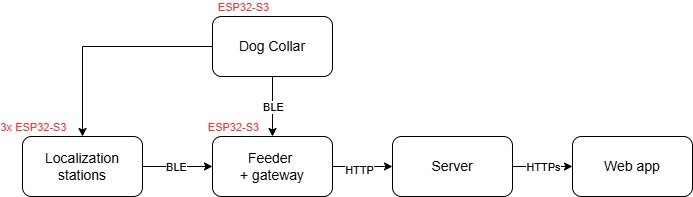
Block Diagram of a System
-
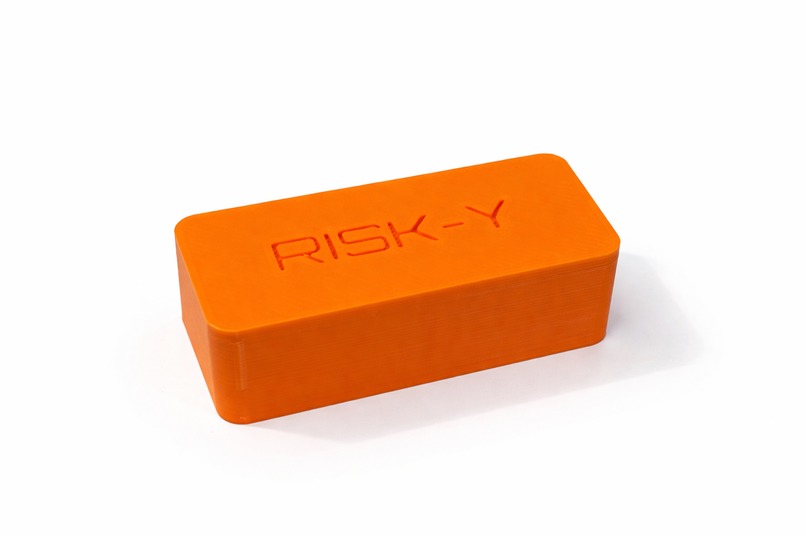
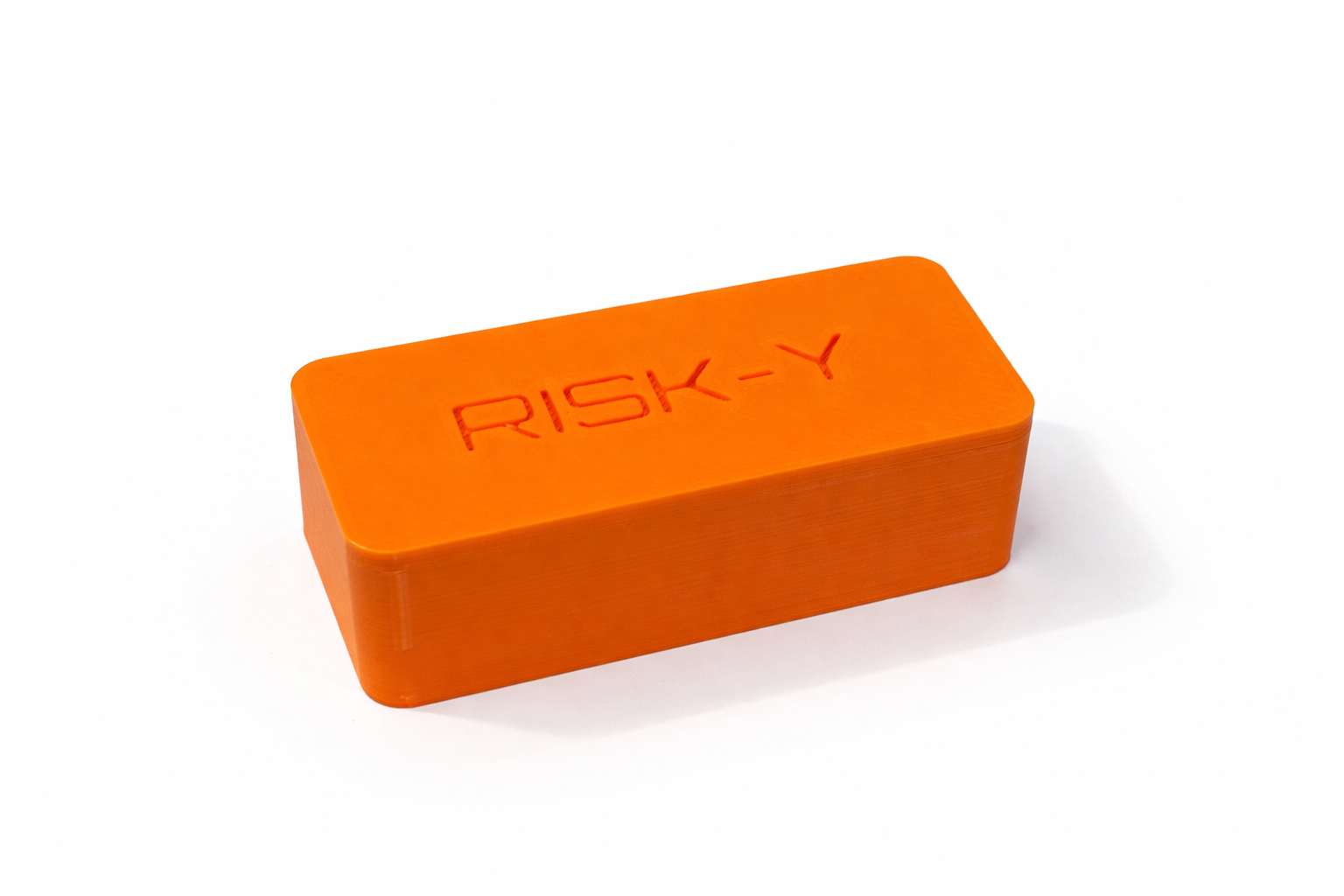
Bluetooth Beacon
-

Dog Collar Module
-
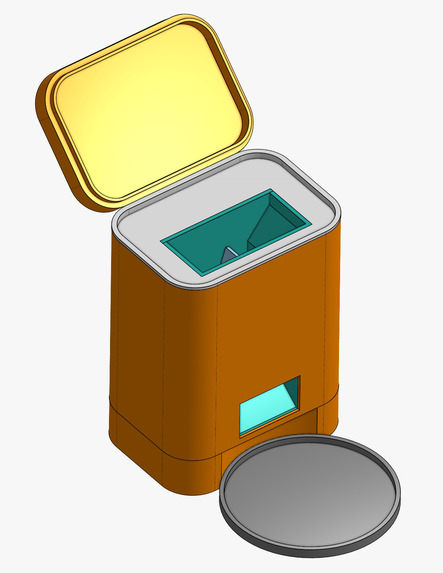
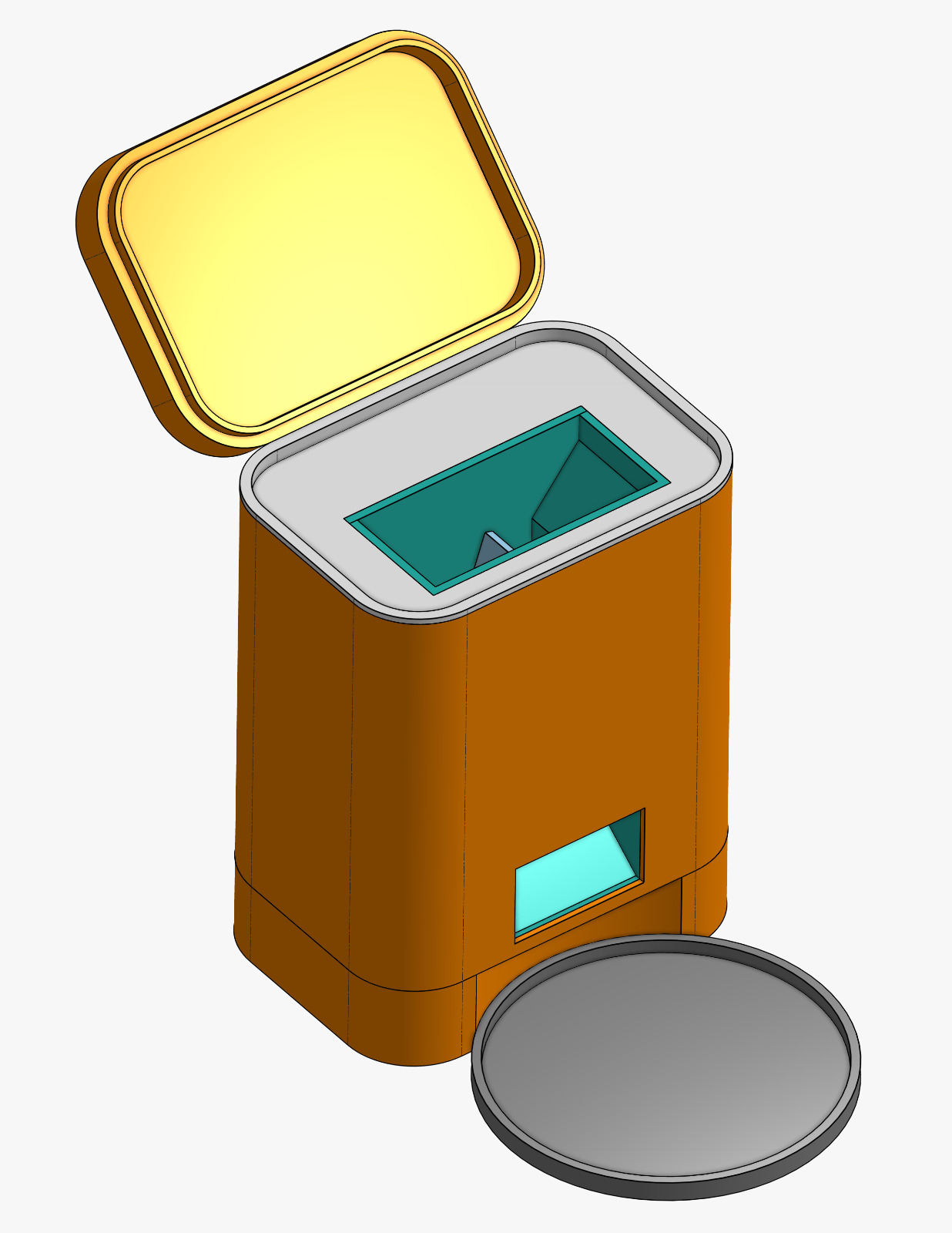
Base station 3D model

Inspiration
WatchDog started from a simple question: what is your dog doing when you’re not home? As dog owners, we realized that while people have fitness and health tracking apps, there is no good equivalent for pets integrated into smart home. Since dogs cannot communicate directly, their well-being must be inferred from behavior patterns. We wanted to build a system that tracks those patterns and can highlight changes that humans might miss. We also saw strong potential for integrating this into smart home environments, where pets are a natural part of everyday life.
What it does
WatchDog is a smart home system for monitoring and analyzing dog behavior in real time. A wearable device attached to the dog’s collar detects activities such as resting, moving, and eating using an edge AI model. This data is sent to a home gateway and visualized in a mobile/web app.
The system also supports indoor localization using BLE beacons and trilateration, enhanced with IMU-based sensor fusion. Over time, WatchDog analyzes behavioral patterns and can flag unusual activity that may indicate potential health issues. It also integrates with a smart feeder to automate feeding and track food-related data.
How we built it
The system consists of two main hardware components. The first is a wearable collar module built around an ESP32-S3 and an IMU sensor. It runs a real-time activity classification model directly on-device, ensuring low latency and privacy.
The second component is a base station integrated into a smart feeder. It receives data from the collar via BLE and acts as a gateway to a mobile/web application. Additional BLE beacons are placed around the house to enable indoor positioning. By combining BLE signal strength with IMU data (sensor fusion), we approximate the dog’s location within the home.
All data is centralized in an application where users can monitor activity, view analytics, and control feeding.
Challenges we ran into
One of the main challenges was designing a device that is small, lightweight, and comfortable enough for a dog to wear continuously. We focused heavily on ergonomics and minimizing size while keeping full functionality.
Another major challenge was BLE-based indoor localization. Signal strength is inherently noisy and affected by the environment, making trilateration difficult to stabilize. Achieving acceptable accuracy required significant effort and tuning.
We also prioritized a privacy approach, which meant running AI inference directly on the device instead of in the cloud. Balancing real-time performance, battery life, and system reliability across all components was a key challenge.
Accomplishments that we're proud of
- Built a fully working end-to-end system combining wearable hardware, smart home integration, and a mobile app
- Implemented real-time activity classification directly on-device (edge AI)
- Designed a compact, battery-powered wearable suitable for dogs
- Achieved indoor positioning using BLE trilateration combined with sensor fusion
- Integrated the system with a smart feeder for automated interaction
- Delivered a complete, demo-ready smart home integration solution
What we learned
We gained hands-on experience building a full embedded system that combines hardware, edge AI, and wireless communication. We worked extensively with ESP32 devices, IMU data processing, and BLE communication.
We also explored sensor fusion and the limitations of BLE-based positioning in real environments. Beyond technical skills, we learned how to design around real-world constraints such as device size, power consumption, usability, and reliability.
Most importantly, we learned how to turn a complex system into a clear and functional product that can be effectively demonstrated.
What's next for WatchDog
Next steps include improving the accuracy of indoor positioning and activity classification, especially in more complex real-world environments.
We would also expand health analytics by training models on larger datasets to better detect early signs of potential health issues. Additional sensors (e.g. temperature or food level tracking) could further improve insights.
On the product side, we would refine the wearable design, further optimize battery life, and improve the mobile app experience. Long term, WatchDog could become a fully integrated smart home solution for pet care and monitoring.
Built With
- ble
- c
- c++
- esp-now
- esp32-s3
- matlab
- postgresql
- react-native
- tensorflow
- typescript


Log in or sign up for Devpost to join the conversation.