-
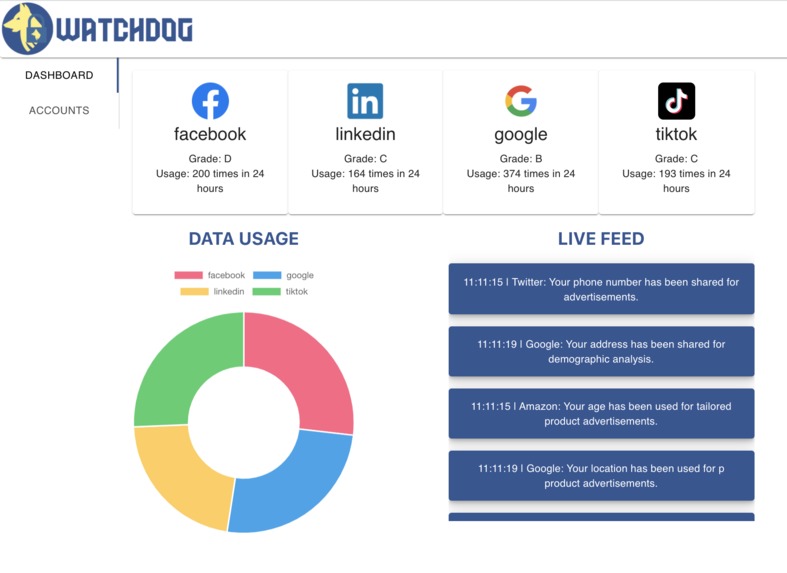
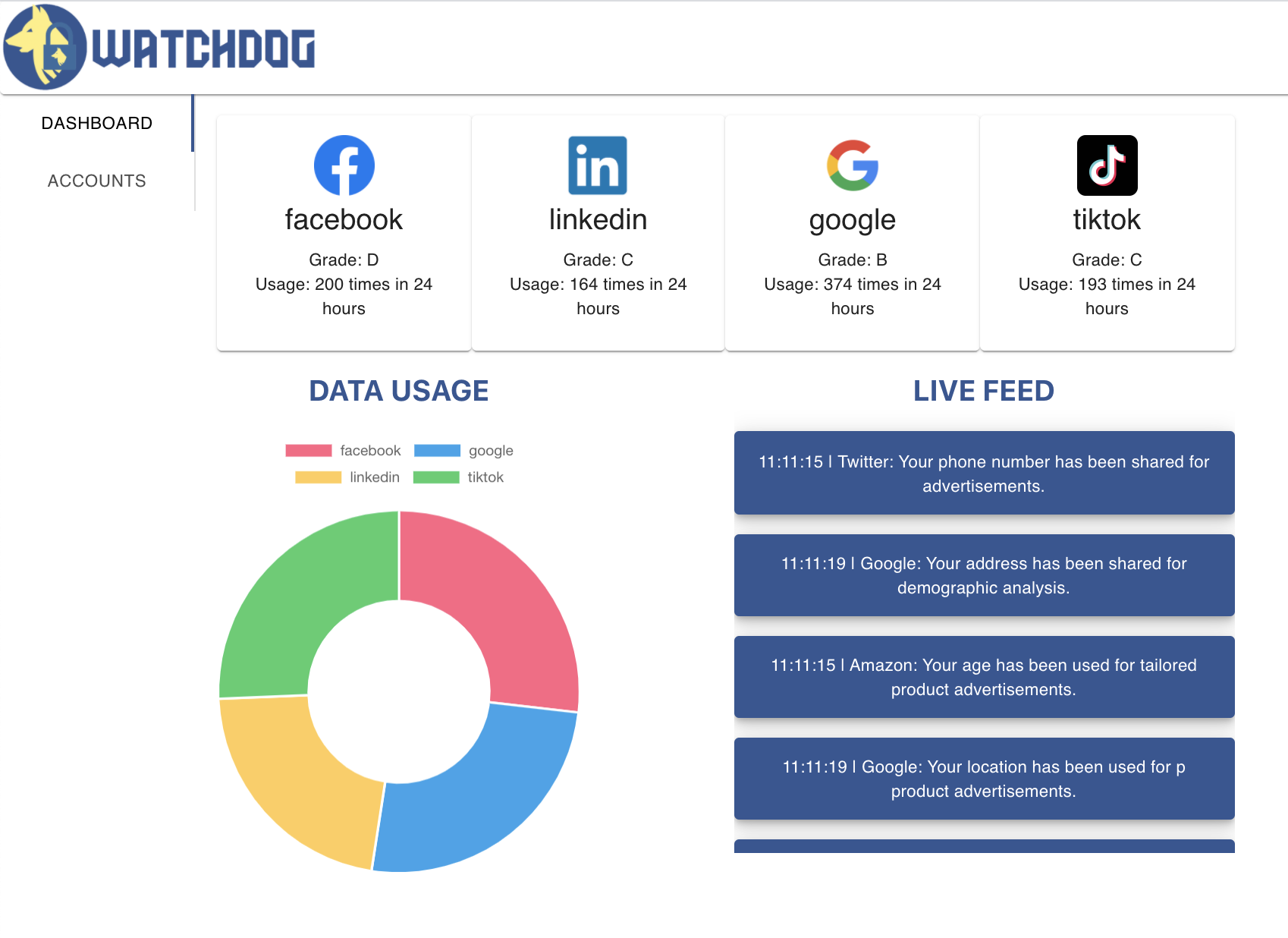
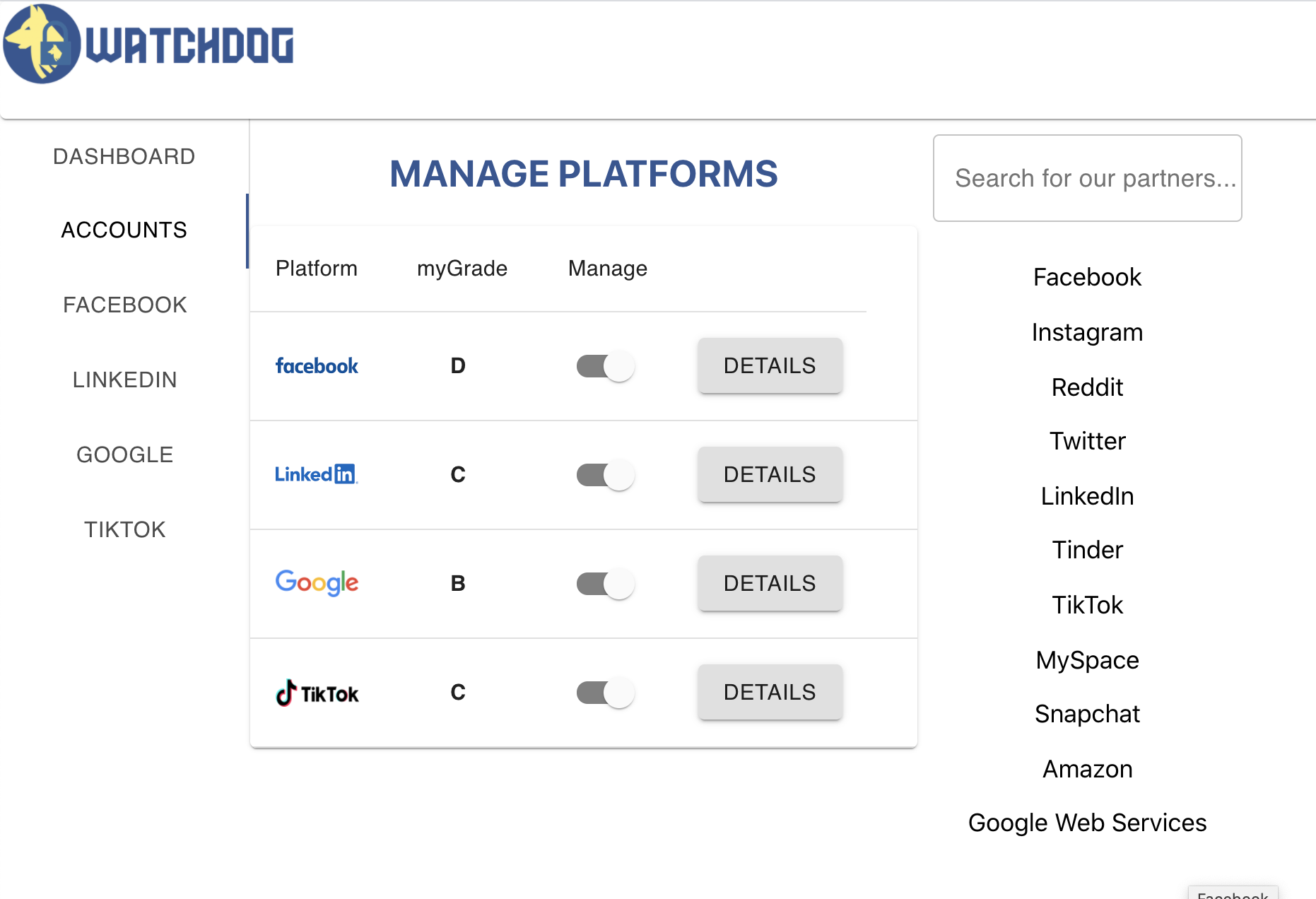
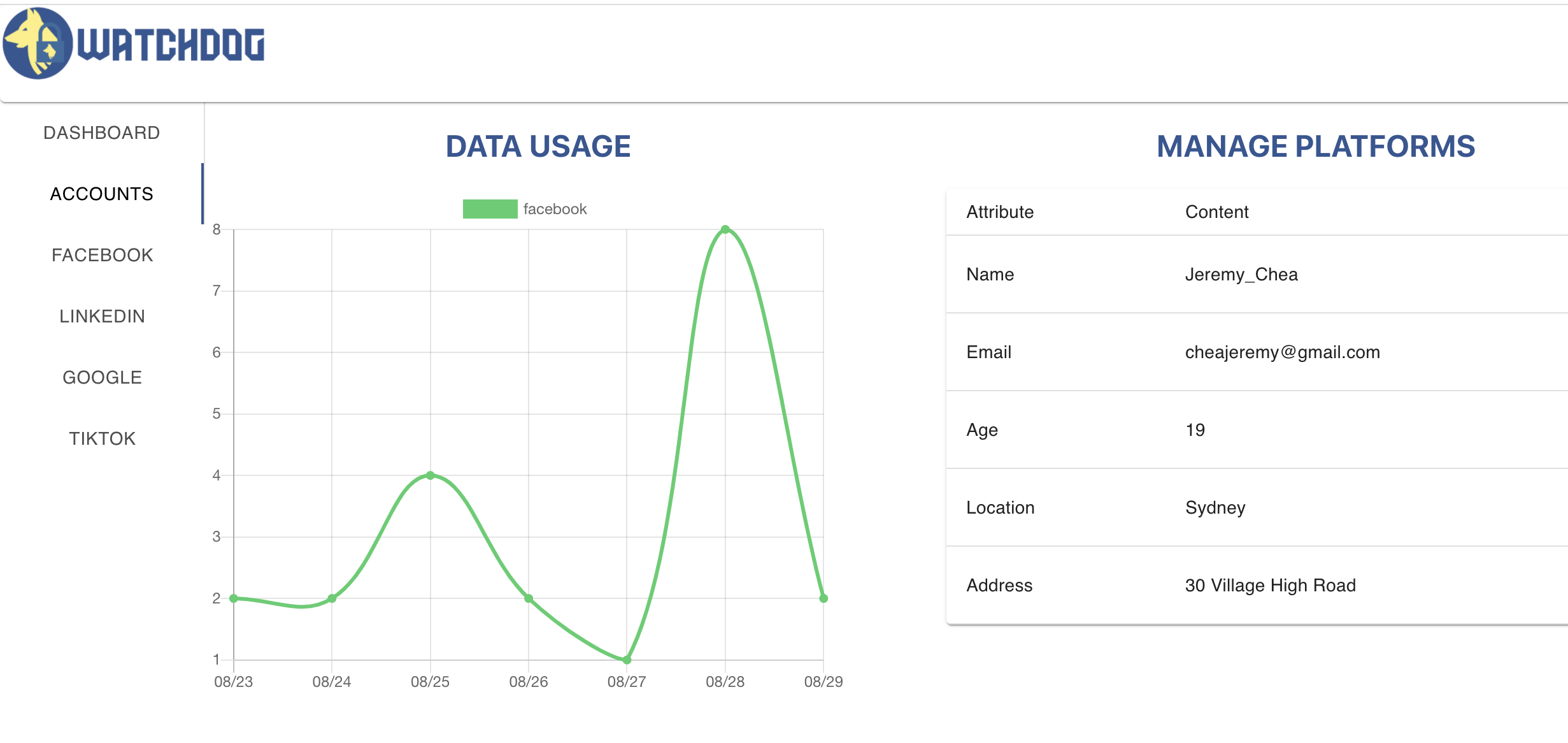
Dashboard - a visualisation of general data usage
-
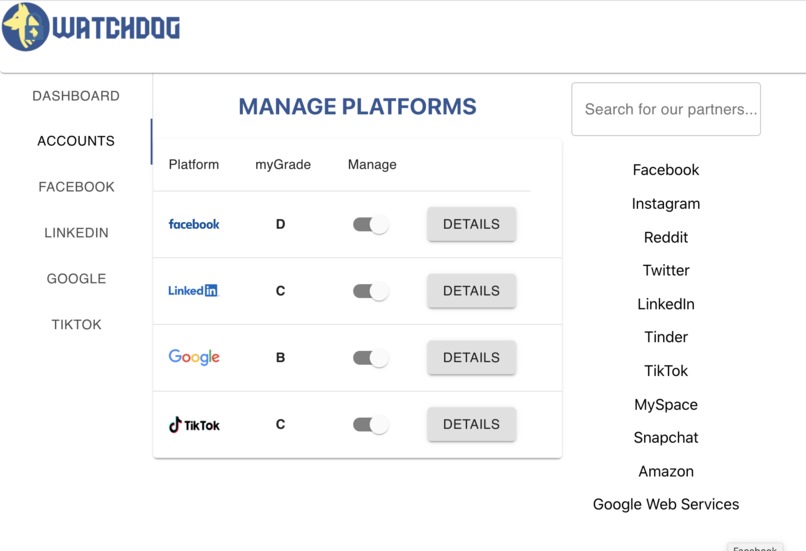
Specific page
-
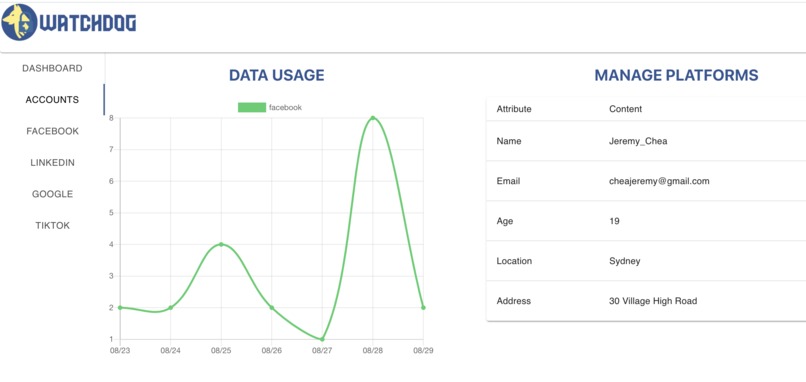
Inspiration
On average, Google holds 5.5 GBs of personal data of each of their users. That is roughly equivalent to 3 millions of usable data points. *
When did they get hold of this data? What are they using it for? When are they using it?
Whilst these companies are allowing users to retrieve these data, we still have no idea of what they are doing with these data behind the doors.
This is why we started the WatchDogs initiative. We wanted to give the users an opportunity to see how and when our data is being accessed by these large companies. Hence, transparency.
What it does
WatchDog is a webapp/chrome extension that gives users the ability to see how websites that have access to personal data are using it. It provides real time updates whenever a website uses our data for third party reasons such as advertising, market research etc…
The websites themselves must provide this information for us which is optional but their choices to share data culminates in a grade that we give them. This grade is a summary of how transparent a company/website is in sharing their data usage. This gives users the ability to see exactly how and when their data is being accessed. With this information, users will be able to make informed decisions of whether they would like to continue to share certain information such as location services etc..
By placing pressure on companies to be transparent about their data usage, we will be able to promote a culture of trust and honesty between a user and a large company. This also allows smaller companies to be able to use transparency as a way to improve public image and give consumers incentive to choose them over larger companies who may not have as high of a WatchDog grade.
How I built it
Backend: Python + Flask
Frontend: React.js
Chrome extension: HTML, CSS, JavaScript
Challenges I ran into
We used React to build our frontend for the first time and it was a challenge building a complex but simple to use website that was nice to look at. Only one person knew how to use React and having him only work on the frontend would be too demanding so two others had to learn the framework to supplement his work.
Accomplishments that I'm proud of
Learning new frameworks and programming languages
not sleeping until 5 in the morning
Roles
Adam Ma: Full stack
Lyric Wang: Pitch, backend, O-O design
Matthew Juan: Chrome extension, backend
Jeremy Lim: Frontend, design
Vicky Hu: Pitch, frontend, design
Jeremy Chea: Pitch, frontend
What I learned
We’ve never built a chrome extension before and it turned out to be really similar to web development which was a task a few of us had done before. Learning the similarities and differences between the two was a fun and rewarding experience.
This was our second hackathon together and, learning from the previous experience, we were able to work together in a more efficient manner and build a bigger and better overall solution
What's next for WatchDog
The goal of WatchDog is to become the industry standard in monitoring data transparency between companies and users. We will aim to reach out to large companies, especially social media companies whilst refining and enhancing the features that we have to offer users. We will also aim to provide more accurate and precise information for users to be able to see how their information and data is being accessed. Ultimately, we aim to create a culture in which large companies are transparent about their usage of data so that users will be able to be aware and make informed decisions of which companies they decide interact with.


Log in or sign up for Devpost to join the conversation.