Inspiration
We have both worked with software extensively, and wanted to work with hardware in our first hackathon. The Pebble watch seemed like a good fit that didn't require electrical knowledge while pushing us out of the comfort zones of the technologies we usually work with. We brainstormed some ideas and Watchdog seemed promising, as it was an original design that had the potential to help people.
What it does
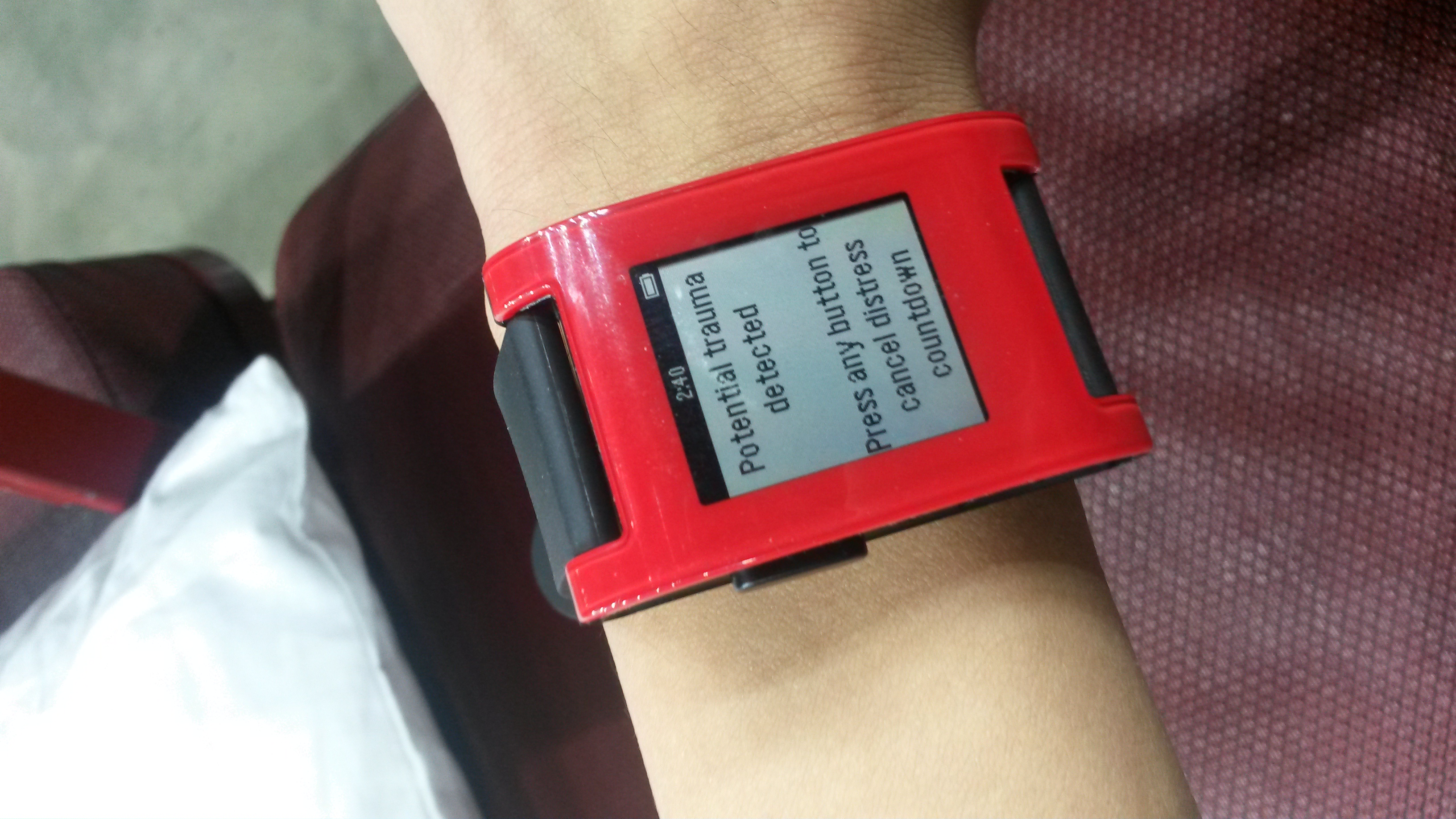
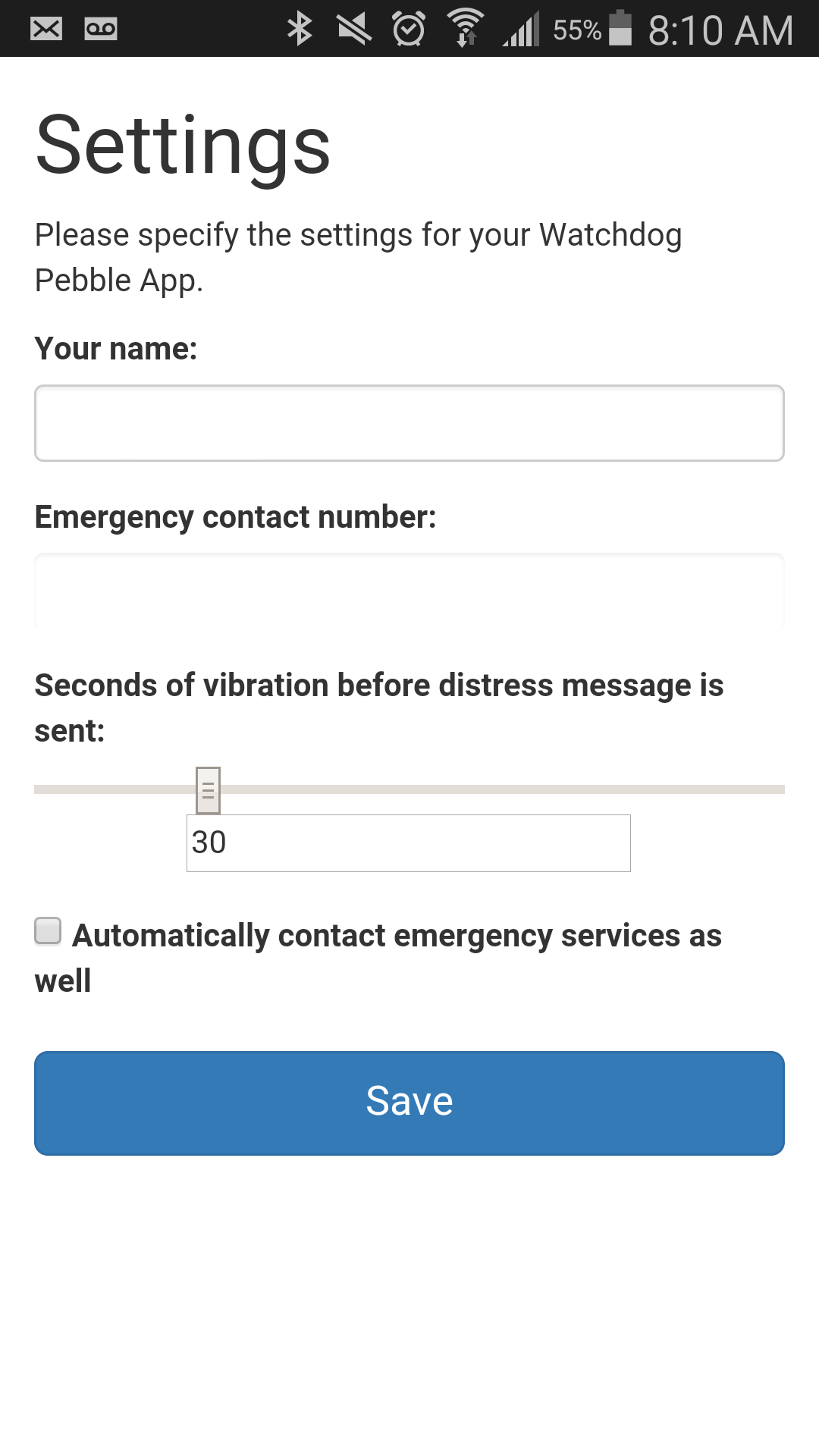
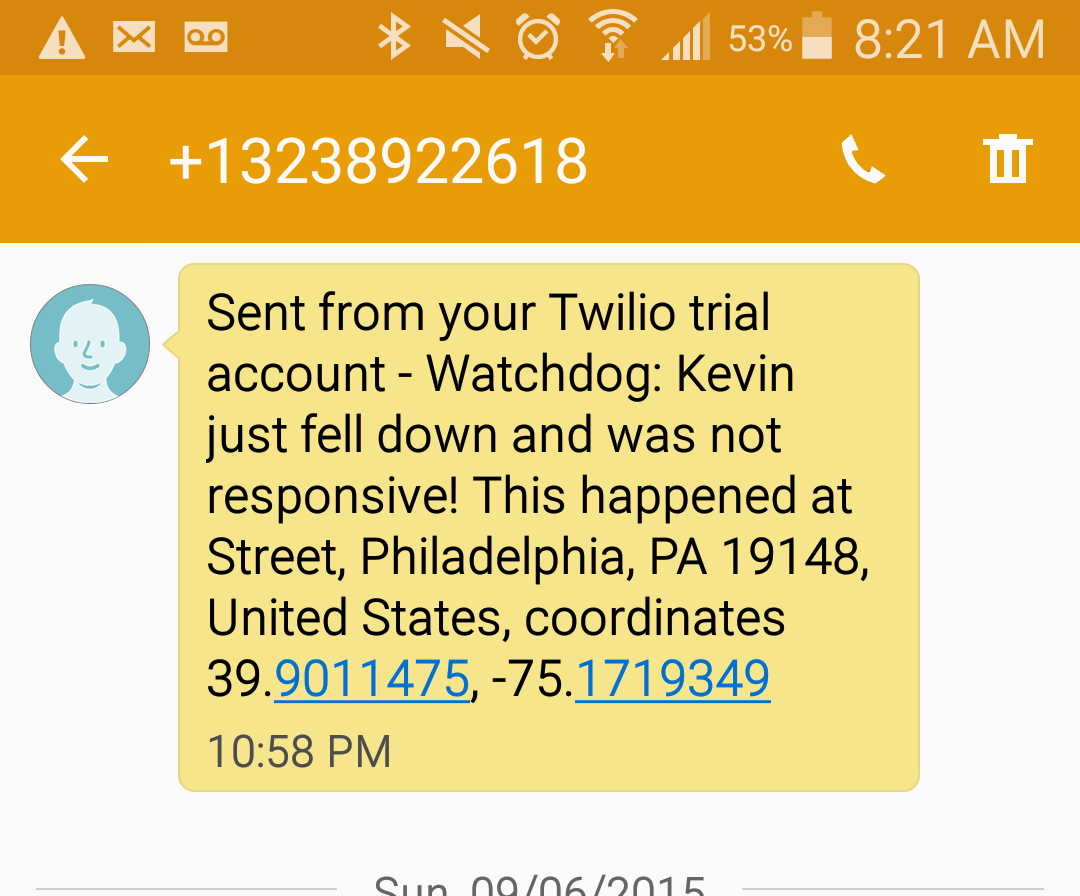
Watchdog causes the Pebble to vibrate periodically (barking) when it detects that potential trauma has happened due to a fall. In the event of a false positive, Watchdog can be easily disarmed by pressing any button on the watch, or by shaking it around in case the other hand isn't free. If the wearer does need help, they don't have to do anything - in the worst cases, they often cannot. This is where Watchdog shines. By automatically notifying (from a trusted contact or emergency services via Twilio, and giving their coordinates along with an approximate address through the Bing Maps API) without any interaction on the wearer's part, Watchdog ensures that the user will never be caught helpless and alone.
How I built it
Neither team member had any experience with Pebble, wearables, or even hackathons. We built it learning new things while putting various productive software engineering technologies, such as Git and Emacs to use. Lots of Google and patience also helped. We set up a Flask web server that PebbleKit (the JavaScript integrated with Pebble) sends XMLHttpRequests to, and the server does the messaging using the Twilio API.
Challenges I ran into
Working around the limitations of the Pebble, while figuring out just what those limitations were. For example, Pebble officially supports both JavaScript and C but the JavaScript functionality is very limited, as it doesn't actually run on the watch itself. We also had some trouble finding a good host to deploy our web server on.
Accomplishments that I'm proud of
Watchdog's mechanism is among the most proactive life-protecting system around, and it provides that protection without being a burden on the wearer. Specialized hardware exists, but no one wants to have to carry around something that does nothing but burden them until their life is in serious trouble. Because Watchdog is built of top of the Pebble platform, it's out of your way and you get to carry around a cool smartwatch with you.
What I learned
We learned how to integrate a wide array of technologies in Watchdog. We tried multiple deployment servers, hopped between languages, and integrated numerous APIs to make the app. The biggest takeaway from this is that there is nothing that can't be learned, and the things we learn will only help us more in the future.
What's next for Watchdog
If there is a market for this then we would love to try to make it work. The algorithms can be refined and the concept can be expanded to other wearables.


Log in or sign up for Devpost to join the conversation.