-
-
WatchCare-AI

Inspiration
One of our teammates was personally inspired by a real experience rushing to an emergency room, where we noticed that ER waiting areas were understaffed and healthcare workers were visibly overburdened, making it clear how easily a patient incident could go unnoticed during peak stress moments.
What it does
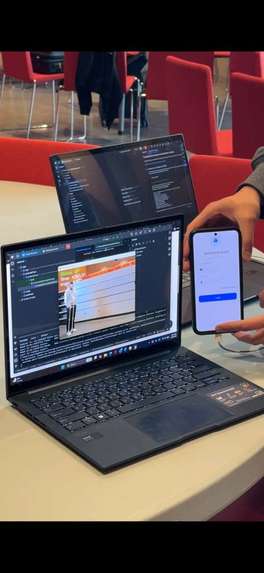
WatchCareAI is a real-time fall detection and alerting system designed for healthcare settings. It uses pose estimation on video streams to detect subtle incidents such as slumping, fainting while seated, or sliding off chairs cases that are often missed by humans. When an incident is detected, the system automatically generates a structured alert containing the location and timestamp, which is pushed to a mobile app used by nurses. Alerts can be claimed and resolved in-app to prevent duplicate responses and create a clear audit trail.
How we built it
Our system follows a simple but powerful pipeline: Camera Feed --- Pose Estimation --- Fall Detection --- Firebase Alert --- Nurse App On the AI side, we used Python with OpenCV and pose estimation to analyze body angles and motion over time. If the body angle drops below a threshold and the person remains motionless for more than 4 seconds, the system flags a potential fall. The backend is powered by Firebase Firestore, which stores alerts in real time and enables instant synchronization across devices. The Android app listens to Firestore updates and provides nurses with a live alert list, along with claim and resolve functionality.
Challenges we ran into
One of the biggest challenges was ensuring reliability in real-time communication between the AI system and the mobile app. Coordinating Firebase schema design across multiple team members while developing in parallel required clear contracts and fast iteration. Another challenge was building a fall detection approach that captures subtle incidents without excessive false positives. Finally, integrating and debugging across AI, backend, and Android components within a hackathon timeframe pushed us to prioritize clarity, simplicity, and a strong MVP.
Accomplishments that we're proud of and what we learned
Through this project, we learned how to design a real-time, end-to-end system that bridges AI, backend infrastructure, and mobile applications. We gained hands-on experience with pose-based computer vision, real-time databases, transaction-safe state management, and collaborative development under extreme time constraints. Most importantly, we learned how to frame technical solutions around real human problems and safety-critical use cases. This experience has given us a huge practical experience!
What's next for WatchCareAI
As WatchCareAI evolves, its AI capabilities will be expanded to become more accurate, adaptive, and context-aware. The system will move beyond basic fall detection to understand subtle human behaviors by learning patterns of normal movement versus medical distress, reducing false alarms while catching high-risk incidents earlier. By incorporating multi-person tracking, temporal analysis, and continuous model refinement from real-world data, WatchCareAI can prioritize alerts by severity and confidence. Over time, integrating additional signals such as motion consistency, posture stability, and environmental context will allow the AI to make smarter decisions, ensuring reliable, real-time safety monitoring in even the most complex healthcare environments.
Built With
- android-studio
- firebase
- github
- kotlin
- mediapipe-pose
- python

Log in or sign up for Devpost to join the conversation.