-
-
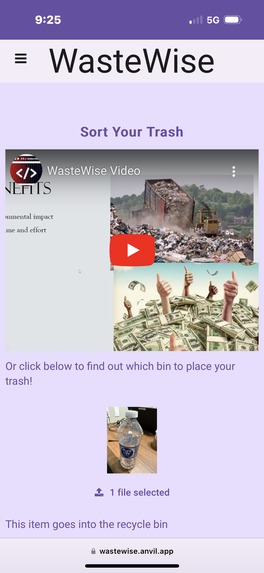
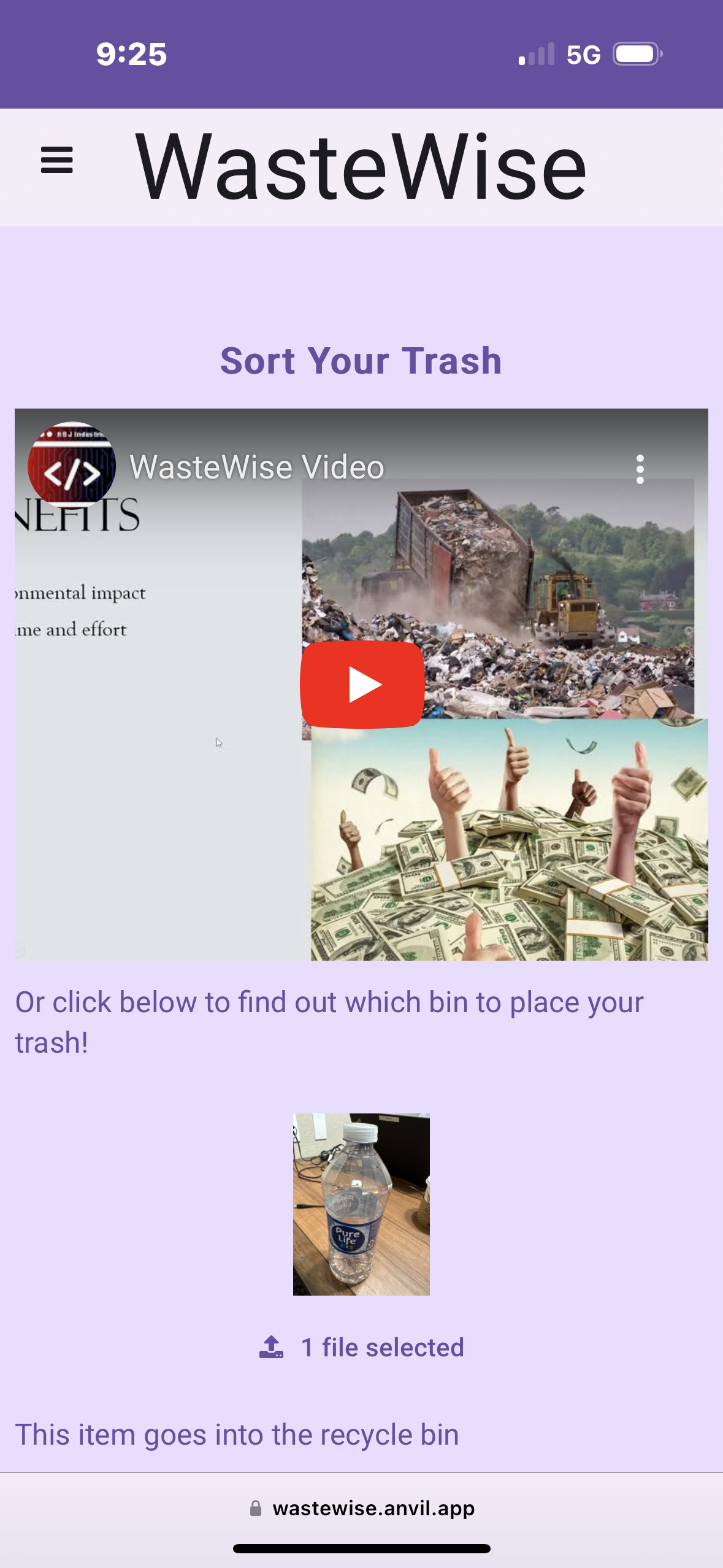
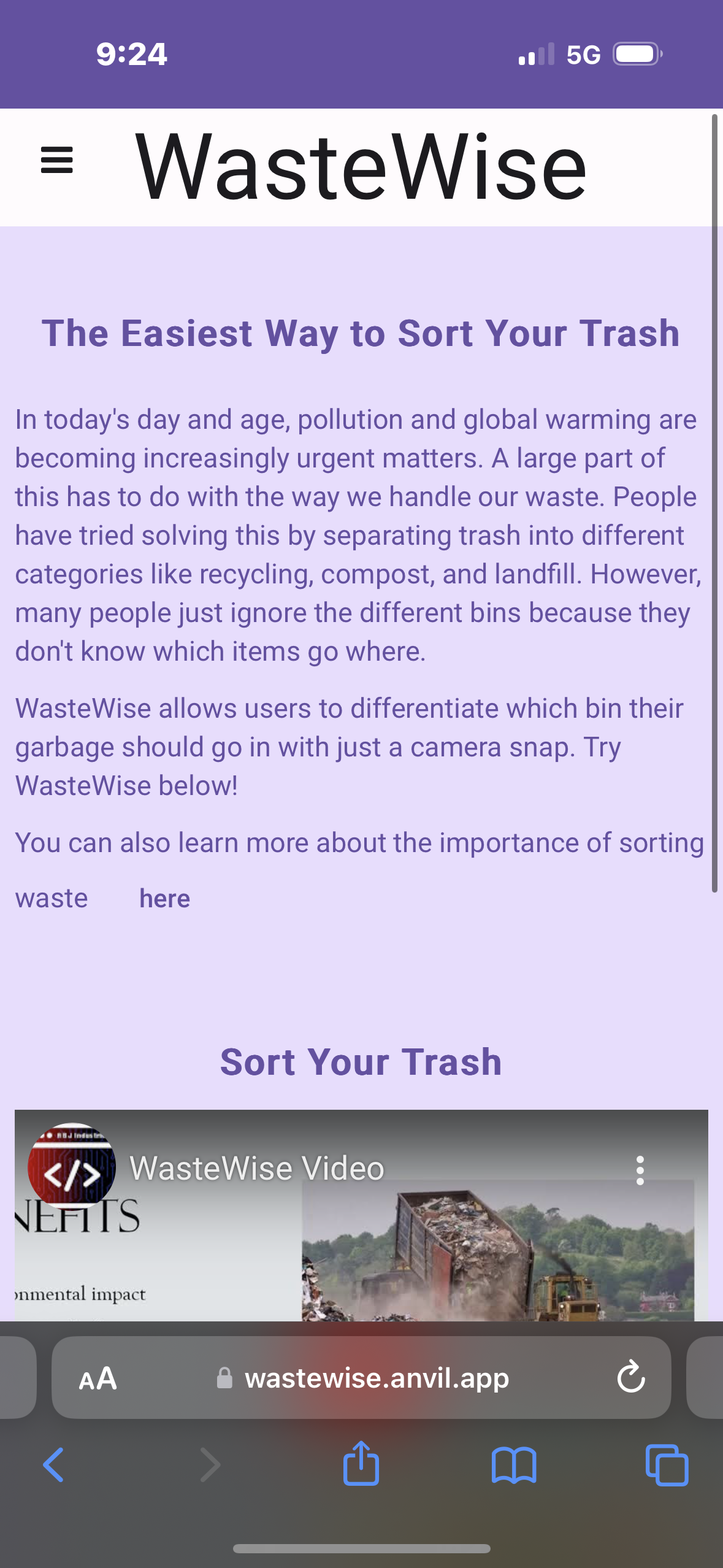
Home Page after prediction
-
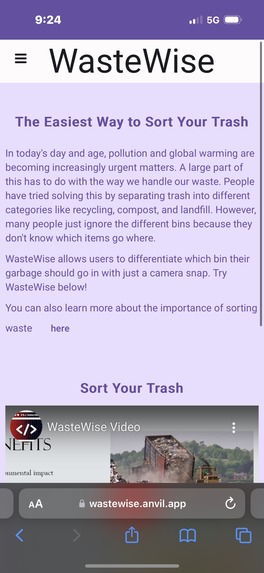
Home Page
-
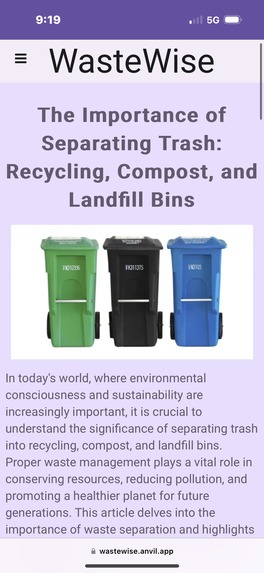
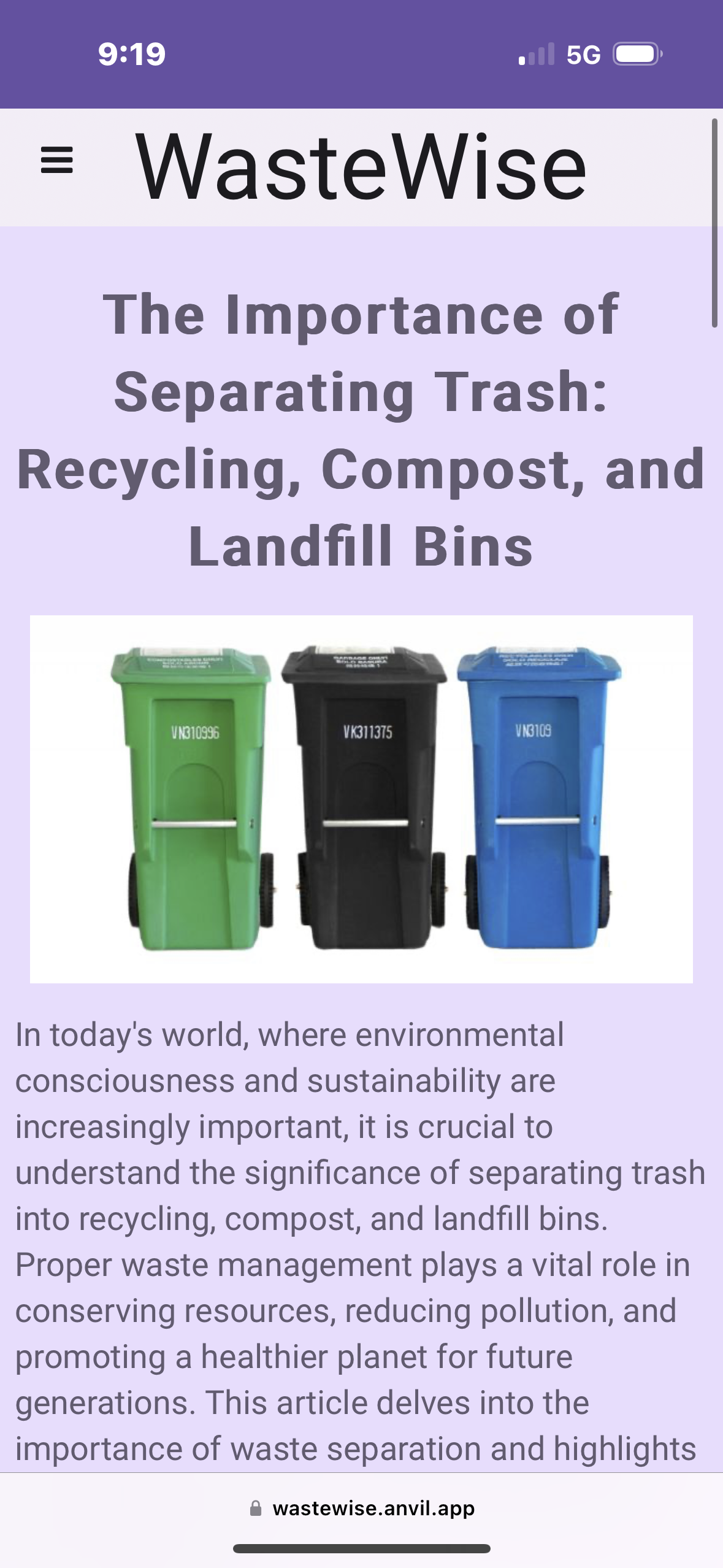
Info Page
-

logo

Inspiration
Whenever I eat at school or public cafeterias there are always lots of bins to place my trash in. At first, this was very confusing to me, especially since I did not want to think while doing such a simple task of throwing away my trash. I'm sure a lot of people have felt this way before, and as a result randomly throw away their trash. At first, it may not seem like a big deal, but after some research, I found that according to the EPA, 75% of waste in America could be recycled, but we only recycle about 30% of it. Making it easier to recycle is one key way we can encourage more people to properly sort their waste. That's why I made WasteWise to help solve this problem.
What it does
This is a website that makes 2 key things easy for users:
Easy usage of the WasteWise application to determine which bin to place their trash in, with just the snap of a picture. It utilizes a custom built artificial intelligence model to classify the type of waste something is, including, recyclable, compostable, and landfill.
Easy access to important information about the importance of waste sorting and its benefits to the environment.
How we built it
I custom built and trained a convolutional neural network in Tensorflow to classify trash types. All the data was gathered from various places on Kaggle. For the front-end, I used Anvil, which lets developers quickly build websites with just python. I used client side programming to get the image file taken from the camera and pass it to the server side, which then uses the AI model to make a prediction and send it to the client.
Challenges we ran into
The most challenging part of this hackathon was finding good data to train the model on. I was unable to find a good dataset on Kaggle that included the categories recycle, compost, and landfill. As a result, I had to find multiple datasets and combine them into one large and extensive one, all while ensuring that each category had the same amount of data, as to prevent biases in the model.
Accomplishments that we're proud of
I am very proud that my model was actually able to classify different categories of trash very accurately. I am also very proud of the user friendly design of the website. Not only is a good design important for engaging users, but it also makes using the trash sorter easier, which is the whole point of WasteWise.
What we learned
I learned that often, the hardest part about making a Machine Learning model is not actually the building or training of the model. Rather, the most difficult part is finding good data and processing it correctly. I also learned that even though I am not naturally gifted with any art abilities, I can still design visually appealing products if I put in enough effort and don't give up.
What's next for WasteWise
- I will continue to add more data to continue enhancing the accuracy of the model.
- I will continue to experiment with different model architectures further improving its performance.
- Using this concept and technology to apply to other use cases.
Built With
- anvil
- kaggle
- python
- tensorflow


Log in or sign up for Devpost to join the conversation.