-
-
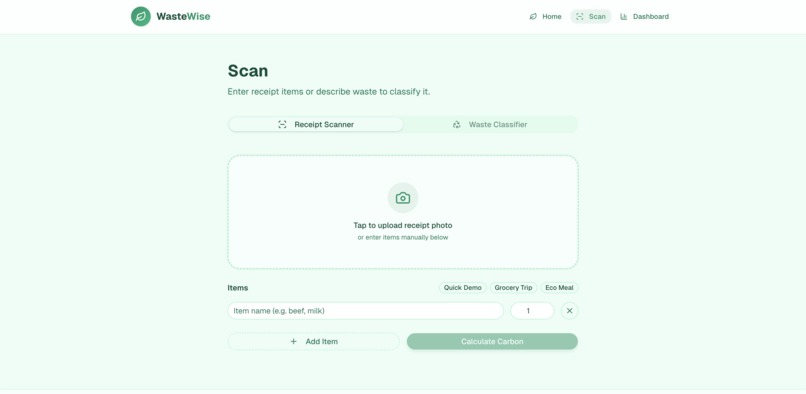
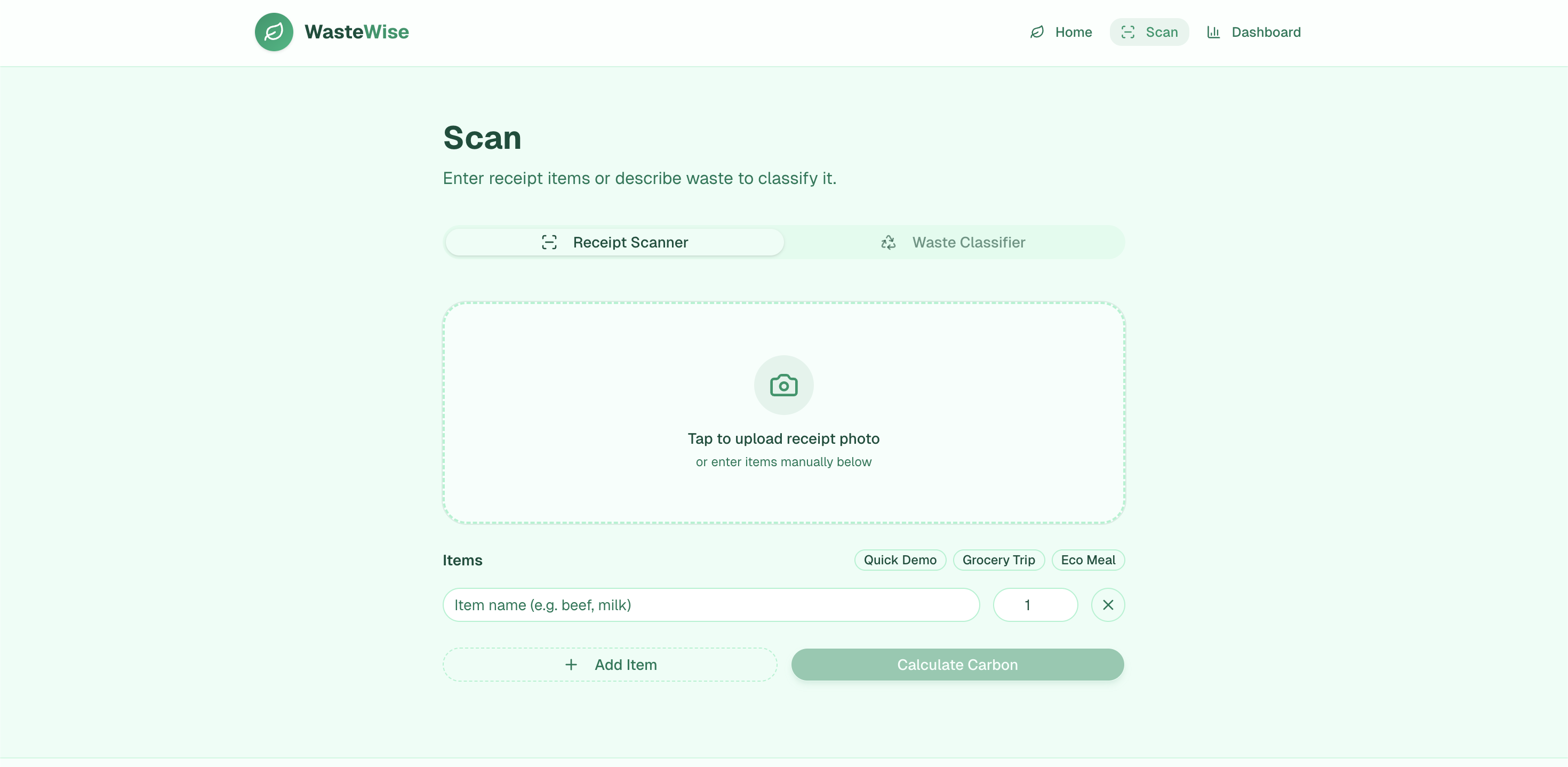
Receipt scanner
-
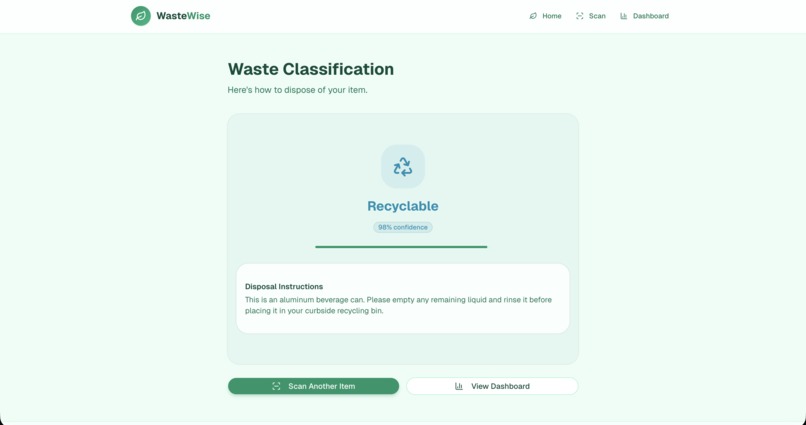
Waste classifier suggestions
-
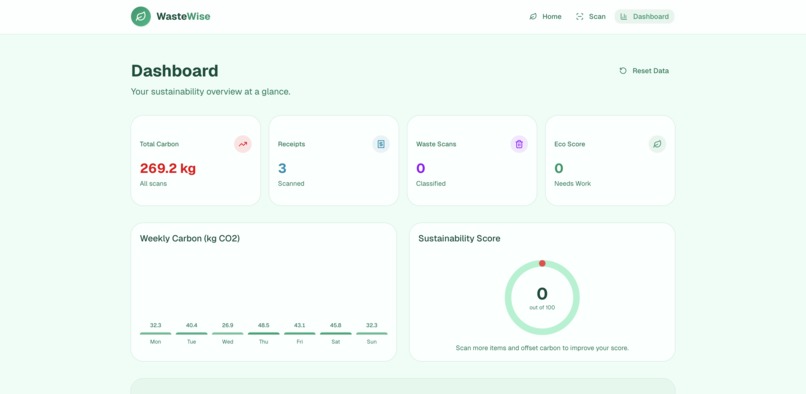
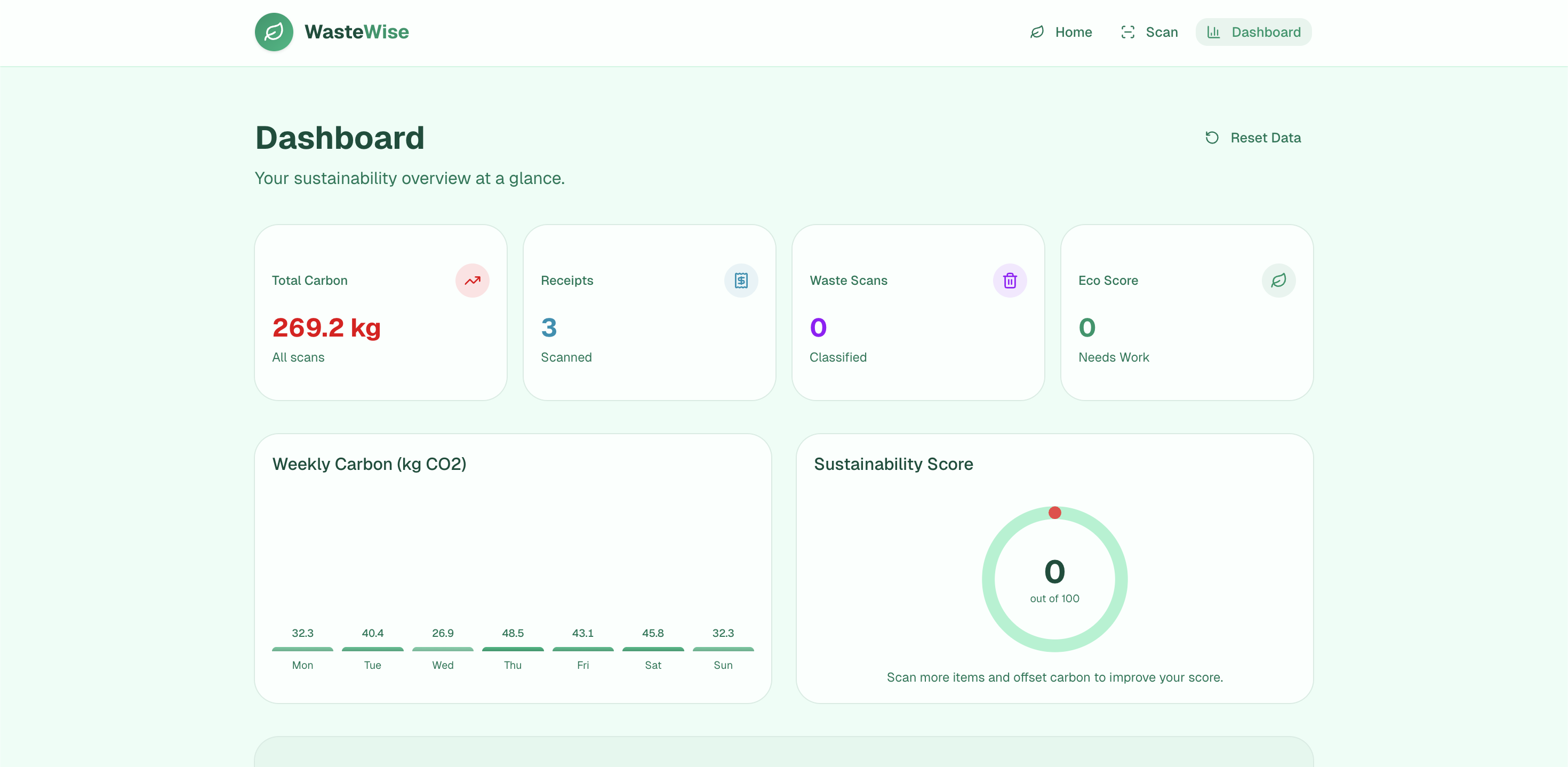
Eco dashboard
-
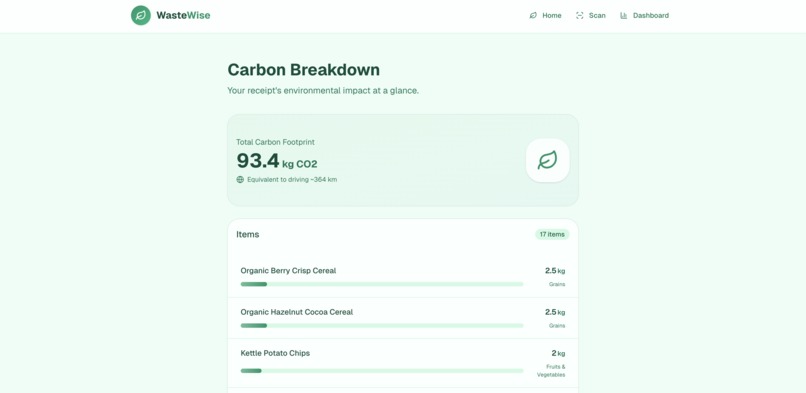
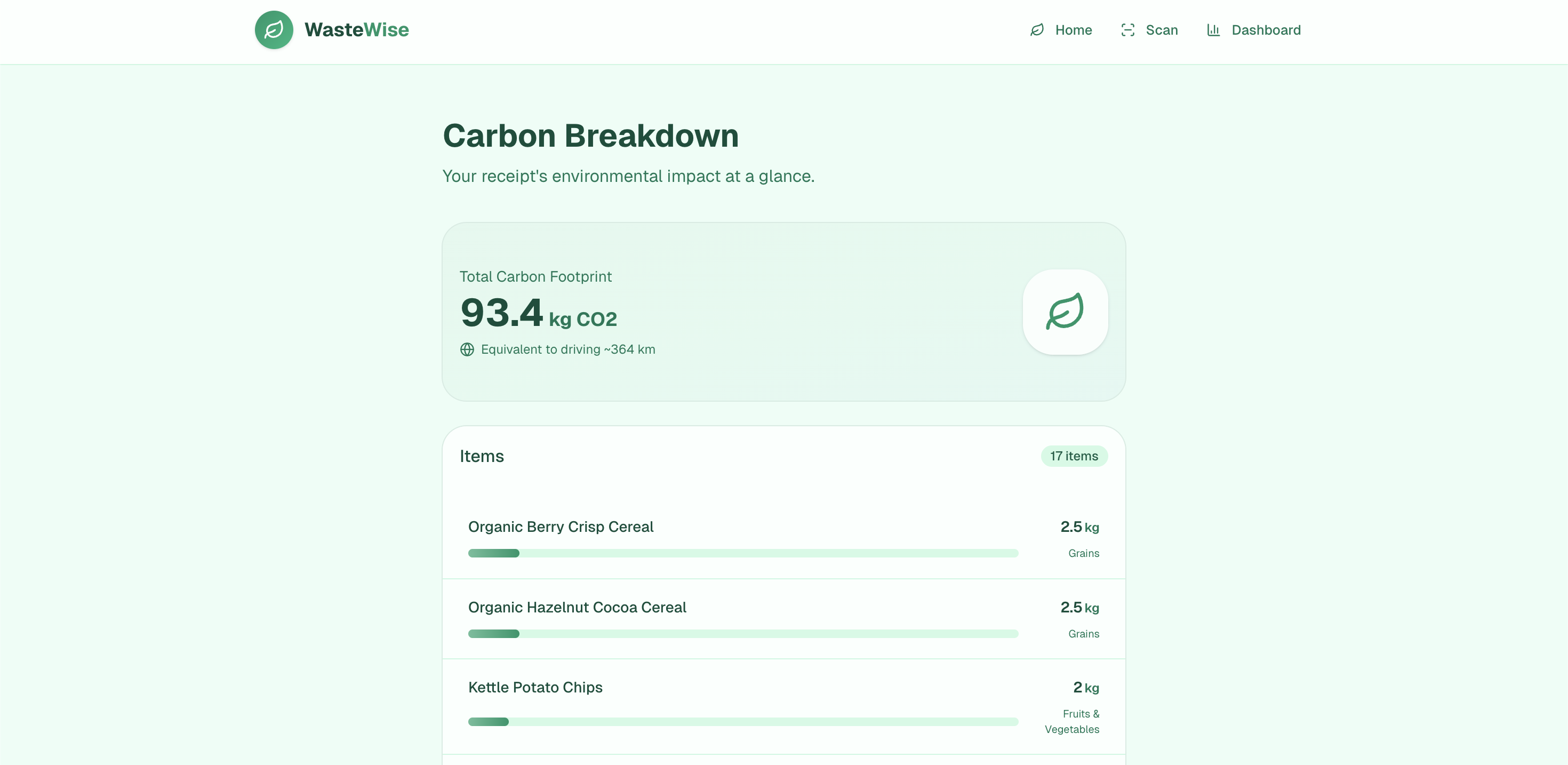
Receipt scanner results
-
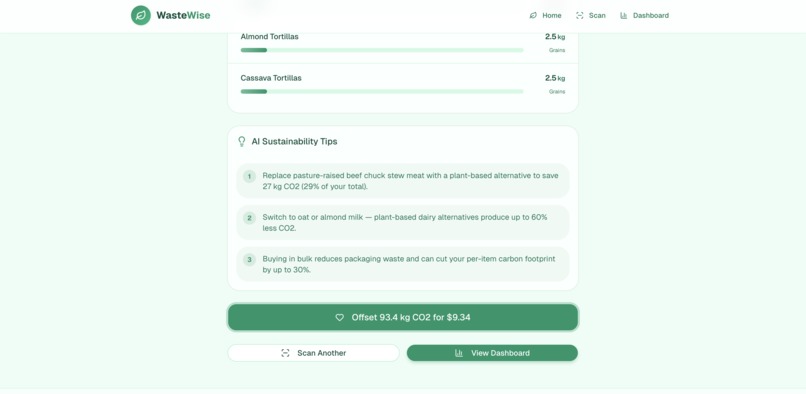
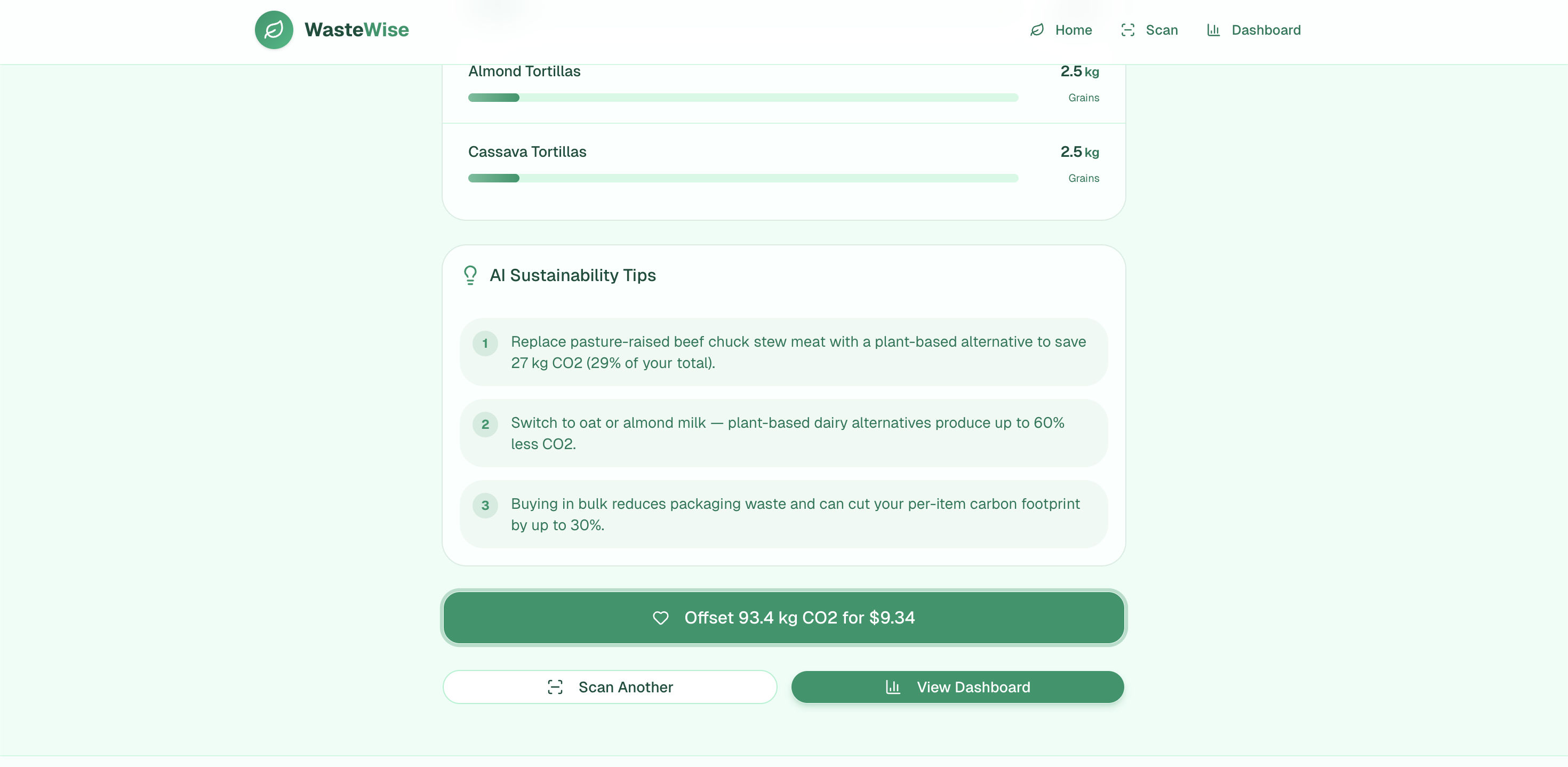
Receipt scanner suggestions
-
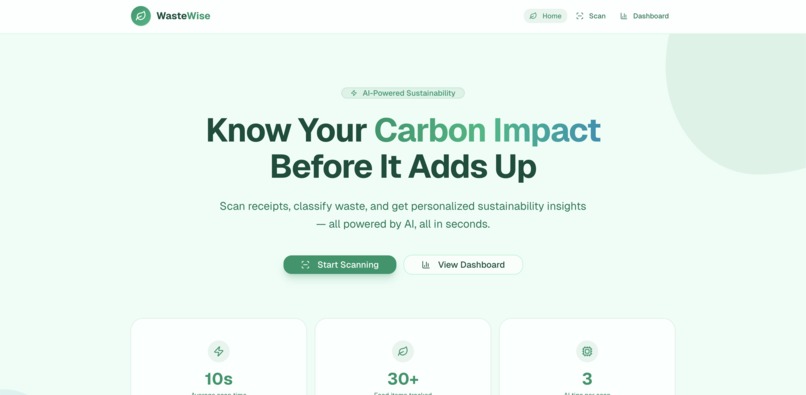
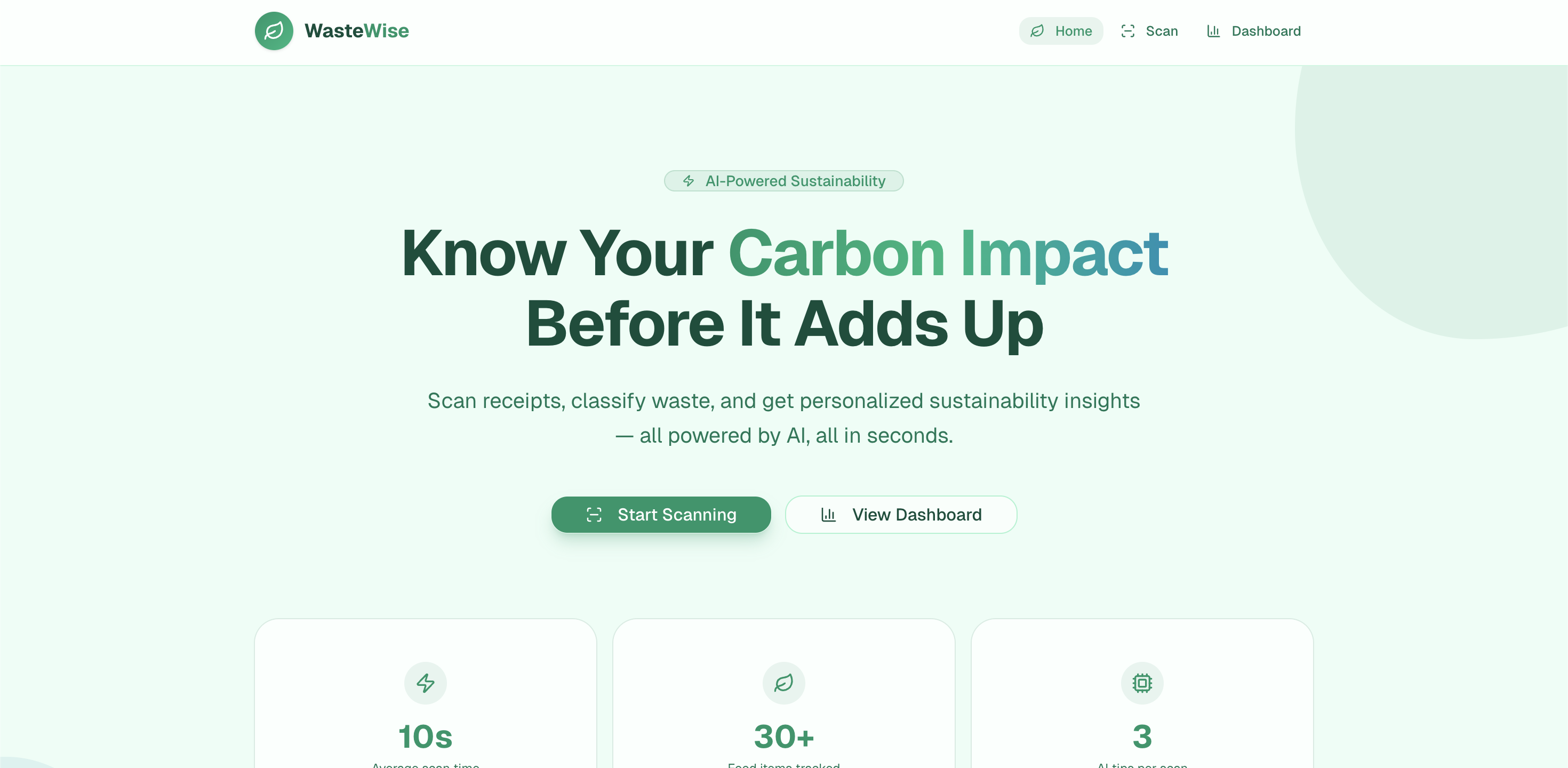
Homepage
-
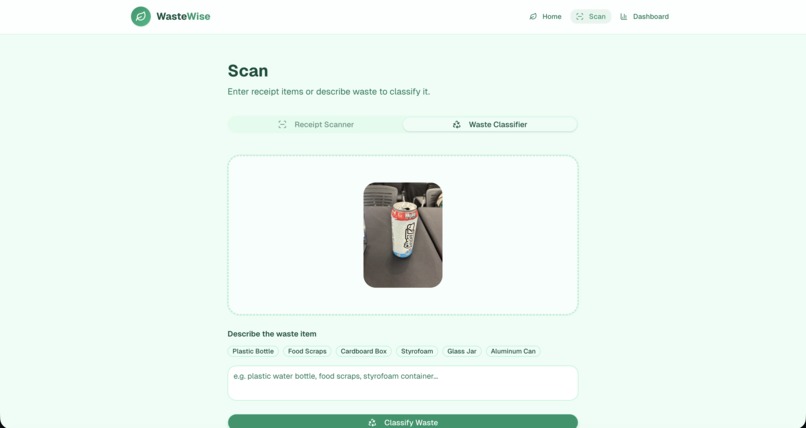
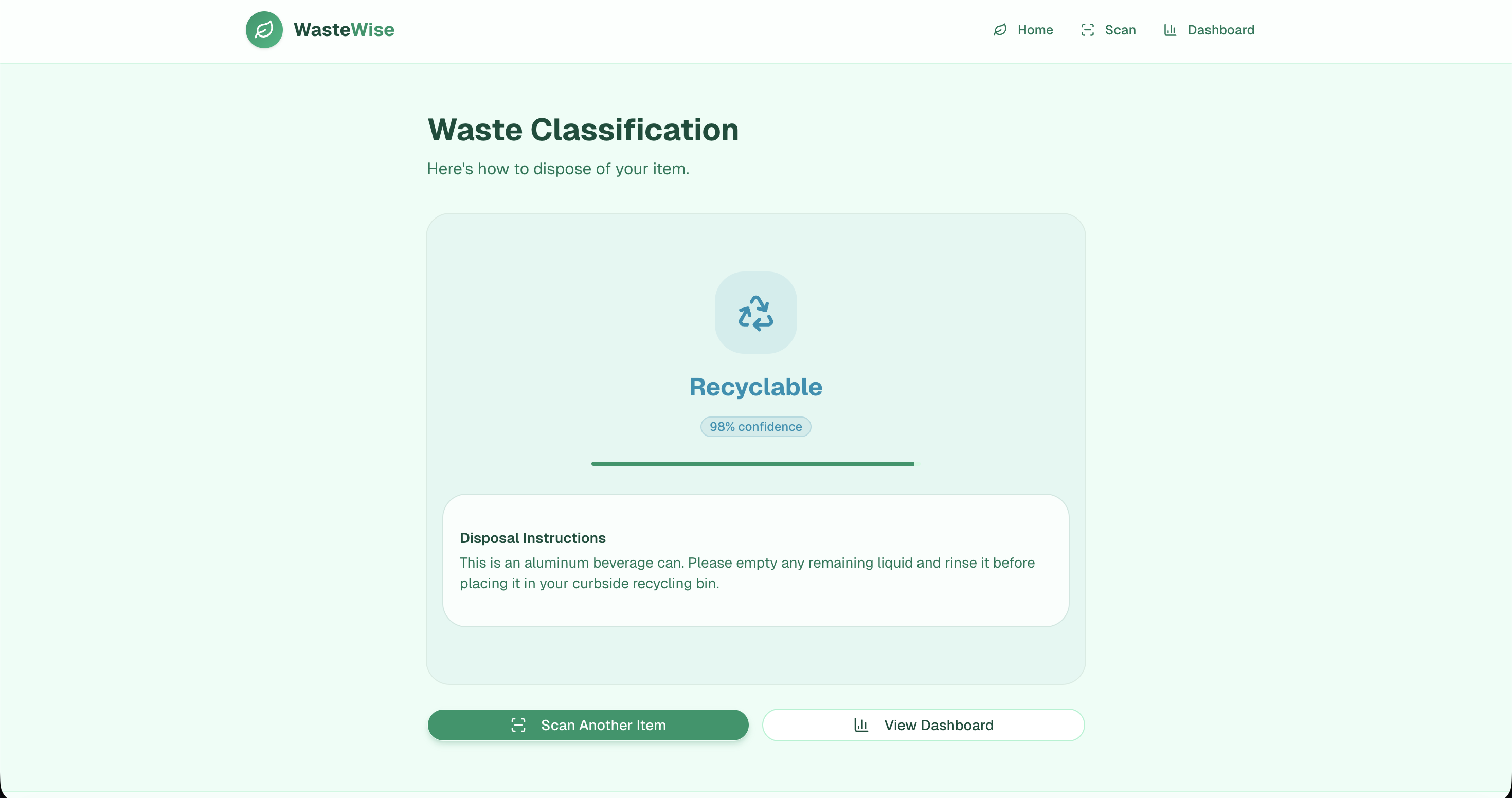
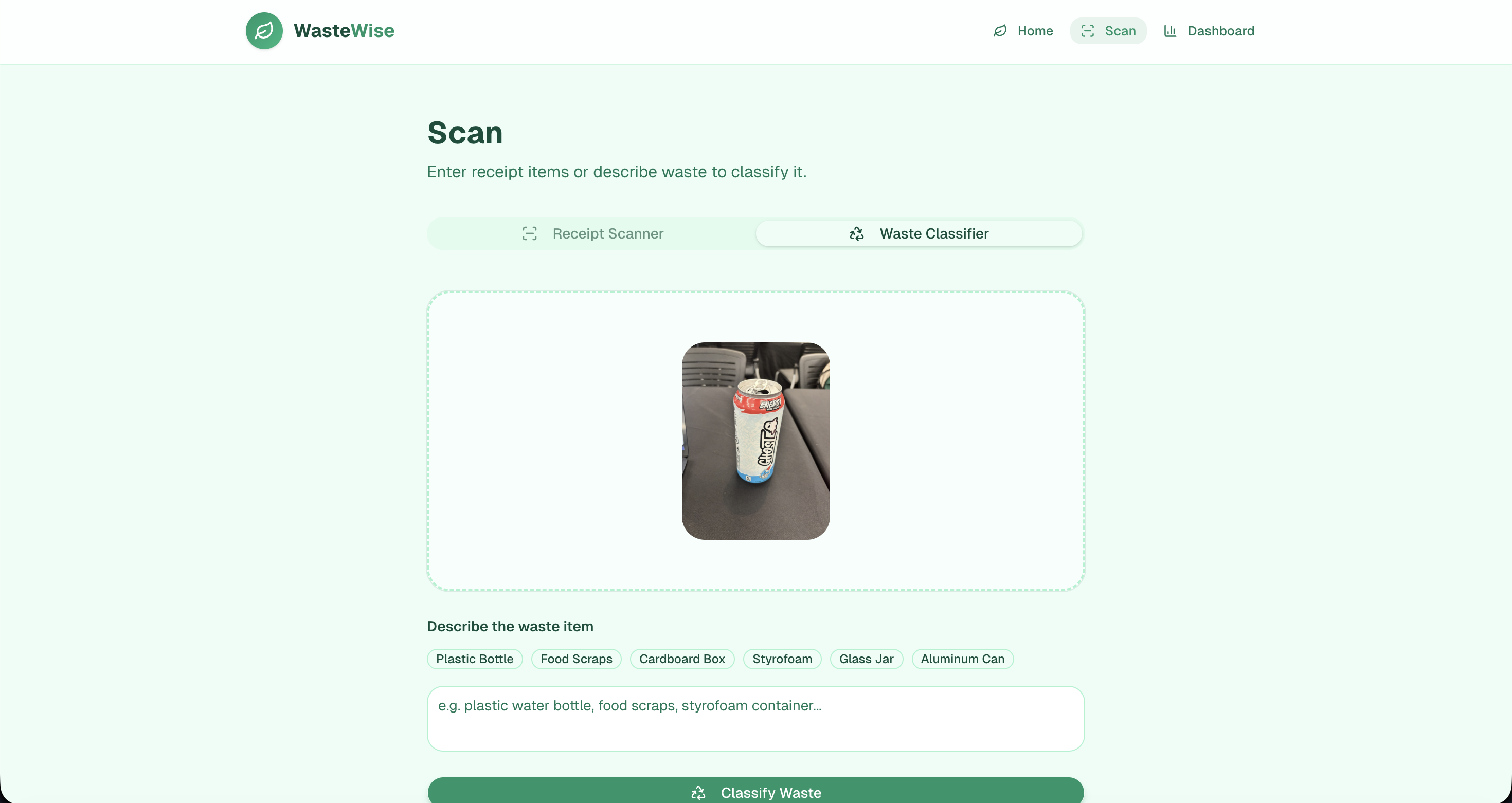
Waste classifier
-
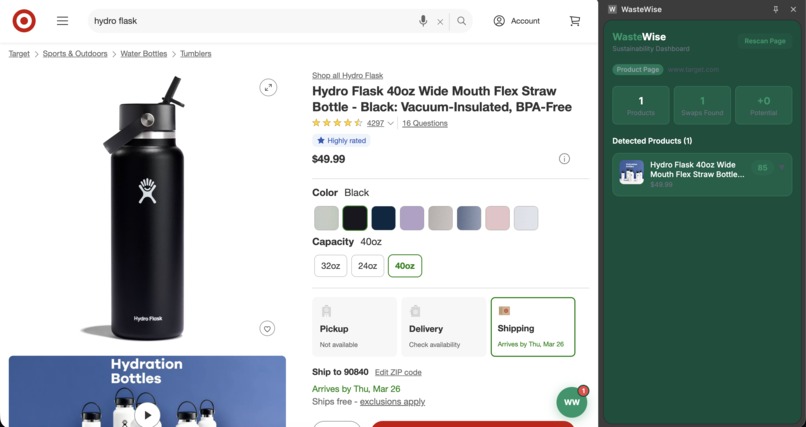
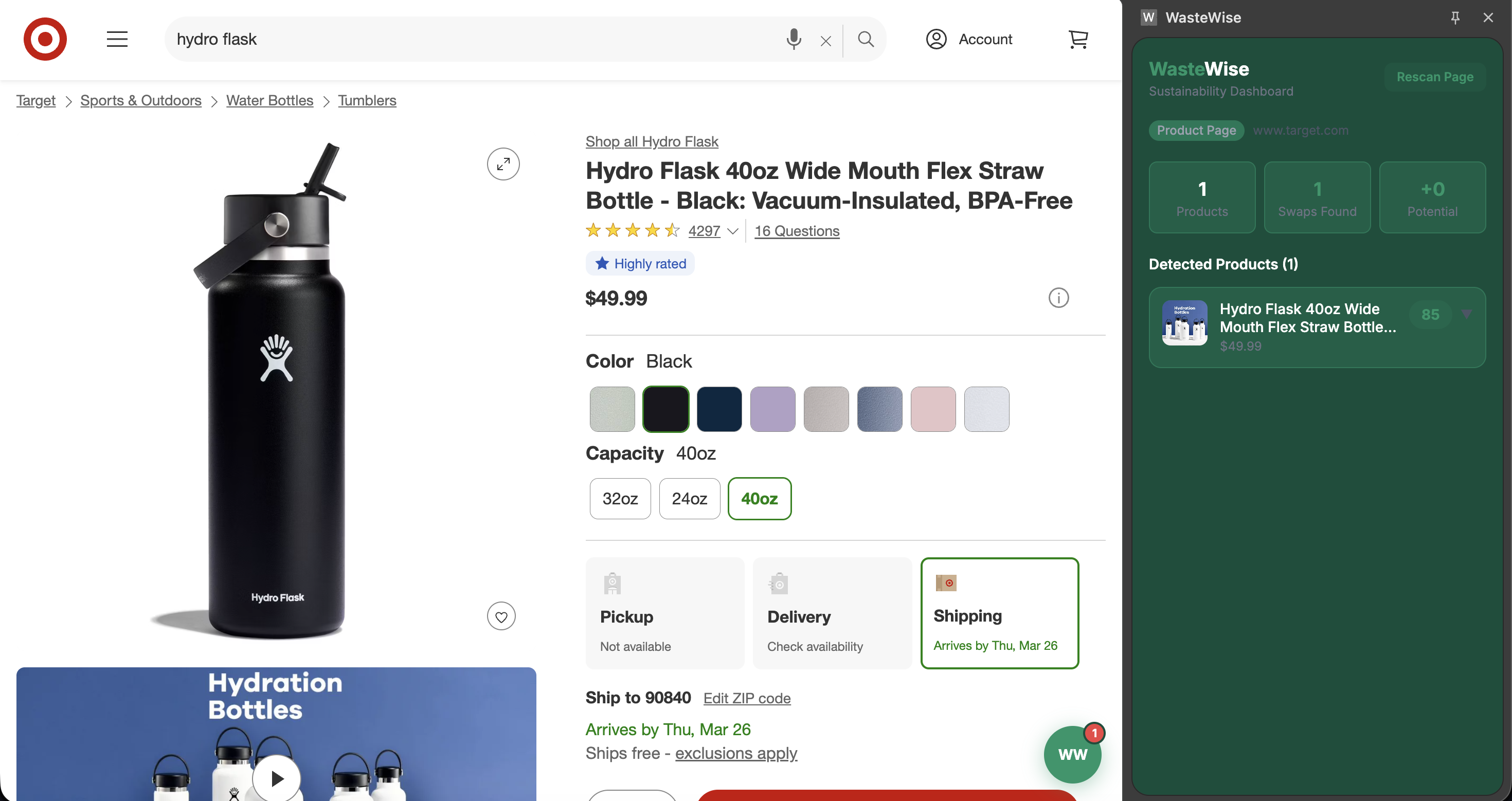
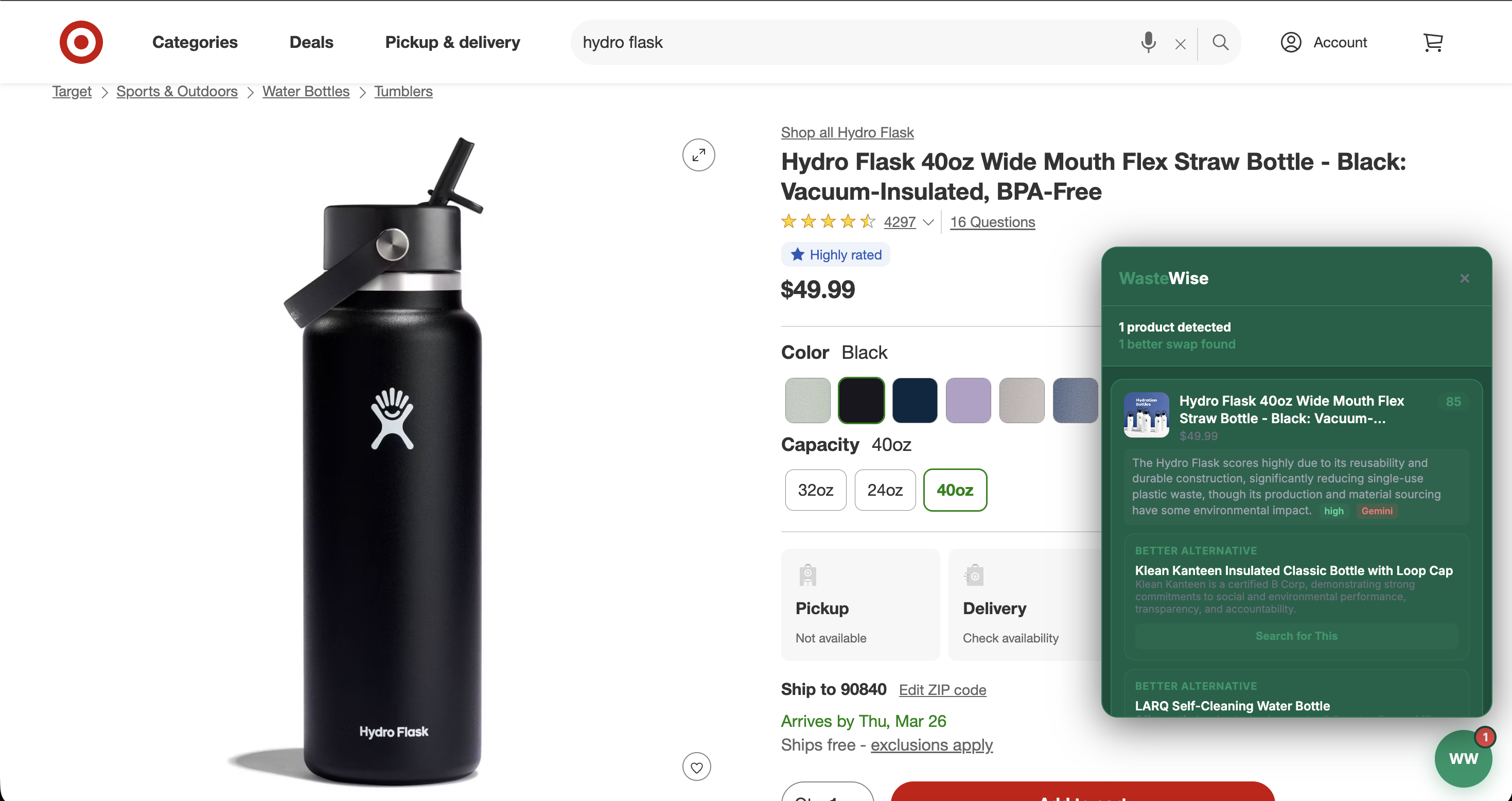
Extension scan
-
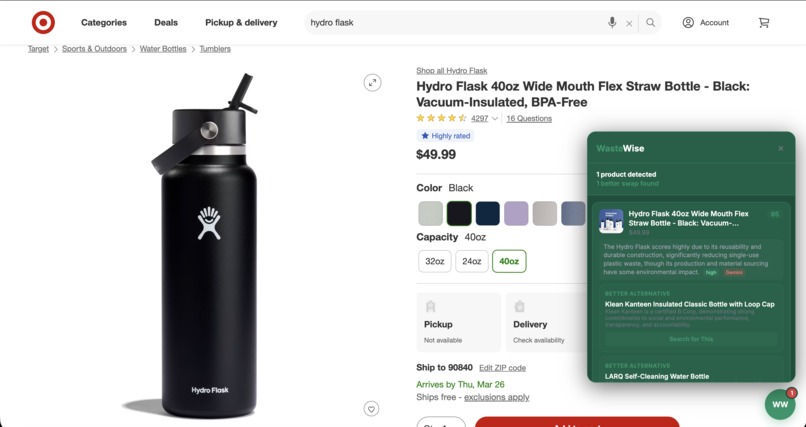
Extension popup
An AI-powered sustainability platform that helps consumers understand and reduce their environmental footprint through receipt scanning, waste classification, and real-time eco-scoring while shopping online.
Authors
Lucas Amberg, Edong Lee, and Jacob Paolinelli
About the Project
Inspiration
Every day, consumers make dozens of purchasing decisions without understanding their environmental impact. We wanted to build a tool that makes sustainability effortless — meeting people where they already are: at checkout. Whether you're reviewing a grocery receipt, throwing something away, or browsing Amazon, Waste Wise gives you the information you need to make greener choices without changing your routine.
What We Learned
- How to build a Turborepo monorepo coordinating a Next.js web app and a WXT browser extension sharing a unified design language
- Integrating Google Gemini's multimodal capabilities for both image analysis (receipt scanning, waste classification) and structured product eco-scoring
- Building a Python-based AI agent with Fetch.ai's uagents protocol to handle real-time product sustainability analysis
- Designing a Chrome extension that monitors shopping cart changes across major retailers using content scripts and the Chrome API
- Working with Supabase for real-time data persistence and user dashboard tracking
How We Built It
Waste Wise is a monorepo with two apps managed by Turborepo:
Web App — A Next.js 16 application where users can upload receipt images or photos of waste items. Gemini's multimodal API analyzes the images, extracts product information, and returns eco-scores with sustainability details and greener alternatives. A dashboard tracks the user's environmental impact over time using Supabase.
Browser Extension — A WXT-powered Chrome extension that watches shopping carts on major retail sites (Amazon, Target, Walmart, Kroger, and more). When products are detected, they're sent to a FastAPI backend agent that uses Gemini to score each item's sustainability on an A-F scale and suggest eco-friendly alternatives — all in real-time as you shop.
Challenges
- Parsing product data from diverse retailer DOM structures — every site has a different layout, requiring custom content scripts for each
- Getting Gemini to return consistent, structured JSON responses for eco-scoring across wildly different product categories
- Coordinating state between the Chrome extension's content scripts, background service worker, and popup UI
- Handling image-to-text extraction from receipt photos with varying quality, lighting, and formatting
Description
Waste Wise is a two-part sustainability platform:
- Receipt Scanner — Upload a photo of any receipt. AI extracts each item, scores its environmental impact, and suggests greener alternatives.
- Waste Classifier — Snap a photo of any waste item to learn whether it's recyclable, compostable, or landfill, with personalized disposal recommendations.
- Shopping Cart Eco-Scorer (Browser Extension) — Monitors your cart on Amazon, Target, Walmart, Kroger, and other retailers. Each product gets a real-time sustainability grade (A-F) with recommended alternatives.
- Impact Dashboard — Track your eco-scores and sustainability progress over time.
Technologies and Libraries Used
Core Framework and Build Tools
- Next.js 16 — React framework with server-side rendering and App Router
- React 19 — JavaScript library for building user interfaces
- Turborepo — Monorepo build system for managing the web app and extension
- WXT — Framework for building cross-browser extensions with modern tooling
- TypeScript — JavaScript with static type checking
AI and Machine Learning
- Google Gemini API (
@google/genai) — Multimodal AI for receipt scanning, waste classification, and product eco-scoring - Fetch.ai uagents (
uagents-core) — Agent protocol for the sustainability scoring backend
Backend
- FastAPI — Python web framework for the extension's scoring agent
- Uvicorn — ASGI server for the FastAPI backend
- Pydantic — Data validation and serialization
Database
- Supabase (
@supabase/supabase-js) — Open source Firebase alternative for database and user data persistence
UI Components and Styling
- Tailwind CSS 4 — Utility-first CSS framework
- shadcn/ui — Re-usable UI component library
- Base UI (
@base-ui/react) — Headless UI component primitives - Lucide React — Icon library
- class-variance-authority — Component variant management
- clsx / tailwind-merge — Utility class merging
- tw-animate-css — Tailwind animation utilities
Browser Extension
- Chrome API — Extension APIs for tabs, storage, and content scripts
- Vite — Build tool powering the WXT extension bundling
Developer Tools
Installation
# Install dependencies
npm install

# Run both apps in development
npm run dev

# Run only the web app
npm run dev:web

# Run only the extension
npm run dev:extension

# Run the Python scoring agent
cd apps/extension
npm run agent
Environment Variables
This project requires the following environment variables:
Web App (apps/web/.env.local)
NEXT_PUBLIC_SUPABASE_URL=your_supabase_url
NEXT_PUBLIC_SUPABASE_ANON_KEY=your_supabase_anon_key
GEMINI_API_KEY=your_gemini_api_key
Extension Agent (apps/extension/agent/.env)
GEMINI_API_KEY=your_gemini_api_key
License
This project is private and not intended for redistribution.
Built With
- fetch.ai
- gemini
- next.js
- react
- supabase
- tailwind
- typescript
- wxt

Log in or sign up for Devpost to join the conversation.