

WasteWatch: Predicting and Reducing Food Waste
Inspiration:
Food waste is a massive problem $254 billion is lost annually across restaurants, grocery stores, and schools. The largest portion, $62 billion, comes from restaurants, while many people still struggle with food insecurity. Restaurants alone generate between 22 to 33 billion pounds of food waste each year. In fact, 4–10% of food purchased by restaurants is wasted before it ever reaches the customer.
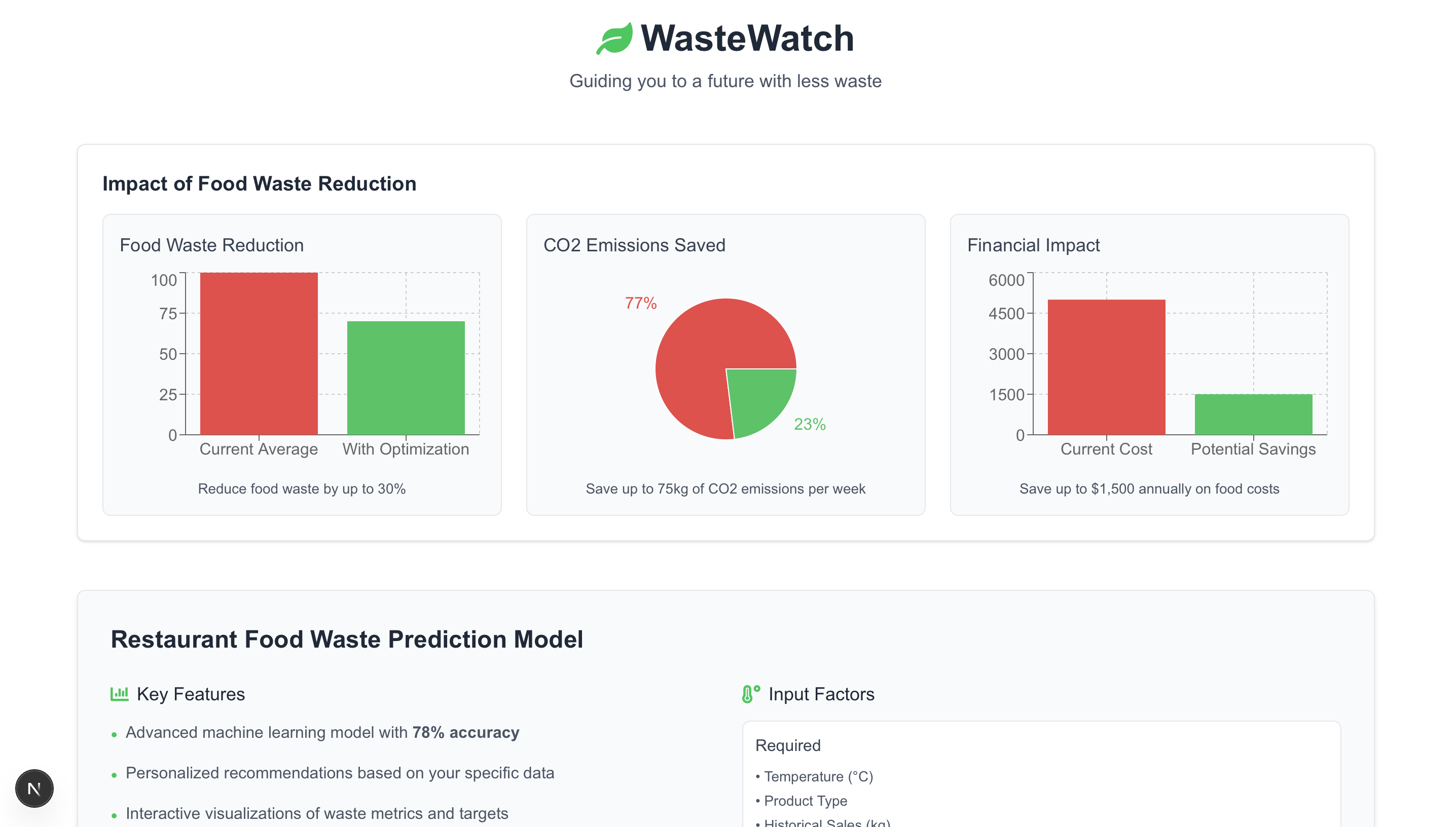
We decided to change that. We created a web application powered by machine learning to help restaurants predict and reduce food waste. By leveraging technology, we provide custom solutions that help restaurants save money and increase profits.
What Does Our Application Do?
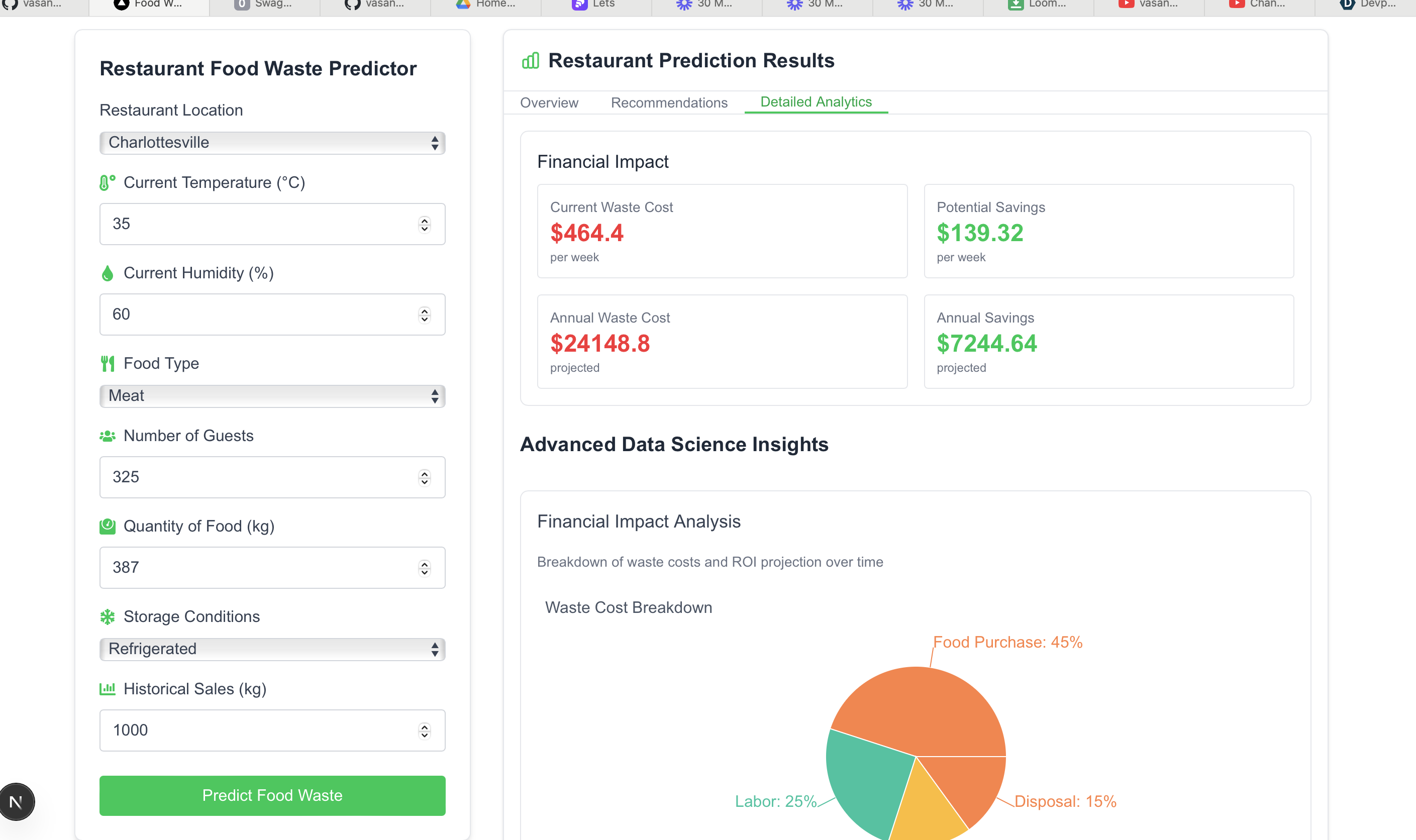
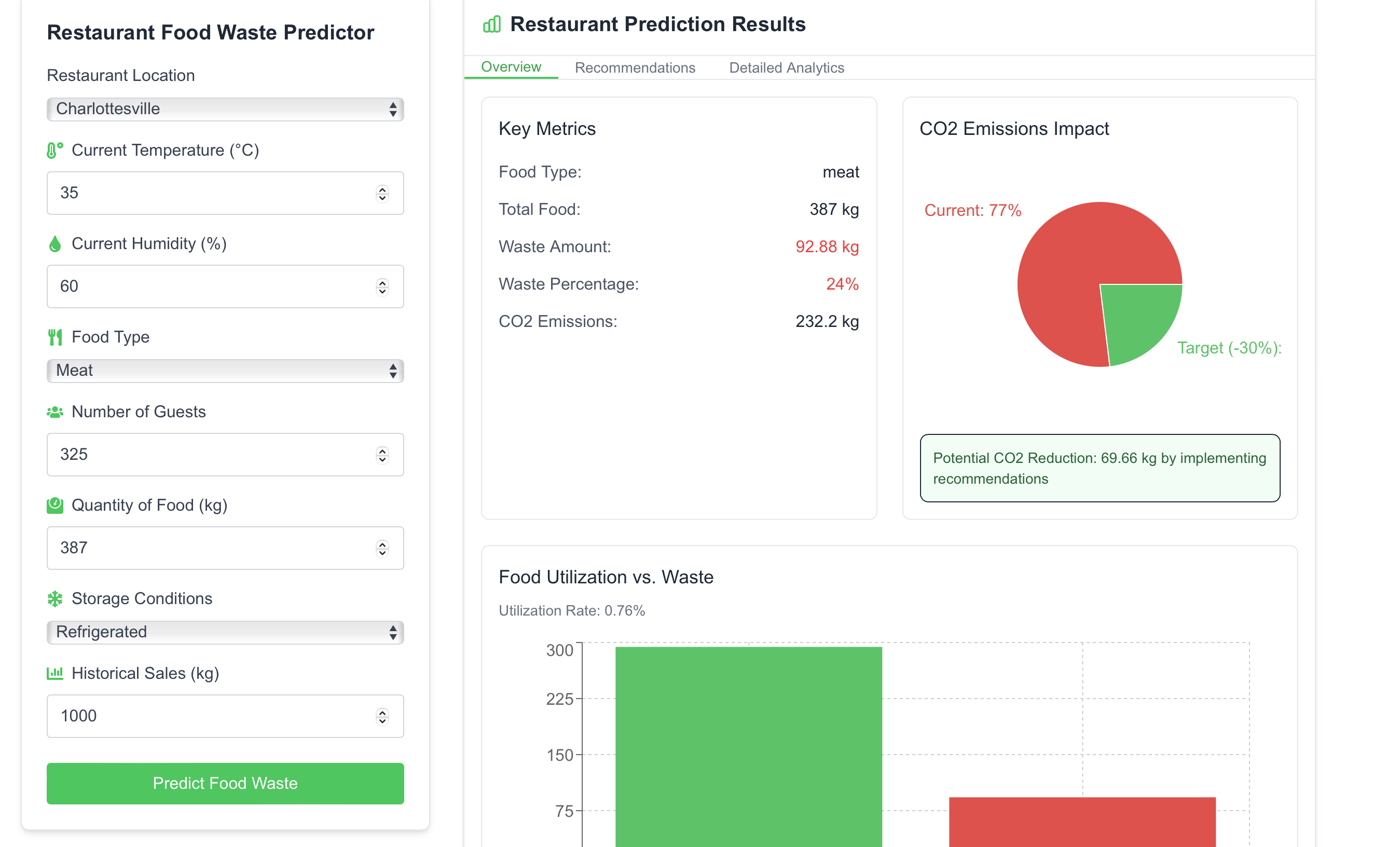
WasteWatch is a predictive tool that takes into account location, temperature, humidity, food type, number of guests, weight of food, storage conditions, and historical sales data. Our interactive dashboard allows restaurants to view the generated analysis and receive solution recommendations tailored to their unique needs.
How we built it (Data Science):
We built a predictive food waste management platform by combining machine learning, data integration, and interactive visualizations. Using over 7,500 restaurant waste records, regional statistics, shelf-life data, and real-time temperature inputs, we engineered features like utilization rate and waste-per-guest ratio. After cleaning and preprocessing the data, we trained a Random Forest Regressor achieving 78% prediction accuracy.
We optimized the models, connected them to real-time data feeds, and built a user-friendly dashboard.
Challenges We Ran Into:
Handling messy data cleaning and organizing datasets with missing or inconsistent values was a significant challenge. Unpredictable demand due to seasonal fluctuations made it difficult to design a one-size-fits-all model, so we made ours adaptive. User experience also posed a challenge; we wanted a tool that was not only powerful but also easy to use, which required iterative design and continuous feedback.
Accomplishments We’re Proud Of:
Building a user-friendly interface that enables non-technical users to make data-driven decisions. Developing a system that integrates with real-time data for continuous optimization.
What We Learned:
Data quality matters the accuracy of the model heavily depends on the variety and reliability of data sources. Simplicity is key clear, actionable insights are just as important as accurate predictions. Technology can drive sustainability small optimizations in inventory management can lead to major reductions in food waste.
What's Next for WasteWatch?
Smart Alerts – Notifications when food is nearing expiration. Grocery Store Partnerships – Integrations with suppliers to adjust inventory in real time. AI-Powered Learning – Models that improve continuously based on restaurant feedback and usage patterns.
Final Thoughts:
WasteWatch isn’t just about predicting food waste it’s about empowering restaurants to make smarter, more sustainable choices. With machine learning and real-time data, we’re transforming food waste into optimized inventory management, lower costs, and a greener planet!
Less waste. More savings. A smarter future.
Built With
- fastapi
- git
- next.js
- openai
- pandas
- python
- react
- scikit-learn
- tailwind
- typescript

Log in or sign up for Devpost to join the conversation.