
Inspiration
In many Nigerian communities—particularly in suburban and peri-urban areas—illegal dumping, open drains, and unmanaged waste remain pressing challenges. These issues contribute to environmental degradation and significant public health risks. Inspired by the need for a citizen-centric, tech-enabled response, WasteTrack+ was built as a tool for reporting waste hotspots and enabling better coordination around bin tracking and sanitation interventions.
What it does
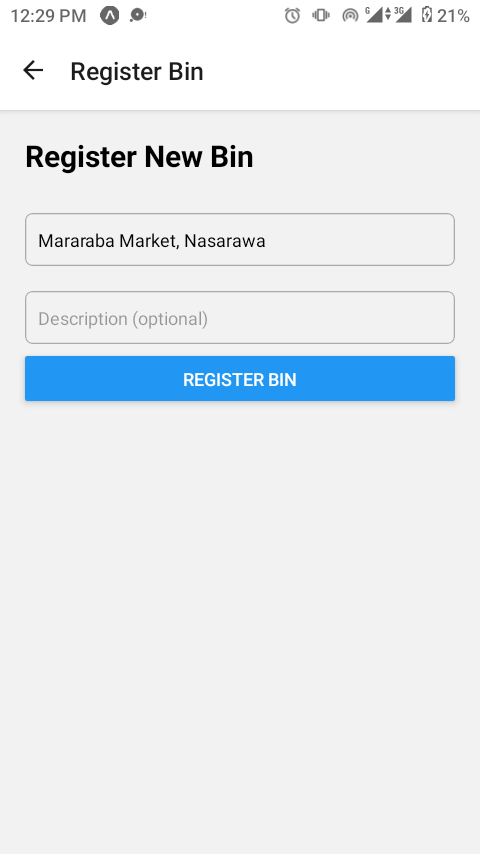
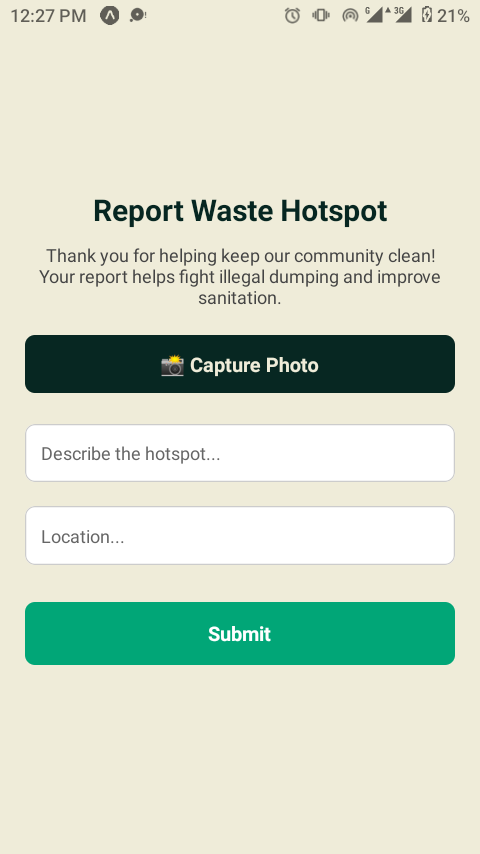
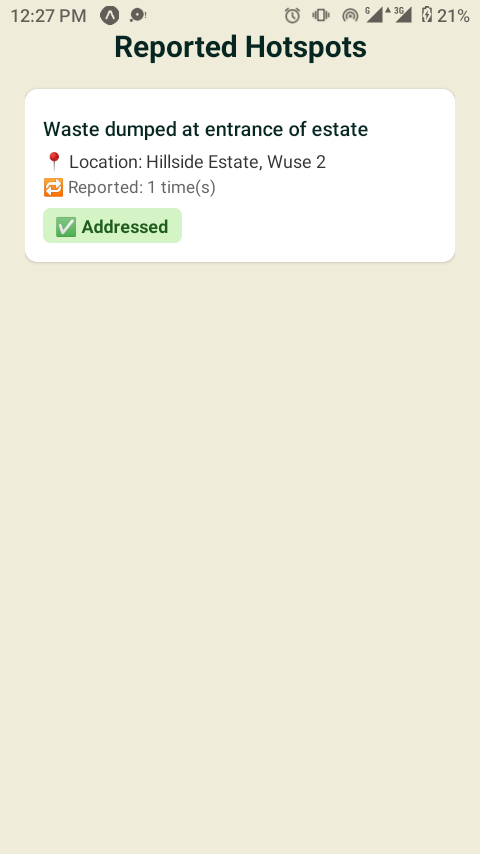
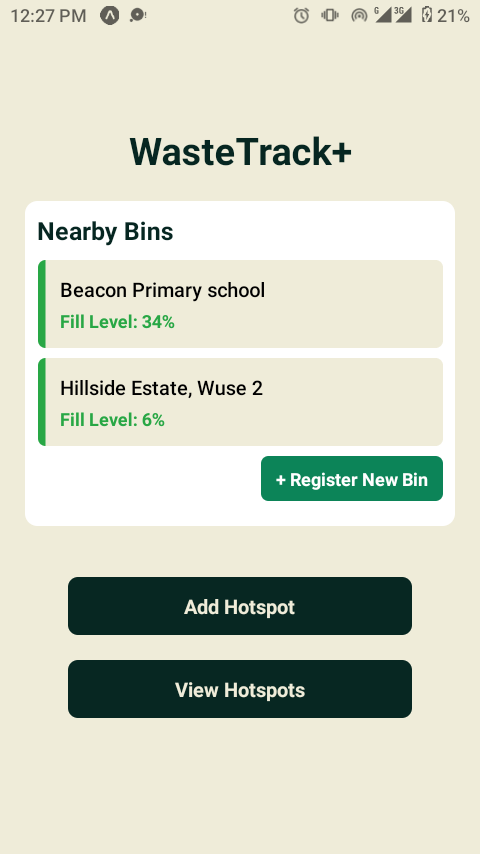
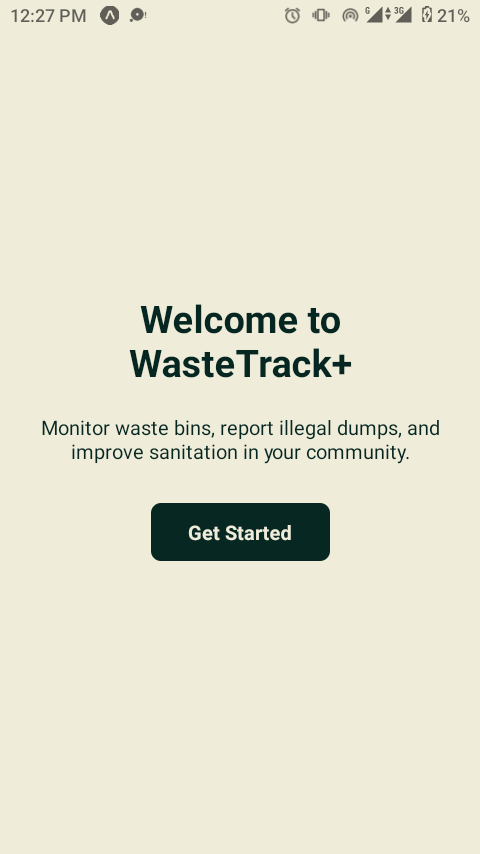
WasteTrack+ allows users to: Hotspot Reporting: Citizens can capture photos, describe, and geolocate waste hotspots. Admin Dashboard: View reports, see recurrence at locations, mark issues as addressed. Bin Registration: Add new bins with a simulated fill level assigned to specific hotspots. Bin Details Modal: View bin fill history with charts and local map view.
How we built it
React Native (TypeScript + Expo): Core mobile development platform. AsyncStorage: For offline-first data storage and retrieval. React Navigation: Stack-based flow from splash to dashboard and forms. react-native-animatable / Animated API: Used for bin fill animation effects. Victory Native: For lightweight chart rendering of bin fill history. react-native-uuid, react-native-maps, expo-image-picker: Supporting tools for unique IDs, maps, and image capture.
Challenges we ran into
UUID Compatibility: The uuid package failed in RN due to crypto.getRandomValues() not being supported. Switched to react-native-uuid. Chart Theme Breakage: Victory’s VictoryTheme was removed in the latest version, leading to runtime errors. Fixed by omitting theme props. Time Constraints: With limited development time before the deadline, feature prioritization and focus on UI clarity became essential. Live Deployment: Due to time and platform constraints, we relied on offline functionality for testing instead of live hosting or OTA updates.
Accomplishments that we're proud of
Delivered a functioning prototype with offline capabilities and a meaningful civic use case. Integrated admin workflows (marking addressed, report recurrence tracking, bin registration) within a clean UI. Designed dynamic bin visuals and a chart-modal interaction that enhances user understanding.
What we learned
Handling state refresh across navigation events in React Native. Managing persistent local storage and triggering UI updates as data changes. Navigating library compatibility trade-offs and simplifying where necessary. Building a complete product story, from idea to prototype, in a short timeframe.
What's next for WasteTrack+
| Feature | Description |
|---|---|
| IoT Sensor Integration | Connect physical bins via microcontrollers (e.g. ESP32) for real-time fill tracking |
| Role-Based Access | Dedicated portals for residents, sanitation teams, and municipal officers |
| Cloud Backend & Dashboard | Sync reports, manage bin data centrally, and provide city-wide analytics |
| Worker Tasking & Alerts | Notify sanitation workers as bins fill up or get assigned |
WasteTrack+ showcases how community-driven reporting and mobile tech can bridge waste management gaps, especially in underserved or infrastructure-challenged regions.
Built With
- asyncstorage
- react-native
- typescript


Log in or sign up for Devpost to join the conversation.