Inspiration
Waste moves through many hands before it reaches recyclers, but the data about that waste is often lost. Collectors, aggregators, informal workers, and recyclers usually do not have a shared view of what material exists, where it is, or whether it was actually recycled.
We built WasteTrace Lite to make waste movement visible, traceable, and easier to manage using a lightweight digital system.
What it does
WasteTrace Lite is an AI-assisted, QR-based waste traceability prototype.
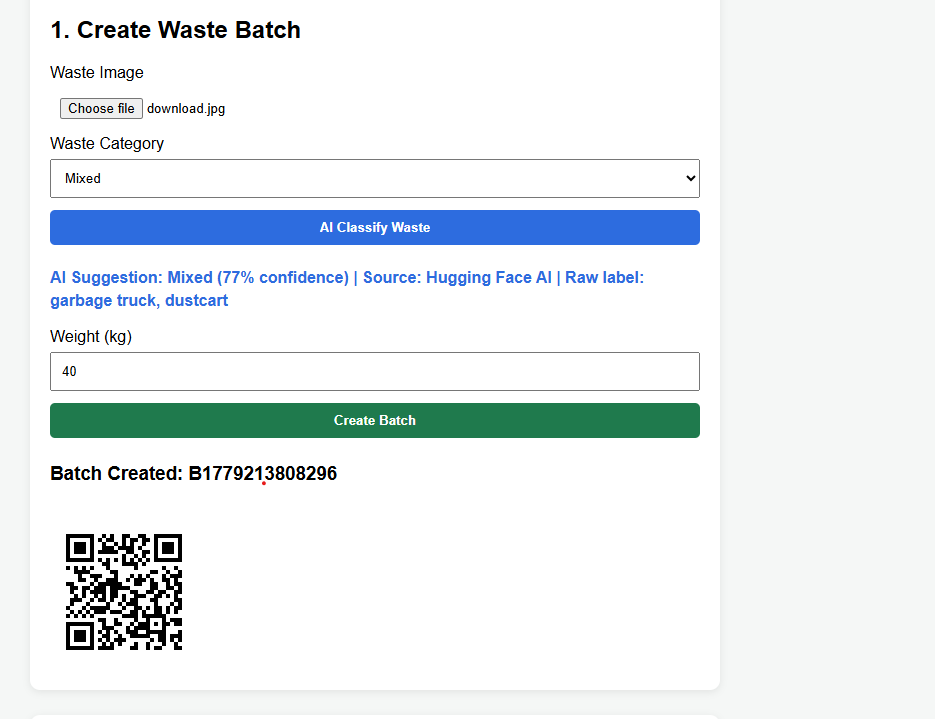
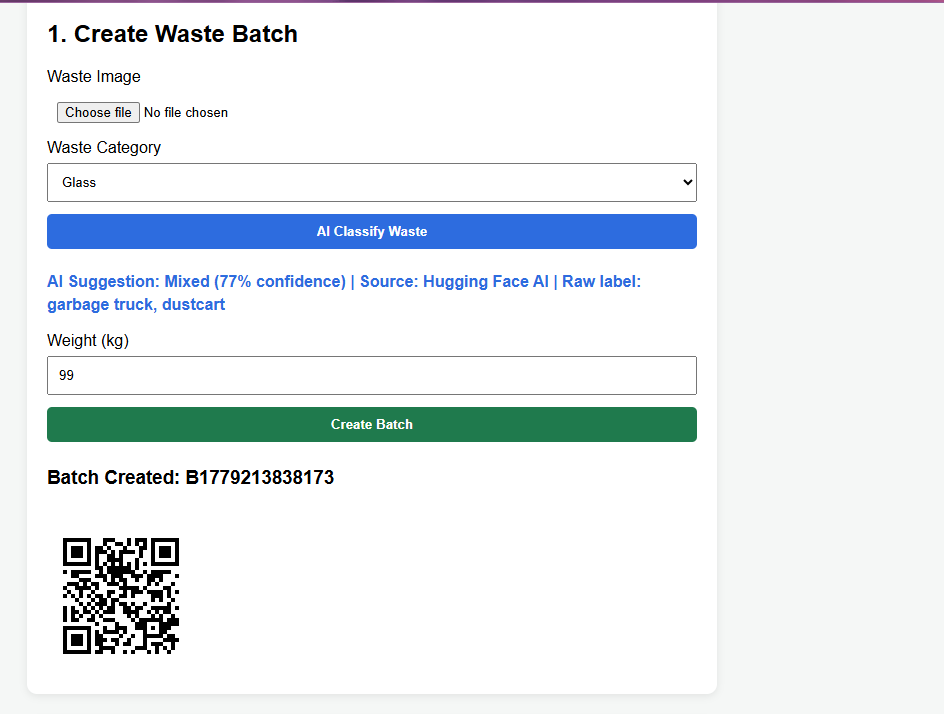
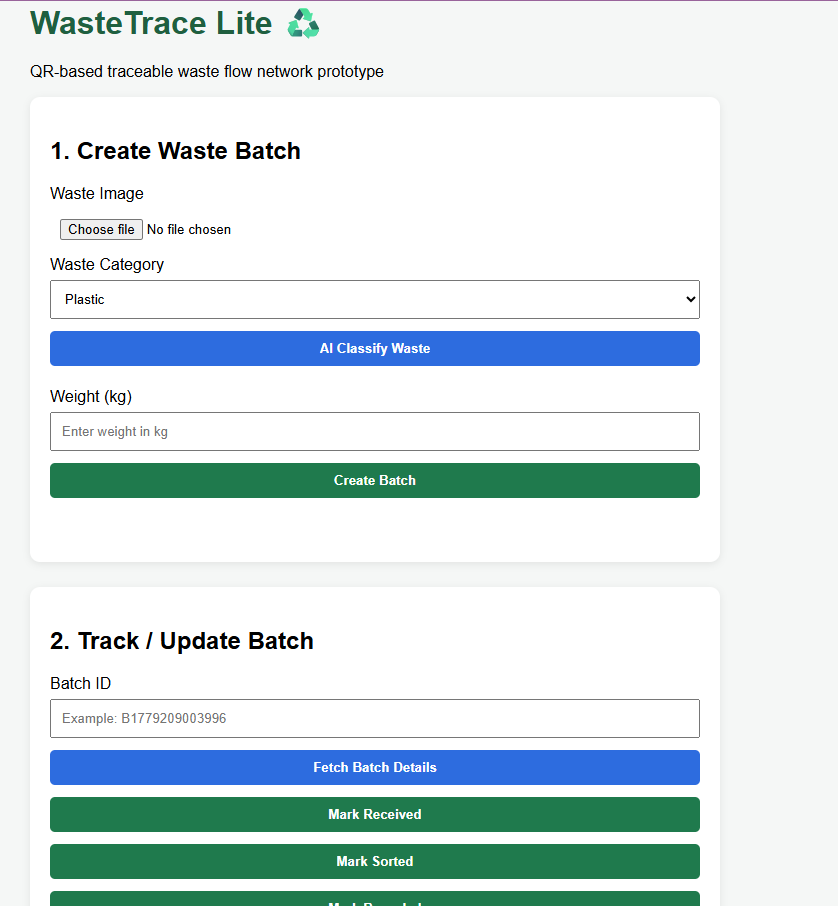
A collector can upload an image of waste, get an AI-suggested category, enter the waste weight, and create a digital waste batch. The system generates a unique Batch ID and QR code for that batch.
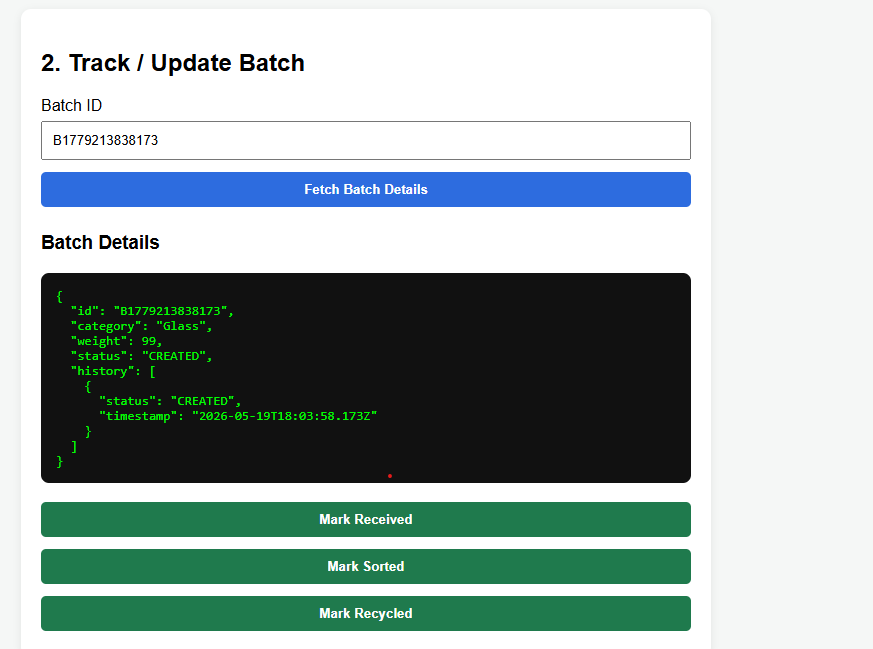
As the batch moves through the flow, stakeholders can update its lifecycle status:
CREATED → RECEIVED → SORTED → RECYCLED
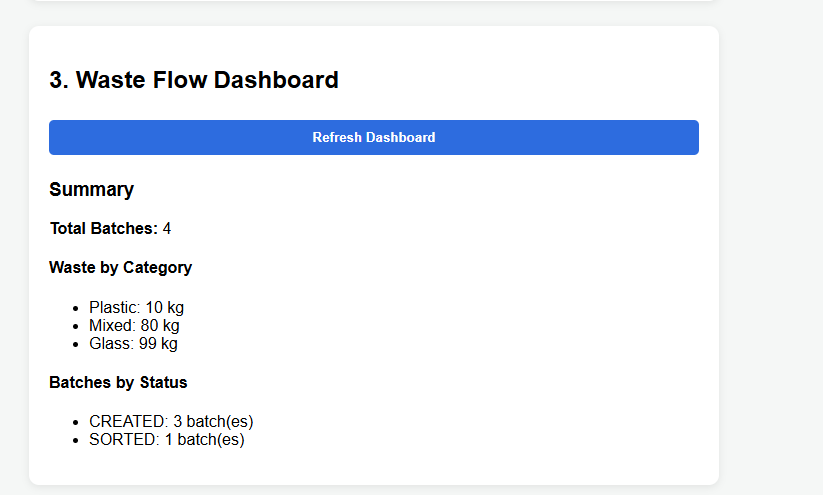
The dashboard shows total batches, waste by category, and batches by current status. This helps create visibility across the waste network.
How we built it
We built the prototype as a simple web application using Node.js and Express for the backend, and HTML, CSS, and JavaScript for the frontend.
The backend provides APIs for batch creation, batch retrieval, status updates, dashboard summaries, QR code generation, and AI classification.
For AI-assisted classification, we integrated Hugging Face Inference API using an image classification model. The prediction is mapped into practical waste categories such as Plastic, Paper, Metal, Glass, Organic, and Mixed. We also added a mock fallback so that the demo remains stable if the AI API is unavailable.
The project was developed using SAP Business Application Studio and version-controlled with GitHub.
Challenges we ran into
One challenge was keeping the solution aligned with the waste traceability problem instead of making it only an AI classification app. We solved this by making traceability, QR tracking, lifecycle updates, and dashboard visibility the core features, while AI only supports easier data capture.
Another challenge was integrating Hugging Face. Some models were not supported by the free inference provider, and the token needed the correct inference permissions. We debugged these issues and switched to a supported model.
We also had to make the application work smoothly inside SAP Business Application Studio, including port forwarding and environment variable setup.
Accomplishments that we're proud of
We are proud that we built a working end-to-end prototype, not just a UI mockup.
The system can create waste batches, generate QR codes, classify uploaded waste images using AI, update lifecycle status, maintain batch history, and show a dashboard summary.
We are also proud that the solution is practical. It does not try to replace existing waste workers or workflows. Instead, it adds a simple digital tracking layer that can work with the current ecosystem.
What we learned
We learned how to design a sustainability-focused system around real-world constraints such as low-friction data capture, informal workflows, and imperfect field conditions.
We also learned how to integrate an external AI service, handle API failures gracefully, and keep the demo reliable with fallback logic.
Most importantly, we learned that solving sustainability problems is not only about building features. It is about designing systems that can realistically fit into existing human and operational workflows.
What's next for WasteTrace Lite
Next, WasteTrace Lite can be extended with persistent database storage, user roles for collectors and recyclers, mobile QR scanning, GPS tagging, offline support, recycler demand matching, route optimization, and tamper-proof audit logs.
In the long term, the platform could help municipalities, aggregators, recyclers, and industries understand recyclable supply flows and reduce material loss across the waste ecosystem.
Built With
- css
- express.js
- html
- hugging-face-inference-api
- javascript
- multer
- node.js
- qrcode
- sap-business-application-studio

Log in or sign up for Devpost to join the conversation.