Problem
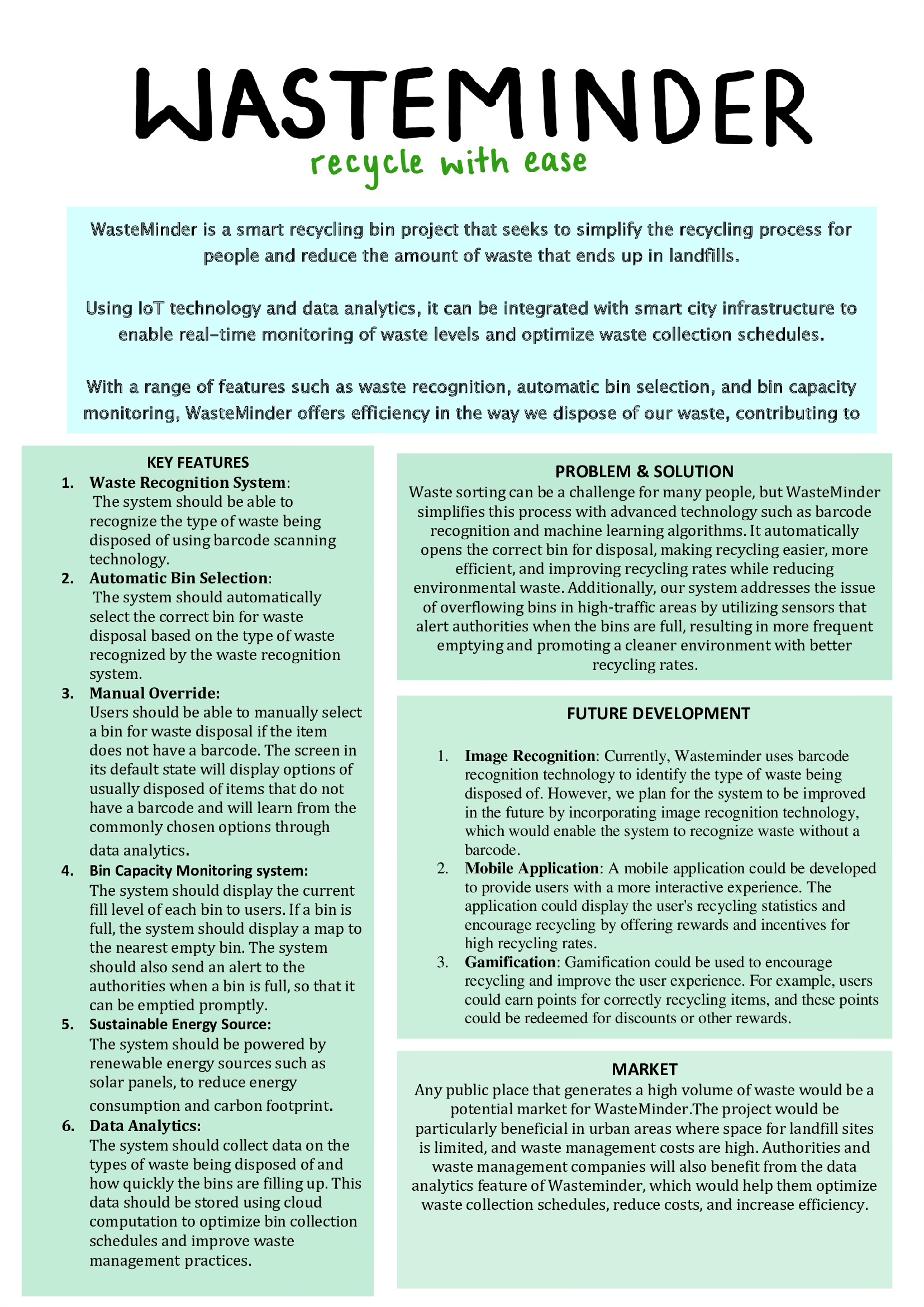
A common challenge that people face when recycling is knowing which bin to put their waste in. However, Wasteminder solves this problem by utilizing advanced technology such as barcode recognition and machine learning algorithms to recognize the type of waste being disposed of and then automatically opening the correct bin for disposal. This not only makes the recycling process easier and more efficient but also helps to improve recycling rates and reduce environmental waste. Our system also offers a solution to the common problem of overflowing bins in busy areas. By installing sensors in the bins, authorities receive regular alerts when the bins are full. This ensures that the bins are emptied more frequently, promoting a cleaner environment and improving recycling rates.
What it does
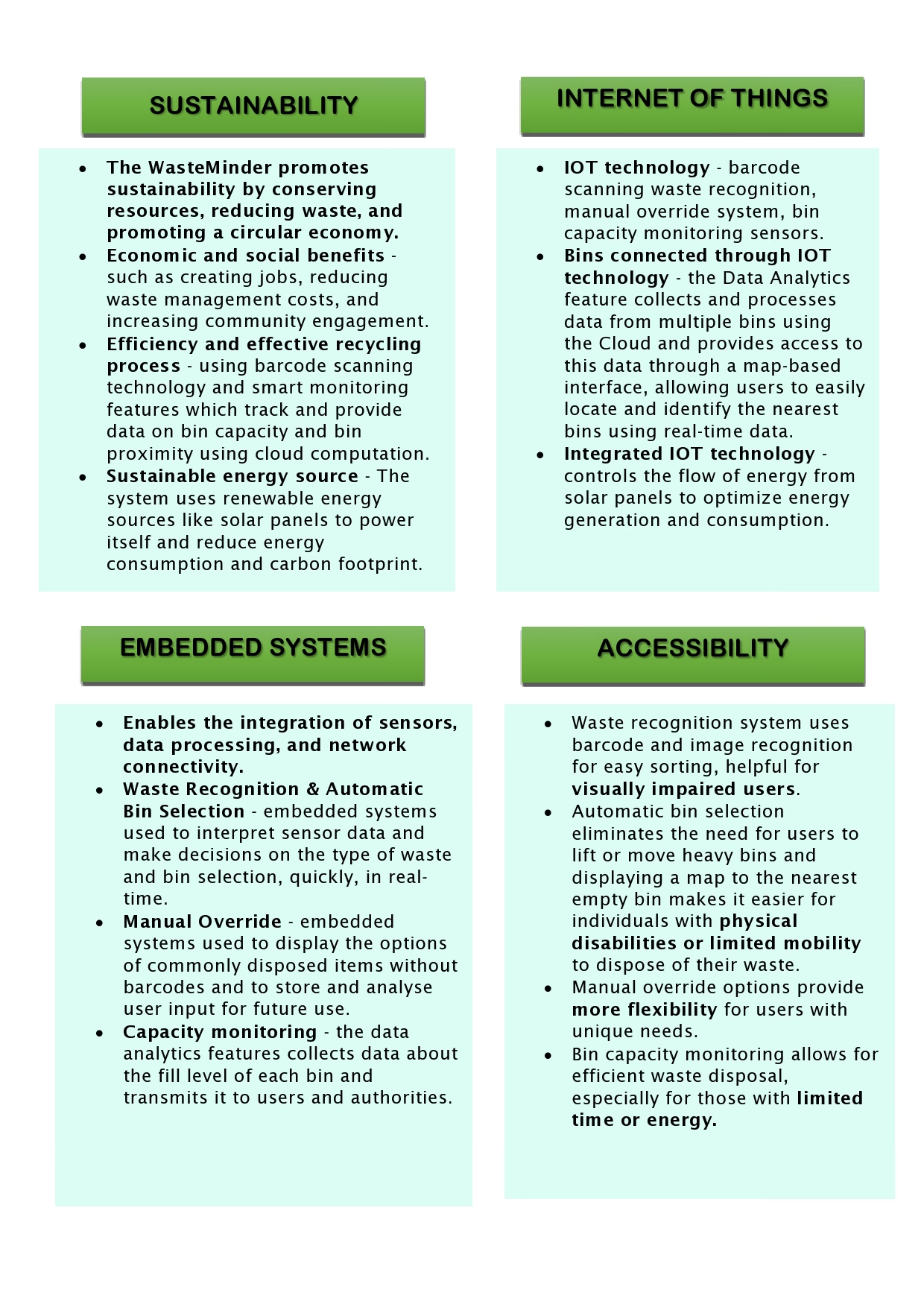
WasteMinder is a smart recycling bin project that seeks to simplify the recycling process for people and reduce the amount of waste that ends up in landfills. Using IoT technology and data analytics, it can be integrated with smart city infrastructure to enable real-time monitoring of waste levels and optimize waste collection schedules. With a range of features such as waste recognition, automatic bin selection, and bin capacity monitoring, WasteMinder offers efficiency in the way we dispose of our waste, contributing to a cleaner and healthier environment.
How we built the prototype
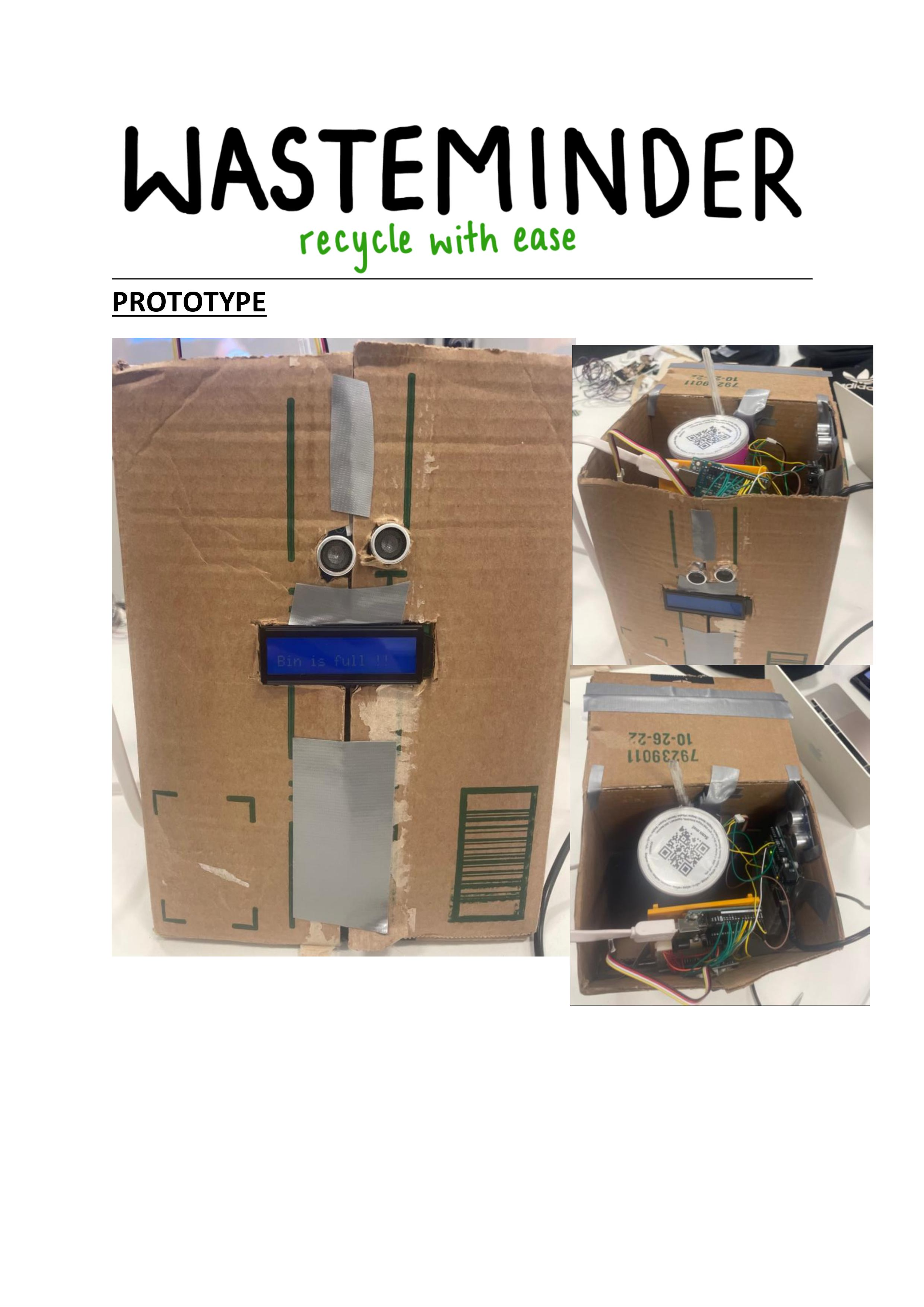
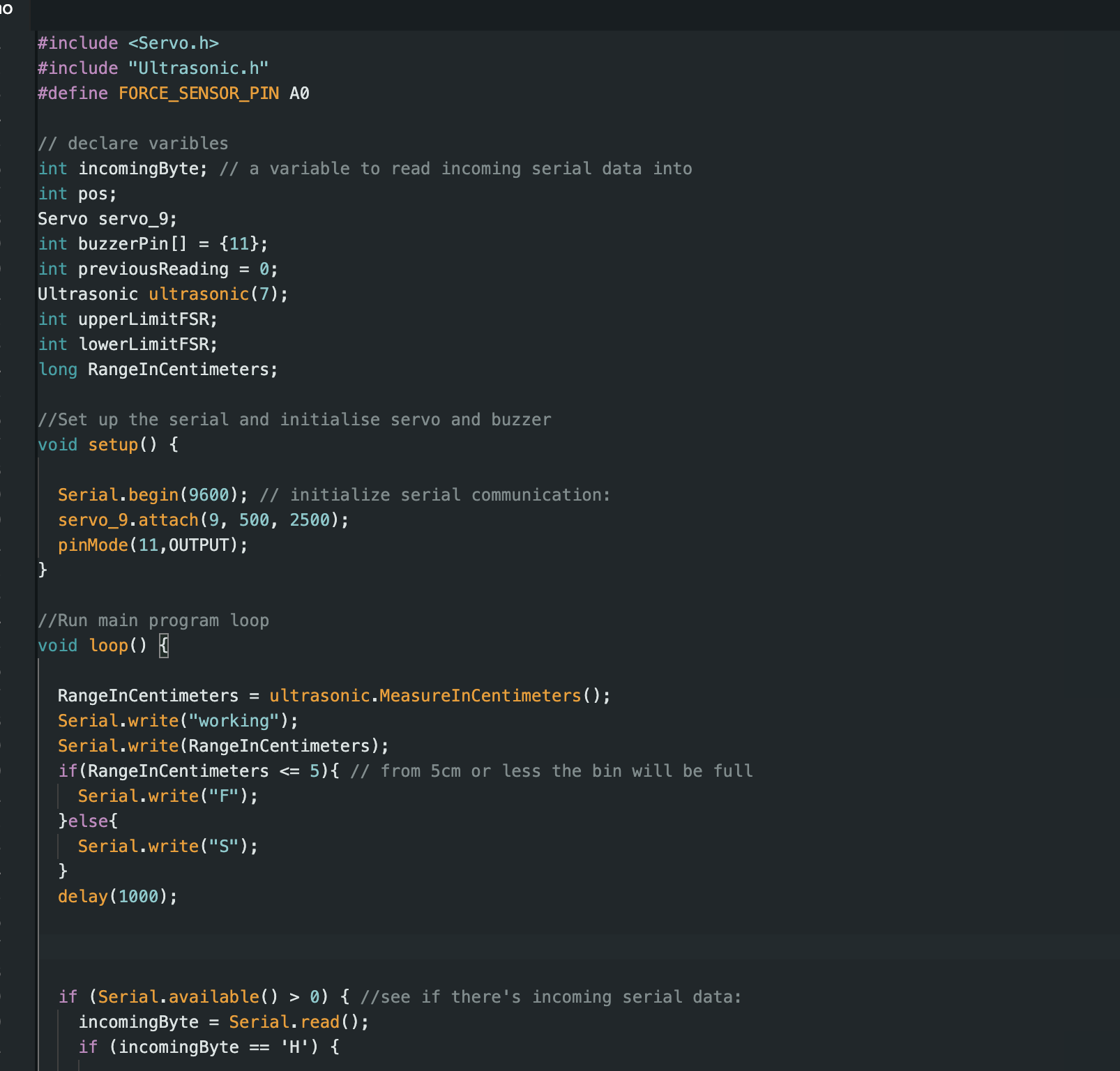
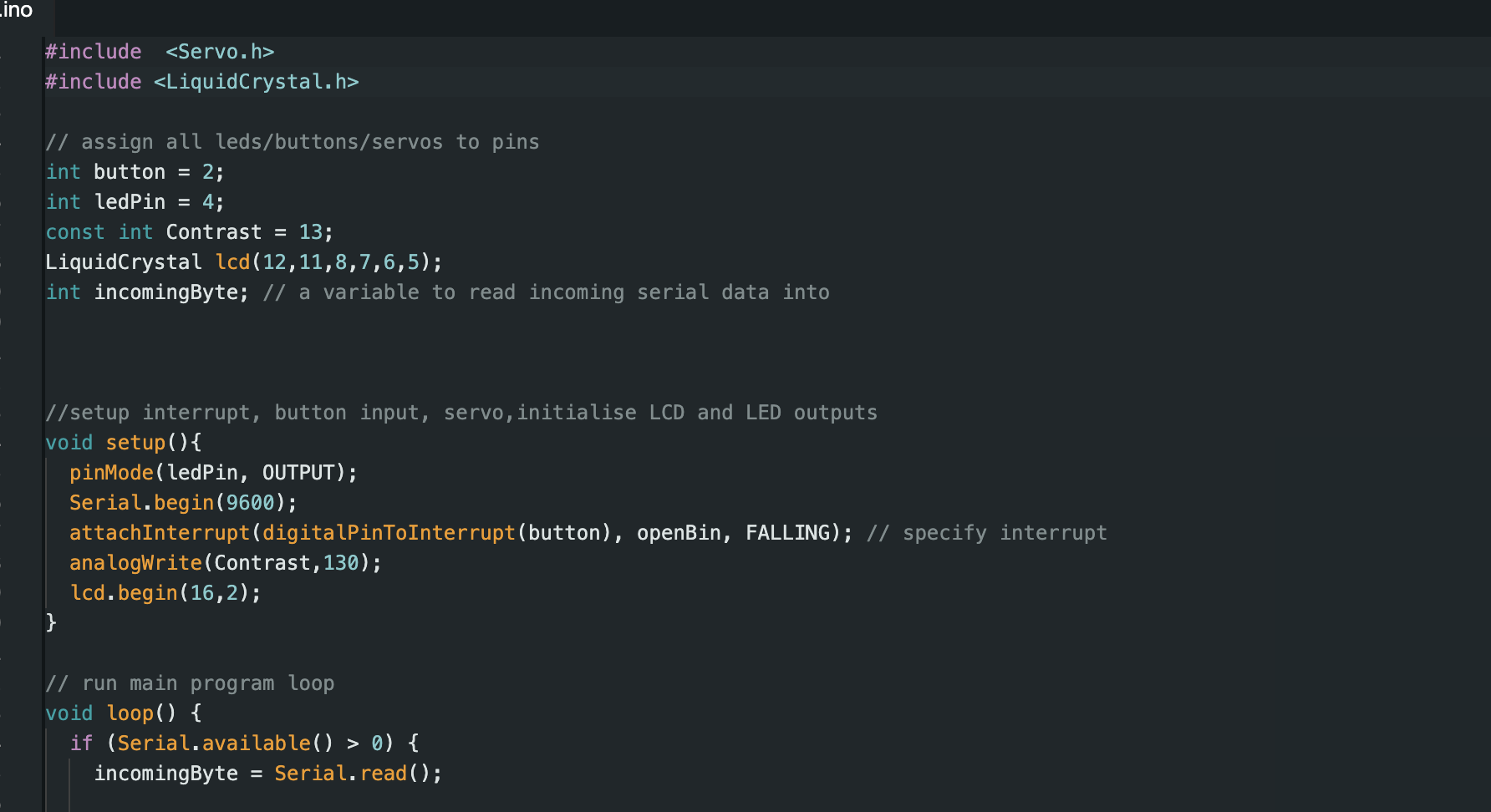
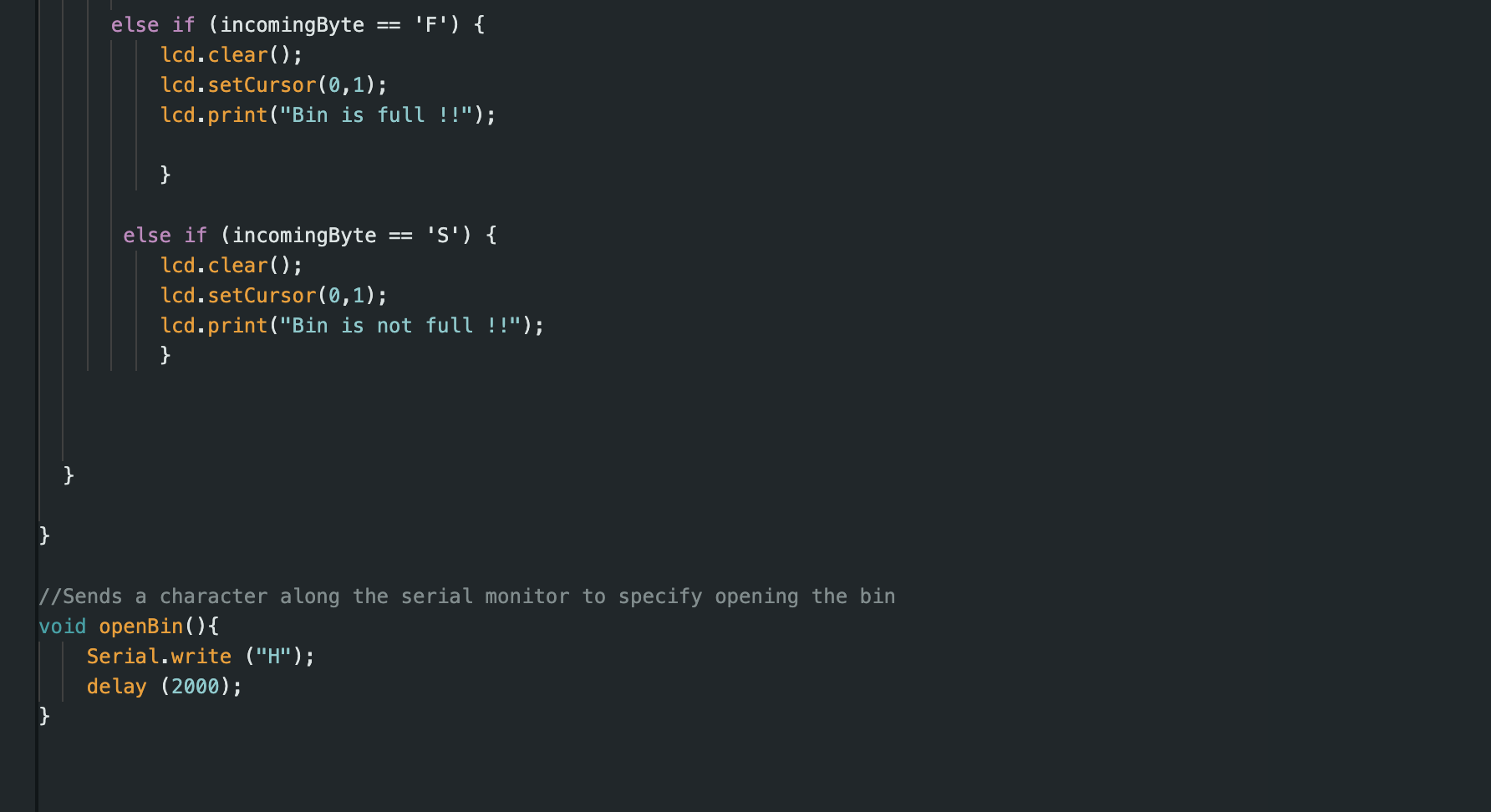
Using an Arduino we created a prototype that mimics some of the key features such as letting the user know when the bin is full and having an opening mechanism for the lid. We used components such as an ultrasonic sensor and LCD. When assembling the Arduino we had many hardware issues such as faulty equipment.
What's next for WasteMinder
- Image Recognition: Currently, Wasteminder uses barcode recognition technology to identify the type of waste being disposed of. However, we plan for the system to be improved in the future by incorporating image recognition technology, which would enable the system to recognize waste without a barcode.
- Mobile Application: A mobile application could be developed to provide users with a more interactive experience. The application could display the user's recycling statistics and encourage recycling by offering rewards and incentives for high recycling rates.
- Gamification: Gamification could be used to encourage recycling and improve the user experience. For example, users could earn points for correctly recycling items, and these points could be redeemed for discounts or other rewards.

Log in or sign up for Devpost to join the conversation.