Inspiration
Every city has the same problem: everyone sees the waste, and almost nobody knows who is responsible for it. A pile of plastic on a beach path gets walked past a hundred times, and when someone does clean it up, nobody knows it happened.
We're two teenage brothers from Morocco, and we wanted to do something about it in our own community. If people can see where waste is, prove when it's gone, and get recognized for it, cleaning up stops being a lonely chore and becomes a community effort.
Wasteless started in Agadir, but Agadir is only the beginning. Our slogan is From Agadir to the world.
What it does
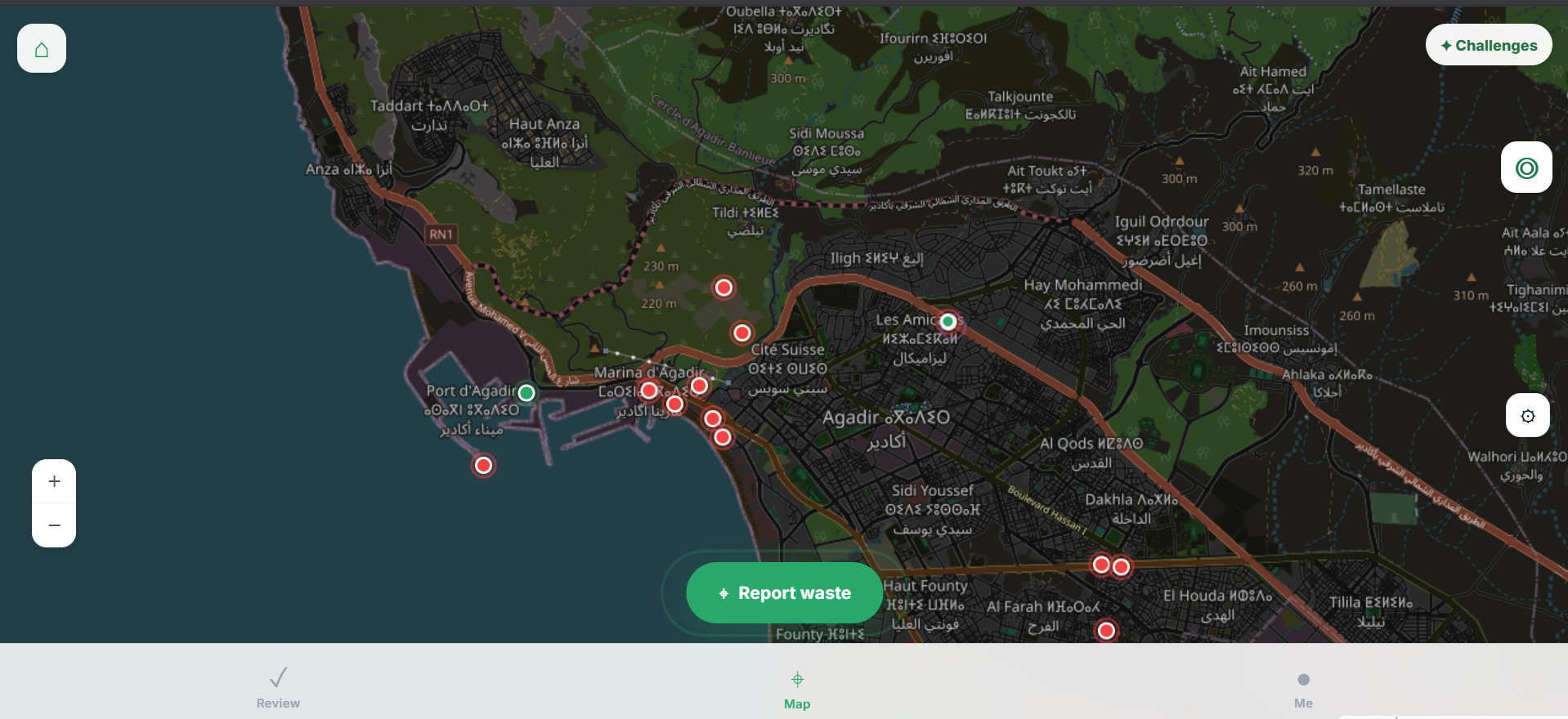
Wasteless is a community-powered waste hotspot map:
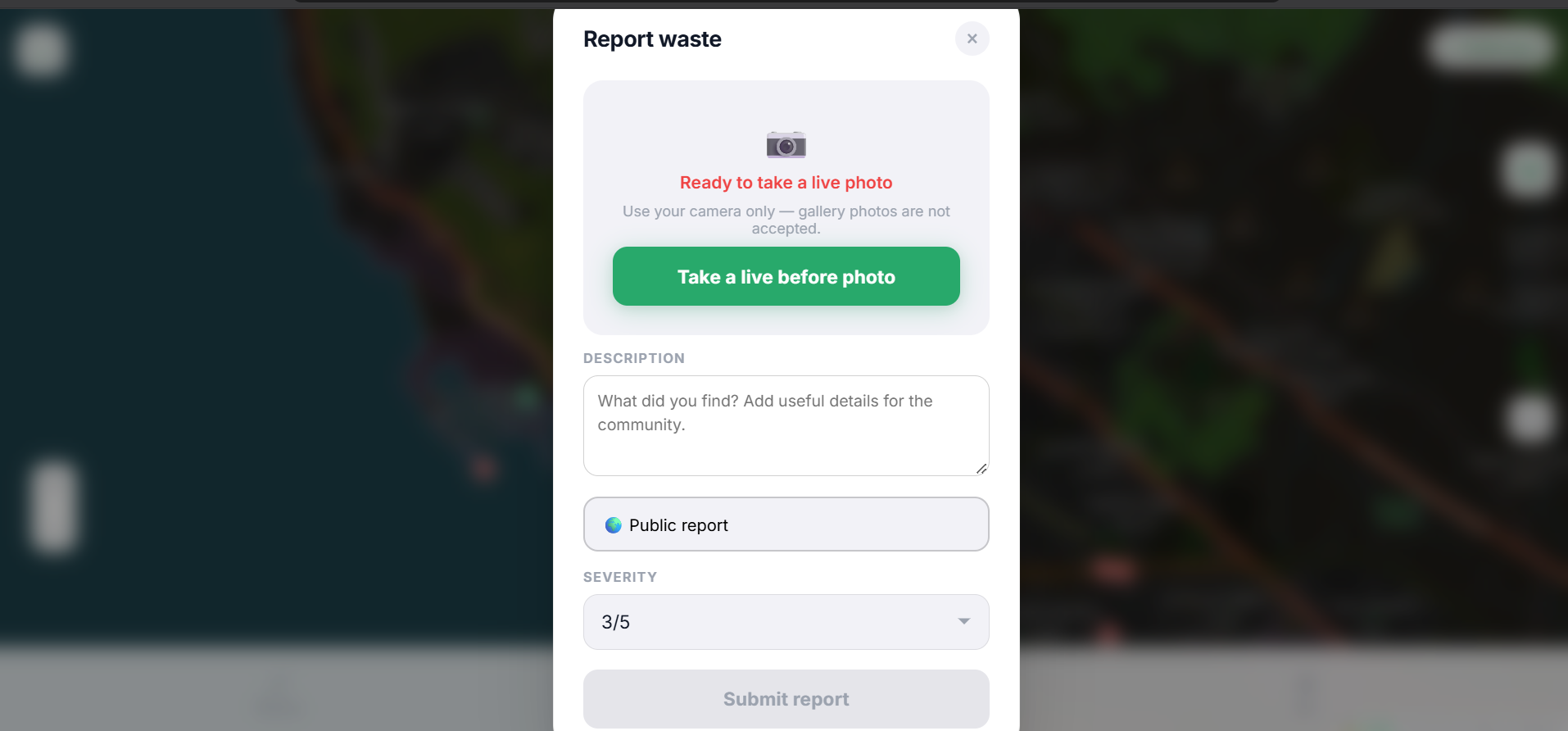
- Report waste by dropping a pin on the map and taking a photo with the live camera. Gallery uploads aren't accepted, which helps make sure reports reflect something real on the ground.
- Clean up a hotspot and submit an "after" photo.
- Verify together: a cleanup only counts once three community members independently approve it. When the third approval arrives, the hotspot is marked as resolved.
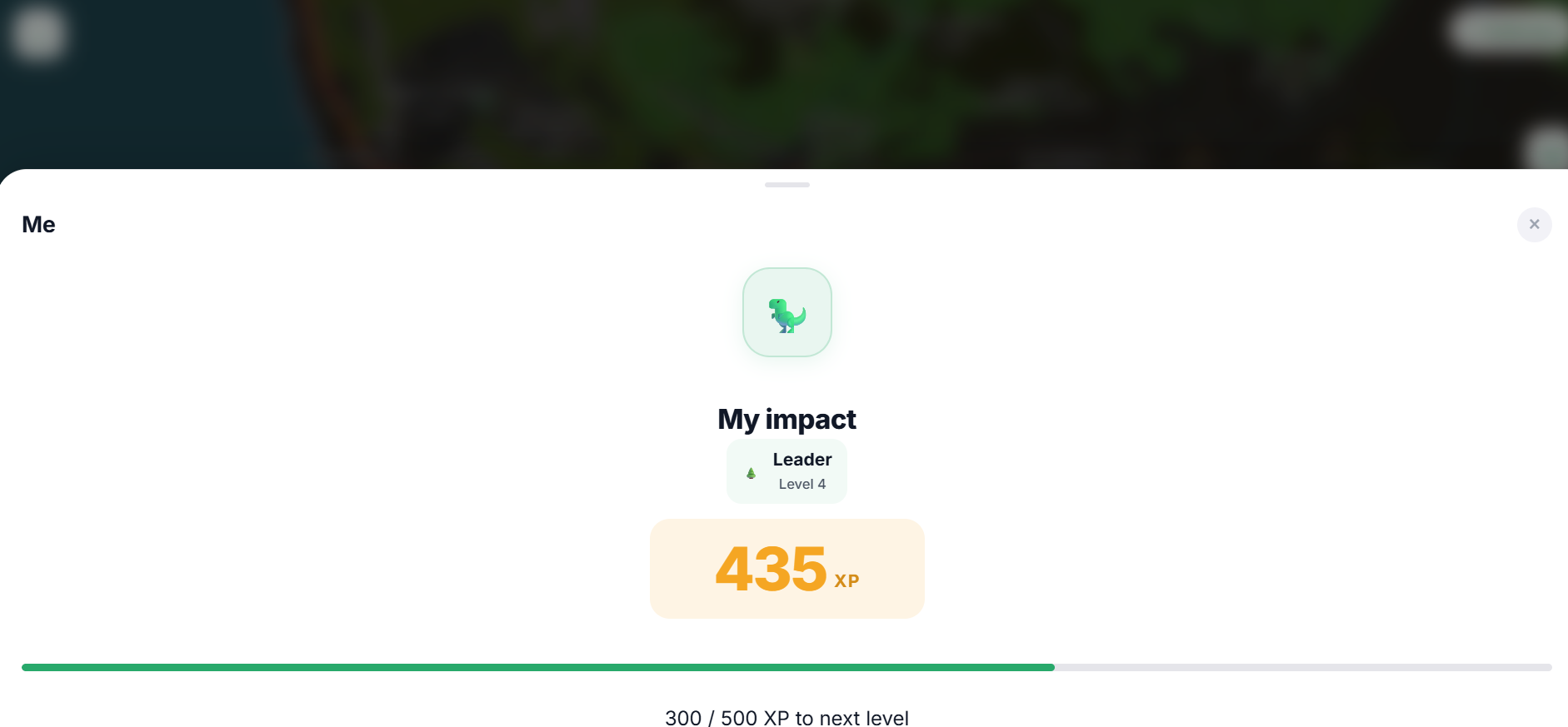
- Get rewarded: you earn XP for reporting, cleaning up and reviewing. Levels, streaks, badges and community challenges keep people coming back.
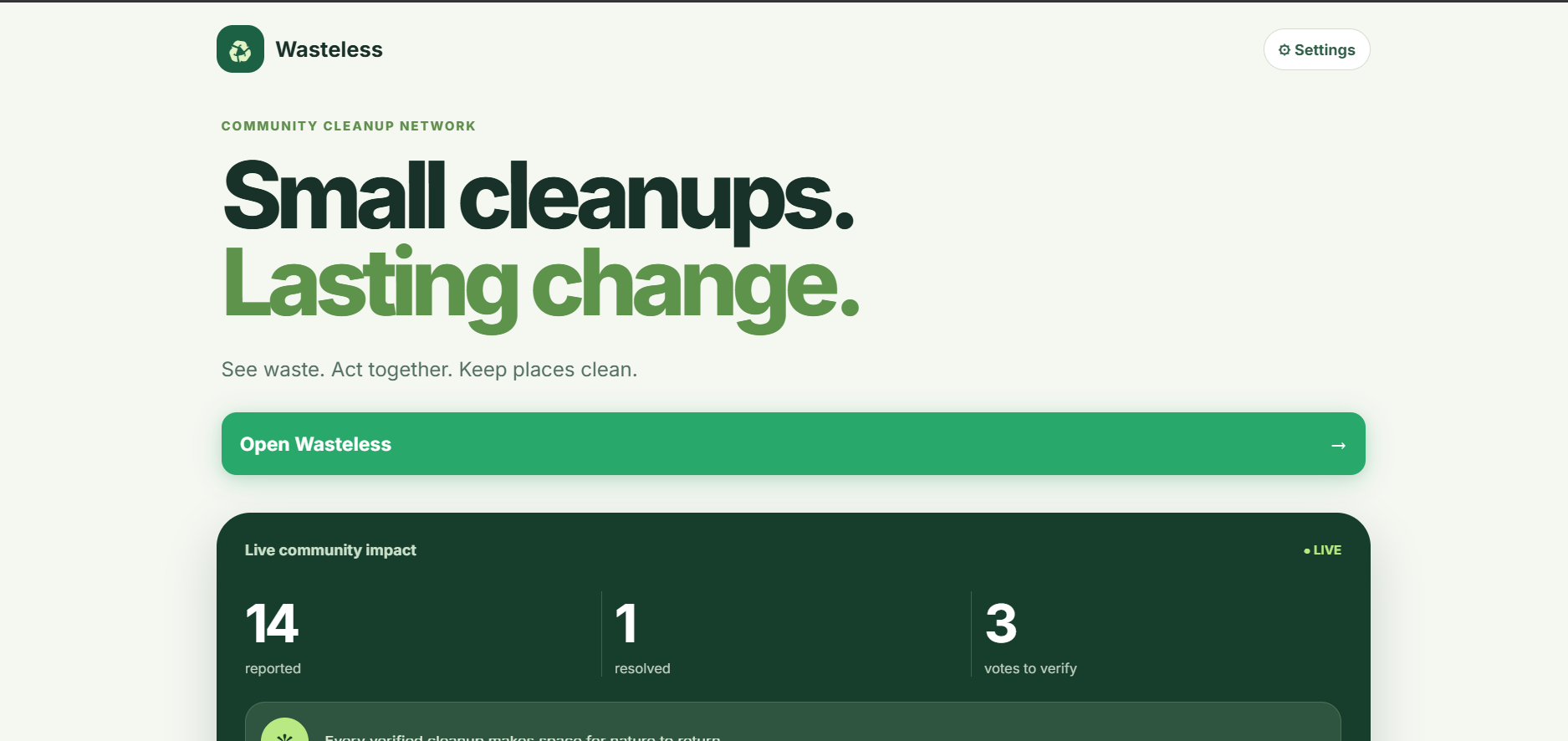
- See the impact on a landing dashboard showing waste reported, cleanups verified and votes still needed.
How we built it
- React + TypeScript, built with Vite
- Leaflet with OpenStreetMap for the interactive map, custom hotspot markers and status filters
- The browser camera API for live-only photo capture
- A small gamification engine for XP, levels, streaks, badges and challenges
- Hosted on Netlify
For the hackathon, Wasteless is a demo prototype: all data lives in the browser, and a built-in reviewer switcher lets one person play Reviewer 1, 2 and 3 to show the verification flow end to end. When we launch, Wasteless will run on a real server and backend, with real accounts and shared data across every user.
Challenges we ran into
- Getting an API key. We ran into a wall when we tried to get an API key we needed. As two students, the cost and requirements were too much for us. Instead of giving up, we changed the idea: rather than having software decide whether a place is clean, we let people vote on it. That constraint gave us the core of Wasteless, community verification.
- Trust. A reporting app is only useful if reports are real. Live-camera-only capture and three independent approvals were our answer, and we wanted that flow to feel fast instead of bureaucratic.
- Making verification demoable. Community verification needs many people, but a demo has one. The reviewer-persona switcher solved that without changing the real logic.
- Keeping the map honest. Hotspots change status (needs cleanup, awaiting review, resolved), and the map, filters and dashboard all have to stay consistent with each other.
- Motivation. We wanted civic duty to feel rewarding rather than like homework.
Accomplishments that we're proud of
- A complete loop, end to end. You can report a hotspot with a live photo, submit a cleanup, get it verified by three reviewers, and see it resolved, all in one flow.
- Verification that actually means something. Requiring three independent approvals gives every resolved hotspot a reason to be trusted.
- Turning a limitation into a feature. We couldn't get the API key we wanted, so we built something more human: a community that keeps itself honest.
- Rewards that feel good, not forced. XP, levels, streaks, badges and community challenges are all working, and they make the app feel like a game you want to keep playing.
- A clear impact snapshot. The landing dashboard shows waste reported, cleanups verified and votes still needed, so anyone can see what the community is achieving.
- Built by two brothers with limited resources, and a demo anyone can follow in under two minutes.
What we learned
- Constraints can lead to better ideas. Not having the API key pushed us toward community voting, which we now think is the stronger design.
- Small design decisions shape trust in a community tool. Three approvals instead of one changes how much people believe the map.
- Motivation is a design problem. A visible XP bar and streak change whether someone comes back tomorrow.
- A good prototype is honest about what it is. Building the demo to run entirely in the browser let us focus on the idea and the user experience first, knowing the real backend comes at launch.
What's next for Wasteless
- A real backend. Accounts, shared data across all users, and stronger anti-fraud checks such as location verification.
- Sponsors and real rewards. We want local businesses and organizations to sponsor Wasteless so people can redeem their XP for real things, like gifts, discounts or bus tickets. Cleaning up your neighborhood should give something back.
- Partnerships with cities and NGOs, so verified hotspots reach the people who can act on them.
- Beyond Agadir. Agadir is just the start. From Agadir to the world.
Built With
- react
- typescript
- vite


Log in or sign up for Devpost to join the conversation.