-
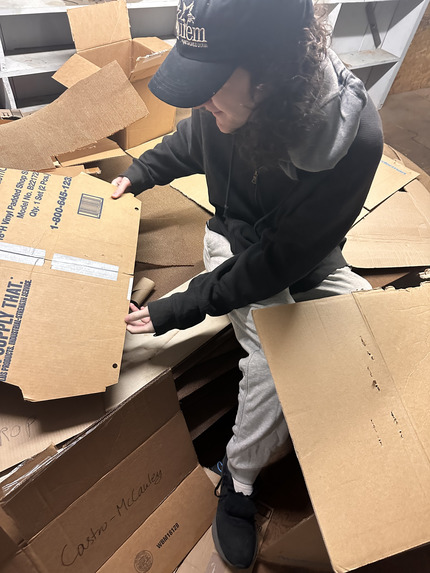
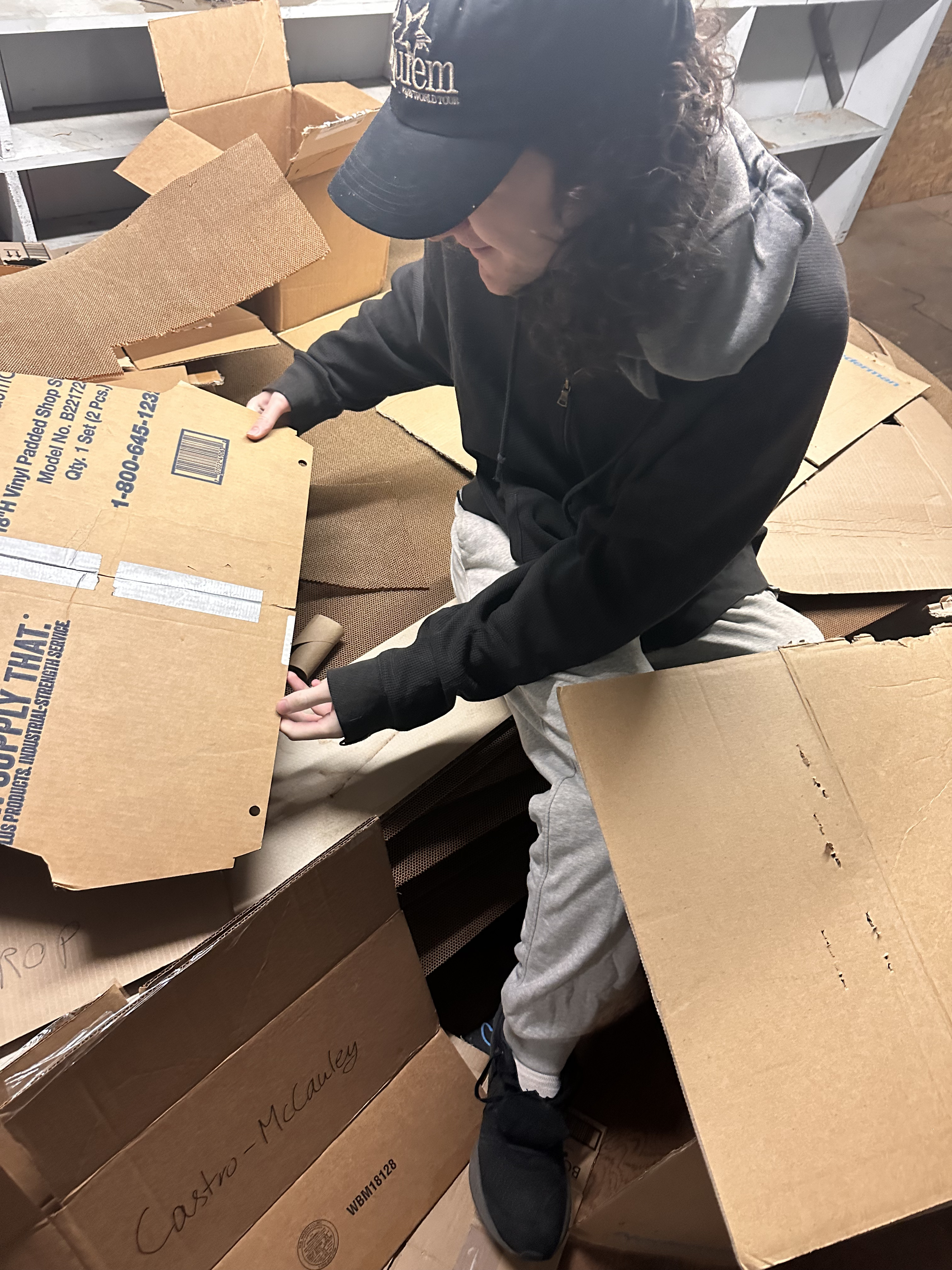
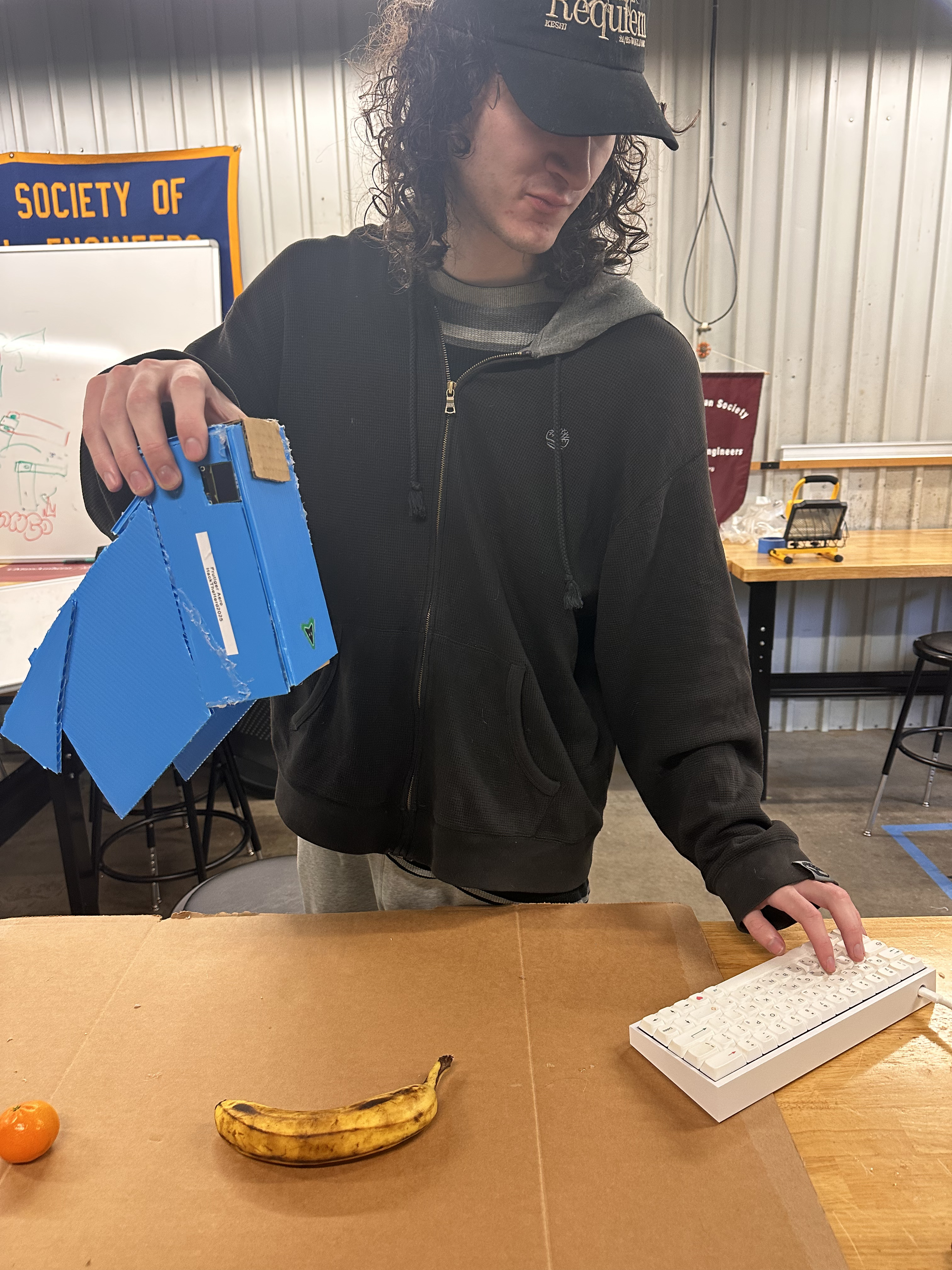
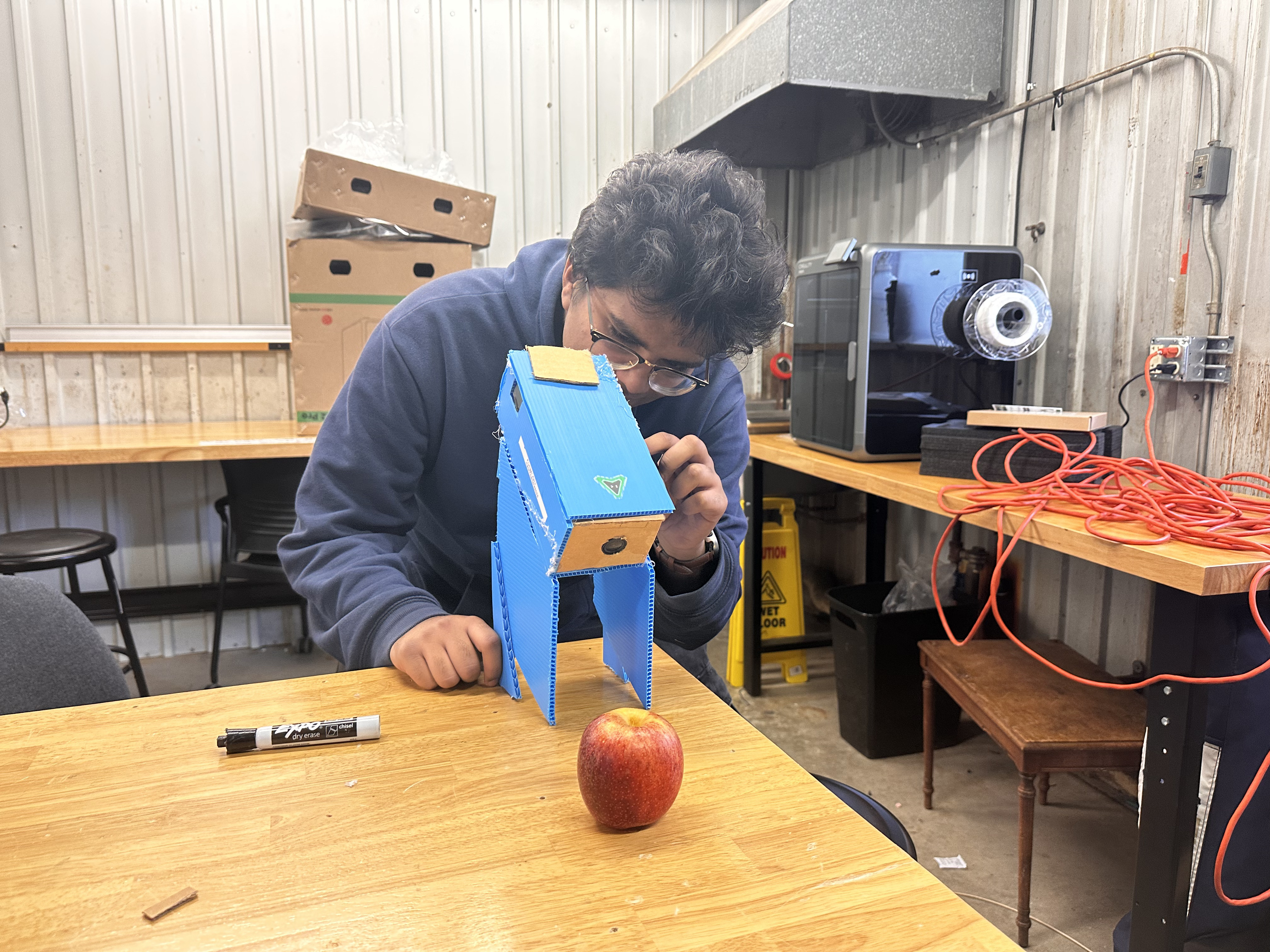
prototyping with cardboard
-
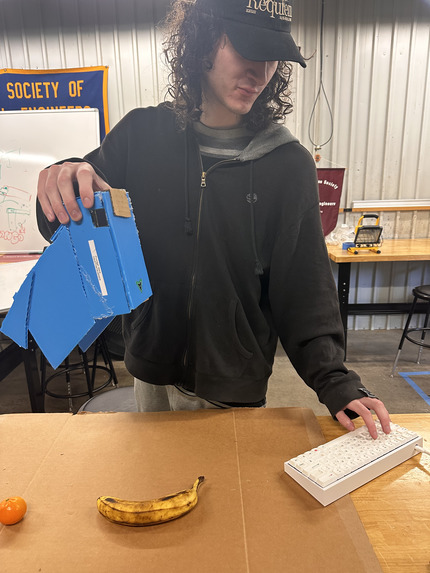
creating our own dataset
-
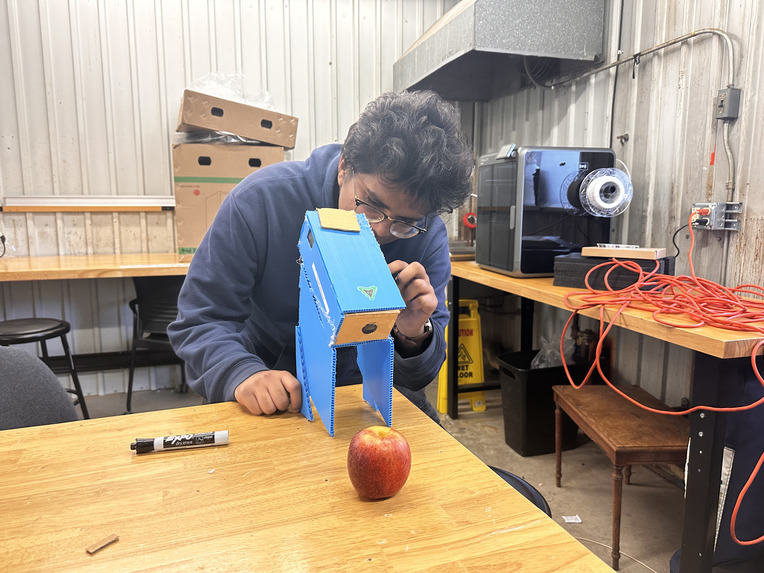
testing phase!
Inspiration
Throughout our time at university, we’ve seen how often perfectly good food ends up uneaten. This waste isn’t just costly; it contributes to a larger environmental footprint that often goes unmeasured. We realized that meaningful change starts with meaningful data. Our project was inspired by the idea that if we could automatically identify and track what food is being wasted, we could uncover patterns, inform better decisions, and ultimately reduce waste at both individual and institutional scales.
What It Does
Our system uses a custom trained neural network paired with a camera to automatically recognize food items in real time. As the camera observes meals before and after consumption, it logs the detected uneaten items and sends them to a dashboard for analysis. This allows us to identify trends such as common leftovers, portion size mismatches, and waste frequency. The result is a non-invasive system that automatically tracks and exports data for ease of use.
How We Built It
We developed and trained our own neural network using our own dataset. Thats right. We were unable to find many good datasets so we made our own to ensure accuracy across lighting conditions and camera angles. The model runs on our custom camera setup, which captures frames and performs on-device inference to identify what food is present. We then created a data pipeline that sends each prediction to a backend where it is stored. From there you are able to plots trends and highlights anomalies that help uncover waste patterns.
What’s Next
From the start, we built this project with scalability in mind. Our prototype camera system works in any dining hall setup, and a production ready version could be mounted almost anywhere, ideally above a conveyor belt but not limited to that. The goal is to make installation effortless for campuses or institutions that want to track food waste without disrupting their existing infrastructure.
One of our next steps is expanding beyond a single camera. Most dining halls serve hundreds or thousands of students per day, so one camera simply wouldn’t provide enough coverage. Our design supports a multi-camera network where several units can monitor different parts of a serving area or conveyor line simultaneously.
Multiple cameras introduce a new challenge: avoiding duplicate entries when two cameras see the same plate. Our proposed solution is a shared caching system. Each time a camera identifies a plate, it stores a temporary “signature” of that plate in a central cache for about a minute. Any other camera that sees a similar plate first checks this cache to prevent duplicates. Once the plate has moved through the system, its cache entry is automatically cleared. This allows a distributed camera network to stay synchronized and maintain accurate data collection.
Should this project continue, Our next steps would be to make the camera more robust, and really clean the edges. We want to maintain ease of use while also creating a camera that can last for the long term.


Log in or sign up for Devpost to join the conversation.