-
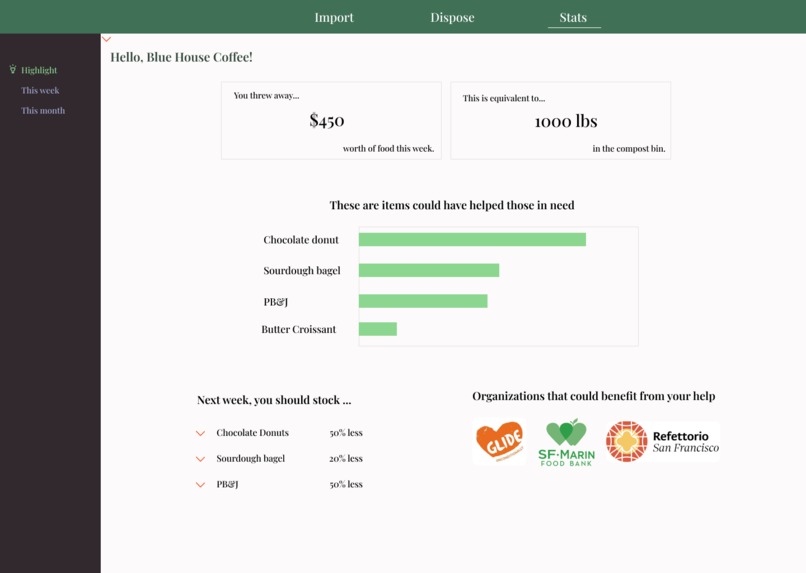
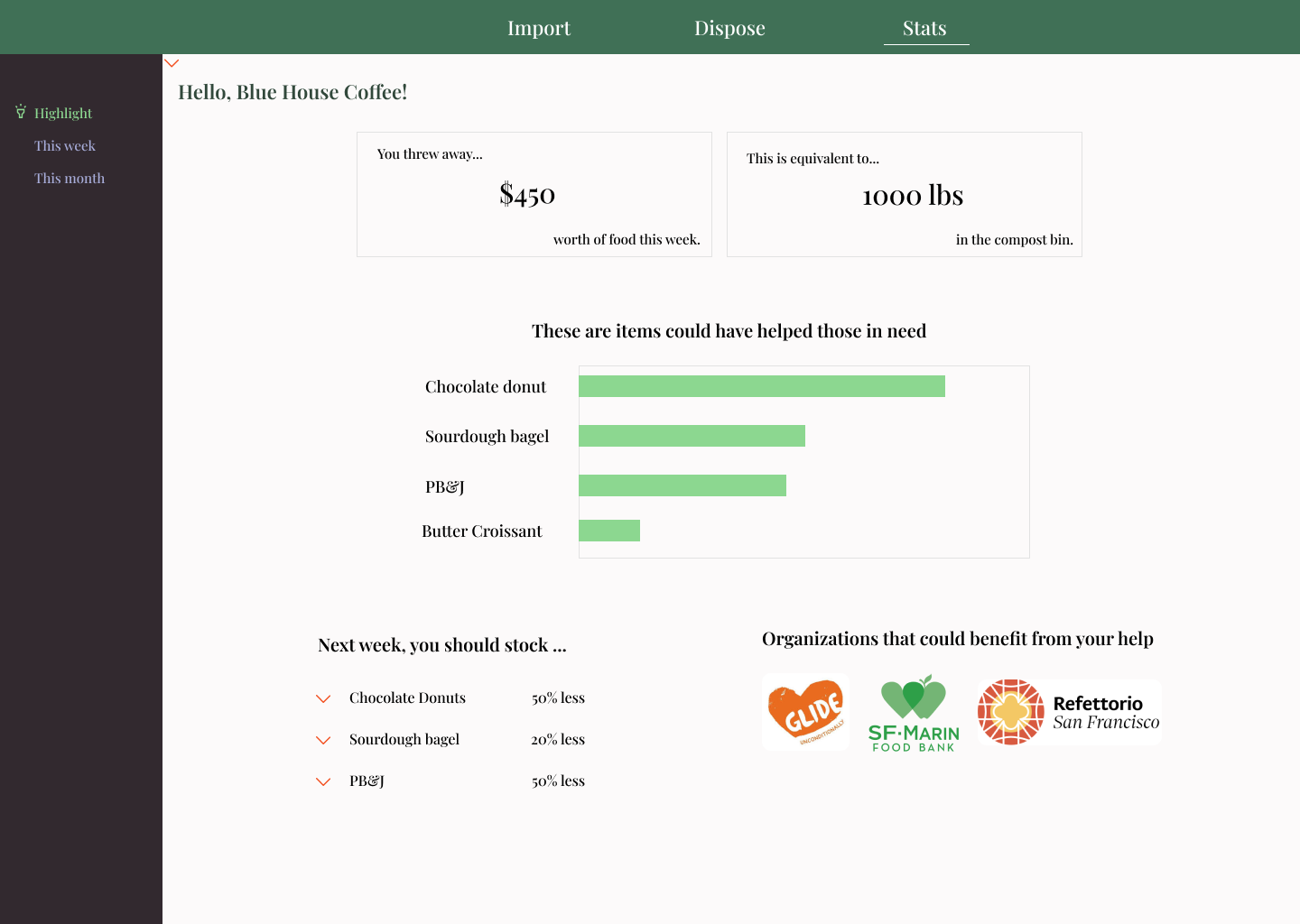
The Statistics tab with relevant insights
-
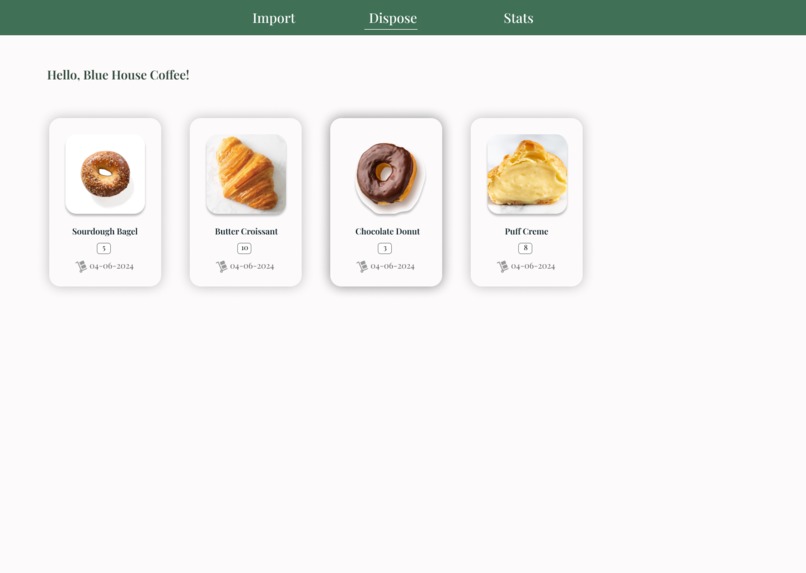
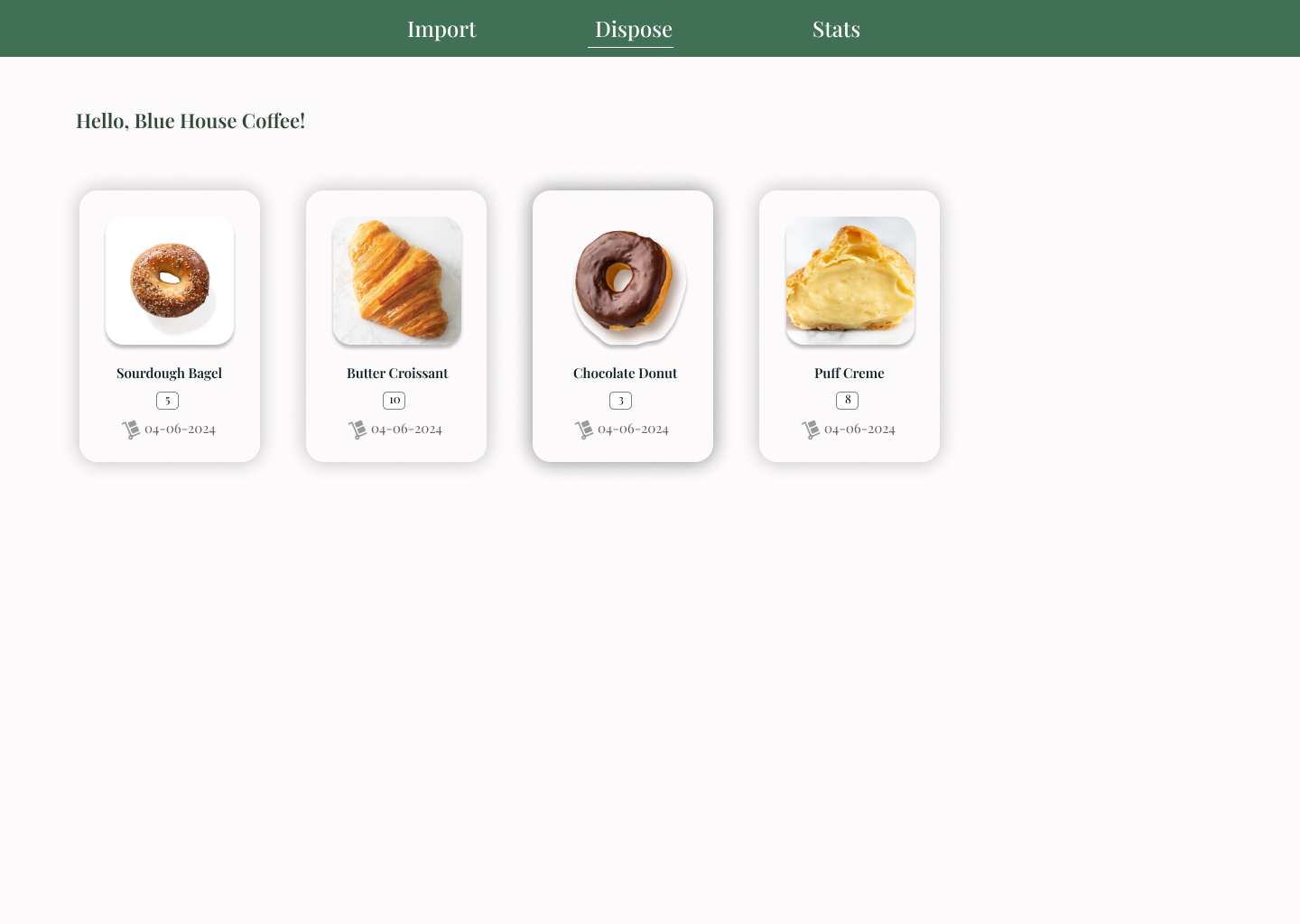
Displaying the business food menu items
-
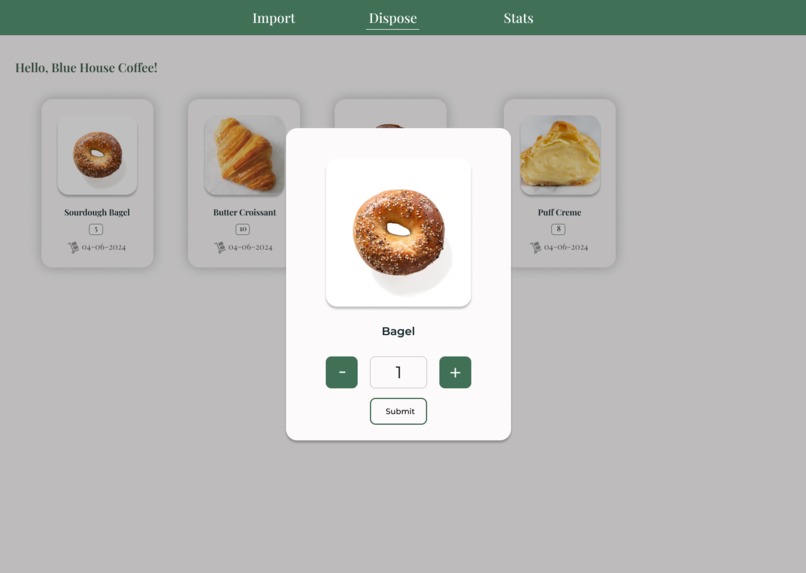
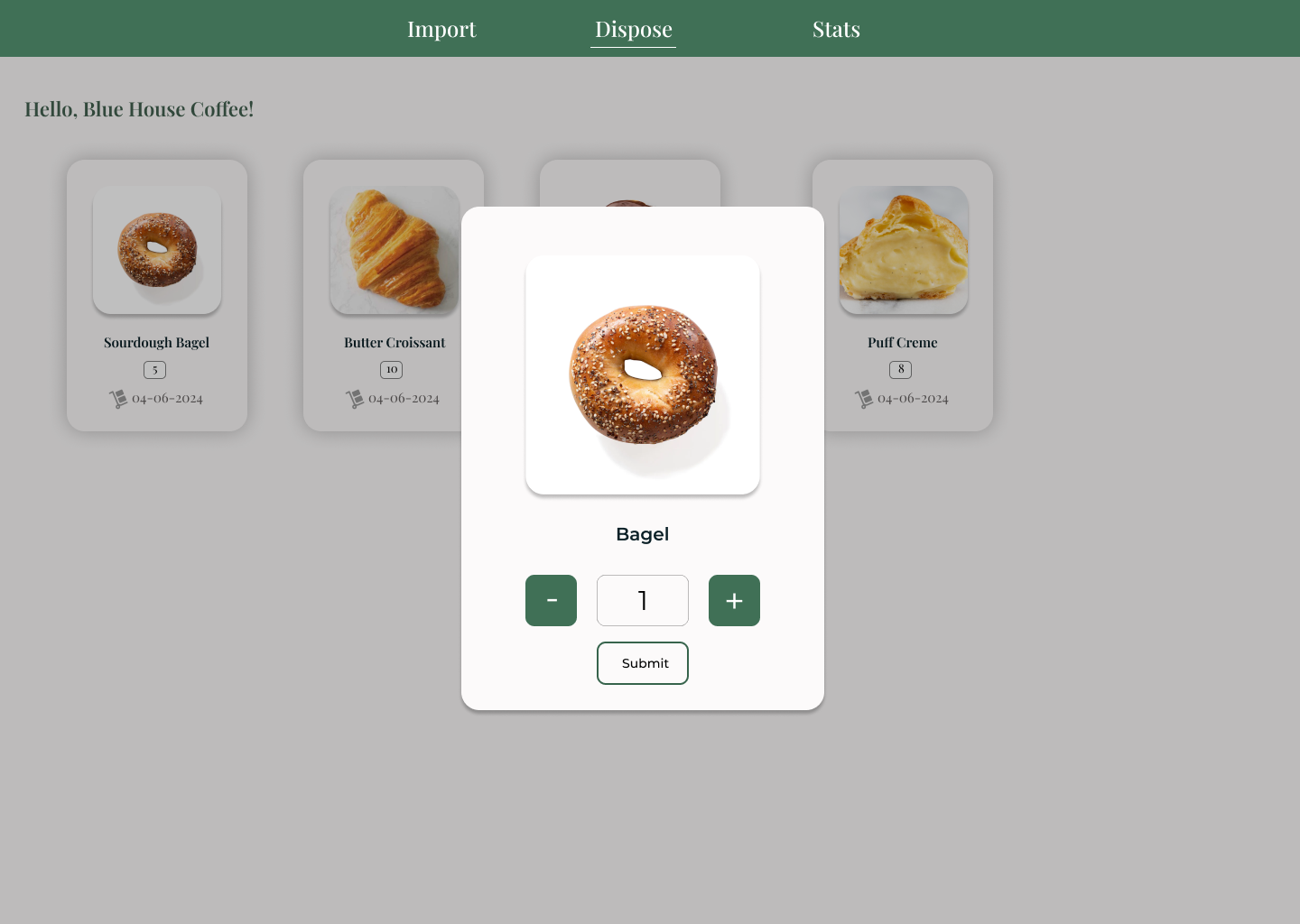
Easy one-click interface to log the food disposal
-
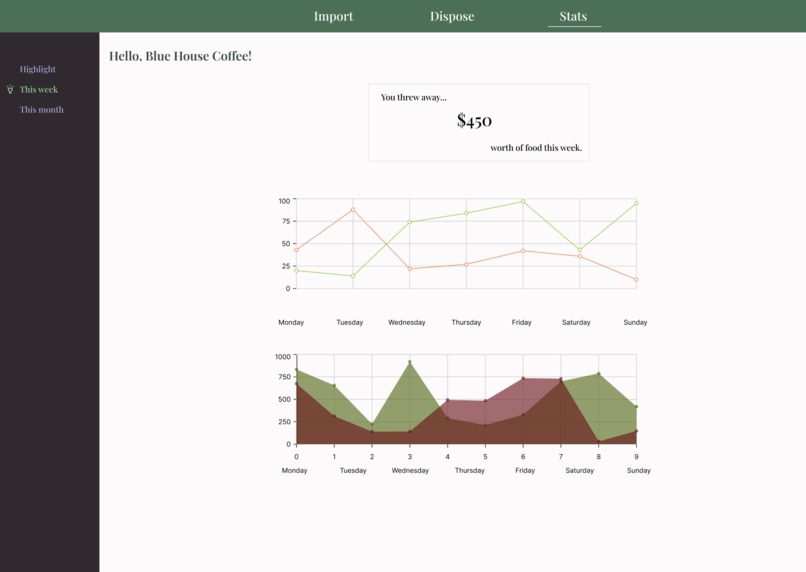
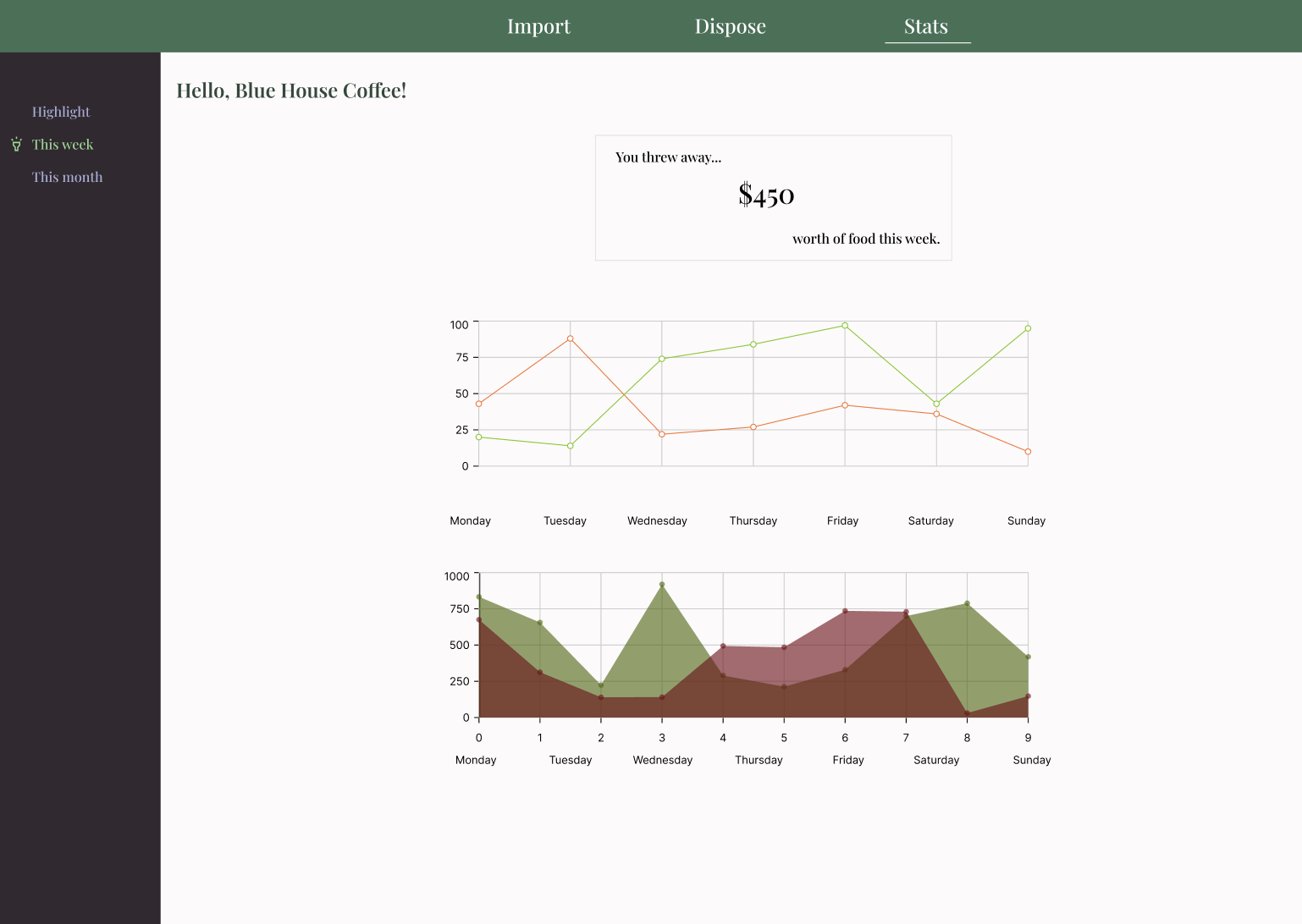
A Weekly summary - more detailed view of the stats
Inspiration
Climate change is driven by the global production of the goods and services that people and organizations consume. While continuing to advance waste reduction, reuse, recycling, composting and community health, the City must also begin to address the lifecycle impacts of the products – including both goods and services – that flow in and out of San Francisco. With these in mind, our team proposed a tailor application to track, manage and help the small and medium business grow without the hassle of using complex solutions made for large businesses.
What it does
The app will track what, which, and how much food waste is being dumped into the compost bin. Tailored to small businesses like local cafes, restaurants, and food trucks with a small to medium menu, waste tracking is made effortless, easy, and time-saving for businesses. At the end of a shift, employees can push a few buttons, following the following mechanism:
- At the end of the shift, select the item and the number of items being disposed.
- This information will be stored in the database.
- The
Statstab updates its suggestions and insights from these data, such as - The estimated cost of throwing away these food waste
- The estimated weights of this waste
- The items being thrown away the most. This insight can be used to reduce overstocking of the same item (thus reducing waste), or donation to local non-profit organizations.
What makes our idea different is we simplify the user interaction between the user with the app with just "1 - click and it's done" to track those numbers and transform them into: a) top products being wasted most using financial impact and weight as metrics b) statistically compare the current waste to prior weeks, months c) leveraging AI model to suggest the according agencies, volunteers as a method to redirect the over-stocked food to marginalized groups
How we built it
We drafted our idea on Figma and attempted to use React.js to build the front end with UI research to simplify the process.
When the user submits a "Dispose" request, the data is sent to a SQLite database. This data is also fetched for the Stats tab of the app. These APIs request are handled by Django.
Challenges we ran into
- Time constraint: We didn't have enough time to create a fully functional web app with two people. With the
Accomplishments that we're proud of
We are hopeful about our ideation process and the prototype on Figma - it is a good starting point for our team to further develop this idea in the future. Furthermore, there are simple packages in Reactjs can be combine with Django to accomplish this. The app functions locally
What's next for WasteLess
Leverage AI model for suggestions and build a community to connect users

Log in or sign up for Devpost to join the conversation.