-
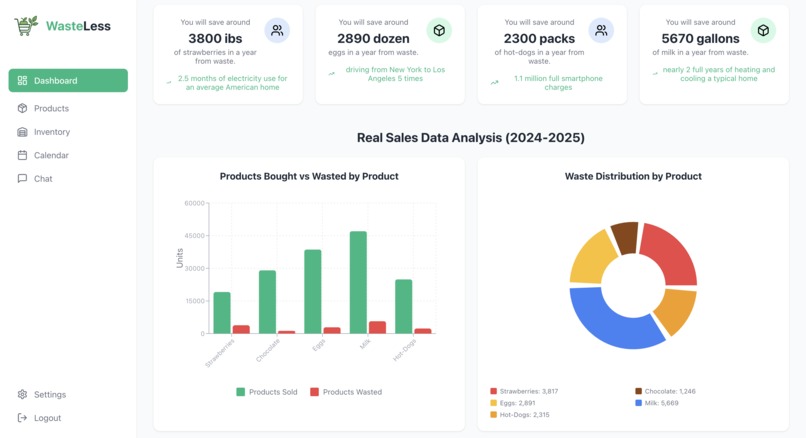
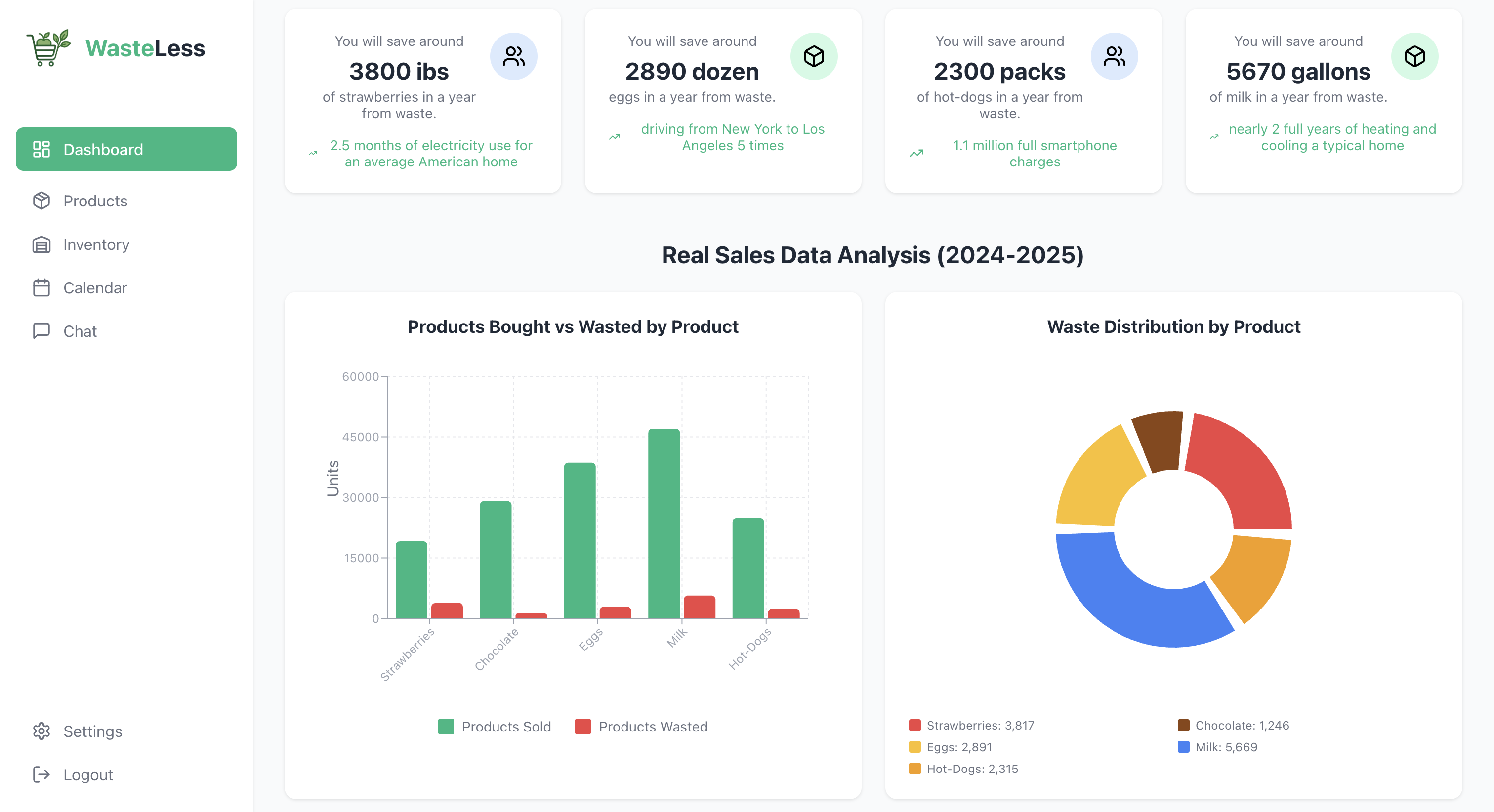
Potential impact calculated on the waste prevented
-
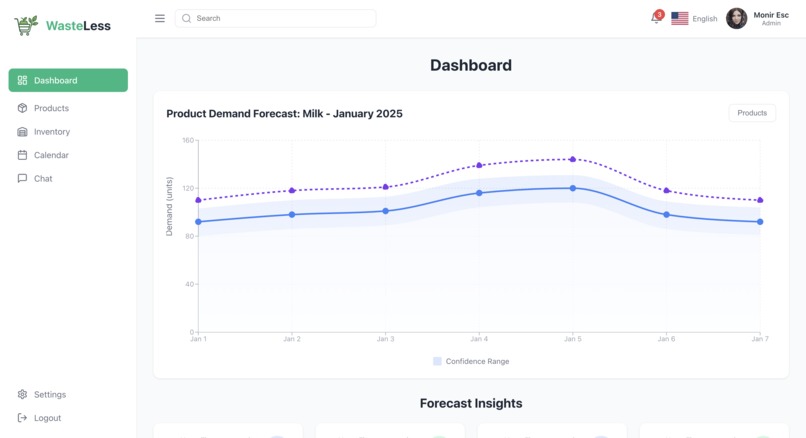
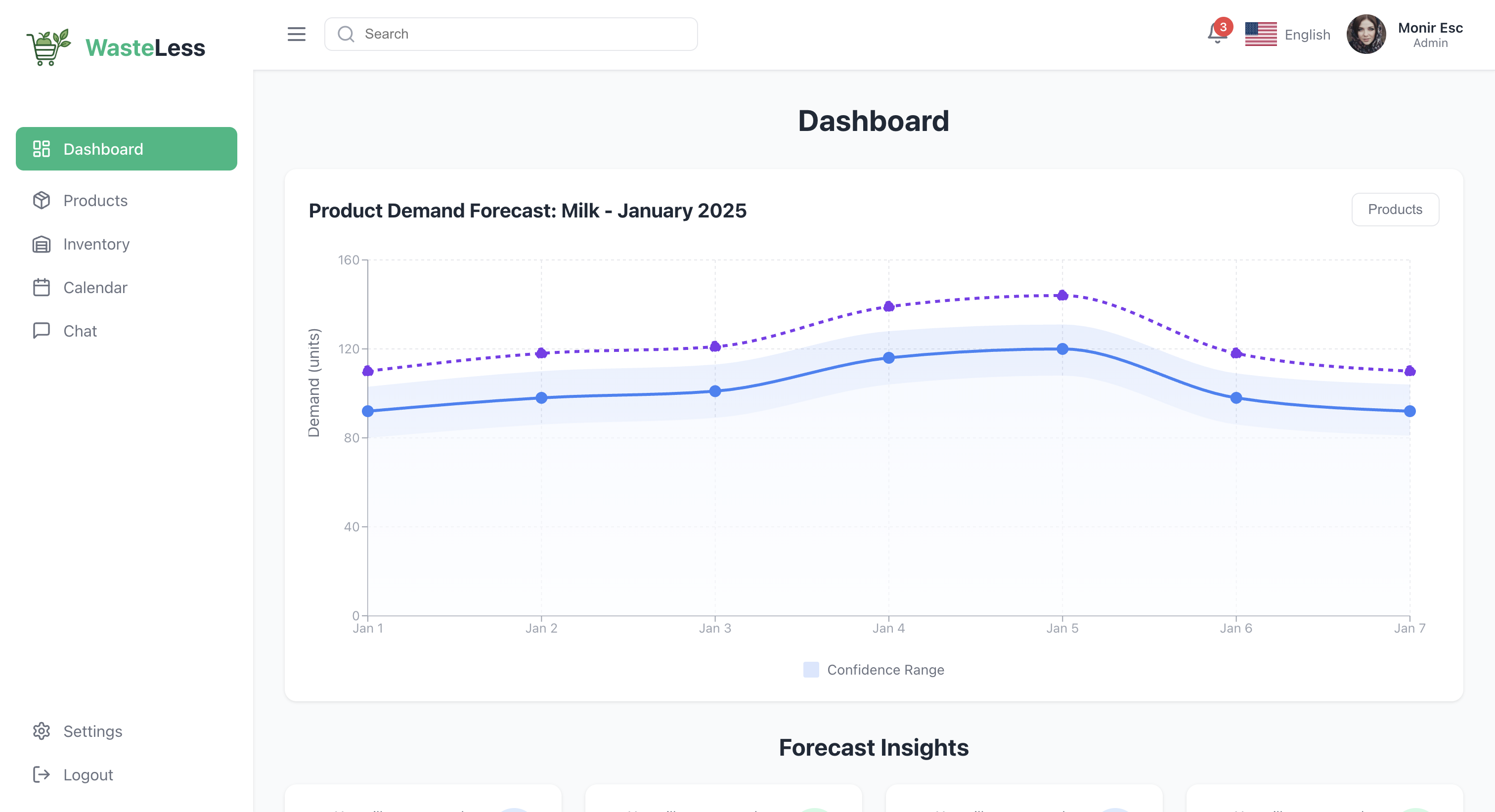
Predicting the demand for the next 7 days
-
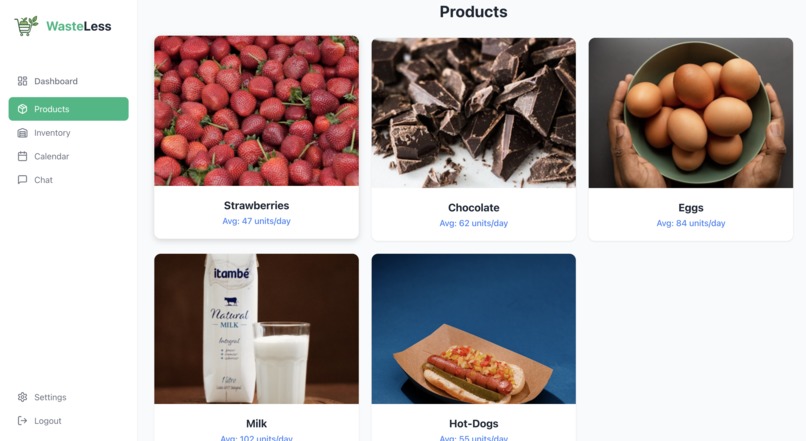
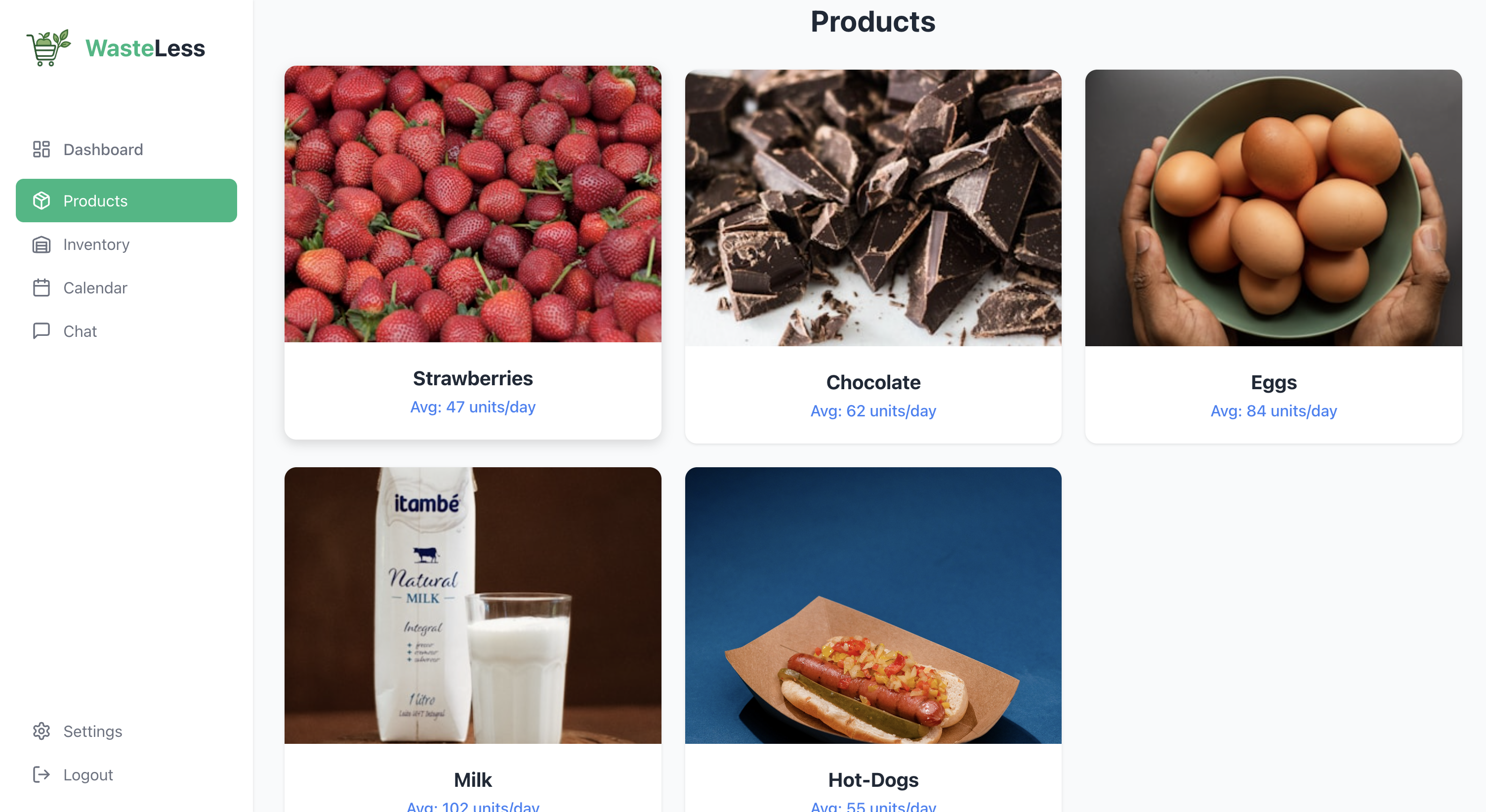
Products that are in the system
-
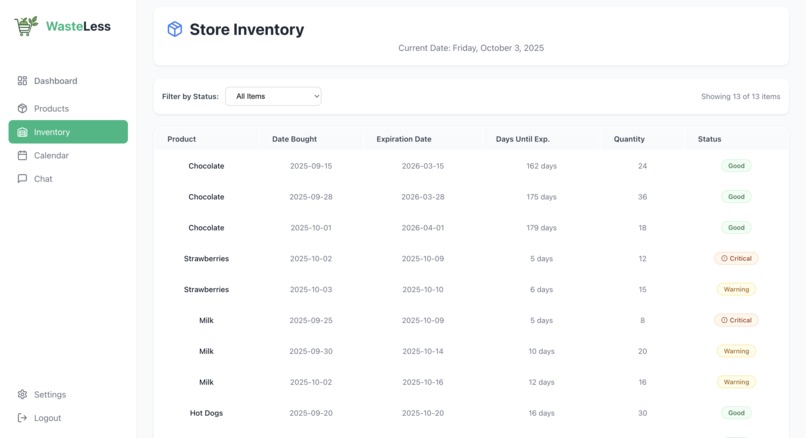
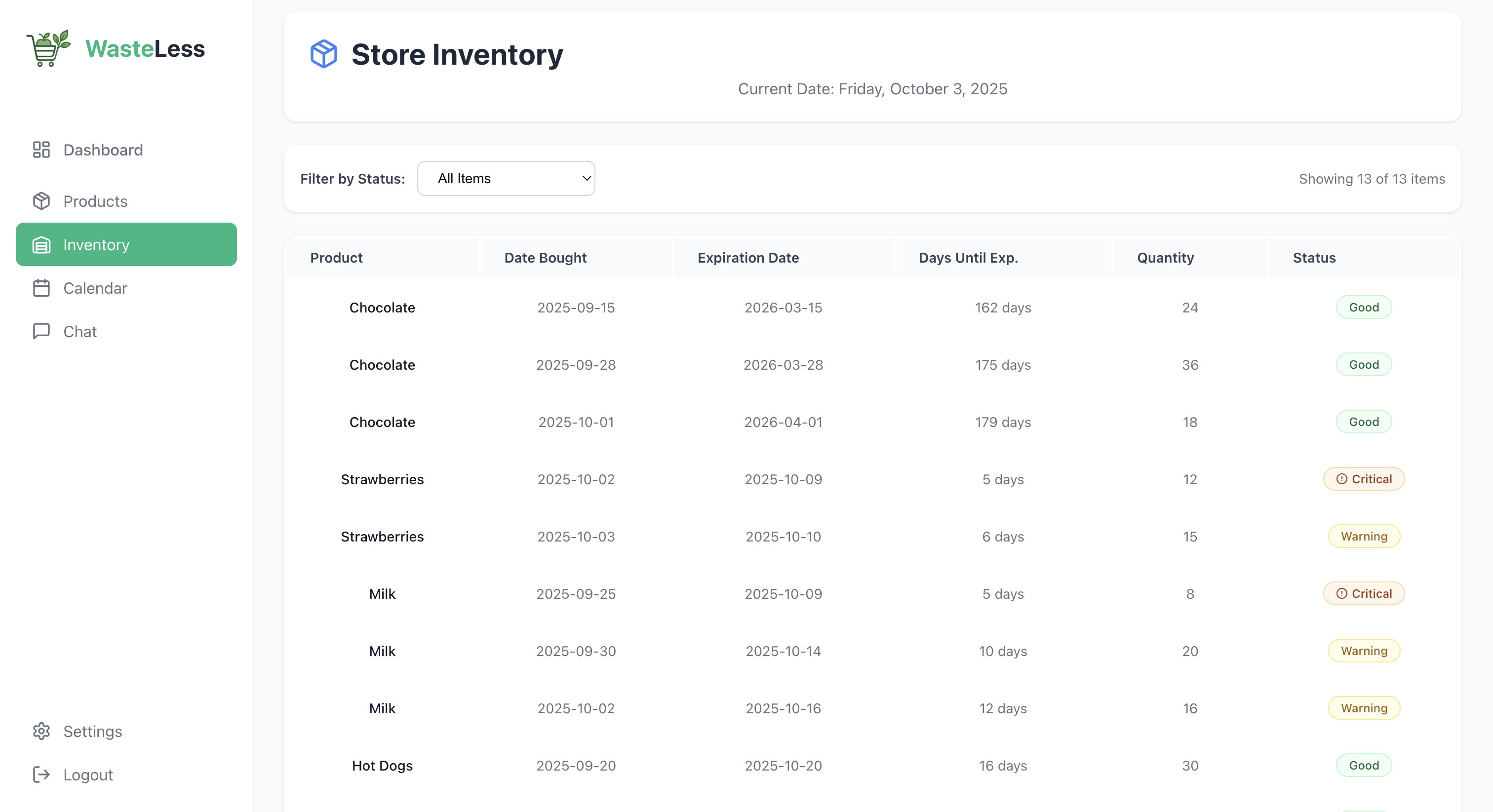
Inventory
-
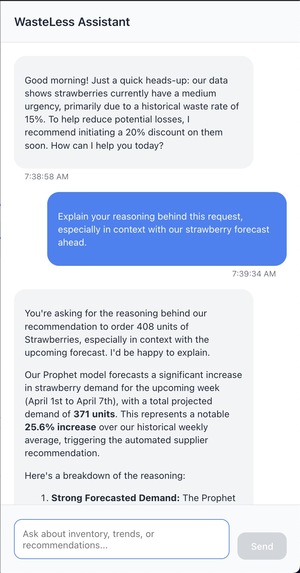
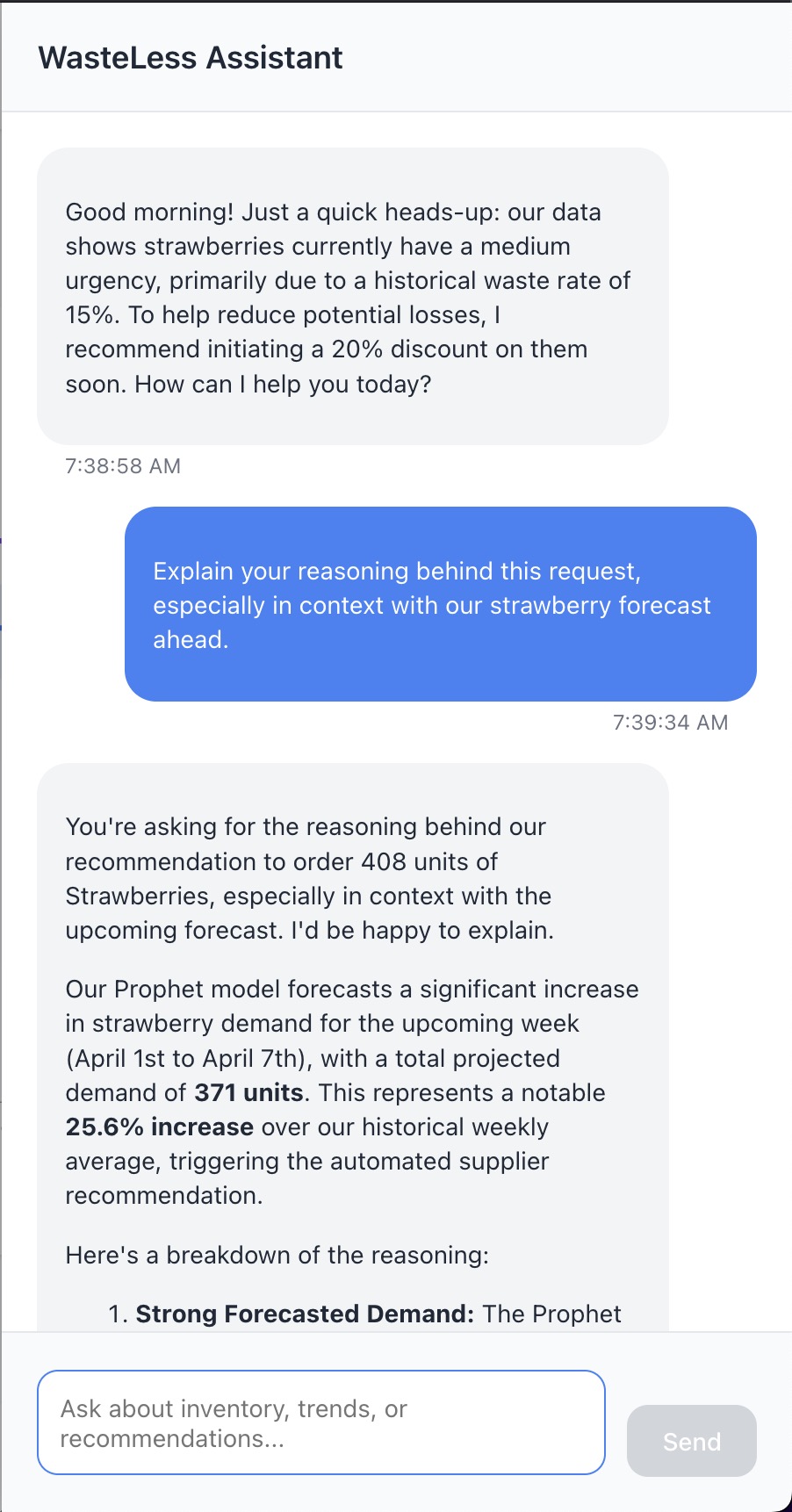
Gemini-Powered Chat System
Inspiration
Americans waste about 60 million tons of food every year. While households are responsible for around 43% of it, stores and restaurants are responsible for the other 40%. Apart from the ethical issues that come with it, food waste is also responsible for 11 percent of the world’s emissions. Our team was driven by the idea of bringing change to the problem on a bigger scale: beyond ourselves and consumers. We came together with a goal of providing store owners with modern, intelligent tools that would allow them to manage their inventory in a more sustainable way.
What it does
WasteLess predicts consumer demand by analyzing external factors that influence purchasing behavior—weather conditions, time of year, day of the week, and holidays. A store will see drastically different chocolate sales on February 14th compared to a typical Tuesday evening, and our system accounts for these patterns. The model trains on historical store data, including daily purchase volumes and waste levels over a full year, expanded with weather data (temperature and precipitation), day-of-week patterns, and holiday indicators. Beyond predictions, WasteLess provides recommendations on optimal stock levels and suggests strategic timing for discounts on items approaching expiration through both an interactive inventory view and a helpful chat assistant.
How we built it
We developed WasteLess using an approach that combines machine learning, real-time data integration, and user-friendly interfaces. The predictive model was built using historical store data augmented with weather API integrations to capture environmental factors affecting purchase behavior. We created interactive dashboards that visualize trends, predictions, and recommendations in an intuitive format for store owners. The system also incorporates a chat interface powered by Gemini to provide natural language interactions, allowing owners to ask questions about their inventory and receive personalized insights.
Challenges we ran into
Integrating multiple data sources and APIs was more complex than we expected. Particularly, setting up the Gemini chat interface and ensuring seamless communication between the prediction model and the frontend.
Accomplishments that we're proud of
We successfully built a predictive model that captures demand patterns based on multi-variable inputs. Our interactive dashboards transform raw predictions into clear, actionable insights that store owners can immediately use. We're particularly proud of integrating the conversational AI interface, which makes data analysis accessible through simple questions. Most importantly, we created a tool that addresses a real problem with tangible environmental and economic impact.
What we learned
This project was the first time for most of us working with external APIs, particularly weather data integration and AI chat interfaces. The process of connecting the backend to the user-friendly interface taught us how different parts of the programs come together. Moreover, we gained an understanding of which variables impact consumer behavior and how to represent them in our model. The experience of coordinating machine learning, data visualization, and conversational AI into a cohesive product strengthened our full-stack development and collaboration skills.
What's next for WasteLess
In the future, we plan to expand WasteLess to serve restaurants, which are also some of the biggest contributors to food waste. We aim to enhance our predictive model by incorporating additional data sources such as local events, social media trends, and economic indicators. Future iterations will include automated ordering integrations with suppliers, mobile app functionality for on-the-go management, and community features that connect stores with food banks for donations. Our long-term vision is to create a platform that makes sustainable food management easy for businesses of all sizes.


Log in or sign up for Devpost to join the conversation.