-
-
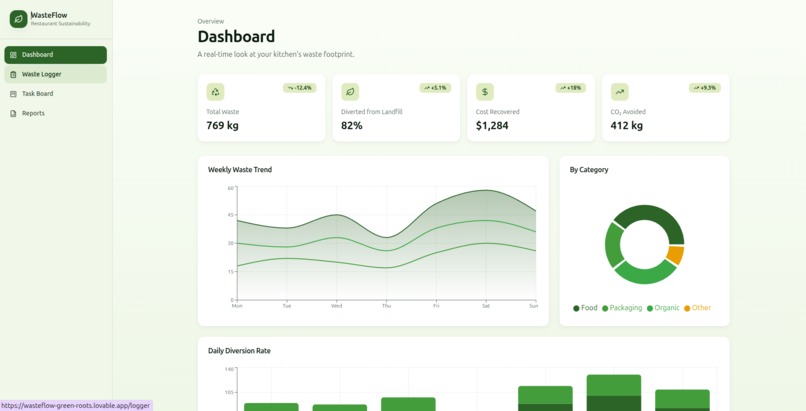
Dashboard
-
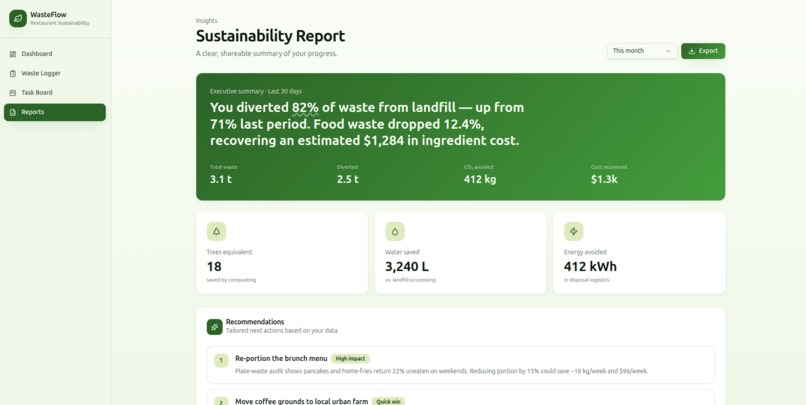
Report
Inspiration
Walking into any café, restaurant, or small office in Chennai, you see the same thing — mountains of single-use plastic cups, bags, and packaging piling up by end of day. Most business owners I spoke to genuinely want to change. But when I asked how they track their waste or manage their plastic-reduction efforts, the answer was always the same:
"We have a WhatsApp group. And a spreadsheet somewhere."
That gap — between good intention and actual system — is where WasteFlow was born.
Every business wants to go plastic-free. But without a workflow, good intentions die in a group chat.
I wanted to build something that didn't just raise awareness, but gave businesses a real operational tool to act on sustainability every single day — not a campaign, not an infographic, but a workflow.
What it does
WasteFlow is a workflow automation tool for restaurants, cafés, and small businesses that want to reduce plastic waste and go zero-waste — but have no system to actually do it.
It has four core modules that work together as an automated loop:
$$\text{Waste Log} \rightarrow \text{AI Analysis} \rightarrow \text{Auto Task Assignment} \rightarrow \text{Progress Tracking} \rightarrow \text{Report}$$
| Module | What it does |
|---|---|
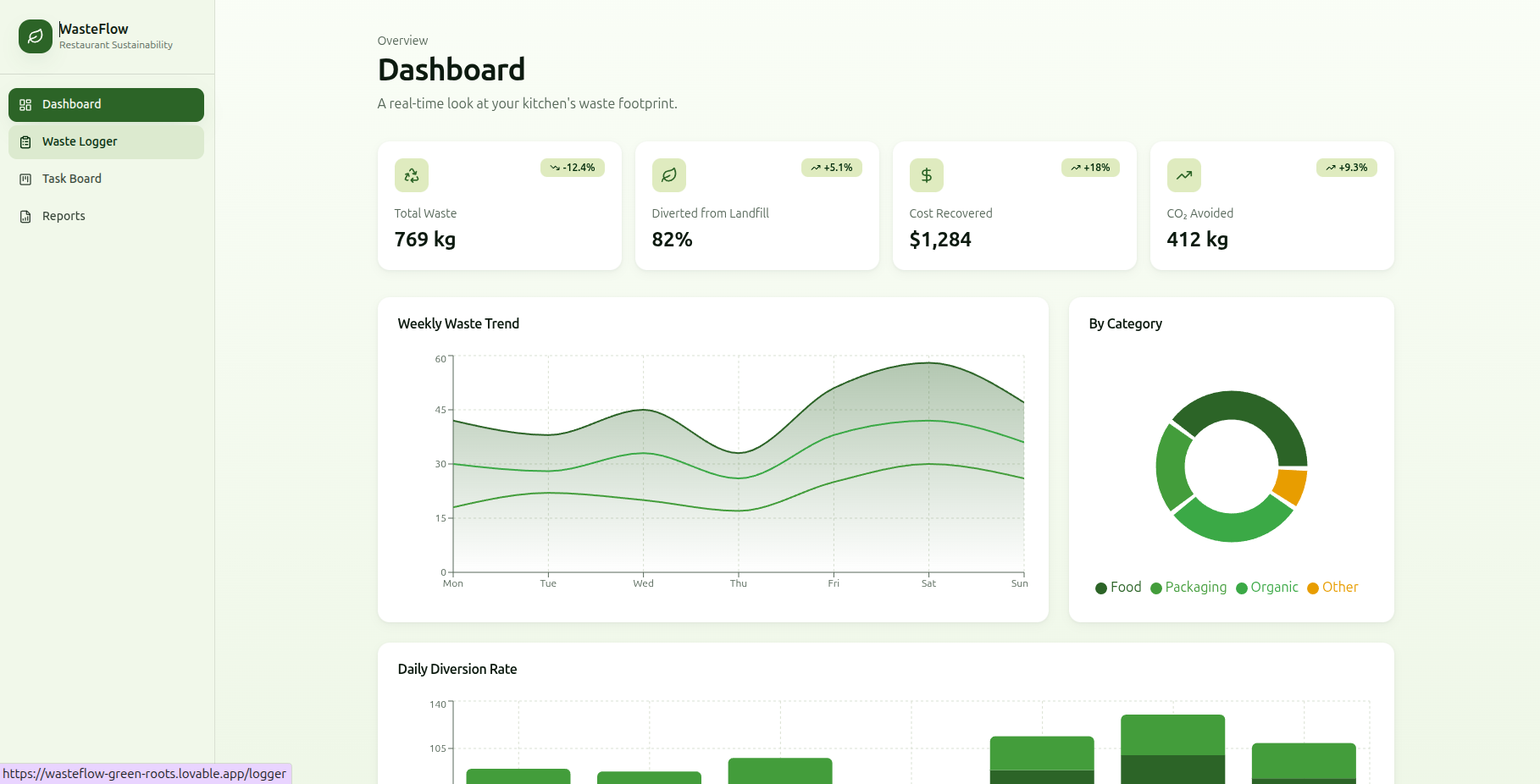
| 📊 Dashboard | Live metrics — plastic diverted, eco score, weekly reduction trends |
| 📋 Waste Logger | Staff log daily waste in 60 seconds by category and weight |
| ✅ Task Board | Auto-assigns green action tasks to team members based on waste data |
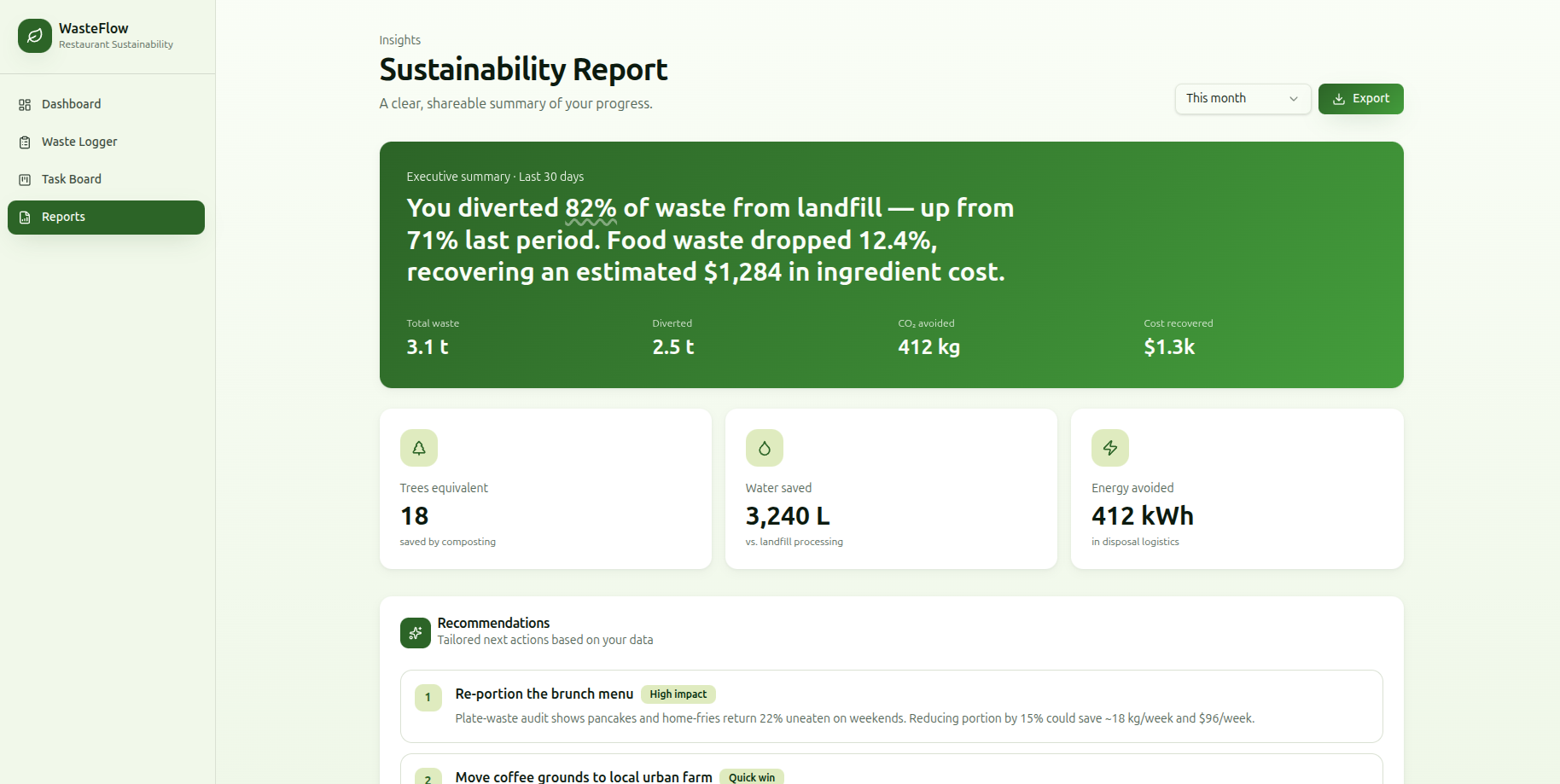
| 📄 Report Generator | One-click sustainability report with AI-powered plastic-free swap recommendations |
Every waste log entry automatically feeds the dashboard, triggers task assignments for the right staff members, and builds toward a weekly sustainability report — with zero manual effort from the manager.
The AI layer (powered by Claude) analyses each week's waste patterns and returns specific, quantified recommendations — for example:
"Bamboo fibre cups cost ₹8 more per unit but eliminate 3kg of plastic per week from your logs."
Not generic advice. Actionable, cost-aware swaps tied to real data.
How we built it
WasteFlow was built using a modern, lightweight stack chosen for speed of development and ease of deployment:
- Frontend — React with Tailwind CSS, designed with a nature-inspired aesthetic (deep greens, earthy tones) to reflect the environmental mission
- Database — Supabase for real-time storage of waste logs, task assignments, and team activity
- AI Layer — Claude API by Anthropic for intelligent waste pattern analysis and plastic-free recommendations
- Charts — Chart.js for the waste breakdown bar chart and plastic reduction trend line
- Deployment — Lovable.dev for rapid prototyping, live deployment, and shareable URL
The automation engine connects all four modules: Waste entry submitted → saved to Supabase → Claude API analyses category totals → returns 3 specific swap recommendations → tasks auto-assigned to staff by role → dashboard KPIs update in real time → weekly report auto-generated on Sunday
The entire project was built solo using vibe coding — describing features in plain English and iterating rapidly on the output.
Challenges we ran into
1. Making it simple enough for kitchen staff
The waste logger had to work for someone who's mid-shift, not tech-savvy, and has 60 seconds maximum. Early versions had too many fields and dropdowns. I stripped it back to three things only: what type, how much, who logged it — nothing else.
2. Making AI recommendations actually useful
The first version of the AI prompt returned things like "reduce plastic usage." Completely useless. I spent significant time on prompt engineering to get Claude returning specific, quantified, cost-aware suggestions tied to the actual logged data — not boilerplate green advice.
3. Speaking the language of business owners
Environmental tools often talk to environmentalists. WasteFlow needed to talk to a restaurant owner. I reframed every metric around cost and operations:
- Not "kg of plastic diverted" but "₹1,200/month saved in disposal fees"
- Not "eco score improved" but "your sustainability report is ready to show investors"
4. Keeping the automation loop reliable
Ensuring the chain of log → AI analysis → task assignment → report generation worked end-to-end without breaking required careful state management and error handling at each step.
Accomplishments that we're proud of
- Built a fully working, deployable tool — not a mockup — in under 3 days as a solo vibe coder
- The AI recommendation engine returns genuinely useful, specific suggestions (not generic tips) by combining waste category data with cost context in the prompt
- Designed an interface clean enough for non-technical kitchen staff to use daily without training
- The automated report generator replaces what would normally take a manager 2–3 hours of manual spreadsheet work
- Created a real business case: if adopted by just 100 restaurants in Chennai:
$$\text{Plastic diverted} = 100 \times 12.4 \text{ kg/week} \times 52 \text{ weeks} = \textbf{64,480 kg/year}$$
That's over 64 tonnes of plastic kept out of landfills — from one city, one tool.
What we learned
The hardest part of sustainability isn't awareness — it's accountability infrastructure.
A business can want to go plastic-free for years and never get there without a system that:
- Makes daily logging frictionless (under 60 seconds)
- Turns data into clear tasks with named owners
- Shows visible, quantified progress over time
I also learned that AI is most powerful when applied to a narrow, specific domain. A general chatbot is forgettable. An AI that looks at your waste logs and says "switching your supplier's packaging format will cut 60% of your plastic waste" is genuinely valuable.
Technically, I got hands-on experience with:
- Prompt engineering for structured, domain-specific AI output
- Real-time database design for time-series operational data
- Dashboard UX for non-technical end users
- The full vibe coding workflow from idea → deployed product
What's next for WasteFlow
WasteFlow is just getting started. The roadmap includes:
- 🔔 WhatsApp / SMS notifications — task reminders sent directly to staff phones, no app needed
- 📸 Photo waste logging — staff photograph a bin, AI estimates the weight and category automatically
- 🏆 Team leaderboard — gamify sustainability with weekly eco scores per staff member
- 🤝 Supplier audit module — flag which suppliers send the most plastic packaging and auto-draft a swap request email
- 🌏 Multi-location support — chains and franchises can compare eco scores across branches
- 📊 Carbon footprint calculator — convert waste data into \( CO_2 \) equivalent for ESG reporting
The long-term vision is a sustainability OS for small businesses — the back-office tool that makes going plastic-free as easy as managing inventory.
Every tonne of plastic starts with one café deciding to track it.

Log in or sign up for Devpost to join the conversation.