-
-
Waste2Value — AI-Powered Waste-to-Resource Platform
About the Project
Inspiration
Waste is often treated as something worthless, yet many discarded materials still have potential. A plastic bottle can become a craft material, cardboard can support creative projects, and kitchen scraps can become compost. However, people often lack an easy way to identify these opportunities or connect with someone who could use what they throw away.
Waste2Value was inspired by the need to bridge this gap. We wanted to use technology to help people see waste differently — not as the end of a product's life, but as an opportunity to create value. Starting in Kigali, Rwanda, our goal is to make reuse more accessible, reduce unnecessary waste, and connect people through shared resources.
What it does
Waste2Value is an AI-powered household waste-to-resource platform that helps users discover useful opportunities for discarded materials.
Its core features include:
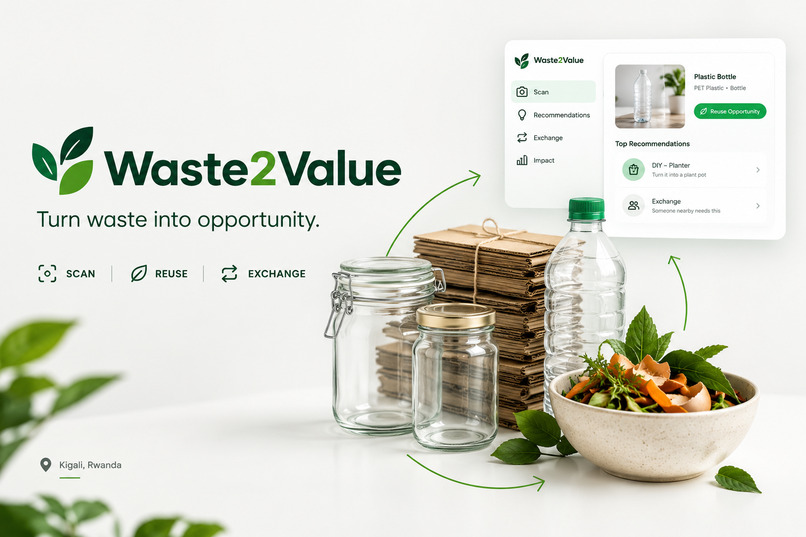
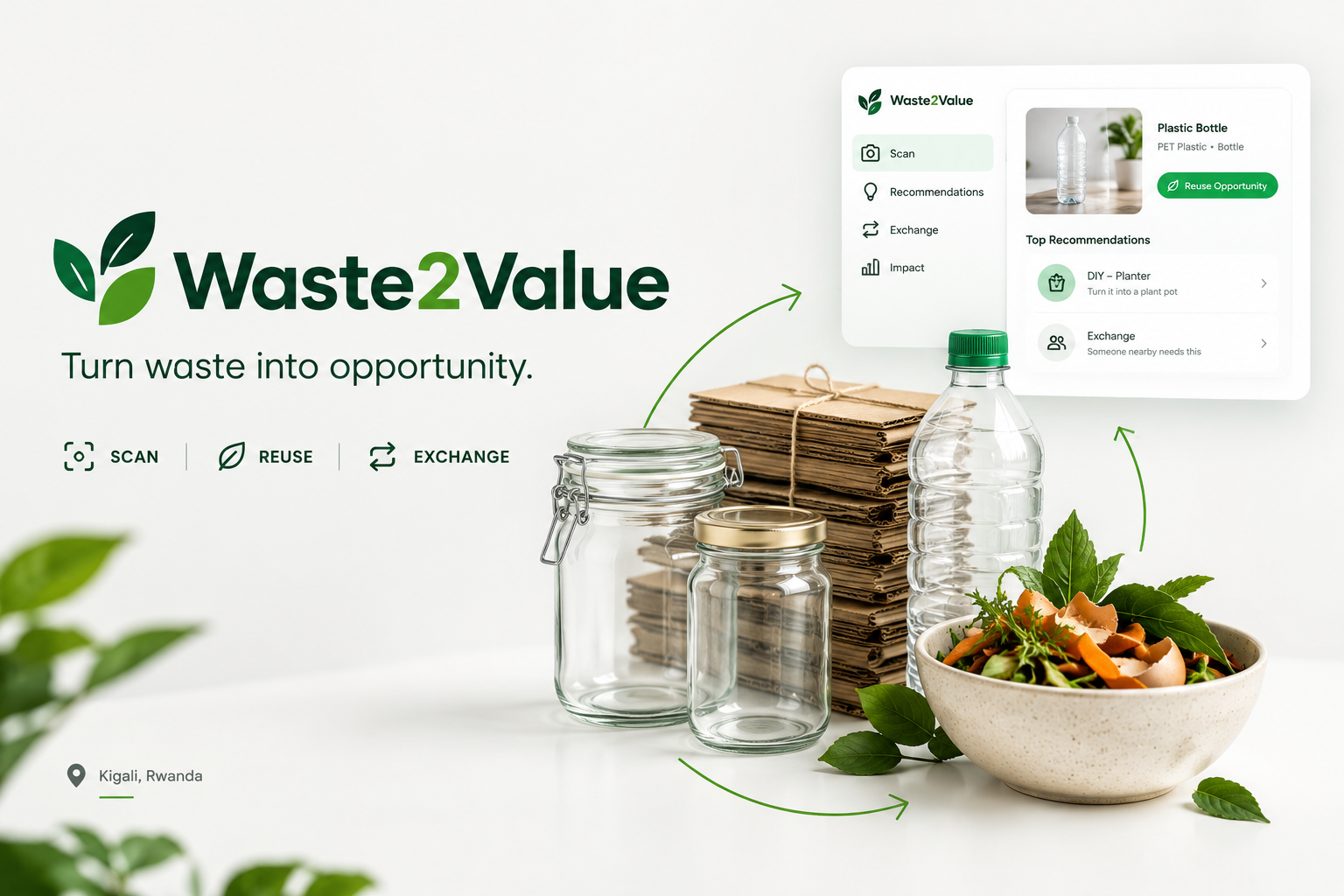
- AI Waste Scanner: Identifies the likely material and object type from a photo.
- Smart Recommendations: Suggests practical options such as reuse, DIY projects, exchange, or recycling.
- DIY Guidance: Provides step-by-step ideas for transforming suitable materials into useful items, with safety considerations.
- Local Resource Exchange: Enables users to offer reusable materials and request items they need.
- Impact Dashboard: Tracks completed reuse activities and exchanges to help users understand their contribution.
By bringing these capabilities together, Waste2Value connects waste identification with practical action, helping materials find their next purpose.
How we built it
Waste2Value combines a web application with AI-powered material identification, recommendation logic, and local resource exchange capabilities. Its architecture is designed to connect the user interface with backend services and structured data, supporting material profiles, recommendations, exchange posts, matches, and impact records.
The platform is designed around a simple user journey: scan a material, discover its potential, choose an action, connect with others when needed, and track the outcome. Safety considerations are also important, particularly when recommending ways to reuse materials that may require special handling.
Challenges we addressed
Building a waste-to-resource platform involves more than identifying objects. Different materials can have different reuse possibilities, and the most useful recommendation depends on factors such as condition, available tools, practicality, and local demand. Connecting people who have materials with people who need them also requires meaningful matching and reliable information.
Waste2Value brings these challenges into one platform, with the goal of making sustainable choices easier to discover and act on.
What we learned
This project helped us explore how AI can be applied to a practical, everyday problem. We learned that technology can do more than classify information: it can help people make decisions, discover opportunities, and connect with others. We also recognized the importance of usability, responsible AI recommendations, and measuring impact through recorded actions rather than unsupported estimates.
What's next
We envision Waste2Value growing into a platform that helps communities recognize the value of their discarded materials, supports local reuse networks, and encourages a more circular approach to everyday resources.
Our mission is simple: turn waste into opportunity, one material at a time.
Built With
- artificial
- computer
- generativeai
- intelligence
- next.js
- postgresql
- react
- typescript
- vision

Log in or sign up for Devpost to join the conversation.