-
-
Waste2Value
Inspiration
Waste is often treated as something that has lost its value. But a plastic bottle could become a useful craft material, cardboard could support a small business, and kitchen scraps could become compost. The problem is that many households do not know what their discarded materials can become or who might need them.
Waste2Value was inspired by this gap between waste and opportunity. We wanted to explore how technology could help people see discarded materials differently — not simply as rubbish, but as resources waiting for another purpose.
Our focus begins in Kigali, Rwanda, where making better use of household waste could support cleaner communities, encourage reuse, and create opportunities for people who need affordable materials.
What it does
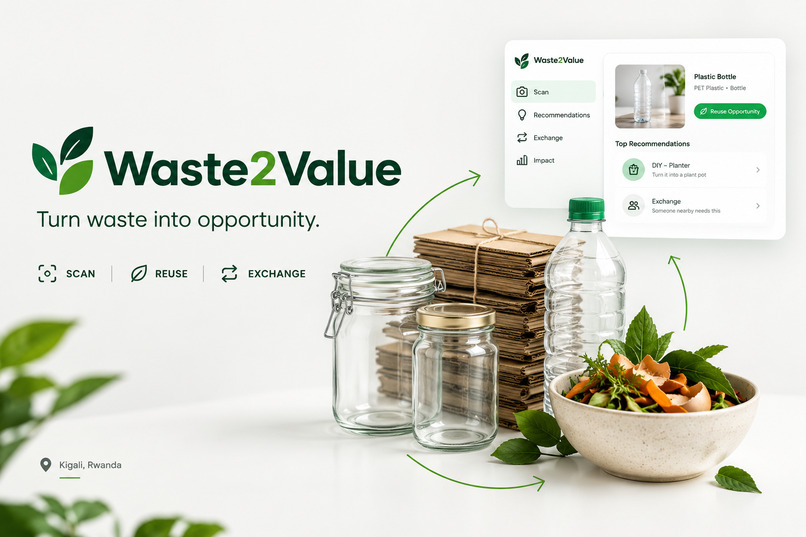
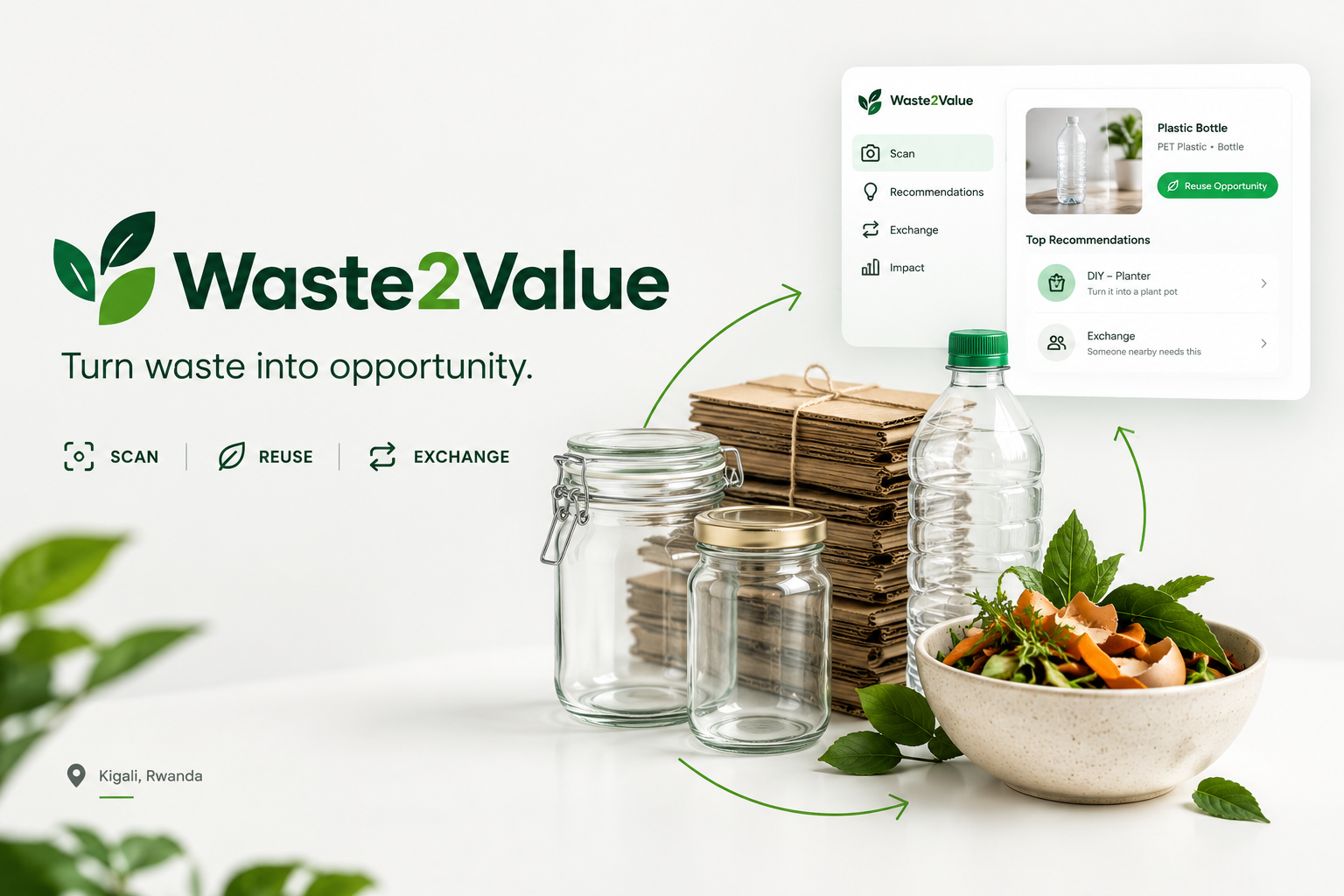
Waste2Value is an AI-powered household waste-to-resource platform designed to help users discover value in materials they would otherwise throw away.
The platform brings together five core capabilities:
- AI Waste Scanner: Users photograph an item to identify its likely material, object type, and condition.
- Smart Recommendations: The system suggests relevant next steps, including reuse, DIY projects, exchange, or recycling.
- DIY Guidance: Users can discover practical, step-by-step ideas tailored to the materials and tools available to them, with safety considerations built in.
- Local Resource Exchange: Users can offer reusable materials or request materials they need, helping connect households with students, craftspeople, and small businesses.
- Impact Tracking: Users can record completed actions and track their verified reuse and exchange activities.
Instead of giving everyone the same generic recycling advice, Waste2Value aims to connect each material with its most practical next opportunity.
How we plan to build it
Waste2Value is designed as a responsive, mobile-first web application supported by a backend API and a relational database.
Computer vision will help identify materials from uploaded photographs. A recommendation engine will rank possible actions according to factors such as material condition, practicality, available resources, and local demand. AI-generated DIY guidance will be grounded in a curated knowledge base, with safety rules preventing unsuitable materials from receiving unsafe DIY instructions.
The exchange feature will allow users to post material offers and requests, while a matching system will identify potential connections based on material type, quantity, and approximate location.
We also recognize that AI identification will not always be correct. Users should be able to correct misidentified materials, and environmental impact figures should be based on recorded, verified actions rather than unsupported estimates.
What makes Waste2Value different?
Waste2Value goes beyond identifying waste or providing recycling information. It connects identification to action.
A user should be able to move from photographing a discarded item to discovering a useful alternative, following a suitable reuse idea, or finding someone nearby who needs that material. Over time, recorded outcomes could help the platform understand which materials are useful, what people need, and which opportunities work best in the local community.
Our vision
We envision a future where fewer useful materials are discarded simply because people cannot see their potential.
Starting in Kigali, Waste2Value aims to make reuse easier, connect local material supply with demand, and help communities move toward a more resource-conscious way of living.
Our guiding idea is simple: waste is not always the end of a product's life. Sometimes, it is the beginning of something else.
Built With
- ai
- nextjs
- postgressql
- react
- restapi
- typescript
- vision

Log in or sign up for Devpost to join the conversation.