Inspiration
Waste-Wise was inspired by the growing problem of food waste and the fact that many people still struggle to access sufficient food. Restaurants, bakeries, canteens, and event organizers often have surplus food that could still be consumed. We wanted to create a technology-driven solution that connects those with excess food to those who need it, helping reduce food waste while supporting communities and protecting the environment.
How We Built the Project
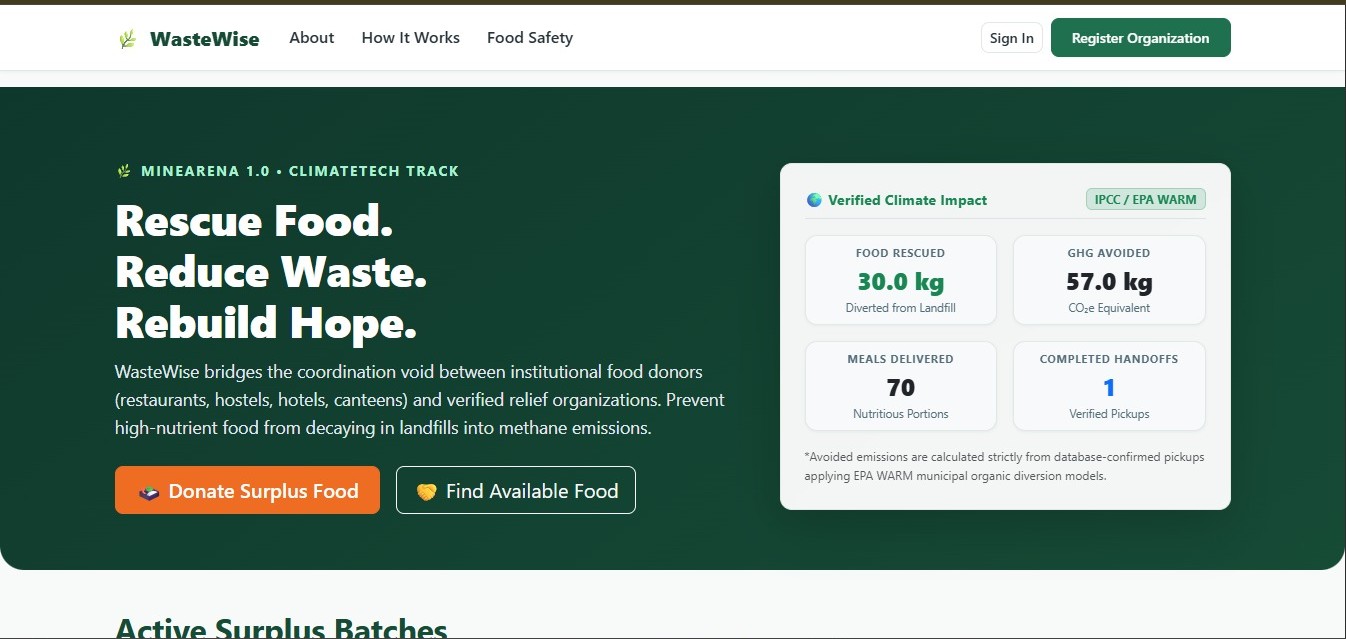
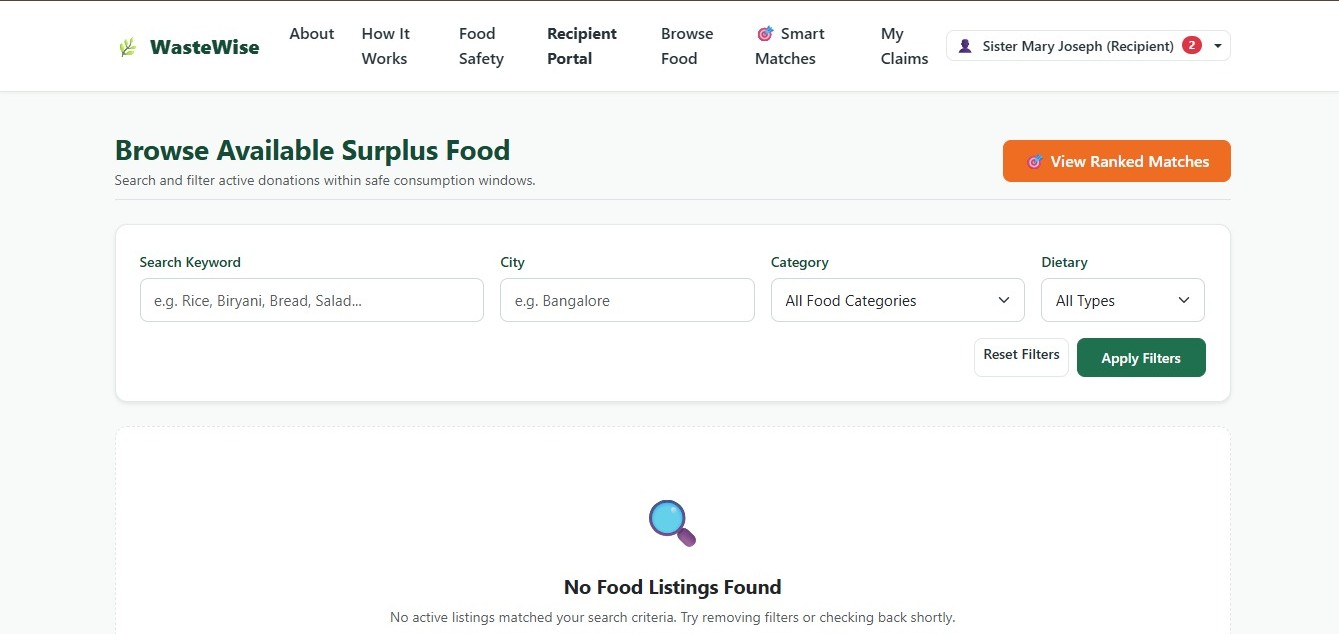
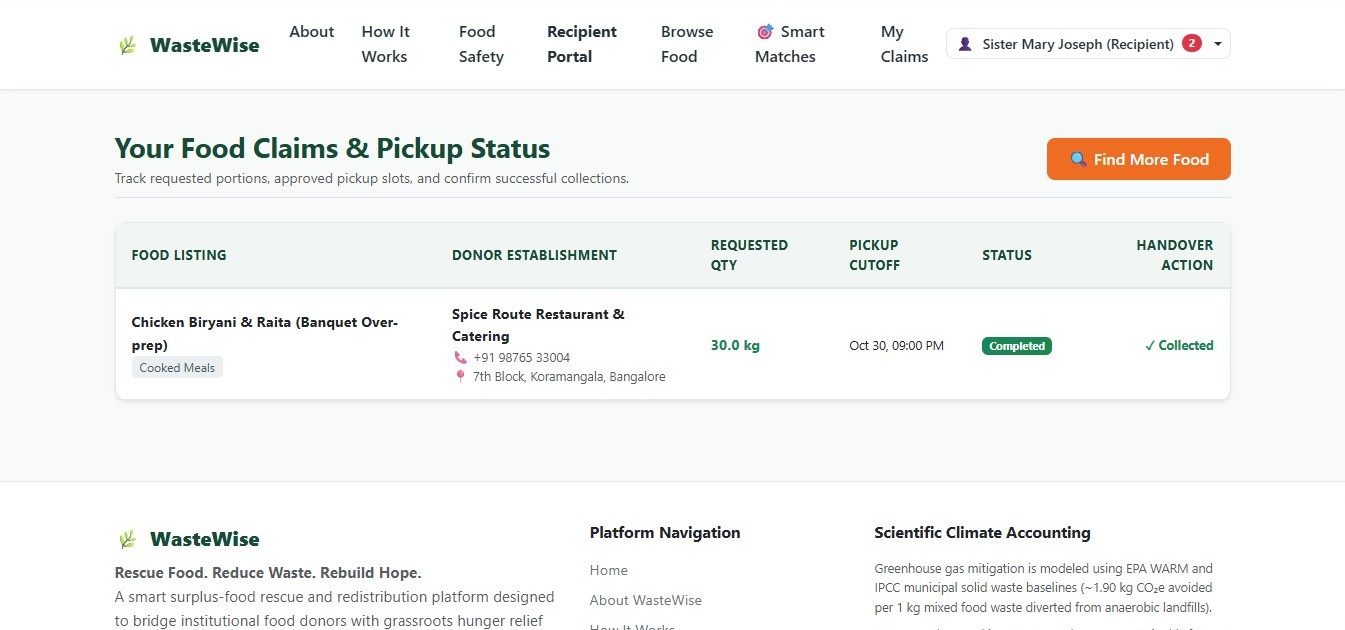
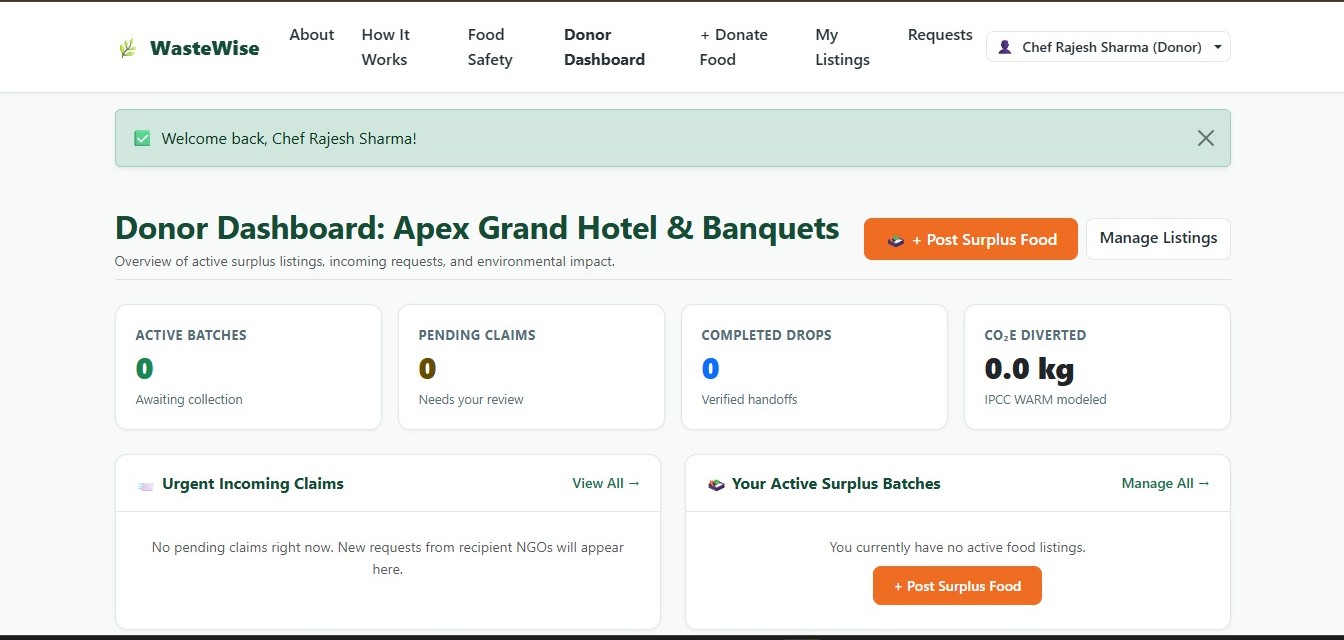
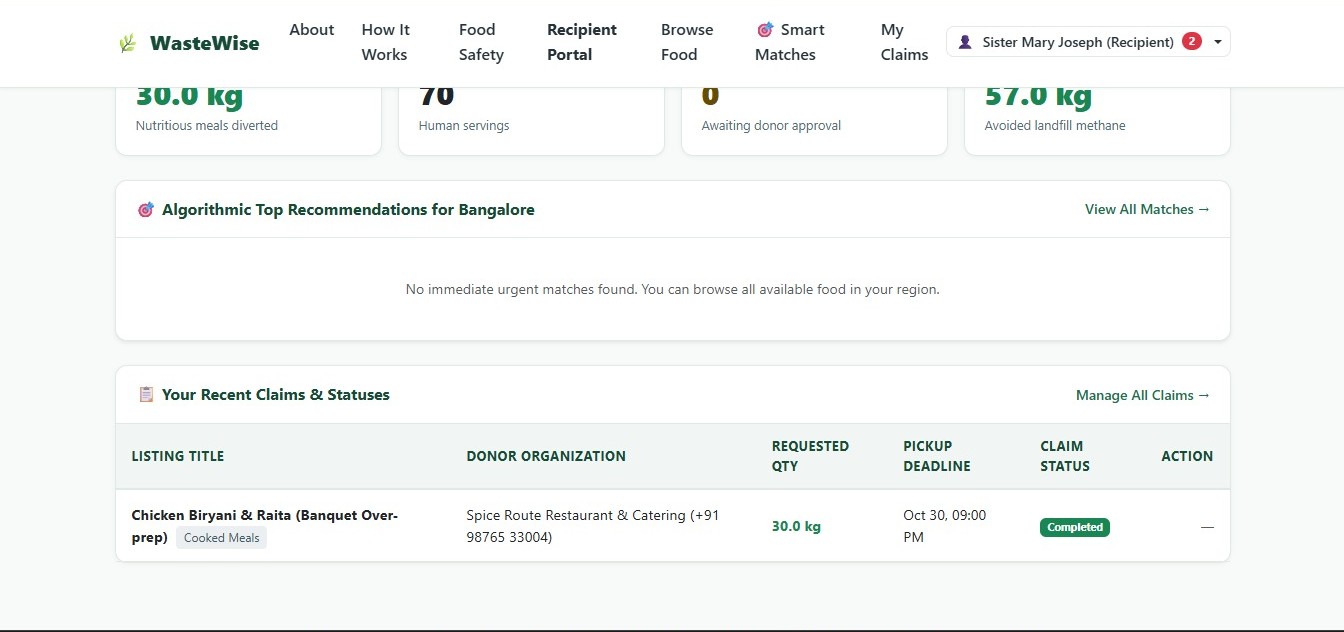
We designed Waste-Wise as a web-based food rescue and redistribution platform. It allows donors to list surplus food with details such as quantity, category, location, and pickup deadline. Recipients can explore available food, find suitable listings, and request donations. The platform also supports donation management, pickup confirmation, and impact tracking. We planned the system using Python Flask, SQLite, HTML, CSS, Bootstrap, and JavaScript to create a practical, responsive, and user-friendly experience.
What We Learned
Through Waste-Wise, we learned how technology can address real-world environmental and social problems. We explored web application development, database management, user roles, food donation workflows, and the importance of designing an accessible user experience. We also learned that reducing food waste is not just about redistributing food; it requires coordination, timely communication, and responsible handling.
Challenges We Faced
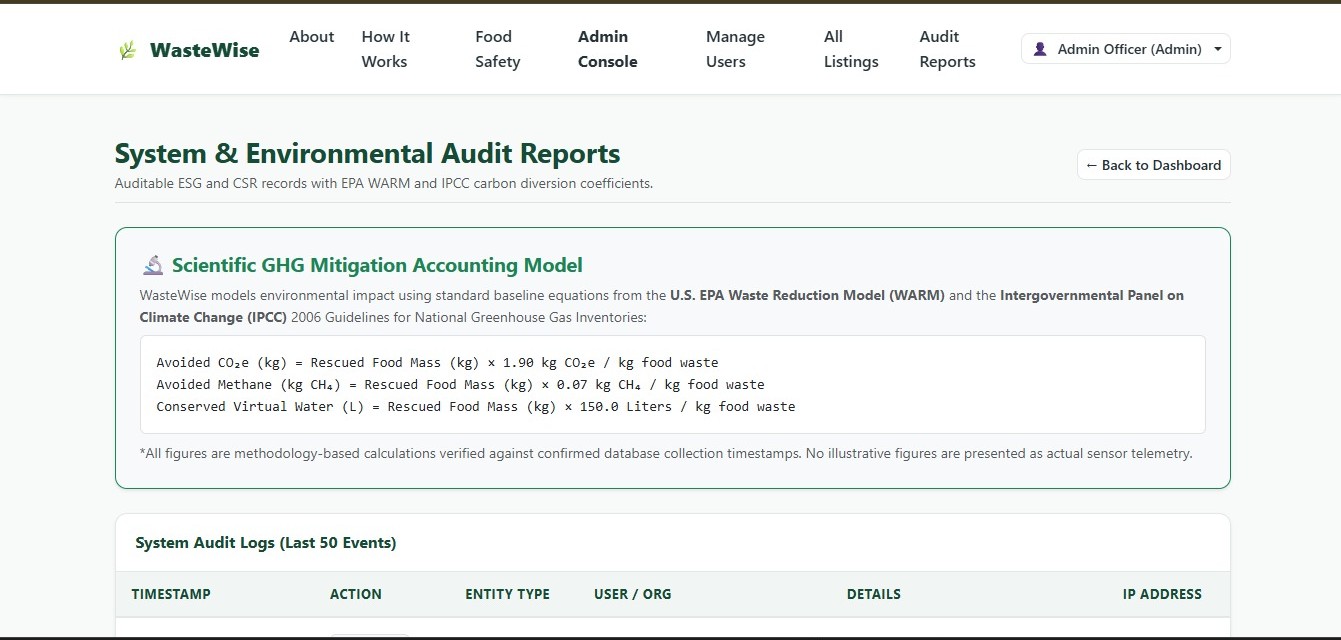
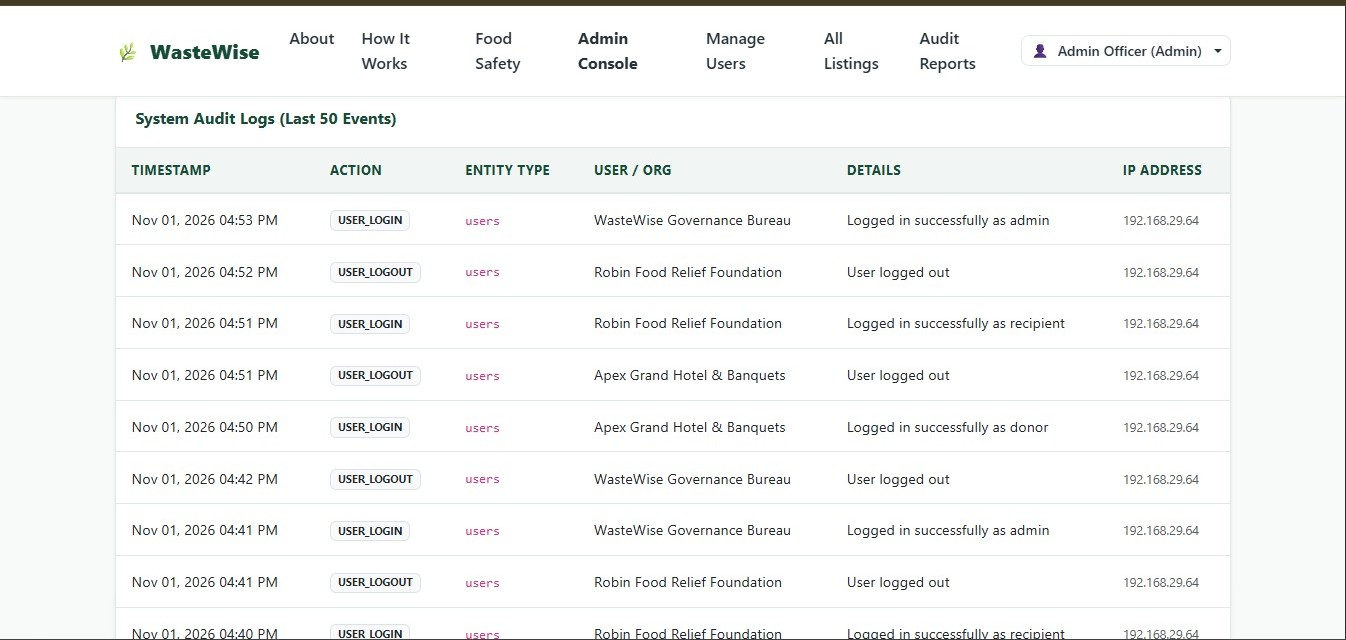
One of our main challenges was designing a reliable process to connect food donors with suitable recipients before the food's pickup deadline. We also considered how to prevent multiple recipients from claiming the same quantity, maintain accurate donation records, and make the platform easy to use for different types of users. Another challenge was identifying meaningful ways to measure environmental impact without making unsupported claims. These considerations helped us focus on reliability, transparency, and practical usability.
Environmental and Social Impact
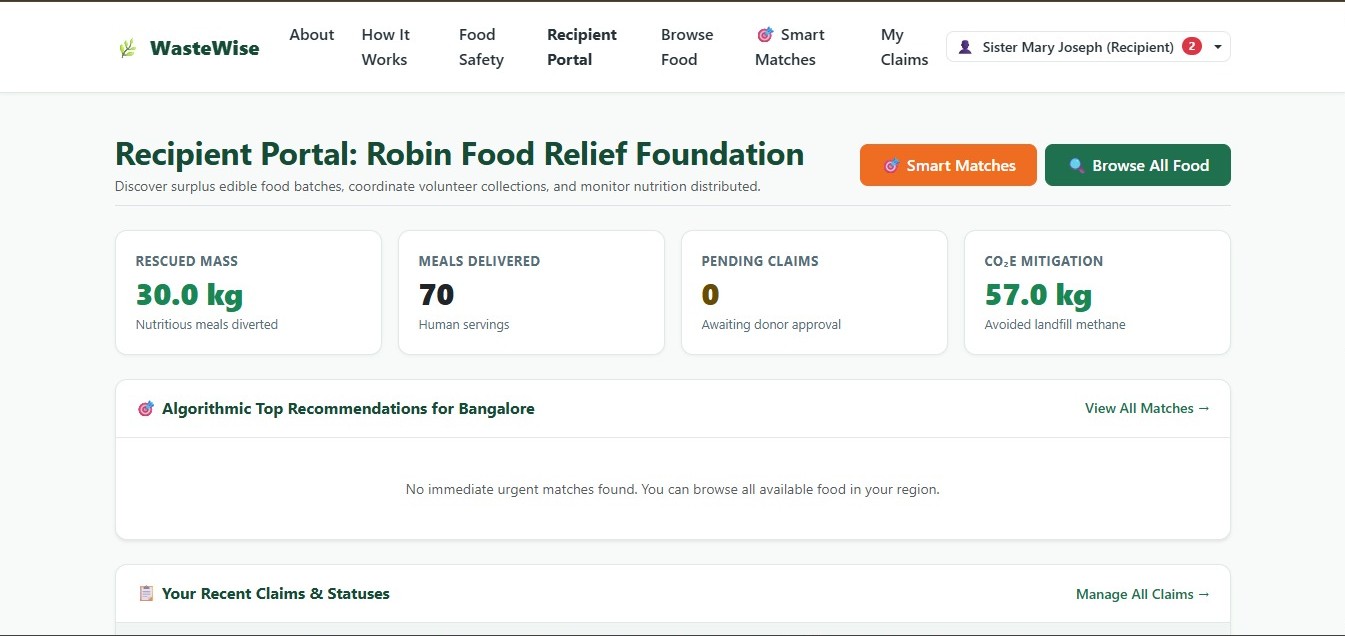
Waste-Wise aims to reduce avoidable food waste, support food redistribution, and help conserve the natural resources used in food production, including water, energy, and land. By diverting edible surplus food to people who can use it, the platform has the potential to reduce waste-related environmental impacts while supporting food-insecure communities. Our vision is to make surplus food a valuable resource rather than waste, contributing to a more sustainable and compassionate future.
What it does## What it does
Waste-Wise is a food rescue and redistribution platform designed to reduce food waste while helping people access surplus food. It connects food donors, such as restaurants, bakeries, canteens, and event organizers, with NGOs and other recipients who can make use of available food. Donors can list surplus food with details such as quantity, category, location, and pickup deadline. Recipients can explore available listings, find suitable donations, and submit requests. The platform helps manage donation requests, coordinate pickups, and track completed donations. By making surplus food easier to redistribute, Waste-Wise aims to reduce avoidable waste, conserve natural resources, and support communities in need.
How we built it
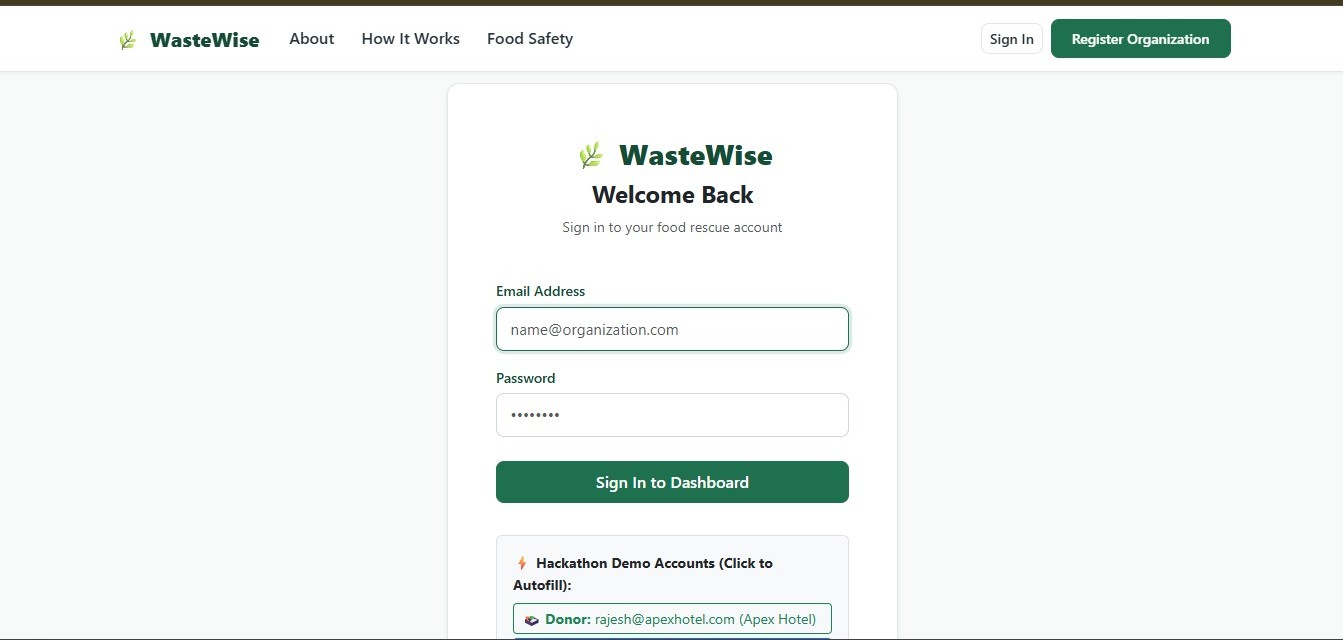
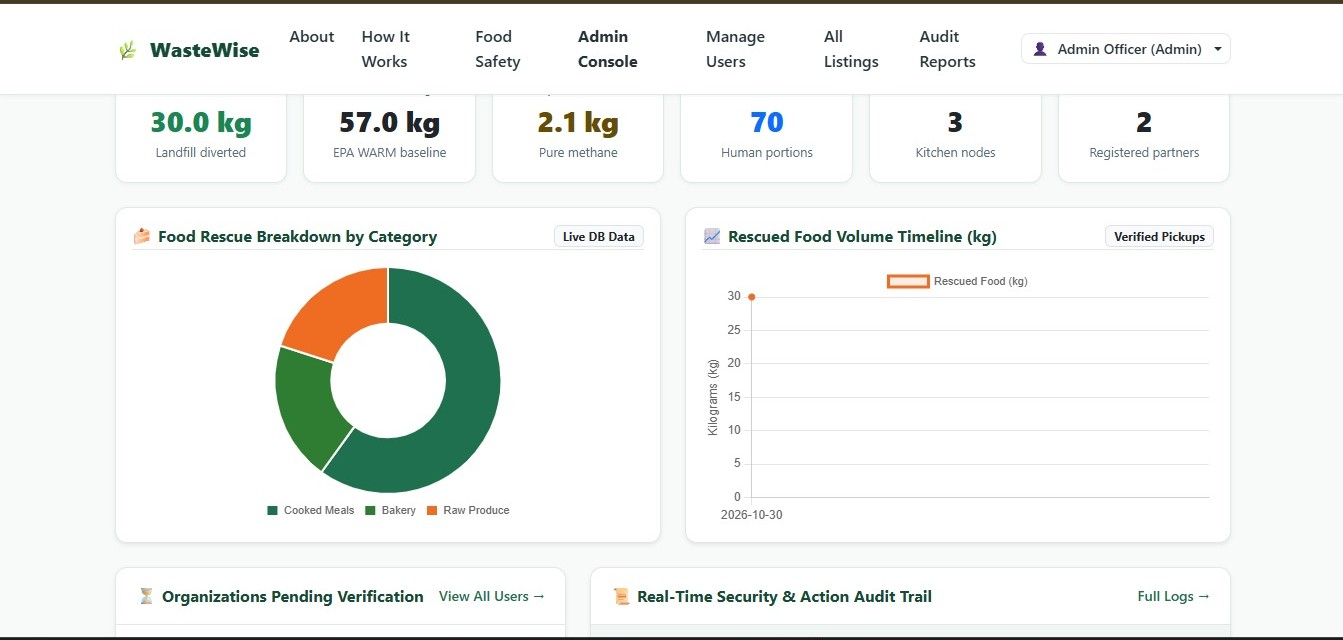
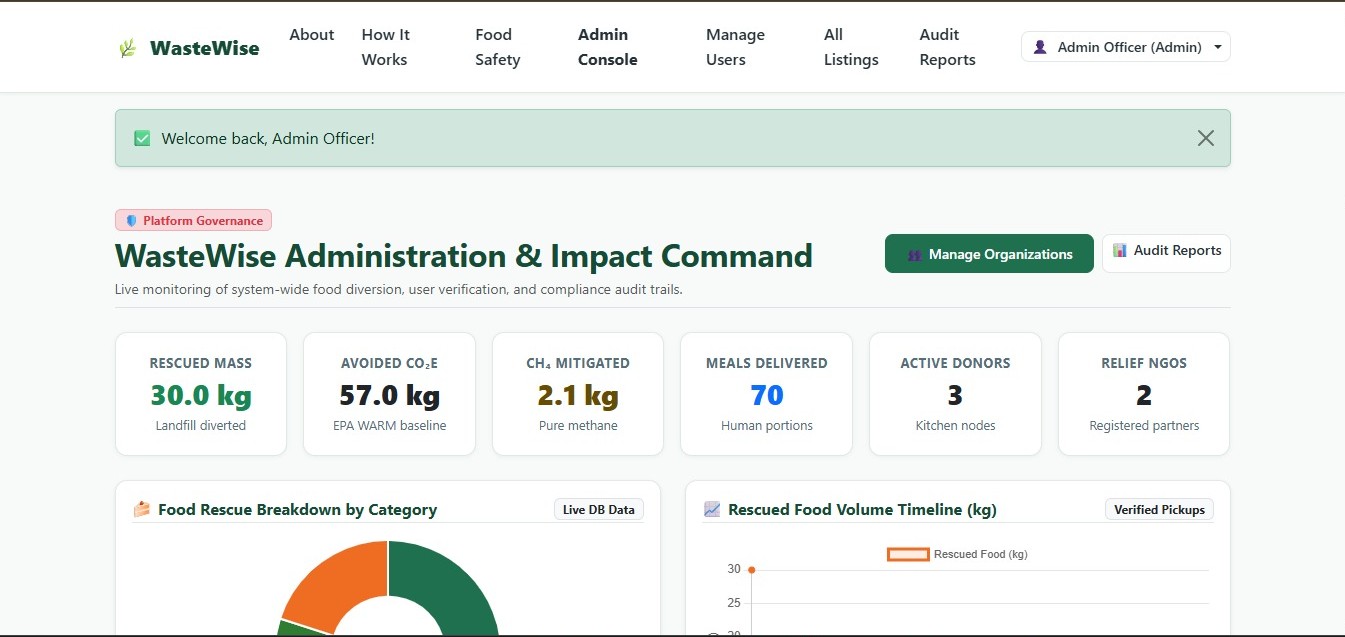
We designed Waste-Wise as a web application with a focus on usability, accessibility, and sustainability. The planned technology stack includes Python Flask for backend logic, SQLite for database management, HTML and CSS for page structure and styling, Bootstrap for responsive layouts, and JavaScript for interactive elements. The platform is organized around donor and recipient workflows, with features for food listings, donation requests, request management, pickup confirmation, and donation history. We also designed the concept of an impact dashboard to help visualize donation activity and estimate potential environmental benefits using transparent calculations.
Challenges we ran into
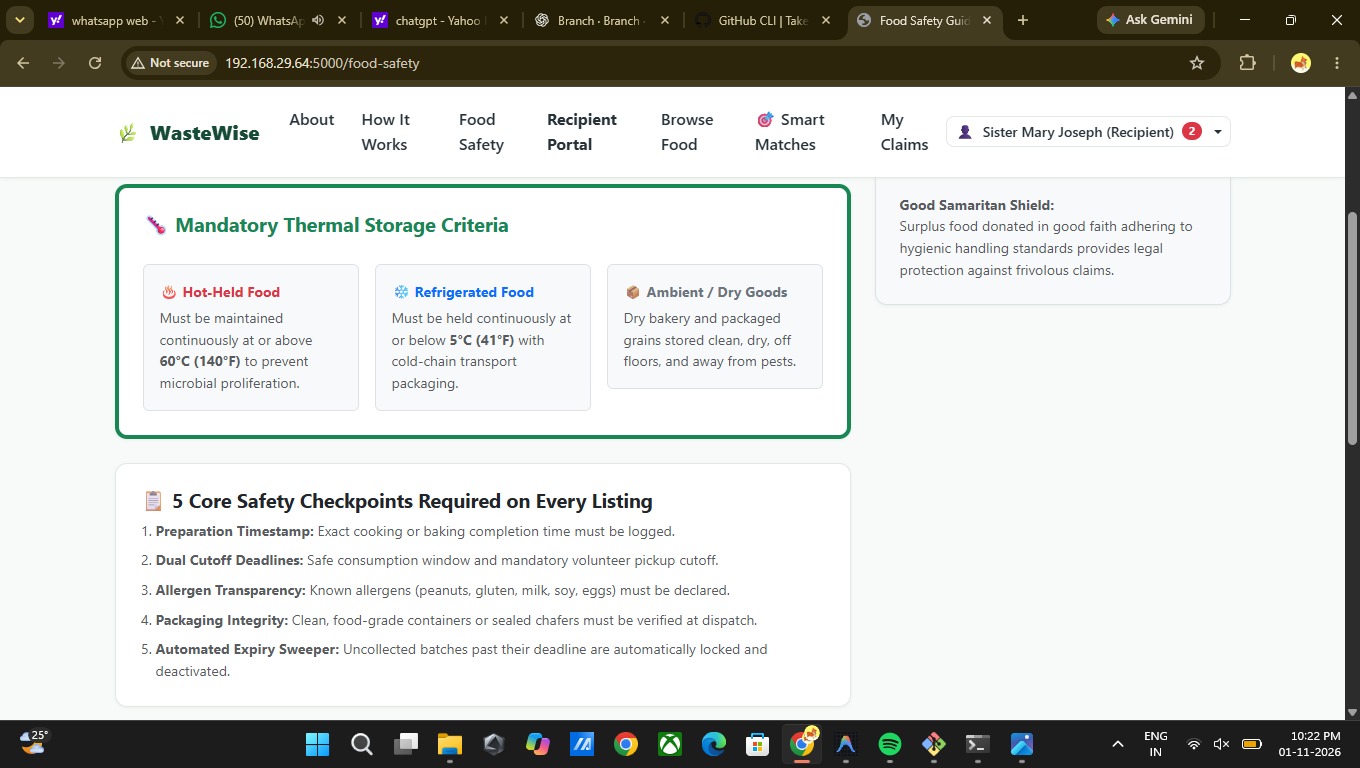
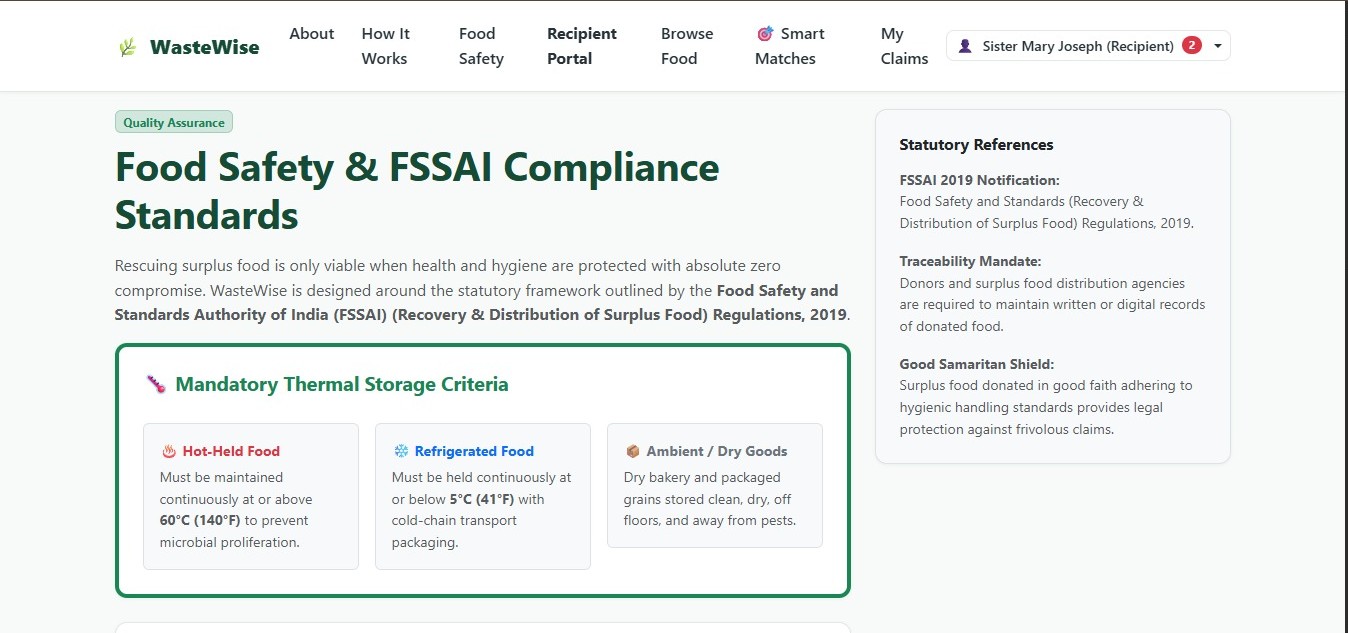
One of the main challenges was designing a reliable process for matching available surplus food with suitable recipients before pickup deadlines. We also had to consider how to prevent multiple recipients from claiming more food than a donor has available, keep donation records accurate, and make the platform intuitive for different types of users. Another important challenge was considering food safety, timely collection, and the difficulty of accurately estimating environmental benefits. These challenges encouraged us to prioritize reliability, clear workflows, and responsible impact measurement.
Accomplishments that we're proud of
We are proud to have developed a solution that addresses both an environmental problem and a social need through technology. Waste-Wise brings food donors and potential recipients together in one proposed workflow, making surplus food redistribution easier to organize and manage. We are especially proud of the project's focus on sustainability, its potential to support food-insecure communities, and its vision of turning food that might otherwise go to waste into a useful resource. We also aimed to make the platform practical, user-friendly, and capable of growing as more donors and recipients participate.
What we learned
Through Waste-Wise, we learned how to approach real-world problems with a technology-driven mindset. We explored the importance of web application architecture, database design, user experience, and managing interactions between different user roles. We also learned that an effective food redistribution system requires more than simply listing available food: it needs timely coordination, accurate availability information, responsible handling, and trust between participants. Most importantly, we learned to think about sustainability not just as an idea, but as a problem that can be approached through practical digital solutions.
What's next for Waste-Wise Our team 'Neural Nexus' would certainly want to learn and make this project feasible, reliable and come up with more innovative and also implement the below mentioned aspects. Our next goal is to make Waste-Wise more reliable, accessible, and useful in real-world settings. Future improvements could include location-based matching, smarter recipient recommendations, real-time notifications, mobile-friendly enhancements, and partnerships with local restaurants, NGOs, and community kitchens. We also plan to improve impact tracking by recording the amount of food successfully redistributed and using a documented methodology to estimate associated environmental benefits. In the long term, we envision Waste-Wise growing into a community-driven food rescue network that helps reduce avoidable food waste, supports people in need, and contributes to a more sustainable future.


Log in or sign up for Devpost to join the conversation.