-
-
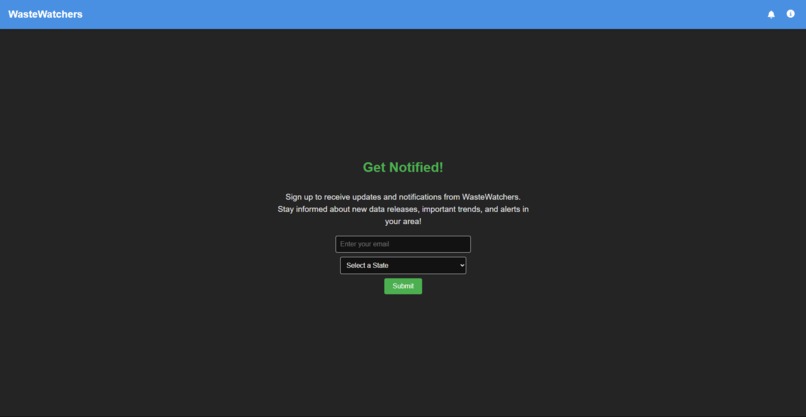
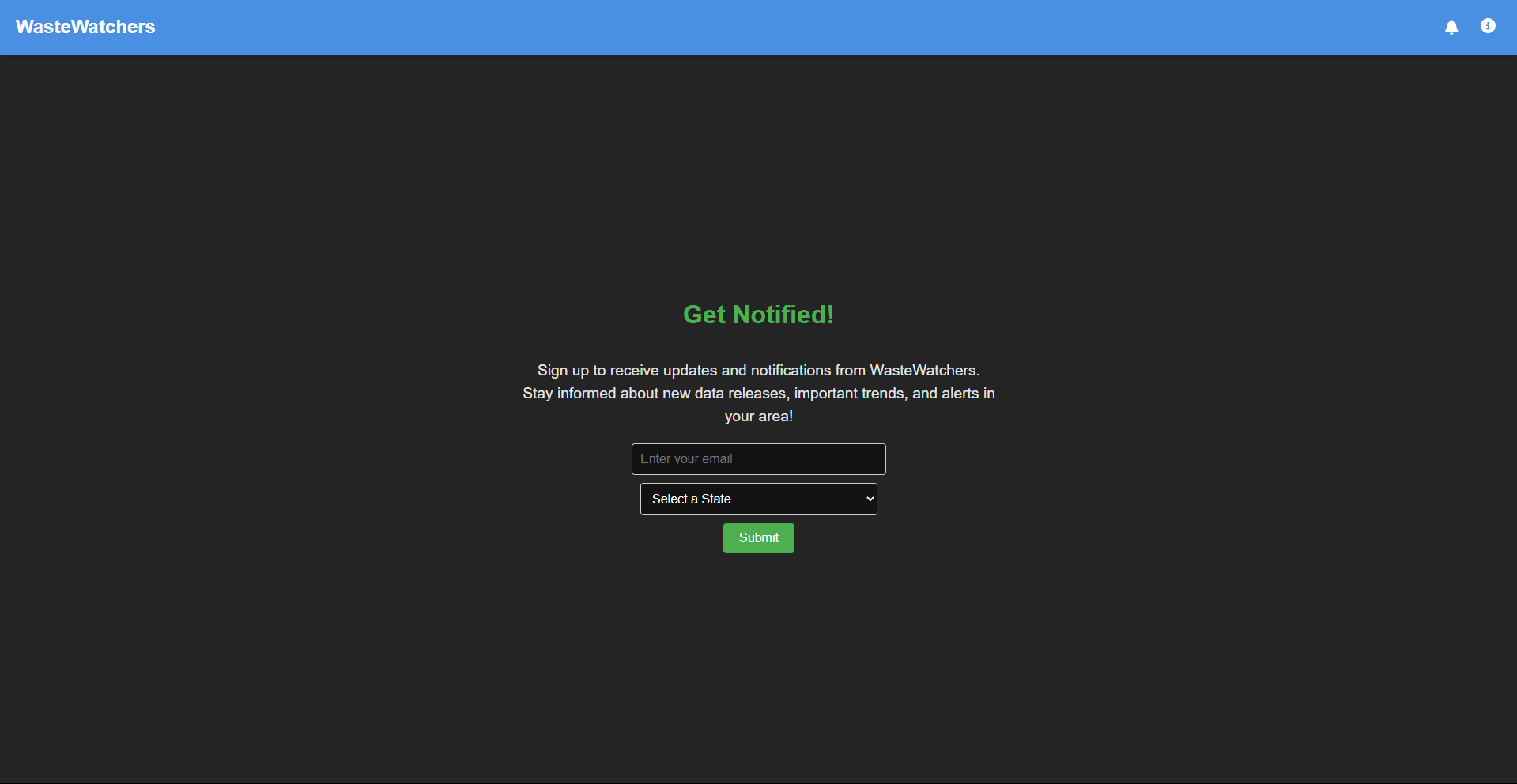
Signup for weekly emails if there is a local outbreak!
-
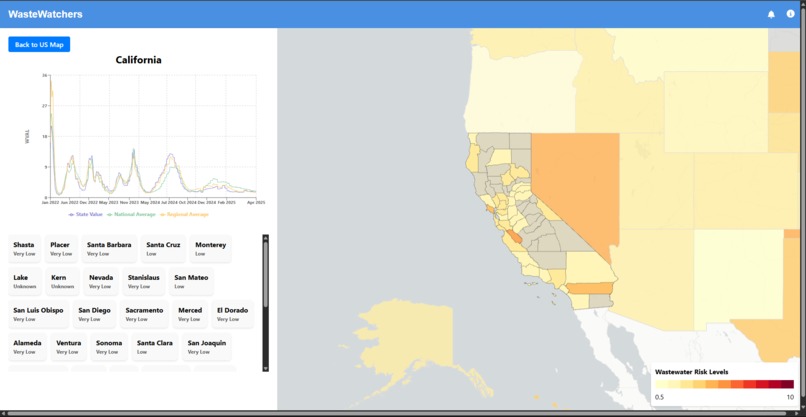
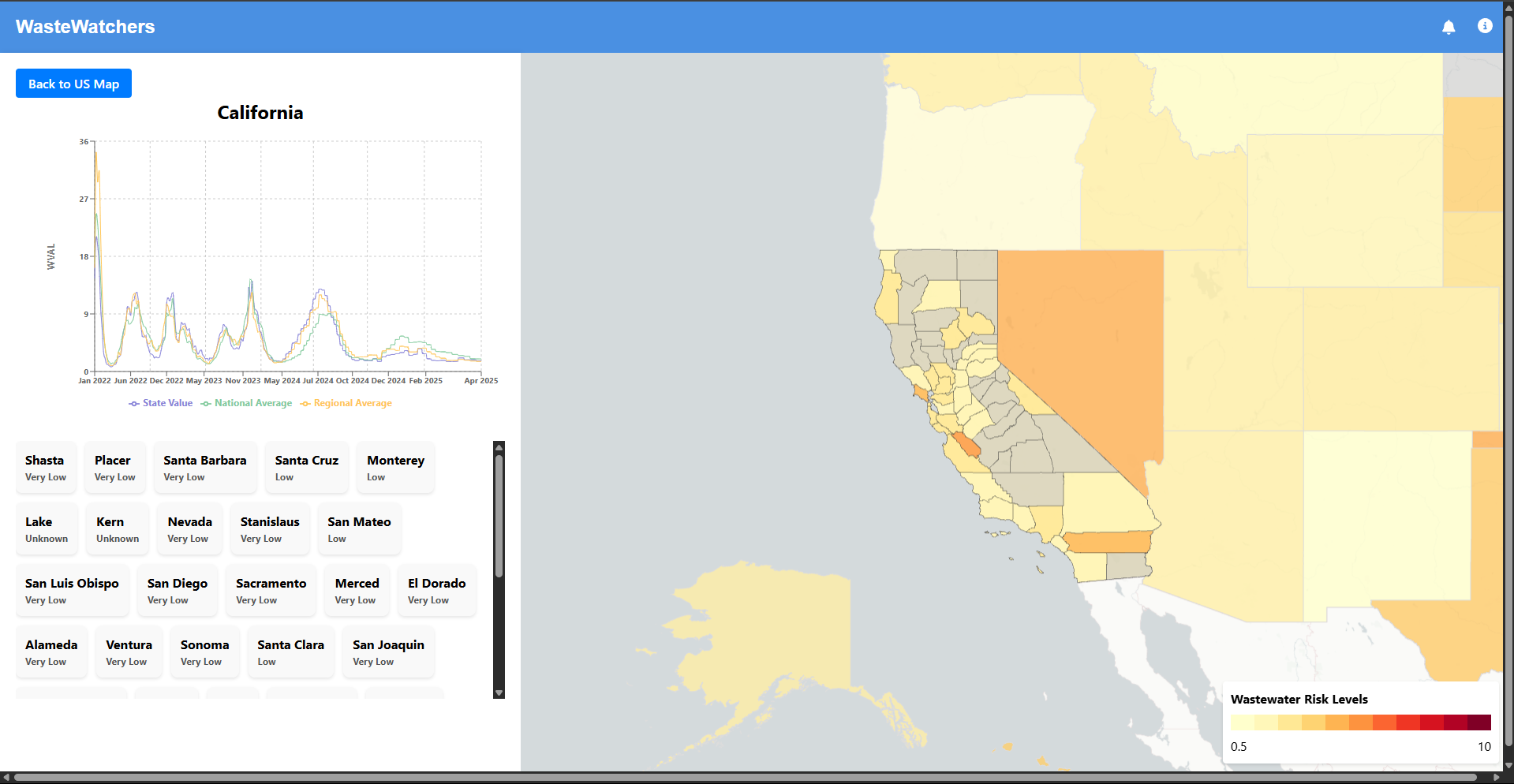
Drilldown into live local county data!
-
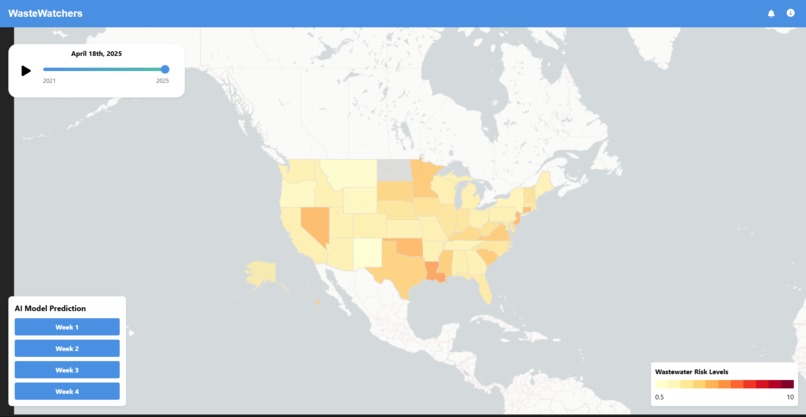
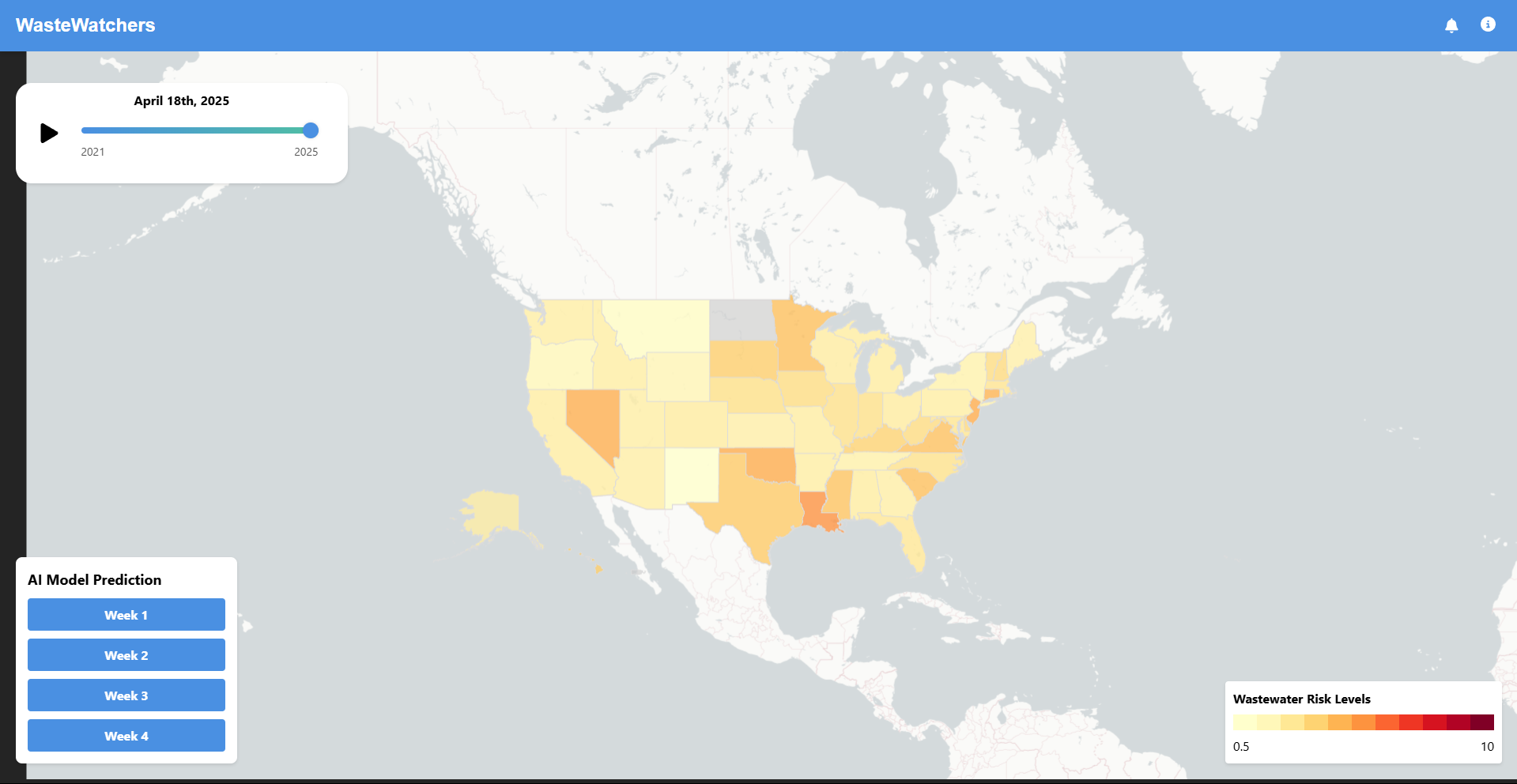
See nation data use predictive models!
-
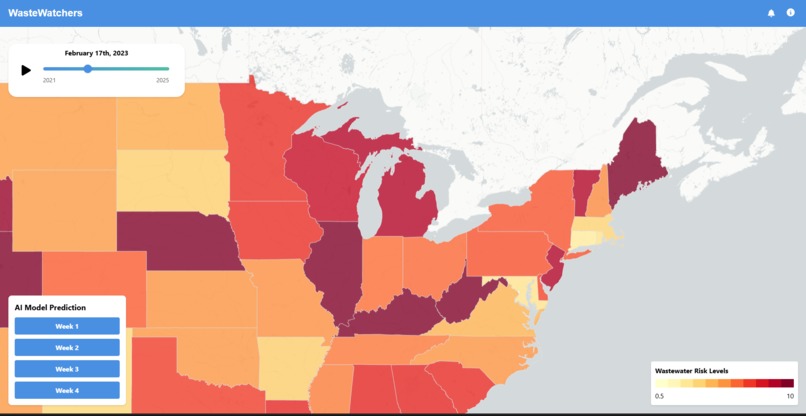
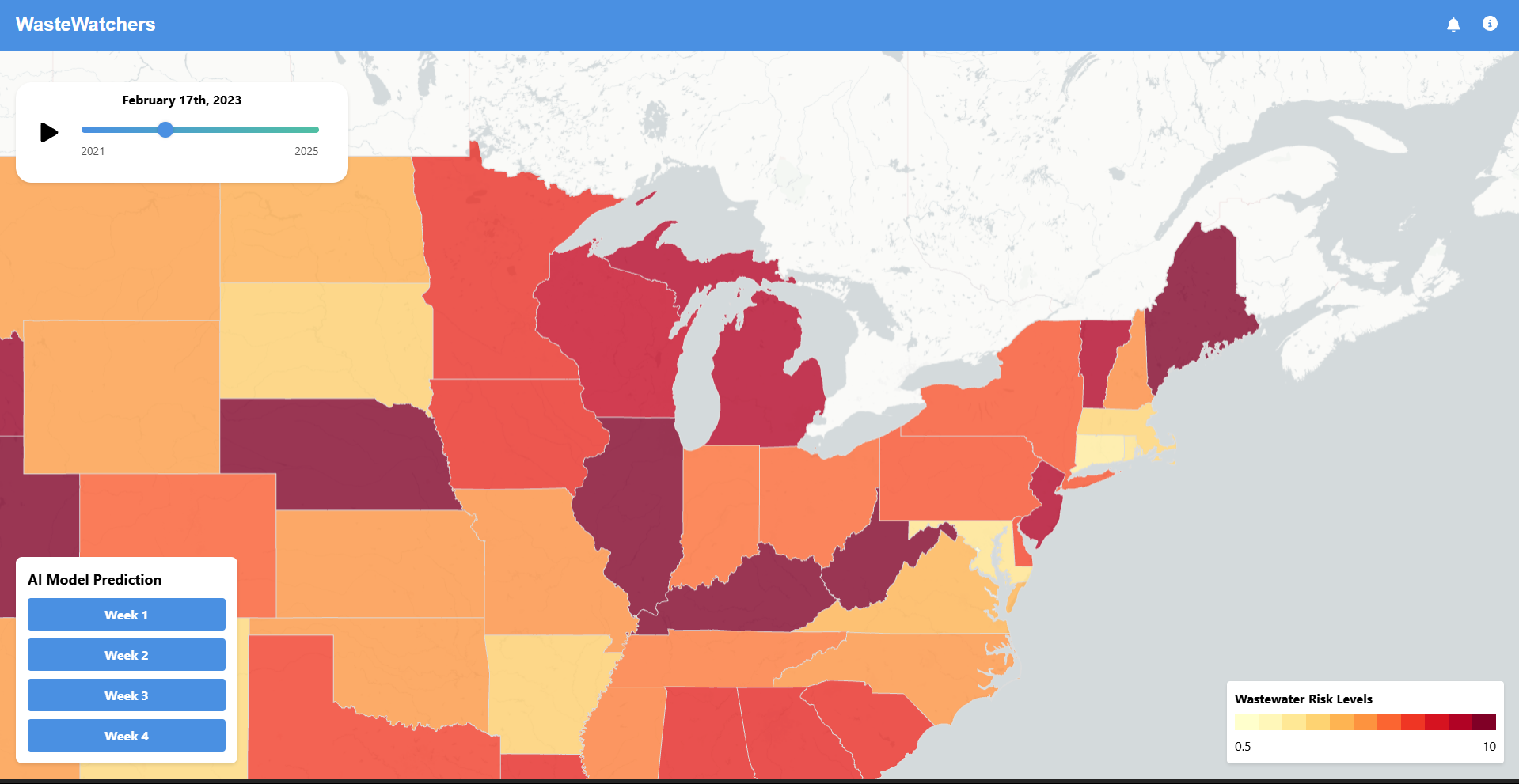
Analyzing historical trends across the country!
Flushing Out Tomorrow's Viruses Today 🦠
While traditional methods of tracking disease rely on lagging indicators like reported cases, our project, Waste Watchers, offers a unique and proactive approach: predicting viral trends by analyzing what we leave behind – wastewater. This method allows us to detect subtle shifts in viral prevalence within a community before they manifest in widespread illness and reported cases. By peering into the wastewater stream, we're essentially getting an early warning signal, offering a powerful tool to anticipate and prepare for potential health challenges in a way that traditional surveillance simply can't match. This isn't just about tracking the present; it's about forecasting the future of community health.
Inspiration 💡
Wastewater analysis is a groundbreaking approach in public health that’s gaining momentum, and what makes it so special is that it doesn’t rely on patients taking any action. Traditional methods, like reporting symptoms to a doctor or app, often miss the mark since people are contagious before showing symptoms, and let’s face it, not everyone reports when they’re sick. This makes wastewater analysis a more reliable, proactive solution. In fact, researchers in Sweden successfully predicted a norovirus outbreak back in 2013, two to three weeks before clinical cases peaked. Building on this impressive potential, our project uses this method alongside an LSTM neural network to forecast outbreaks weeks into the future.
Tech Talk🤖
Our project utilizes a powerful tech stack to predict virus outbreaks effectively. We built the frontend with React.JS, incorporating DECK.GL and Recharts for dynamic data visualization. The backend is powered by Django and SQLite, ensuring seamless functionality. For predictive modeling, we employed TensorFlow and Pandas, alongside ETL jobs to process and scale the data efficiently.
Challenges we ran into💪
One of the more interesting issues we ran into was processing POST requests under Django. It turns out that Django is very particular in how it handles these requests, so a large chunk of time was spent figuring out how Django wanted this data formatted. We initially believed this to be a CORS issue - in fact Django was reporting it as such. Changing our approach one variable at a time helped us uncover the solution of finding the specific property to reference, and converting it into a JSON object. Another issue we ran into is how we handled our frontend. It's very easy to neglect the concept of components in React and let your project become one great big file. We decided to do a little bit of refactoring to make the last few hours of the hackathon more manageable - something that we believe ended up saving us time.
Accomplishments that we're proud of🌟
We are proud of the fact that we were able to combine many different technologies together for an impactful goal. In particular, technologies that not all of us were familiar with, let alone know about.
What we learned📕
We started early and built a roadmap to help guide us along the way. This ended up paying itself off in dividends. Another thing we found is that staying on the same page was imperative, and made the process so much easier than working in silos.
What's Next on Our Radar 🔭
Our journey doesn't end here. We're eager to expand Waste Watchers to encompass a broader spectrum of infectious diseases. With the increasing availability of wastewater data for viruses like MonkeyPox, Influenza A, and RSV from sources like the CDC and Stanford's WastewaterSCAN, we plan to integrate these insights into our platform. This will provide a more comprehensive understanding of the overall viral landscape in a community. We also envision refining our predictive models as more data accumulates and exploring personalized risk assessments based on user location and localized trends. Ultimately, we aim to evolve Waste Watchers into a vital tool for public health awareness and proactive individual decision-making in the face of evolving health challenges.


Log in or sign up for Devpost to join the conversation.