

Inspiration
We read an article about food waste and how much it's impacting our society. We wanted to know if we cold tackle that issue from a technological and entrepreneurial stance. Turns out we can.
What it does
The project is split into two parts, a standalone app and optional product.
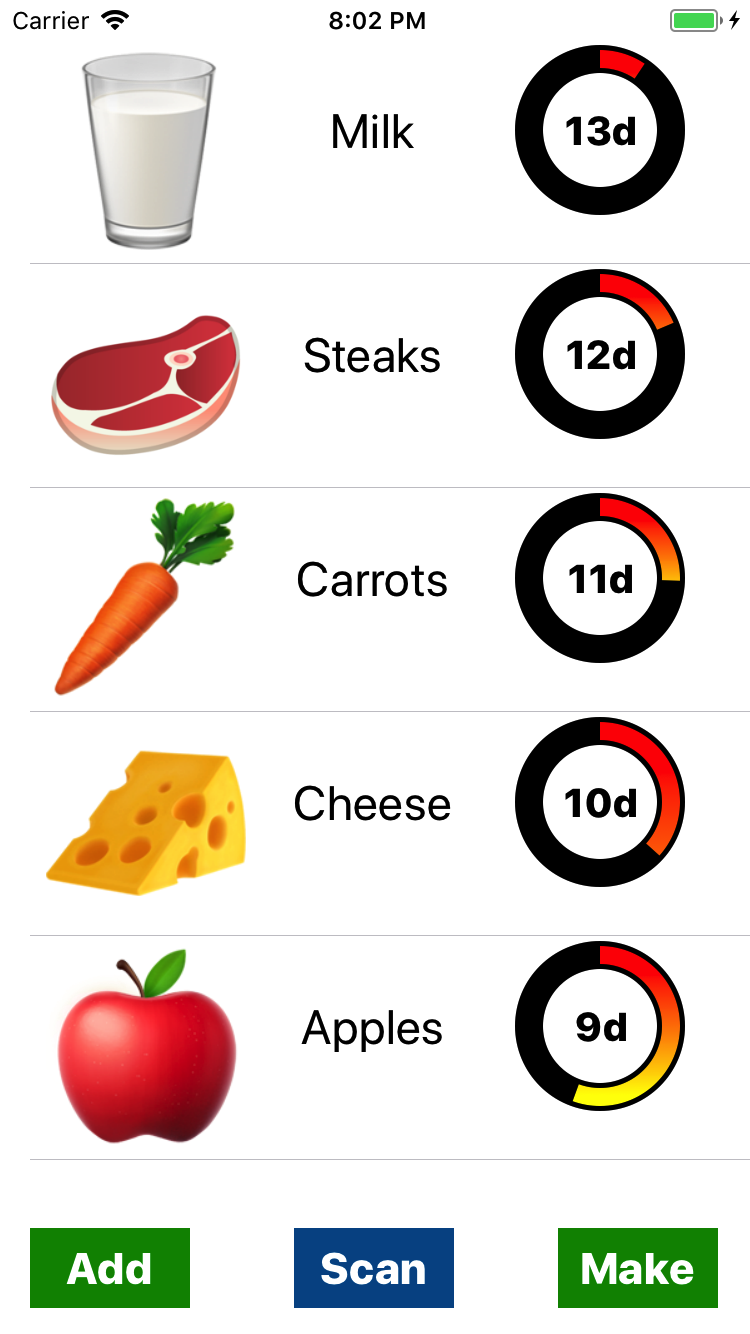
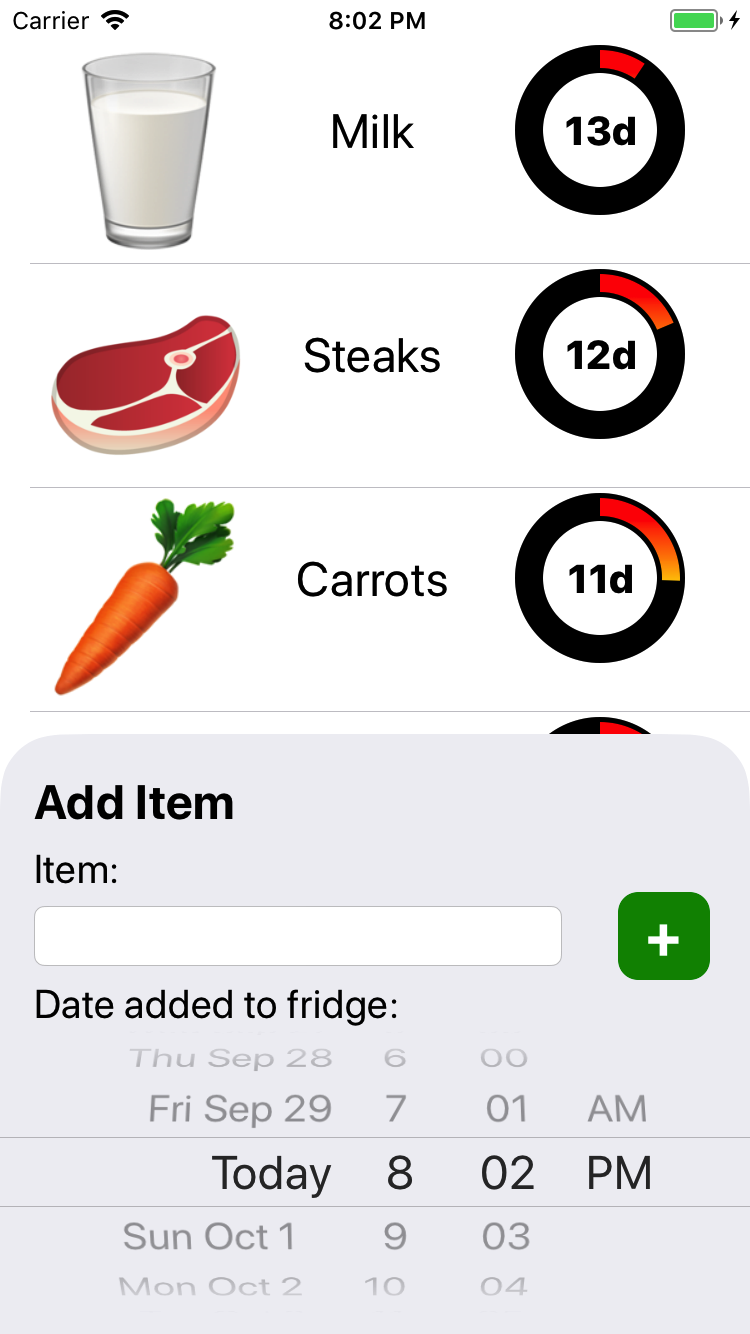
The app is a way to track the food that enters your household and monitor the expiration dates of each item. There are a couple ways to log items into the app, but the main on is a receipt scanner. Additionally, you can just manually add anything and the app will do its best to find your food in the database. Speaking of which, we are using the EatByDate database. EatByDate is a website that logs data on most different kinds of foods and how long they will last in the fridge. Our UI features a feed of all the different foods in the fridge and the amount of time left on them. From here one can move to a our make section in which recipes are generated based on the foods you have in your fridge. These recipes are largely pulled from the AllRecipes data base where we cross check ingredients. You can either generate recipes based on your entire fridge or just select a few ingredients (like if something is about to spoil).
The secondary component is a sensor that sits in the fridge and detects gasses that rotting foods let off. The main gasses that need to be detected are ethylene, various sulfides, ethanol, and lactate (for produce, meats, grains, and dairy, respectively). The sensor sits in your fridge an detects if there are any changes over time. Note that this will be tracking change in gas concentration, not just overall concentration to account for residual gas from past foods. This sensor will be connected to a wifi network so it can send notifications straight to your phone through the app.
How we built it
For the app, we created a shell app to demonstrate all of the features we would like to implement. However, we were able to get each feature into it, even if some of them have to be manually triggered.
For the sensor, we used an arduino and grove base shield. Unfortunately, we weren't able to get all of the sensors we need, but we simply used the given light and sound sensors instead with the idea that as soon as we acquire a gas sensor, we can just swap it out and edit the values.
Challenges we ran into
The first challenge was having never used arduinos before. I spent the better part of friday night just familiarizing myself with the syntax and sensors. From there, we had the issue of not having all of the proper hardware including the sensors and a wifi enabled arduino. We would have used a snapdragon, but we both brought macs.
On the software side, our main issue was manpower. This team is just the two of us, and I personally have zero experience with swift. This is why we decided to go with a shell app instead of a working one that only had a couple of our projected features. We thought it was more important to showcase our idea than our technical skills.
Accomplishments that we're proud of
We're personally proud of just being able to field a product in this amount of time. This was our first hackathon and we were able to have something to show for it. We're also proud of the fact that if this goes through, it might actually help people. In the past, we have largely done projects constrained by our abilities and interests so this was the first time we set out with a goal to help people and the thought that we'll figure it out as we go.
What we learned
We learned a lot about ourselves and how we work together (quite well). In addition, we learned a lot about our capabilities as engineers. I honestly never would have thought that we'd be able to pull this off.
Lastly, we each picked up a huge array of technical skills. On my side, working with arduinos was a really interesting experience, one that I'm eager to repeat.
What's next for Waste Not
Short term, we'd like to generate a full working app (not necessarily polished) and a working prototype of the sensor. From there, we hope to launch to the public with the app and see if it catches people's interest. If it does, we'll be going to kickstarter to fund mass production on the sensor to get it out there. We hope for it to eventually become as common as the Nest.
Log in or sign up for Devpost to join the conversation.