-
-
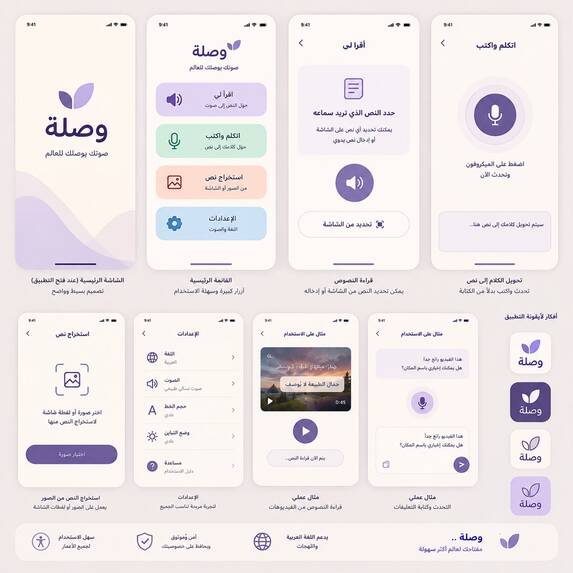
UX / UI app
-
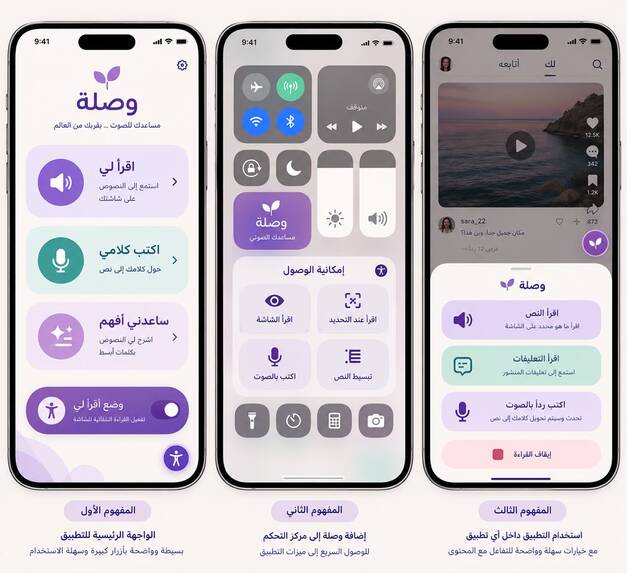
UX / UI
Inspiration
Digital information is part of our everyday lives, but accessing and understanding it is not equally easy for everyone. We wanted to explore a simpler, more natural way for people to interact with digital content, especially for those who benefit from voice-based assistance and clearer explanations.
This inspired Waslah | Your World, Within Reach — an accessibility assistant designed to help users read, dictate, and understand digital text through a straightforward experience.
We believe that technology should adapt to people, not force people to adapt to complicated technology. That is why language, simplicity, and user control are central to our vision.
What it does
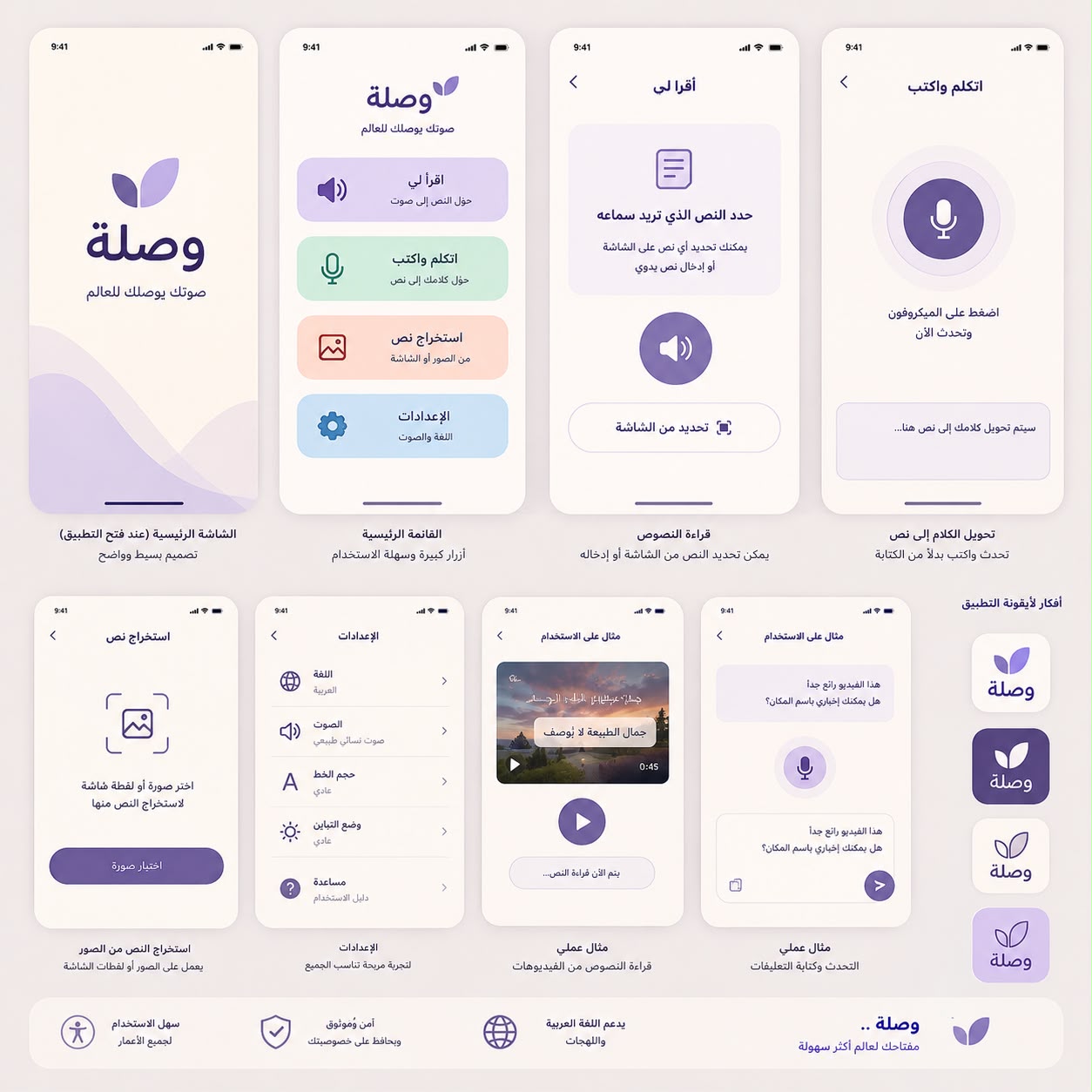
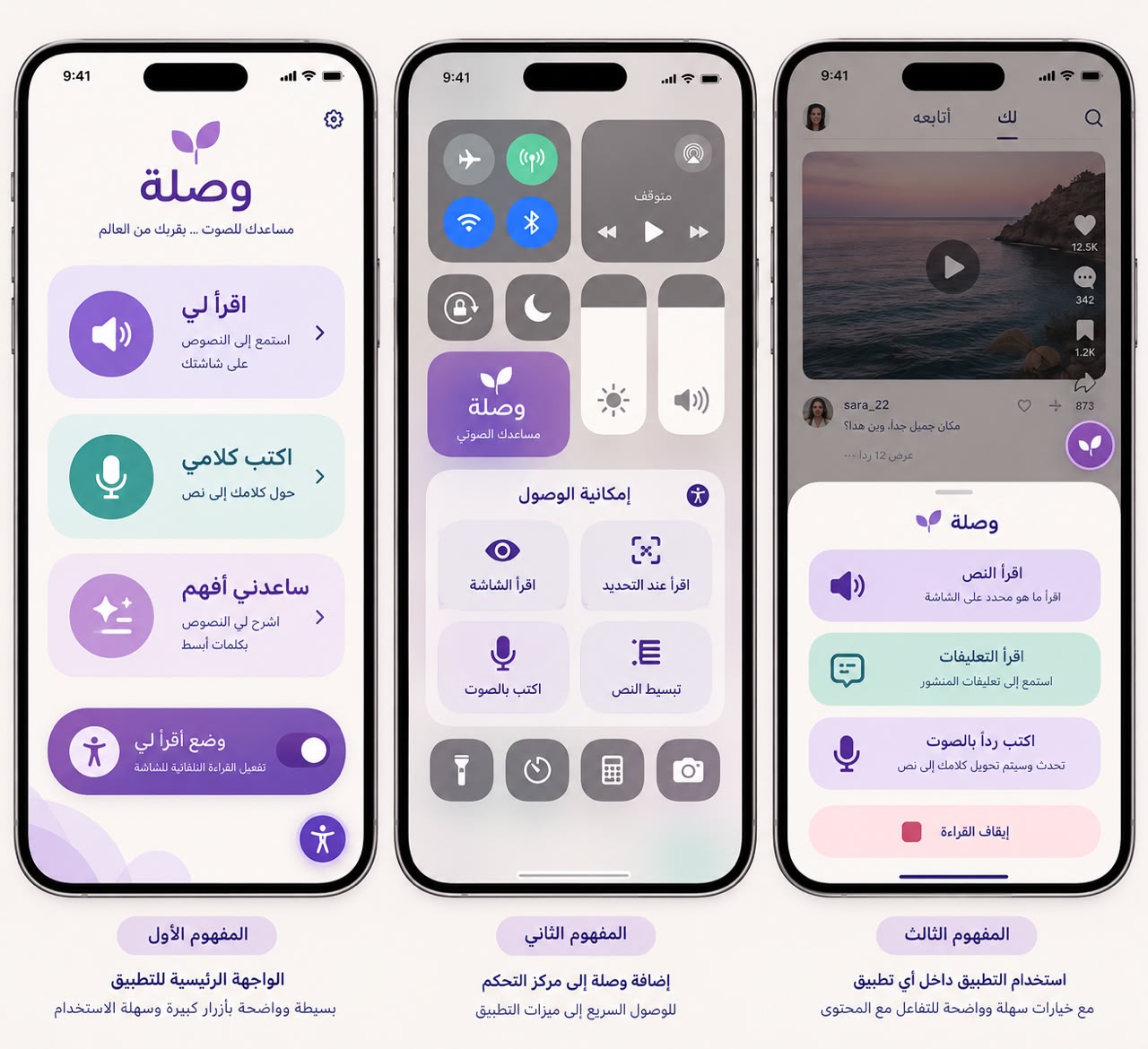
Waslah is an Arabic-first accessibility project built around three core services:
- Read for Me: Helps users access text through a reading experience.
- Dictate for Me: Provides a voice-input workflow for turning spoken words into text.
- Help Me Understand: Aims to simplify text and make information easier to understand.
Language is an important part of Waslah. Our goal is to let users interact in a language they are comfortable with, while Arabic remains the primary language of the current experience.
The web demo presents the service interface and interaction flow. The broader project also explores AI-powered screen understanding and a floating assistant for supported platforms. These advanced capabilities require further integration and testing.
How we built it
We developed a web-based prototype to demonstrate Waslah's interface, its three main services, and the intended user journey.
The broader project is structured around Flutter, with separate components for voice interaction, screen context, overlay presentation, and message confirmation. We have also defined a backend workflow for future AI-assisted screen analysis.
Our approach focuses on keeping the experience simple, separating components so they can be developed independently, and designing for user control and privacy.
Challenges we ran into
One of our main challenges was understanding the technical limitations of browsers and mobile operating systems. A regular website cannot freely access the contents of other applications or display a persistent floating assistant over every app.
Voice interaction introduces further challenges, including microphone permissions, speech recognition, and language support. Connecting AI services also requires a properly configured backend and careful handling of user-provided information.
These challenges helped us distinguish between what our prototype currently demonstrates and what requires additional development.
Accomplishments that we're proud of
We are proud to have developed a tangible prototype that communicates our vision through a clear, Arabic-first interface and three focused assistance services.
We are also proud of the way Waslah brings together accessibility, voice interaction, and language-aware assistance in one concept. Instead of focusing on a single interaction, we designed the experience around different ways users may need help with digital content.
Most importantly, we have established a foundation that can be extended as the technical integrations mature.
What we learned
We learned that accessibility is not simply about adding more features. It requires thoughtful interaction design, understandable controls, and consideration of different user needs and language preferences.
We also learned the importance of validating technical feasibility early, especially when working with screen sharing, speech technologies, and AI integration.
Building Waslah reinforced the need to be transparent about technical limitations and to treat privacy and user consent as essential parts of the experience.
What's next for Waslah | Your World, Within Reach
Our next steps are to improve and validate AI-powered text understanding, develop screen-capture integration on supported platforms, and test voice interaction across supported languages and devices.
We also aim to refine the floating assistant experience, strengthen privacy safeguards, and evaluate the core services through practical user testing.
Our long-term vision is to make digital information easier to access and understand through natural, language-aware, and user-controlled assistance — bringing people closer to the digital world, one interaction at a time.

Log in or sign up for Devpost to join the conversation.