-
-
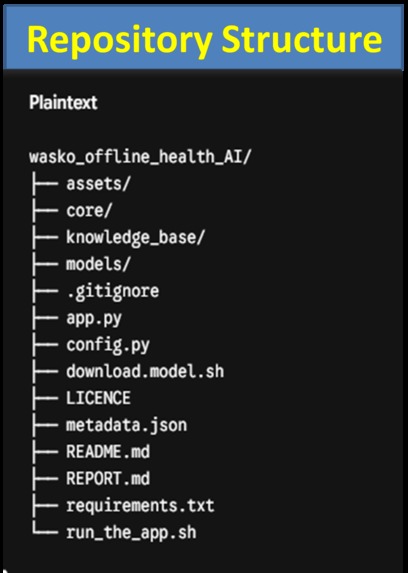
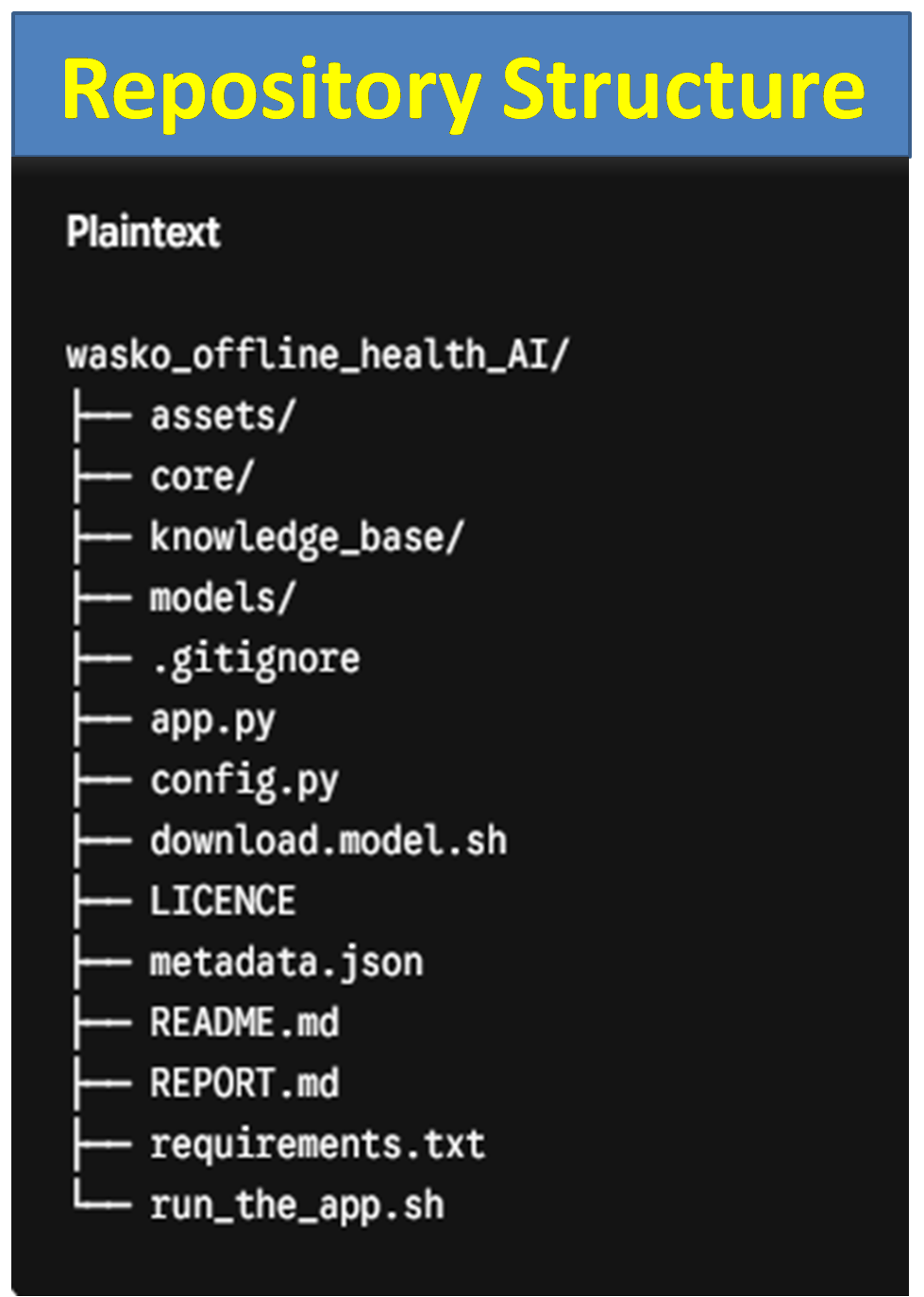
Repository structure
-
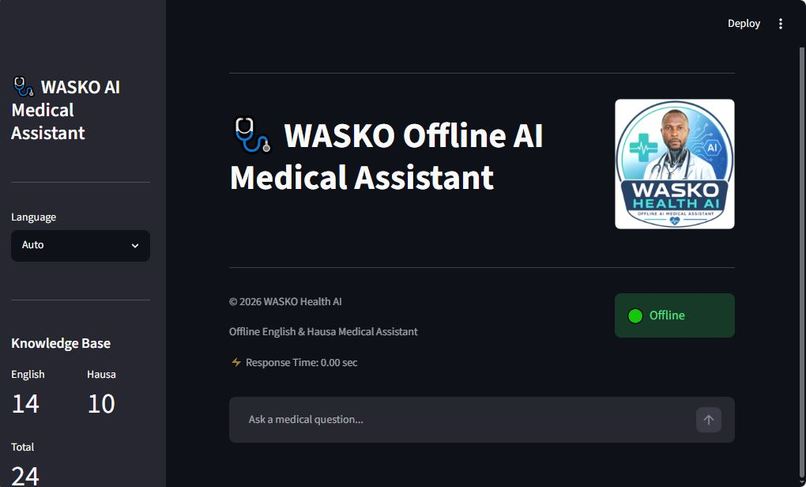
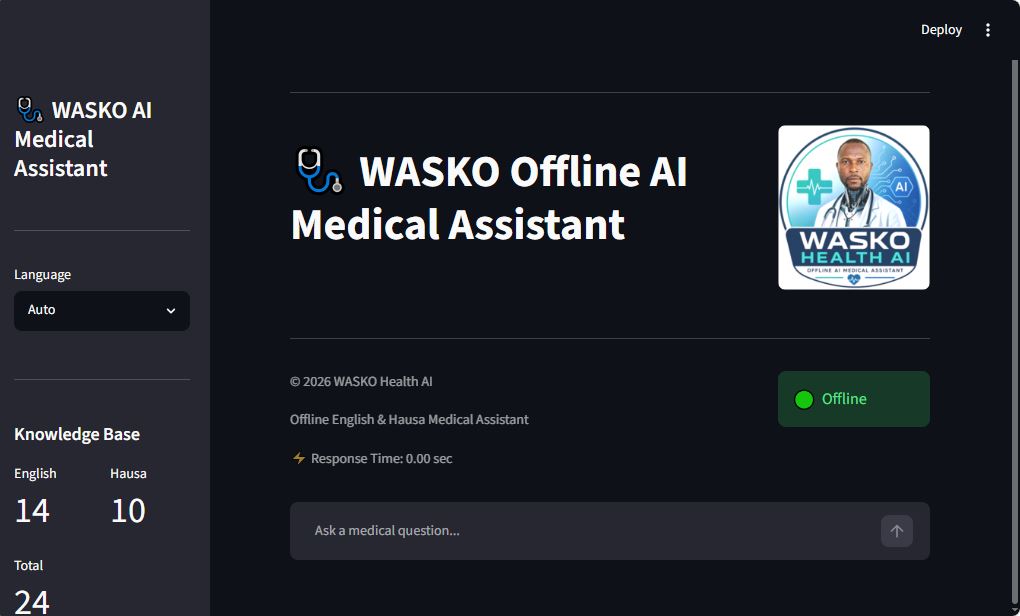
Black interface
-
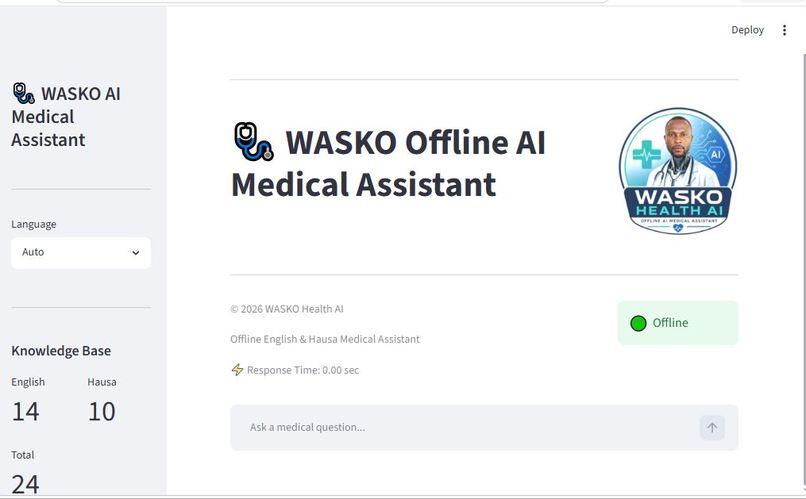
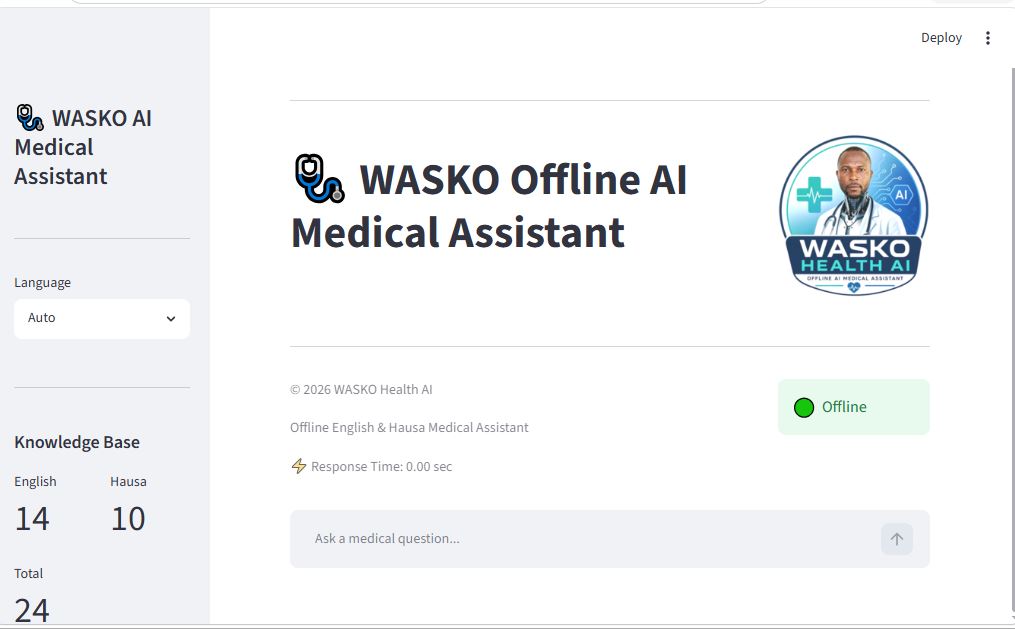
Light interface
-
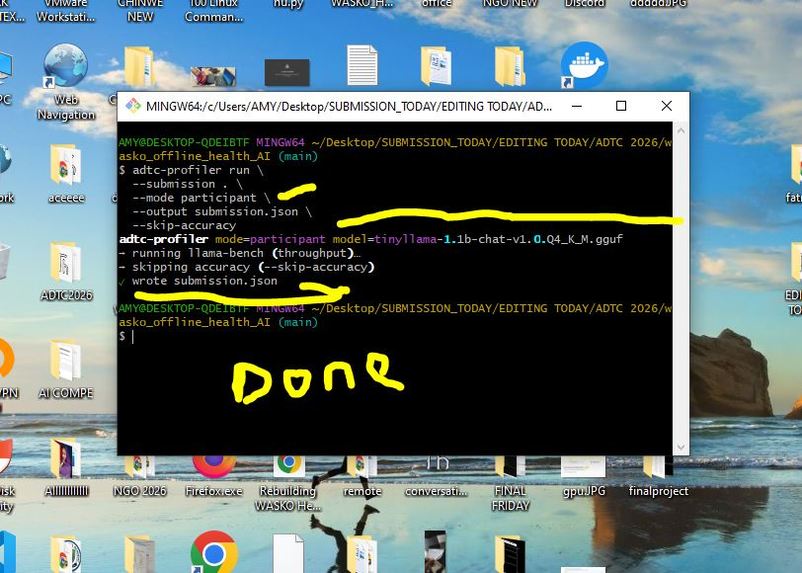
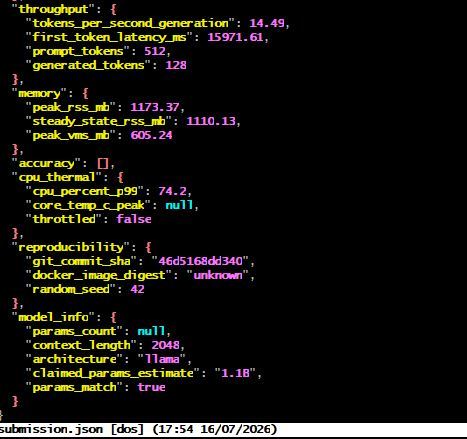
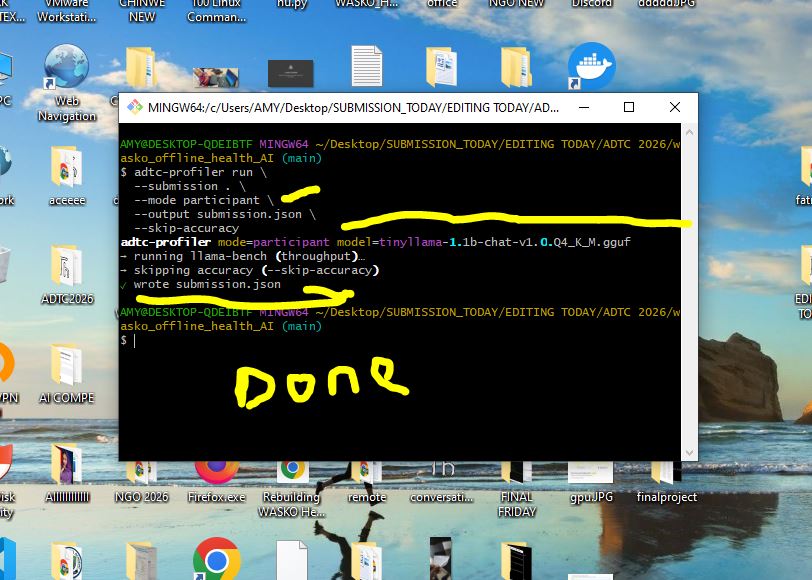
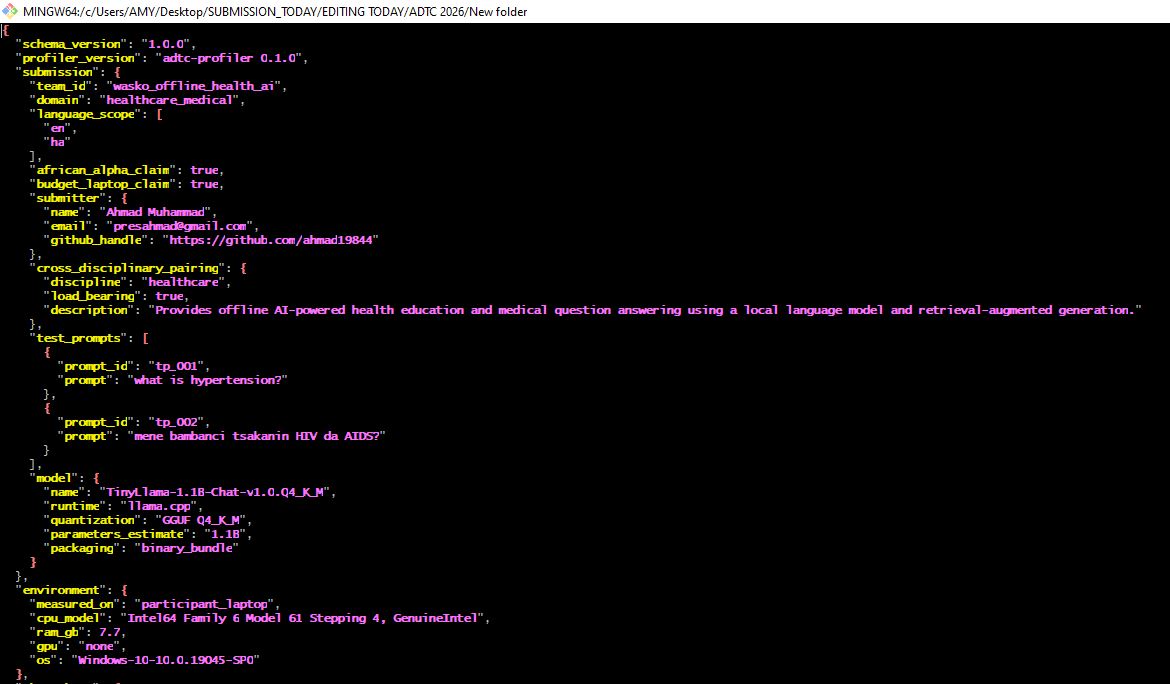
Submission json
-
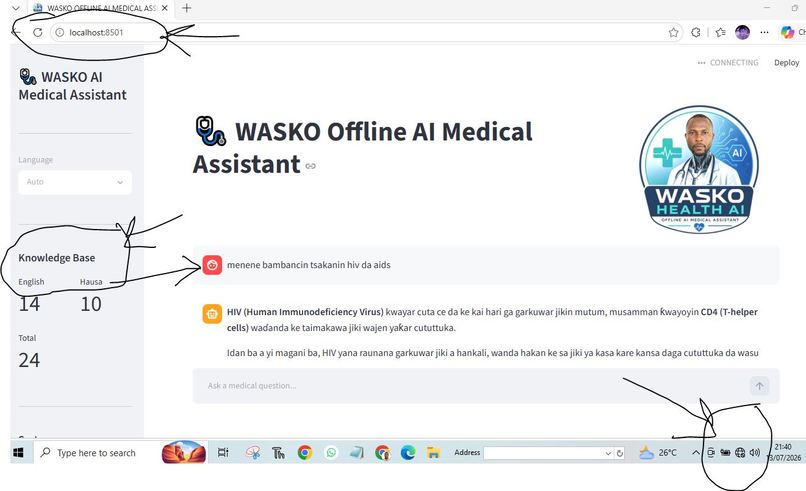
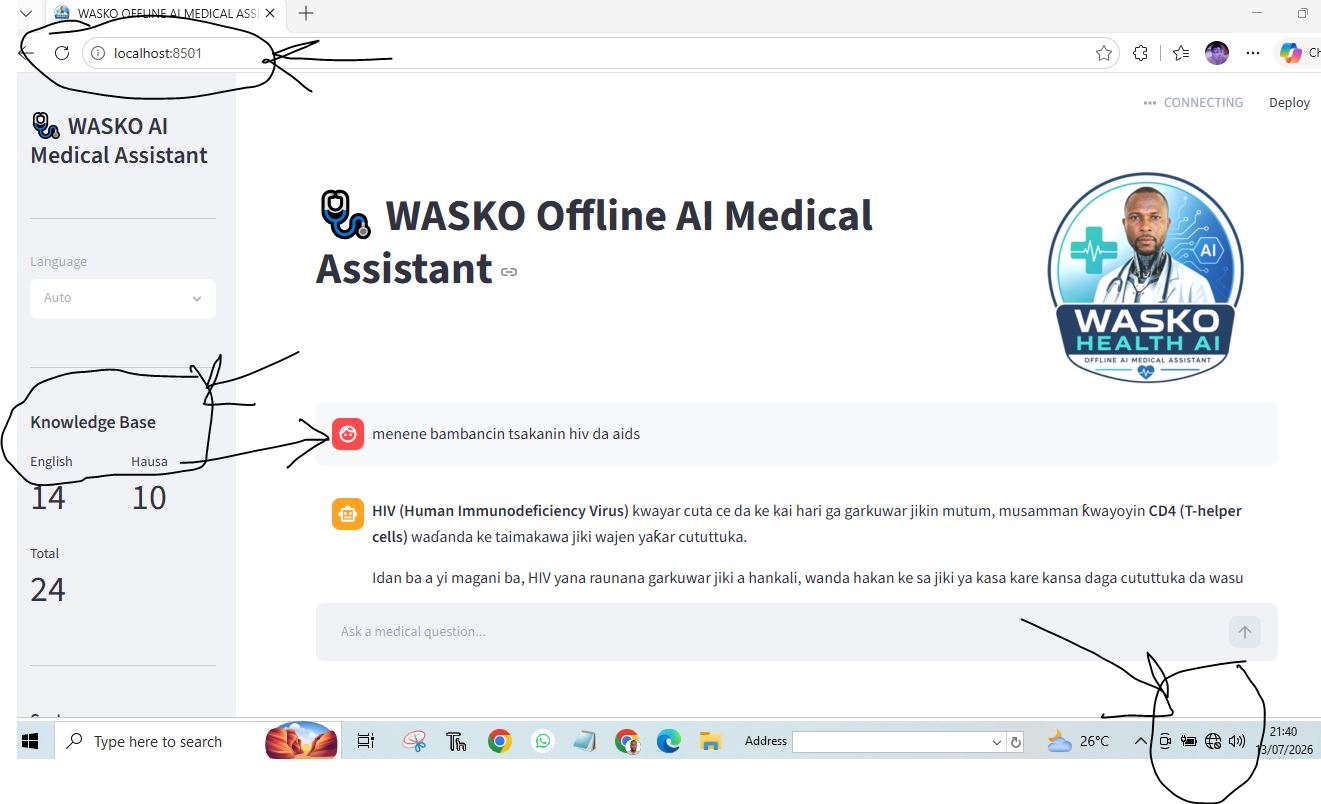
Hausa prompt
-
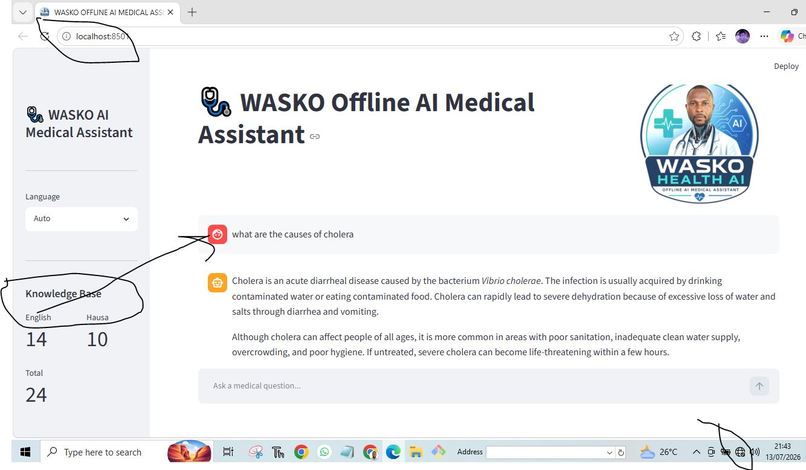
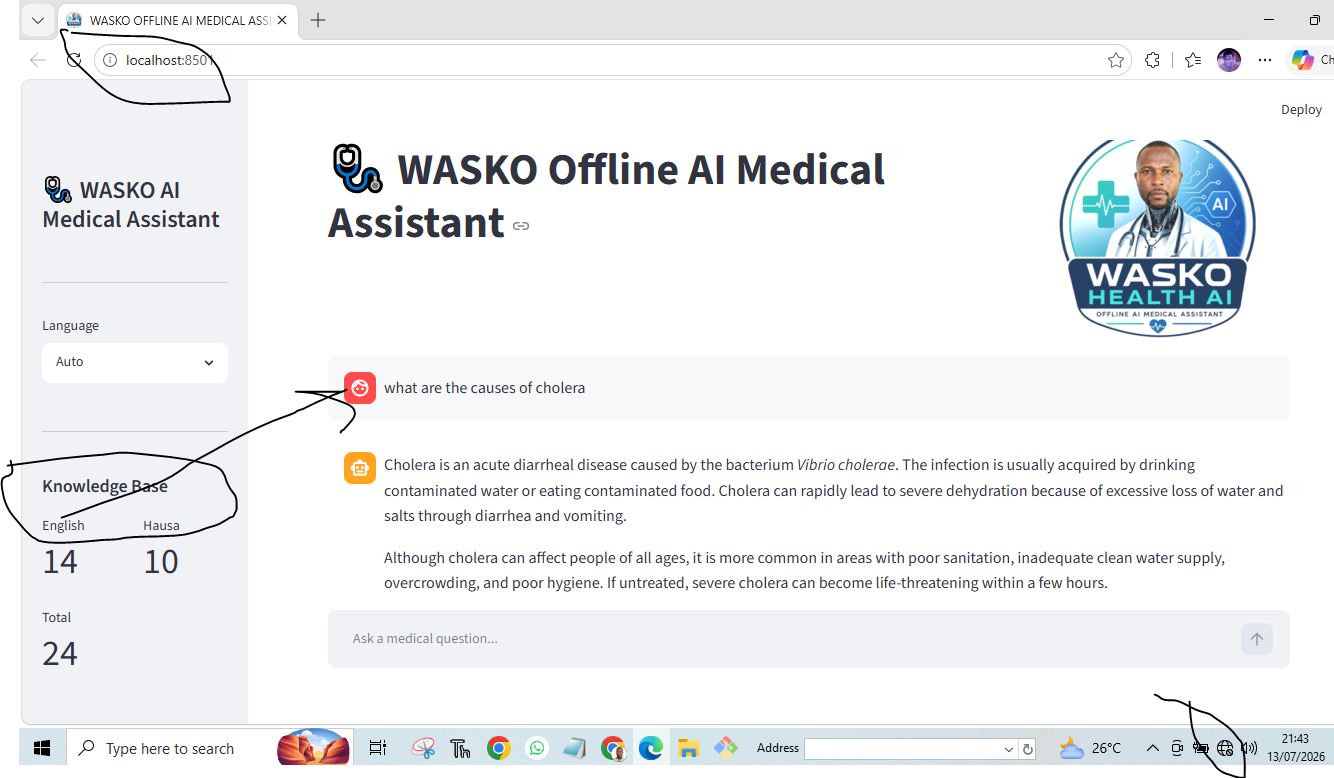
English prompt
-
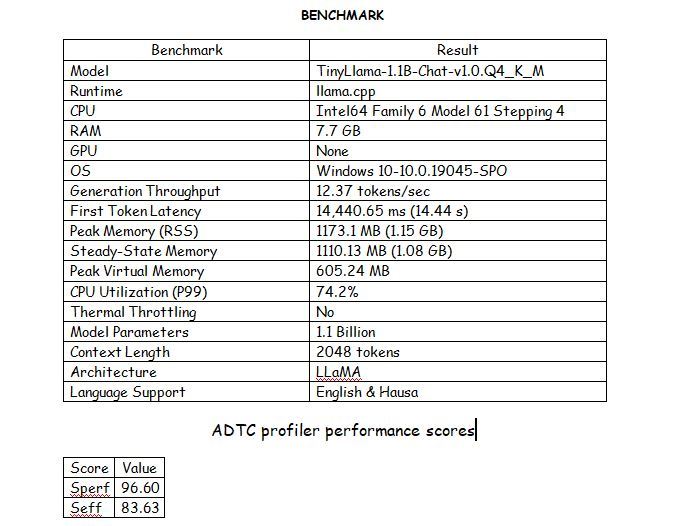
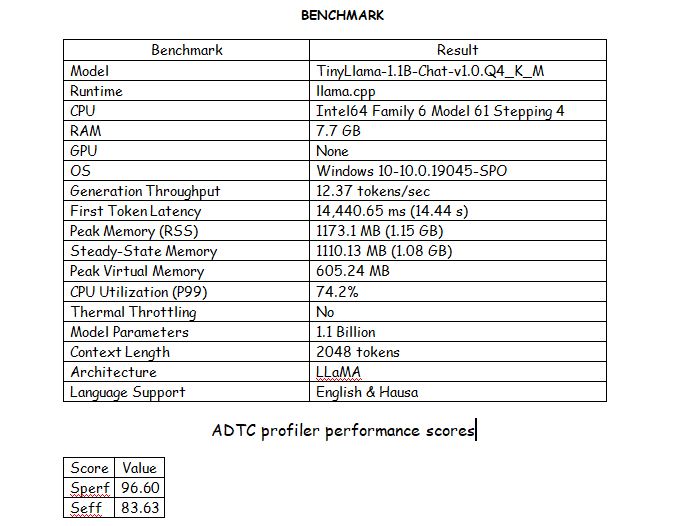
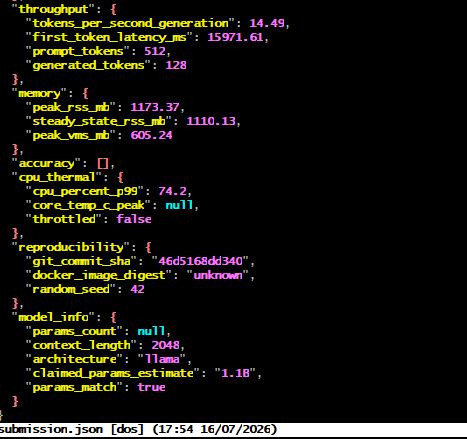
Benchmarl
-
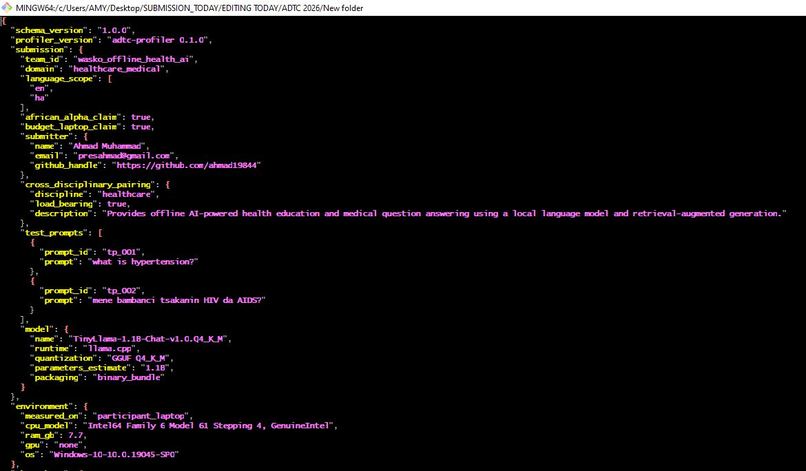
sub 1
-
sub 3
Inspiration
Across many African communities, reliable internet access and modern computing resources remain limited, making it difficult for people to access trustworthy health information when they need it most. I wanted to demonstrate that Artificial Intelligence can still make a meaningful impact in these environments by running entirely offline on an ordinary laptop. The inspiration behind Wasko offline Health AI was to build an AI-powered medical assistant that provides health education in both English and Hausa languages without requiring an internet connection. My goal was to create a practical solution that supports students, community health workers, teachers, rural clinics, and families with reliable medical information anytime and anywhere.
What it does
Wasko offline Health AI is an offline bilingual medical assistant designed for resource-constrained environments. It answers health-related questions in English and Hausa using a curated offline medical knowledge base combined with a lightweight Large Language Model.
Key features include:
- Offline operation with no internet dependency.
- English and Hausa language support.
- Retrieval of relevant medical knowledge before generating responses.
- CPU-only deployment on consumer laptops without a dedicated GPU.
- Fast local inference using TinyLlama running with llama.cpp.
- Plain-language explanations that are easy to understand.
The system focuses on delivering grounded responses from its offline knowledge base while reducing hallucinations through retrieval-based prompting.
How i built it
Wasko offline Health AI was developed entirely with open-source technologies. The application was built in Python with a Streamlit interface for an intuitive user experience. TinyLlama-1.1B Chat (GGUF Q4_K_M) serves as the language model and is executed locally using llama.cpp for efficient CPU inference. Medical knowledge is stored as structured Markdown documents in English and Hausa, and a custom retrieval engine identifies the relevant disease and section before constructing optimized prompts for the model. The project also includes language detection, keyword extraction, prompt optimization, response cleaning, and bilingual support. Performance was evaluated using the official ADTC Profiler, confirming practical deployment on a standard laptop without GPU acceleration.
Challenges i ran into
Developing an offline AI assistant introduced several technical challenges.
The first challenge was compiling and configuring llama.cpp on Windows while ensuring compatibility with the required profiler tools. Integrating the GGUF model, optimizing CPU inference, and resolving build dependencies required extensive debugging.
Another challenge involved designing a retrieval pipeline that consistently selected the correct medical document and section while supporting both English and Hausa queries. I also refined prompt engineering to minimize hallucinations, eliminate unnecessary formatting, and ensure that responses remained concise and directly addressed the user's question.
Finally, optimizing memory usage and inference speed to meet the ADTC Laptop LLM requirements required multiple rounds of testing, benchmarking, and performance tuning.
Accomplishments that i am proud of
I am proud to have developed a fully offline AI medical assistant that runs efficiently on consumer hardware without relying on cloud services.
Which includes:
- Successfully deploying TinyLlama on a CPU-only laptop.
- Building bilingual English and Hausa support.
- Creating a structured offline medical knowledge base.
- Implementing retrieval-based generation to improve response quality.
- Achieving practical performance using the official ADTC profiling tool.
- Demonstrating that affordable hardware can support useful AI applications for underserved communities.
Most importantly,Wasko offline Health AI shows that advanced AI can remain accessible even where internet connectivity is unreliable.
What i learned
This project strengthened my understanding of deploying Large Language Models in low-resource environments.
I gained practical experience in:
- Efficient local LLM deployment using llama.cpp.
- Prompt engineering for domain-specific assistants.
- Knowledge retrieval and grounding techniques.
- Performance optimization for CPU-only inference.
- Building multilingual AI applications.
- Benchmarking and profiling AI systems for reproducible evaluation.
Perhaps the biggest lesson was that thoughtful system design is often more important than simply using a larger model. With careful optimization and retrieval, compact models can deliver practical real-world value.
What's next for Wasko_offline_Health_AI
My vision is to transform Wasko offline Health AI into a comprehensive offline healthcare platform for Africa.
Future development will focus on:
- Expanding support to additional African languages.
- Growing the offline medical knowledge base with more locally relevant health topics.
- Supporting voice-based interaction for users with limited literacy.
- Optimizing inference for lower-powered devices.
- Adding offline document search and health education modules.
- Collaborating with healthcare professionals to continuously improve the quality and reliability of the knowledge base.
My long-term goal is to make trustworthy, privacy-preserving, and affordable AI healthcare assistance available to every community, regardless of internet connectivity.

Log in or sign up for Devpost to join the conversation.