Inspiration
What Inspired WASHGuard?
In humanitarian settings like Kakuma Refugee Camp in Kenya, ensuring consistent access to safe water and sanitation is critical but often disrupted by factors like equipment breakdowns, fuel shortages, or poor road conditions during rains. Inspired by real field experiences, WASHGuard was built to help front-line WASH teams detect and respond to issues faster using data and AI.
What it does
We wanted to bridge the gap between ground-level observations and coordination-level decision-making by building a tool that could centralize field data, analyze it intelligently, and trigger timely alerts.
How we built it
The prototype includes three main components:
Mobile Data Collection Interface
- Tools: KoboToolbox / React Native / Google Forms
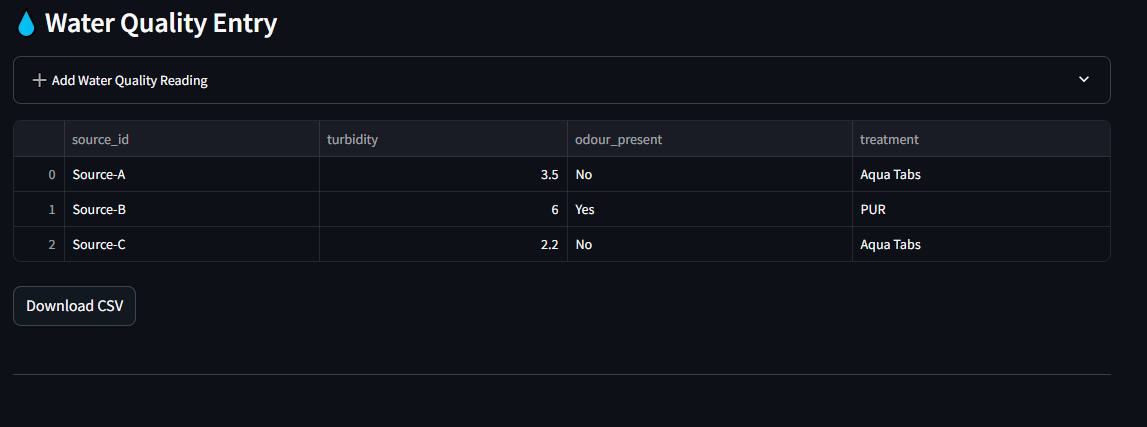
- Captures chlorine levels, water availability, latrine status, turbidity, and feedback from field staff.
AI-Powered Monitoring Dashboard
- Tools: Streamlit, Python
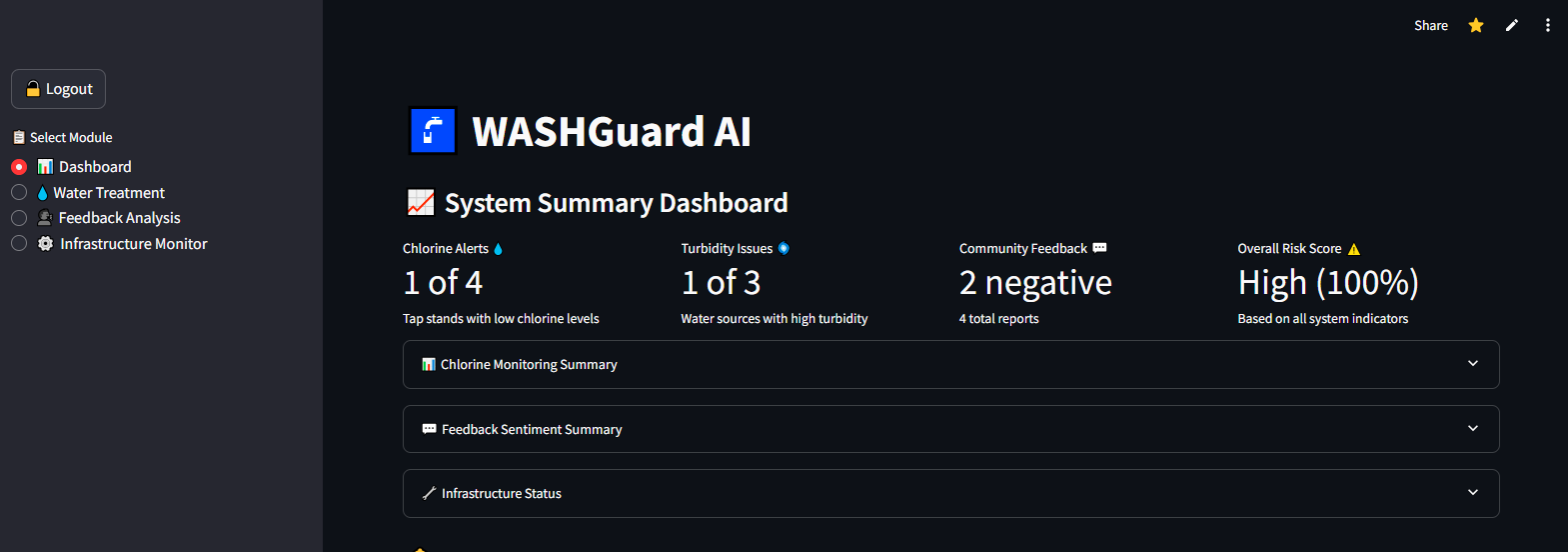
- Visualizes real-time WASH data and includes tabs for:
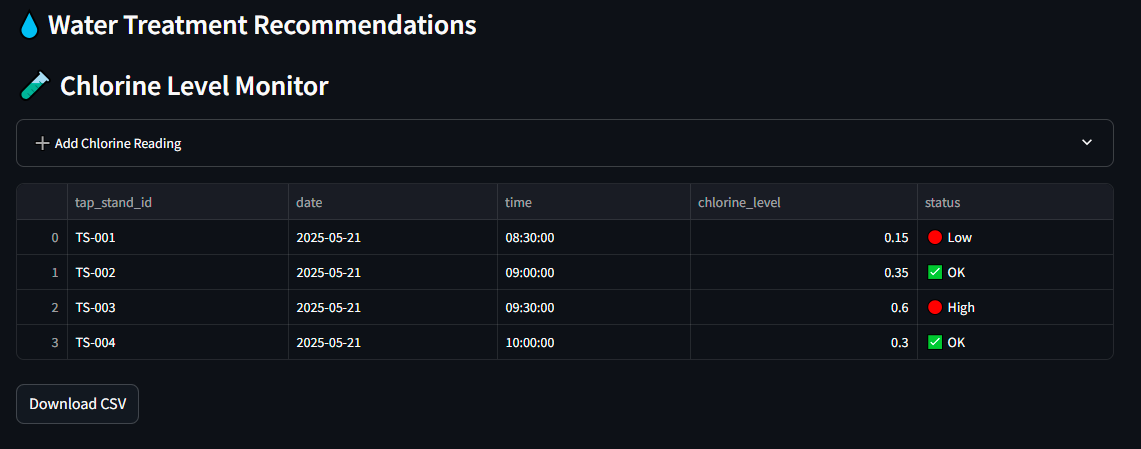
- Chlorine level anomaly detection
- Water treatment recommendations
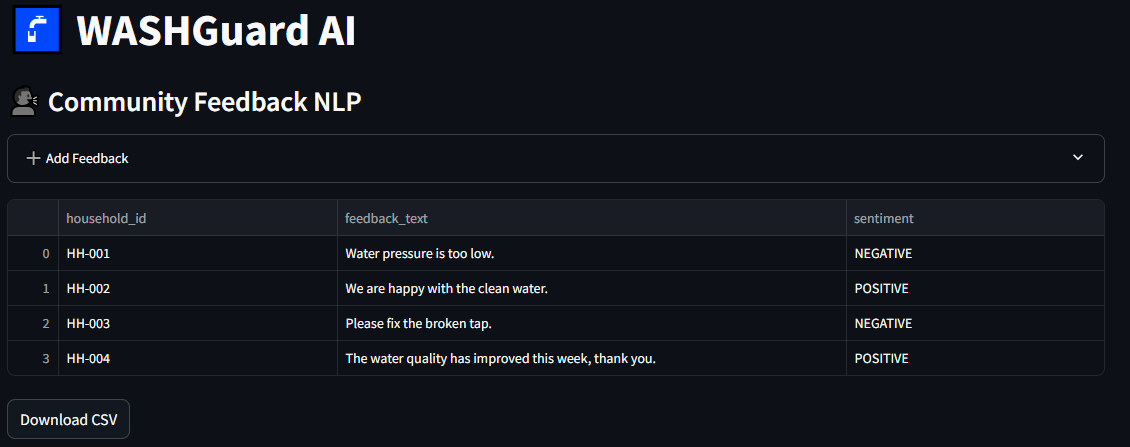
- Feedback sentiment analysis (via Hugging Face)
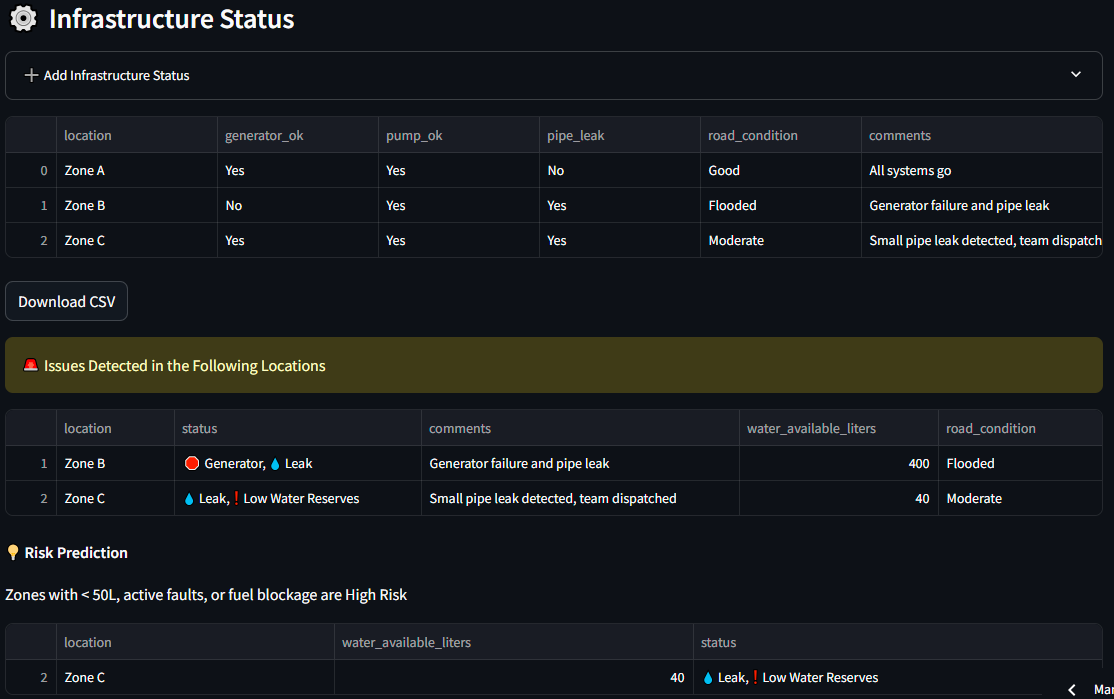
- Infrastructure health monitoring
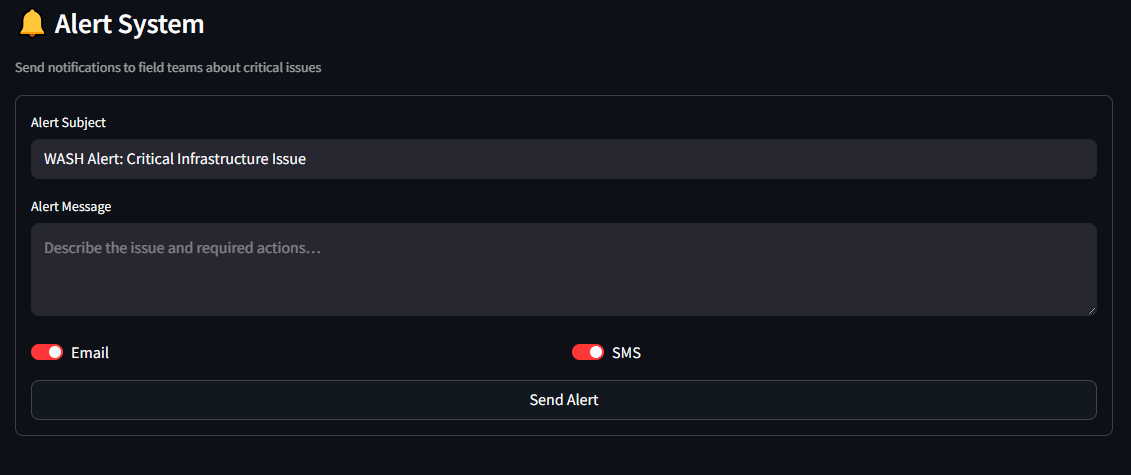
Alert and Notification System
- Tools: Twilio (SMS), SMTP (Email)
- Sends automatic alerts when failures are detected like generator faults, blocked fuel delivery due to road conditions, or low water availability.
- Tools: Twilio (SMS), SMTP (Email)
Challenges we ran into
- Data Realism: Simulating realistic but representative data from multiple sources to demonstrate AI modules.
- Connectivity Limitations: Designing around low-bandwidth environments common in remote areas.
- Infrastructure Complexity: Accounting for cascading failures e.g., rain blocks fuel delivery → generators fail no water pumped.
- Alert Fatigue: Making sure alerts are actionable and not overwhelming to coordination staff.
Accomplishments that we're proud of
- Real-time water quality tracking with alerts and trend charts.
- Community feedback analysis using sentiment-aware NLP.
- Mobile-responsive UI for field accessibility.
- Automated email/SMS alerts for rapid incident response.
- Unified dashboard with exportable summaries.
- Secure login/logout system for protected access.
- Optimized for low-resource deployment in remote areas.
What we learned
- How to turn raw field data into actionable insights using simple machine learning models and logic rules.
- How crucial road access and fuel logistics are to water delivery in emergency settings.
- How to design a usable, scalable AI dashboard even during early prototyping phases.
What's next for WASHGuard
- Role-based access control for admins, field staff, and partners
- Offline data capture with sync support for remote deployments
- Machine learning risk prediction for proactive alerts -Integration with GIS mapping to visualize zone-level risks -User-friendly mobile app for on-the-go monitoring
- Partnerships with NGOs & local governments to scale impact


Log in or sign up for Devpost to join the conversation.