-
-
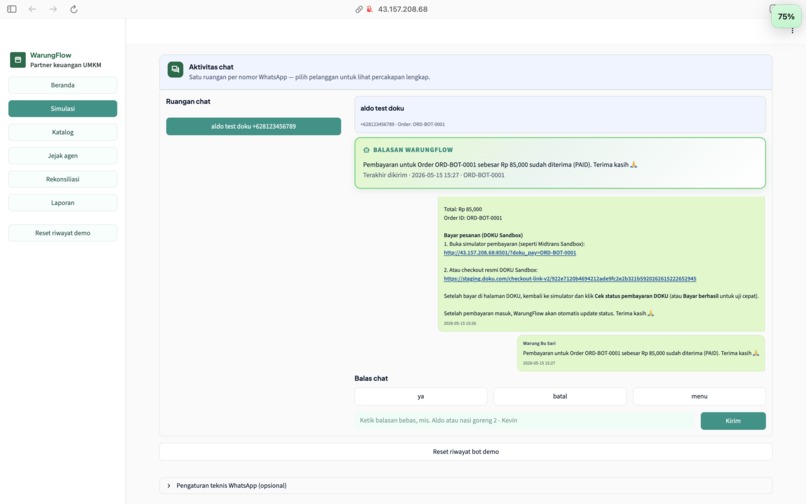
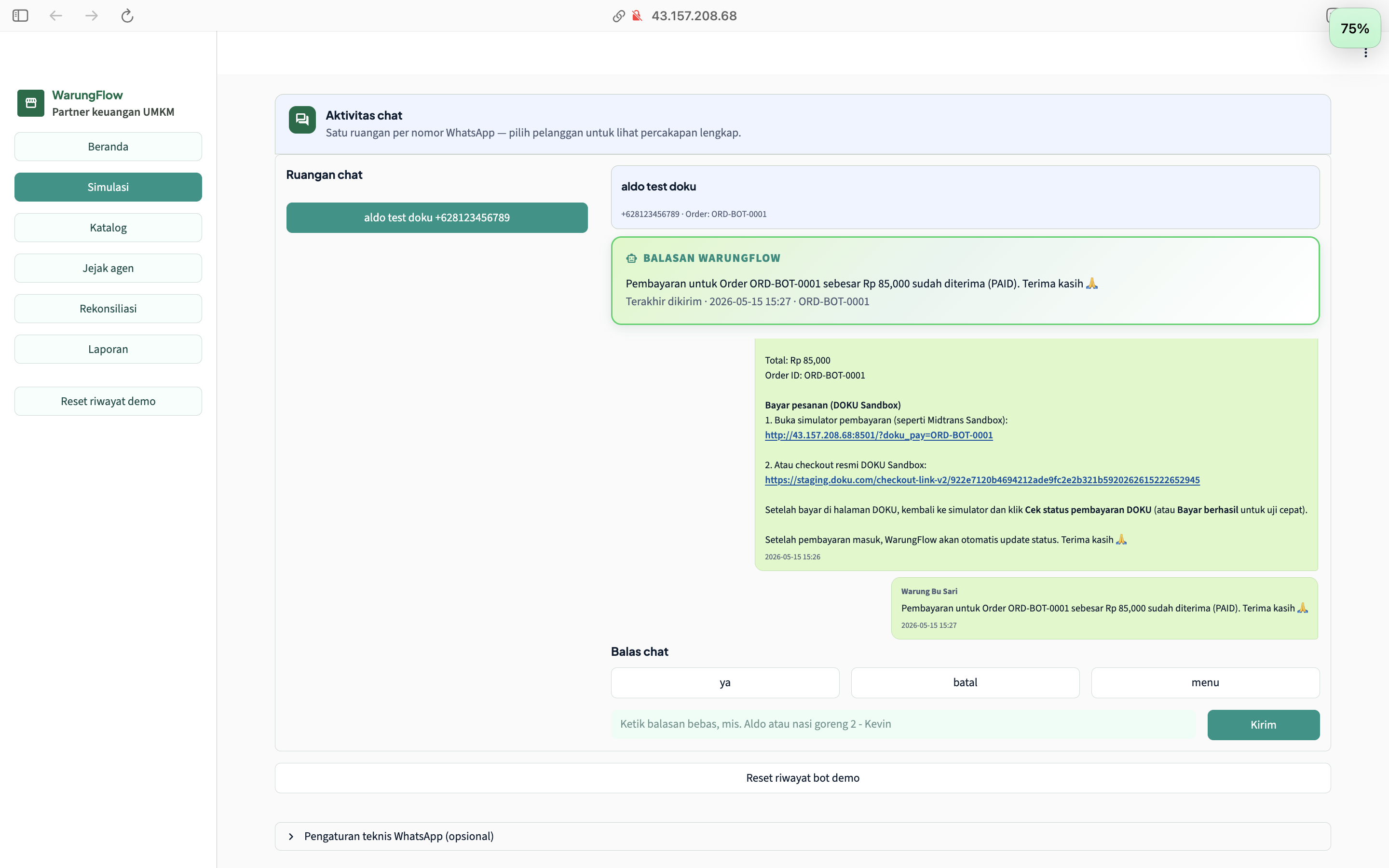
Simulasi bot whatsapp pesan konfirmasi otomatis saat pembayaran diterima
-
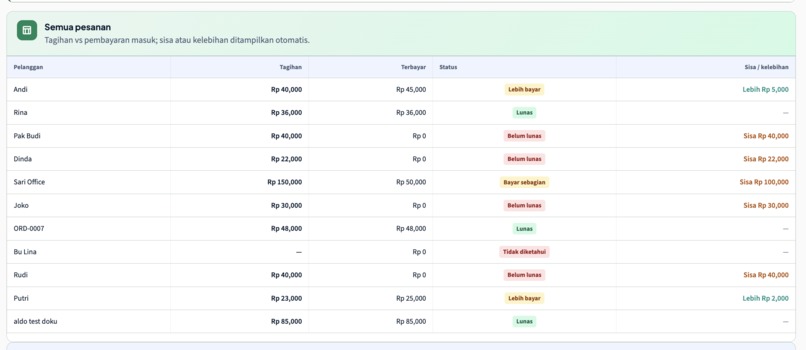
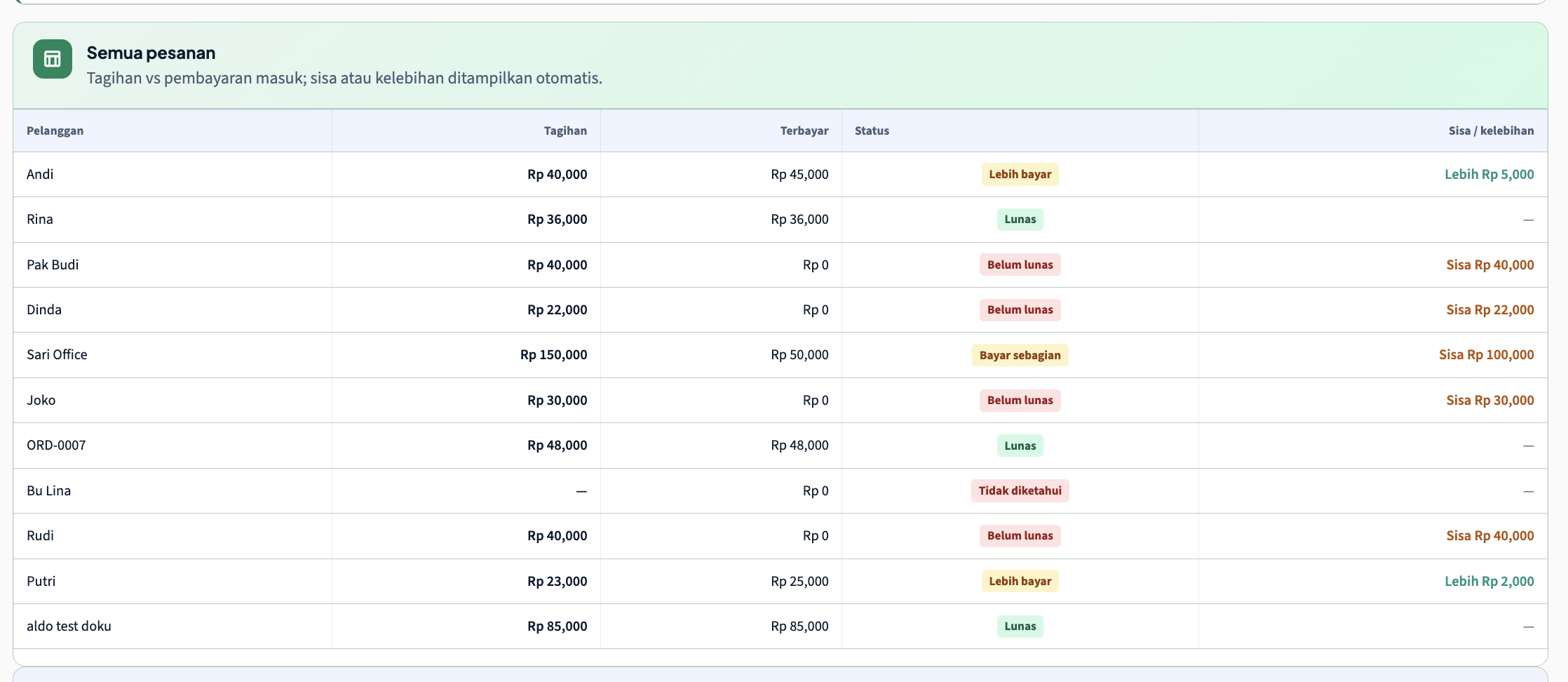
Halaman rekonsiliasi, cek secara helicopter view bagaimana status semua pesanan
-
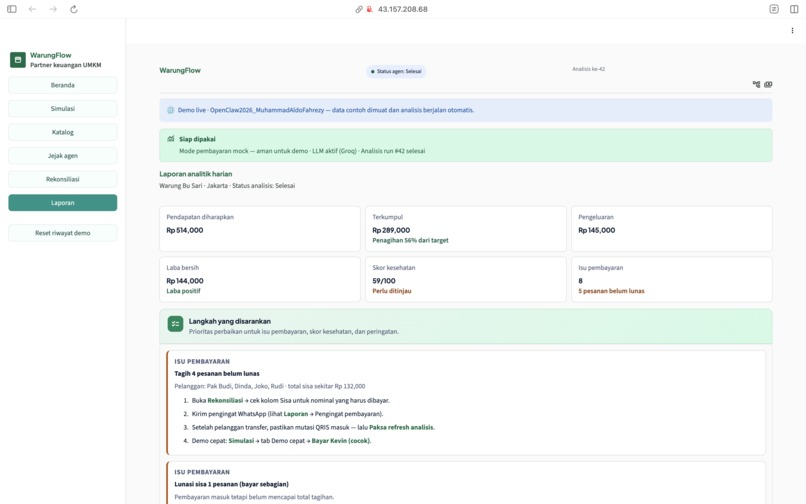
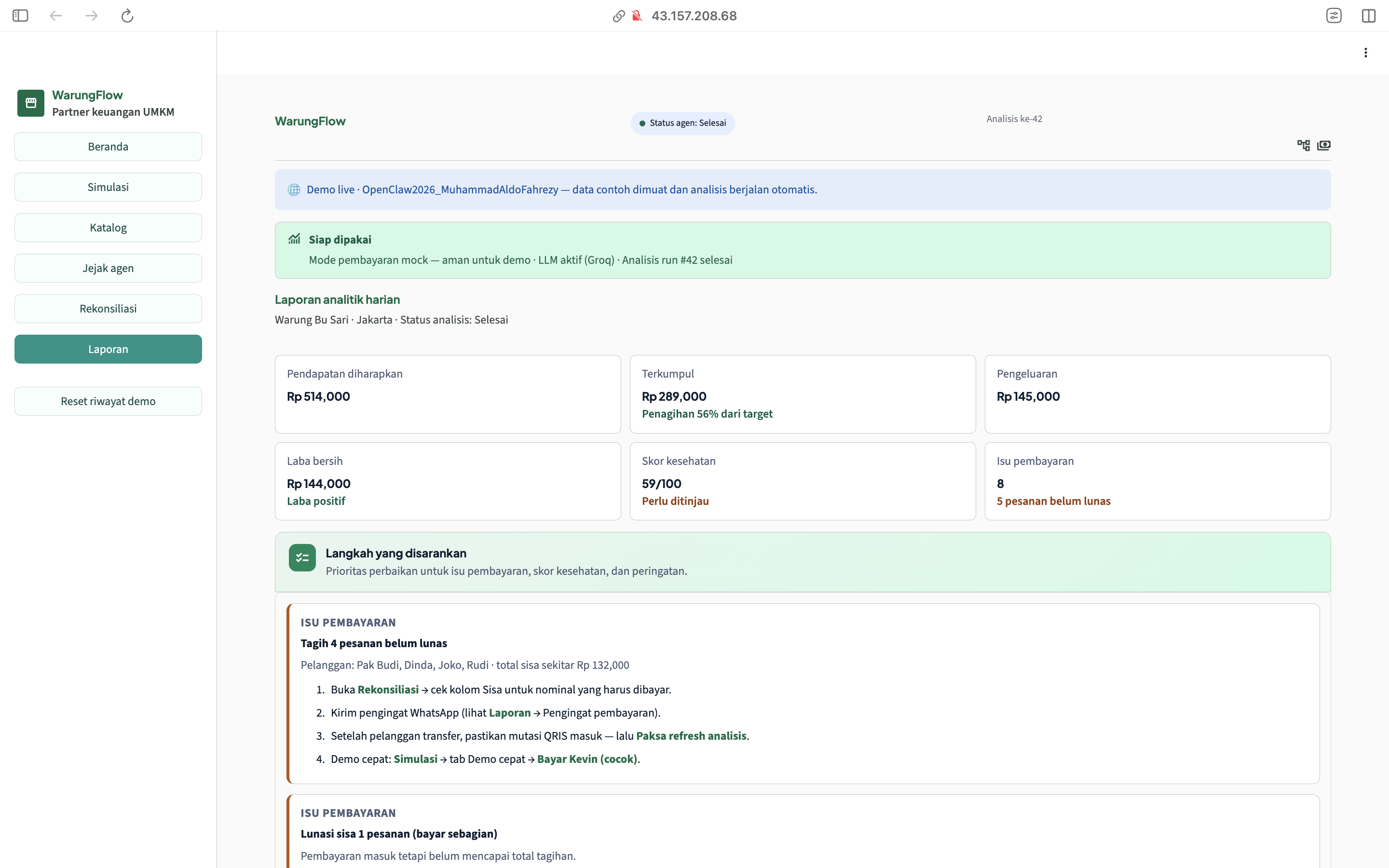
Laporan analitik 1
-
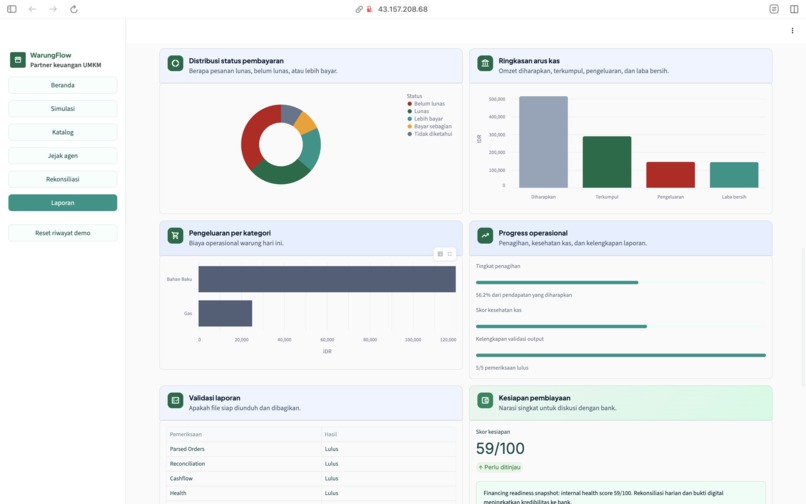
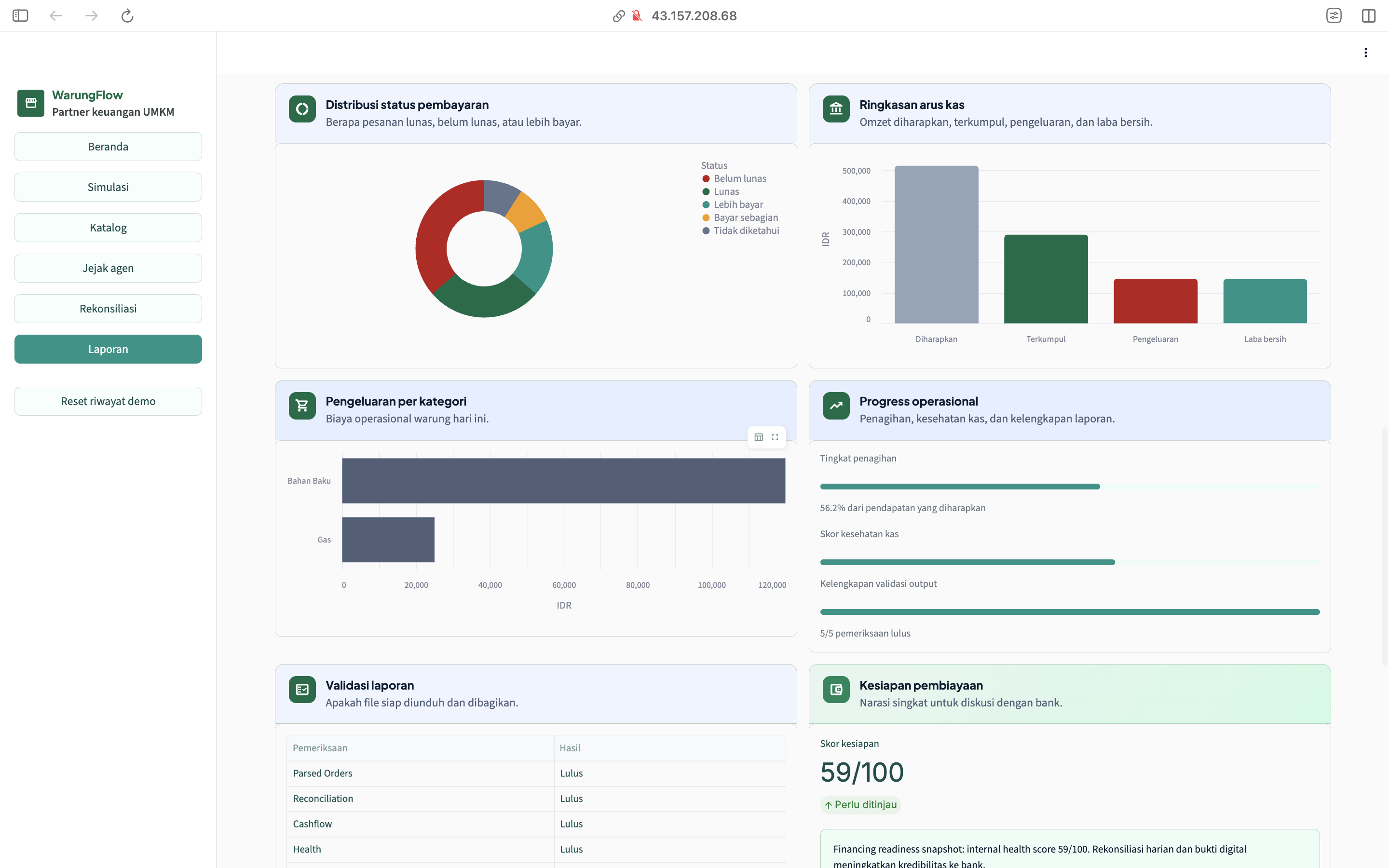
Laporan analitik 2
-
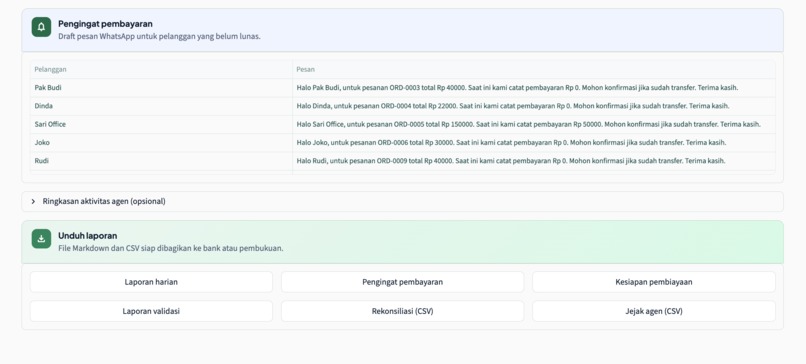
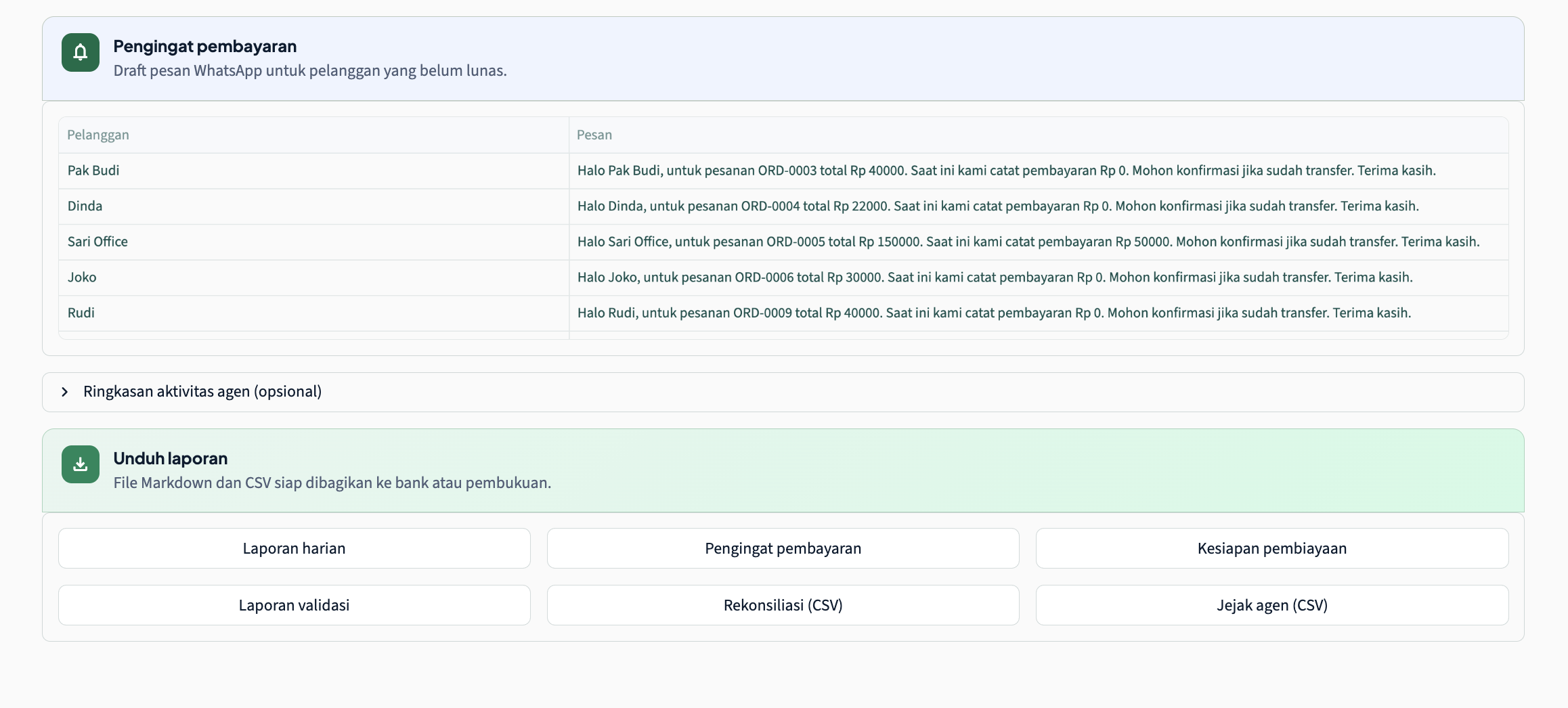
Template pesan untuk follow up pembayaran yang belum lunas
-
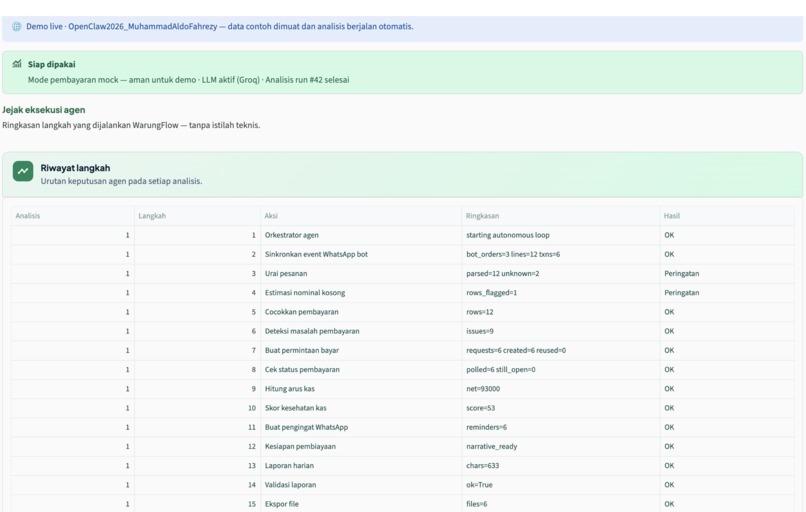
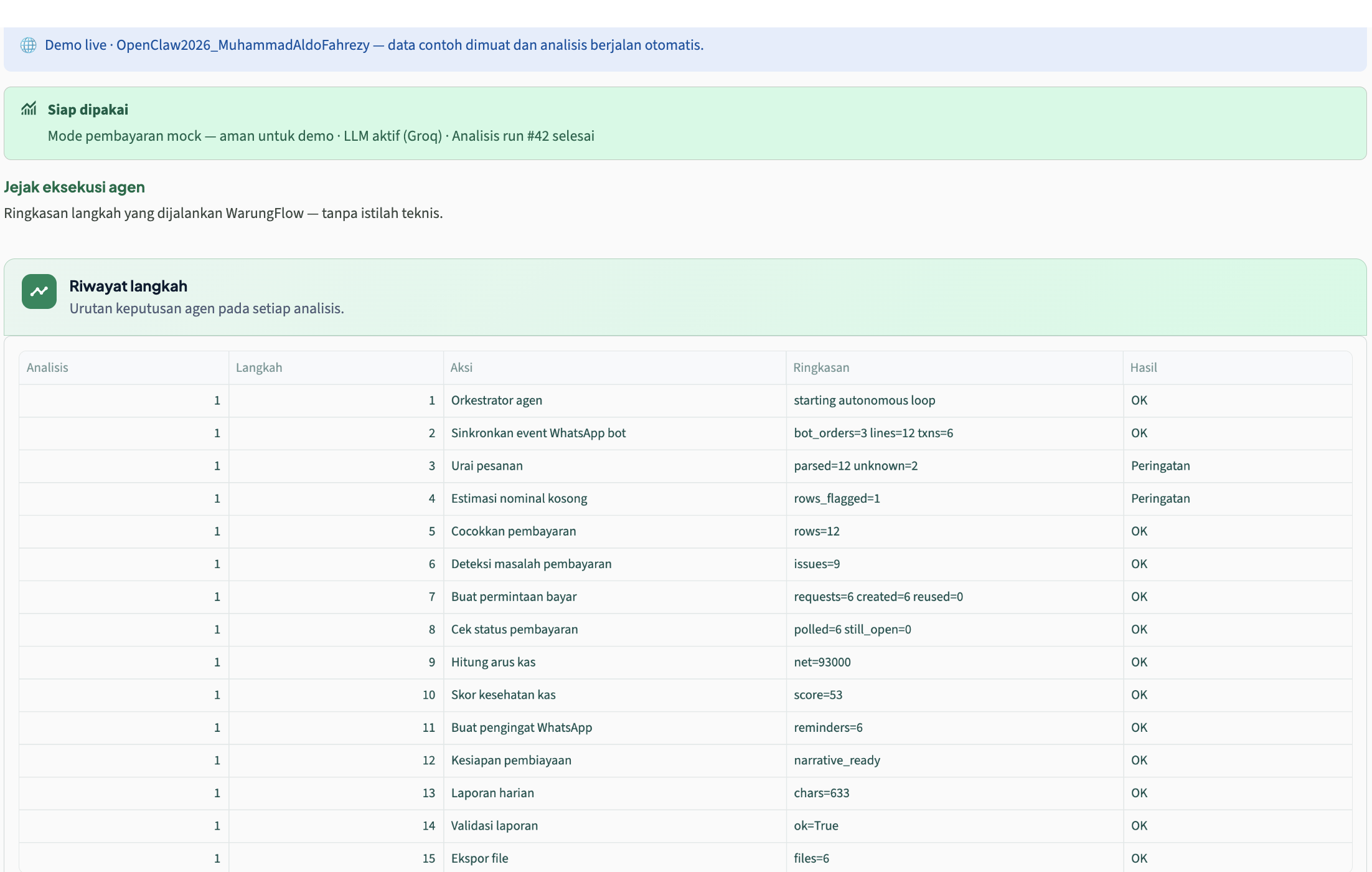
Riwayat steps yang diambil Agent
-
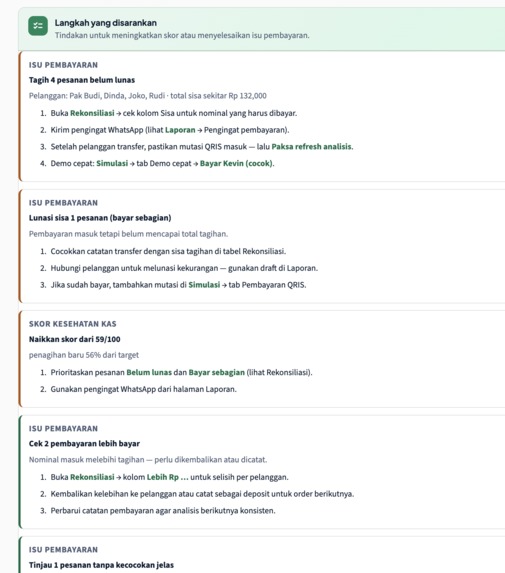
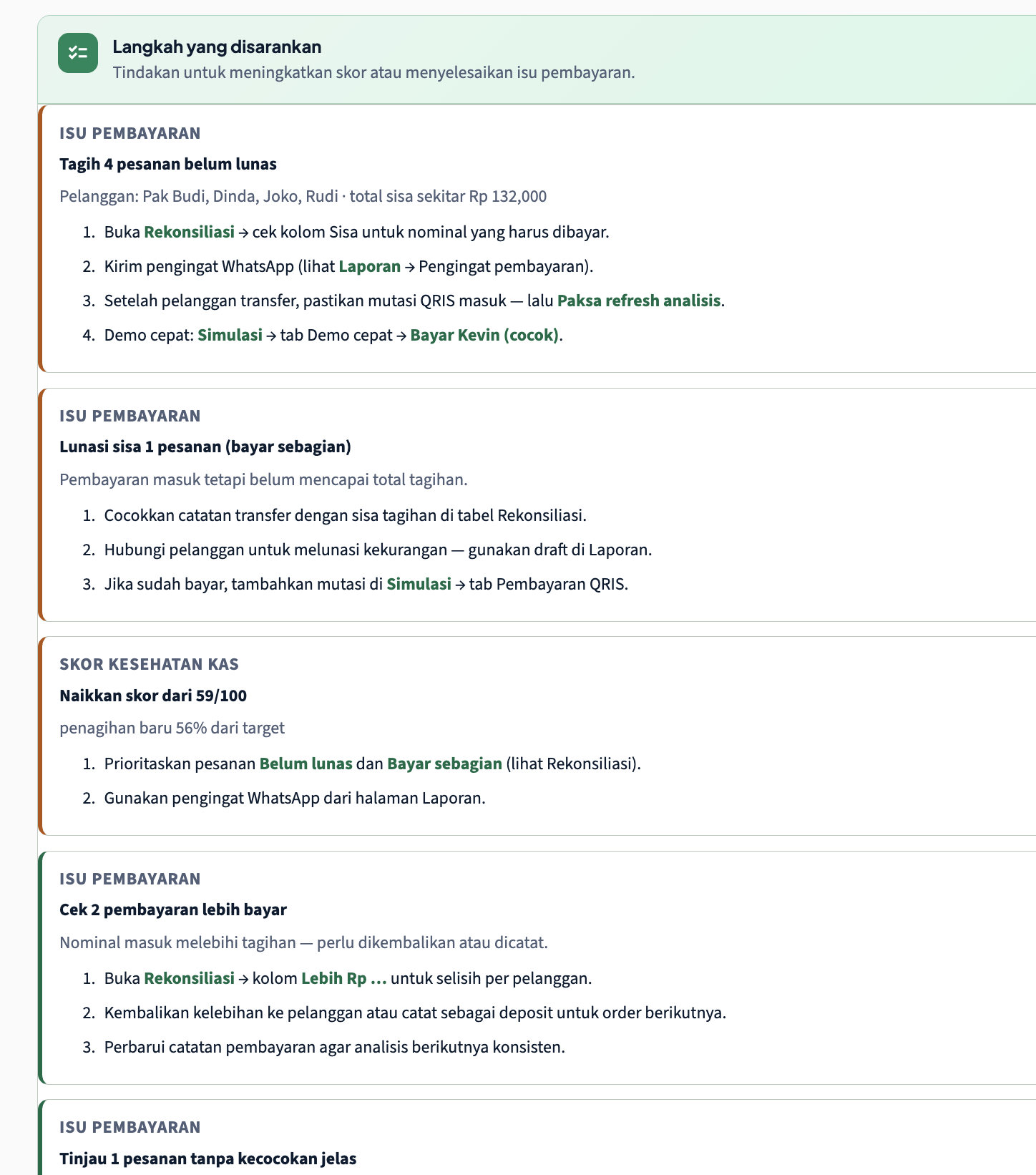
Rekomendasi langkah untuk meresolusi isu atau meningkatkan skor kas keuangan
Inspiration
Indonesian warung and UMKM owners take orders on WhatsApp, accept QRIS, bank transfers, and cash, then close the day with manual notes. With tens of millions of UMKM in Indonesia and QRIS volume growing rapidly (Bank Indonesia, 2025), daily reconciliation is becoming harder, not easier. Many sellers cannot quickly answer: who has paid, who still owes, or what net profit was today. Informal bookkeeping also limits access to financing. We built WarungFlow to automate this back-office work with an autonomous agent, not another customer chatbot.
What it does
WarungFlow is an autonomous finance operations agent for Indonesian UMKM.
Given messy WhatsApp orders, a product catalogue, expenses, and QRIS-style payment logs, it:
- Parses and structures informal chat orders (deterministic parsing + catalogue pricing)
- Reconciles payments using fuzzy Indonesian name matching and order-ID priority in bank notes
- Flags UNPAID, PARTIALLY_PAID, OVERPAID, and NEEDS_REVIEW with clear Sisa Rp / Lebih Rp in the UI
- Creates payment requests in Mock mode (no API keys) or DOKU Sandbox (hosted checkout + Check Status API sync)
- Calculates cashflow, net profit, and a 0–100 health score
- Generates Bahasa Indonesia payment reminders and financing-readiness summaries
- Validates and exports markdown/CSV reports
The Simulasi page lets judges test WhatsApp order intake, QRIS payments, and both payment modes with reactive auto-refresh (e.g. Kevin UNPAID → PAID).
How we built it
WarungFlow is not a chatbot wrapper. It uses a state-driven orchestrator:
decide_next_action()plans the next step fromAgentStategapsrun_agent_stream()runs up to 24 tool steps per analysis- 20 registered tools in
TOOL_REGISTRY(load, parse, reconcile, cashflow, validate, export) - Full
execution_tracewithrun_idvisible on Jejak agen for judges
Stack: Python, Streamlit, pandas, rapidfuzz, Altair, FastAPI (optional bot server), python-dotenv.
Payment (Best Payment Use Case):
- Mock:
?mock_pay=ORD-BOT-xxxdeep links - DOKU Sandbox: Checkout API + HMAC signatures + Check Status poll via
?doku_pay=simulator
WhatsApp bot is an input channel only (SYNC_BOT_EVENTS). The core value is autonomous reconciliation and reporting.
AI tools used in development: Cursor IDE agent; optional Groq/Gemini for reminder tone when LLM_MODE=live. Money matching and arithmetic stay deterministic.
Challenges we faced
- DOKU sync without a public webhook on Streamlit-only deploy → solved with Check Status API polling on simulator return
- Wrong payment matches when bank notes mention multiple names → order-ID priority in reconciliation logic
- Indonesian name variants (honorifics, bank display names vs WhatsApp names) → rapidfuzz + normalization rules
- Session persistence without resetting payment mode on every page refresh
What we learned
Deterministic tools should own money matching and arithmetic. The agent loop should own planning, sequencing, and validation. Paying on a hosted checkout page alone does not update back-office books; payment gateways need explicit status sync into the agent workflow.
What's next
- WhatsApp Business API for live order ingestion
- Production DOKU HTTP notifications
- POS integration and bank-ready financing export packets

Log in or sign up for Devpost to join the conversation.