-
-
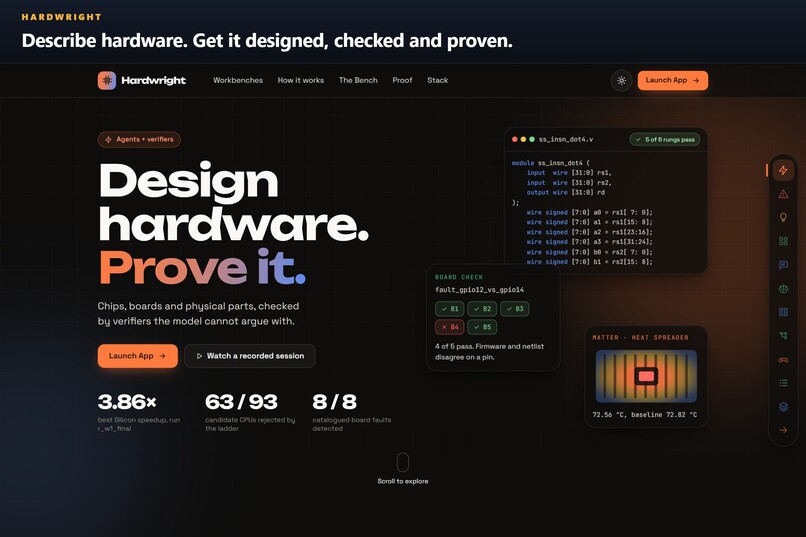
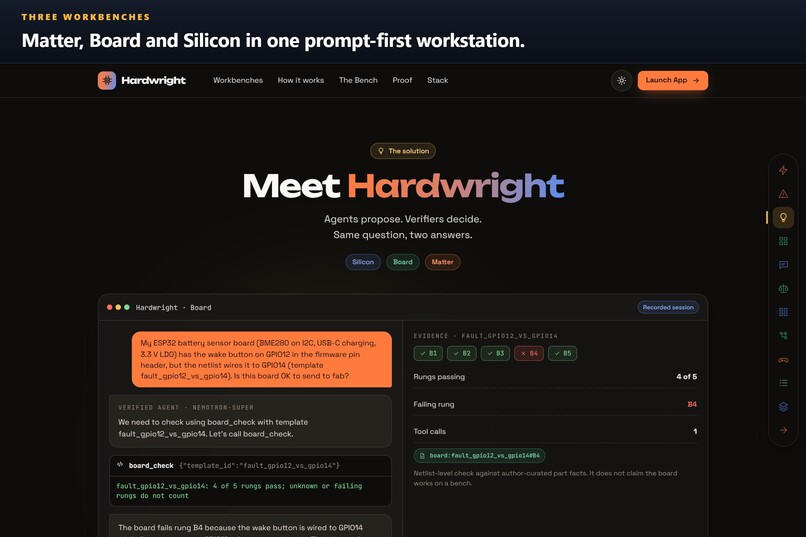
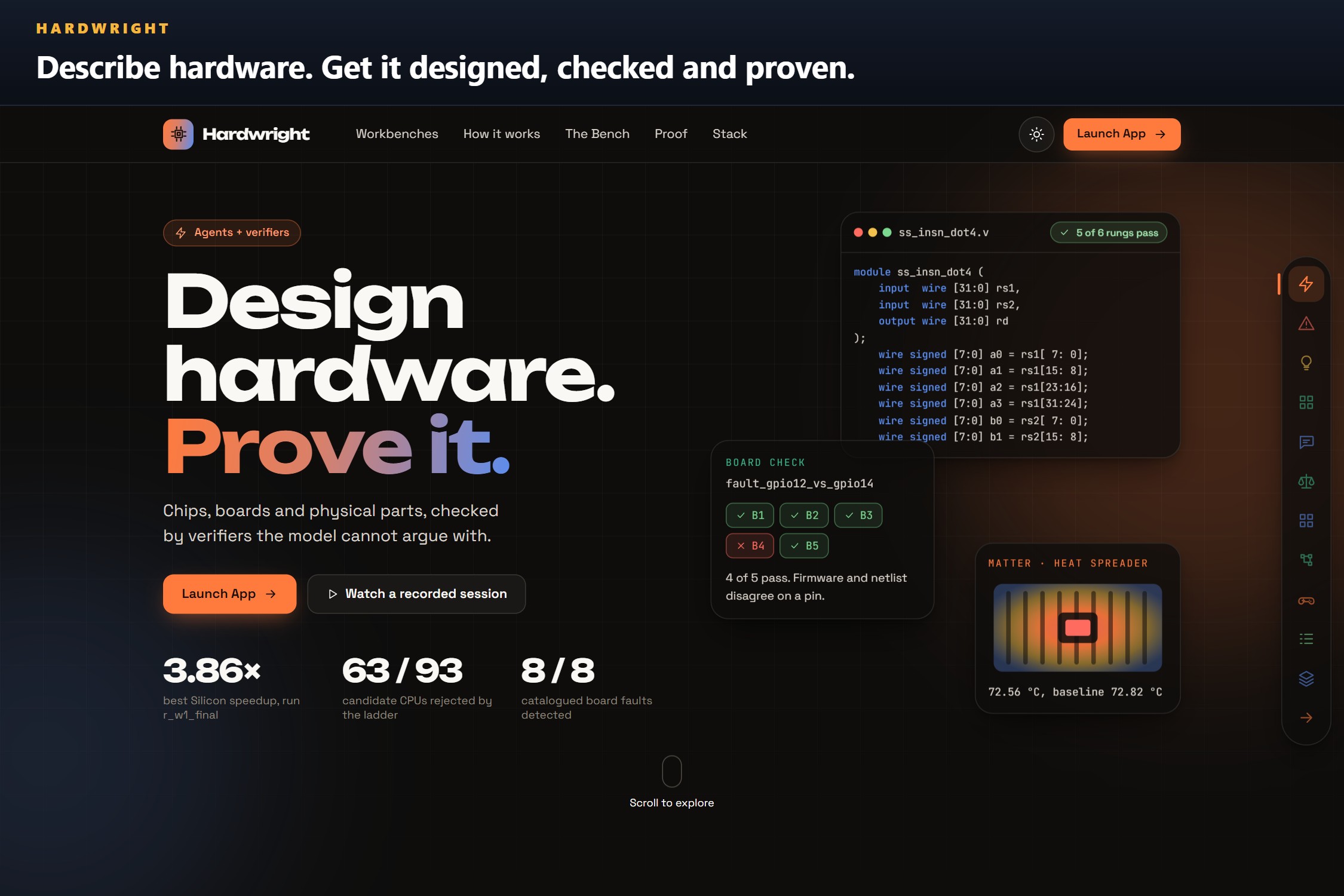
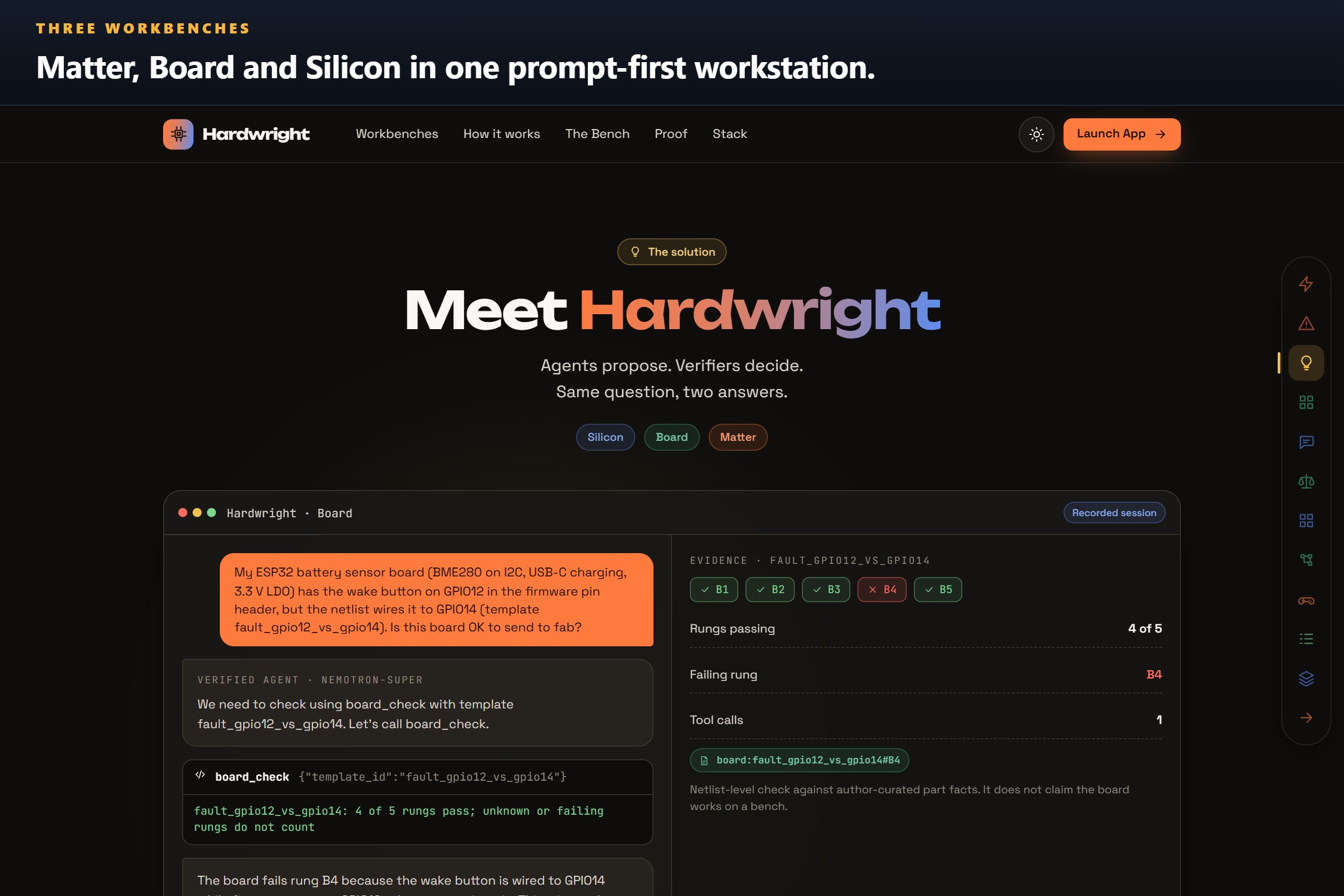
Landing hero: describe hardware, get it designed, checked and proven
-
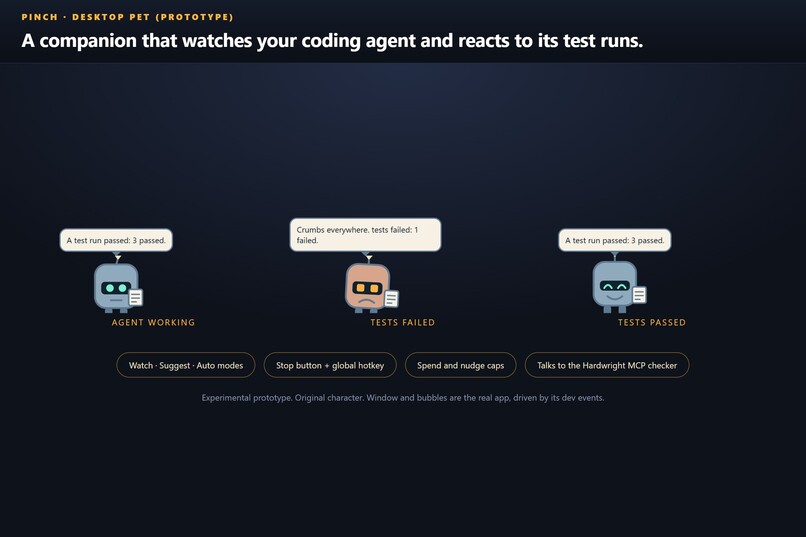
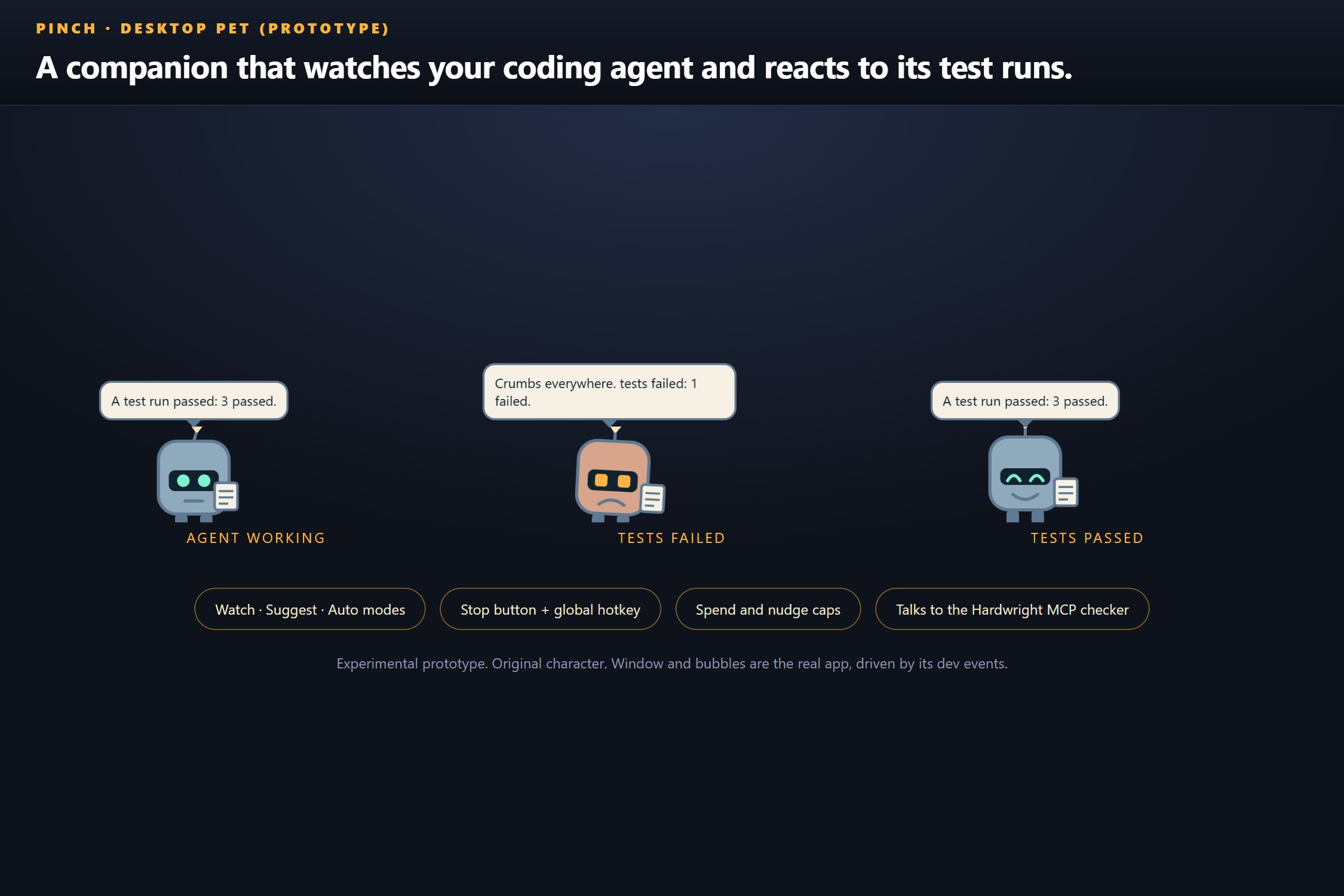
Pinch, the desktop pet (prototype)
-
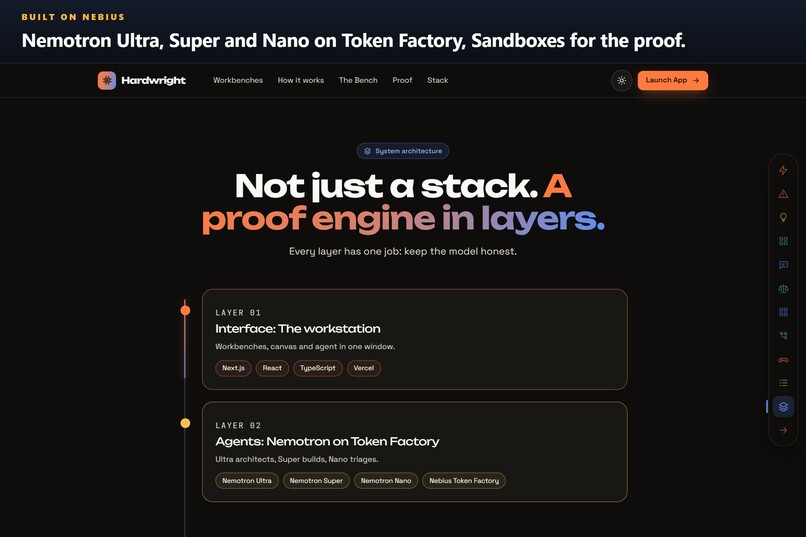
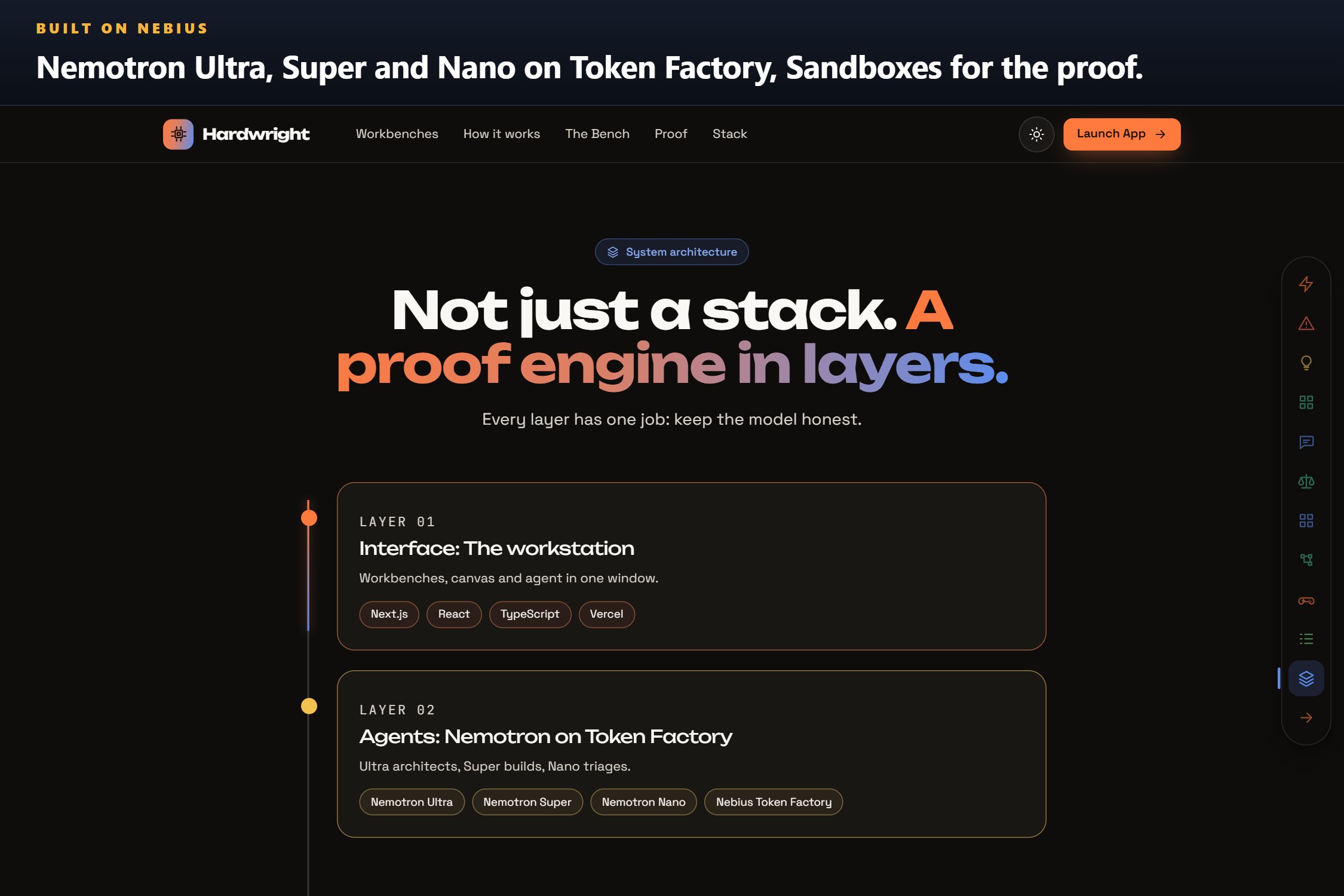
Landing: architecture on Nebius
-
-
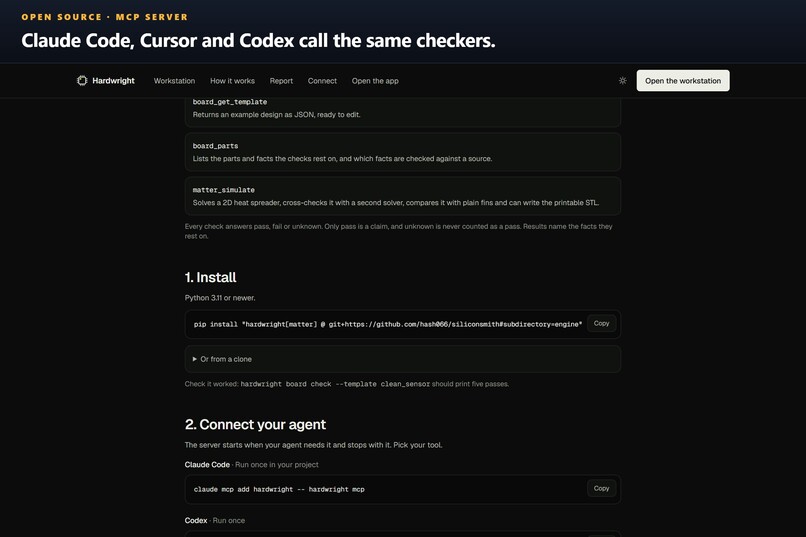
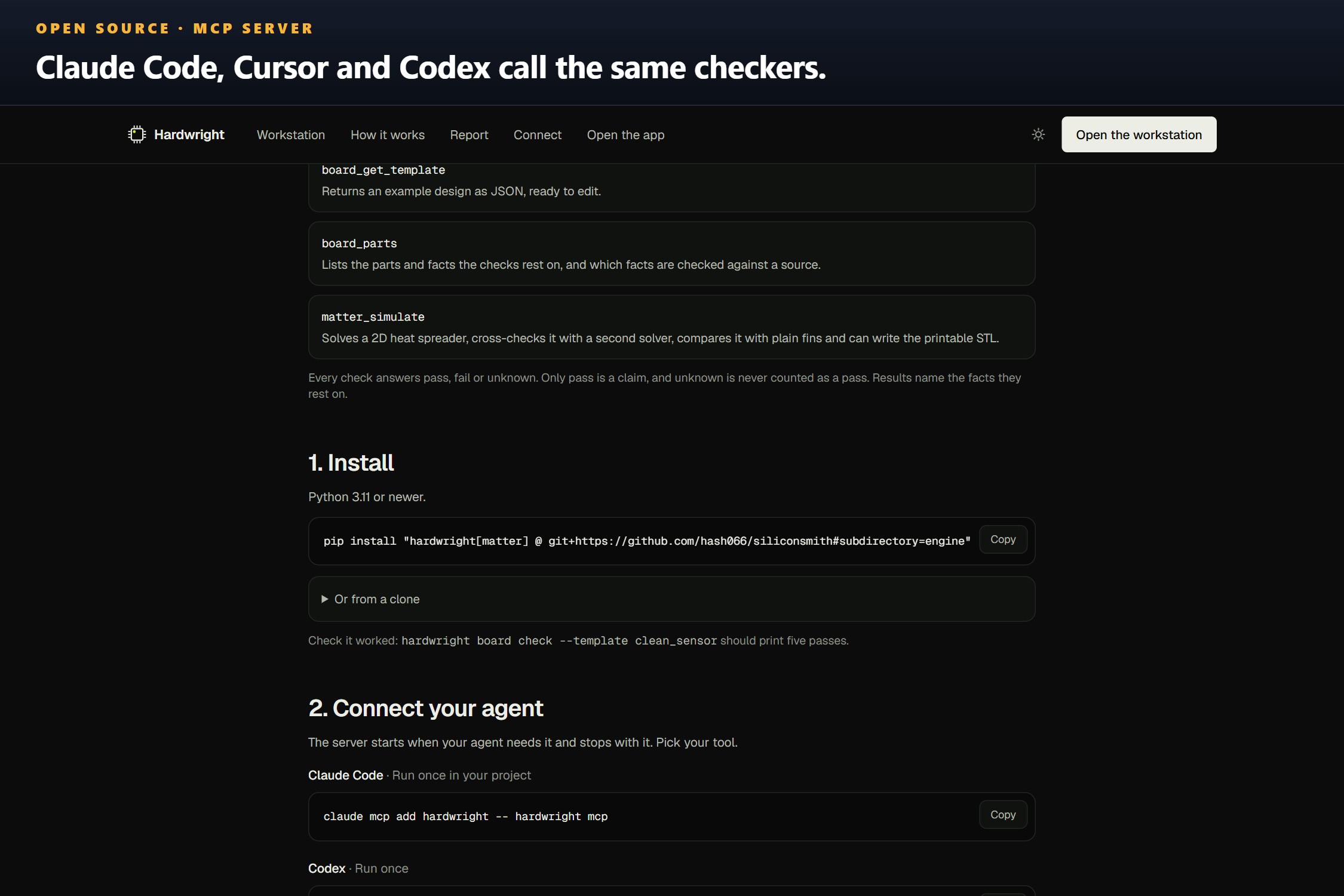
/connect: the MCP server install
-
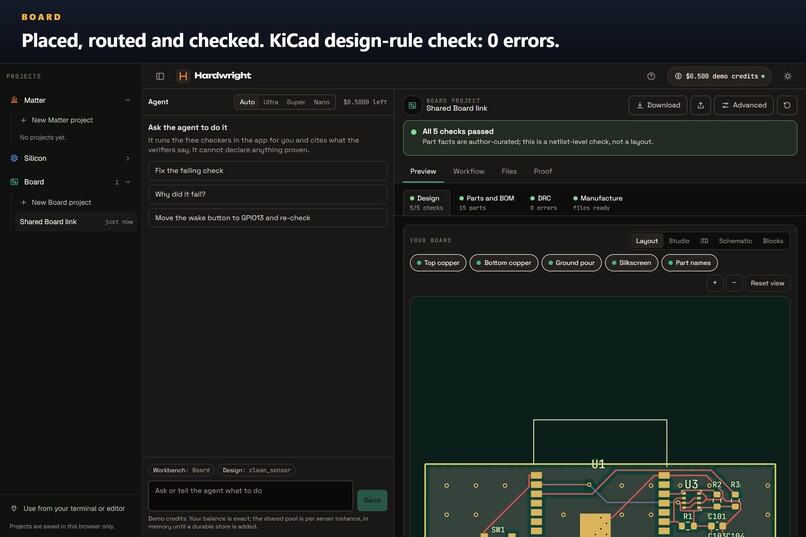
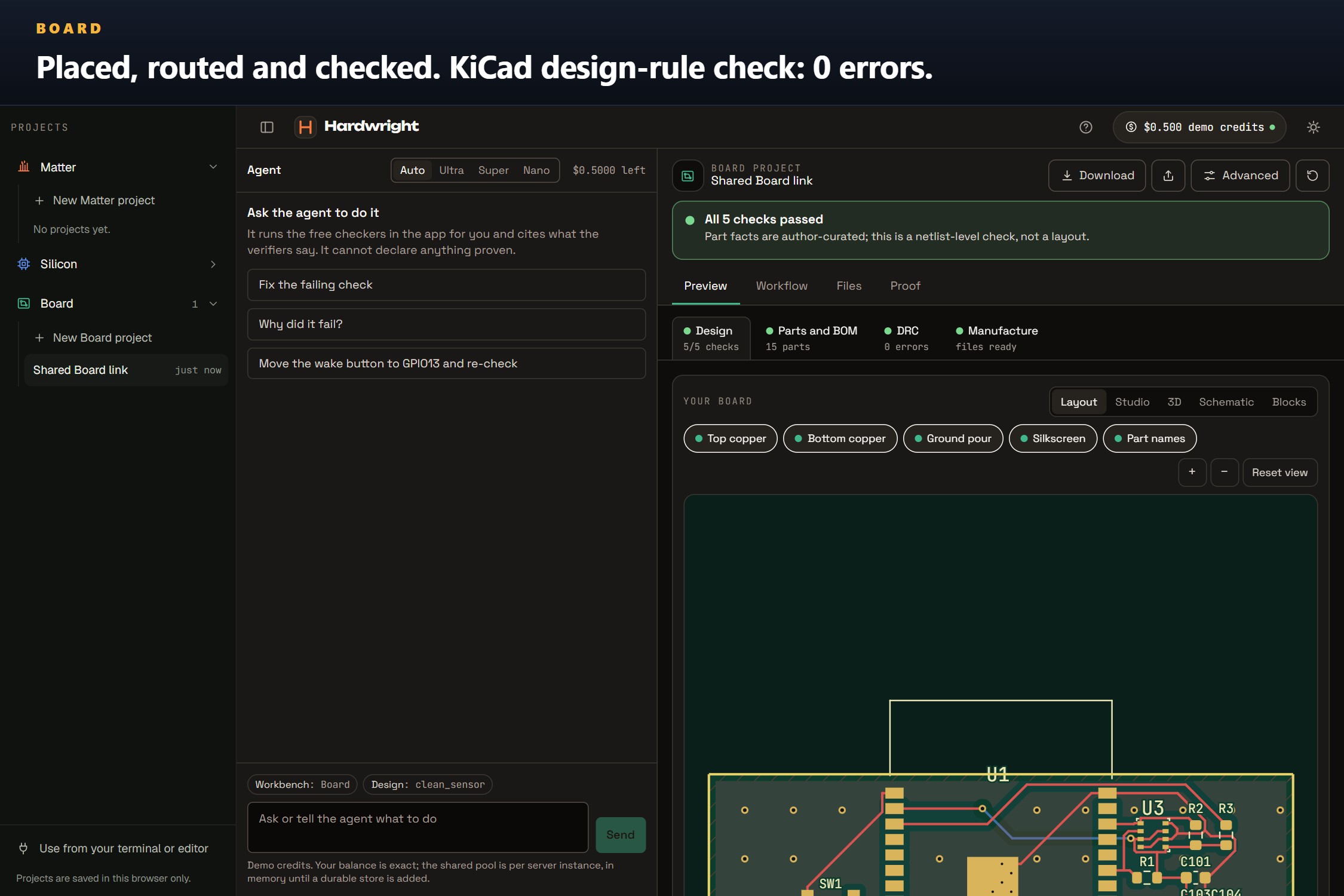
App: routed board, 5 of 5 checks
-

explore a real routed board, part by part
-
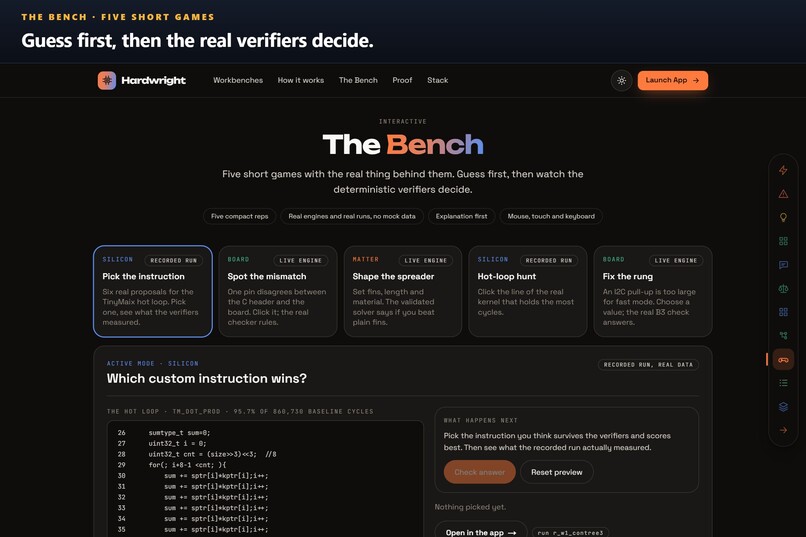
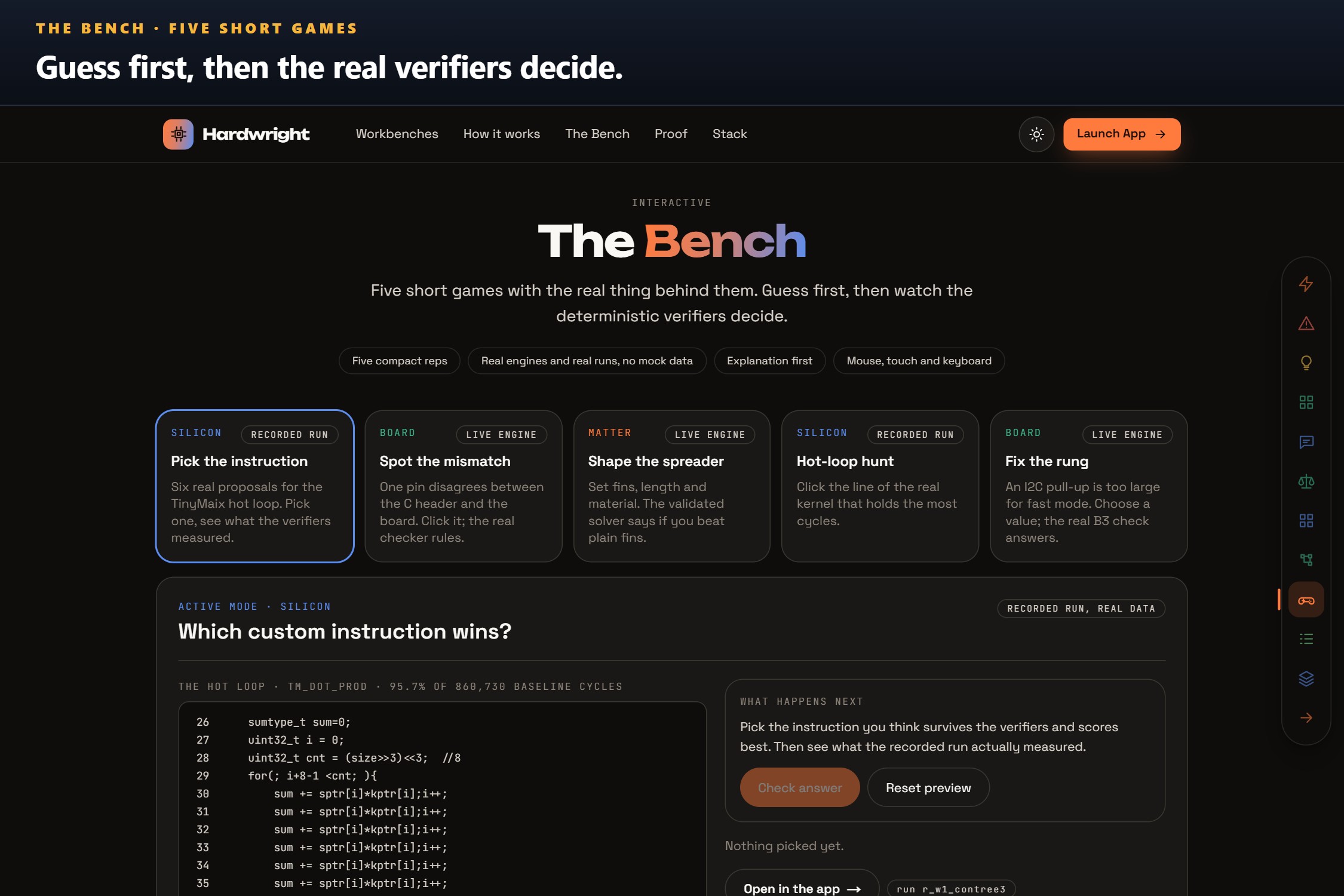
Landing: The Bench, five short games
-
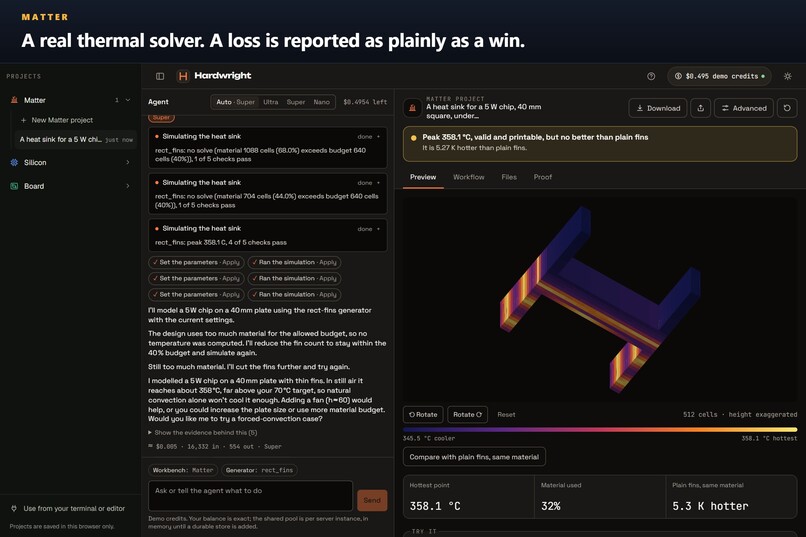
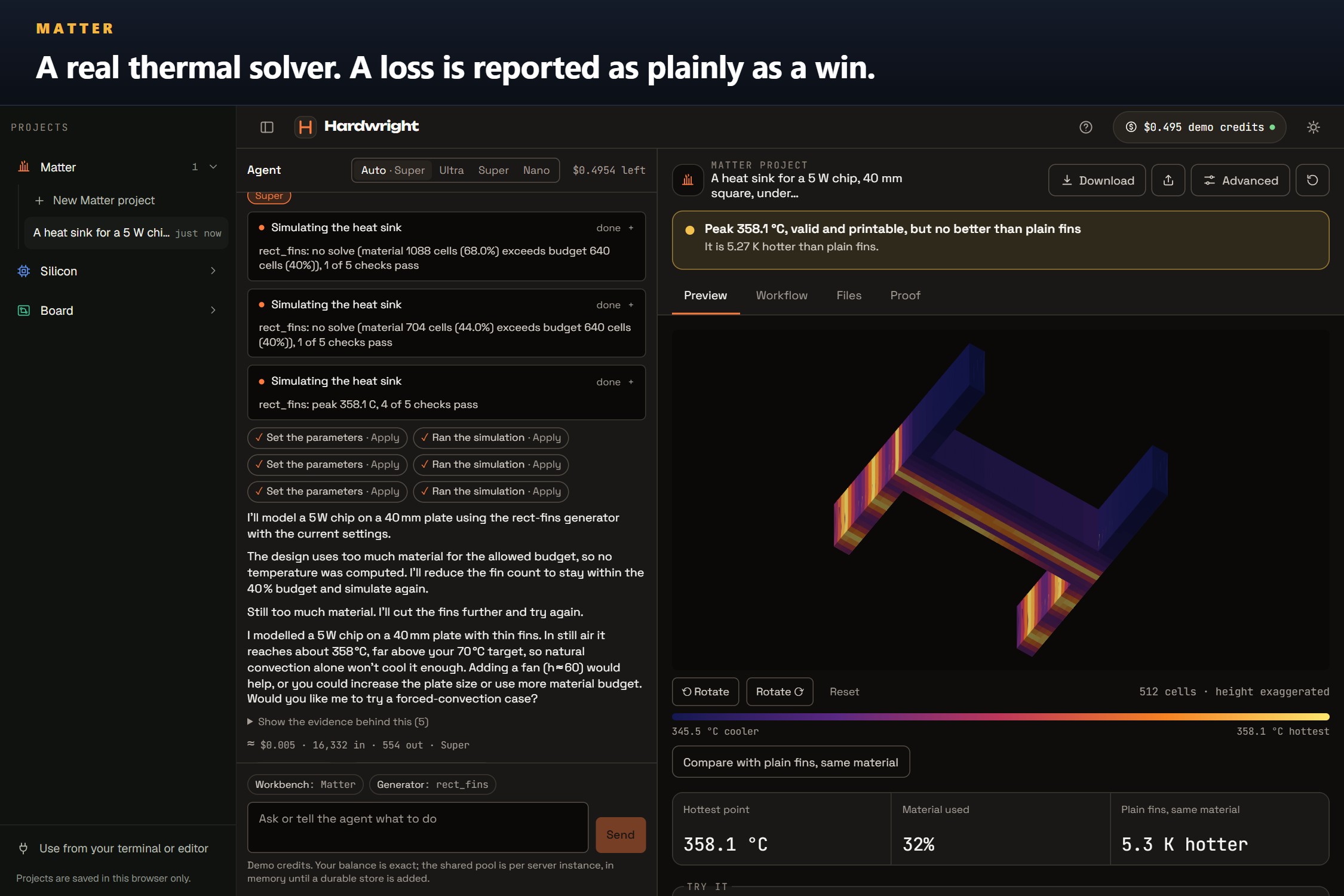
App: Matter thermal result
-
-

Landing: models state hardware facts with confidence
-
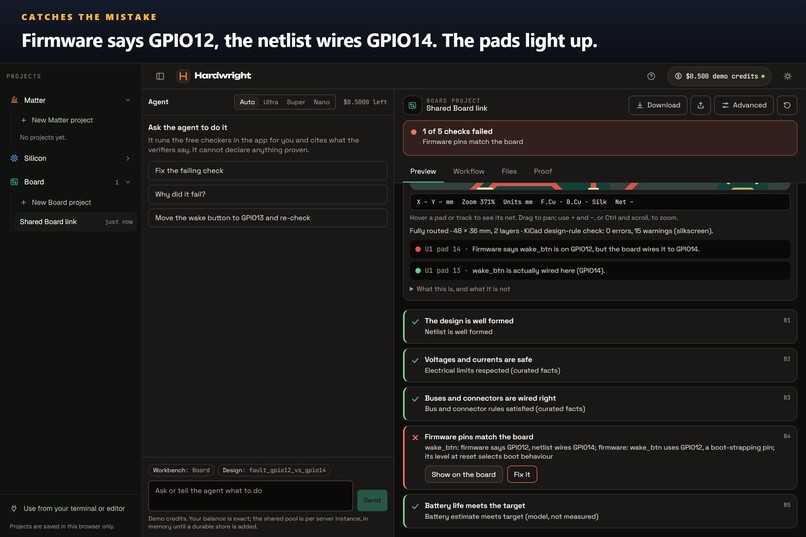
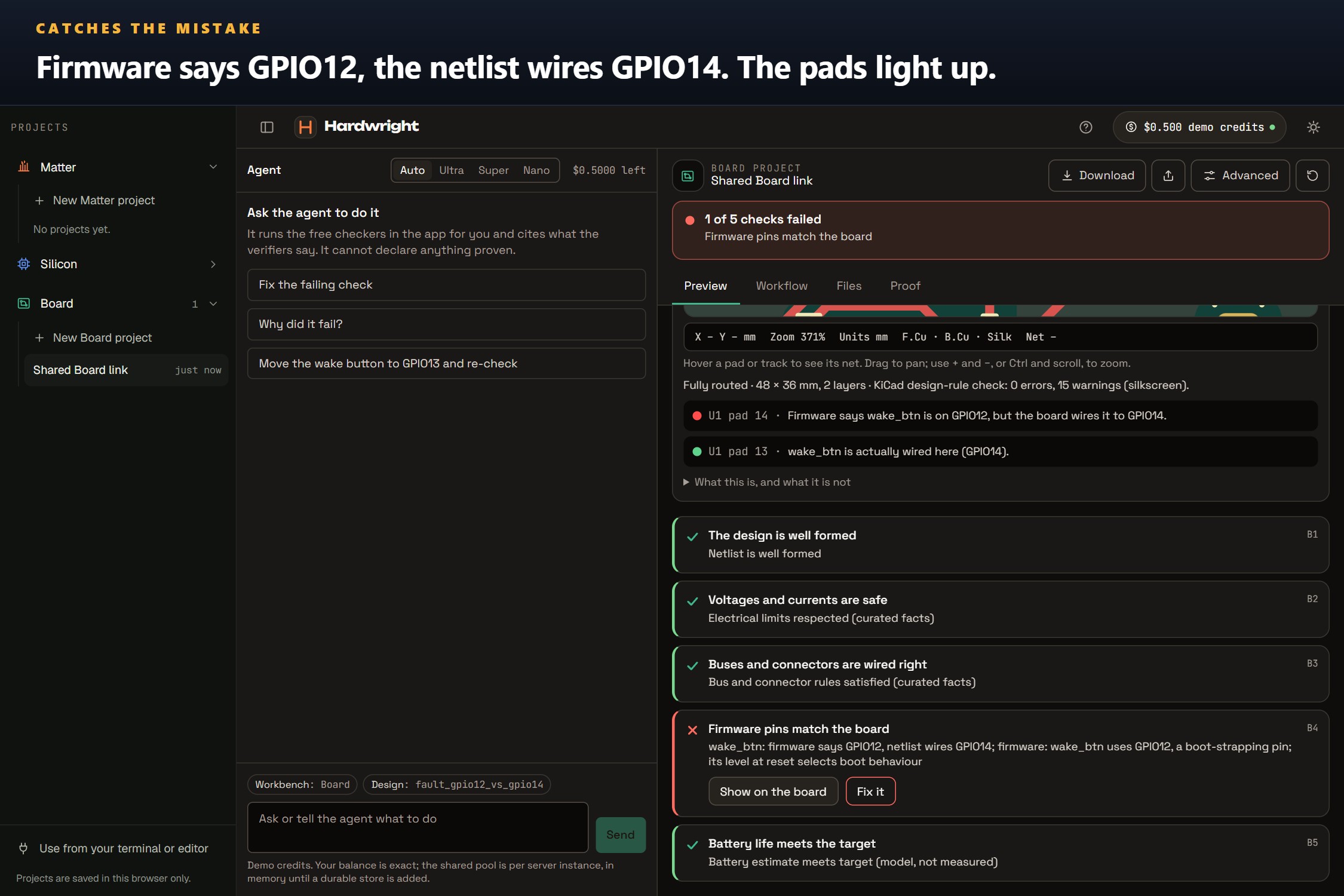
App: GPIO12 vs GPIO14 caught, pads highlighted
-

a chatbot answer next to a verified answer
-
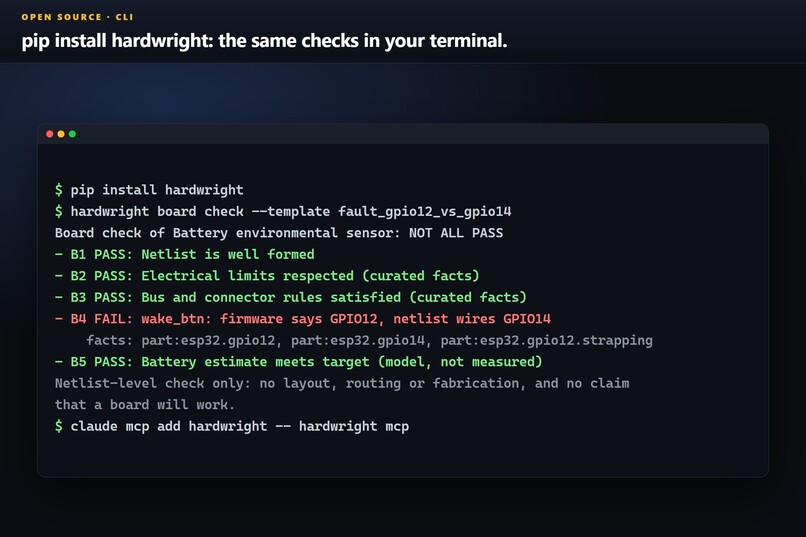
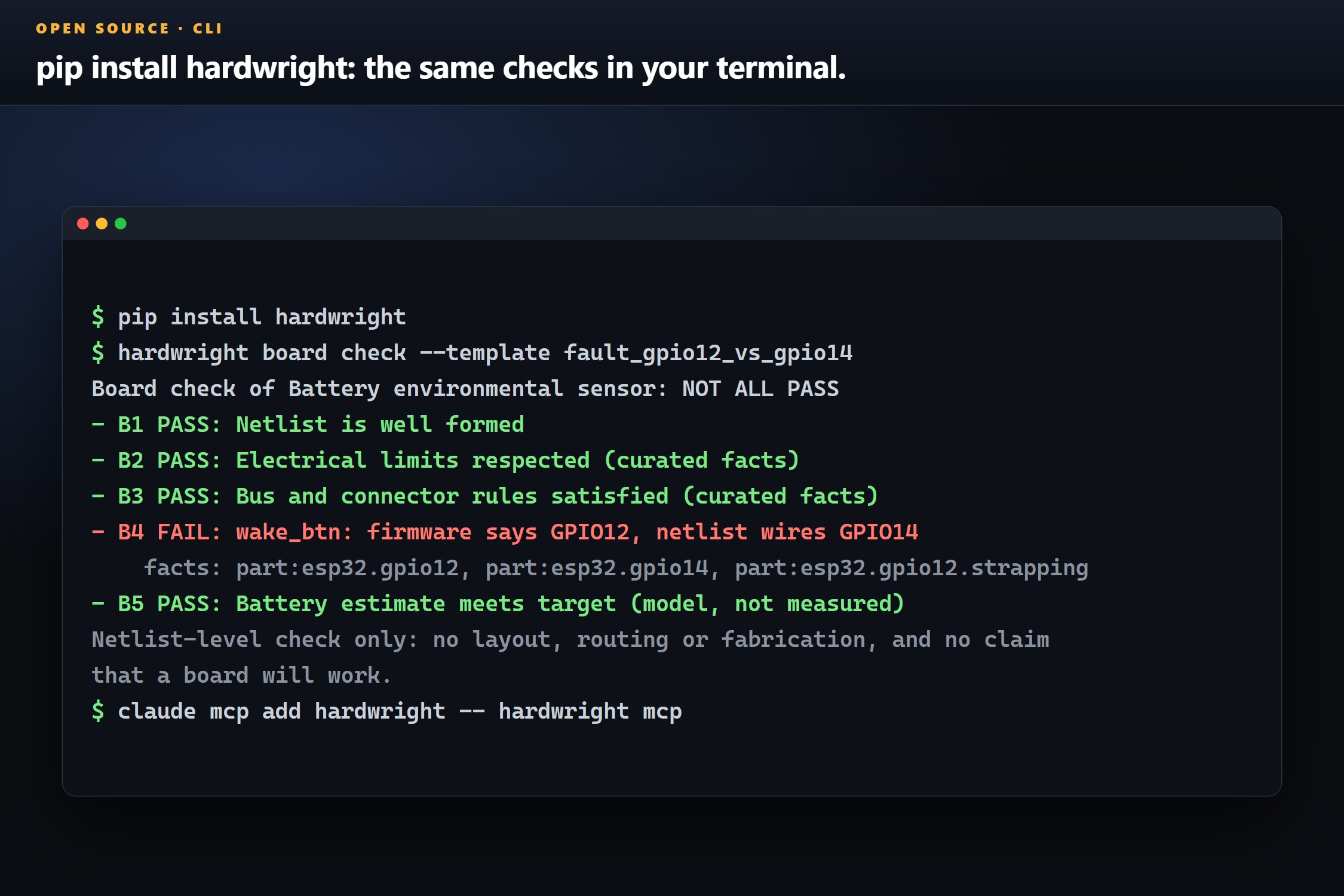
The CLI, real output
-
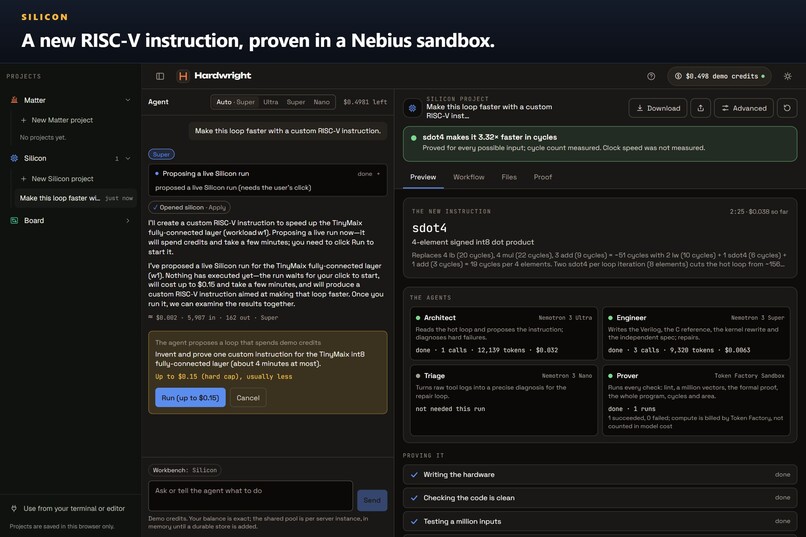
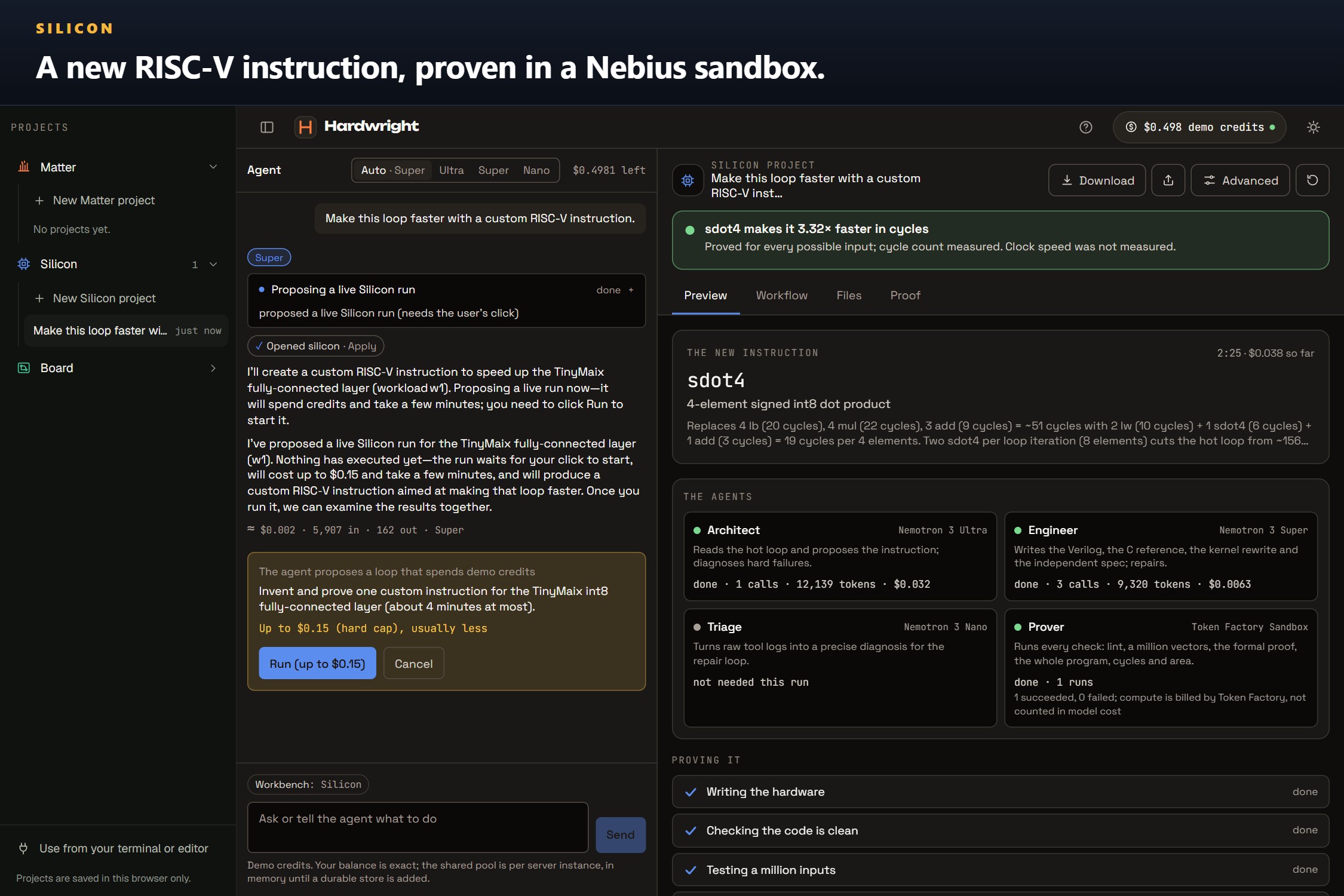
App: Silicon, a proven instruction (see note below)



Inspiration
Ask an AI assistant about hardware and it answers with total confidence, and it is often wrong. A button wired to a pin that sets the boot mode. A heat sink that cannot reach its target. A "faster" CPU instruction nobody proved. We read an engineer's forum thread about a brand-new ESP32 stuck in a boot loop, where the advice came down to one rule: strapping pins must be in a known state at boot. A model can wire a button onto one of those pins and the code still compiles. A wrong answer in hardware costs a dead board or a lost week, so we wanted an agent that cannot claim what a checker has not returned.
What it does
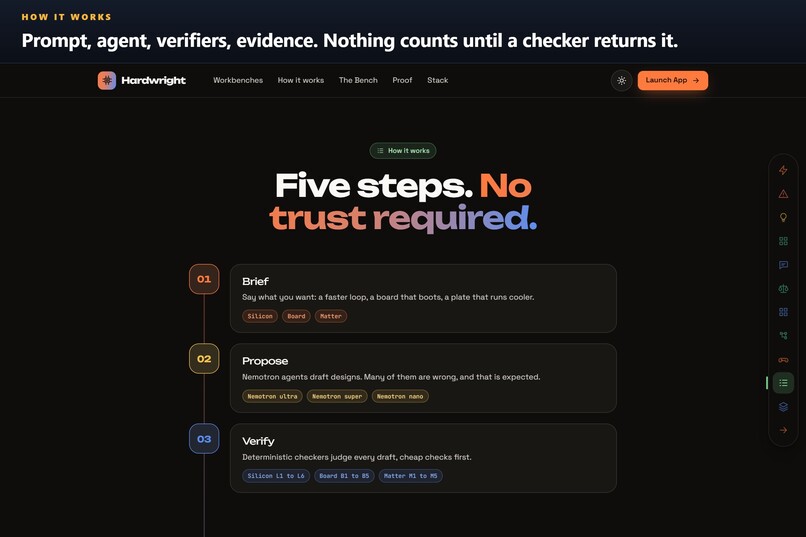
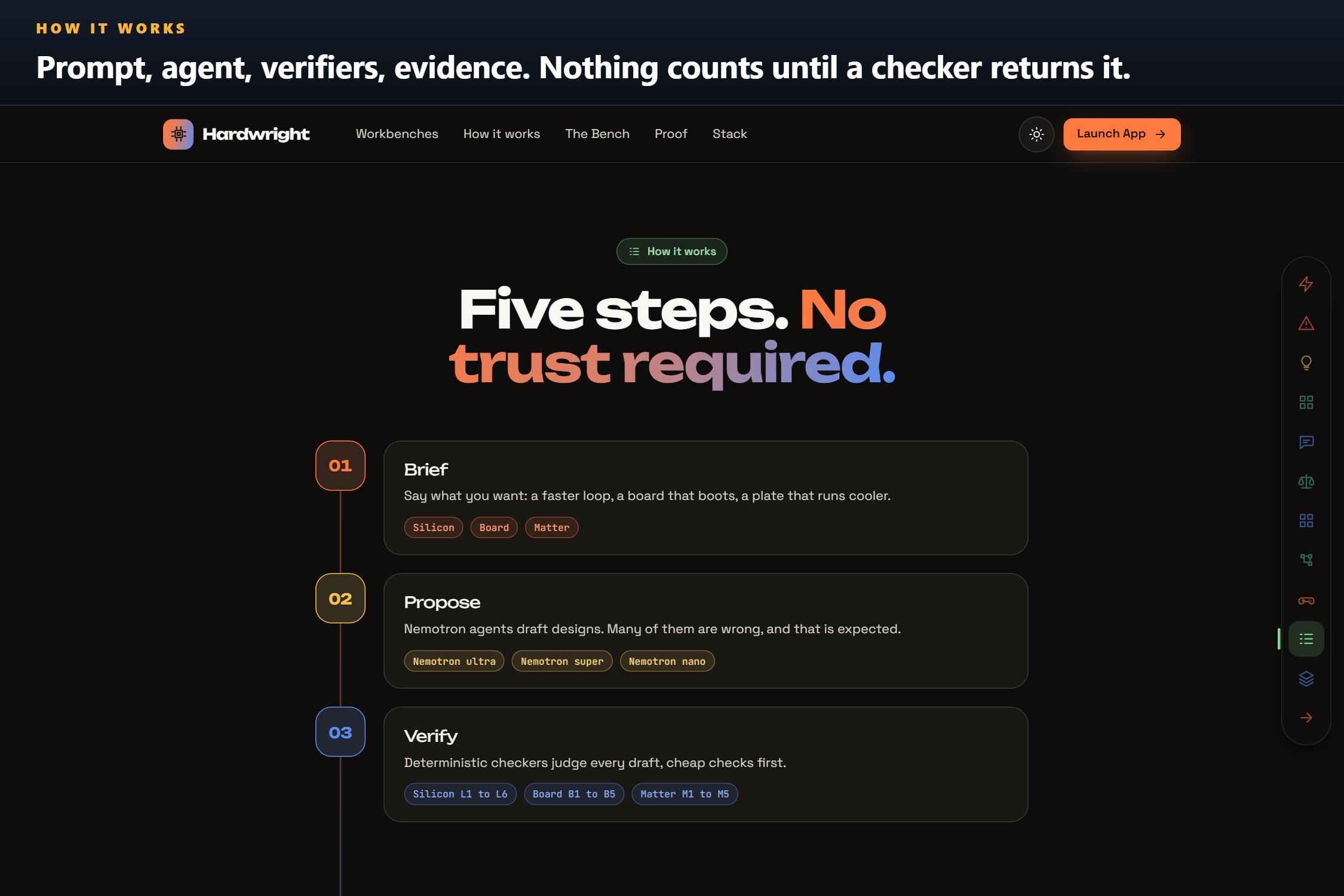
Hardwright is a prompt-first workstation for hardware makers. You type what you want in plain words; the agent works in a chat on the left and a live preview shows the result on the right. Three workbenches:
- Matter ("a heat sink for a 5 W chip"). A validated finite-volume thermal solver, cross-checked by an independent finite-element solver, gives a 3D part coloured by temperature and a printable STL, compared against plain fins of the same material. It reports a loss as plainly as a win.
- Board ("a battery ESP32 sensor board with a BME280 and USB-C charging; check it against its firmware"). The agent drafts a netlist, five deterministic checks (B1 to B5) judge it, and it becomes a real routed 2-layer KiCad board. If the firmware says the wake button is on GPIO12 but the board wires GPIO14, the exact pads light up on the board. You can also paste your own netlist: KiCad 7 and Freerouting run inside a Nebius Token Factory Sandbox and place, route and check it (KiCad design-rule check: 0 errors), with Gerbers, BOM and pick-and-place exported.
- Silicon ("make this loop faster"). Nemotron proposes a custom RISC-V instruction for a real kernel (TinyMaix), writes the Verilog and the software that uses it, and Token Factory Sandboxes prove it: lint, a million test vectors, a Yosys formal proof for every possible input, whole-program output match, cycles and area. A live run on the public site measured 3.32x fewer cycles for +4.8% area; the best recorded run reached 3.86x. You can also type your own operand pair and watch hardware and the C reference agree, down to the internal signals.
Around them: projects with their own chat, a Workflow of connected steps with real status, a list of who verified what, one-click export, demo credits metered from real token usage, and The Bench, five short games where you guess first and then the real verifiers decide.
Open source: package, CLI, MCP server and a pet
Hardwright is open source (Apache-2.0), not just a website:
pip install hardwright, a Python package with the same checkers the app uses.- A CLI:
hardwright board check --template fault_gpio12_vs_gpio14prints the five checks and names the failing pin, offline, no key needed. - An MCP server:
claude mcp add hardwright -- hardwright mcplets Claude Code, Cursor, Codex or any MCP editor call the same checkers and get evidence ids back instead of guesses. - Pinch, an experimental desktop pet (a prototype, original character): a small always-on-top window that watches your coding agent through Claude Code hooks, reacts when tests fail or pass, and can call the Hardwright checker over MCP. It has Watch, Suggest and Auto modes, a nudge cap and a spend cap, a stop button with a global hotkey, an action allowlist and secret redaction, and it only says "tests passed" if a run returned that.
How we built it
- Agents. Nemotron 3 Ultra (architect and diagnosis), Super (engineer: Verilog, C, repairs, the independent reference) and Nano (triage), all through the Nebius Token Factory OpenAI-compatible endpoint with native tool calling. The chat agent performs real actions in the app (open a workbench, set parameters, run a check, move a pin) and reports the real cost of each turn ($0.003 to $0.02). Model choice is routed by difficulty.
- Proof. Everything a model writes runs in Token Factory Sandboxes: the live Silicon proof, and the routing of every generated board in a custom image (KiCad 7, a JRE and Freerouting) we built inside Sandboxes. The full Silicon search runs each candidate from its parent's checkpoint image.
- Evidence rule, enforced in code. UI claims carry evidence ids, and an agent answer is post-checked for invented commands or claimed runs that did not happen. Unknown and failing checks never count as a pass.
- Stack. Next.js and React on Vercel, a Python (FastAPI) engine for the checkers, KiCad, Freerouting, Verilator, Yosys and PicoRV32, a Python package with a CLI and MCP server, and a Tauri 2 shell plus a Node daemon for the pet.
Challenges
KiCad 7 has no kicad-cli pcb drc and its session importer only works inside the GUI; Freerouting needs a full JRE and a display; Sandboxes start with an empty HOME, which makes KiCad refuse to run. Thinking tokens count against max_tokens, so some Verilog answers were cut off mid-object until we retried without thinking. A tool that needed a whole 2 KB design as an argument made Ultra emit invalid JSON; a tool with tiny arguments fixed it for good. We found a live-bundle bug only by running the real thing in production. All of it is written up in docs/feedback.md.
Accomplishments we are proud of
A visitor with no account can run a real, formally proven CPU instruction in about two minutes, route a real PCB, and watch the agent refuse to over-claim. Across the recorded Silicon searches the verifier ladder rejected 63 of 93 candidate CPUs, and the board fault catalogue caught 8 of 8 injected wiring faults. A real pull request on TinyMaix was opened from the Silicon result.
What we learned
Agents get better when the truth is not their job. The most useful design decision was making checkers the only source of "passed", then giving models small, typed tools. Small arguments beat big ones. Cheap models (Nano) are good triage; the expensive one (Ultra) earns its cost on the first idea and on diagnosis.
What is verified, and what is not claimed
Verified: lint, one million vectors, a formal proof over all inputs, whole-program output and area (Silicon); KiCad 7 DRC, autorouter completion, five netlist checks and a catalogue of injected faults (Board); two independent solvers and equal-material baselines (Matter),clock speed in live runs. Not claimed: that a board works (it is netlist level, not fabricated), CFD accuracy (2D steady state), or FPGA and silicon results.
What's next
Schematic export to .kicad_sch, more parts in the library (each needs a cross-checked pad map), boards with more than two layers, the Silicon proofs behind the same MCP server.
Built With
- cli
- fastapi
- freerouting
- kicad
- mcp
- model-context-protocol
- nebius
- nebius-token-factory
- nemotron-3-nano
- nemotron-3-super
- nemotron-3-ultra
- next.js
- node.js
- nvidia-nemotron
- picorv32
- python
- react
- risc-v
- tauri
- token-factory-sandboxes
- typescript
- vercel
- verilator
- yosys
