-
-
hybrid-orderbook pallet implements an innovative trading system that dynamically routes orders to the most favorable execution venue
-
-
warp(x)
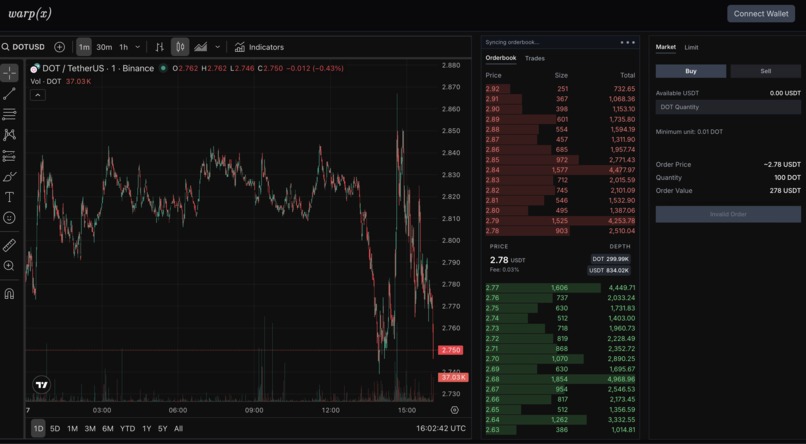
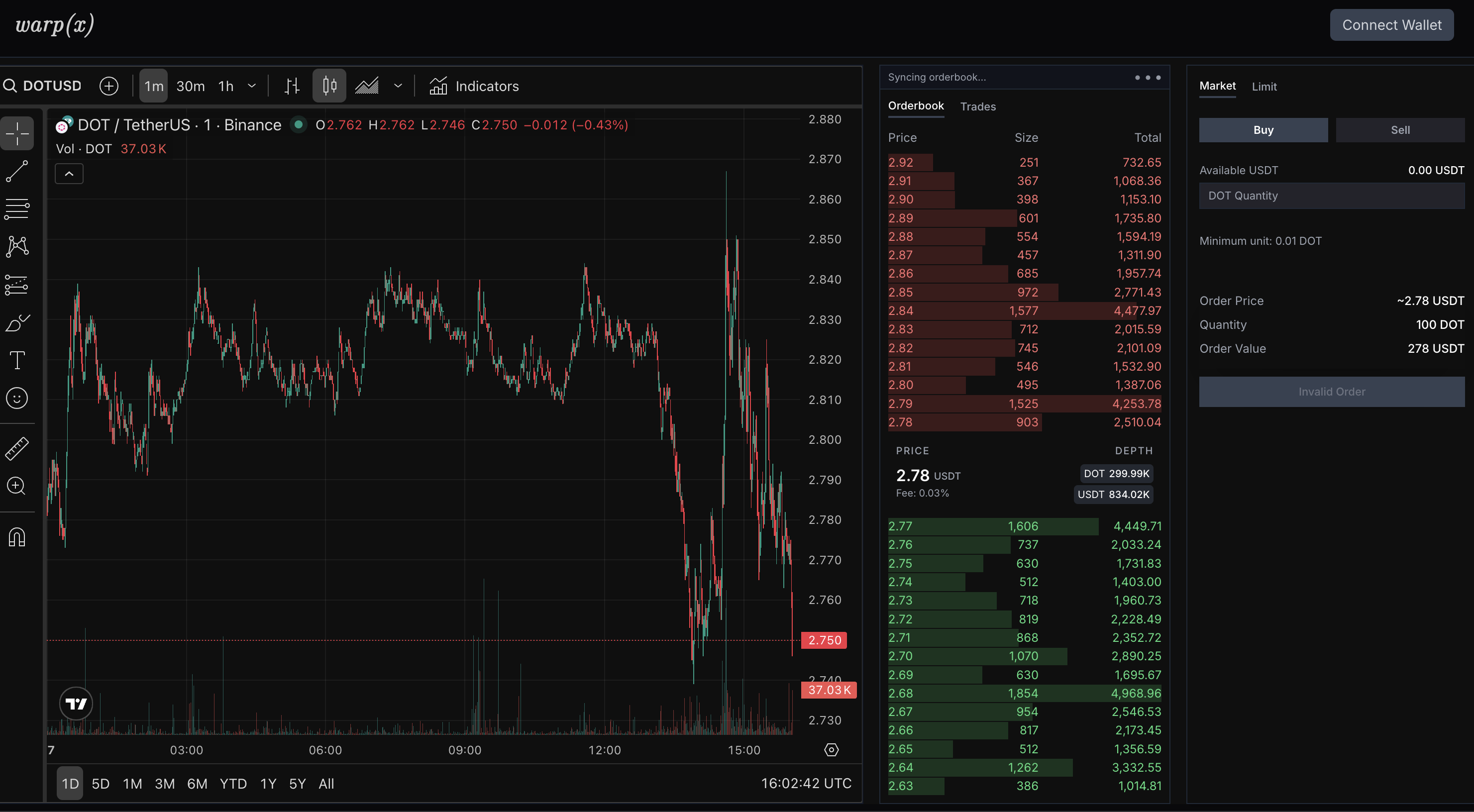
warp(x) is a fully on-chain hybrid orderbook exchange with AMM implemented in Rust
Features
Those are the features implemented in warp(x) runtime
Hybrid Orderbook
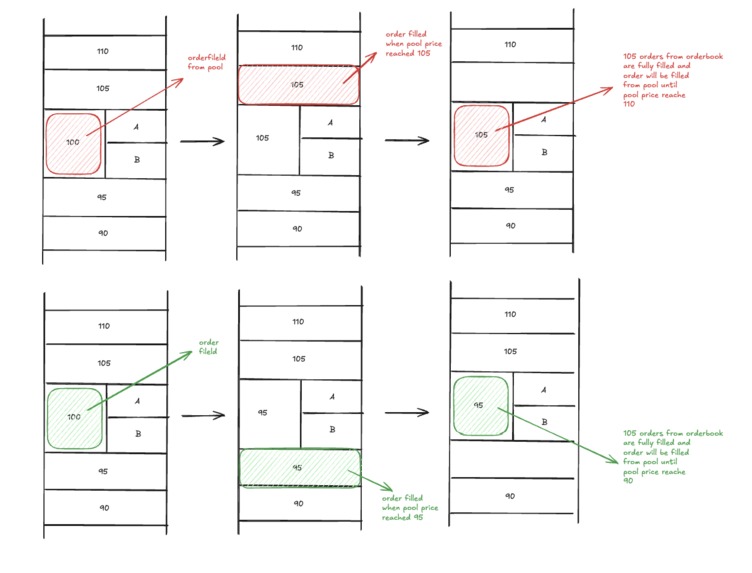
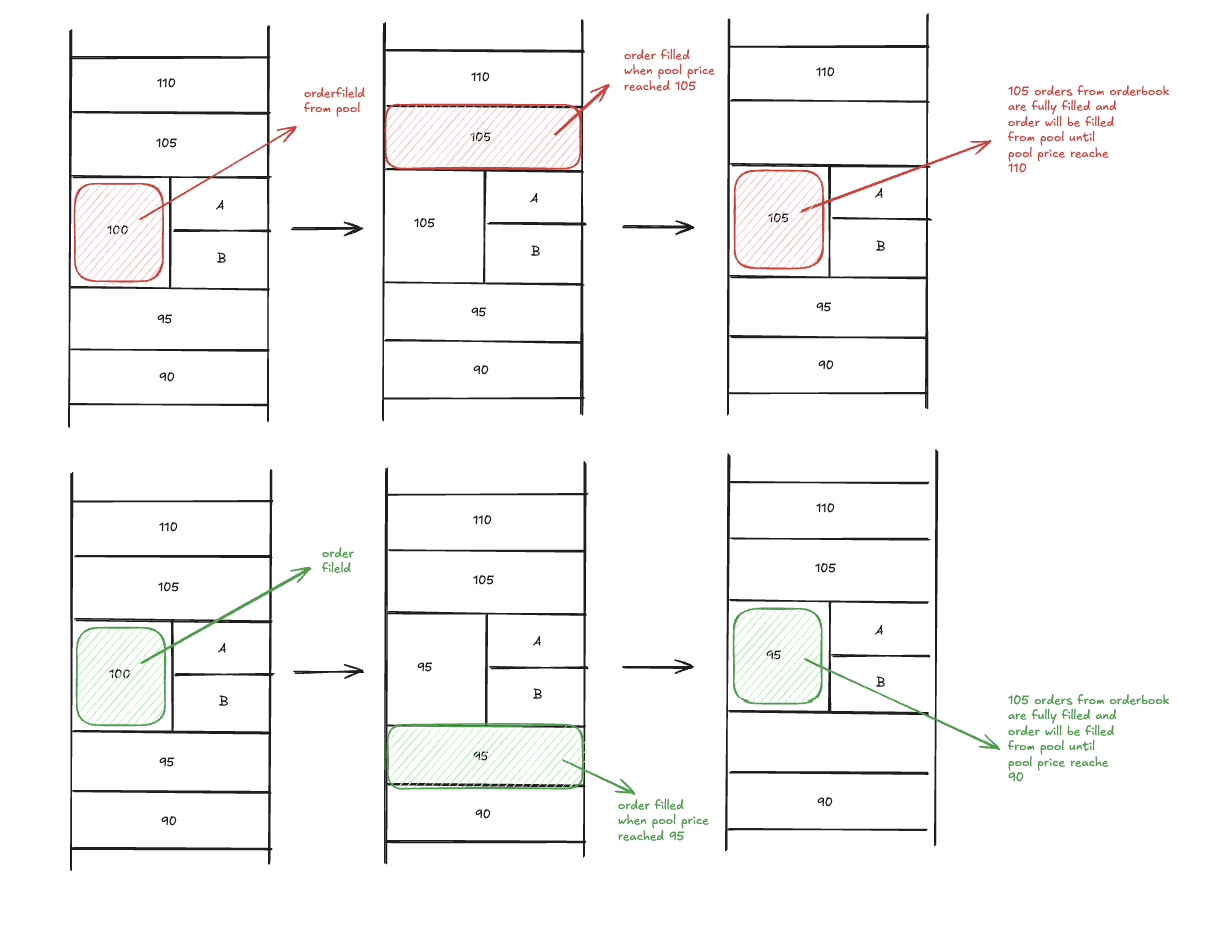
Pool is always located at the middle of bid/ask orderbook where the current price of pair is made and eliminating the spread between those two. As a result, order is matched at the better price, which is taking instant arbitrage, the market provided.
Process of matching order
- When user place an order, order is matched on pool
- If the price(of the pool) reached the lowest ask or highest bid, order is matched on orderbook.
- This process repeats until the order is fully filled
Reward Distribution
- Takers Pay Makers Earn
- No matter how(e.g limit order or add liquidity to the pool) user provides its liquidity to the pool, will get rewards of trading fee
NOMT
- Storage layer
- Since fully on-chain matching order requires large amount of storage io, it is important to make cost efficient as much as possible. warp(x) applied NOMT
Multi Asset
- Since warp(x) is based on PolkadotSDK, which is the best framework for composability, XCM is supported natively. Other assets like DOT, EVM-compatible assets(e.g ETH, WBTC) are bridged via XCM.
Pre-Confirmation
Inspired by Flashbots' Flashblocks technology on Ethereum L2
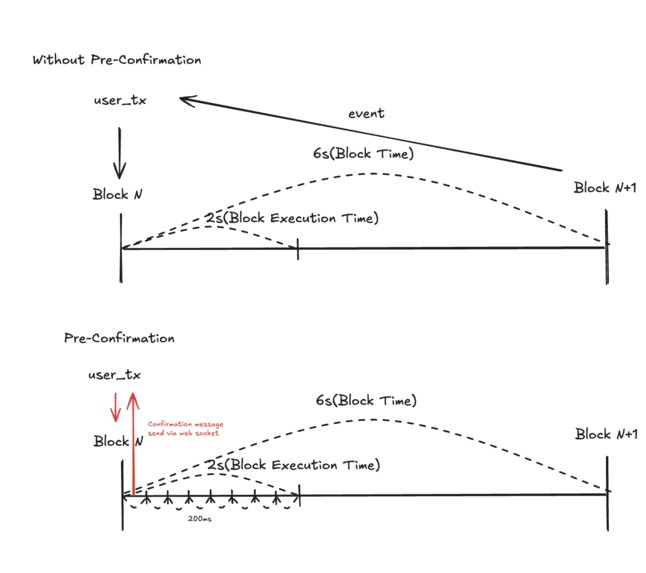
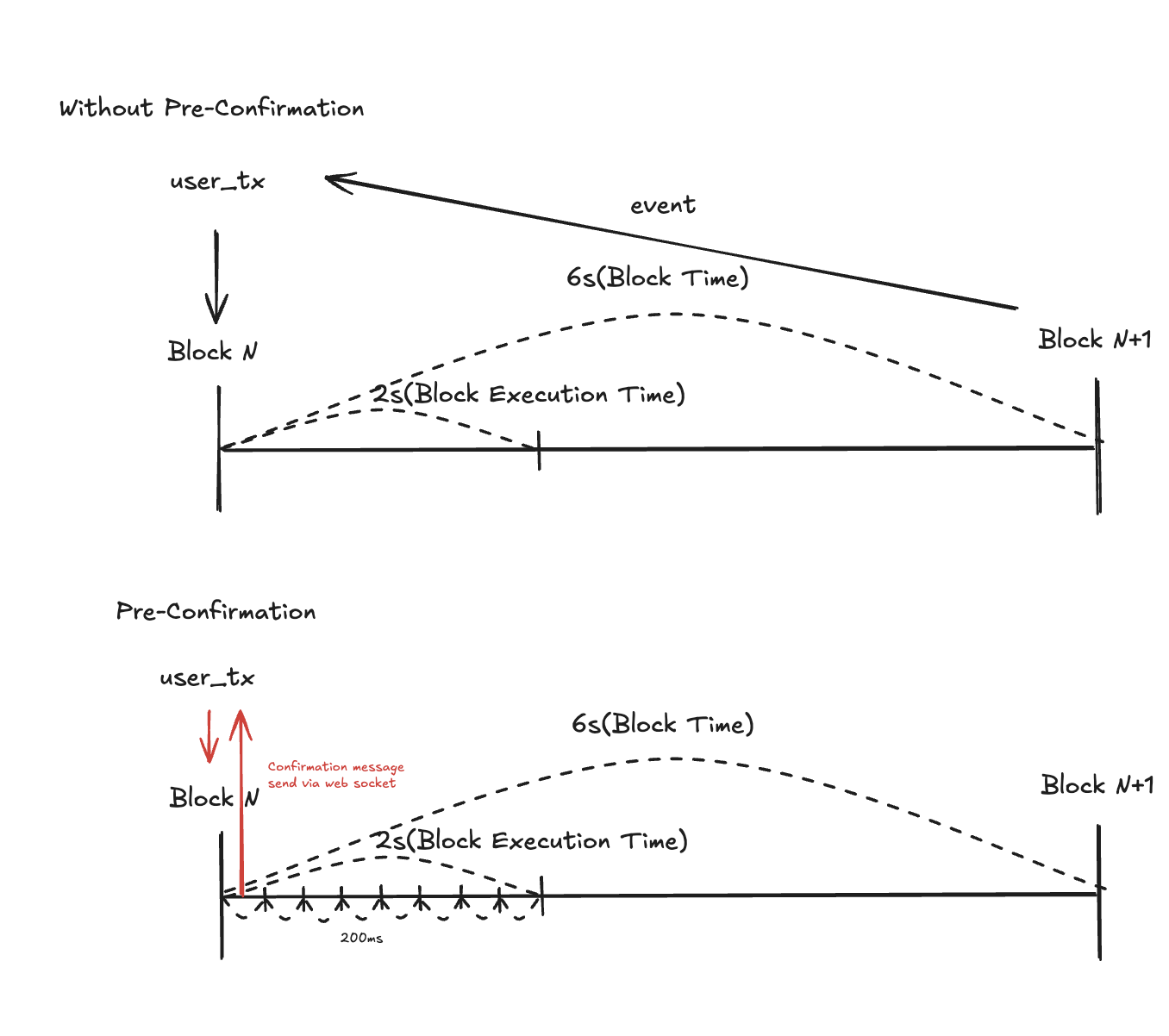
Real-time Block Building: warp(x) implements a pre-confirmation system that provides real-time visibility into block construction through WebSocket subscriptions. Users can track their transactions being included in blocks before final confirmation.
Incremental Block Building: Blocks are built incrementally as sub-blocks, allowing for faster transaction confirmation visibility. This approach significantly reduces the time users need to wait to know if their transactions will be included in the next block.
Instant Trade Visibility: Unlike traditional blockchains where users must wait for block finalization, warp(x)'s pre-confirmation system enables near-instant feedback on transaction inclusion, improving the trading experience especially for time-sensitive operations.
How it works
- During block production, the proposer builds blocks incrementally as sub-blocks at regular intervals (configurable
preconf_block_time) - Each sub-block payload is broadcasted via WebSocket to subscribed clients in real-time
- Users can subscribe to the WebSocket endpoint to receive pre-confirmation updates about their transactions
- This allows applications and users to react to transaction inclusion much faster than waiting for final block confirmation
Private Trading
- With the power of ZKP, warp(x) enables users to trade without revealing their identity on-chain. That said, only the token and its amount of order is revealed
- This feature is still work in progress
Milestones
Phase 1
- [x] Pallet Hybrid Orderbook
- [x] Support
Limit Order&Market Order - [ ] Support
Stop-Limit Order&Stop Order
Phase 2
- [x] Pre-Confirmation
- [ ] Future Trading
Phase 3
- [ ] Integrates multi-assets such as EVM-compatible or other parachains' assets
Phase 4
- [ ] Private Trading(e.g Dark Pool)
- [ ] Integrates NOMT DB
Why Polkadot?
Polkadot offers several compelling advantages for our project:
Robust Shared Security: Polkadot's unique shared security model ensures that all parachains benefit from the collective security of the entire network. This approach significantly enhances the resilience and integrity of our chain, providing a solid foundation for our exchange.
Cost-Effective Scalability: By leveraging Polkadot's architecture(a.k.a agile coretime and elastic scaling), we can achieve high transaction throughput at lower costs compared to traditional roll-up solutions. This efficiency allows us to offer competitive fees while maintaining optimal performance which enables fully-on-chain trading.
Composability: Through its native Cross-Consensus Message (XCM) protocol, Polkadot enables seamless interoperability between different parachains and even external networks such as Ethereum and Solana. This composability is crucial for creating a truly interconnected and efficient ecosystem.
These features make Polkadot an ideal platform for building our hybrid orderbook exchange, enabling us to create a secure, scalable, and interconnected trading environment.
What we want to achieve on Polkadot:
- Fully On-Chain Trading: Unlike other centralized exchanges, warp(x) will not have any server or backend. Everything is executed on-chain, ensuring transparency and trustlessness.
- Composability: warp(x) will be fully integrated into the Polkadot ecosystem, allowing for seamless interoperability with other parachains and even external networks.
- Security: With the shared security of Polkadot, warp(x) will benefit from the security of the entire network, ensuring that the exchange remains secure even in the face of potential attacks.
- High Liquidity: warp(x) will provide high liquidity for trading pairs, making it easier for users to buy and sell assets.
Built With
- next
- rust
- typescript
