-
-
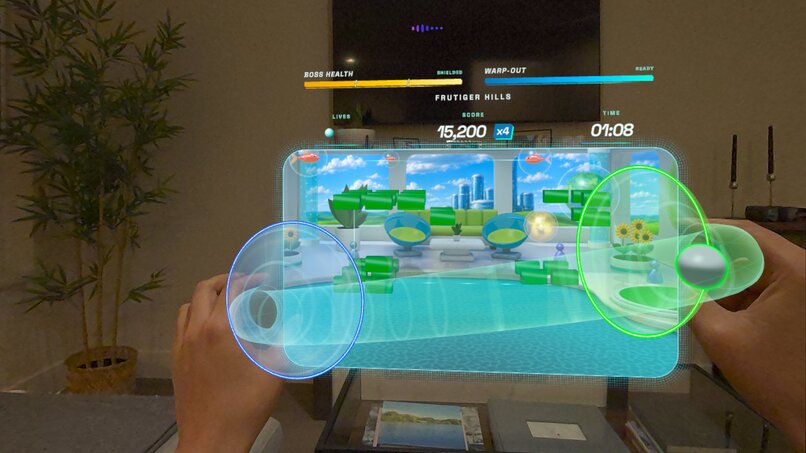
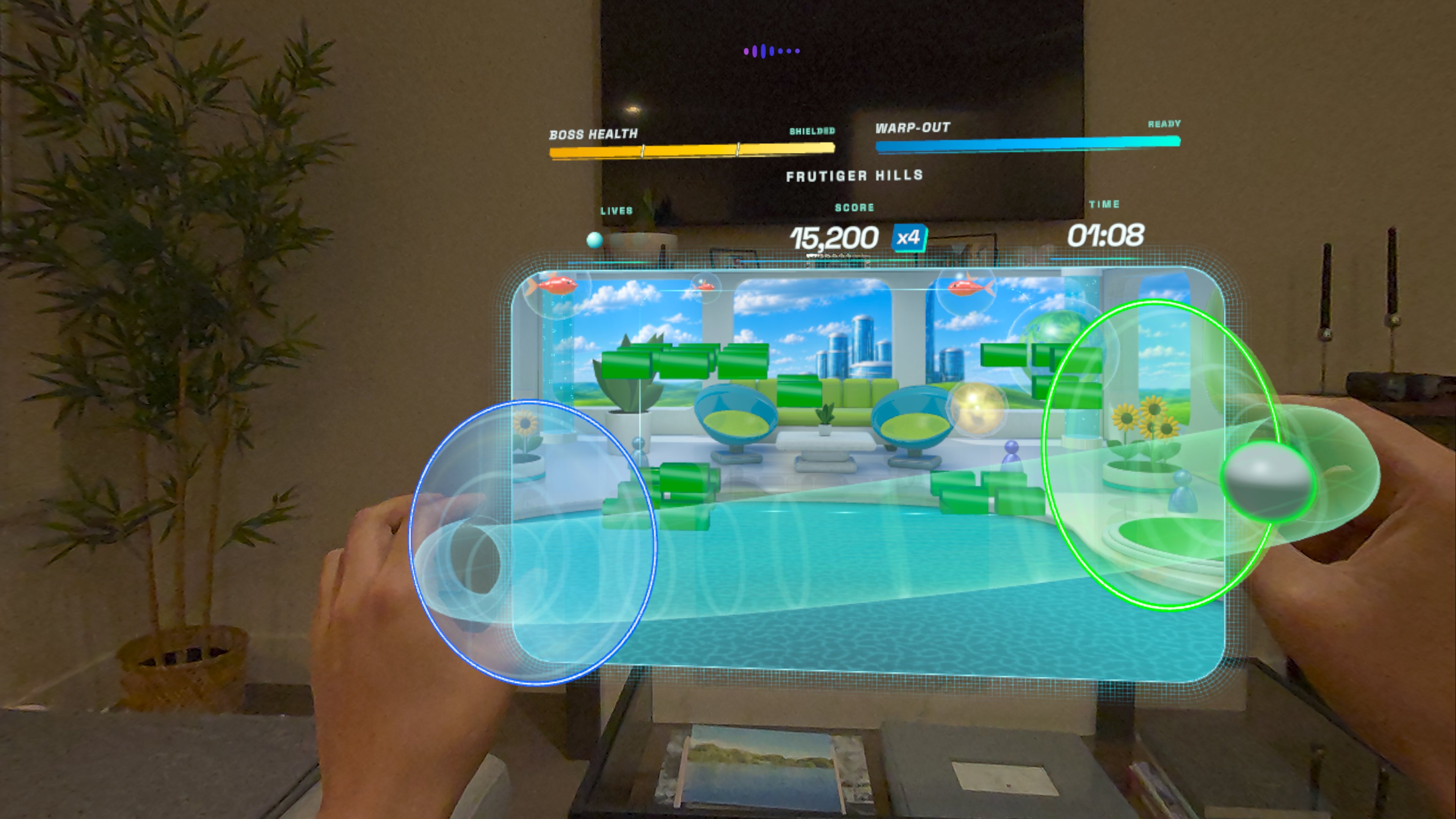
Frutiger Hills Arena
-
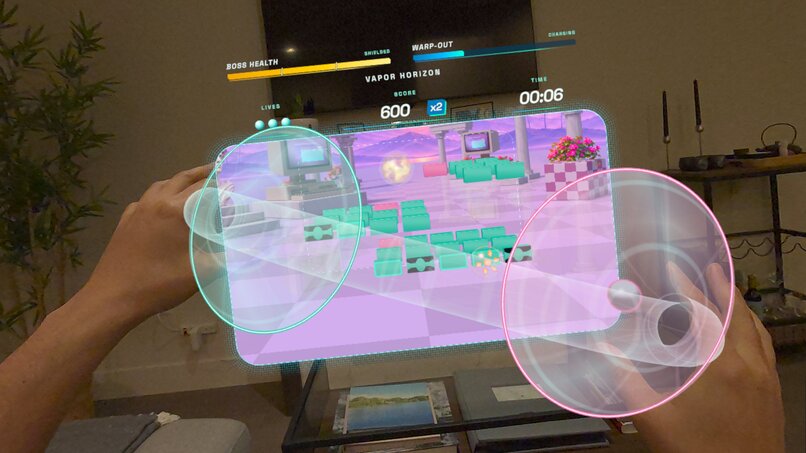
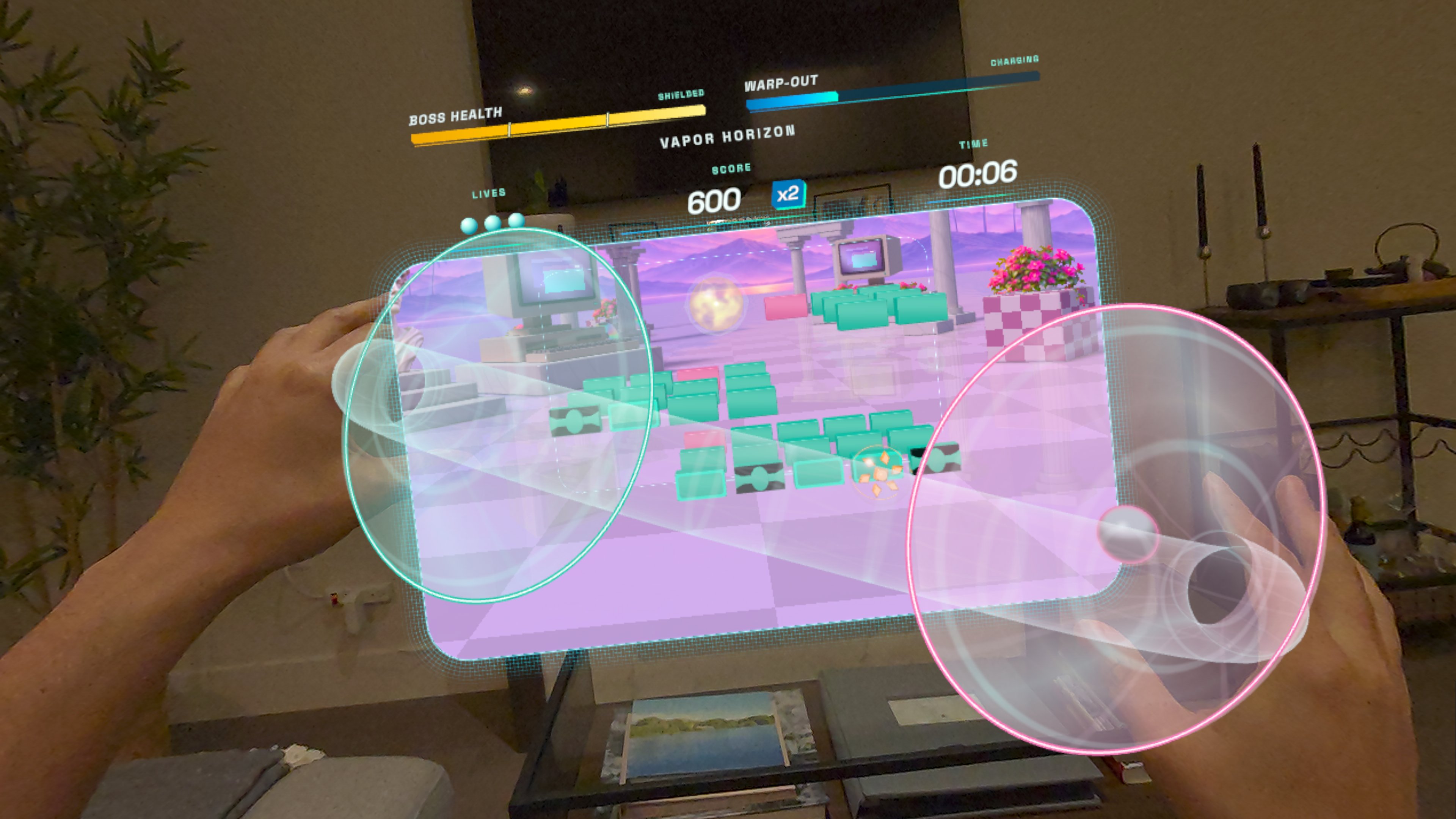
Vapor Horizons Arena
-
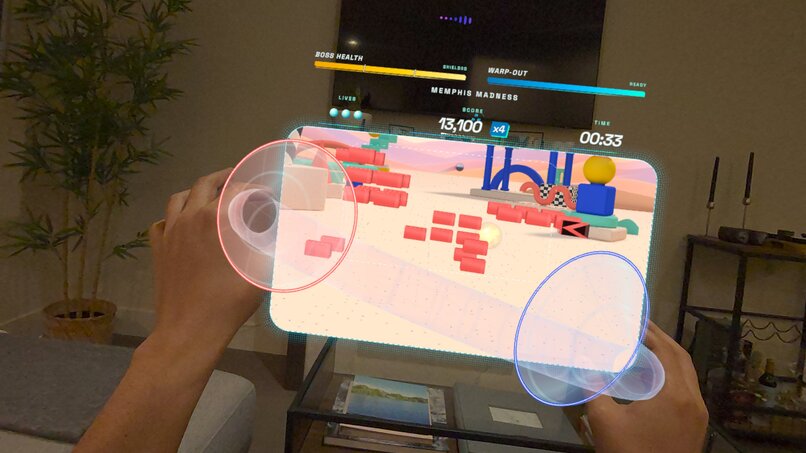
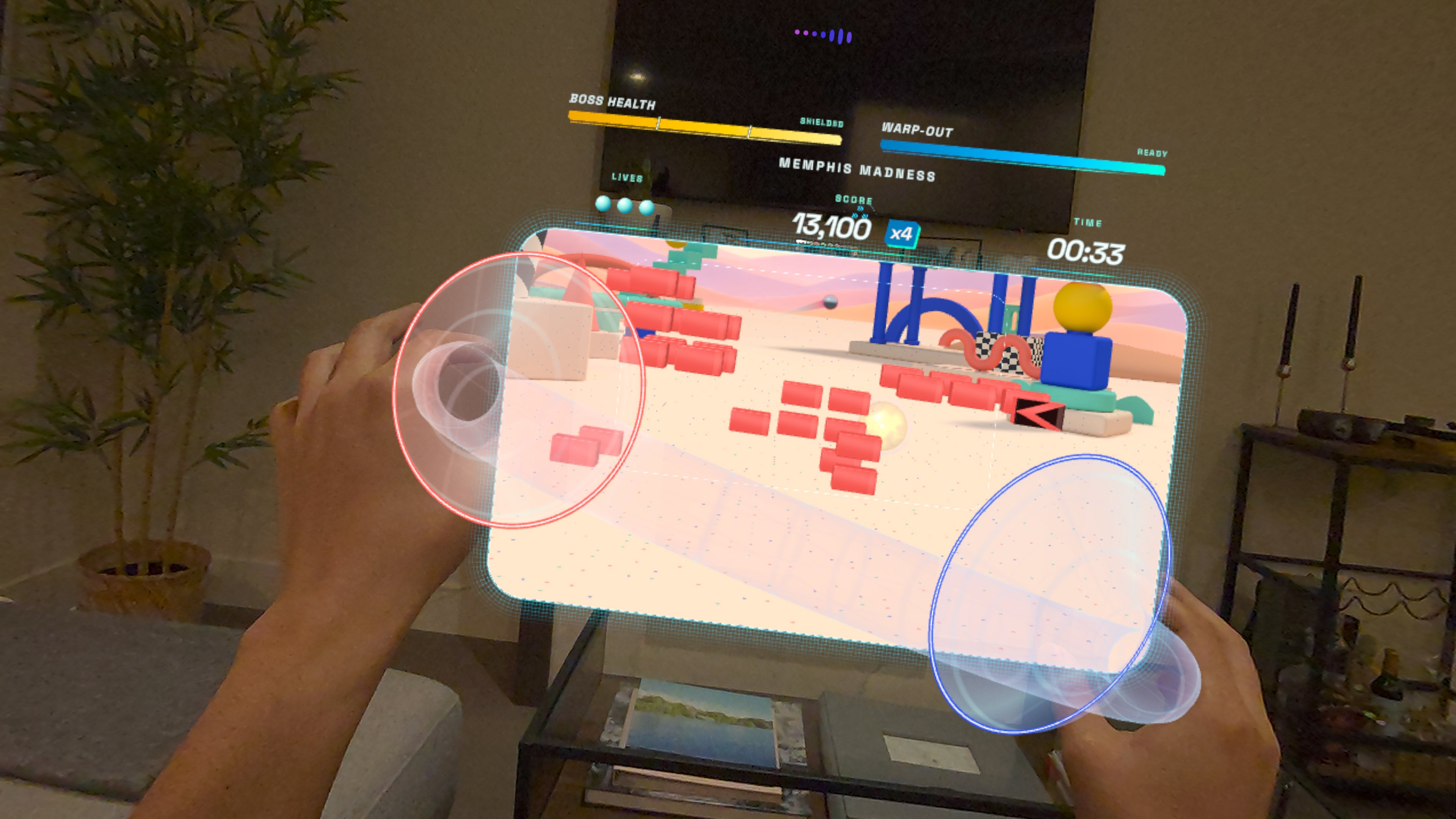
Memphis Madness Arena
-
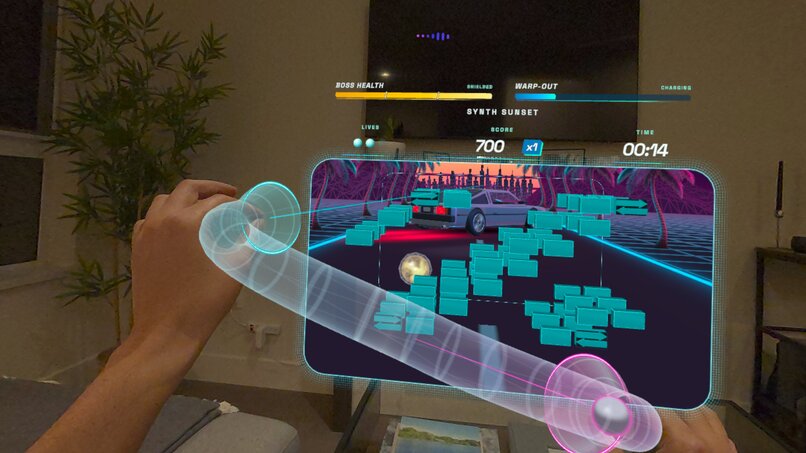
Synth Sunset Arena
-
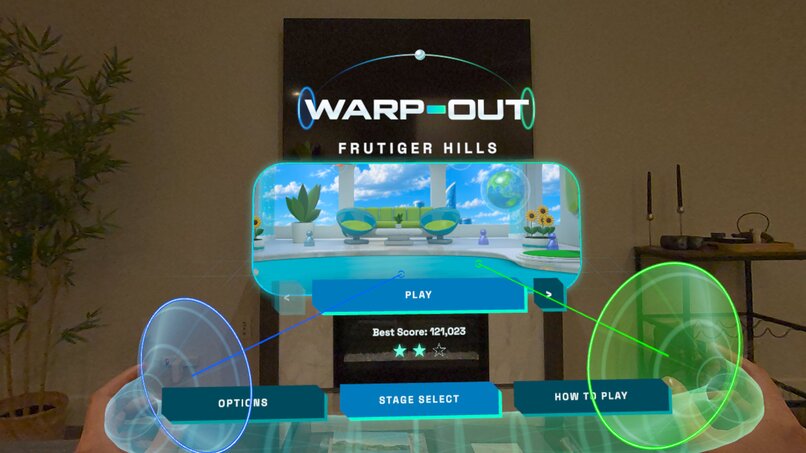
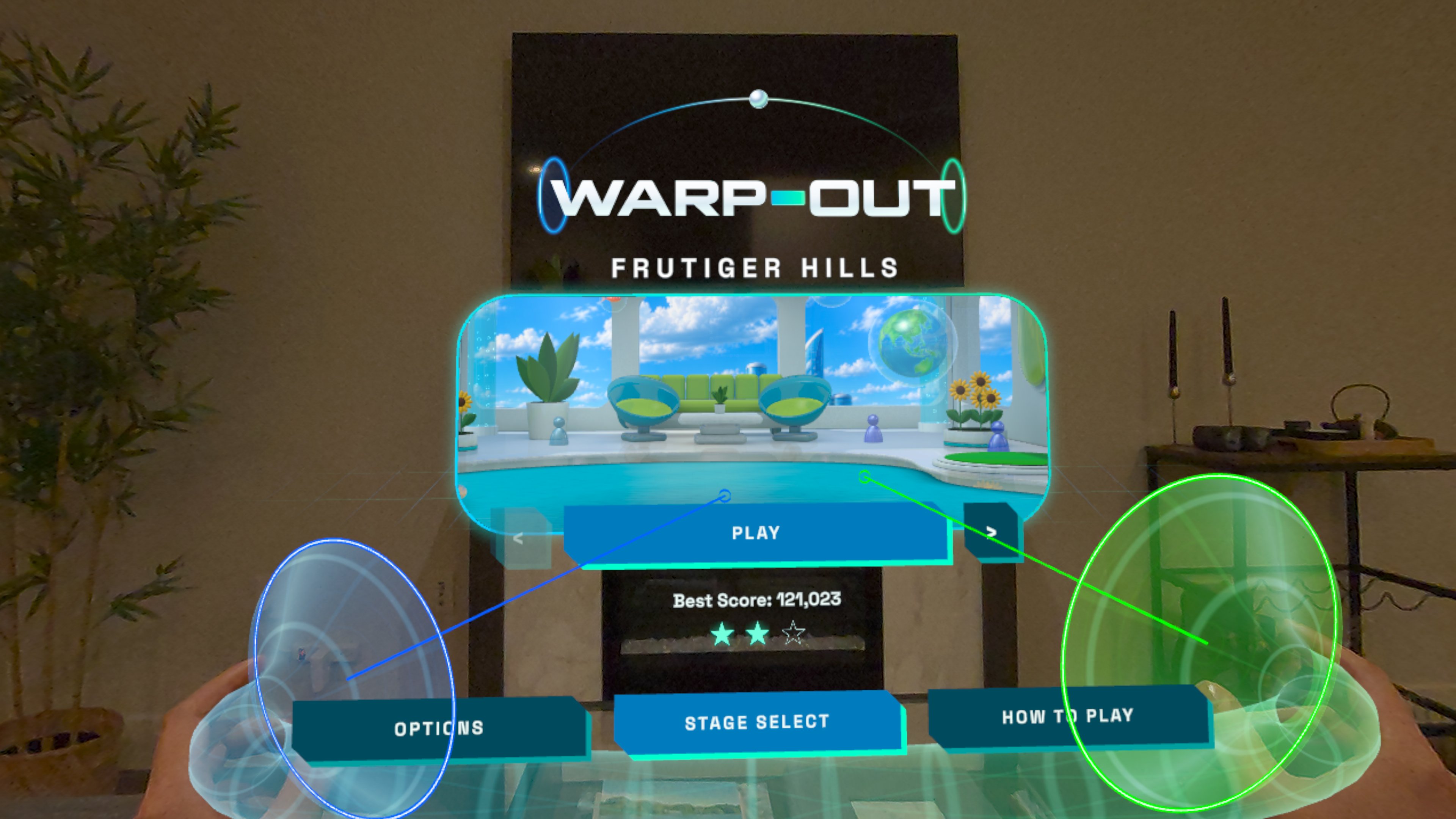
Main Menu
Inspiration
WARP-OUT combines the arcade immediacy of Brick Breaker, the spatial possibilities of Portal, and the immersive blend of music, color, and atmosphere that makes Tetris Effect so memorable.
I wanted to bring those inspirations into mixed reality through a mechanic that belongs on a spatial platform: your hands become the portals. This transforms a familiar arcade formula into something physical and expressive, with another world opening inside your own space.
What It Does
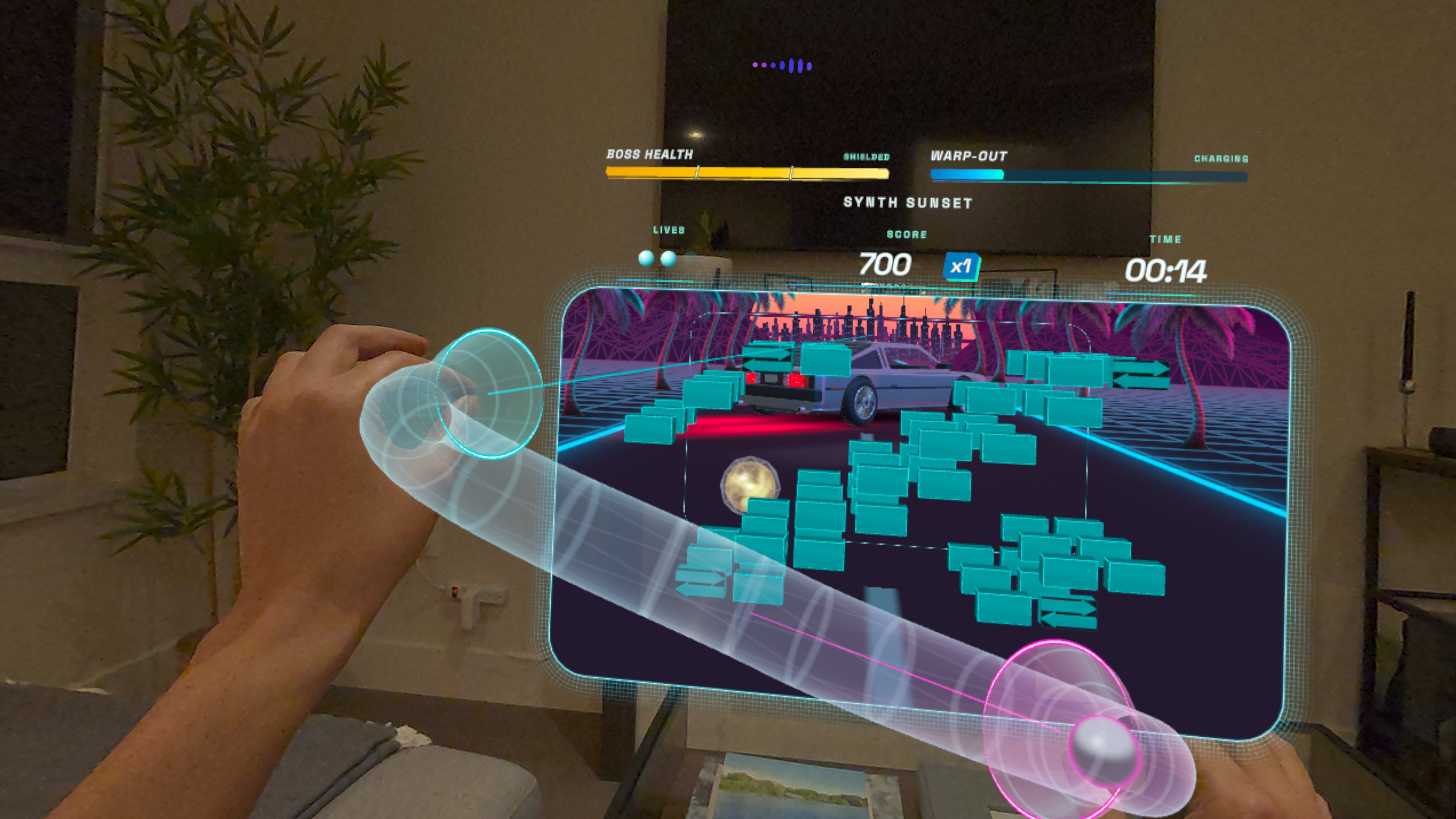
WARP-OUT is a mixed reality brick breaker played entirely with your hands. Catch the ball with one hand, aim with the other, and unleash it back into the arena.
Spread your thumb and index finger for wider portals and easier catches. Bring them closer together to reveal an aiming laser and fire faster shots. Tap as the ball passes through for a speed and damage boost.
Match the exit portal’s color to the blocks, clear advancing waves, and break through the boss core’s defenses. Offensive, defensive, and bonus power-ups help you clear waves and rack up points, while your ultimate ability, WARP-OUT, can clear the arena of blocks.
Four arenas draw on internet and design aesthetics: Frutiger Hills, Vapor Horizon, Synth Sunset, and Memphis Madness, each with its own visual identity and music.
How I Built It
I developed WARP-OUT solo using Unity, the Meta XR Core SDK, and OpenXR, with AI-assisted coding and asset production. As Studio Director at Astral Shores Games, I combined this workflow with a decade of experience in VR design and project management to tackle the project while our core team continued working on our other games.
Custom hand interactions use tracked finger positions and palm orientation to control portal size, placement, and aiming. Passthrough keeps players connected to their surroundings, while hand-directed pointers and pinch gestures support menu navigation. I also used Meta’s Field of View Simulator to evaluate the arena and interface against the upcoming Meta VR Glasses’ viewing constraints.
Challenges and Lessons
The central challenge was balancing the freedom of hand tracking with arcade precision and accessibility. Small finger movements need responsive, stable controls; fast action needs clear feedback; and expressive gestures need to remain comfortable and intuitive.
Generous catches help players get started, while smaller portals and timed shots create room for mastery. Hand tracking gives the classic Brick Breaker formula new dimensions of control, coordination, and player expression.
What’s Next
I plan to refine portal interactions, expand encounters and arenas, and improve clarity, comfort, and progression through player feedback. I also want to introduce leaderboards and achievements.
Winning would help fund artist-authored 3D assets, music, and sound effects to replace some AI-generated assets, working with our core team and external artists.
My goal is an arcade experience that feels native to spatial platforms and uses immersive technology to elevate a classic formula into something new.


