Geopolitical analysis is inherently multidisciplinary — no single expert (or AI model) can simultaneously reason at depth about military history, operational strategy, and war economics. Yet most AI-based analysis tools use a single prompt to a single model and call it a day. We asked: what if we built an actual debate system, where specialist AI agents argue with each other, challenge each other's evidence, and revise their positions?
This is exactly how real intelligence agencies work — Red Team analysis, structured analytical techniques, and competing hypotheses. We wanted to replicate that rigor in software, powered by Qwen's multi-model infrastructure.
How We Built It using Qwen Cloud
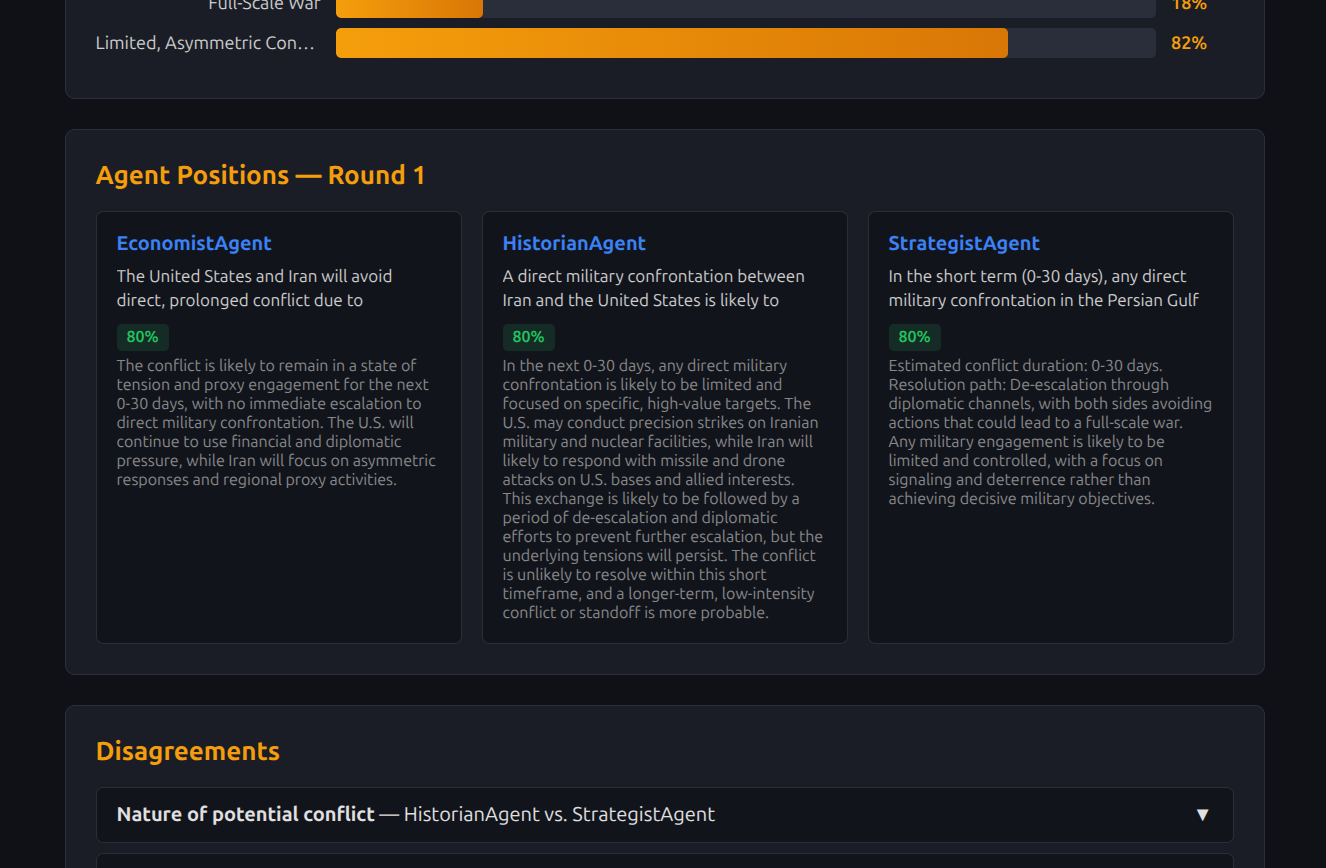
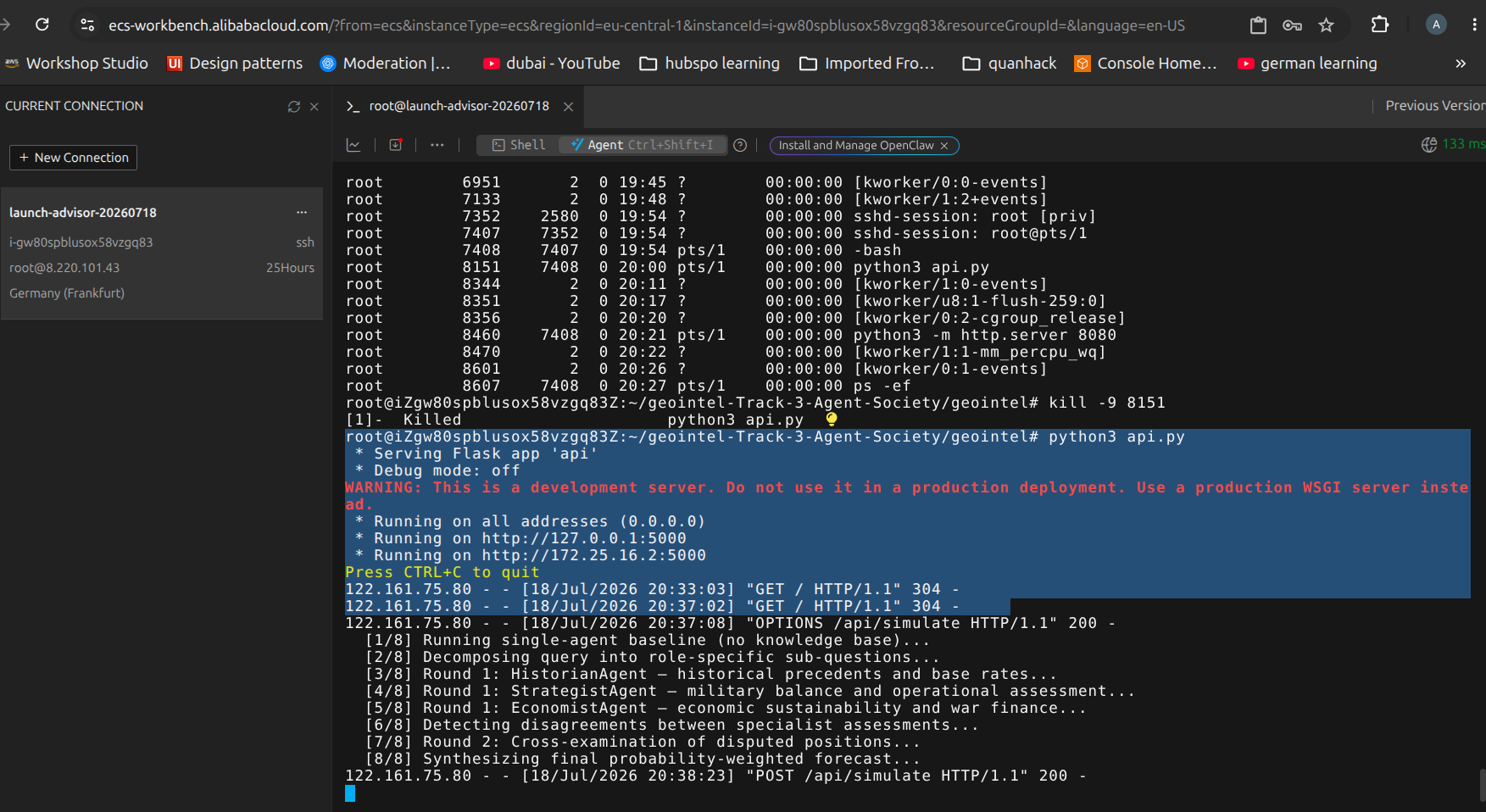
The system has 5 AI agents in an 8-step pipeline:
- BaselineAgent — single model, no knowledge base. The control group.
- HistorianAgent — armed with Turchin's cliodynamics, Kennedy's imperial overstretch theory, insurgency base rates, and civilizational fatigue patterns.
- StrategistAgent — applies DIME matrices, A2/AD assessment, nuclear escalation ladders, and terrain multipliers.
- EconomistAgent — analyzes FIRE ratios, debt sustainability, energy independence, and sanctions resilience.
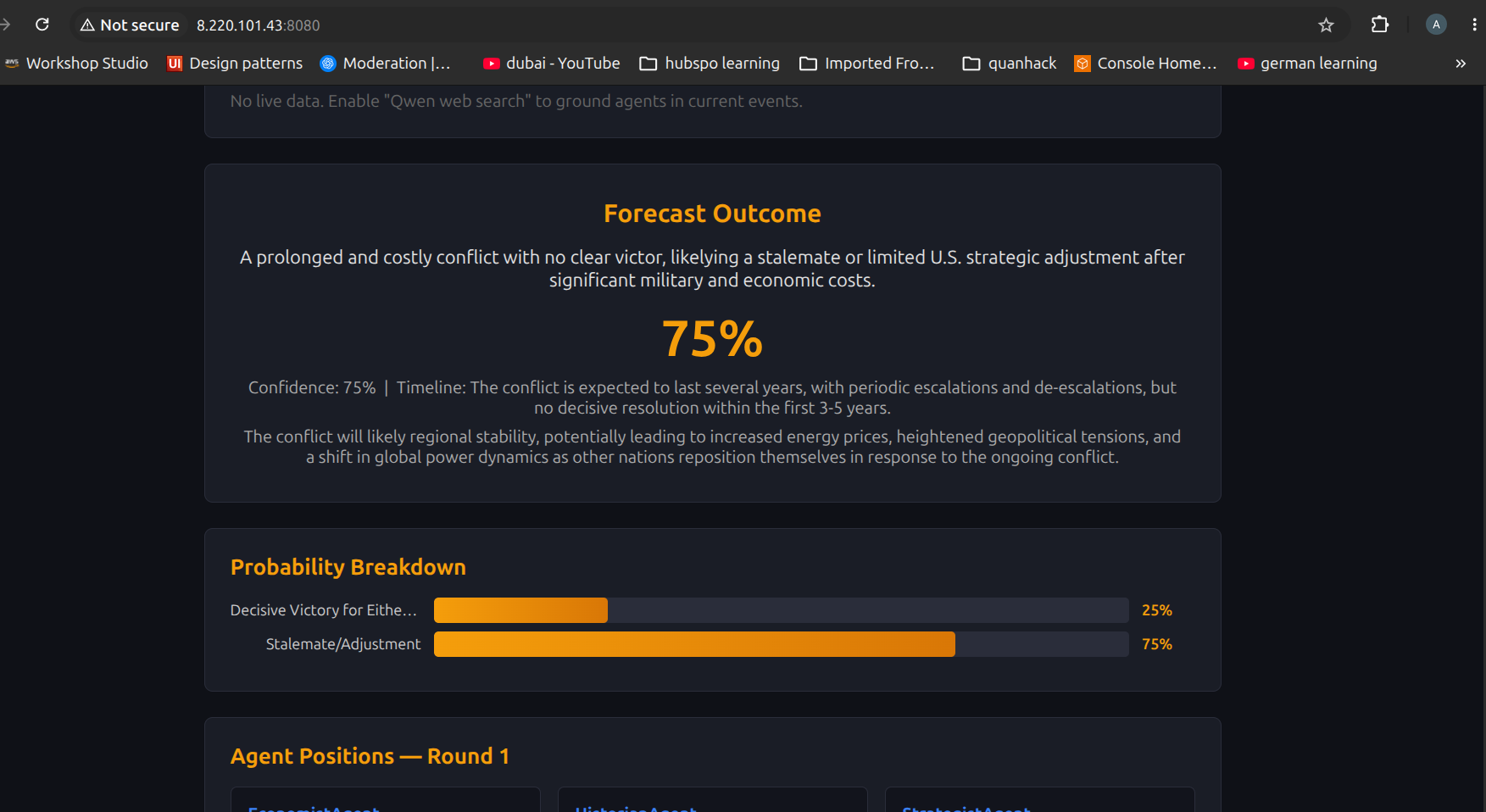
- SynthesisAgent — the orchestrator. Decomposes queries, detects disagreements, runs cross-examination, and produces weighted forecasts.
Each agent receives role-filtered knowledge base context from a curated corpus of 18 countries, 18 historical conflicts, 17 civilizational patterns, 23 demographic profiles, and 12 religious/cultural drivers.
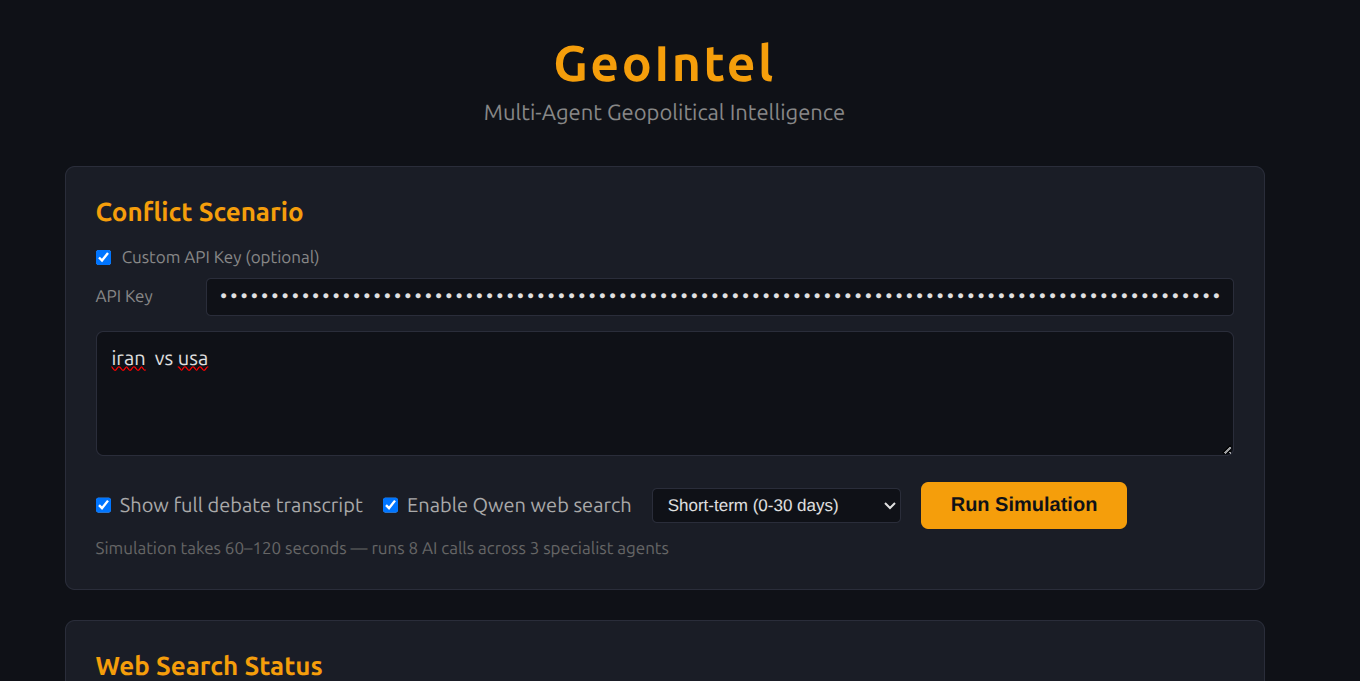
When enable_search is turned on, every Qwen API call automatically searches the web and grounds its reasoning in live, real-time results — so agents aren't just relying on training data, they know what happened this week.
What We Learned
- Multi-agent debate works. The system consistently identifies 8x more key factors than a single agent (26 vs 3), covers 3 analytical dimensions instead of 1, and produces +5pp higher confidence scores.
- Disagreements are features, not bugs. The system automatically detects when agents produce contradictory evidence, forces them to defend or revise, and weights their final positions accordingly. This is exactly what structured analytical techniques prescribe.
- Qwen's native web search is powerful. Using
enable_search=truevia the DashScope OpenAI-compatible endpoint means we get live grounding without building any scraping infrastructure. The model does the search internally. - Time horizons matter. Adding
--horizon short/medium/longcompletely changes the agents' analytical frame — from "what happens in the next 30 days" to "how does this play out over years." - Prompt engineering is architecture. The system prompt for each agent isn't just a personality — it's an entire analytical framework with 7 structured methodologies. Getting those right was harder than building the pipeline.
What's Next
- Add more agent specializations (Intelligence Analyst, Diplomat, Regional Expert)
- Support multi-party conflicts (not just bilateral)
- Add memory so agents learn from past prediction accuracy
- Real-time alerting when web search detects escalating events
- Deploy as a SaaS with user accounts and prediction tracking


Log in or sign up for Devpost to join the conversation.