WarehouseIQ — Agentic AI for Amazon Fulfillment Centers
Inspiration
My teammate and I were brainstorming ideas involving heavy context, where numerous things happen simultaneously and critical details get lost. The spark came when we received an Amazon order and started discussing how Riverside has some of the largest fulfillment centers in the country. We looked at each other and the idea clicked.
A warehouse is exactly the kind of environment where AI can make a real difference — extensive context, messy unstructured data, and forgotten incident reports that pile up until they cause accidents. We didn't want to replace the people running the floor. We wanted to make sure nothing important gets lost in the noise.
What It Does
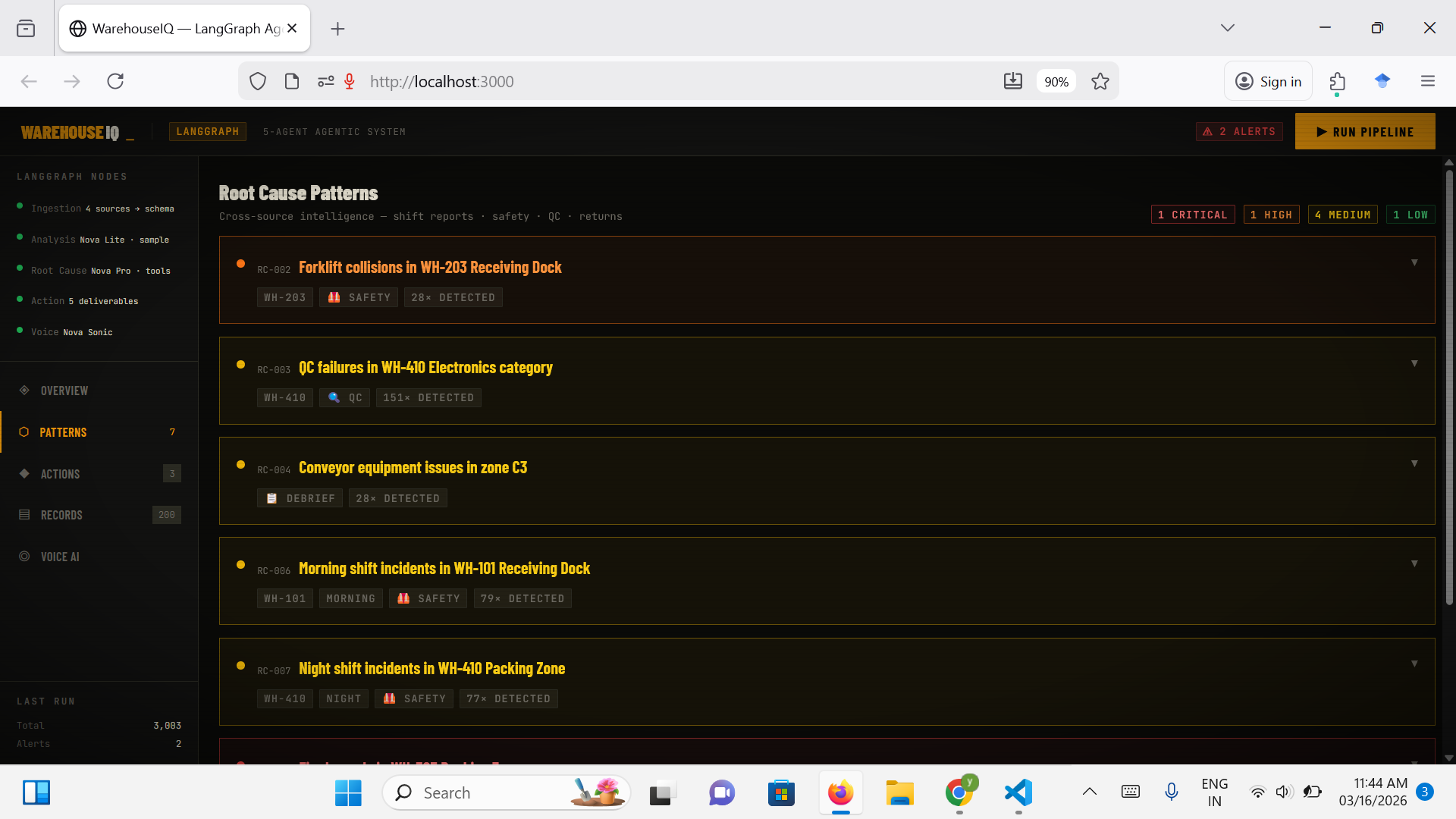
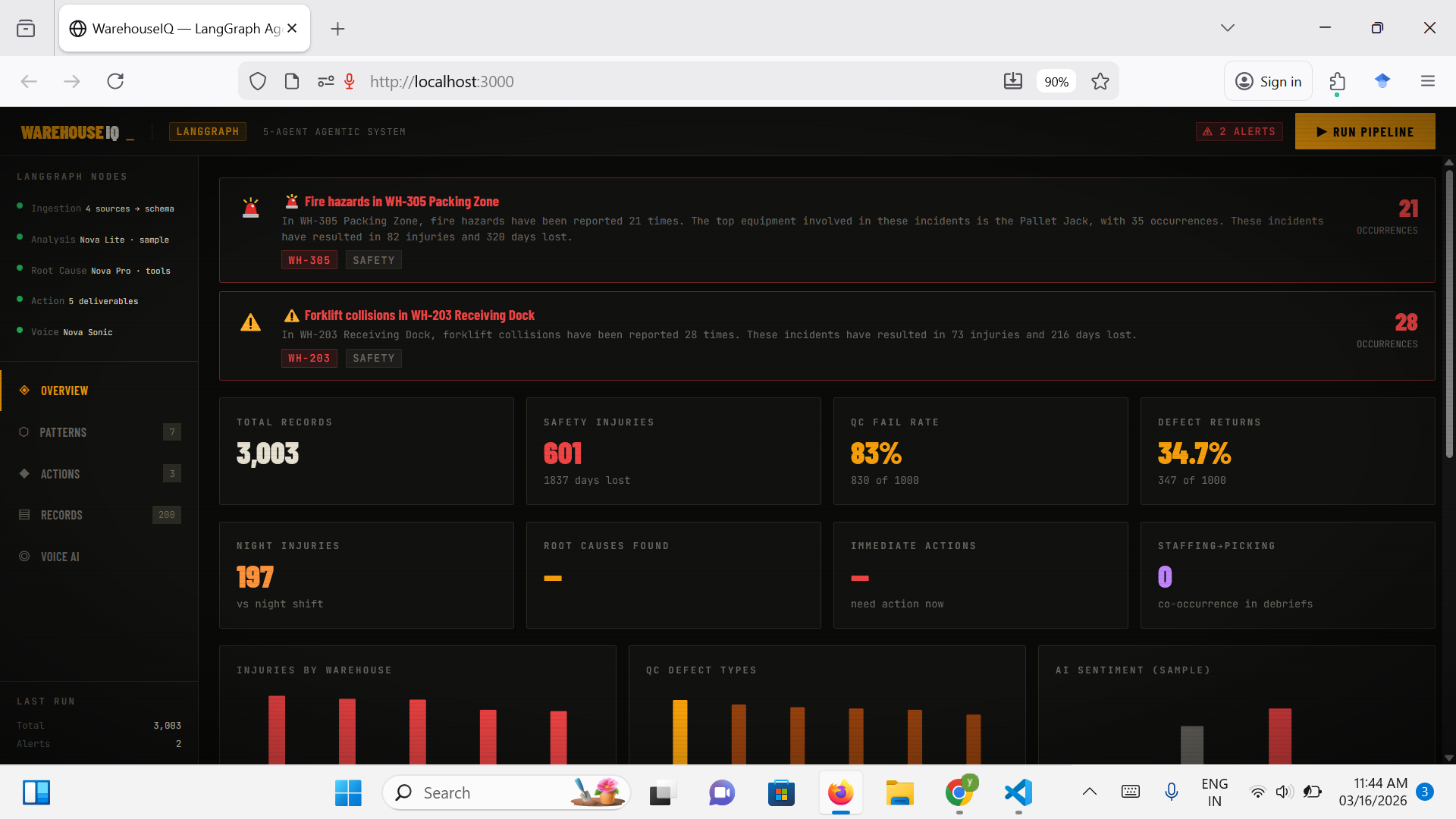
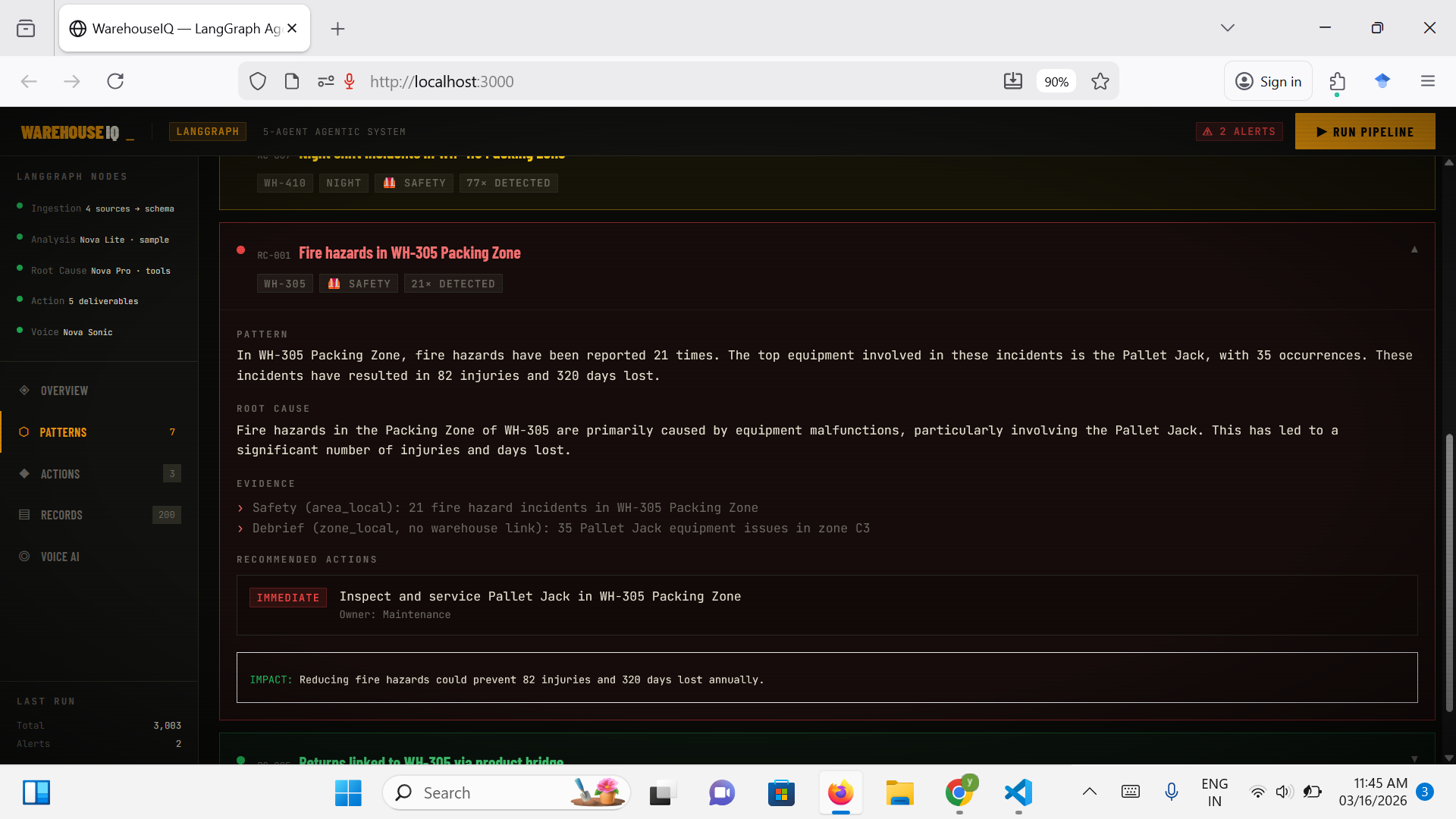
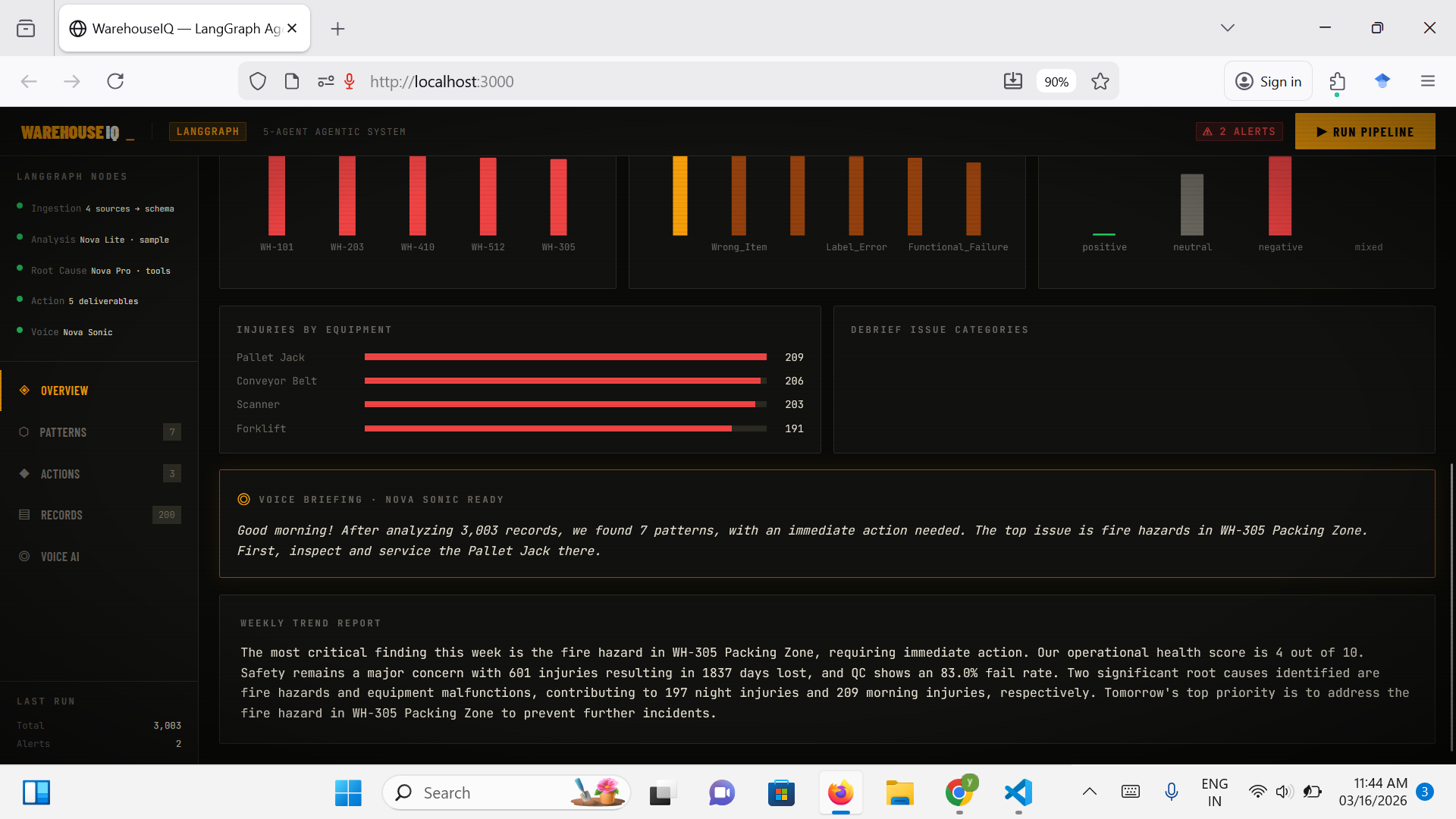
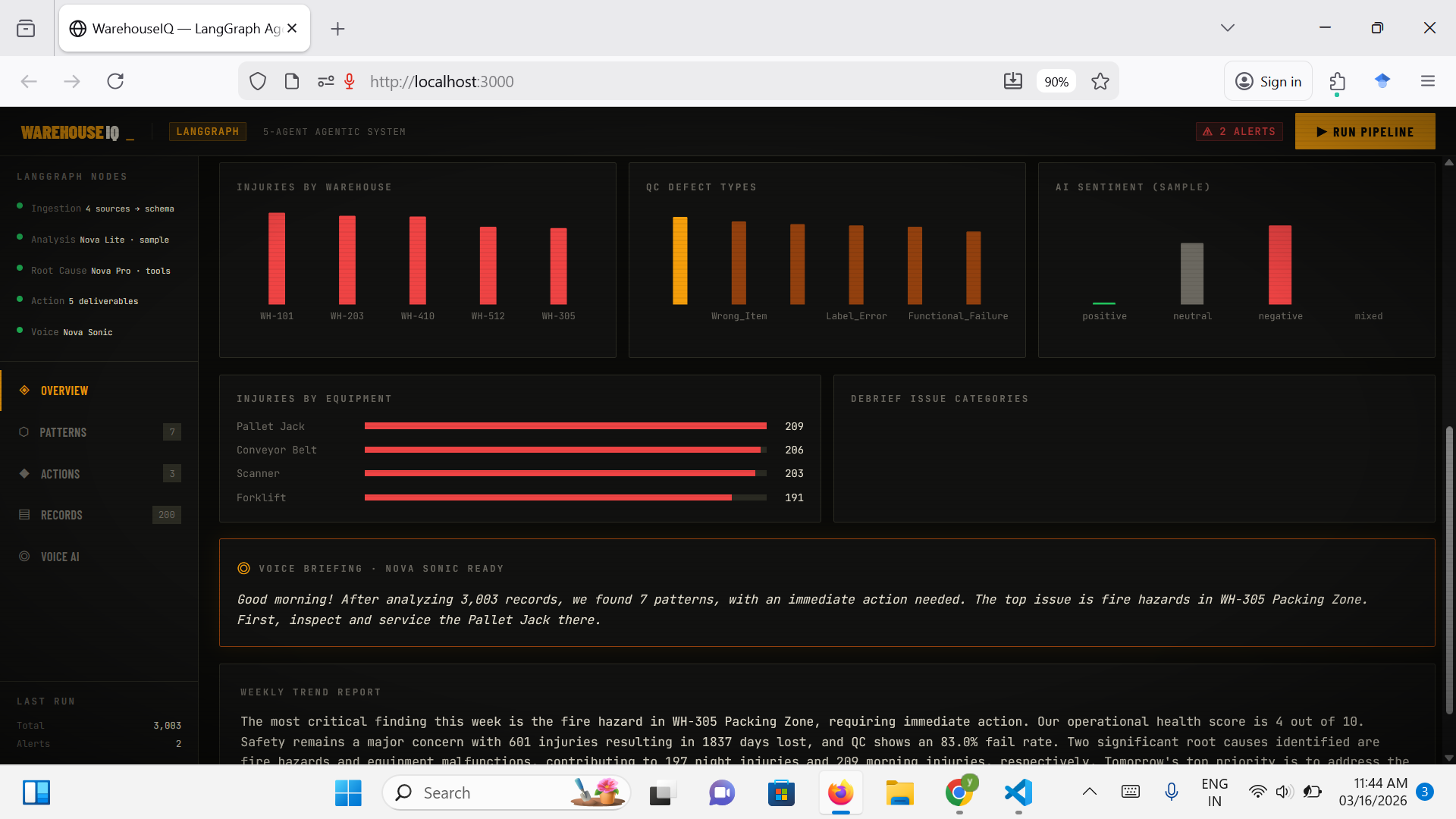
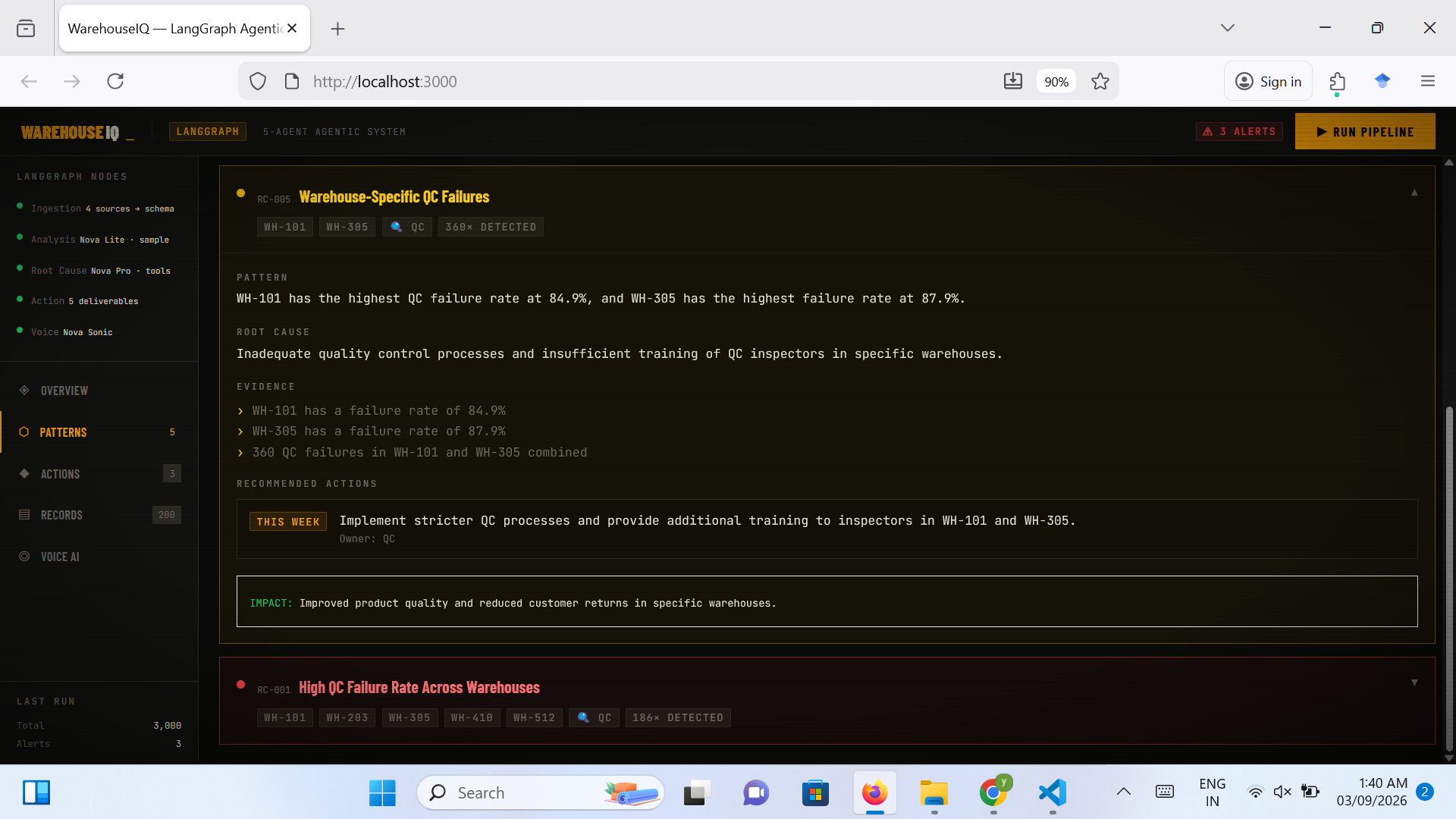
WarehouseIQ is a 5-agent agentic system powered by Amazon Nova that ingests warehouse operational data across four sources — shift debrief logs, safety incident reports, QC inspection flags, and customer returns — and produces specific, evidence-backed root cause insights tied to exact warehouses, areas, equipment, and shifts.
The pipeline runs five LangGraph agents:
- Ingestion Agent — normalizes 4,000+ records from 4 data sources into a unified schema, including transcribed voice memos via Amazon Transcribe
- Analysis Agent (Nova 2 Lite) — enriches every record with sentiment analysis, anomaly detection, and issue theme extraction
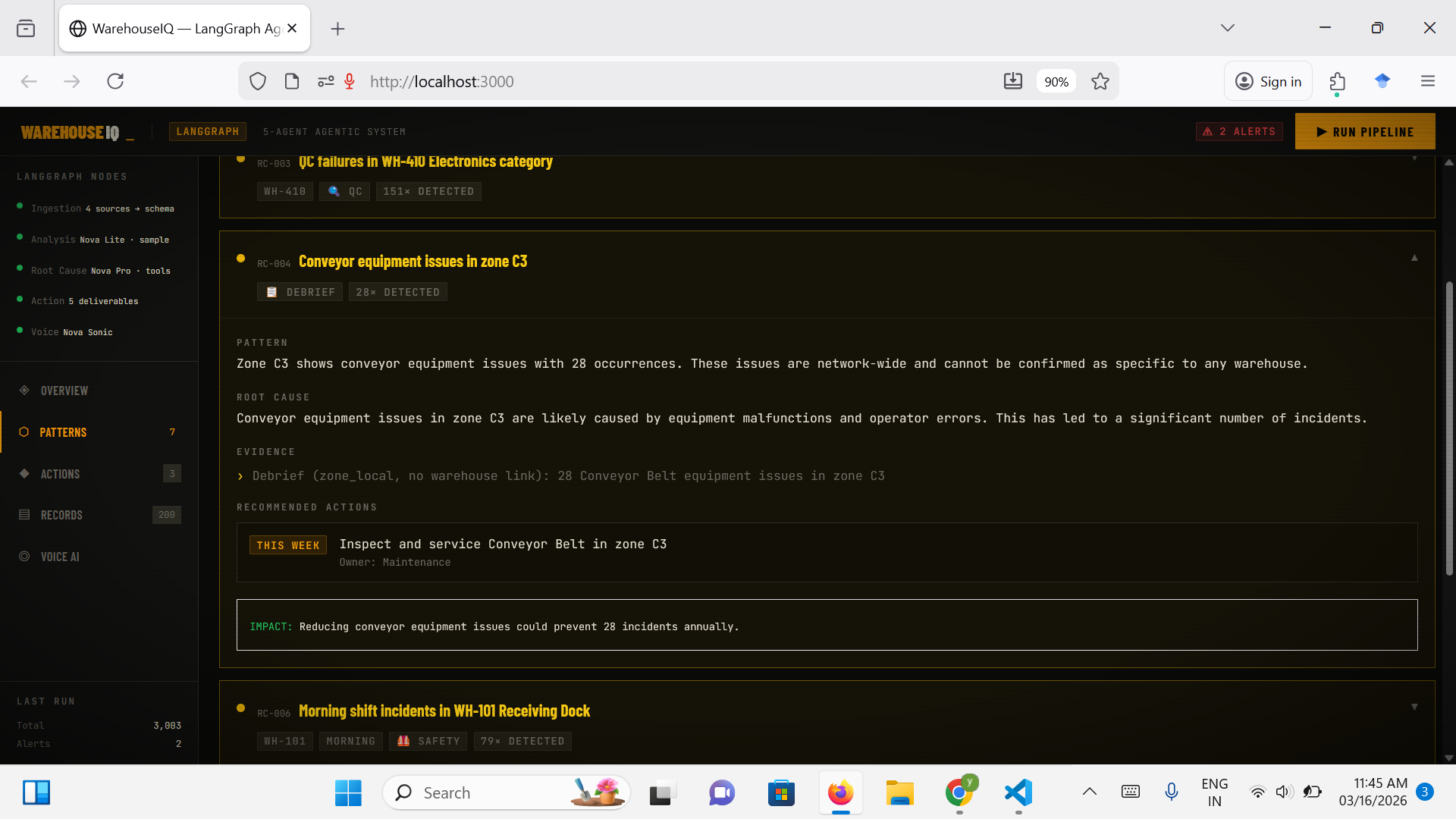
- Root Cause Agent (Nova 2 Pro) — runs an autonomous ReAct tool-calling loop across 10 warehouse tools, discovering cross-source causal chains like: forklift collisions in WH-305 Packing Zone → conveyor belt damage → operational slowdowns → picking errors → defect returns spike
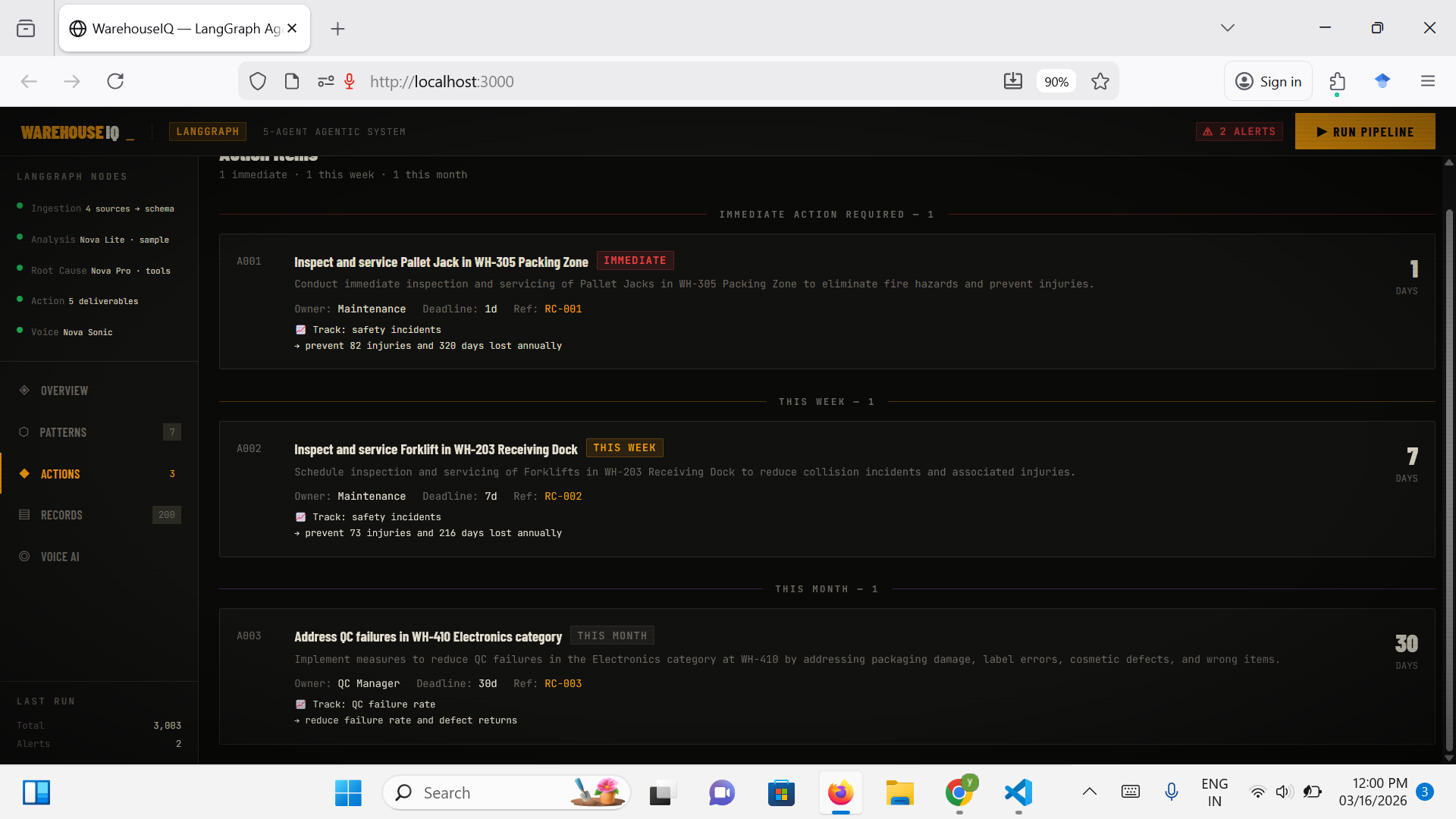
- Action Agent — generates prioritized remediation plans with owners, deadlines, and measurable KPIs
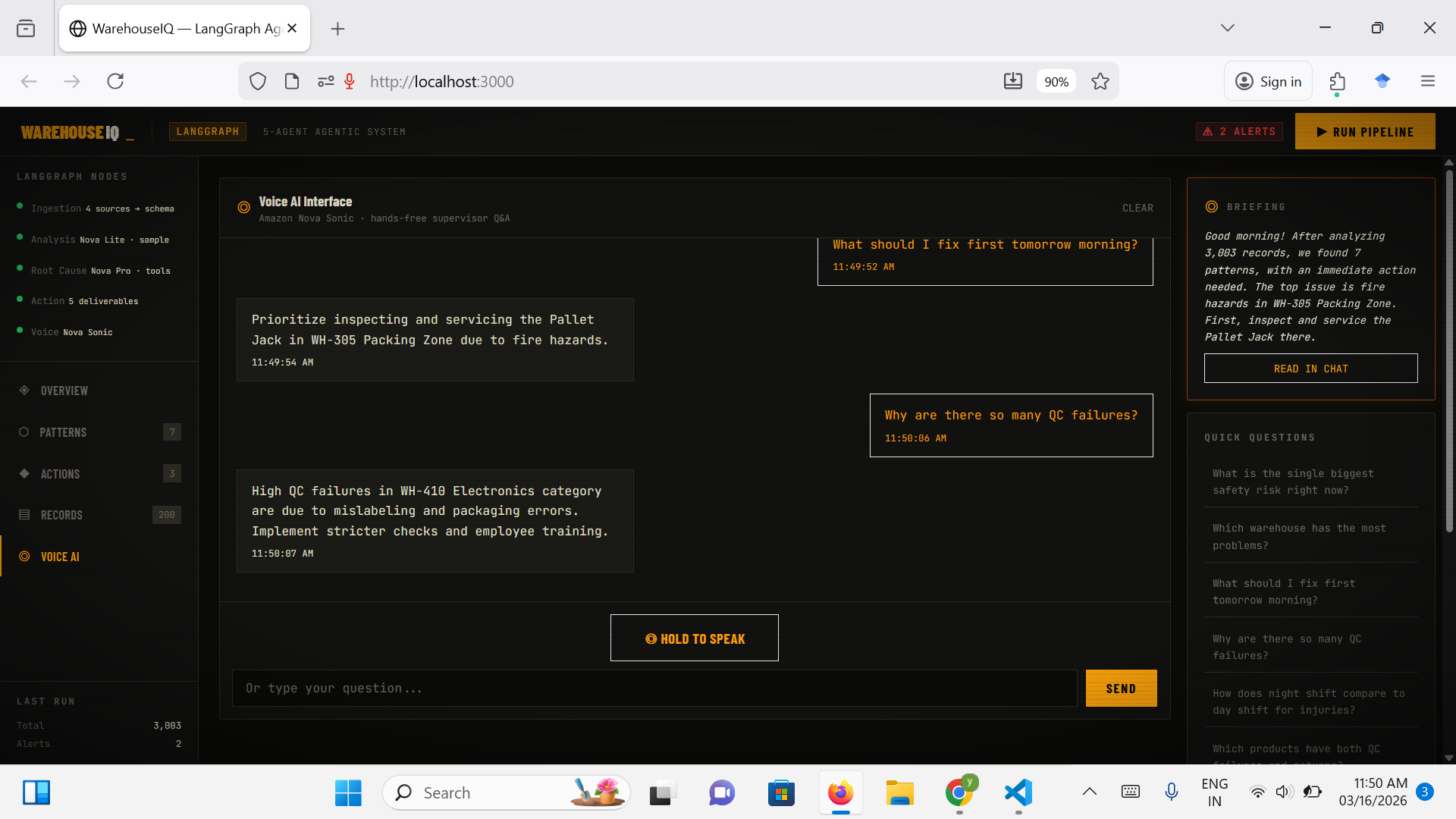
- Voice Agent (Nova 2 Sonic) — lets shift supervisors verbally query the system and receive spoken, evidence-backed answers in real time
How We Built It
- Backend: Python, FastAPI, LangGraph StateGraph, LangChain ReAct tool-calling loop
- Models: Amazon Nova 2 Pro, Nova 2 Lite, Nova 2 Sonic
- AWS Services: Amazon Bedrock, Amazon Transcribe, Amazon Polly, Amazon S3
- Frontend: Next.js, TypeScript, Tailwind CSS — industrial amber-on-black terminal UI
- Architecture: 5 agents as LangGraph nodes with a shared WarehouseState, streaming progress updates to the frontend
Challenges We Faced
The biggest challenge was making insights genuinely specific rather than vague. Early versions produced summaries like "WH-305 has multiple issues" — useless for a floor supervisor. We rebuilt the correlation engine from scratch with honest evidence granularity labels, ensuring every insight cites the exact warehouse, area, equipment, and data sources that support it — and explicitly labels when evidence is only available at a global level.
Nova Sonic's bidirectional streaming API was another major challenge — it requires a completely different client from standard boto3, using HTTP/2 persistent streams with an event-driven protocol. We implemented the full session lifecycle including sessionStart, audio chunking, and completionEnd handling.
What We Learned
- How to build truly agentic systems where the model autonomously decides what to investigate next, not just follows a fixed script
- The importance of evidence grounding — AI insights are only useful if they're traceable back to real data
- How Nova 2 Pro's reasoning capabilities enable causal chain discovery across multiple disconnected data sources
What's Next
- Upgrade to Python 3.12 for full Nova 2 Sonic real-time voice support
- Add live warehouse data ingestion via API connectors
- Expand to multi-facility comparison dashboards
Built With
- amazon-bedrock
- amazon-nova-2-lite
- amazon-nova-2-pro
- amazon-nova-2-sonic
- amazon-polly
- amazon-transcribe
- amazon-web-services
- boto3
- fastapi
- langchain
- langchain-aws
- langgraph
- next.js
- python
- tailwind-css
- typescript

Log in or sign up for Devpost to join the conversation.