-
-
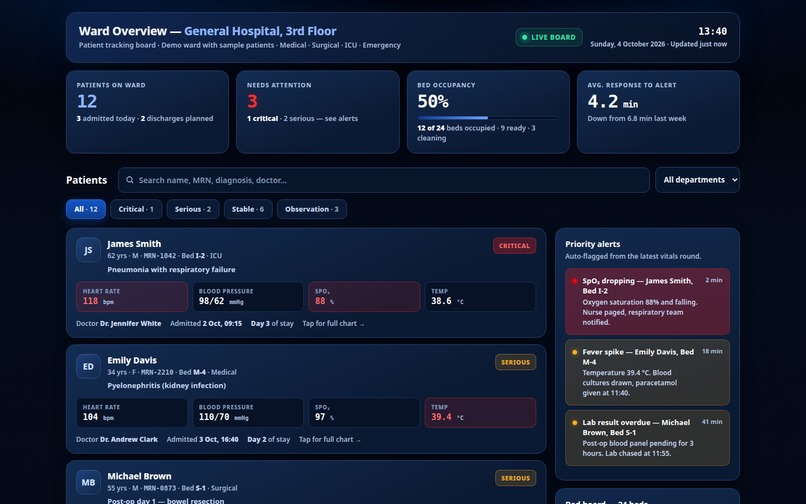
Dashboard
-
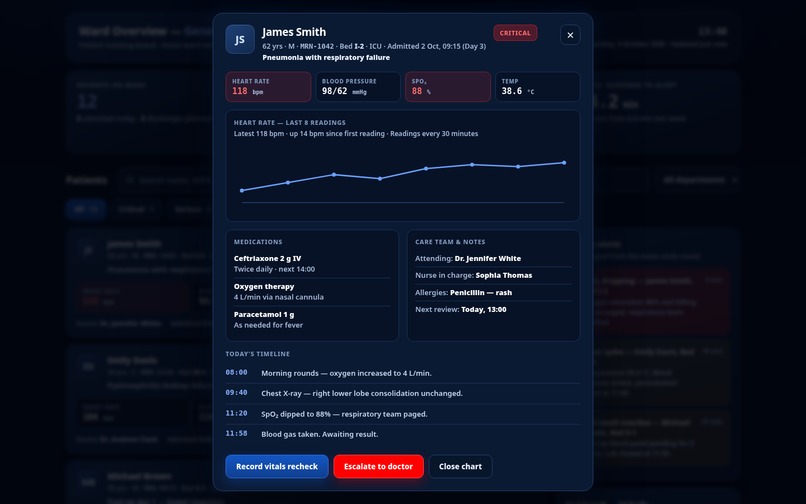
Patient Chart
-
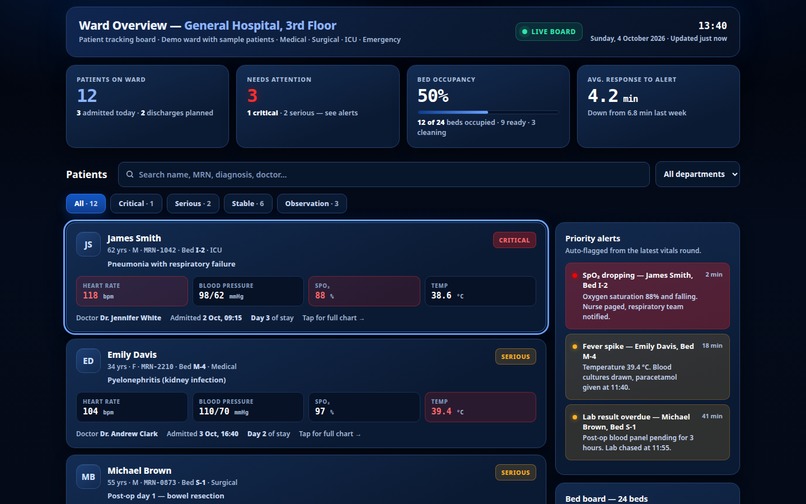
Bed Board
-
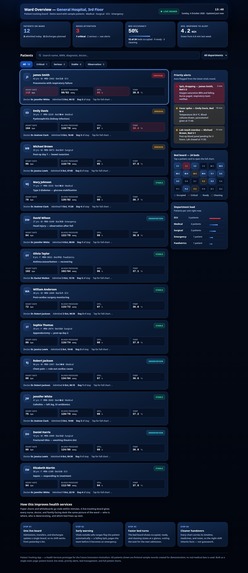
Full Page
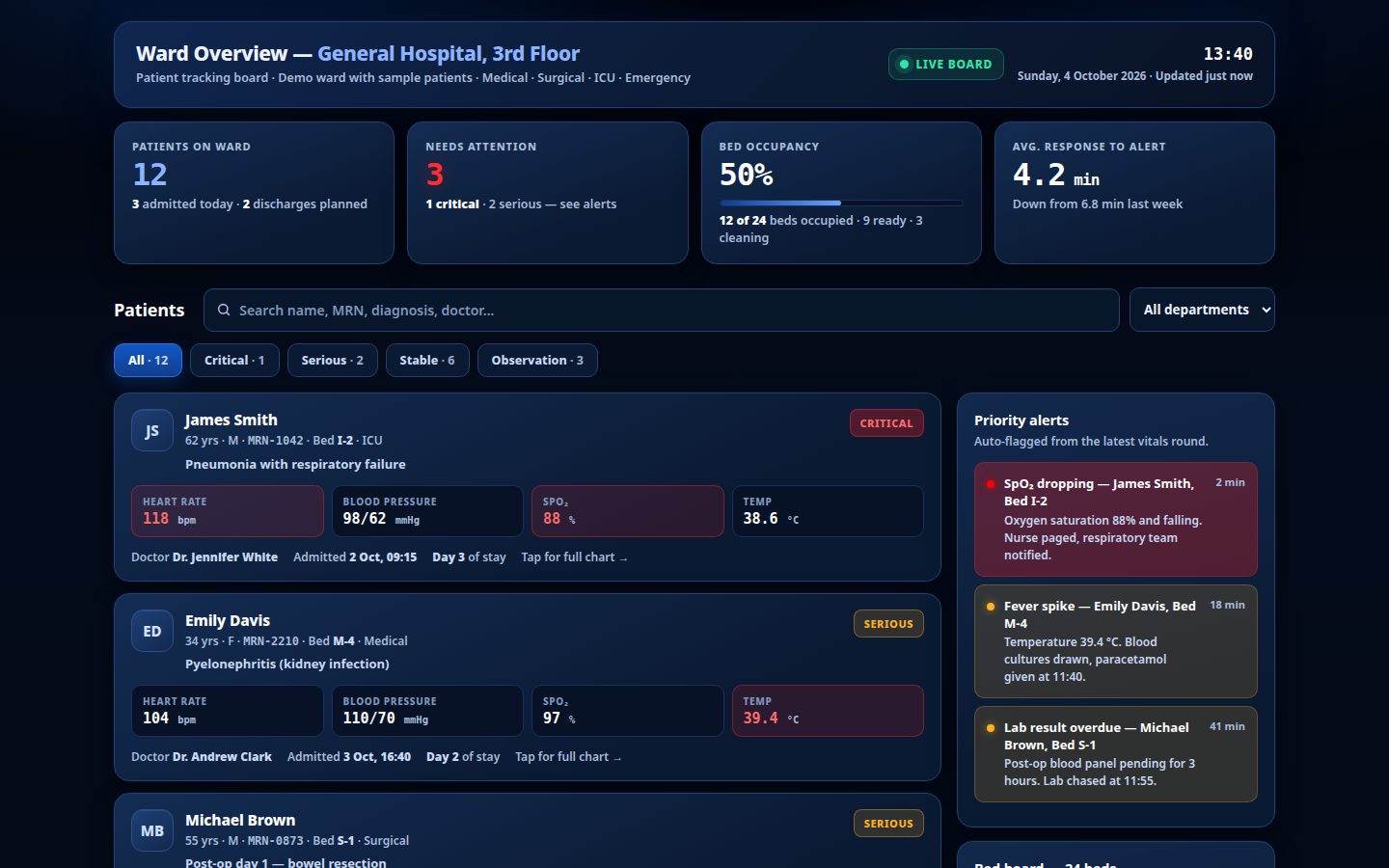
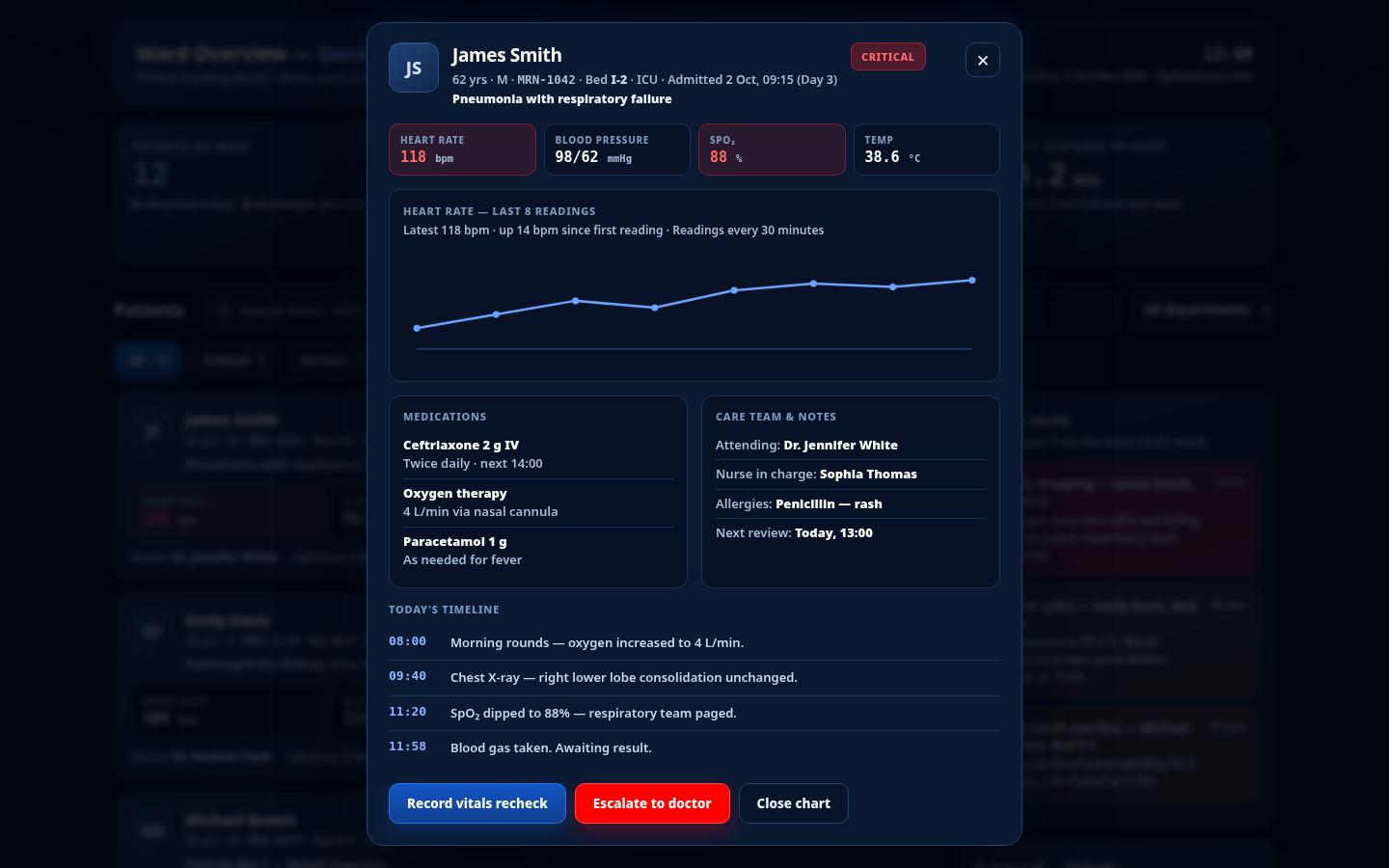
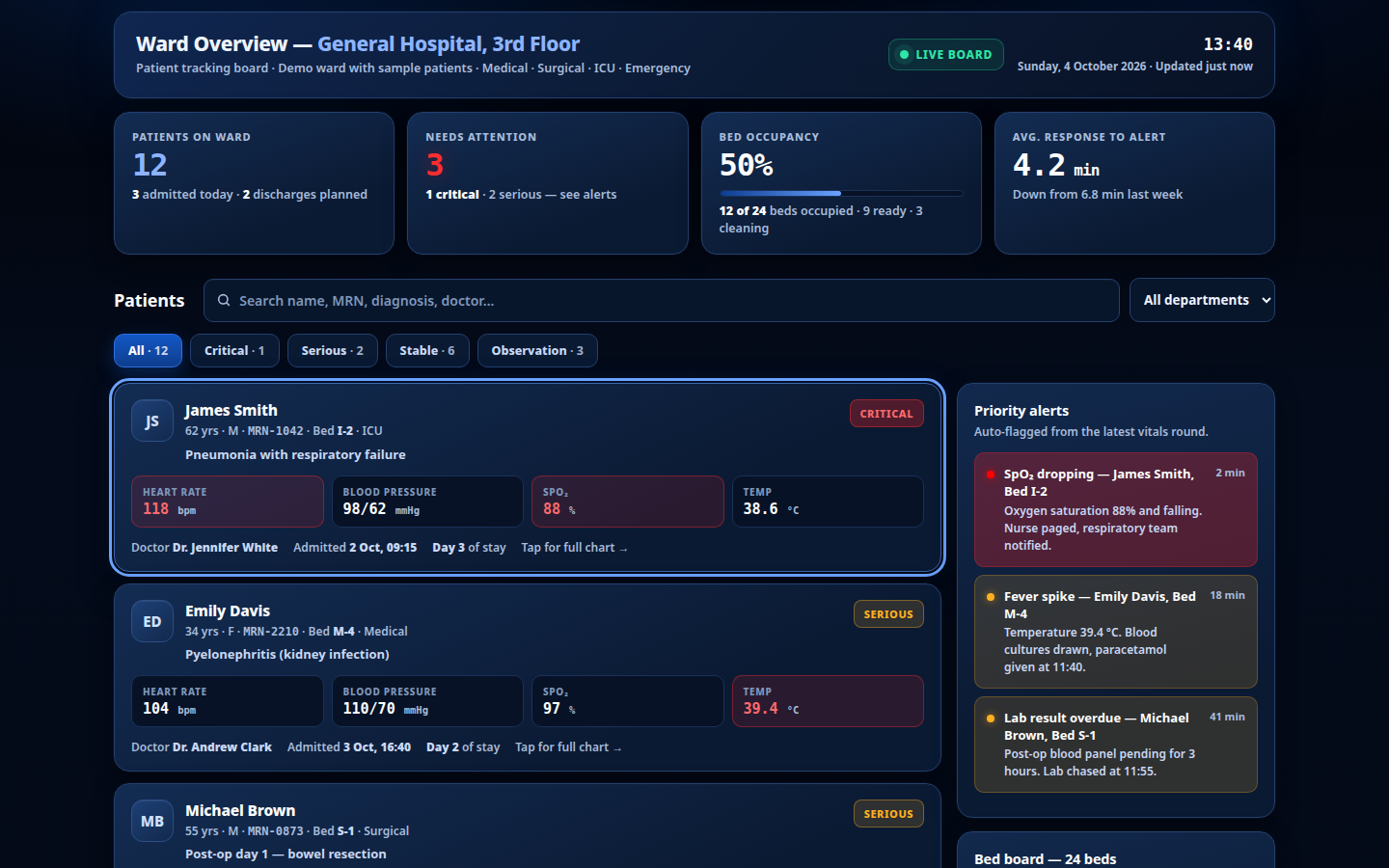
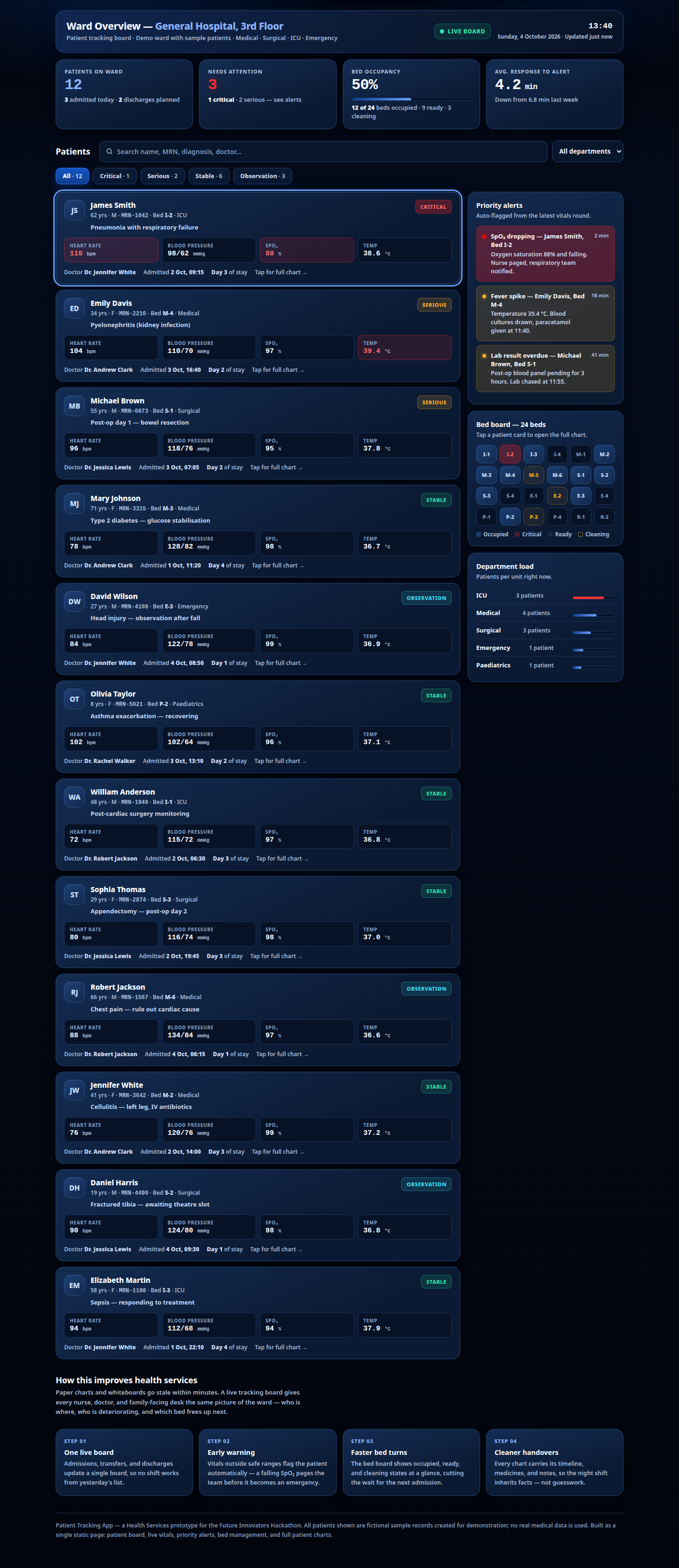
Problem Statement In small clinics and rural hospitals, patient flow is still tracked on paper registers and whiteboards. This creates four connected problems: What is the problem? Ward information — who is admitted, which bed they are in, and how their condition is changing — lives on paper that goes stale within minutes. Who is affected? Nurses and doctors in small, busy wards; patients whose condition deteriorates quietly; and families waiting for honest information. Why does it matter? A patient whose oxygen level is falling can go unnoticed until the situation becomes an emergency. Beds get double-counted, admissions are delayed, and shift handovers depend on memory and handwriting. What are the current limitations? Paper registers cannot warn anyone. Whiteboards must be updated by hand and show no history, no trends, and no alerts. Why do existing approaches fail? Enterprise hospital software solves this, but it is expensive, needs special hardware and licenses, and is far beyond the budget of the small clinics that need it most. Spreadsheets are static and shared by no one in real time. Proposed Solution WardWatch is a live patient-tracking board that gives a small clinic one shared, always-current picture of its ward: Every patient on one board with current vitals (heart rate, blood pressure, oxygen saturation, temperature) and a clear condition badge — Critical, Serious, Stable, or Observation. A priority alerts panel that automatically flags dangerous changes, such as falling oxygen, fever spikes, and overdue lab results, so the sickest patients are seen first. A full patient chart on click: vitals trend, medications, care-team notes, and a timeline of the day's events, with one-tap actions to recheck vitals or escalate to a doctor. A bed board showing all beds — occupied, ready, or cleaning — with live occupancy, so admissions are never double-booked. It runs in any normal web browser, needs no special hardware and no license fee, and is designed so a nurse can understand it in under a minute. It is used by ward staff during a shift, by doctors on rounds, and by the reception desk for admissions. Innovation & Uniqueness The innovation is a service and process innovation, not just software: Early warning as a built-in habit: instead of software that only stores records, WardWatch actively watches vitals and raises alerts — turning patient tracking from paperwork into a safety system. One honest board: patients, beds, and capacity are the same live picture for everyone, ending the double-booked bed and the forgotten patient. Designed for low-resource settings first: free to run, browser-based, and readable at a glance (dark, high-contrast design for bright wards and tired night shifts) — the opposite of enterprise systems designed for rich hospitals. Cleaner handovers: timelines and notes travel with the patient, so the next shift inherits facts, not guesswork. Supporting Materials Working prototype (live): https://wardwatch-209.pages.dev/ — the full board, alerts, patient charts, and bed board can be tried in the browser. All patient records are fictional demo data. Demo video (2:33, with voiceover): https://vimeo.com/1232770038 — a complete walkthrough: board, alerts, patient chart, escalation, and bed board. Screenshots: dashboard, patient chart, and bed board views (uploaded in the project gallery). Project Presentation Expected users: nurses and ward staff in small clinics and rural hospitals, doctors on rounds, and clinic reception/admissions staff. Implementation process: (1) configure the ward once — beds, departments, staff names; (2) one short training session using demo patients; (3) run WardWatch alongside the paper register for one week; (4) go live as the single board, keeping paper only as an emergency backup. Resources required: one existing computer or tablet per ward, an internet browser, and internet access. No servers, licenses, or special hardware. Potential challenges: staff habit change (mitigated by the one-minute learning curve and parallel run), data-entry discipline (mitigated by one-tap recheck actions), and connectivity in rural areas (a future offline mode is planned). Expected outcomes: deteriorating patients escalated in minutes instead of at the next manual round; zero double-booked beds; honest occupancy visible to management; and handovers based on recorded facts. What I Learned How much of hospital safety is really an information problem: the right number, shown to the right person, at the right time.

Log in or sign up for Devpost to join the conversation.