
Inspiration
Semita AI – Dux in semita futuri was born from a real problem we have all felt first-hand: deciding what to do in the world of work, and understanding which professional figure truly fits who we are. We wanted to build something more useful than a job board or an auto-apply bot: a guide that helps people find a realistic, personalized path toward their future career.
What it does
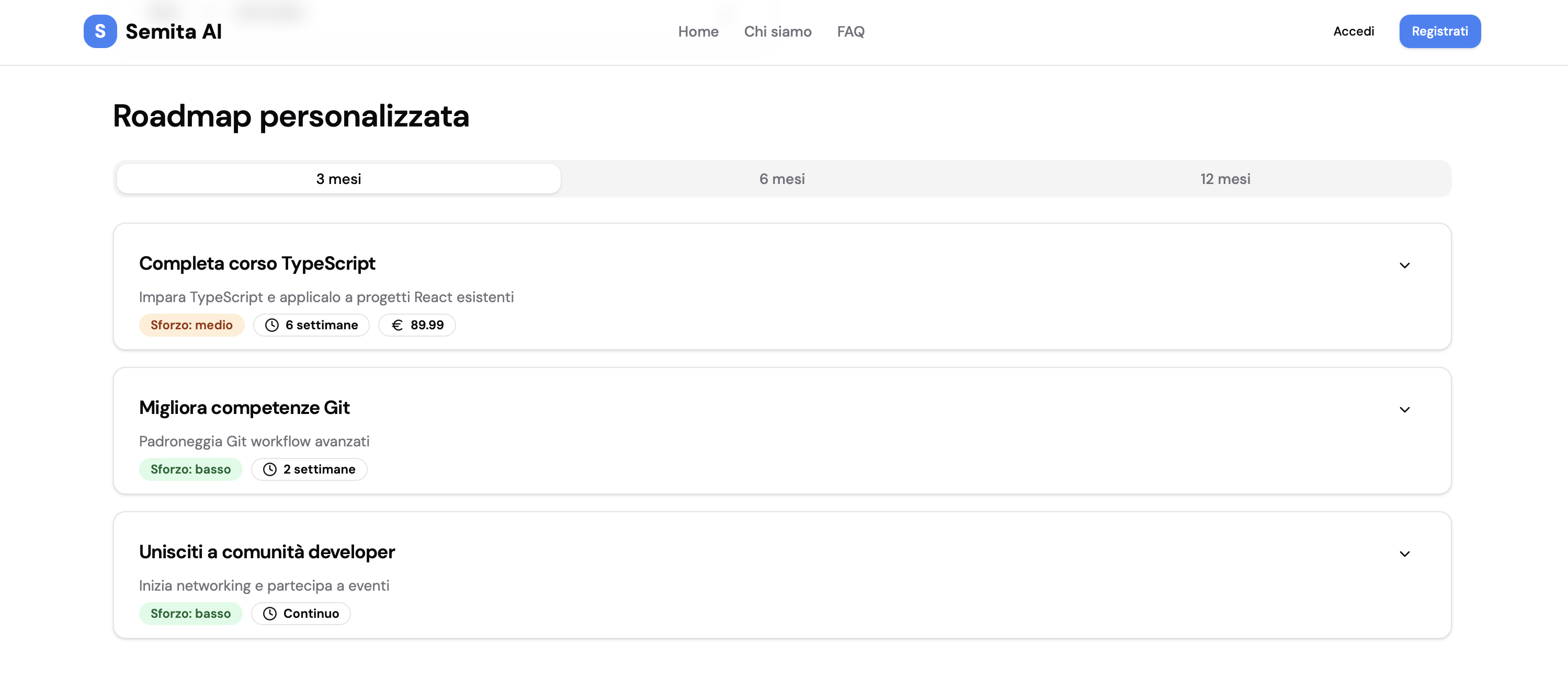
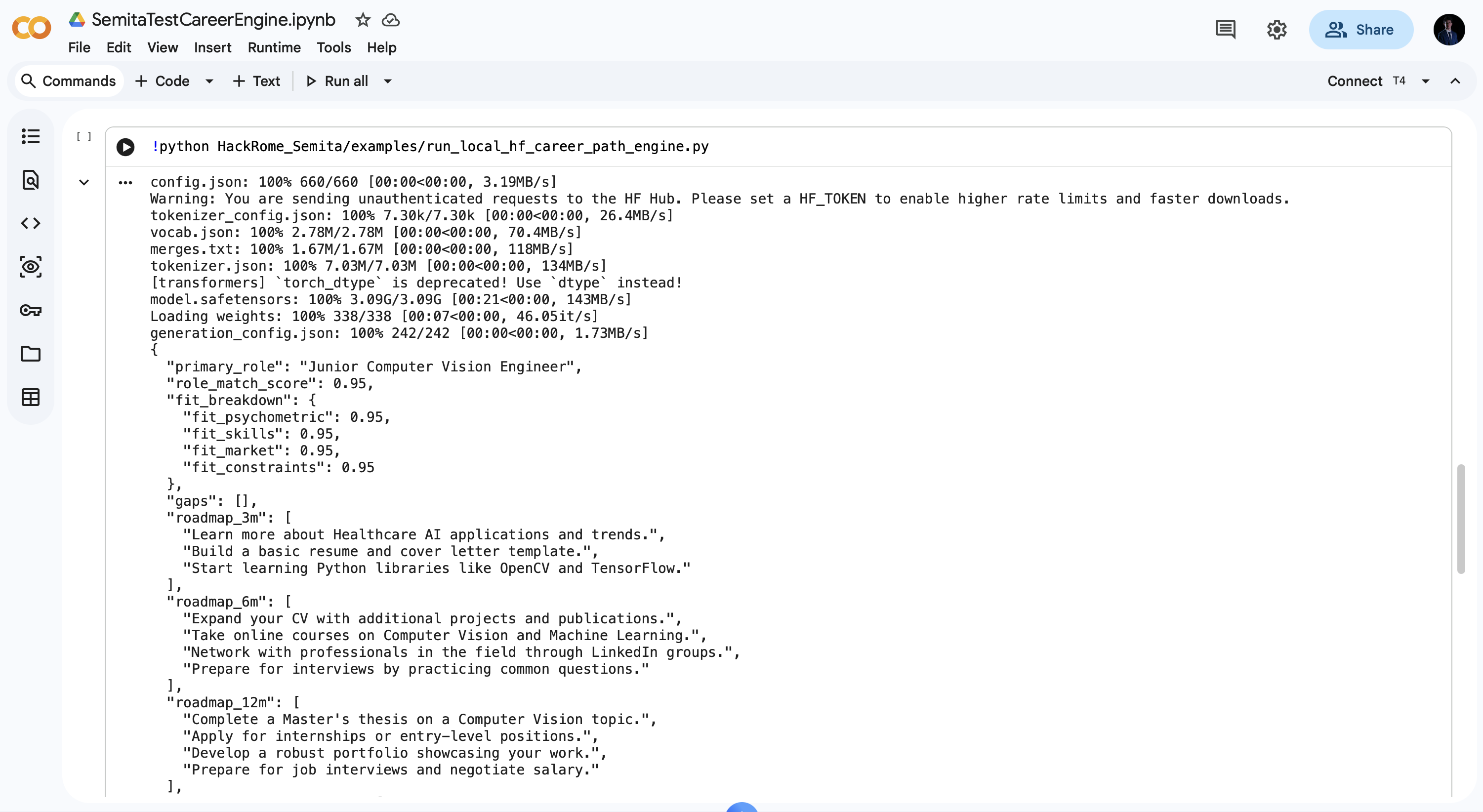
Semita AI is a career path engine that combines CV parsing, a psychometric layer based on interests, values, and work styles, and real-world constraints such as location, budget, and time. It uses RAG to retrieve role knowledge, learning resources, and career guidance, then generates a structured path with a recommended role, match score, gaps, a 3/6/12-month roadmap, resources, and interview prep topics.
How we built it
We grounded the system in established career science frameworks like RIASEC, O*NET work values, and work styles, then connected them to modern AI tools such as LangChain, structured outputs, and RAG. The goal was to keep the recommendations transparent, explainable, and actionable rather than generic or purely synthetic.
Challenges we ran into
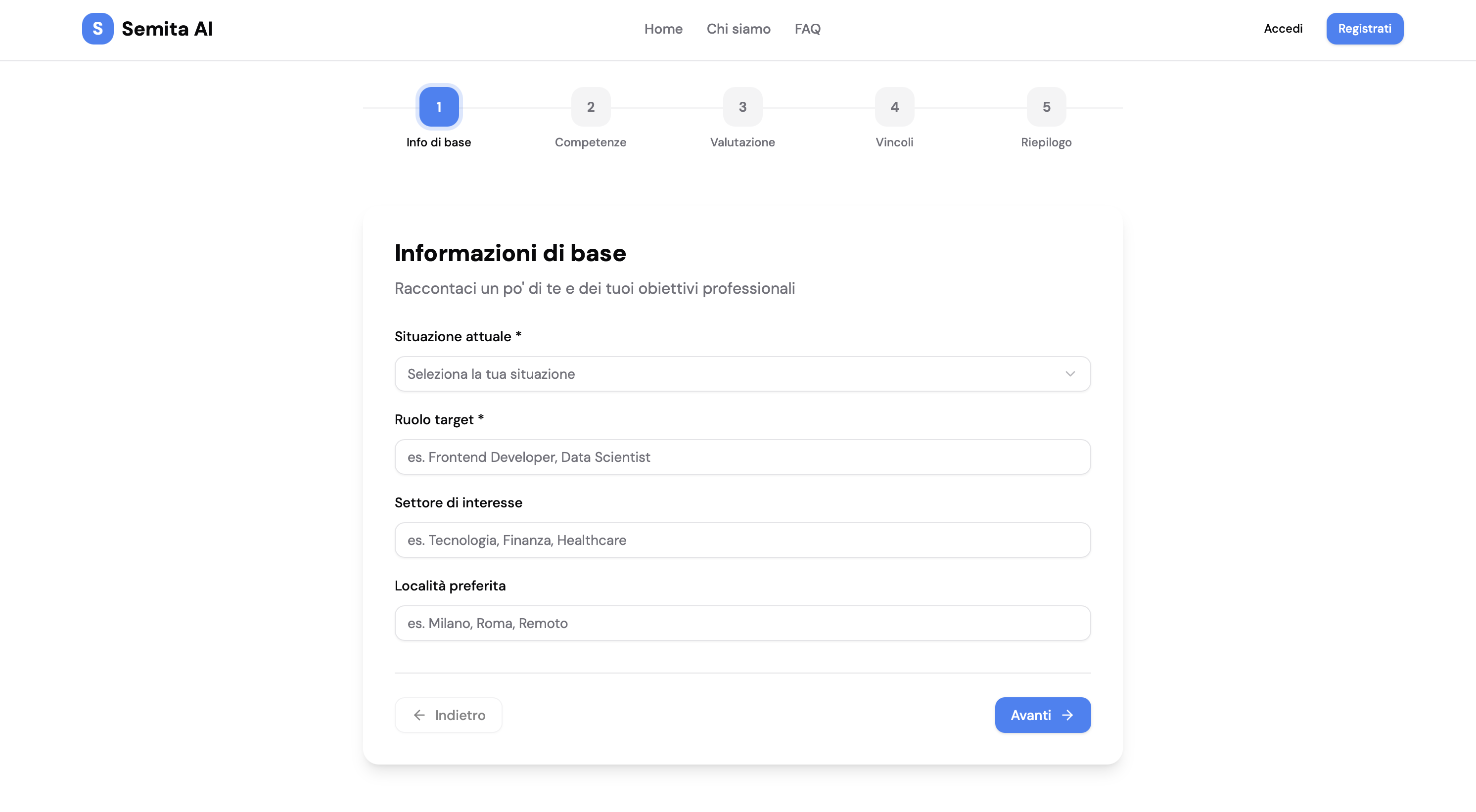
The hardest parts were collecting enough user information without overwhelming the user, keeping the model grounded in real roles and resources, and designing a multi-objective fit that balances psychometric alignment, skills, market demand, and personal constraints. We also had to keep the hackathon scope realistic and focus on the core engine first.
Accomplishments that we're proud of
We turned a very abstract career problem into a structured product concept with a clear engine, data model, and user flow. We also designed a system that does not just say what a person could do, but starts to explain what is feasible, what fits them, and what they should do next.
What we learned
We learned that the hardest part of career guidance is not seeing opportunities, but understanding which role is actually right for you and how to reach it realistically. We also learned how valuable psychometric frameworks and structured outputs are when combined with AI, because they make the system more grounded and usable.
What's next for Semita AI
Next, we want to improve the accuracy of the career matching, expand the knowledge base with more occupational and learning resources, and build the interview trainer as a second-stage agent. We also want to refine the UI so the full path definition feels smooth, calm, and truly personalized.
Built With
- colab
- esco
- jupiter
- langchain
- python

Log in or sign up for Devpost to join the conversation.