-
-
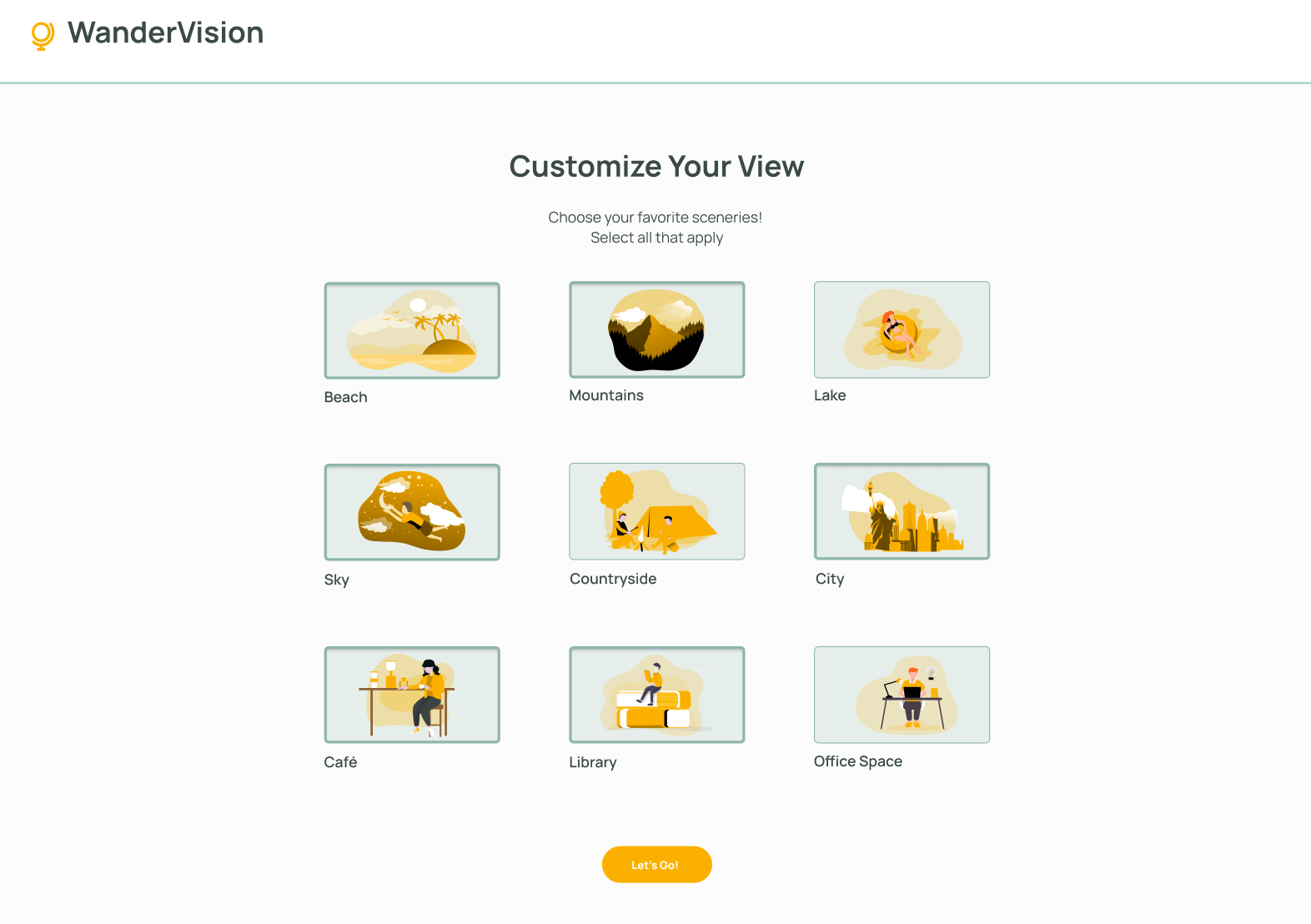
Media 1: User Onboarding
-
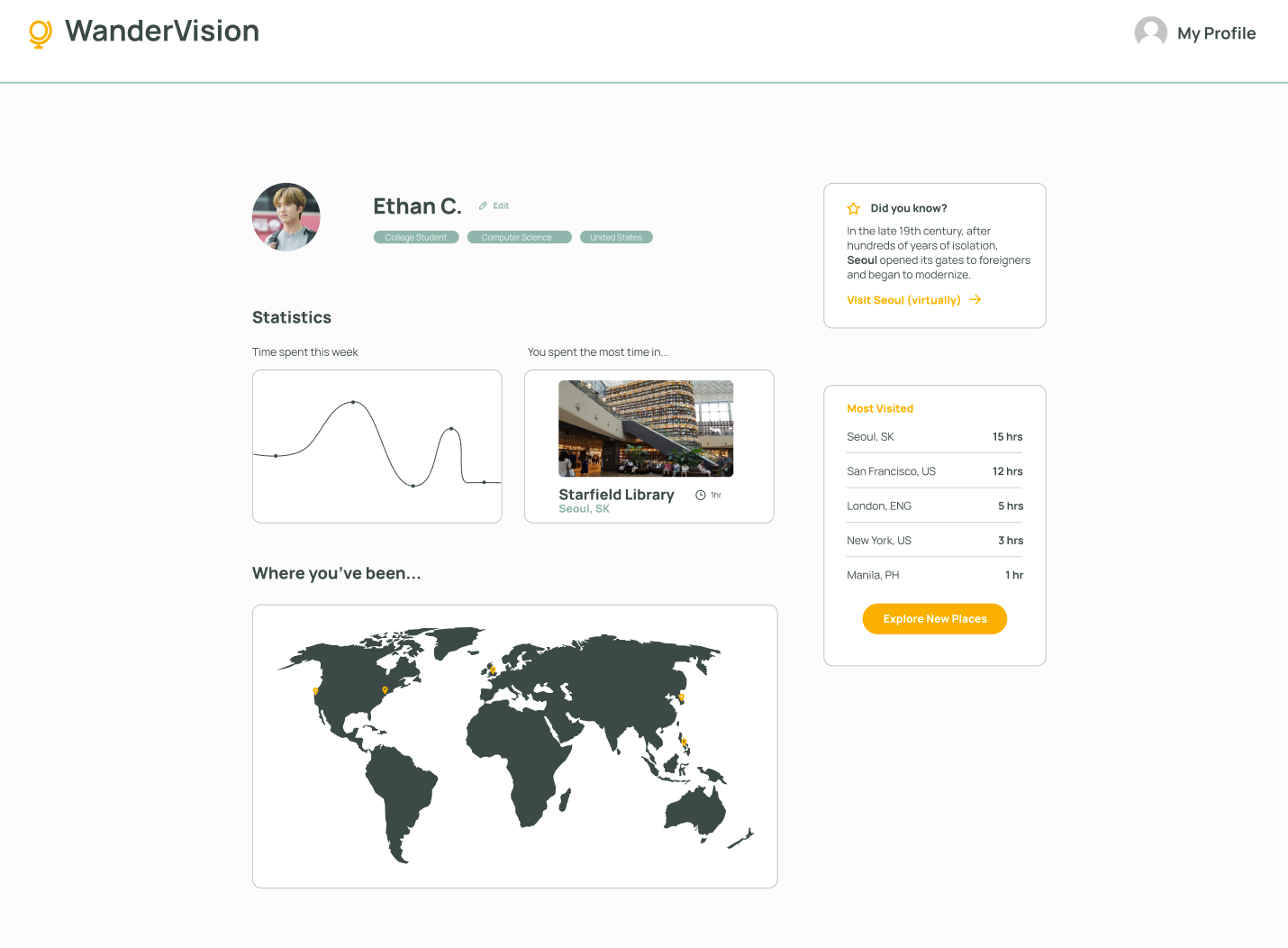
Media 5: User Profile
-
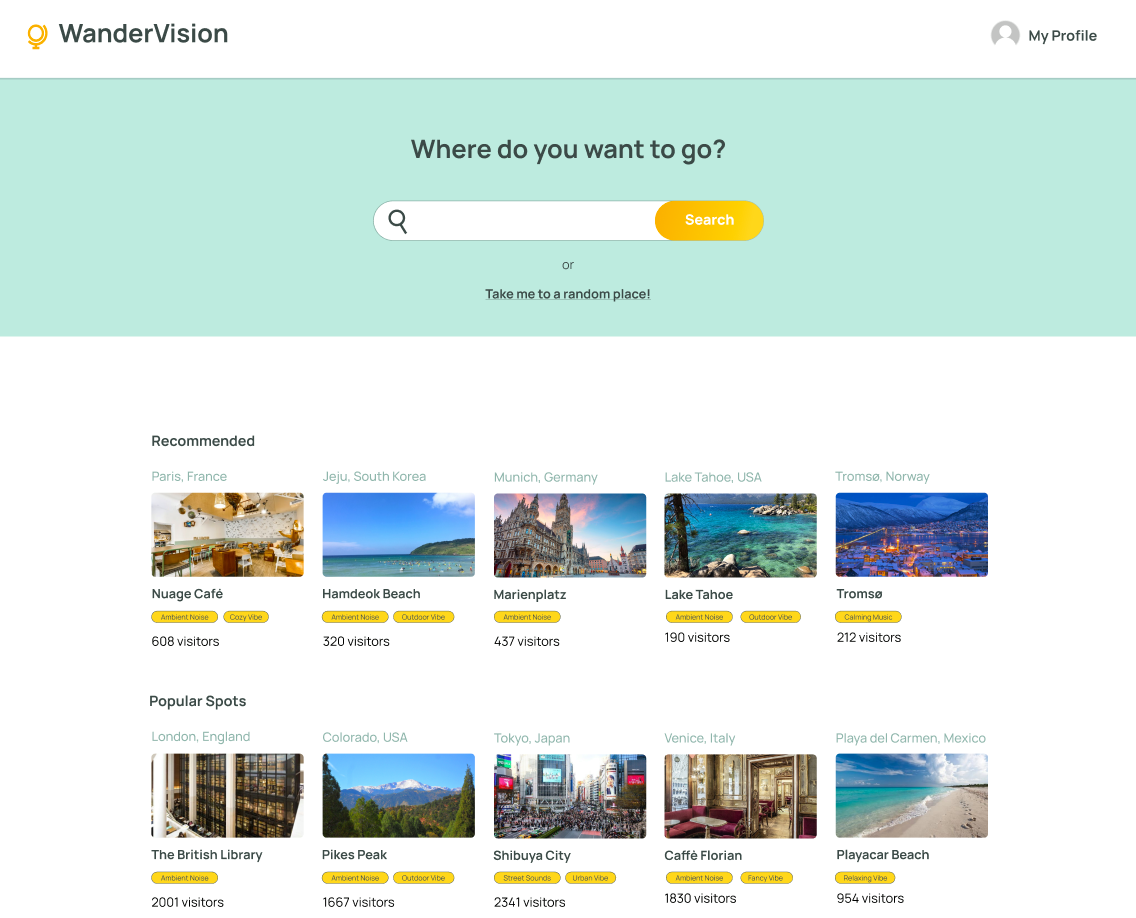
Media 2: User Dashboard
-
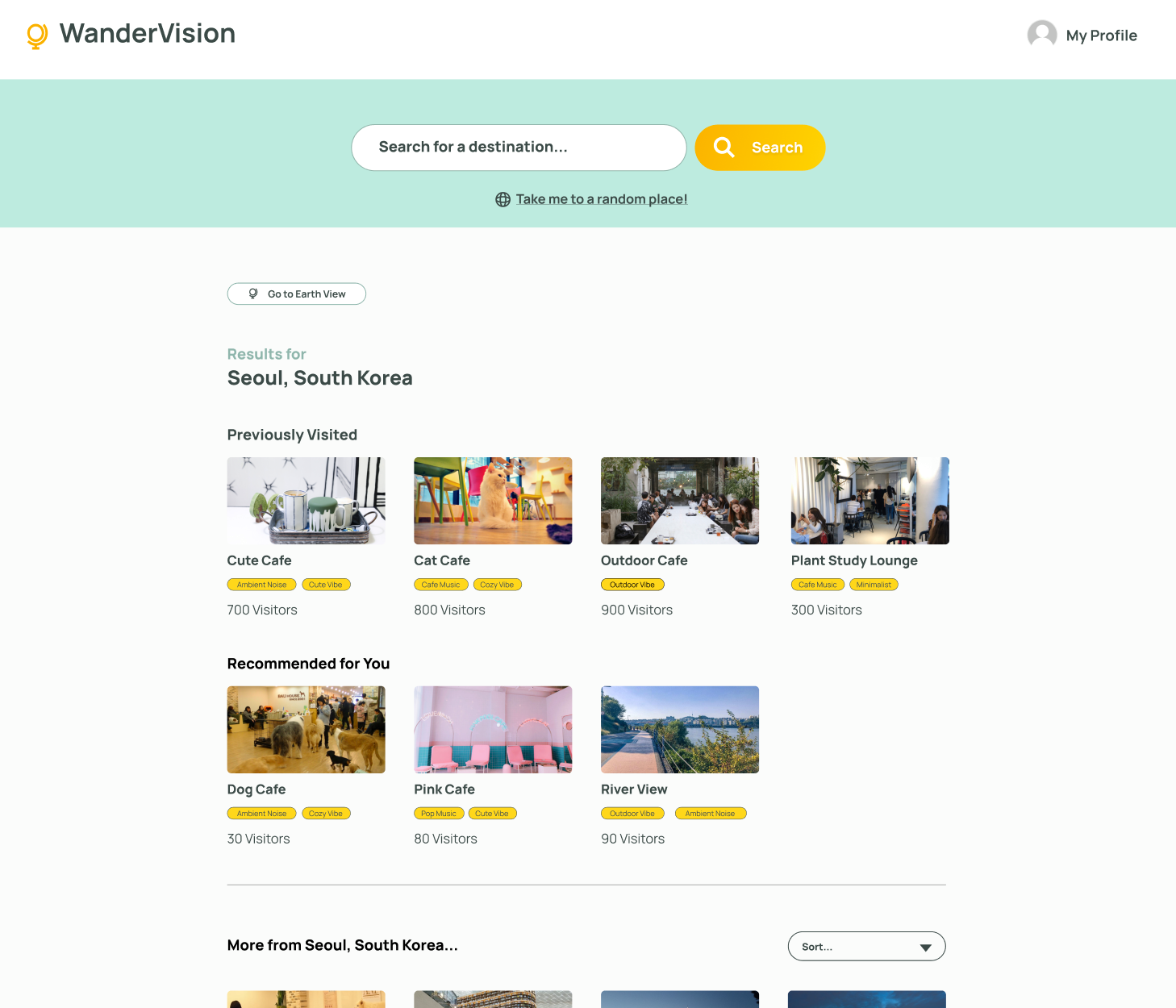
Media 3: Featured Location
-
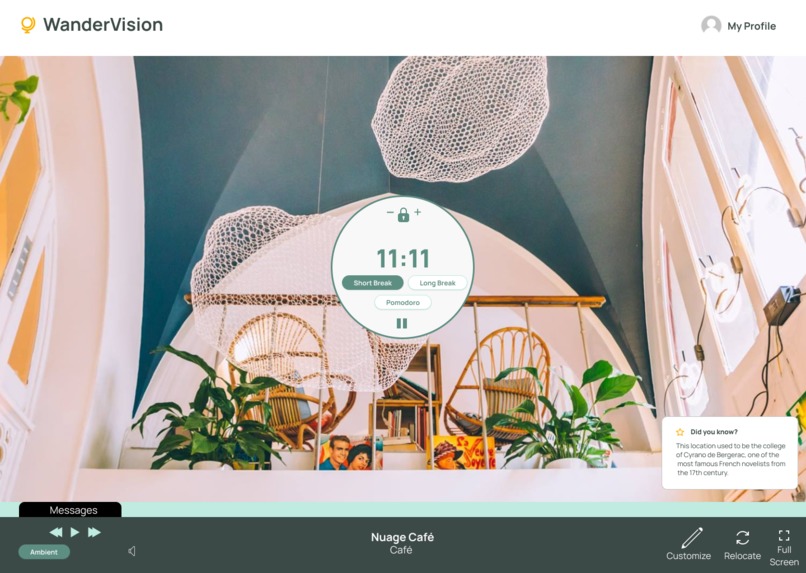
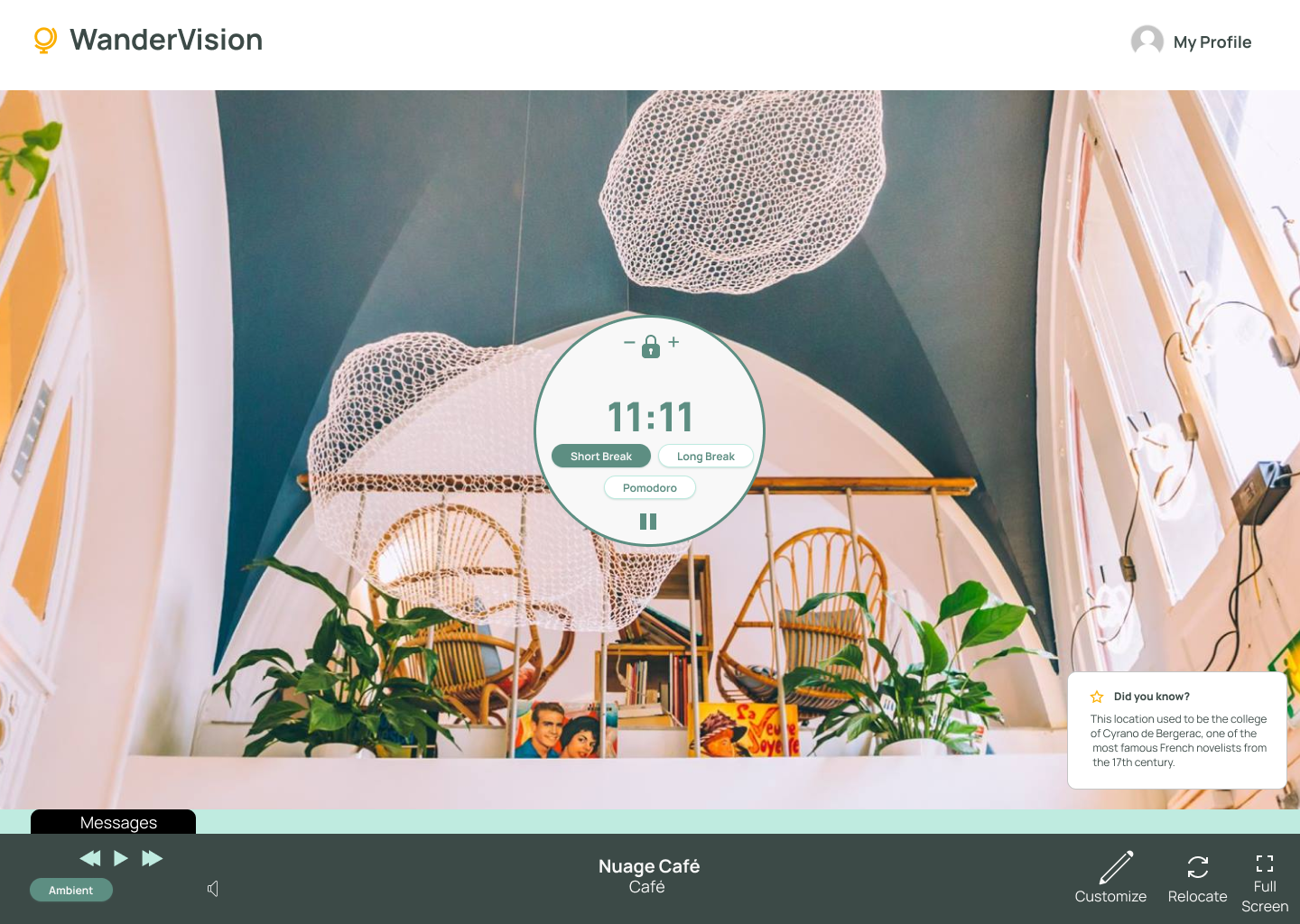
Media 4: Virtual Travel/Productivity Screen
Inspiration
We were inspired by the fact that many people's travel plans were impacted by COVID-19. Some of our team members had noted that they liked tuning into Co-Working streams on platforms like Twitch or playing live cafe-style music from various Youtube channels to help them focus and spice up their remote learning experience. We wanted to find a way to combat the feelings of isolation that many felt at home. In our survey, we found that people missed being around other productive people and also missed the ambiance of working in different places.
What it does
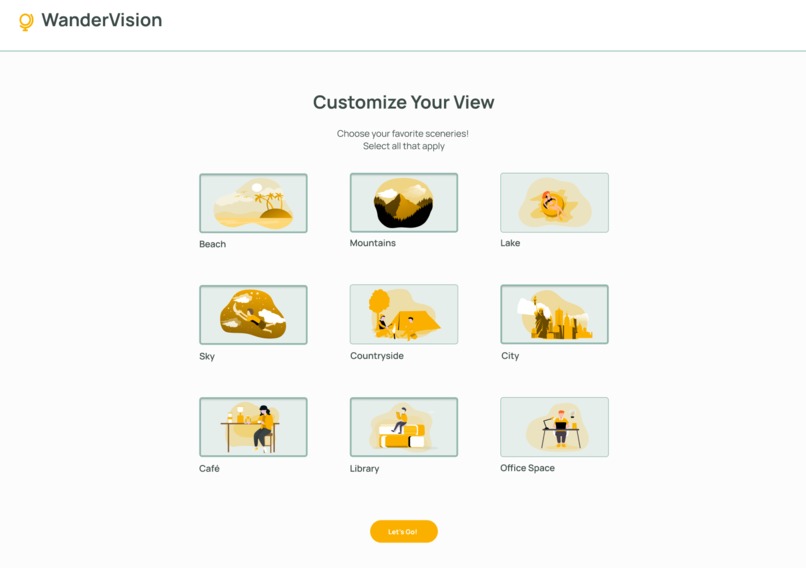
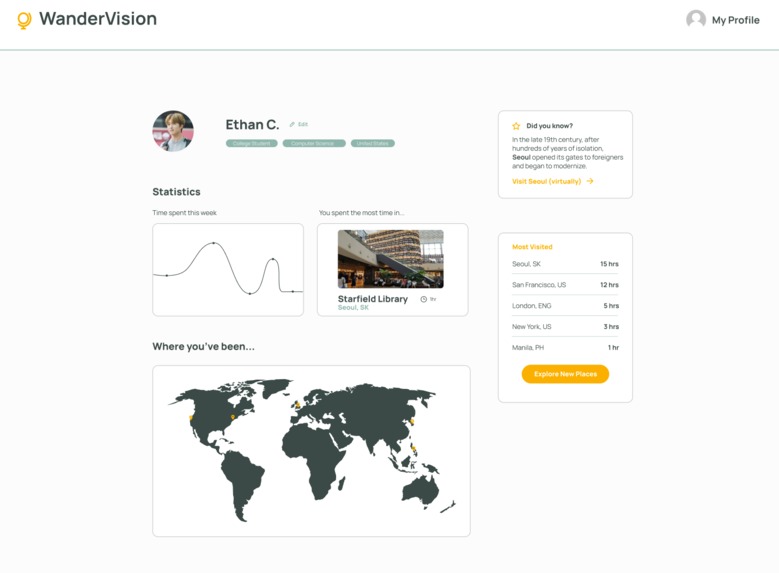
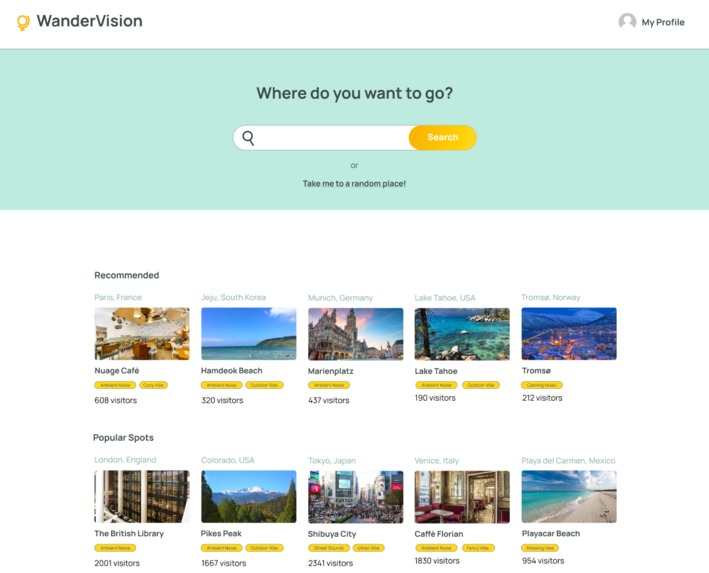
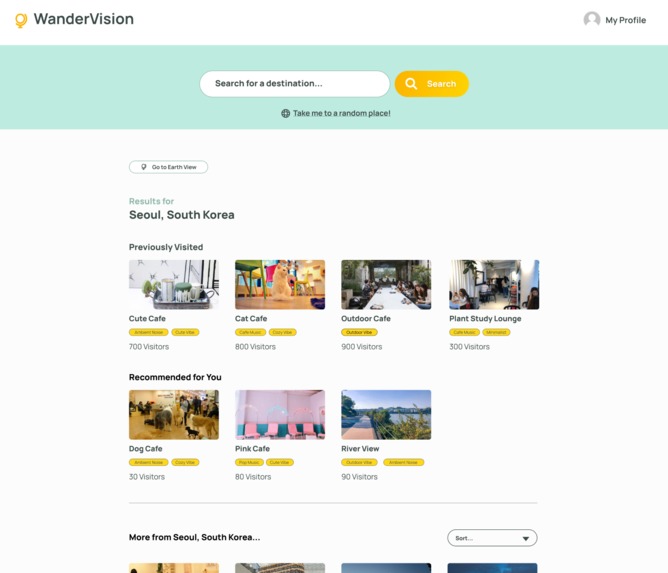
Our product is a web application called WanderVision, which seeks to combine the excitement of travel and exploration with productivity and finding new communities. WanderVision allows users to virtually travel to different locations across the world and immerse themselves in digital workspaces. Users begin by building their profile and selecting their favorite kinds of natural and urban sceneries from options including cafés, cityscapes, mountains, and beaches. From there, users are recommended several locations to virtually travel to, based on their choices. They are also given the option to search a world map for a specific location, search for a location by name, or be placed in a random location. Once a user has chosen a location, their screen displays an immersive view of the location's scenery, complete with ambient sound and background music. The virtual screen features a pomodoro timer to promote productivity during users' virtual travels. The virtual screen also features a chat window, allowing users in the same virtual locations to chat with and motivate each other as they work individually.
How we built it
Our first step in building this platform was gathering feedback from users about their experiences with work, travel, and socializing during the ongoing COVID-19 pandemic. From these findings, we decided to create a platform that would combine several commonly-used productivity and community-building tools, such as a pomodoro timer, relaxing background music, and instant messaging, with the thrill of exploring new places in a safe manner. We summarized the findings from our user research by creating a user persona, which guided us throughout our design process. After sketching our designs, we used Figma to build our product and prototype it from low to high fidelity, over multiple iterations.
Challenges we ran into
One challenge we ran into was embedding videos or GIFs of virtual locations onto Figma, as well as adding background music and ambient sound to the virtual travel feature. Because Figma is only meant for prototyping a design, we were rather limited in the features we could implement in our designs. We would have liked for there to be more interactive elements on the screens that display still images of the user's chosen location.
Accomplishments that we're proud of
Our proudest accomplishment was creating an innovative solution that addresses productivity and social needs, and promotes cultural awareness, especially during the pandemic.
What we learned
We learned how to condense a tedious process like product design into a few crucial steps, in order to finish a high fidelity prototype in 40 hours. We also improved our skills with Figma, by learning how to design interactions like horizontal scrolling.
What's next for WanderVision
In the next phase of designing this product, we hope to conduct user testing to gather comprehensive user feedback and improve our product's design in future iterations.
Built With
- figma
- google-docs


Log in or sign up for Devpost to join the conversation.