-
-
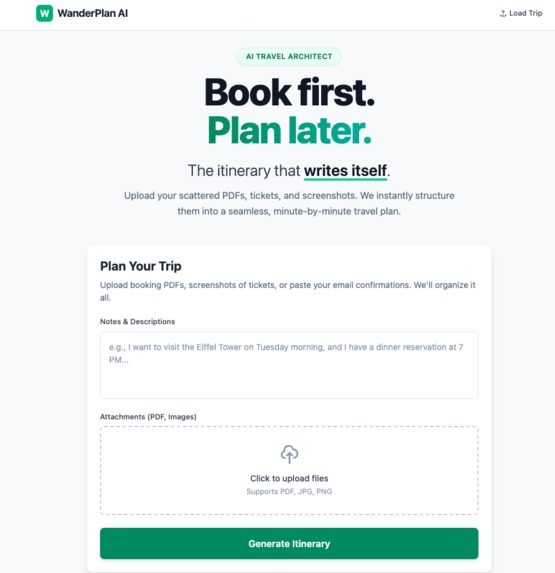
Landing Page
-

Fully Generated Itinerary
-
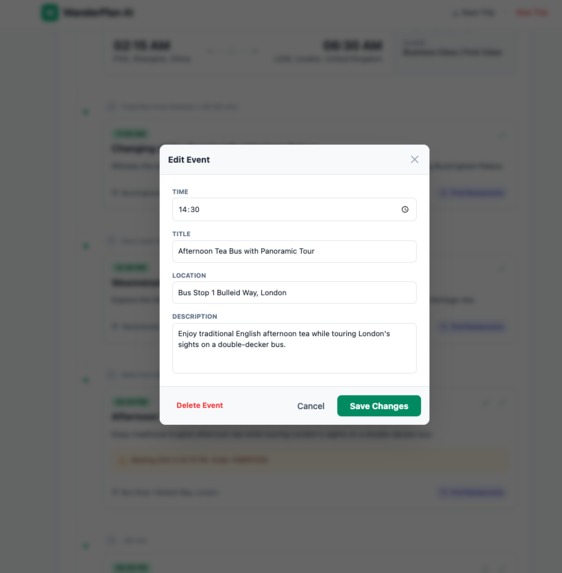
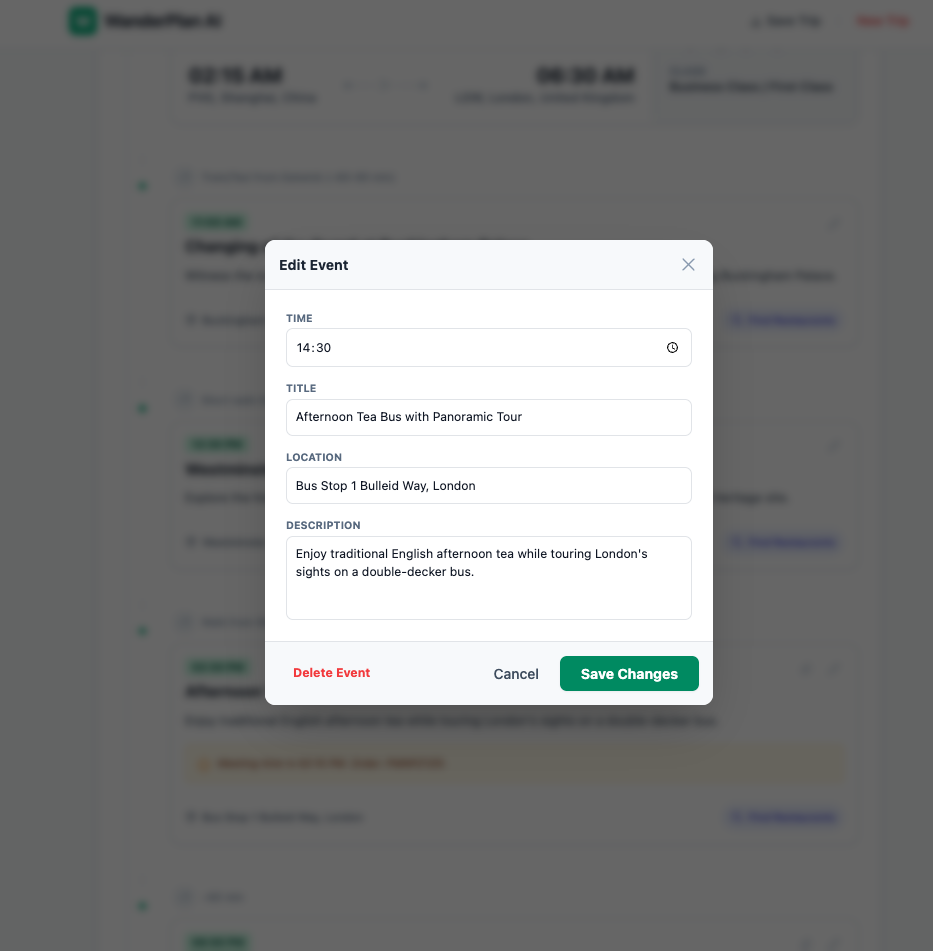
Edit General Event
-
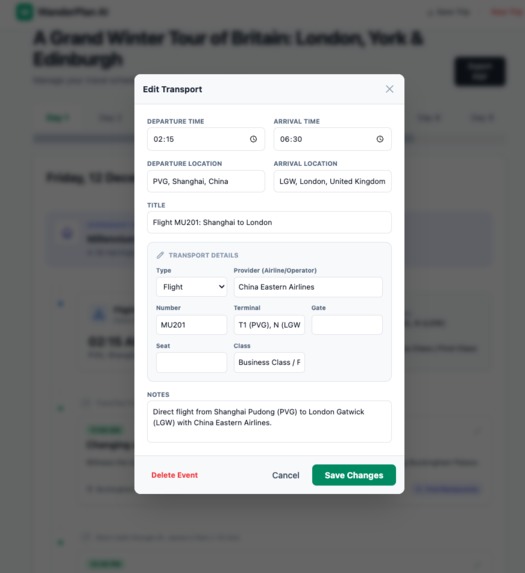
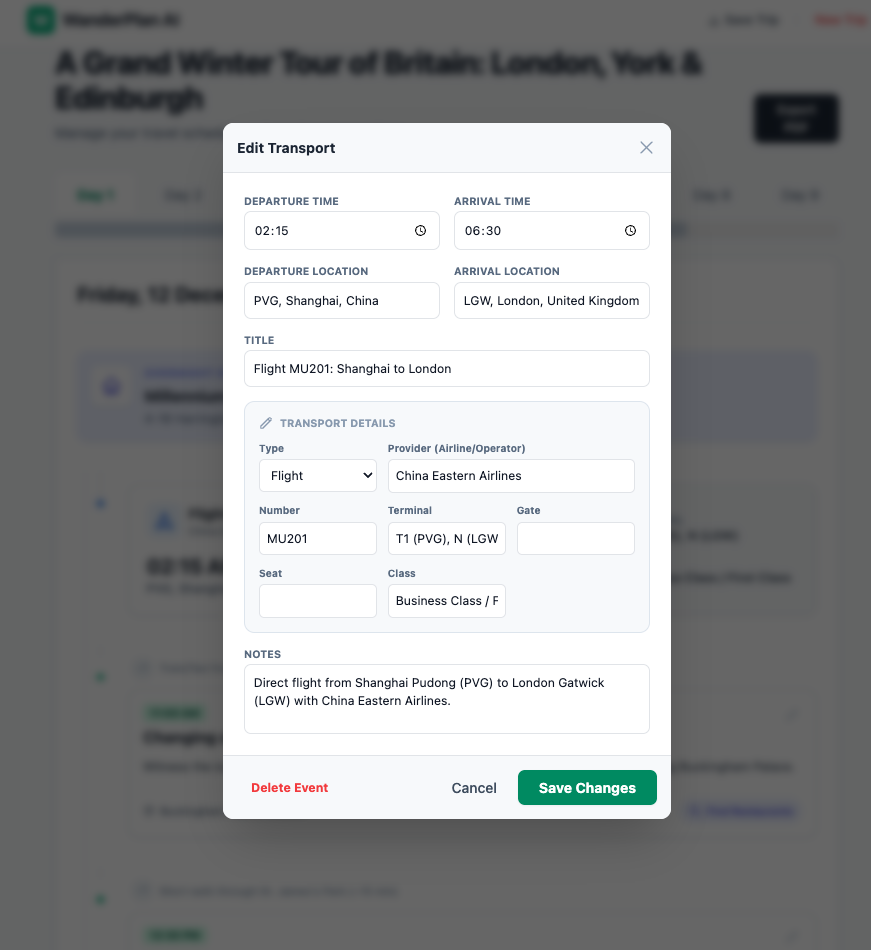
Edit Transportation Event
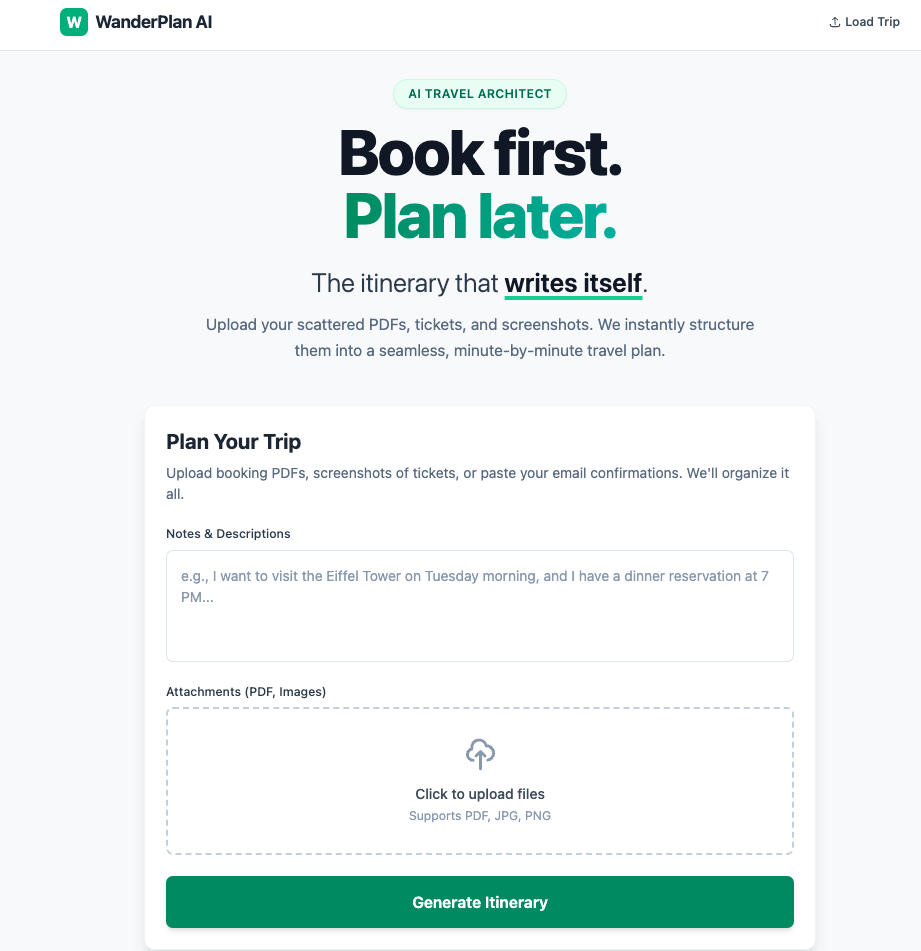

Inspiration
I have a different way of planning trips compared to most people; instead of writing down an itinerary in paper or Excel first, I tend to think everything in my mind and start making reservations right away. During a recent 10-day trip to the UK, I realized that while I'm "lazy" to write things down, I still need to explain the agenda to my companion every time they ask. This is especially true when the trip is long and reservations are scattered across different platforms, apps, and emails. It becomes very difficult to manage all these confirmation files and QR codes. This inspired me to build a tool that works in reverse: instead of a usual planner, you simply upload your booking information—emails, PDFs, snapshots—and the tool generates the itinerary for you.
What it does
WanderPlan AI is a "Reverse Trip Planner" prototype that automates the organization of scattered travel data.
- Multi-Modal Analysis: It utilizes Gemini 3 Pro to analyze and extract data from various file types including emails, PDFs, and screenshots. It automatically generates a structured itinerary, detects schedule conflicts, and resolves them.
- Contextual Grounding: It integrates Gemini 2.5 Flash with the Google Maps tool to provide intelligent restaurant recommendations.
- Direct Access: The tool keeps raw files accessible, allowing users to show QR codes directly from the interface without digging through their inbox.
- Natural Language Refinement: Users can further customize the itinerary by uploading more files or giving verbal instructions.
How we built it
It was built with Google AI Studio with the help of Gemini 3 itself, utilizing a vibe coding approach.
Challenges we ran into
- UX Simplicity vs. Functionality: Designing a smooth UX process that remains simple enough for a "lazy" planner to use while still being powerful enough to fulfill all the complex requirements (conflict detection, route finding, etc.).
- Prompt Engineering for Accuracy: Fine-tuning the prompts with the help of Gemini 3 to ensure the model extracts accurate and meaningful information from a wide variety of unstructured files and formats.
Accomplishments that we're proud of
- Successful UK Trip Mimicry: I was able to mimic the use of the tool using the actual files, emails, and snapshots from my recent 10-day UK trip. Seeing the tool successfully organize all that scattered data made me realize how much easier the trip would have been, leaving me with the feeling that I should have developed it much earlier.
What we learned
- The Power of Vibe Coding: I learned how to effectively use Gemini 3 as a pair programmer to build an entire prototype rapidly, focusing on the "vibe" and intent of the project rather than getting stuck in manual syntax.
- AI as a Reasoning Engine: I discovered that Gemini is highly capable of understanding the "hidden" logic of a trip—such as realizing that two bookings are geographically far apart—which would normally take a human a lot of effort to cross-reference.
- Validation of the "Reverse" Approach: Testing the tool with my own UK trip data confirmed that the biggest pain point in travel isn't the booking itself, but the cognitive load of organizing and recalling that information later.
What's next for WanderPlan AI
The current tool is a prototype consisting of only a front page, meaning data currently only exists within a single session. The next steps include:
- User Accounts and Multi-User Support: Making the tool usable for different users by implementing a robust backend.
- Trip Management: Allowing users to save, edit, and organize multiple trips over time.
- Sharing Capabilities: Adding the ability to share itineraries directly with travel companions so everyone stays on the same page without manual explanations.
Built With
- cloud-run
- google-ai-studio
- react

Log in or sign up for Devpost to join the conversation.