-
-
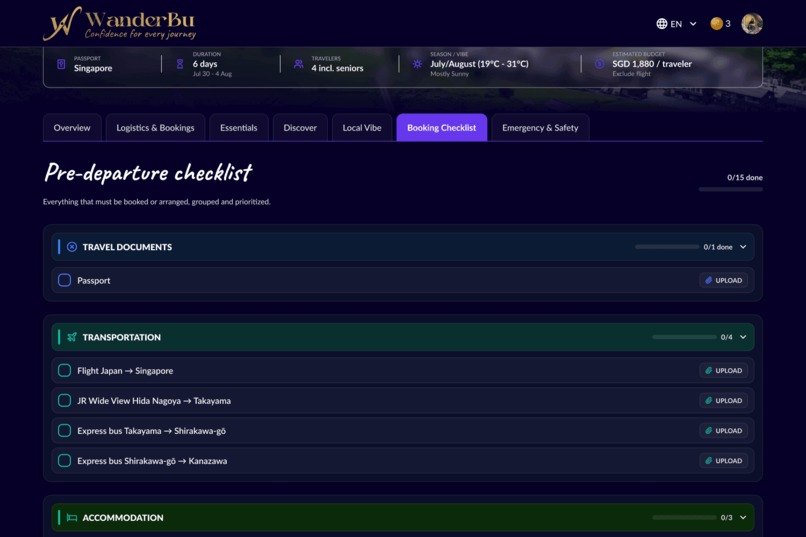
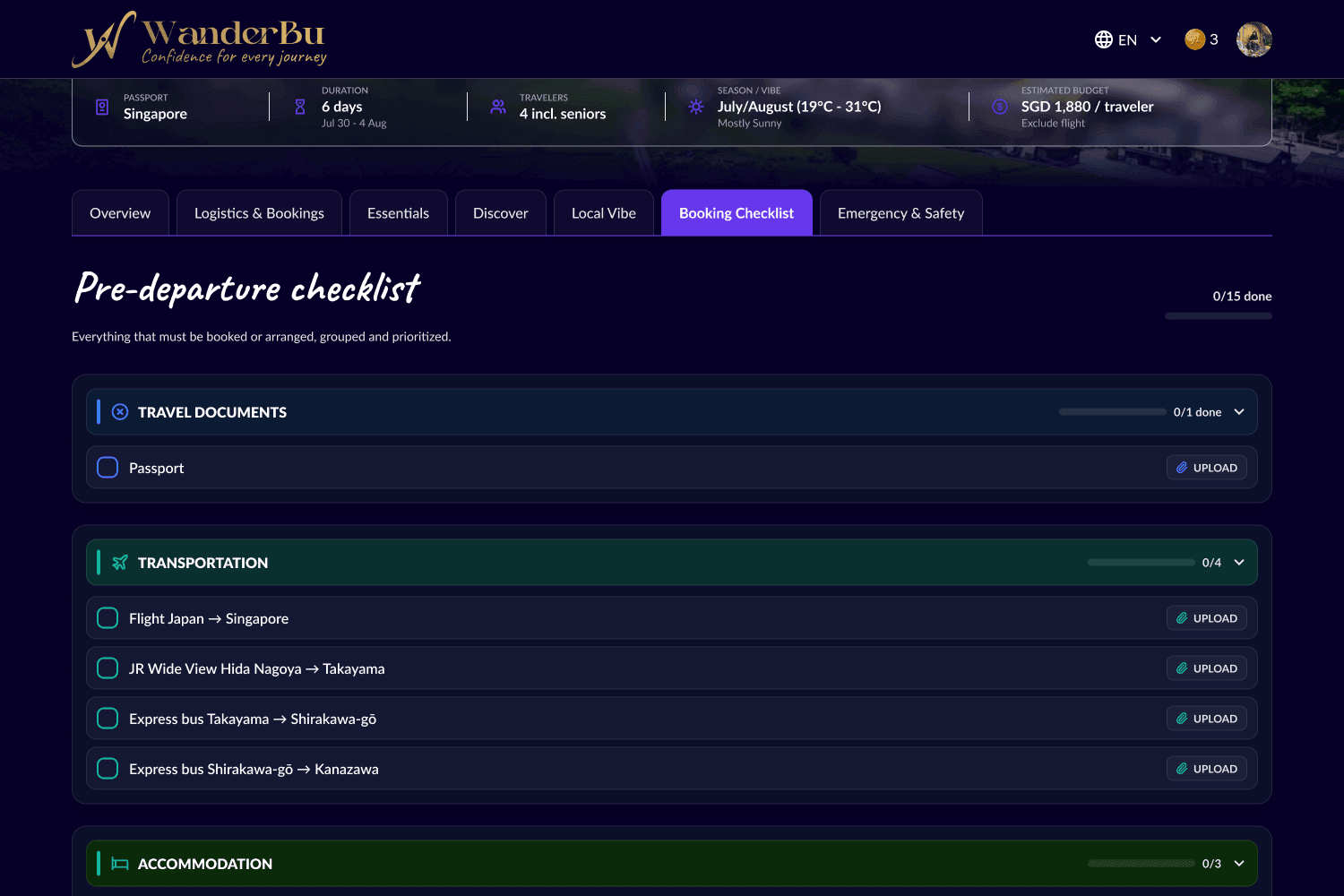
Booking Checklist
-
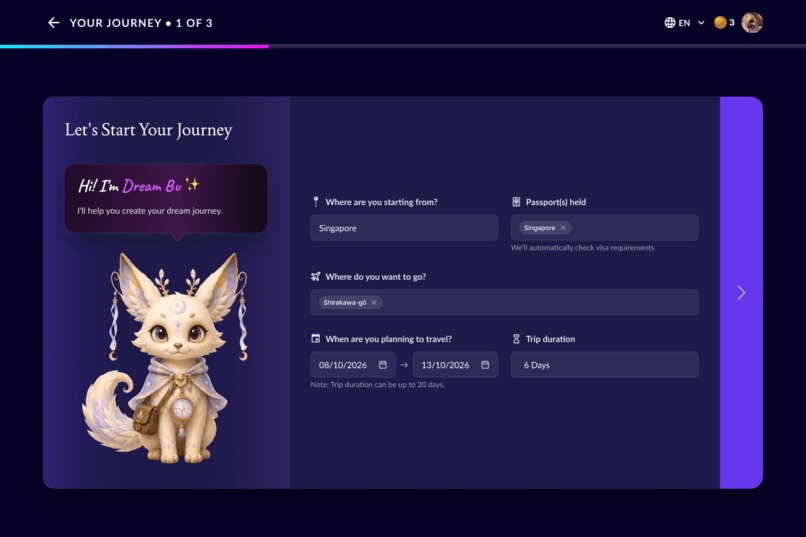
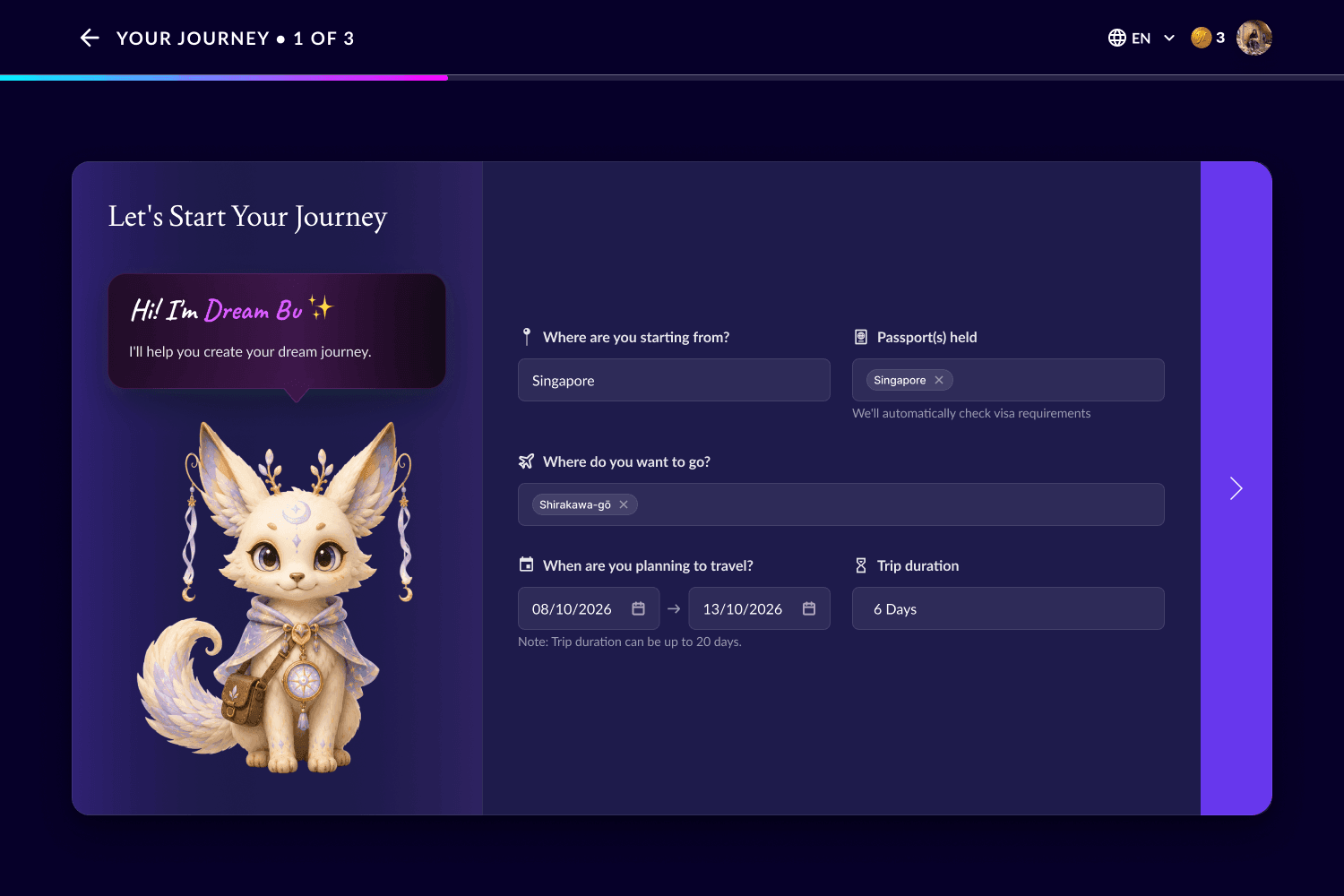
Plan My Trip input
-
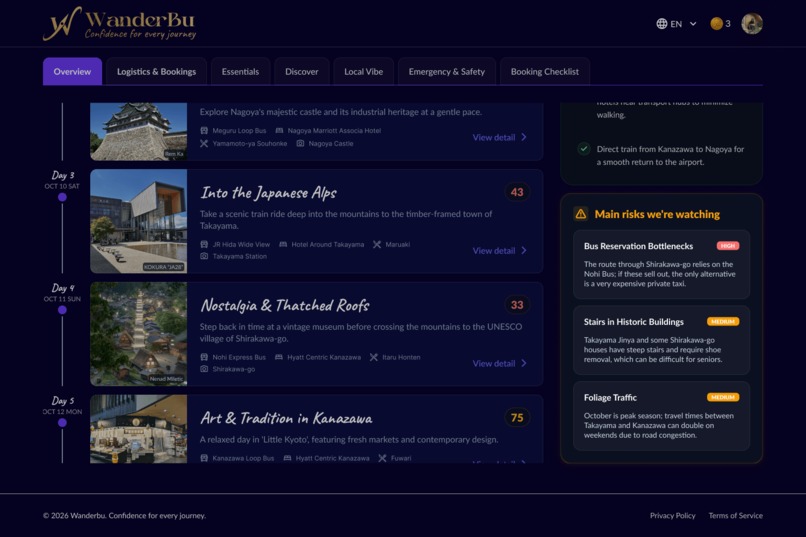
Risk / feasibility
-
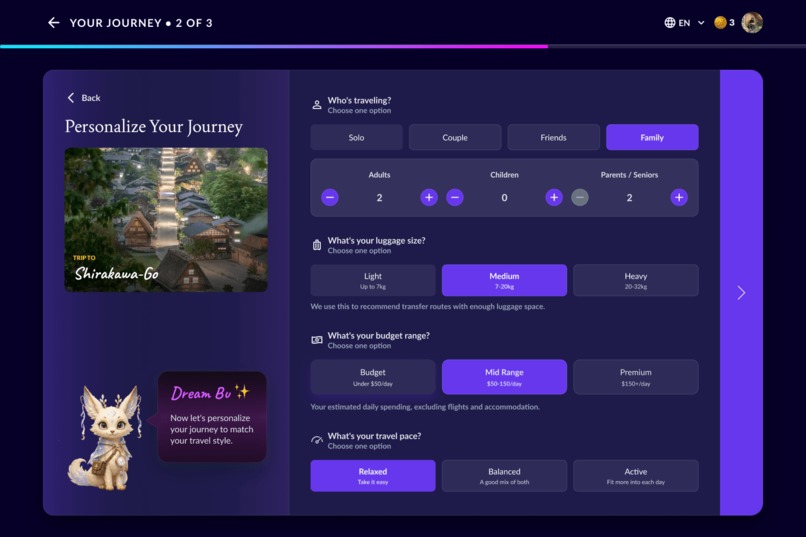
Traveler preferences
-
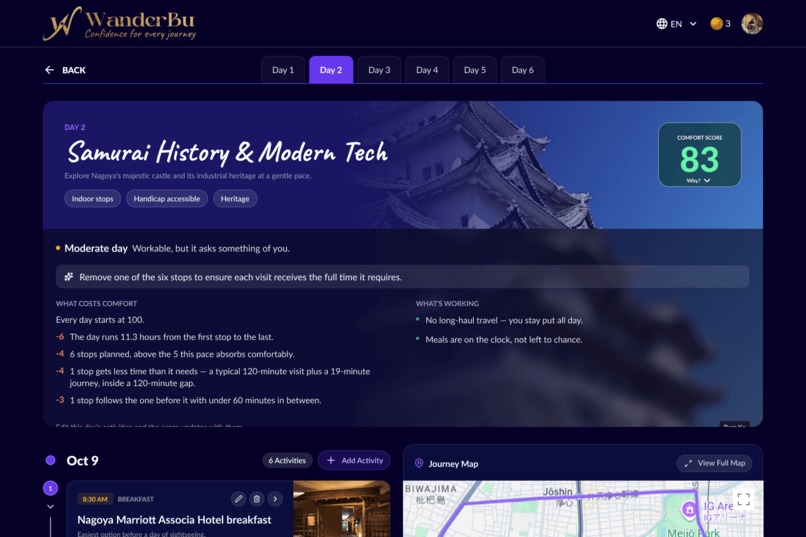
Comfort Score Details
-
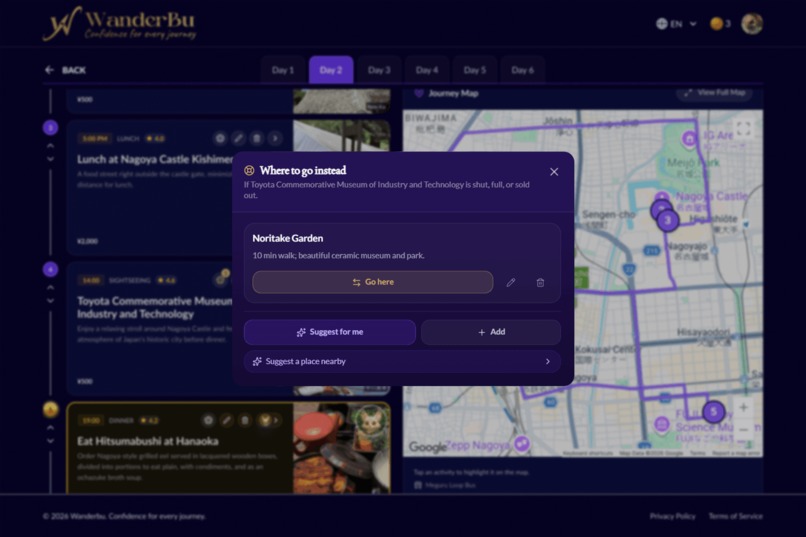
Backup Plan Suggestions
-
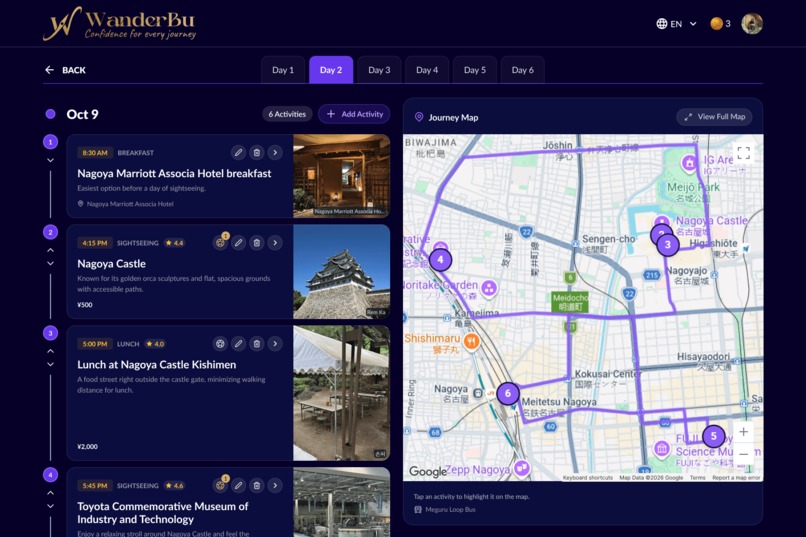
Route + transportation
-
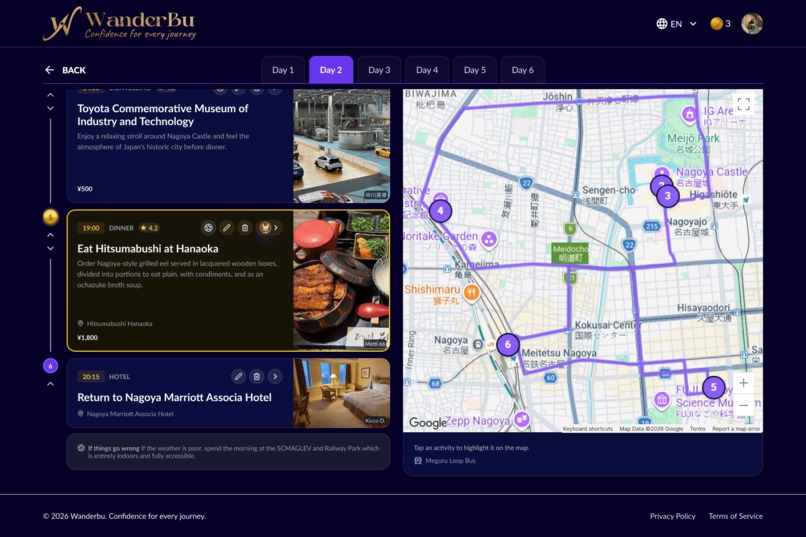
Backup Plan
-
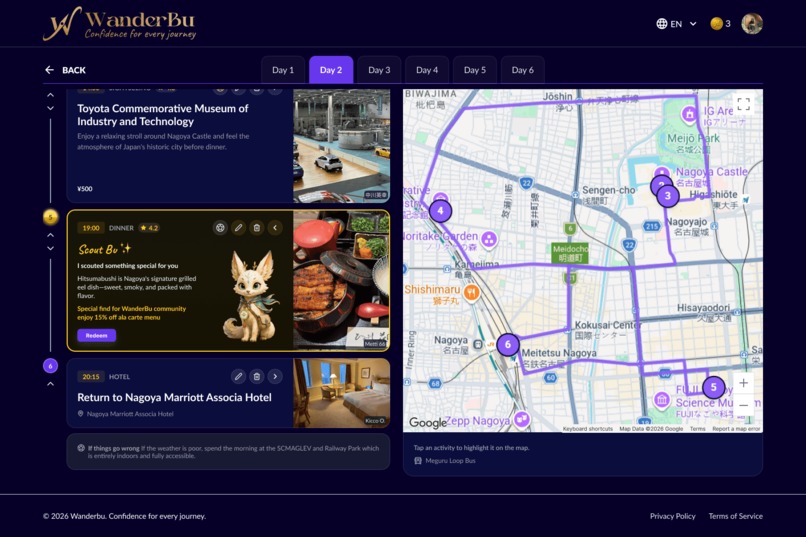
Exclusive Deals
-
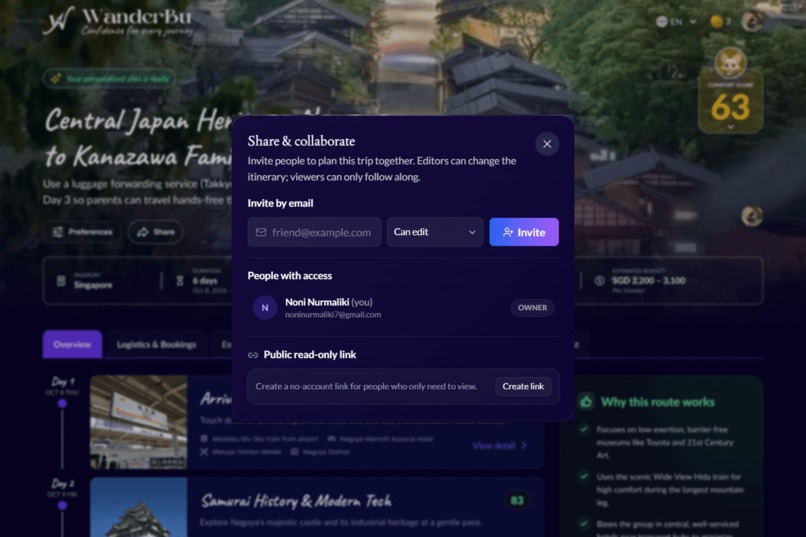
Share you trip with friends and family
-
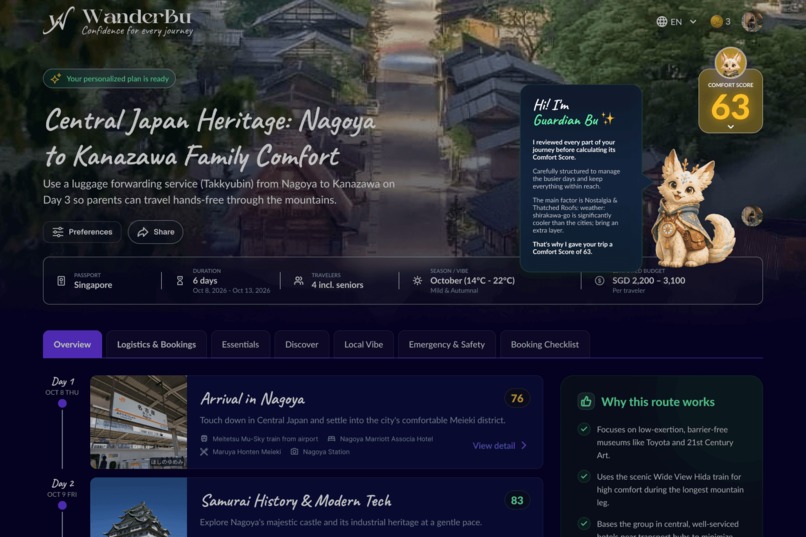
Comfort Score Summary
-
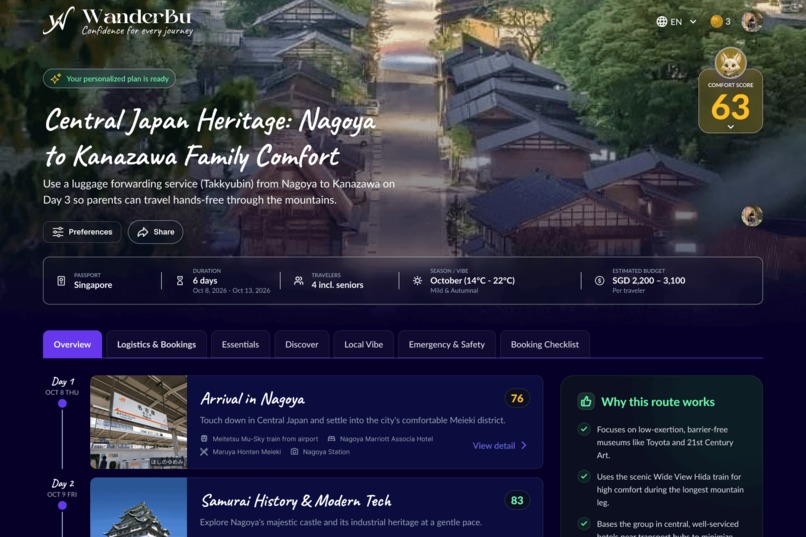
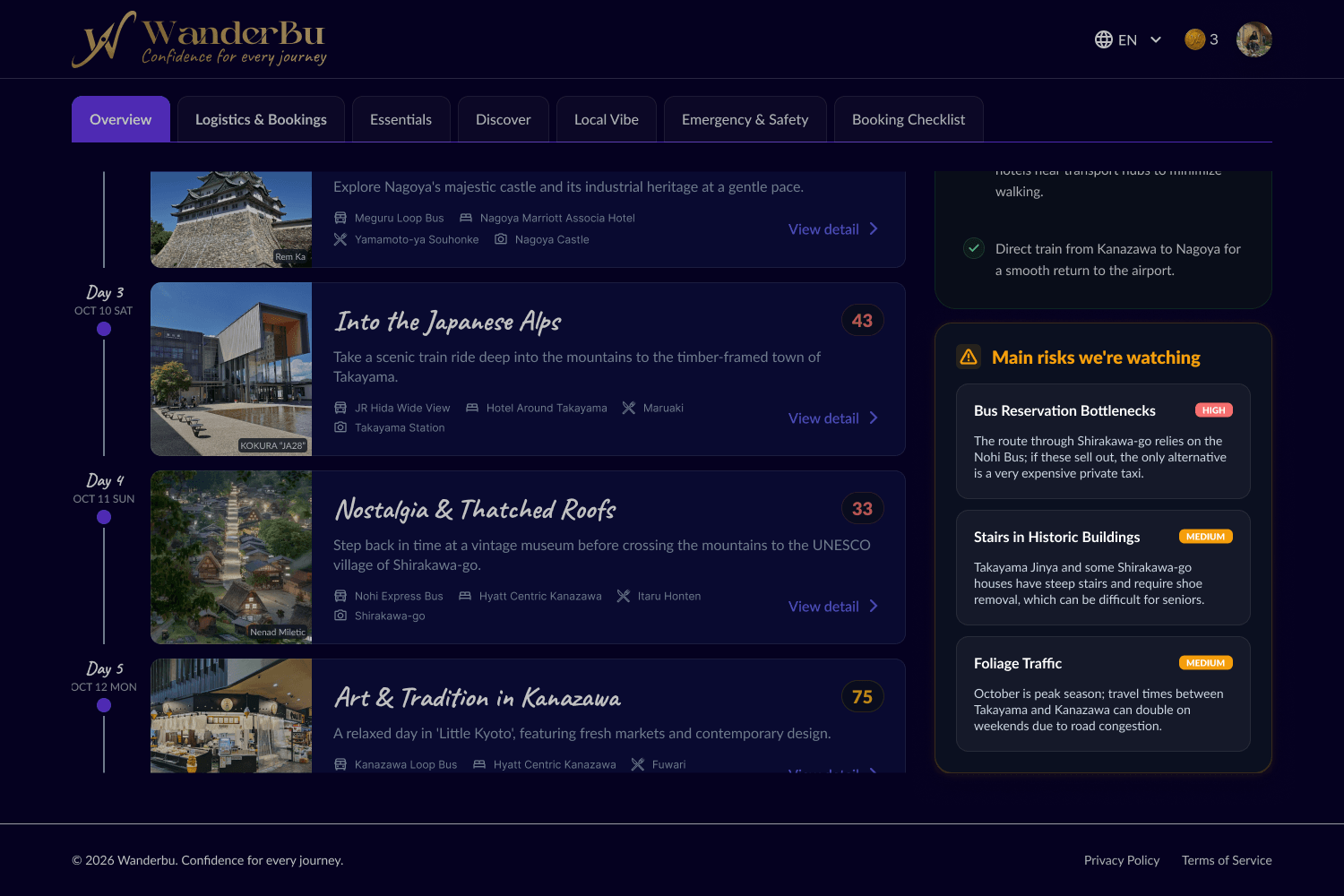
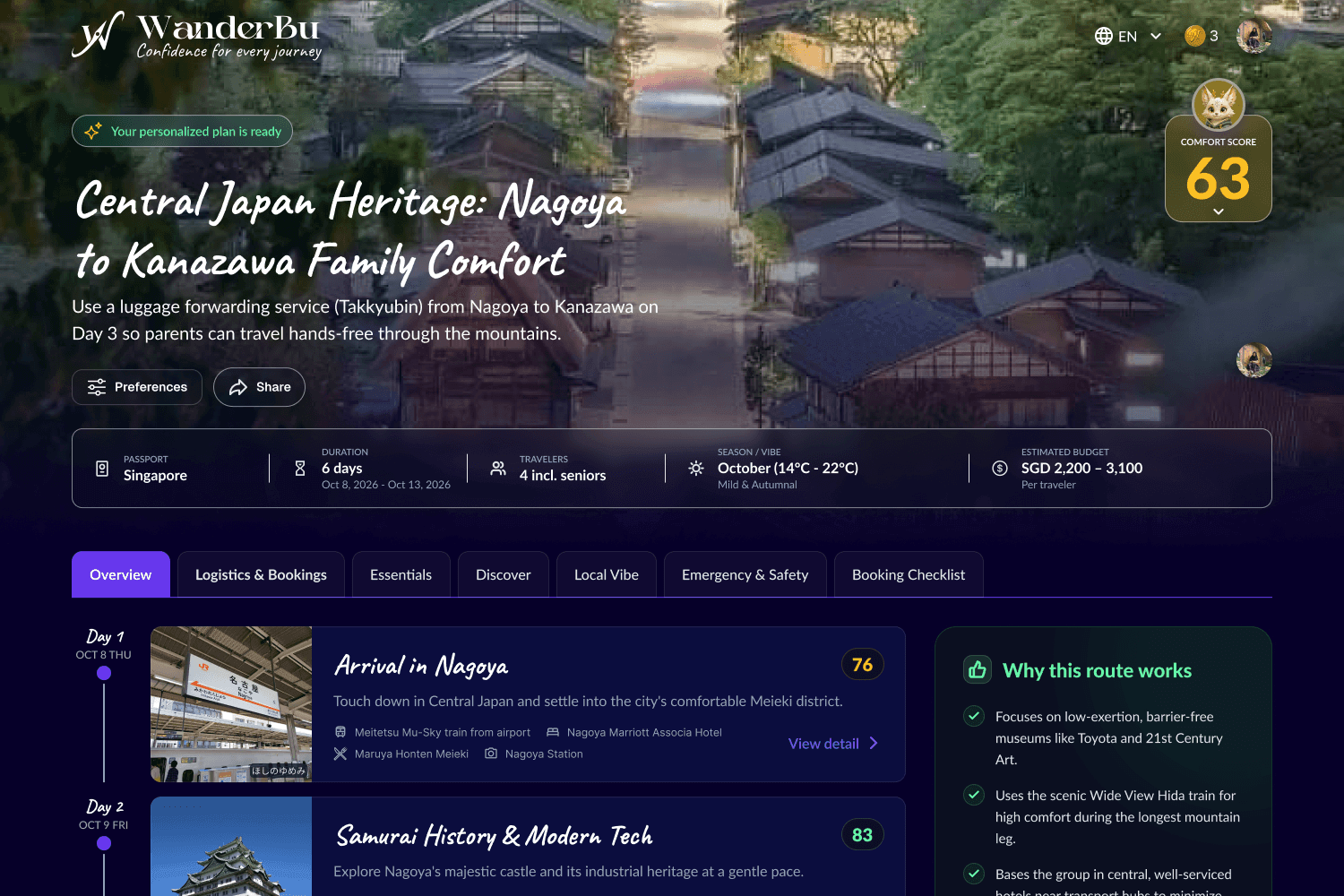
Generated itinerary
-
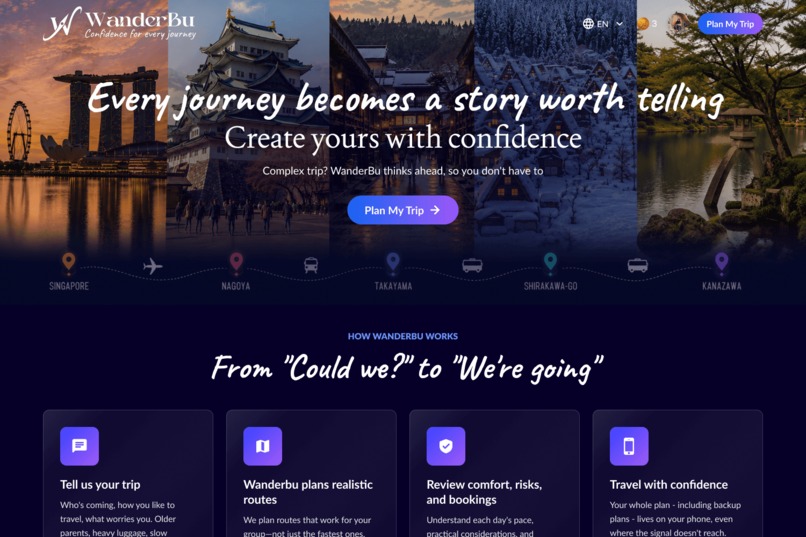
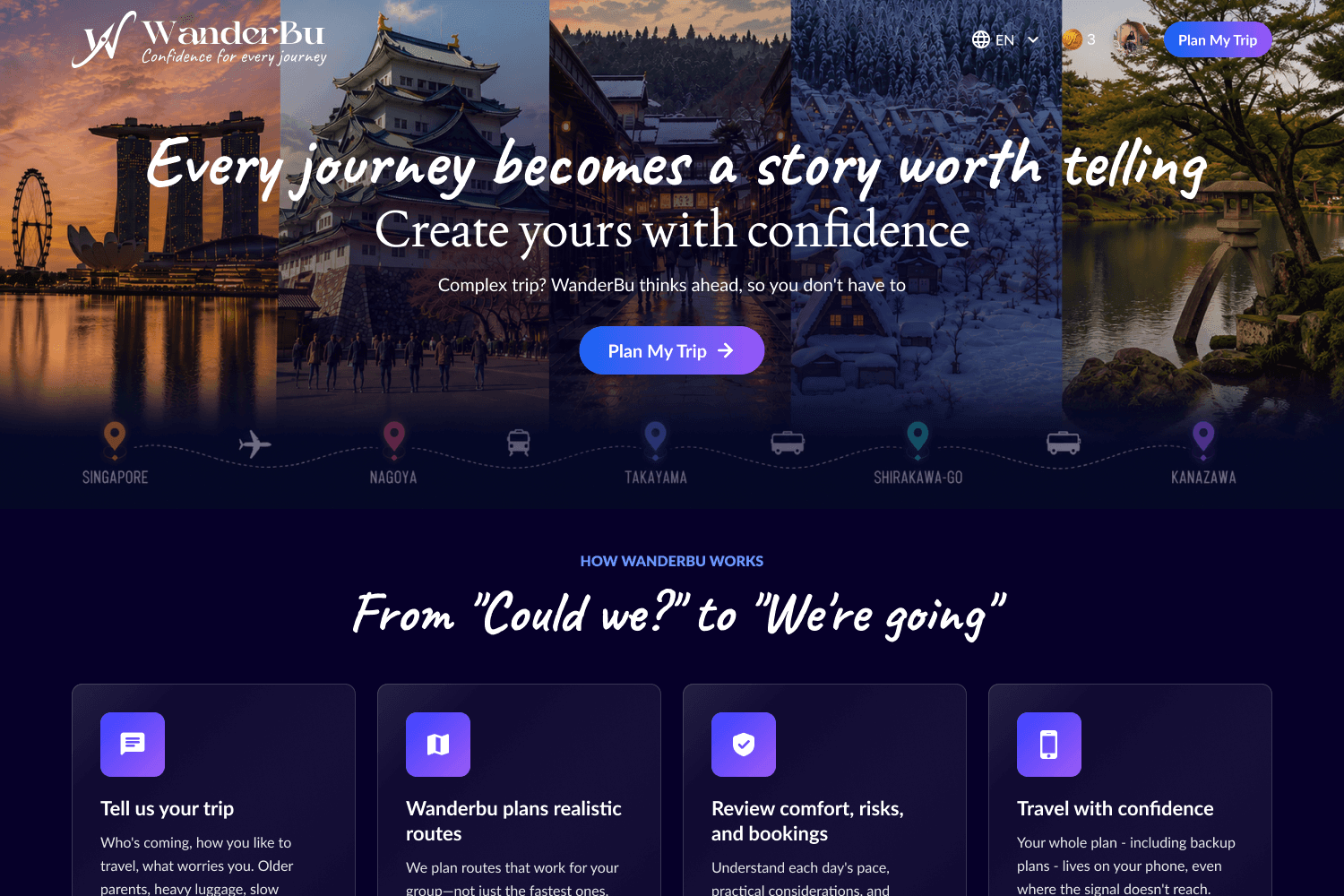
Homepage - WanderBu
Inspiration
Wanderbu was inspired by a simple but powerful insight: many people do not avoid harder-to-reach destinations because they lack interest. They avoid them because the journey feels uncertain, complicated, and risky to plan.
Traveling to major cities like Tokyo is relatively easy. Information is abundant, transport is frequent, neighborhoods are well documented, and most travelers can plan with confidence. But traveling beyond major cities to places like Shirakawa-go is different. These journeys often involve Shinkansen, regional trains, buses, taxis, walking routes, luggage decisions, timed transfers, stopover cities, accommodation planning, meal breaks, and realistic pacing.
For seasoned travelers, this kind of planning can still take hours. For families, older travelers, or people who are less experienced, it can feel intimidating enough that they either skip the destination entirely or rely on packaged tours. While tours are convenient, they often reduce the freedom, flexibility, and personal discovery that make travel meaningful.
We built Wanderbu because we believe independent travel should not be limited to expert planners. Just as Google Maps gave people the confidence to drive somewhere unfamiliar, Wanderbu aims to give people the confidence to travel somewhere harder.
Our bigger vision is to unlock the long tail of travel: rural towns, heritage villages, mountain regions, islands, national parks, cultural routes, and small communities that are rich in experience but difficult to confidently reach.
What it does
Wanderbu is an AI travel confidence engine for complex regional journeys.
Instead of only recommending attractions, Wanderbu helps travelers understand how to actually make a trip work. It turns multi-hop travel logistics into realistic, bookable, and confidence-building itineraries.
For example, instead of simply saying “visit Shirakawa-go,” Wanderbu can plan a route such as Tokyo → Nagoya → Takayama → Shirakawa-go → Kanazawa → Tokyo. It explains when to take the Shinkansen, where a regional train or bus transfer is needed, whether an overnight stop in Takayama makes sense, how long to stay in each city, where to eat, where to rest, and how to avoid a rushed or fragile itinerary.
Wanderbu considers the human side of travel, not just the map. It can adjust plans for older parents, children, slower walking speed, luggage burden, food preferences, budget, comfort level, and risk tolerance.
Each itinerary can include:
- route legs across trains, buses, taxis, and walking
- recommended stopover cities
- accommodation areas near useful transport hubs
- meal and rest break suggestions
- pacing recommendations
- transfer risk warnings
- last-bus or last-train risk alerts
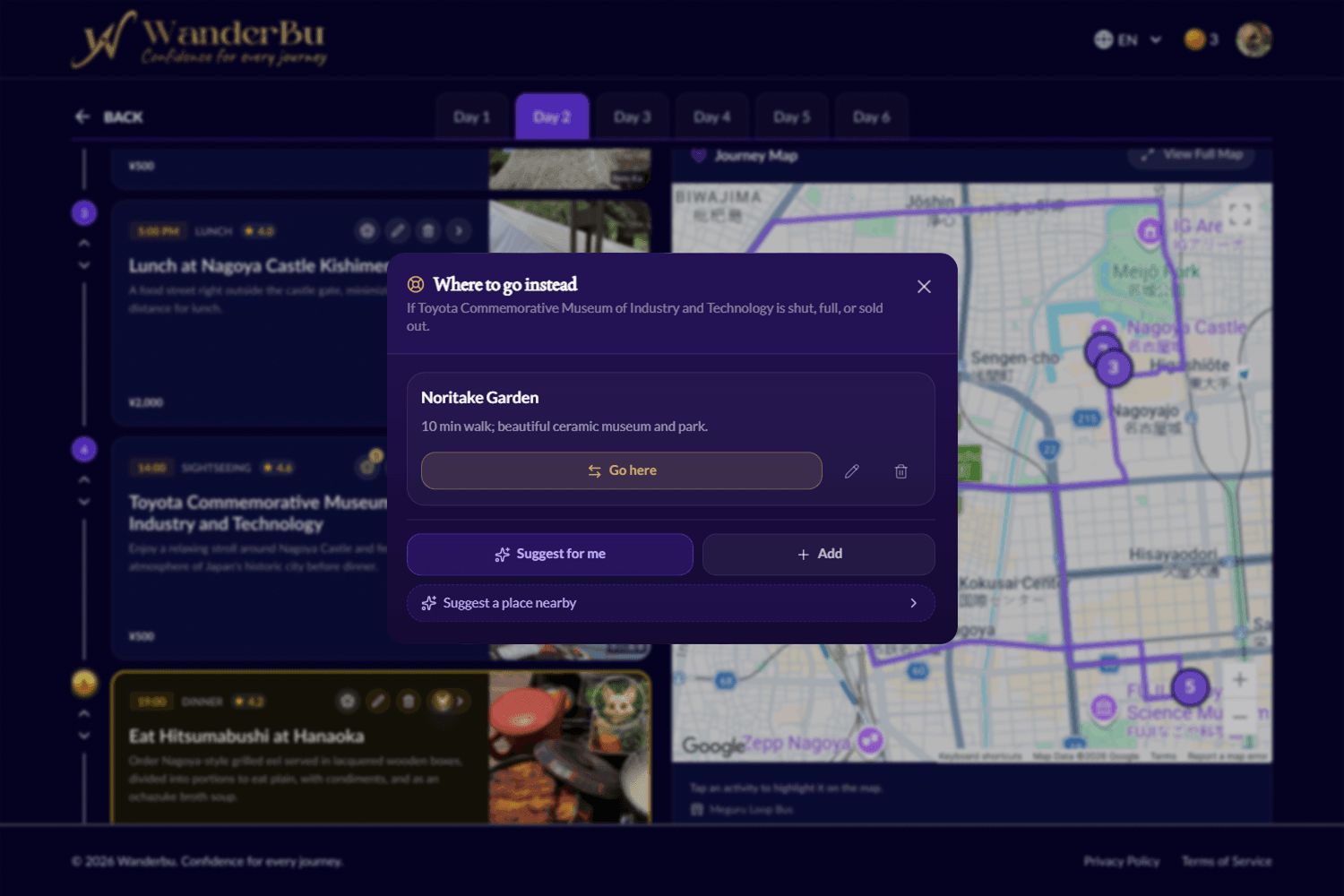
- backup options
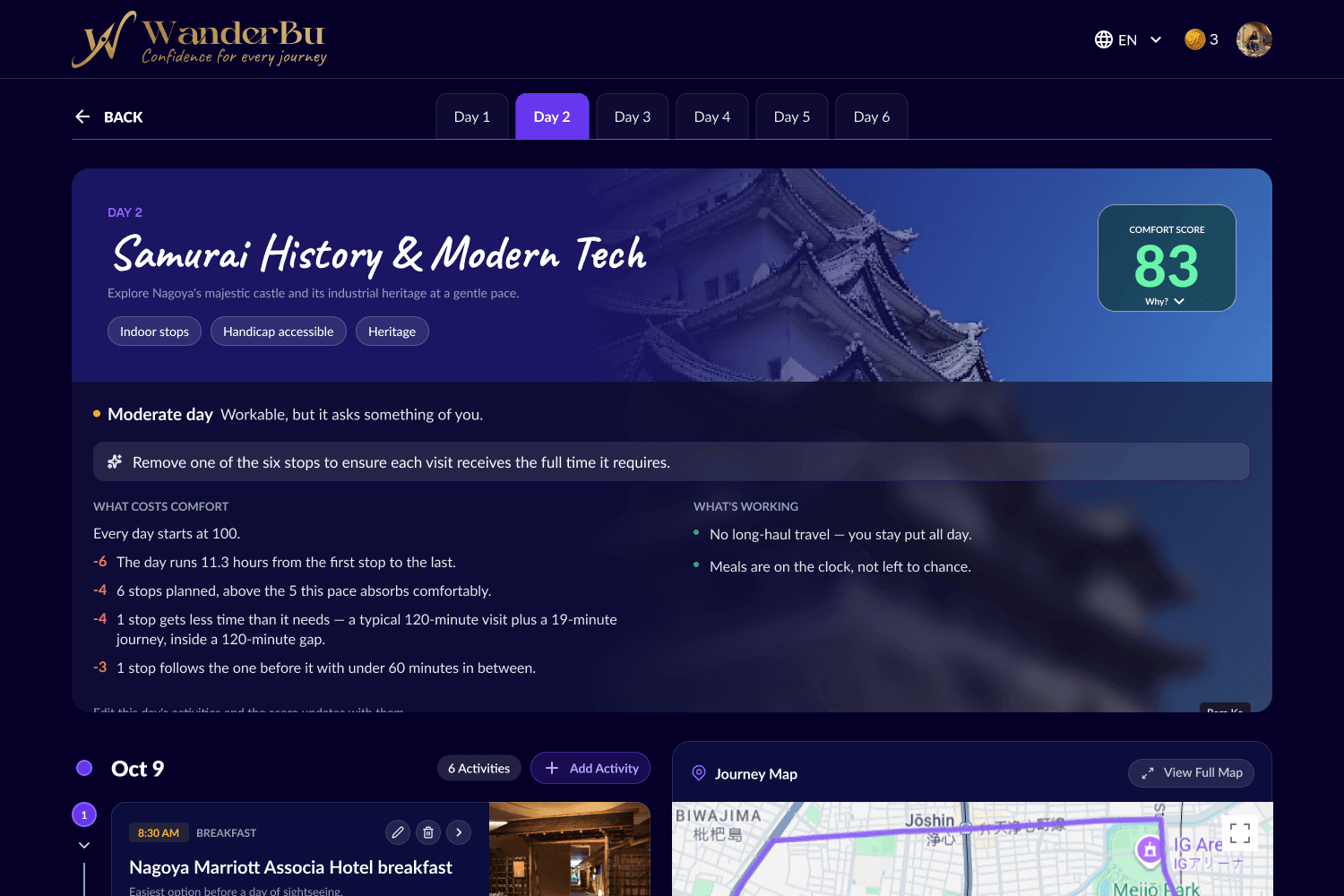
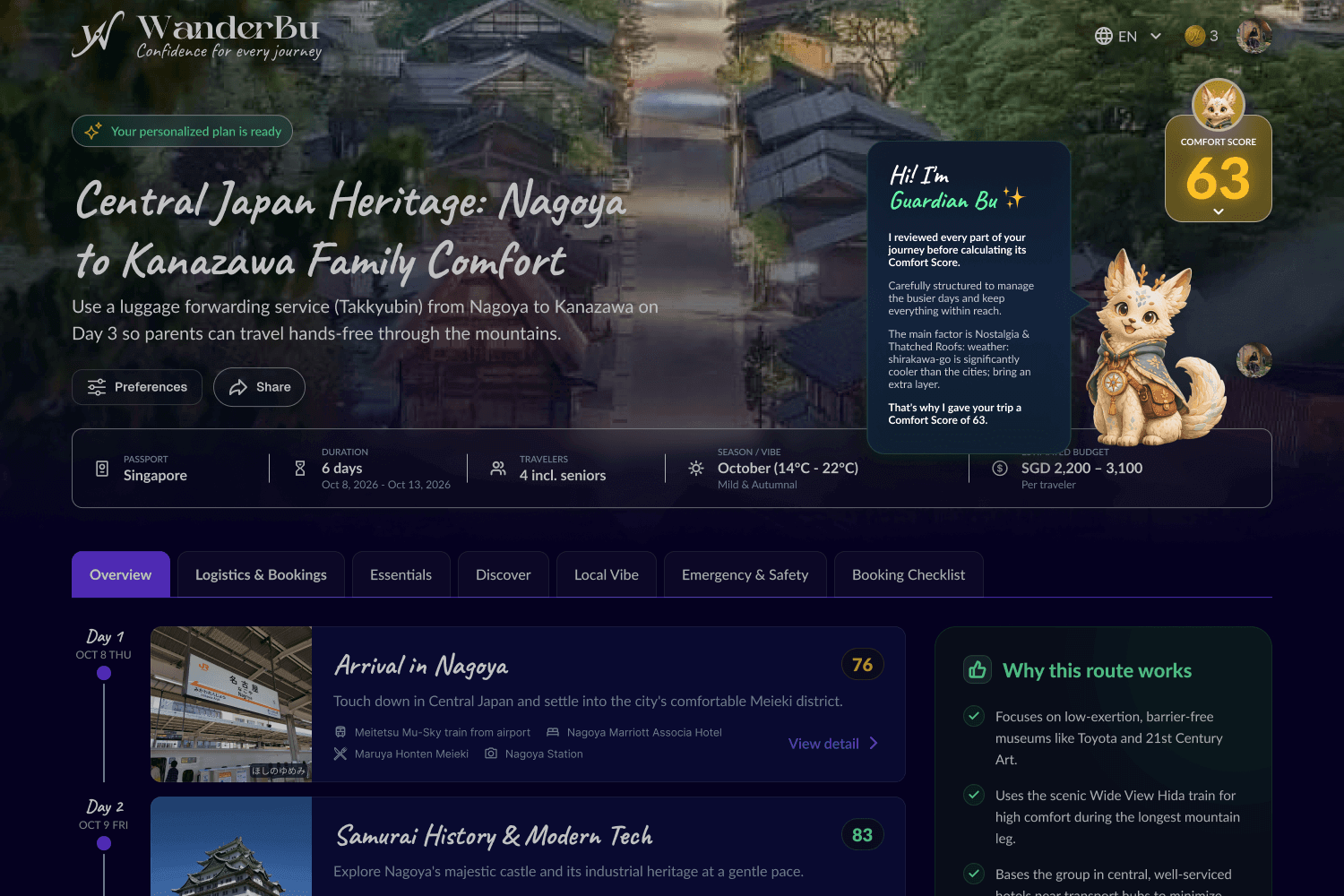
- comfort score for each day
- bookability notes for hotels, activities, transport, and reservations
Wanderbu’s goal is not to maximize the number of places visited. Its goal is to design journeys that feel possible, comfortable, memorable, and independent.
How we built it
We built Wanderbu as a planning layer on top of verified travel, map, and location data, with Gemini AI acting as the reasoning engine.
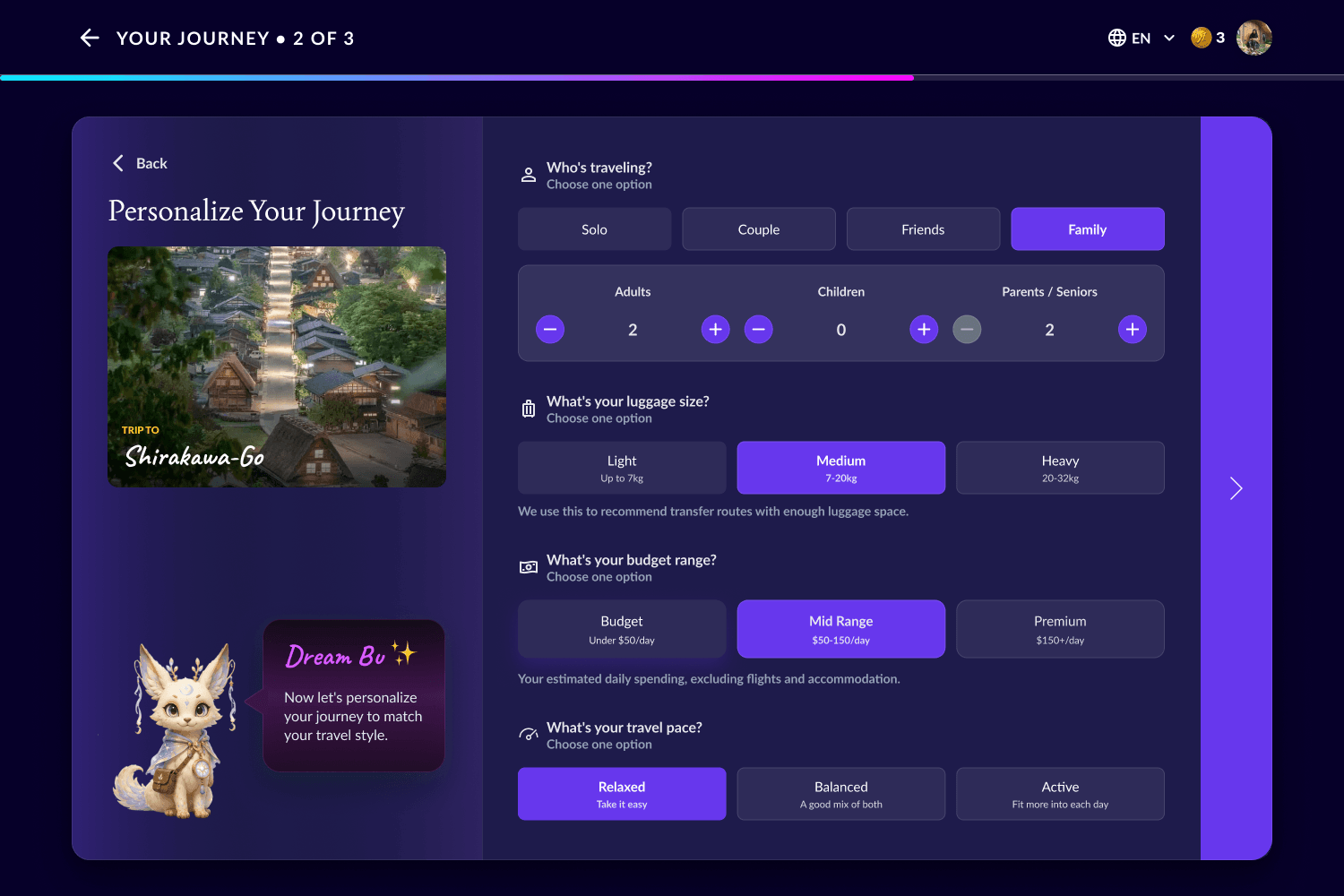
The app starts by collecting the traveler’s destination, starting point, dates, trip duration, group profile, pace preference, mobility needs, luggage situation, budget, food preferences, and must-visit places. It then converts those inputs into a structured travel plan.
Rather than asking AI to invent an itinerary from memory, Wanderbu is designed to ground its planning process in route, map, and place data. Gemini helps reason through the journey, while external data sources help validate travel time, location feasibility, place information, and route options.
The system breaks a complex trip into practical travel legs. It identifies where a traveler should transfer, where an overnight stop may reduce risk, where meal breaks should happen naturally, and where the itinerary may become too tiring.
We designed Wanderbu to think more like a seasoned travel planner than a generic chatbot. It does not only ask, “What places are interesting?” It asks:
Is this route realistic? Are the transfers too tight? Is there a risky last-bus dependency? Should the traveler sleep in a connecting city? Is this day too tiring for older family members? How much walking and luggage movement is involved? Where should meals and rest breaks naturally fit? What is the backup plan if something goes wrong?
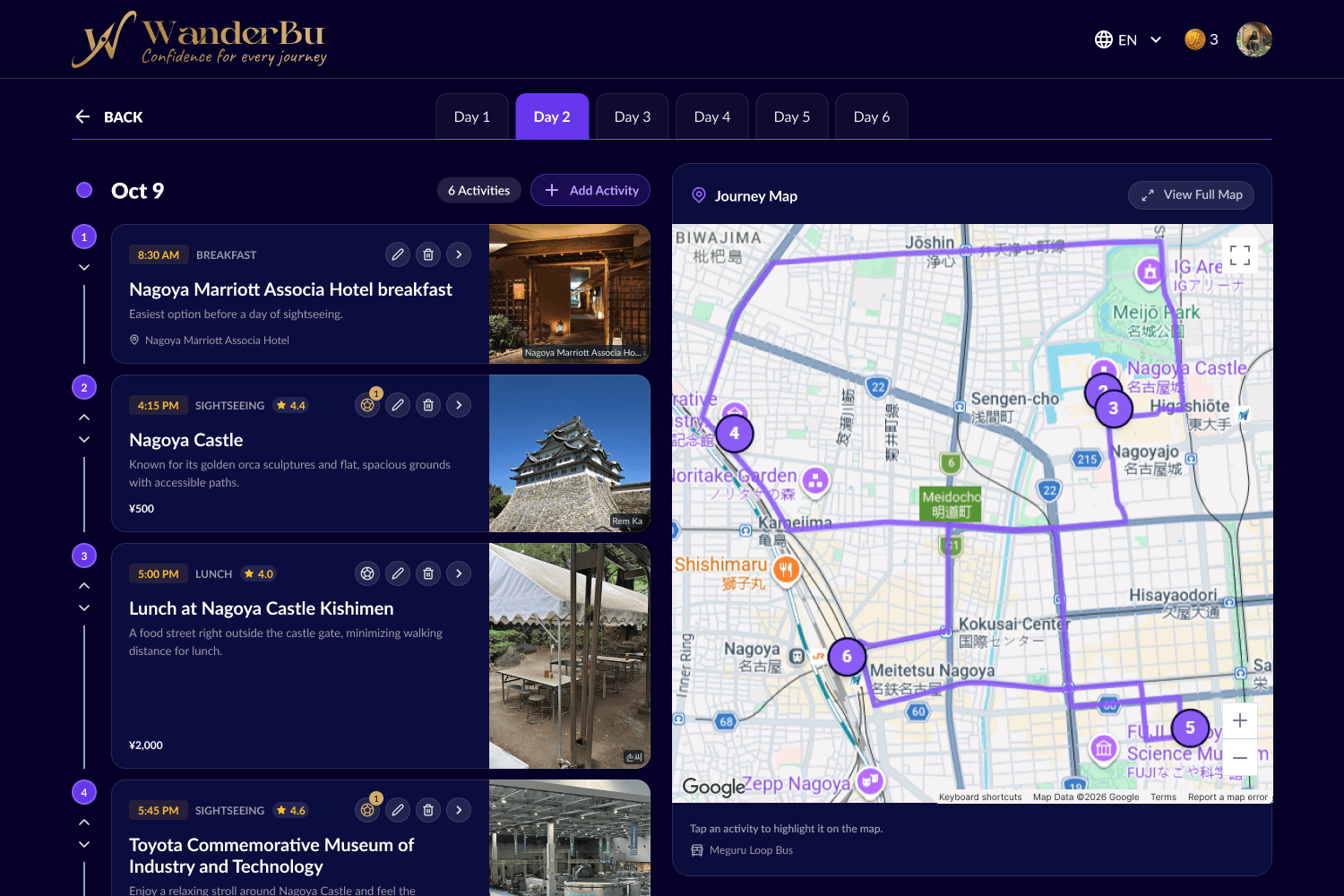
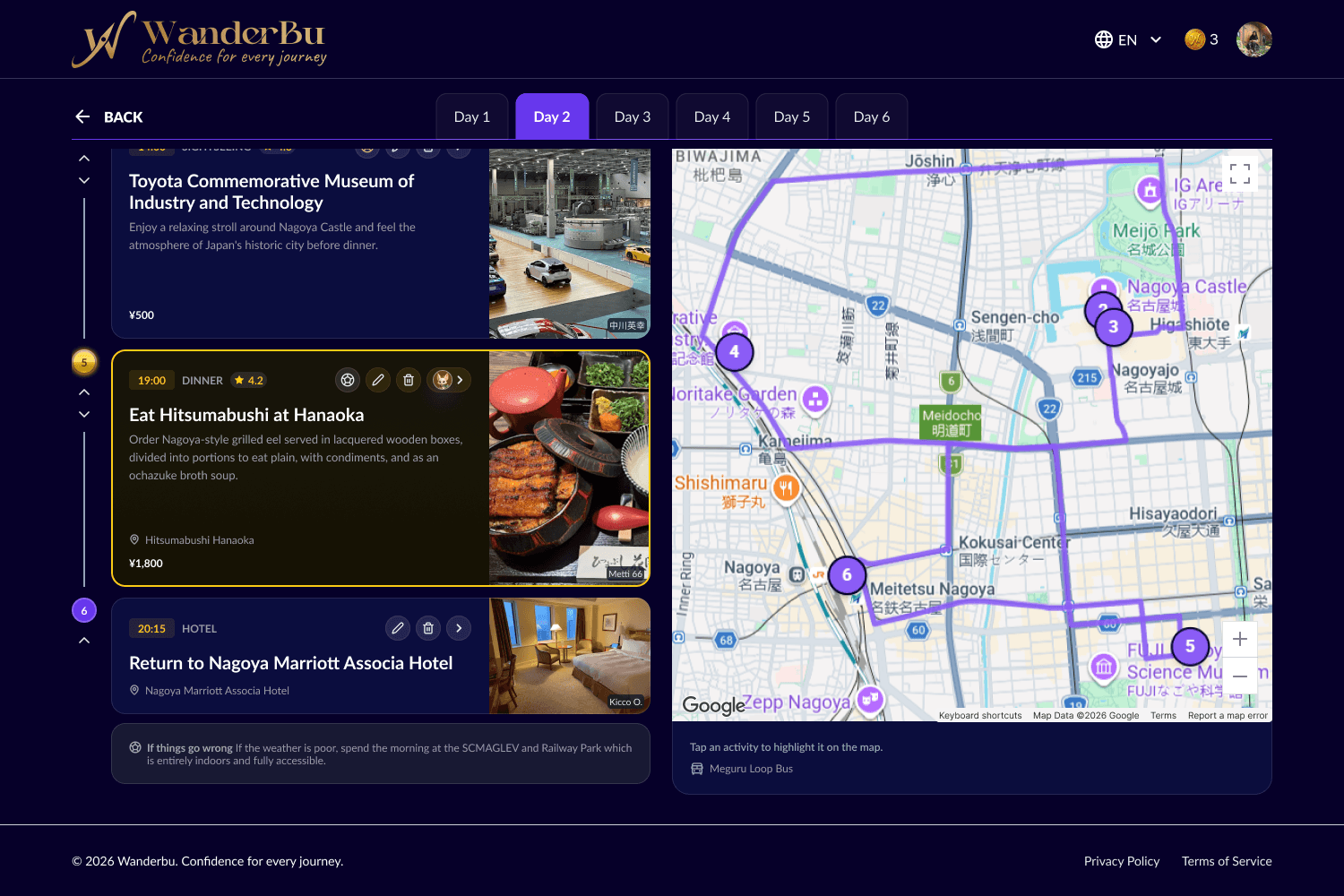
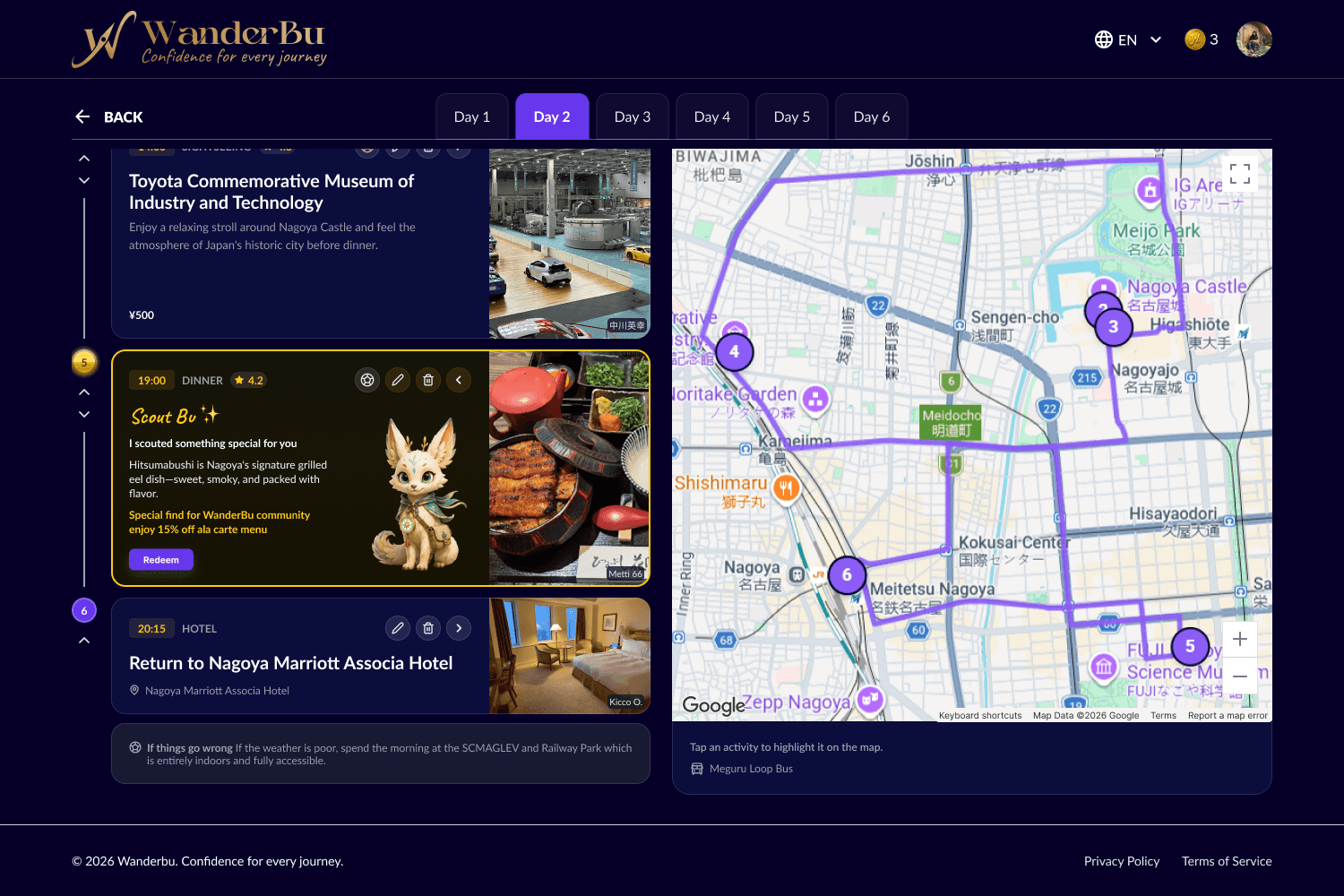
The final output is shown as both a timeline and a map. The timeline explains what to do step by step, while the map shows how each transport leg, stopover, hotel area, eatery, and attraction connects into the full journey.
For the MVP, we focused on regional Japan routes because they clearly demonstrate Wanderbu’s core value: helping travelers navigate beautiful destinations that are not difficult because they are obscure, but because they require careful coordination.
Challenges we ran into
One of the biggest challenges was making Wanderbu feel realistic instead of generic.
Many AI travel tools can generate attractive itineraries, but complex regional travel requires a much deeper level of planning. A good itinerary has to account for transfer buffers, walking distance, check-in times, meal breaks, bus frequency, luggage, weather, fatigue, opening hours, and the different speeds of different travelers.
Another challenge was trust. Travel planning has very low tolerance for wrong information. If an itinerary suggests an impossible transfer, a closed restaurant, a missed bus connection, or an overpacked day, users lose confidence quickly.
To address this, Wanderbu is designed to highlight uncertainty instead of hiding it. It flags risky transfers, explains pacing concerns, shows backup options, and provides comfort scoring so users can understand not just what the plan is, but how dependable and comfortable it is.
We also had to balance guidance with independence. We did not want Wanderbu to feel like a rigid tour package. The goal is to give travelers enough structure to feel safe, while still preserving the freedom and discovery of independent travel.
Accomplishments that we're proud of
We are proud that Wanderbu reframes travel planning from “Where should I go?” to “Can I confidently make this journey happen?”
That shift is important. Inspiration is abundant, but confidence is scarce. People already see beautiful destinations online. What they often lack is the certainty that the route, timing, pacing, and logistics will work for them.
We are also proud that Wanderbu is built with empathy. It does not assume every traveler is young, fast, solo, experienced, or comfortable improvising. It considers families, older parents, slower pacing, rest needs, luggage, food breaks, and the emotional stress of planning unfamiliar journeys.
Another accomplishment is the economic impact potential. Wanderbu can help redirect tourism demand from overcrowded major cities to smaller regional communities. By making harder-to-reach destinations easier to visit independently, Wanderbu can help local hotels, ryokans, restaurants, guides, shops, transport providers, and cultural sites capture more tourism spend.
Most importantly, we are proud of the feeling Wanderbu is built to create: confidence. When travelers feel confident, they are more willing to go further, stay longer, explore deeper, and experience places on their own terms.
What we learned
We learned that the hardest part of travel planning is often not discovery. It is connection.
Travelers can easily find beautiful places online, but turning those places into a real journey requires many small decisions. Which city should they stop in? Is one night enough? Is the transfer too risky? Should they take the train or bus? Where can they eat between travel legs? How much walking is involved? What happens if they miss the last bus? Will the itinerary still feel enjoyable by the end of the day?
We also learned that AI is most valuable when it acts less like a search engine and more like a thoughtful travel companion. The best experience is not just receiving a list of places, but understanding trade-offs and feeling supported through uncertainty.
Another key learning was that the fastest route is not always the best route. For families, older travelers, or people carrying luggage, the most comfortable route may create a better trip than the most efficient one.
Wanderbu taught us that great travel planning is not about squeezing more into the itinerary. It is about helping people move through the world with confidence.
What's next for Wanderbu
Next, we want to make Wanderbu more actionable, reliable, and commercially scalable.
Our immediate focus is to strengthen the MVP around a clear demo journey: Tokyo → Takayama → Shirakawa-go → Kanazawa → Tokyo. This route allows Wanderbu to demonstrate its core strengths across Shinkansen, regional trains, buses, rural destinations, overnight stopovers, food planning, luggage concerns, comfort scoring, and backup options.
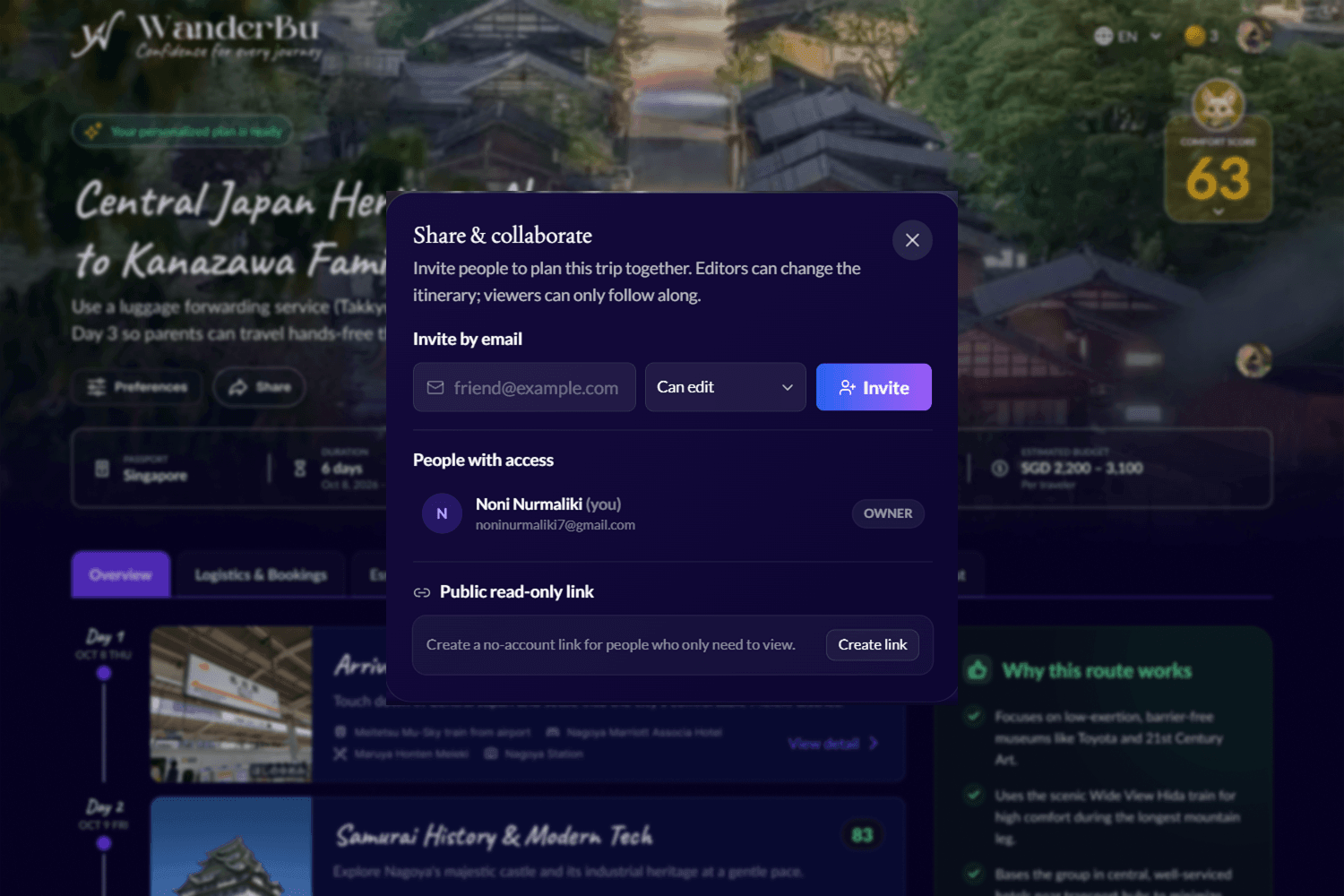
From there, we plan to add deeper route validation, real-time transport awareness, booking links, accommodation recommendations, restaurant suggestions, luggage forwarding guidance, weather-aware adjustments, and collaborative planning for families or groups.
We also want to expand Wanderbu beyond consumer trip planning. The same planning engine can help small travel businesses, independent travel consultants, boutique hotels, ryokans, local guides, and regional tourism operators create personalized itineraries faster for their customers.
This opens two paths for Wanderbu:
For travelers, Wanderbu is a paid planning service that helps them travel beyond major cities without joining a tour.
For travel businesses, Wanderbu is an AI itinerary operations tool that helps them serve customers faster, create better regional journeys, and convert travel interest into actual visits.
Over time, we want Wanderbu to support more harder-to-reach destinations around the world, from rural Japan to mountain towns, island routes, pilgrimage trails, national parks, heritage villages, and multi-city cultural journeys.
Our long-term vision is for Wanderbu to become the trusted AI infrastructure for the long-tail travel economy — helping people go beyond the easy path while helping local communities benefit from more confident, independent tourism.


Log in or sign up for Devpost to join the conversation.