We highly recommend running Wander directly on your mobile device :)
Inspiration
Turn spare minutes into a walk through exciting spots to wind your mind down. The idea came from personal experience, as an international student, I moved to a completely new city and had no idea where to start exploring. Most map apps are built to get you somewhere fast, not to wind down and guide you to places through personal preference. Wander flips that, whether you're a traveler seeing a city for the first time or a student trying to feel more at home in yours, it helps you spend your time well and find the niche spots you'd never stumble onto otherwise.
What it does
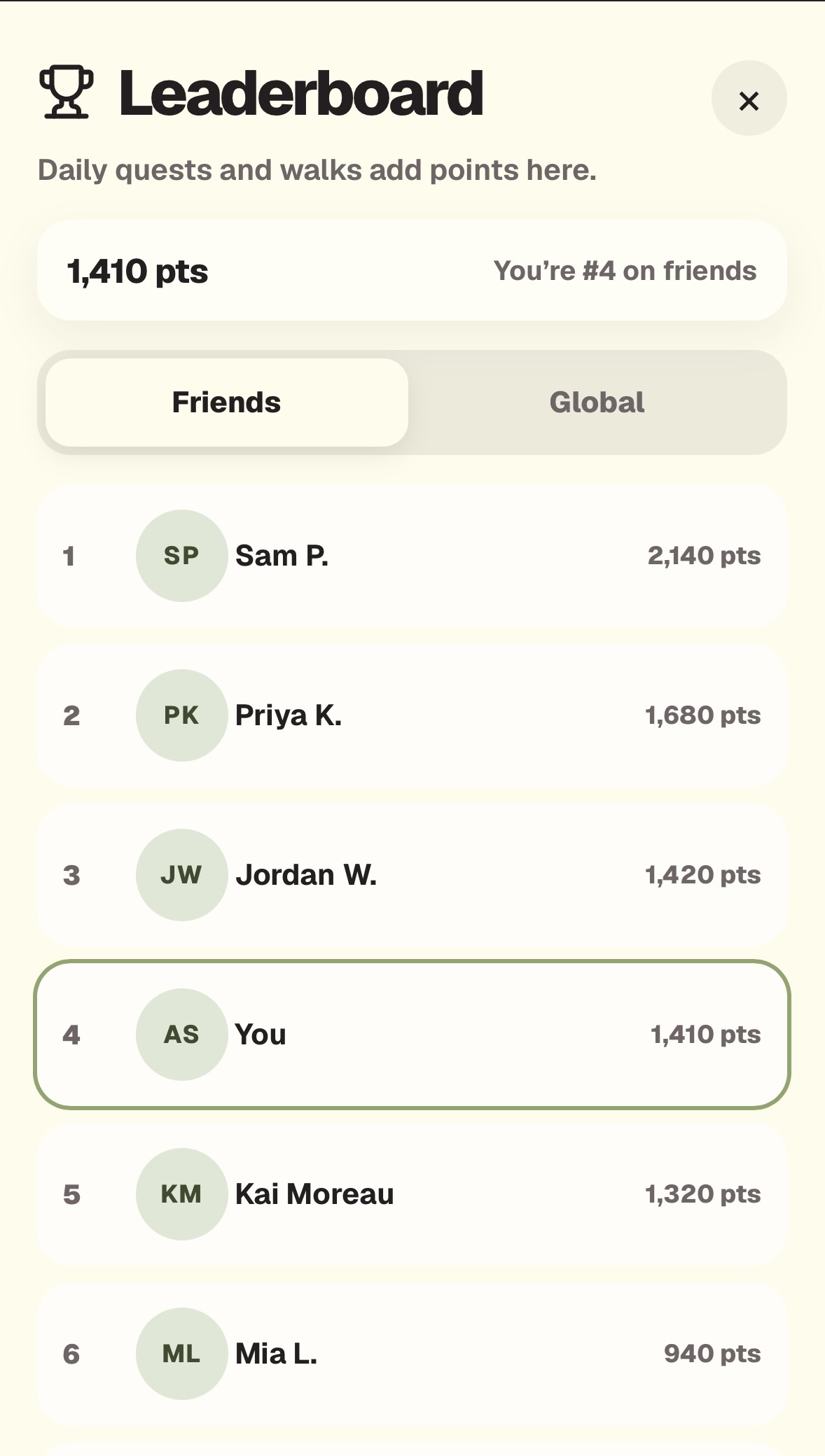
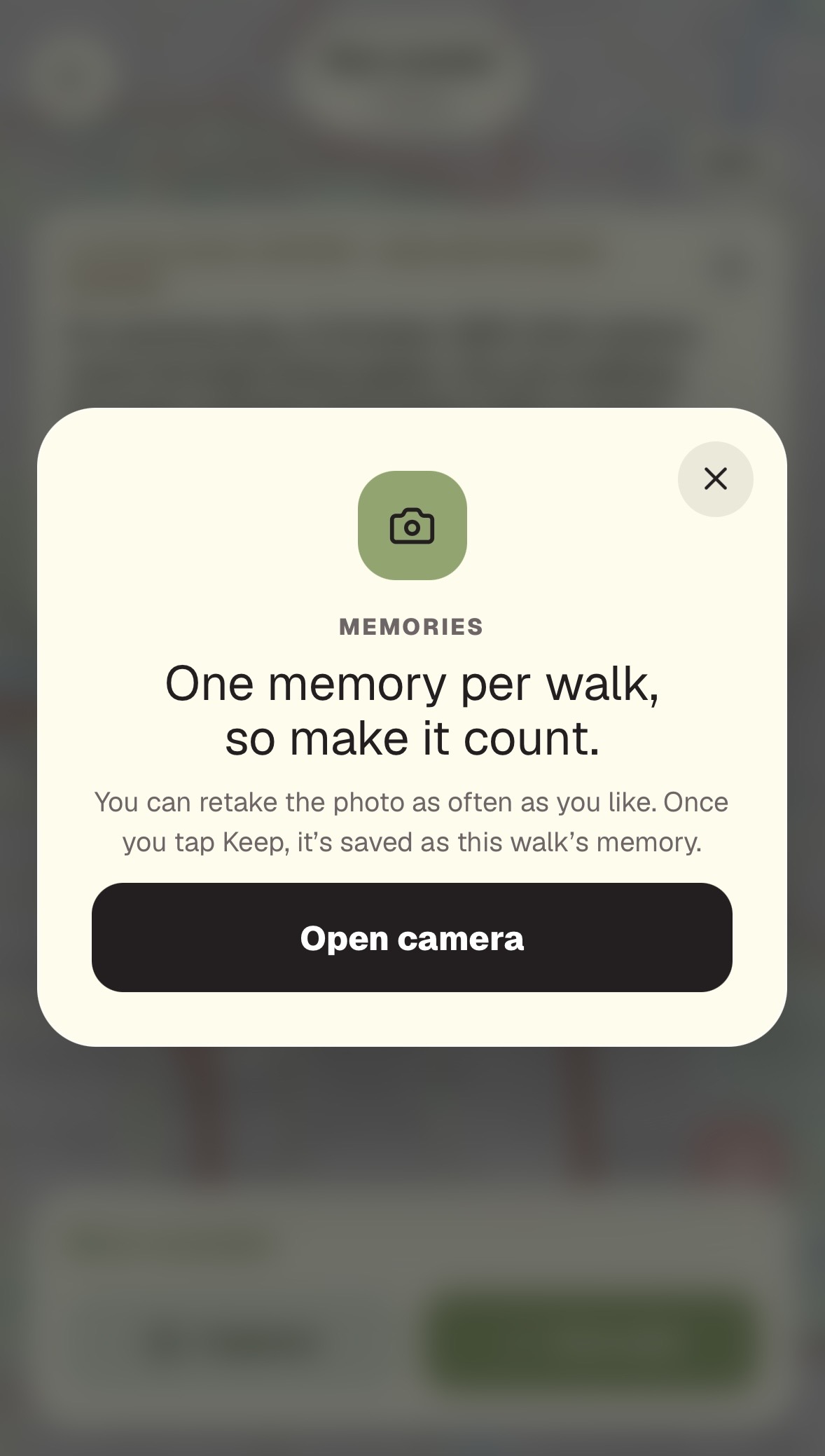
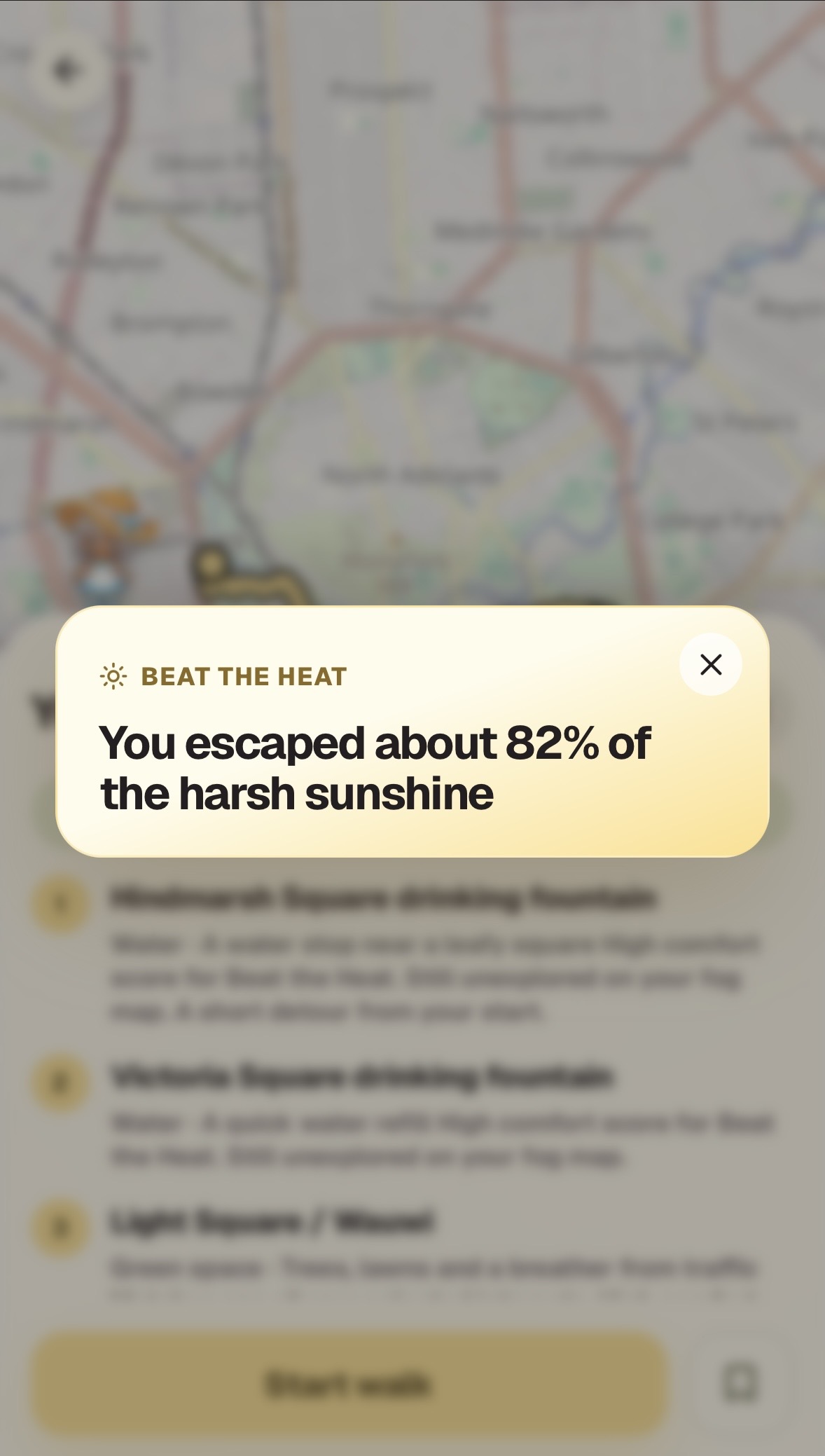
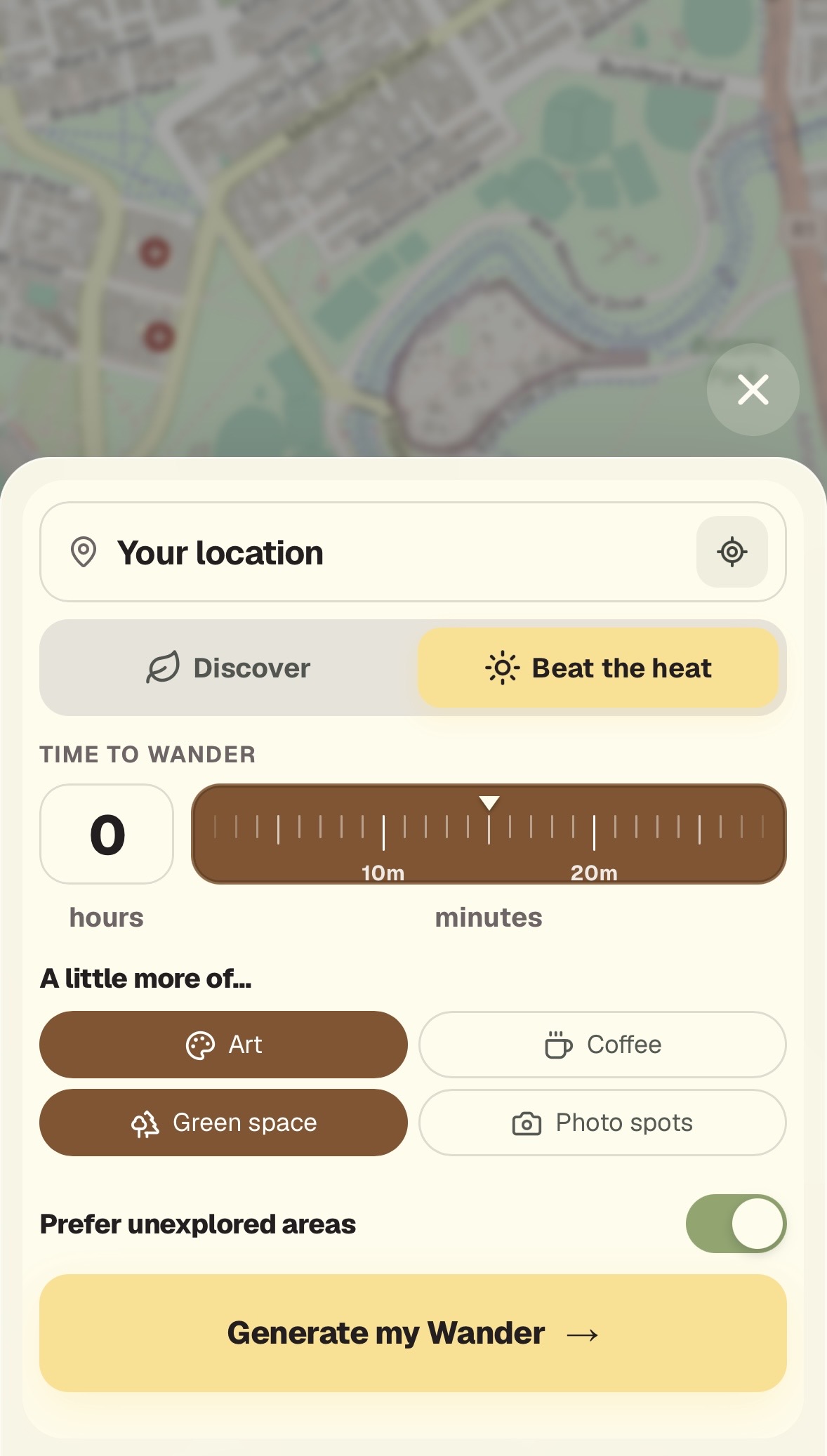
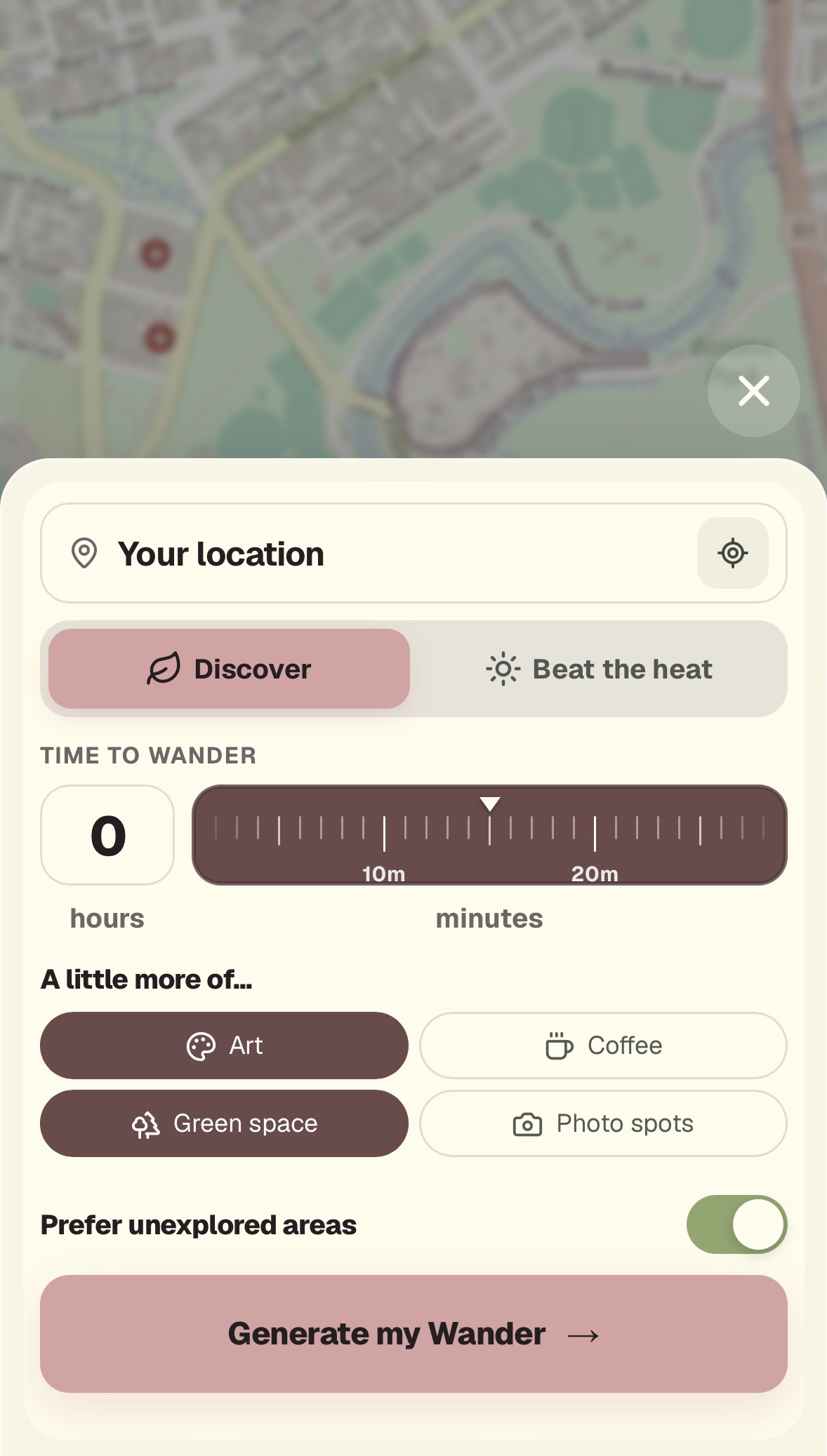
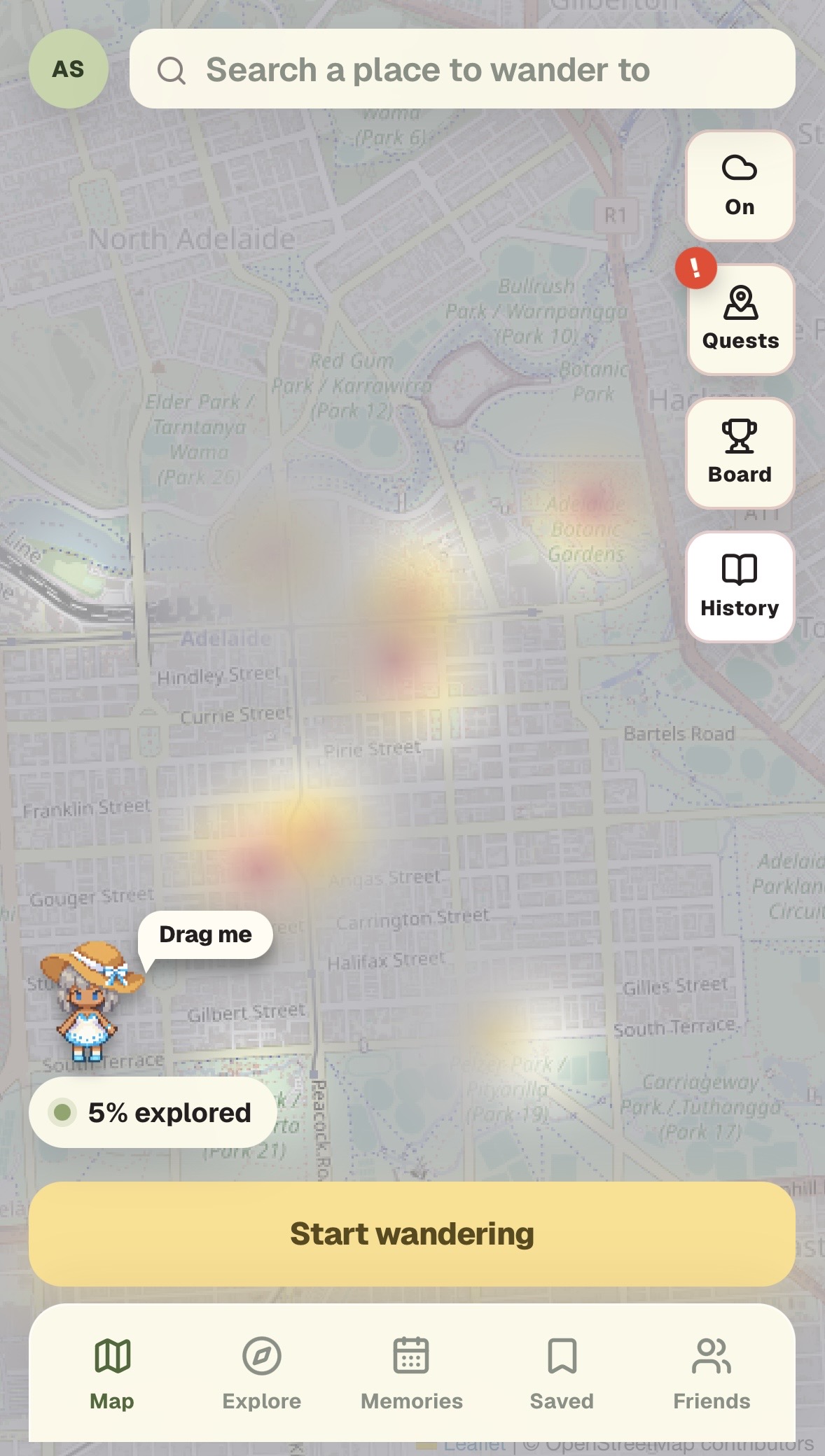
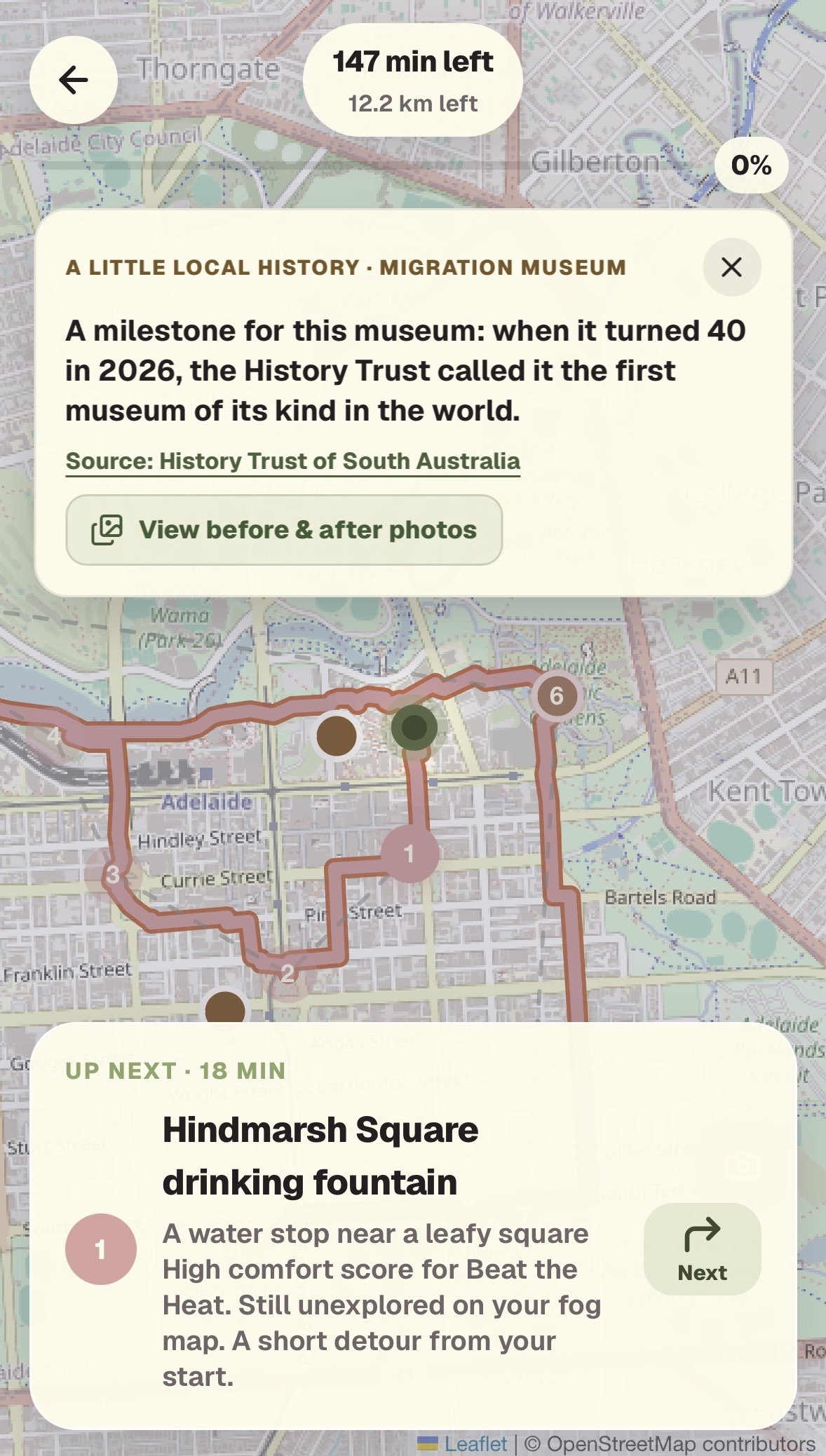
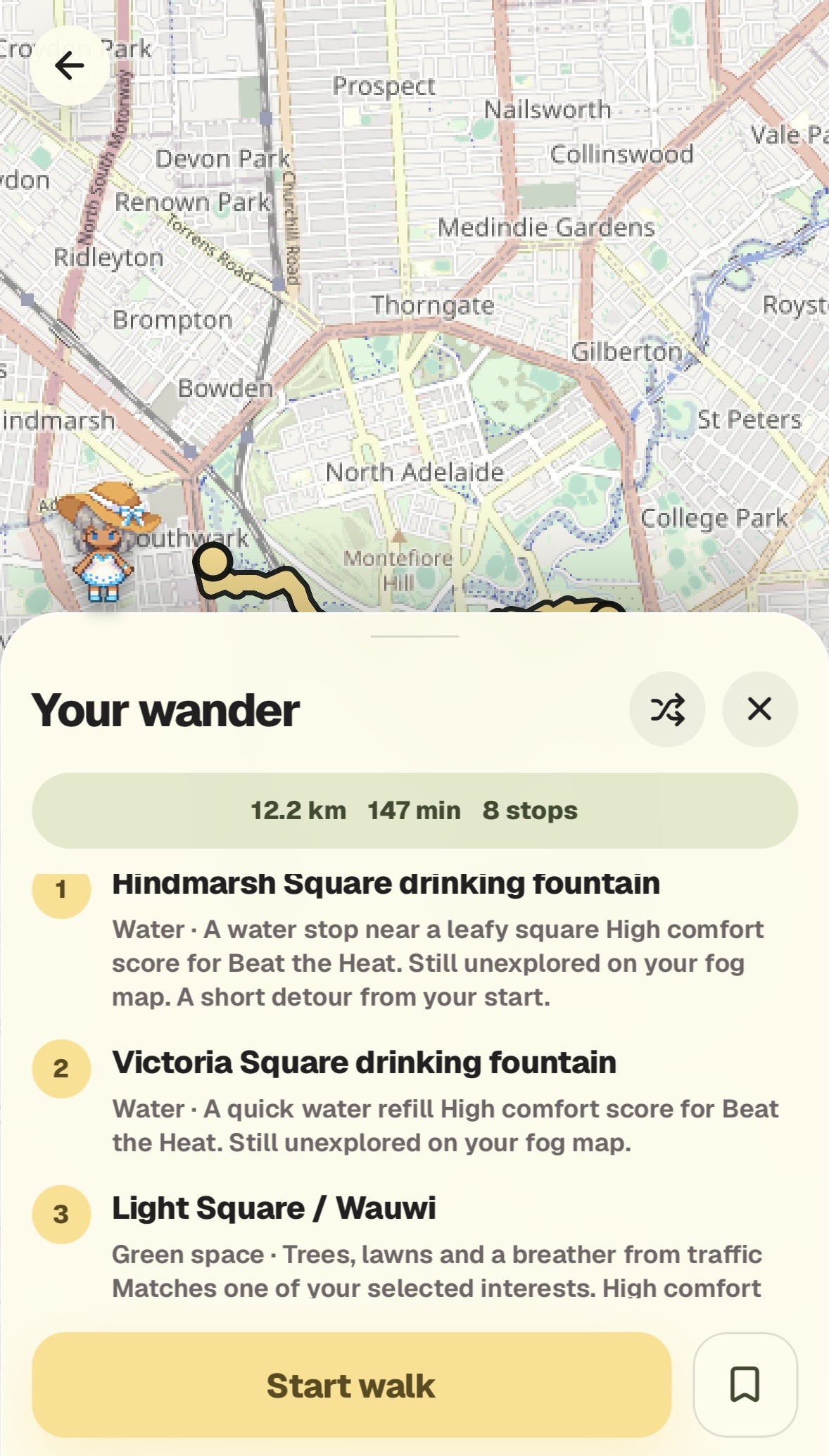
Not every walk needs to be the fastest one. Wander is a mobile app that curates routes for users through multiple places using their interest and available duration: murals, quiet lanes and cute cafes. Wander includes random daily quests for user to earn extra points that determines their ranking on the friends and global leaderboard. Completing walks clears your exploration fog, capture moments, saves memories and use it's cute mascot to get a street view of where you could potentially head to next. Too hot? Use Beat The Heat mode to generate a route with the maximimum amount of shade.
How we built it
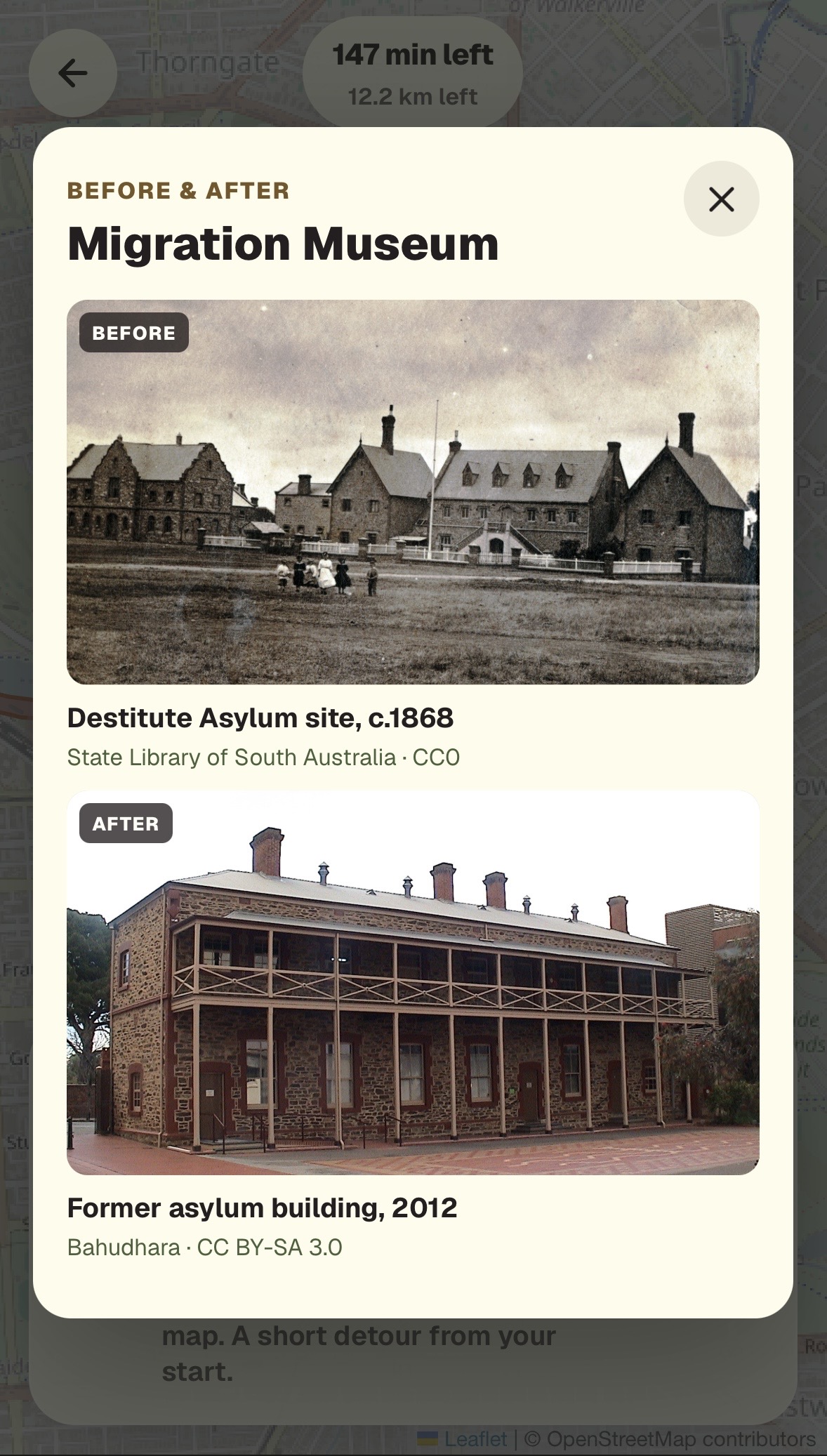
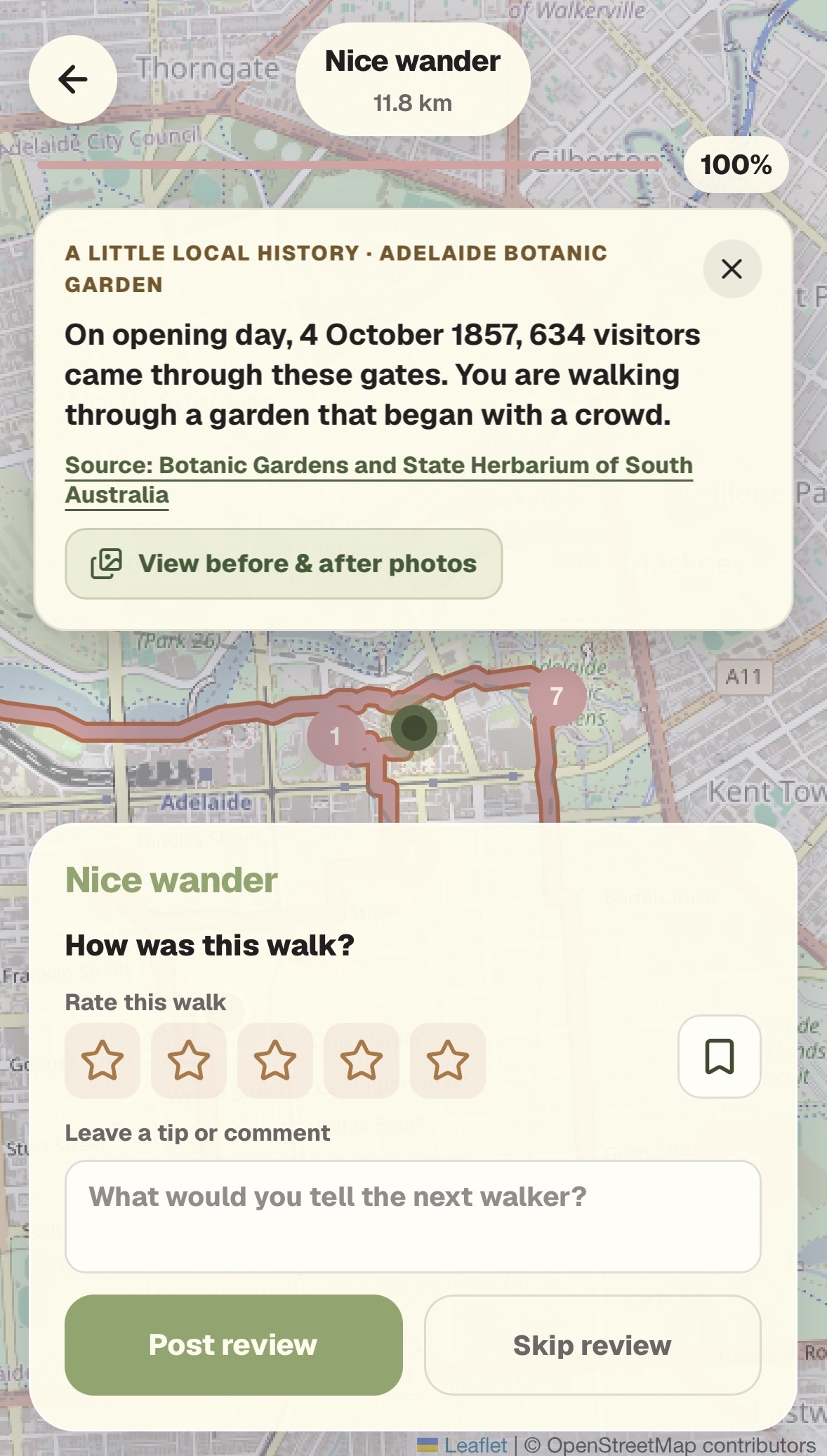
Wander uses React, TypeScript and Vinext/Vite, with Tailwind CSS for styling. Leaflet and OpenStreetMap power the interactive map, while openrouteservice provides walking directions. Our route planner combines the user’s starting location, available time and interests to select places and connect them into a walking route. We added Open-Meteo weather information, Google Street View previews and local history along the way. We used Supabase for authentication, database storage, photos and shared features such as friend requests and leaderboards. Exploration progress, daily quests and walk memories make each walk part of an ongoing experience. Our team developed features on separate Git branches, then merged and tested them together. We used ChatGPT/Codex and Cursor to assist with coding, debugging and documentation, and refined the app through repeated testing and feedback.
Challenges we ran into
Most of our challenges came from the frontend and debugging side. Getting the map to actually feel responsive, routes drawing smoothly, markers updating without lag, took a lot of trial and error, especially juggling Leaflet alongside React's rendering. Connecting everything together was another big one: making sure the frontend correctly talked to our backend (Supabase) for things like saving routes, tracking points, and handling friend requests, without weird bugs where data wouldn't update or would show stale info until a refresh.
What's next for Wander?
Down the line, we'd like to add the ability to host a walk and invite others to join live, expand the curated points database beyond our demo area to cover a whole city, and build out the social side further, think group leaderboards, shared memories from walks with friends, and richer trail reviews.
Built With
- css
- leaflet.js
- open-meteo-forecast
- react
- sql
- supabase
- typescript
- vercel

Log in or sign up for Devpost to join the conversation.