-
-
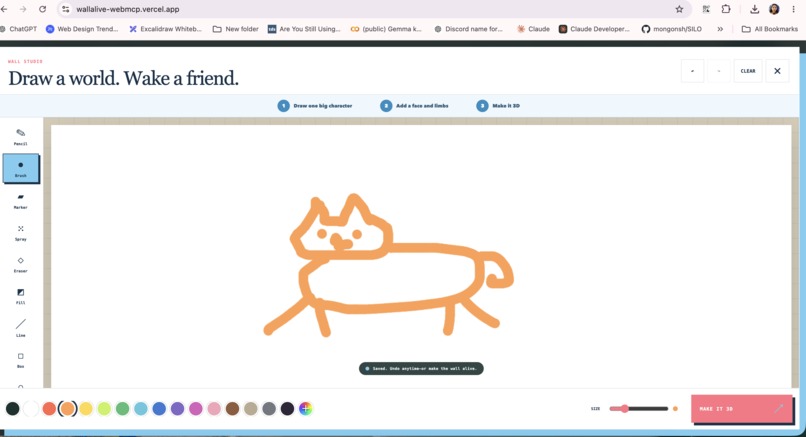
drawing
-
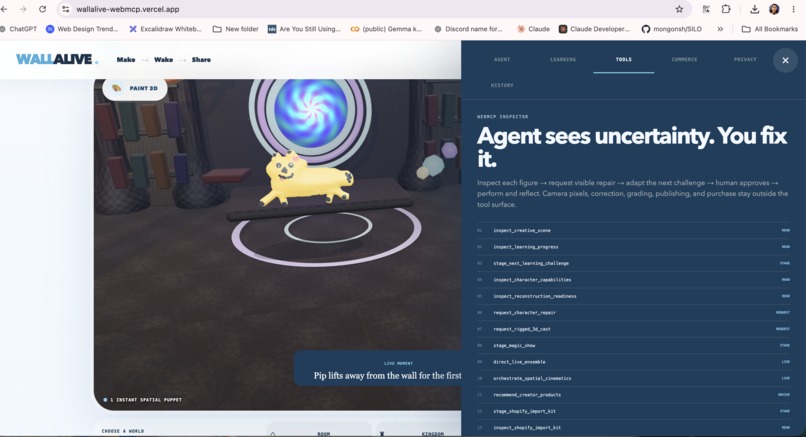
webmcp agents
-
-
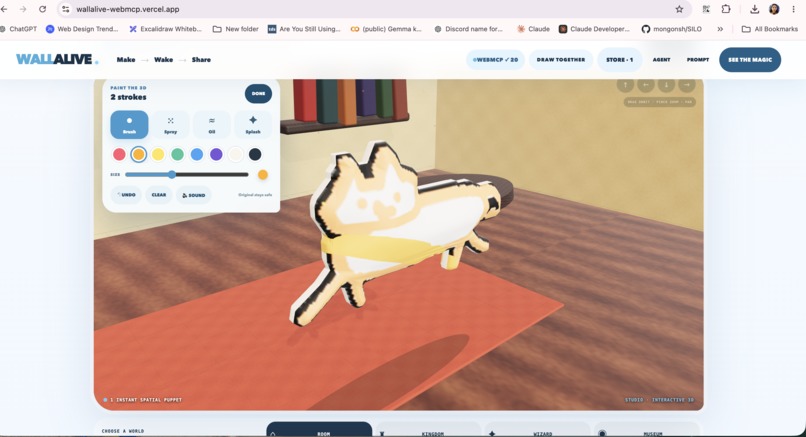
web
-
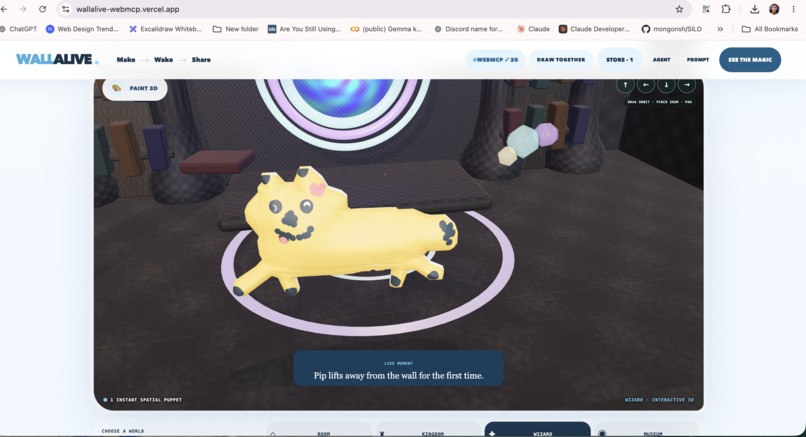
room changing
-
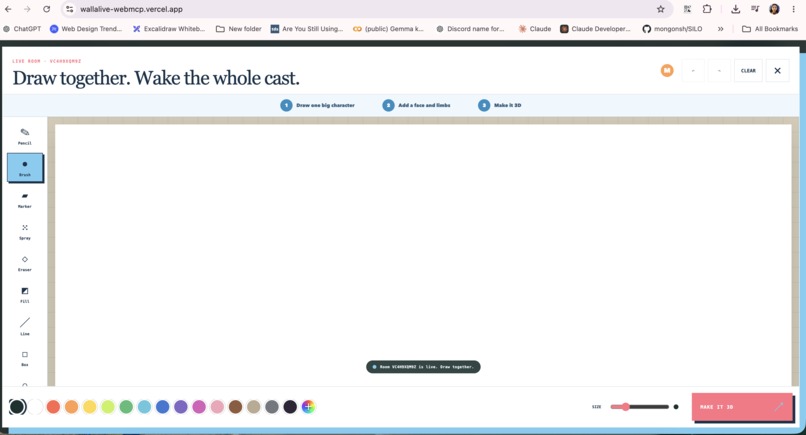
draw together
-
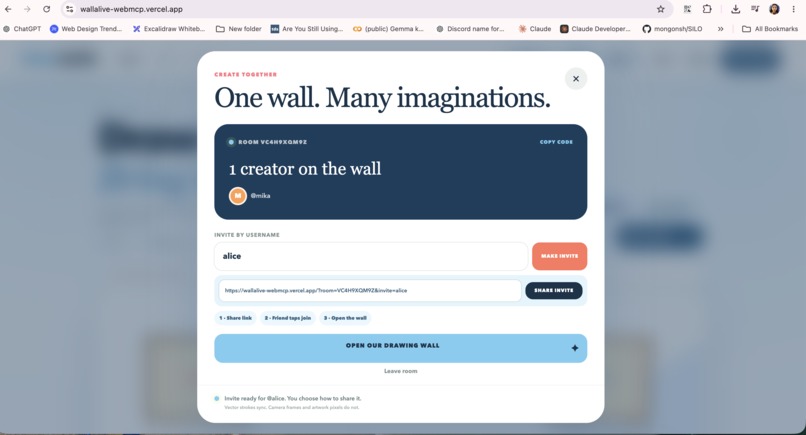
make an invite
-
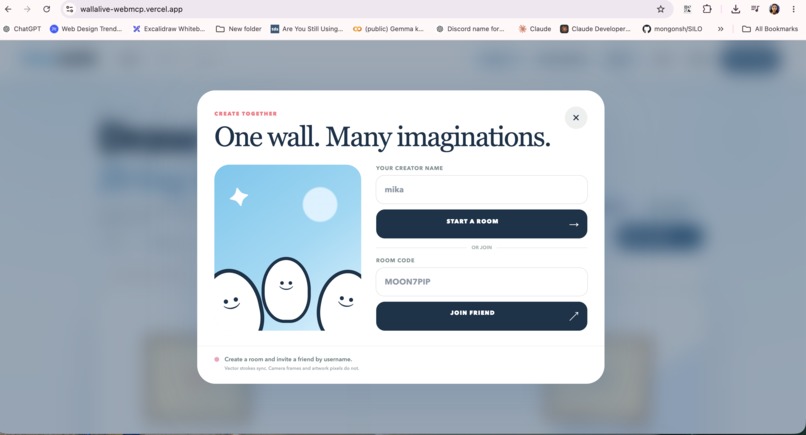
draw together
Inspiration
My eight years old daughter loves drawing everywhere. on paper, on the wall, and on her iPad. I love seeing her imagination, but like many parents, I also worry about how much time children spend only looking at screens.
I started wondering what if screen time could begin with something a child created with their own hands? What if their drawing could leave the paper, become a character, and continue its story in a 3D world?
That question became WallAlive.
What it does
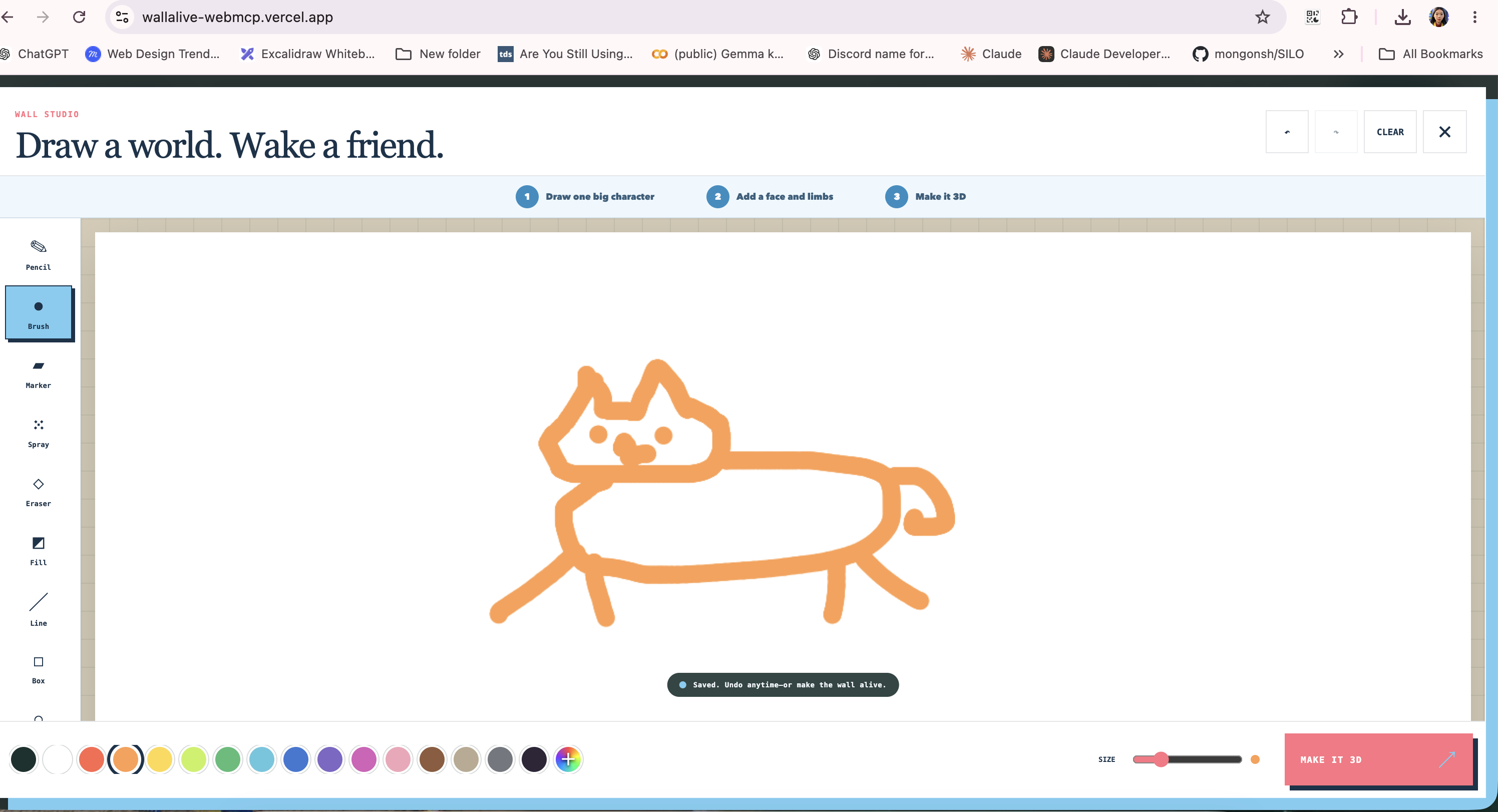
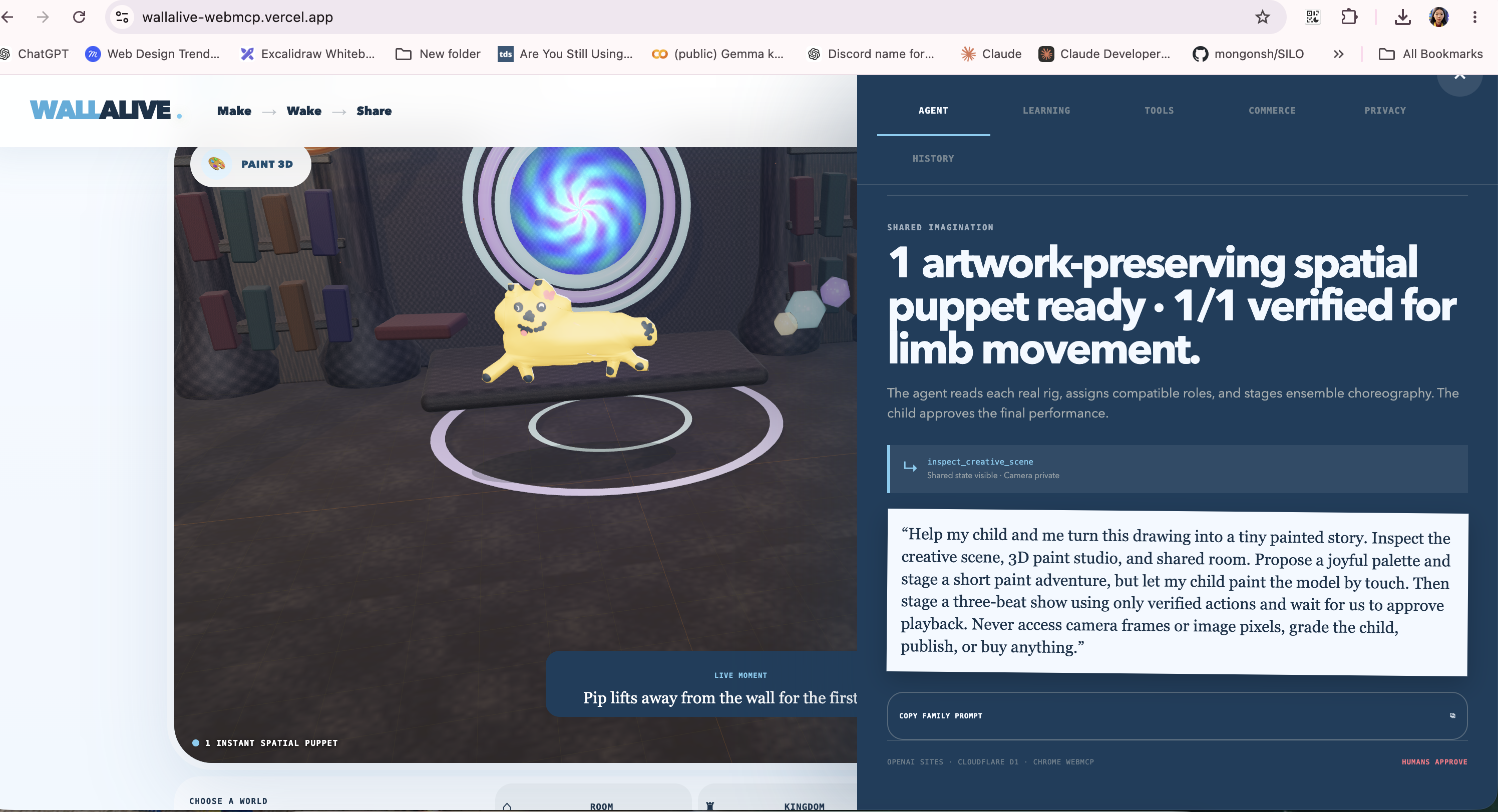
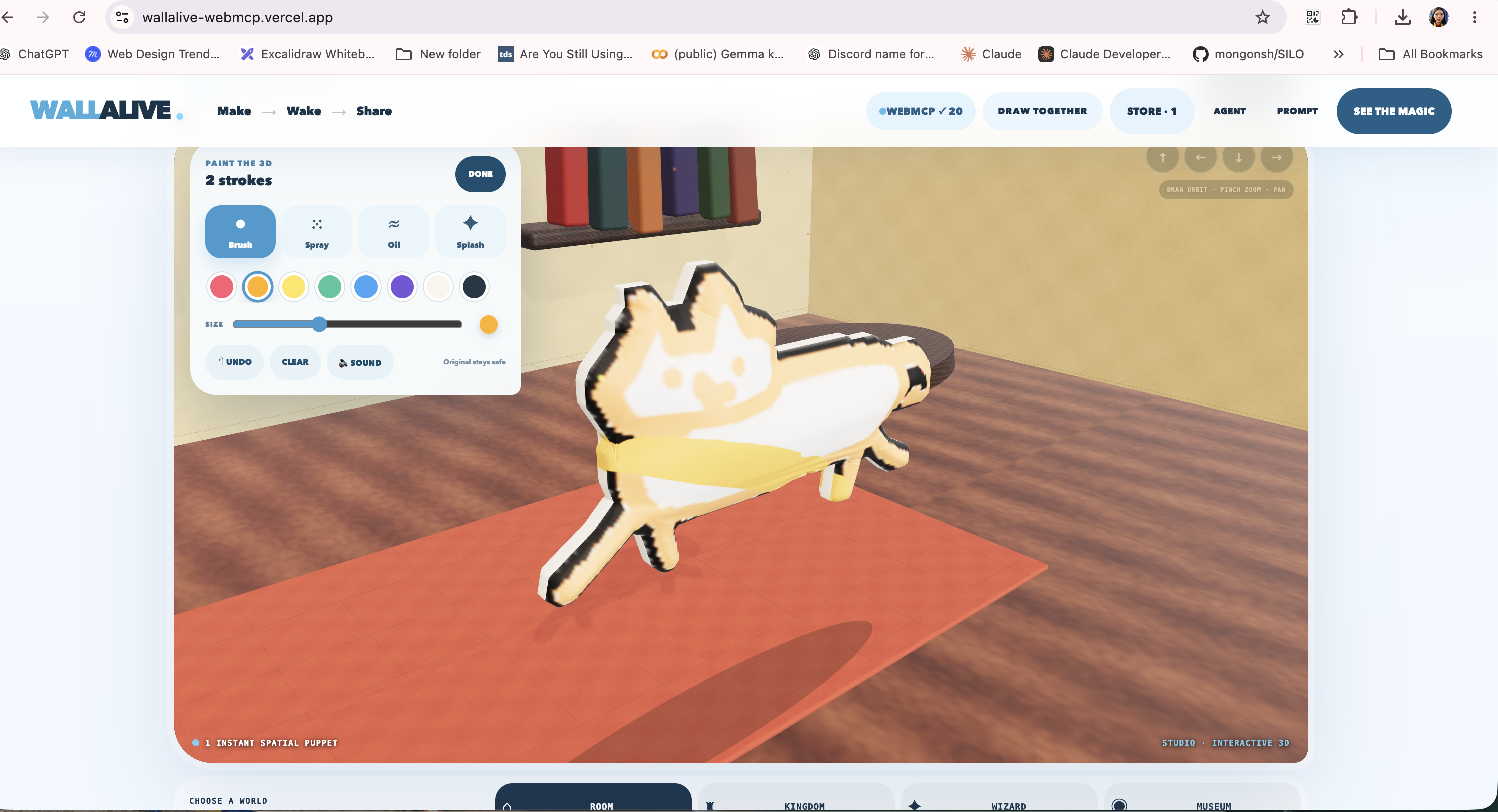
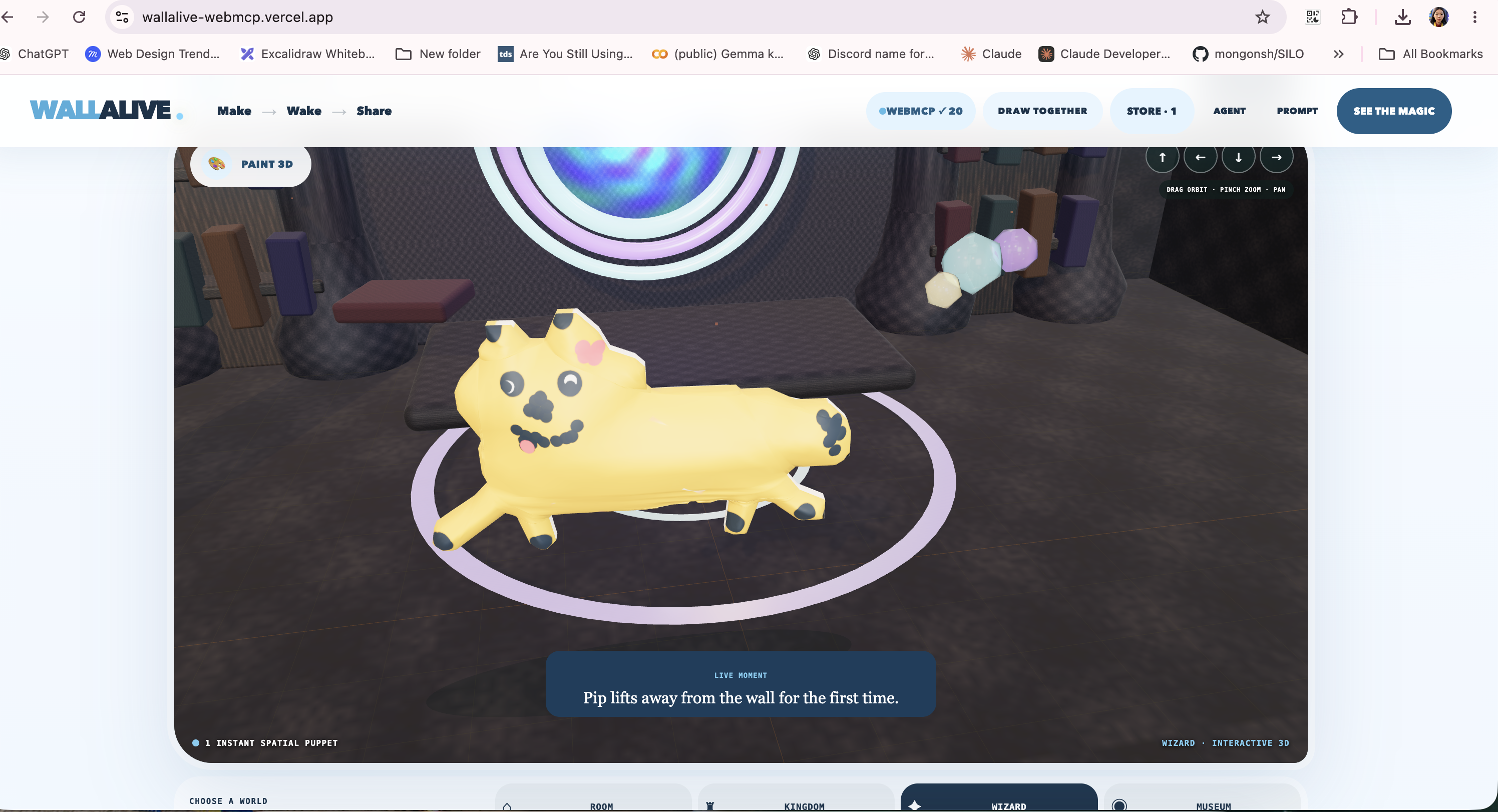
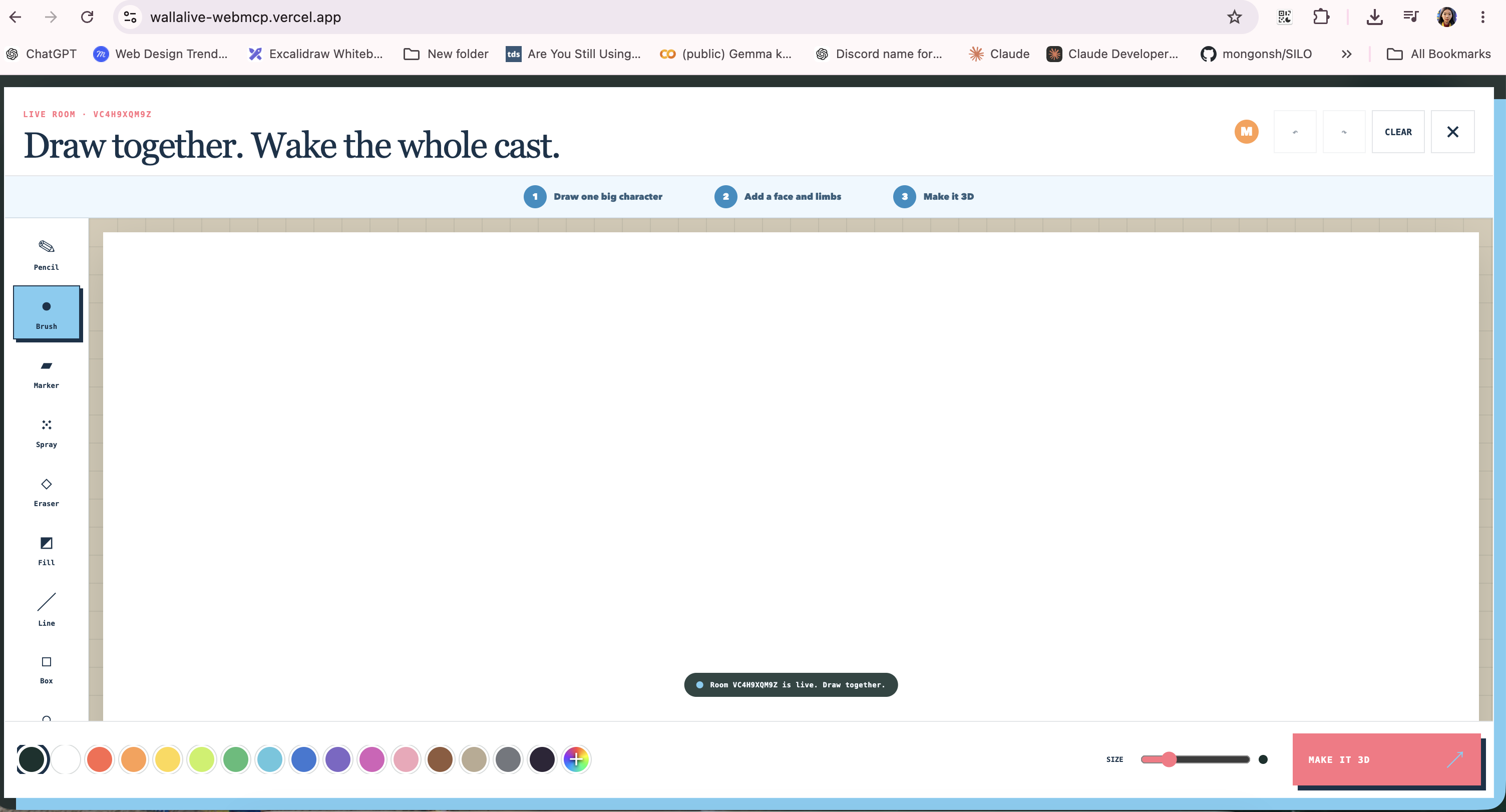
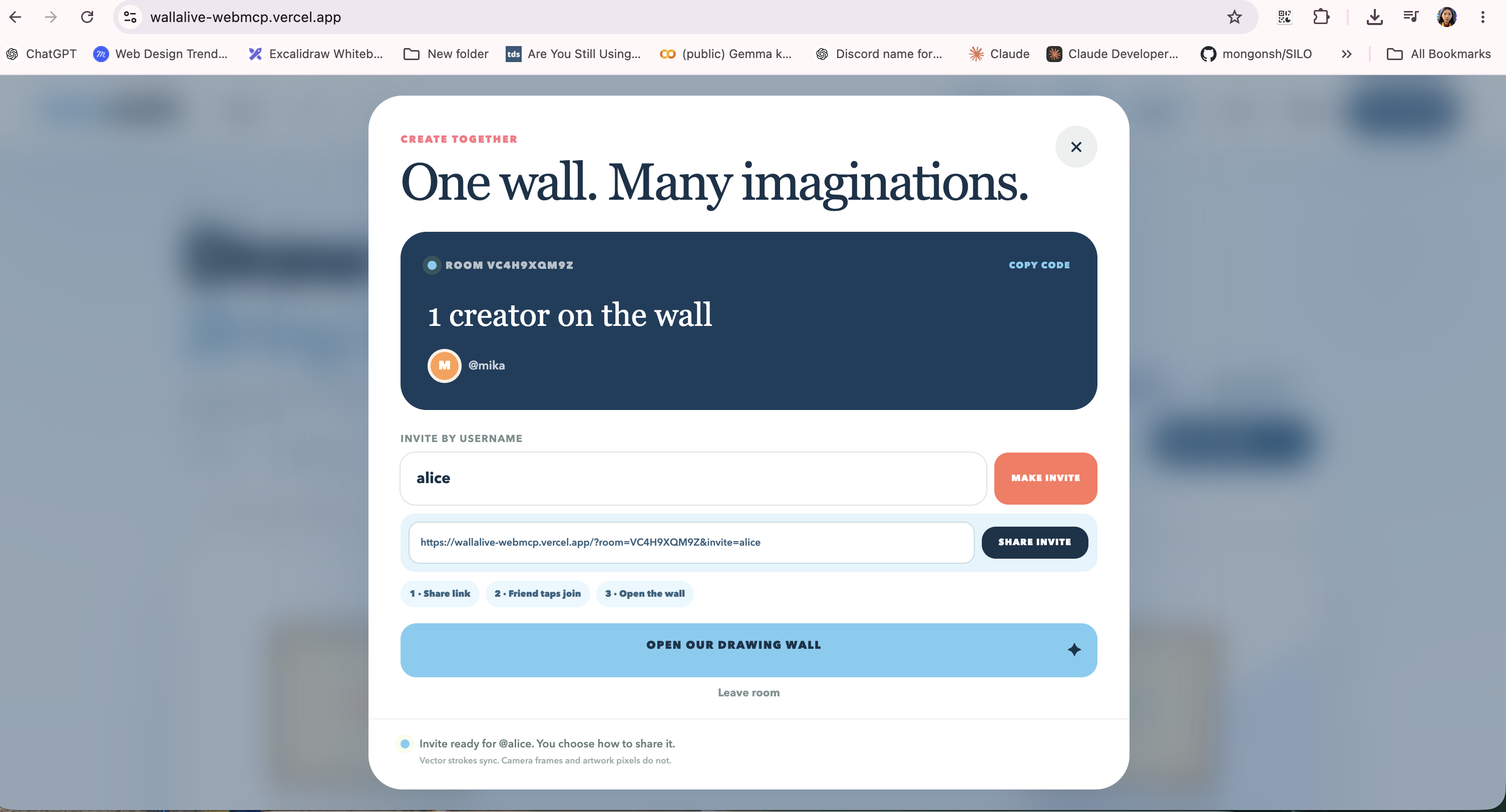
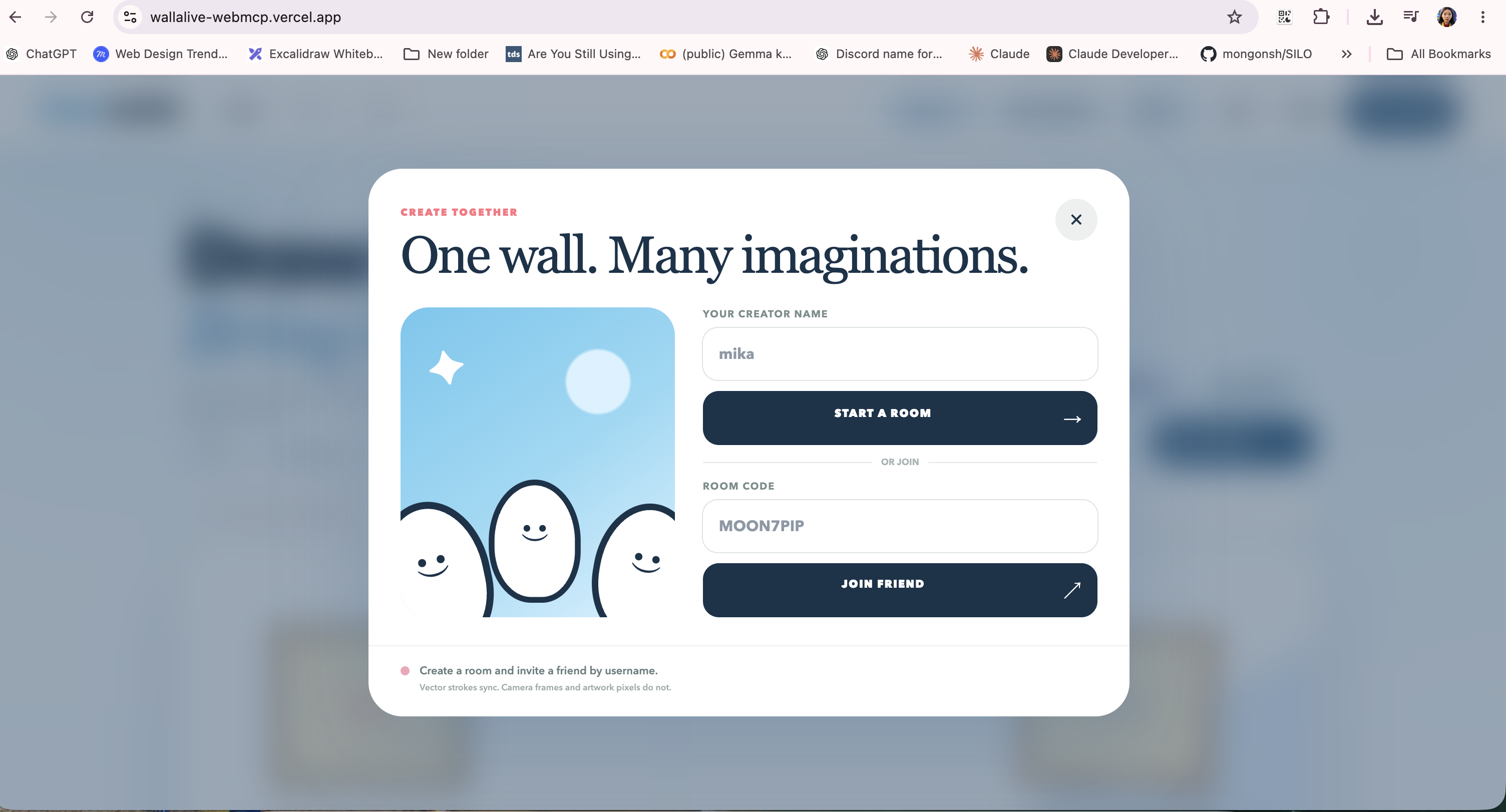
WallAlive turns a child’s drawing into a movable 3D character. A child can draw inside the app or photograph a paper drawing. WallAlive separates the character from the background, detects its visible parts, builds a movable rig, and places it inside an interactive, storybook, wizard, or museum world. Children can paint the 3D character with brushes, spray paint, oil paint, and colorful splashes. They can make it walk, dance, wave, and join stories with characters created by friends. A browser agent can help plan stories, suggest painting activities, inspect what each character can do, and prepare a creator collection. Children still control the creative actions, and an adult must approve any Shopify product draft.
How we built it
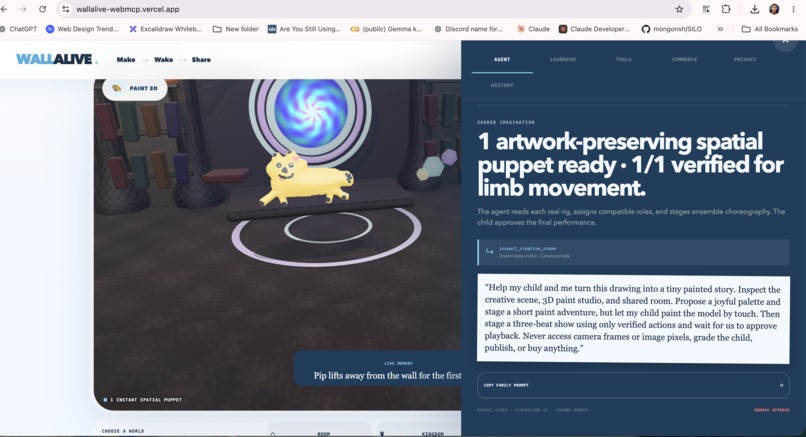
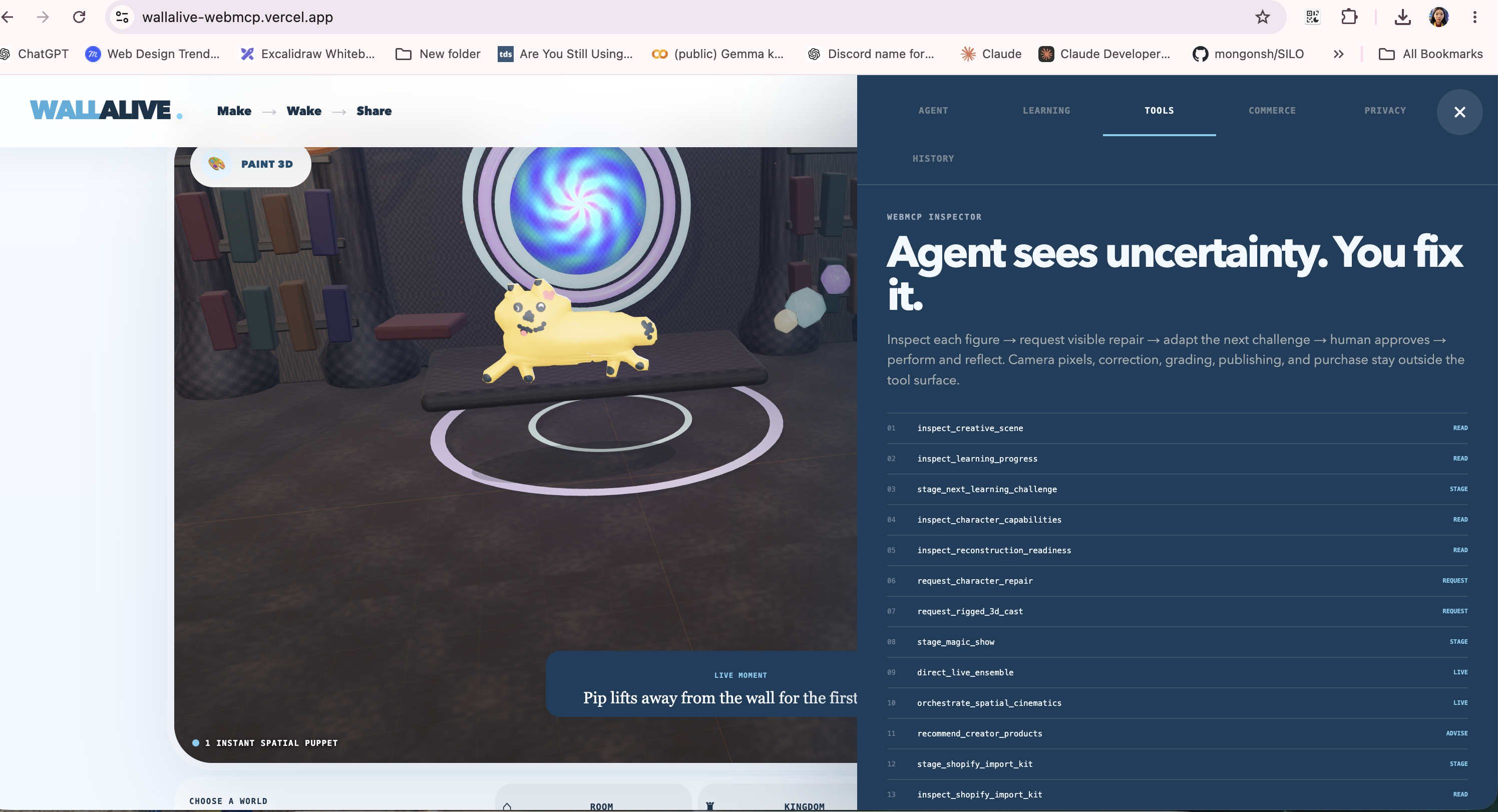
I used several small on-device computer-vision models for drawing isolation, face and body-part detection, pose estimation, and character topology. Three.js renders the characters, animations, paint effects, and interactive 3D worlds. WebMCP gives the browser agent structured tools for understanding the current scene and helping with the next step. The available tools change according to what the user is doing, such as drawing, checking the character, painting, storytelling, collaborating, or preparing a Shopify product. This makes the agent more reliable than asking it to understand the interface by guessing. Shopify’s API is used to read the connected catalog and create an unpublished product draft from approved artwork. Vercel hosts the public application, while Cloudflare D1 supports shared drawing rooms. I used Codex during development and gstack by Garry Tan to challenge the idea, review the experience, test the implementation, and find weak points.
Challenges we ran into
Turning a paper drawing into a believable 3D character was the hardest technical challenge. Real photographs contain paper edges, shadows, grid lines, handwriting, nearby objects, and sometimes several characters. Children also draw bodies in many different ways, so one fixed skeleton cannot work for every drawing. A single image does not show the back of a character either. I had to combine segmentation, pose estimation, learned topology, depth reconstruction, and a human review step instead of pretending every result would always be perfect. I also worried about whether WallAlive would be genuinely useful or only an interesting hackathon demo. I kept asking myself whether it solved a real problem and whether it was truly a good fit for WebMCP. Testing it with my daughter helped me find the answer that the value is not simply converting an image into 3D. It is helping a child continue creating, storytelling, collaborating, and learning from something they made themselves. Another challenge was using WebMCP meaningfully. At first, the app exposed too many tools and expected technical inputs. I changed it so the agent sees only the tools relevant to the child’s current activity and accepts natural requests such as “make a short wizard story” or “paint it with blue spray.” shop webmcp
Accomplishments that we're proud of
The moment I am most proud of was watching my daughter become curious about a character made from her own drawing. It was no longer just another game chosen for her. It began with something she created. I am also proud that WallAlive creates a complete journey that draw, check, build, paint, play, collaborate, and with adult approval prepare the artwork as a real Shopify product draft. Most importantly, the agent supports the child’s imagination without taking control of it.
What we learned
I learned that WebMCP is most useful when the person and the agent have different roles. The agent can inspect information, organize a story, recommend the next activity, and handle complicated preparation. The child should still draw, paint, choose, and play. An adult should remain responsible for publishing or selling anything. I also learned that art and technology do not need to compete. Technology can give a physical drawing another life while keeping the child’s original work at the center.
What's next for Wall alive
Next, I want to improve character reconstruction with more varied children’s drawings, stronger multi-character segmentation, and better movable rigs. I also want to add richer collaborative stories, more interactive worlds, classroom activities, teacher-created challenges, and safer parent controls. The longer-term goal is for children to build shared 3D exhibitions, stories, and small creator shops from artwork they made themselves not from premade characters someone else gave them.
Built With
- blender
- codex
- gstack
- shopify
- three.js
- typescript
- vercel
- webmcp

Log in or sign up for Devpost to join the conversation.