-
-
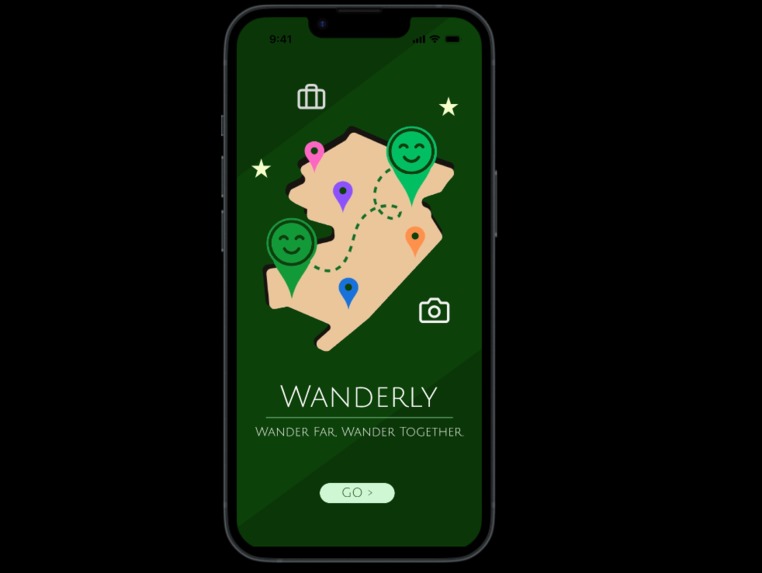
Home Page
-
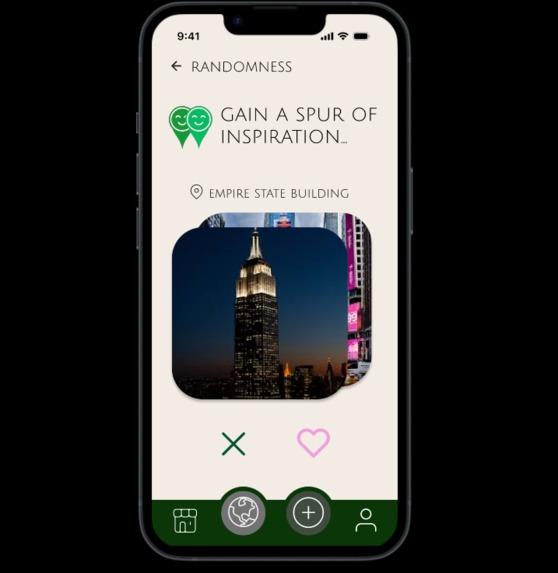
Randomness
-
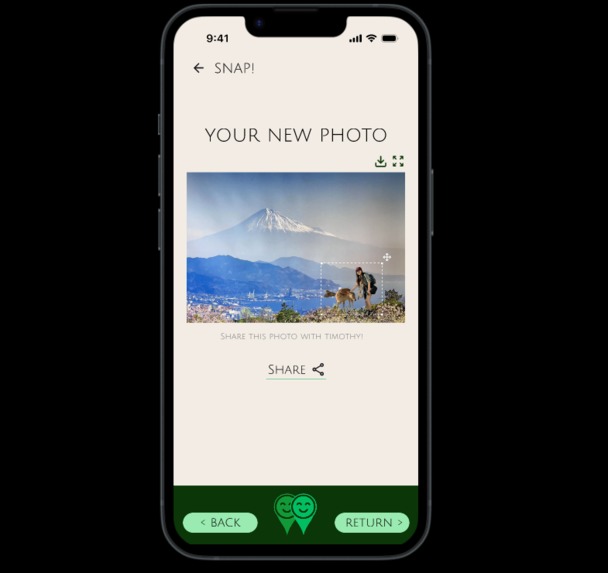
Snapshots
-
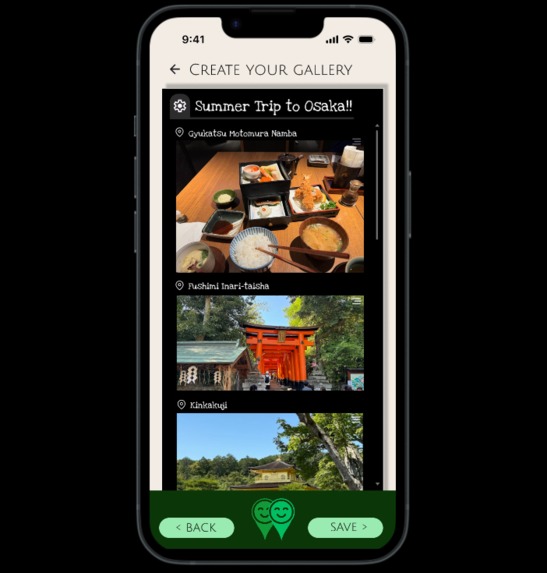
Your Gallery
-
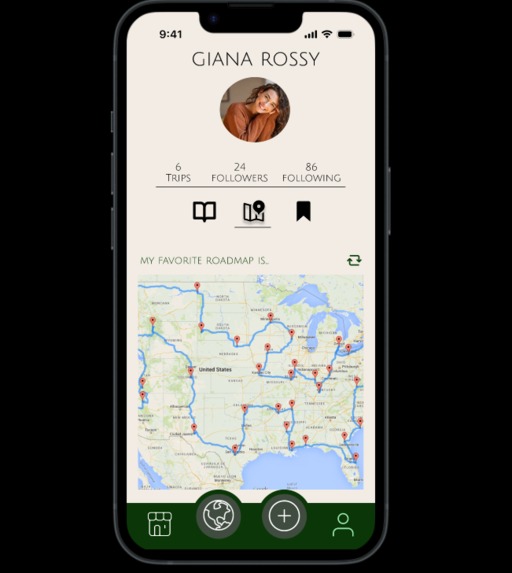
Interactive Map
-
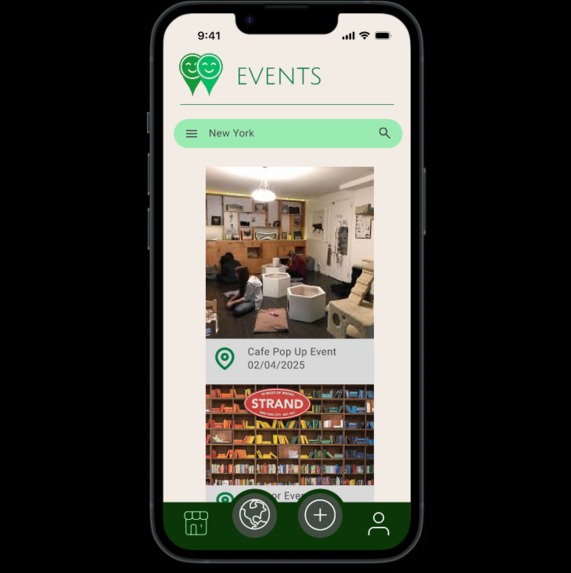
Local Events
-
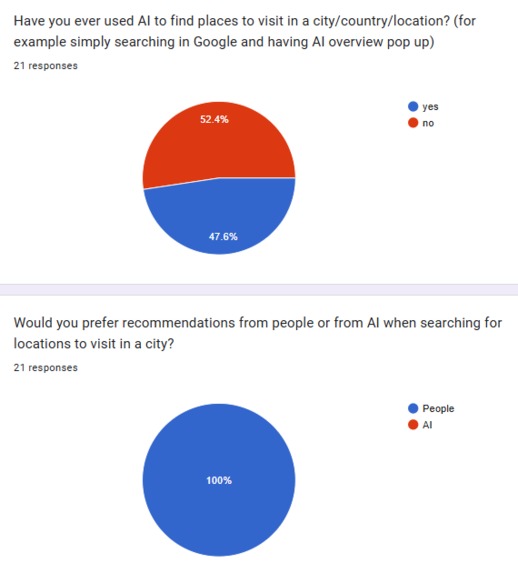
Survey 1
-
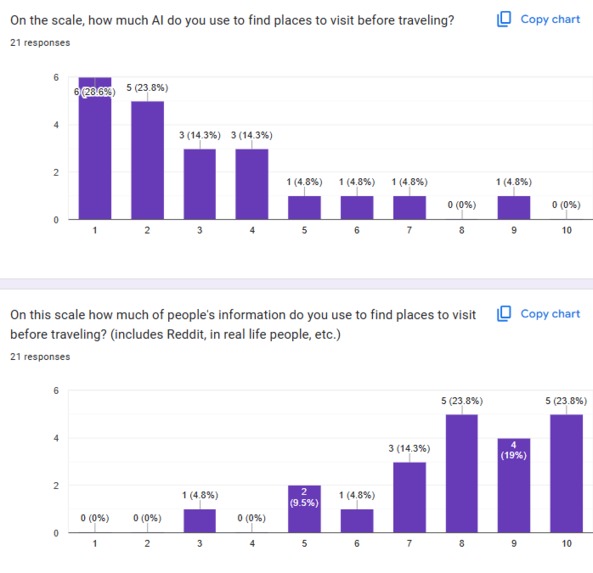
Survey 2
Prototype link:
Describe your project (max 150 words)
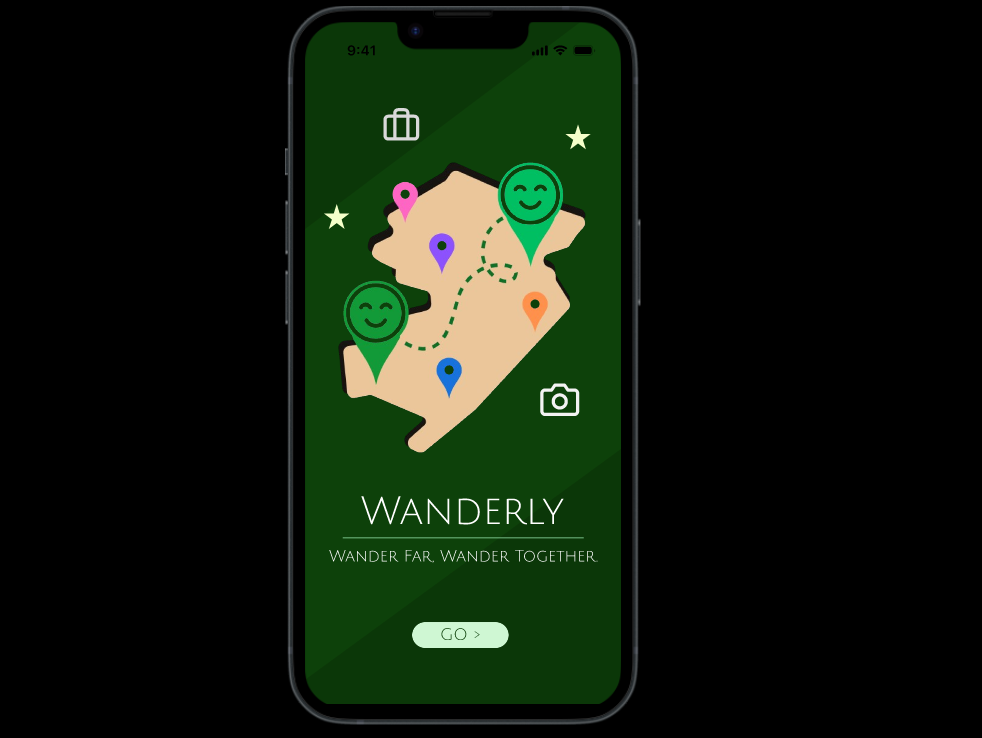
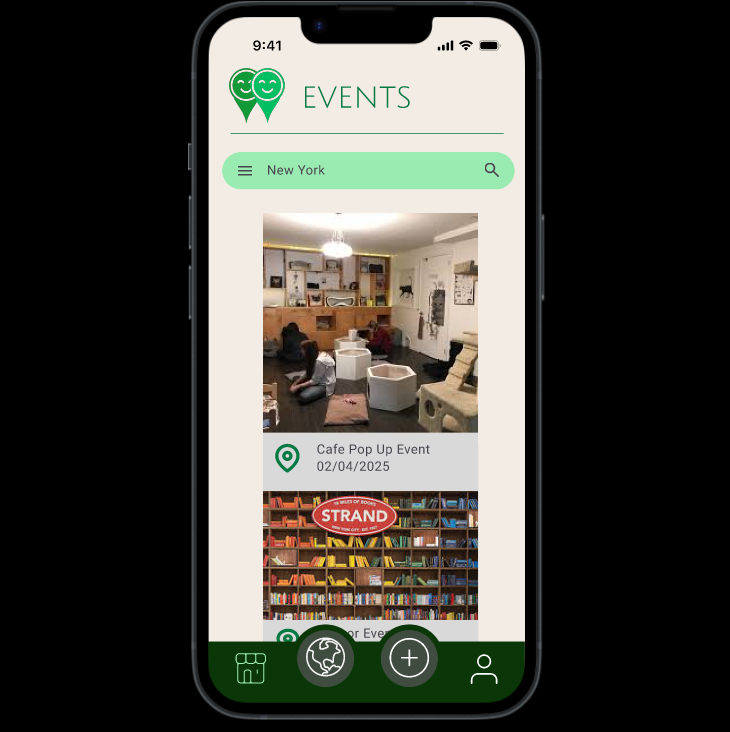
Unlike AI-driven, algorithm-based travel sites, Wanderly is a travel application that empowers real people to share their favorite destinations, hidden gems, and personal stories. Users can explore stunning landscape photos, read heartfelt recommendations, and connect with travelers. To combat the bias of human input, a randomness feature of photos is implemented so that you may receive some inspiration for your next trip. And to connect with your friends even more, a snapshot feature allows users to show up in someone else's photo! To gain a deeper insight and connect with local culture, locals can set up events for travelers to come and meet each other, both boosting community and economy.
The platform also features interactive maps, user-generated itineraries, and local guides to help you plan unforgettable trips. It’s more than just a travel tool—it’s a global community where travelers inspire and support each other.
By prioritizing human connection over algorithms, Wanderly reminds us that the best travel experiences come from the stories we share and the connections we make along the way. Join us and discover the world through the eyes of those who’ve lived it.
Describe your research process and findings. If you conducted any surveys or interviews, please include the survey form and/or interview questions here. If you conducted secondary research by pulling from online sources, please include a link to your sources. (Max 500 words)
In order to understand “remaining human in an age of artificial intelligence”, we first wanted to grasp the uses of AI for normal people who travel occasionally for vacation. We sent out a survey to a random sample of college students in a leadership organization with students ranging from 18-22 years old. In this form, we asked questions pertaining to the relevance of AI when searching for locations to travel to, as well as the pros and cons for asking humans for these travel tips rather than AI.
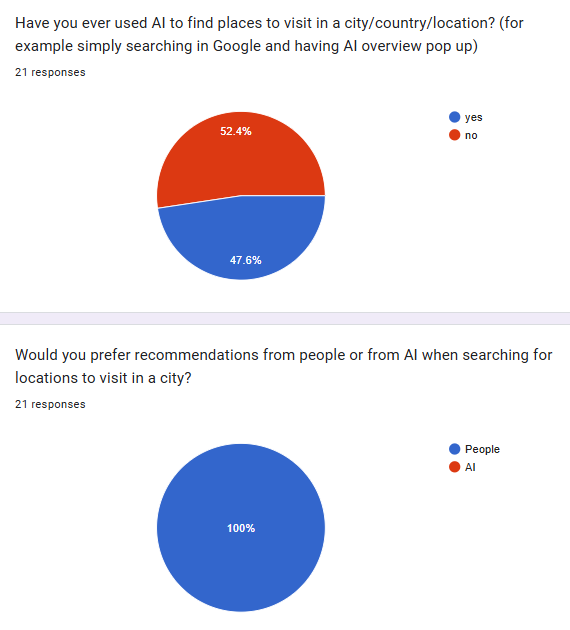
Firstly, our findings showed that around half (52.4%) of the participants rely solely on human knowledge to make decisions when traveling. The other half (47.6%) has used AI to ask for travel recommendations. This includes Google Overview, ChatGPT, and others.
Then, our results revealed that 100% of participants would rather ask humans than AI for recommendations on where to travel in a city. This was generally surprising, as these days, it is very simple to type in Google to see a curated list of travel locations for a location.
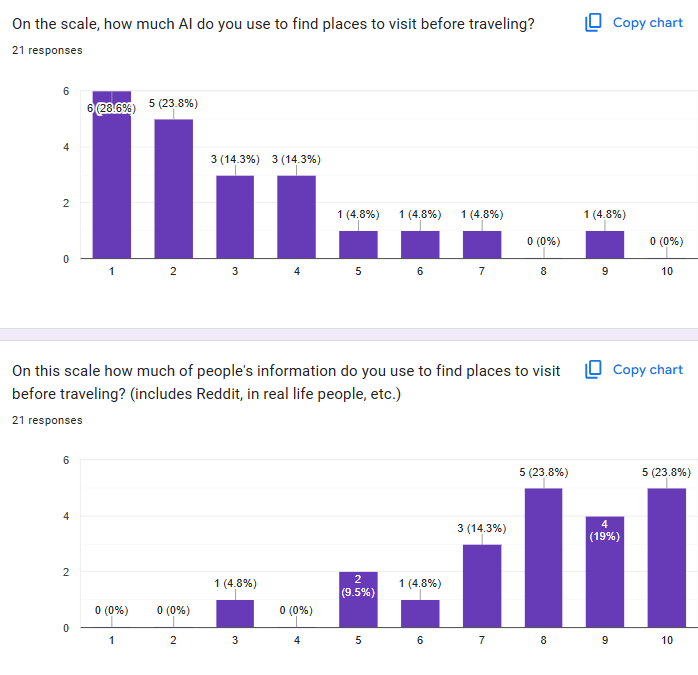
Through scaled graphs of 1-10, it was also revealed that generally, people tend to prefer not asking AI for help when traveling, instead preferring to ask others they know in real life or search up people’s experiences online.
The participants mentioned a few main benefits of asking real people for travel tips. In summary, these were the most popular answers:
1. Humans can attest to their own personal experiences while AI cannot. AI will provide more general information
2. Personalization comes from receiving advice from people who know you, therefore they can suggest places according to your preferences
3. Better to trust an original source than an AI who copies reviews. Humans have actually toured the areas, and AI has not.
4. Humans can give lesser known areas and “hidden gems” that AI may not be able to provide.
We also made sure to listen to the other side: What are the cons to asking humans for travel tips rather than AI? There was one answer that triumphed most others: bias.
1. Humans only have their own experience, their experiences could have gone badly due to a special circumstance
2. The people you know might not have gone to a place you want to go to, therefore you won’t be able to gain any information about that location
3. People’s personal experiences may not be the best at showing the full experience as it is very specific, AI can provide a summarized and generalized result
Overall, from our research, we discovered that there is a need for a pure user-based application where humans can interact with others during their travels, share photos, and see a natural flow of recommendations without the boost of artificial intelligence backing it with an algorithm.
Describe your most important design decisions. What research findings and/or user testing results led you to make these decisions? (Max 500 words)
Our findings revealed the overwhelming preference for human interactions and suggestions when it comes to finding places to travel. Thus, we propose Wanderly to be the camp of a cozy, aesthetic, and useful traveling app which satisfies the need for recommendations, the ability to give recommendations, and a warm travel community.
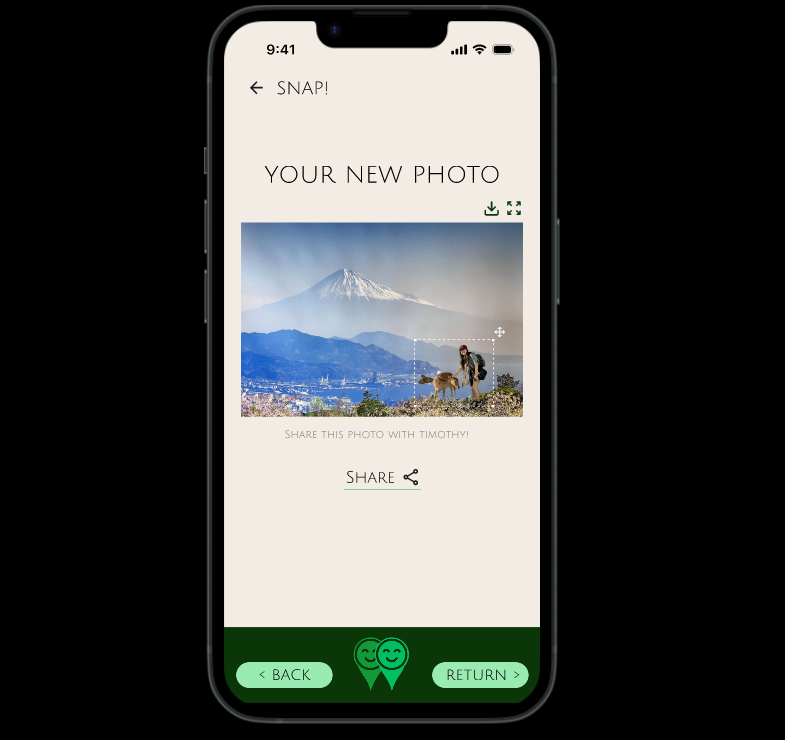
To satisfy the desire for personal human connections, we incorporated as many interactive elements as possible. One example is the “snapshots” feature. If you visited the same location as your friend, you can take a “snapshot” with your friend and share a photo together, even if you two did not visit the location at the same time! This is done using AI but it is a fun easter egg that you can share with your friends after you insert yourself into their photo.
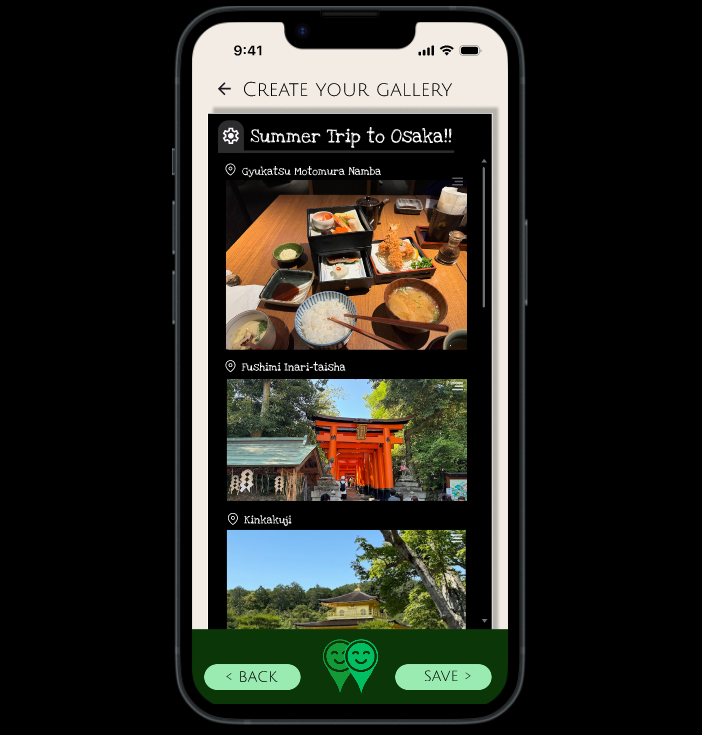
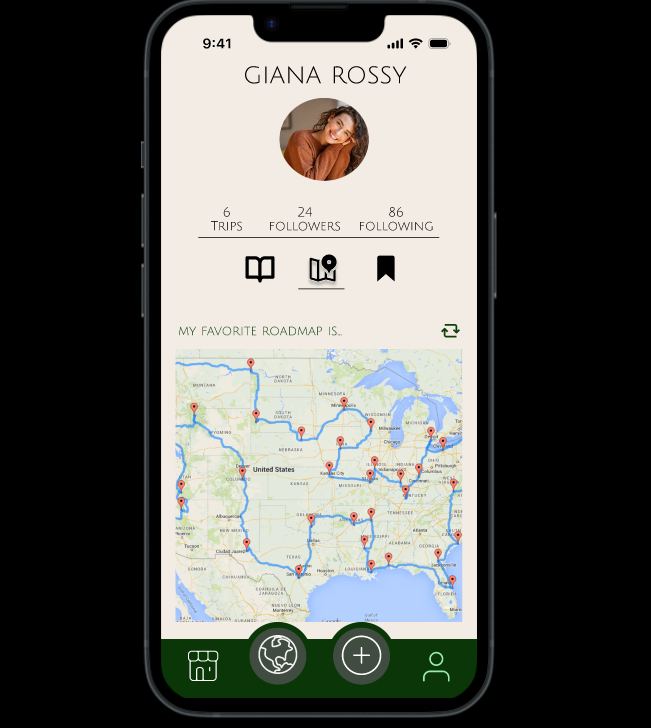
Other features we decided to add include personalized photo galleries so that one may share them with the world if desired, and a map which shows your personal route that you took during a trip. Our survey reminded us that humans can provide extremely detailed and personalized information regarding their trips, so these two functionalities are meant for users to express any information that may be useful. The map serves as both an aesthetic visual for users to scroll through, and as an itinerary for a certain trip. The photos are the main source of information for users to express their favorite locations during a trip.
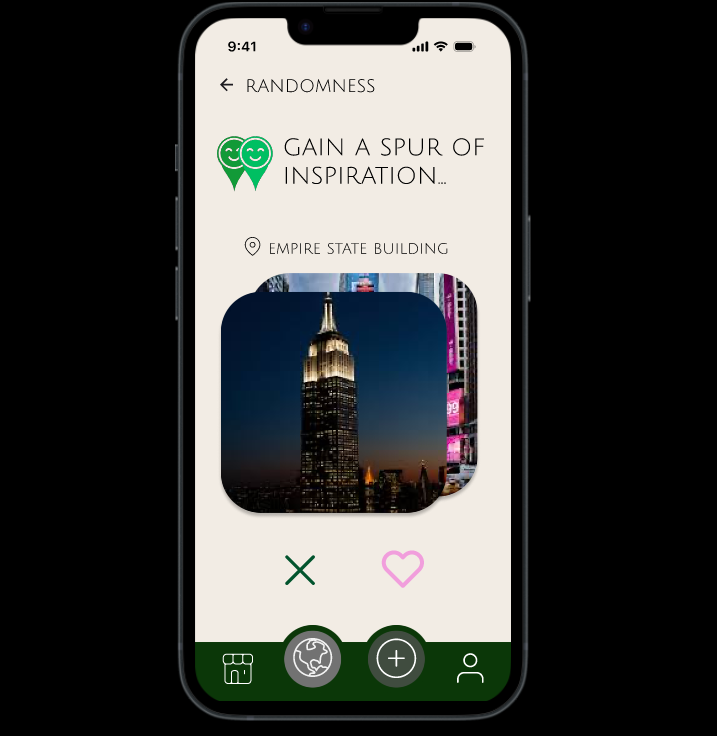
Our findings revealed that bias is the main source that makes people stray away from asking other humans for traveling suggestions. In order to combat this, we decided to implement our main feature, “randomness”. Users may go onto the “randomness” page for their selected location and see a chain of completely randomly selected photos from anyone’s (who deemed their gallery to be public) gallery. Here, they can contribute to the user-based feed by liking the locations they find intriguing, or otherwise swiping left.
Randomness combats bias because people will no longer simply recommend their top spots due to their own personal experiences. Additionally, creating this Tinder-like swiping page gives users a chance to find lesser-known locations, which was much desired by the participants of our survey.
However, we still decided to implement a list of the most popular locations/photos. This gave users the choice to either be "random" or find a list similar to how AI would generate information, but still 100% user-made. Our survey did reveal that the main benefit of using AI was because it captured a very generalized list of information. This page was meant to simulate the biggest use of AI by creating a generalized, popular, locations page.
Built With
- figma

Log in or sign up for Devpost to join the conversation.