Inspiration
Walkability plays a big factor in many people's decisions as to whether or not to live somewhere, especially with younger populations. College campuses, for example, tend to be very walkable, which improves quality of life for college students. I was curious whether or not this translated into any noticeable change in the populations of cities that was provided in the Social Science dataset.
What it does
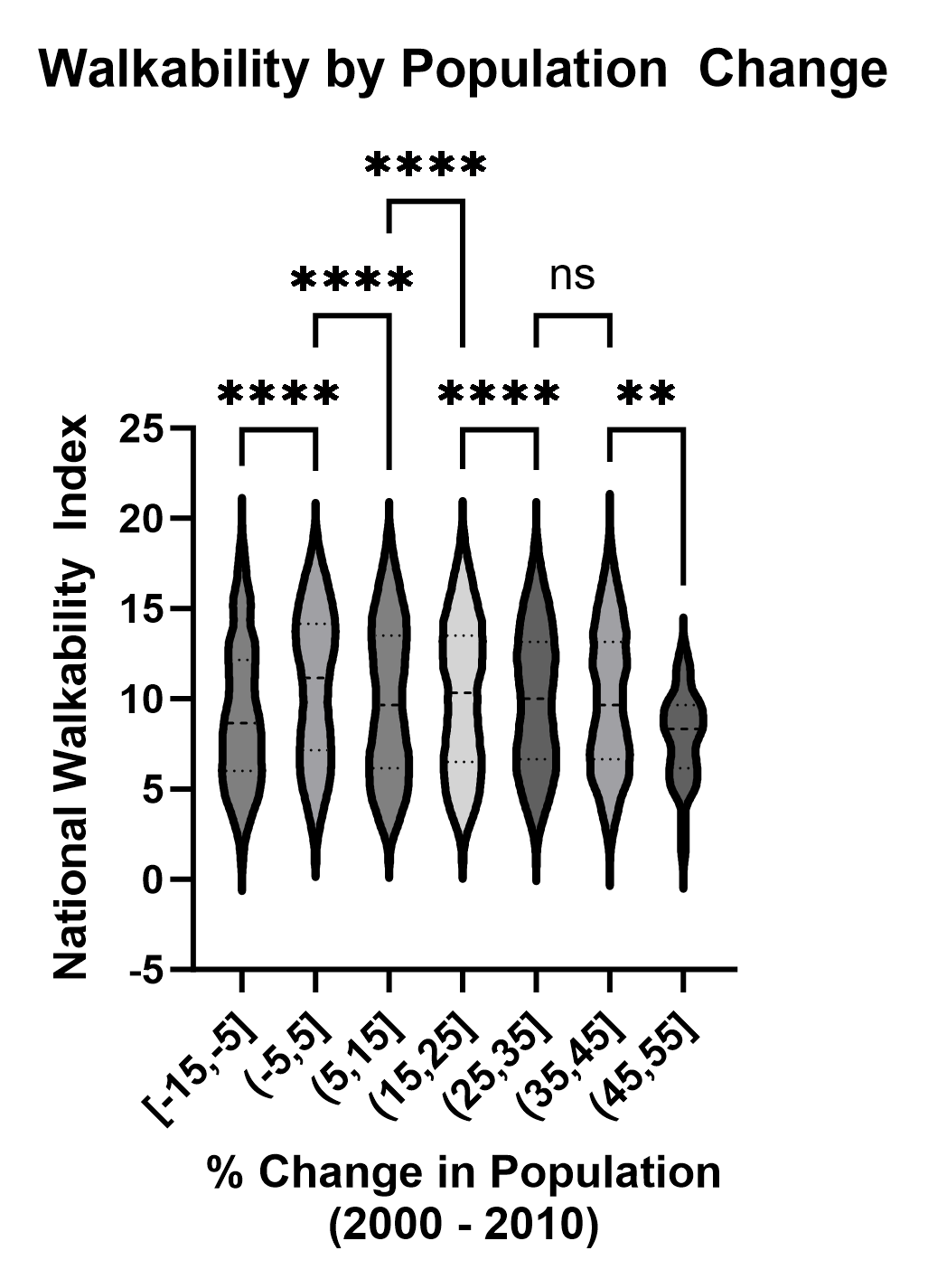
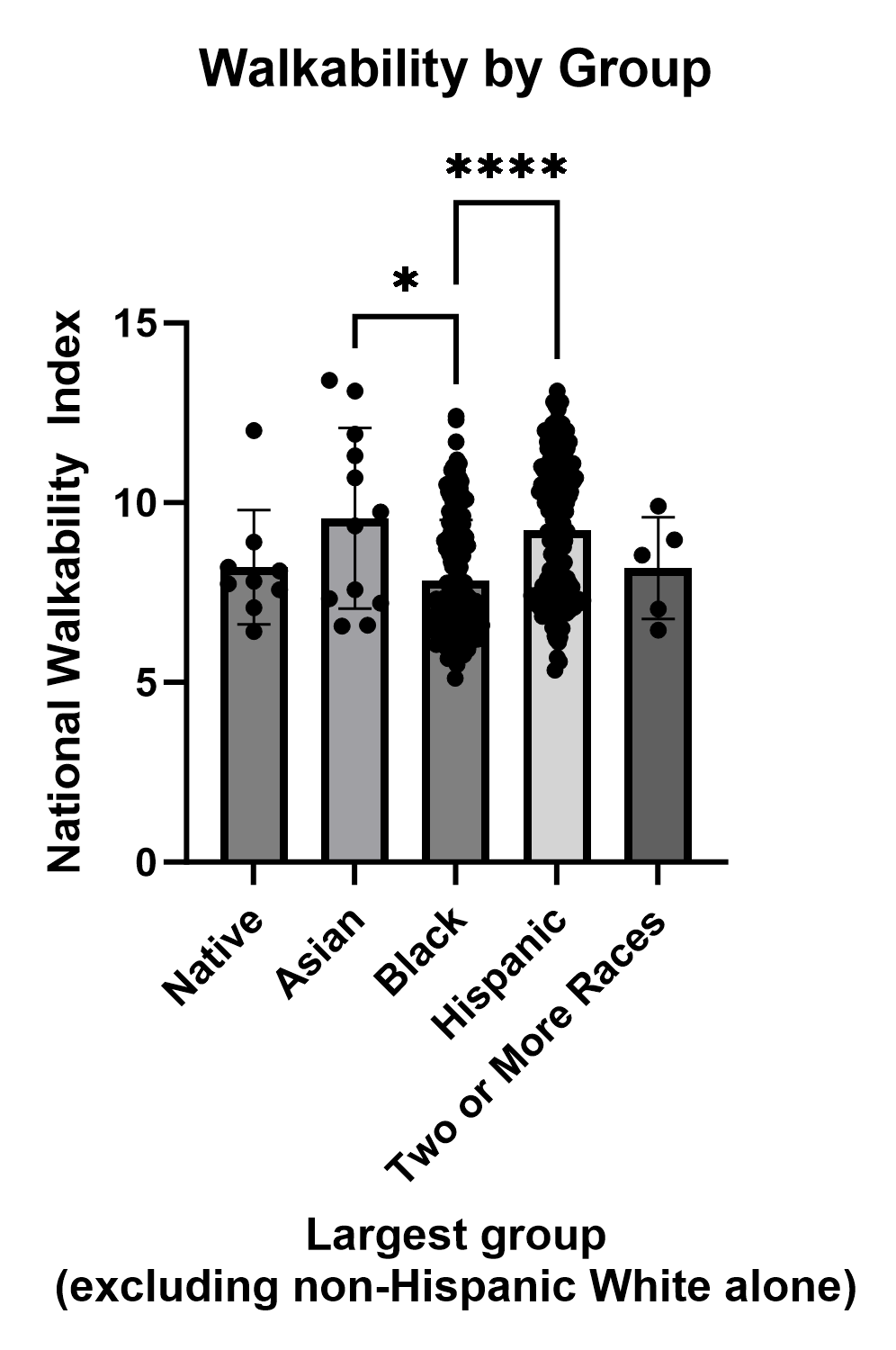
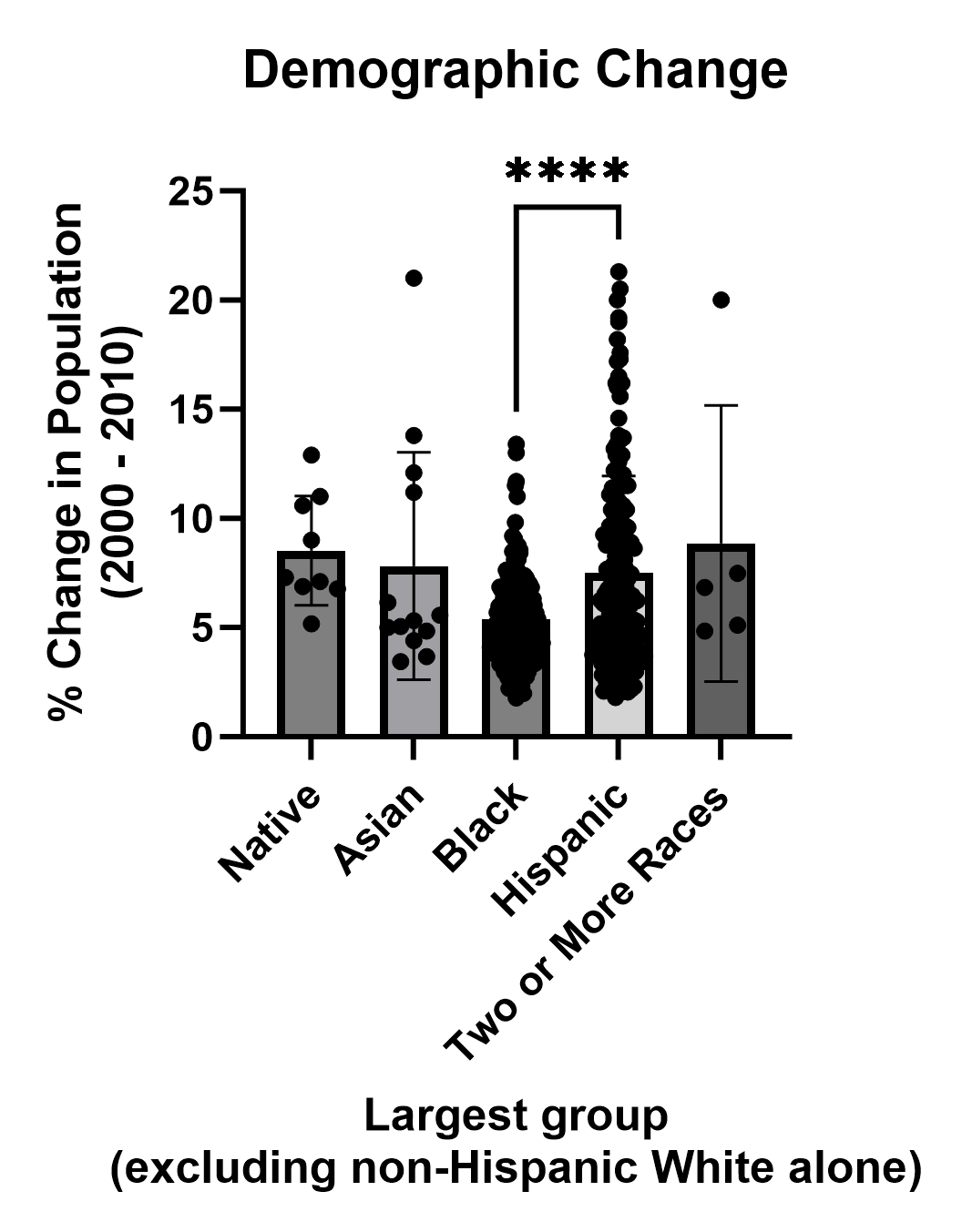
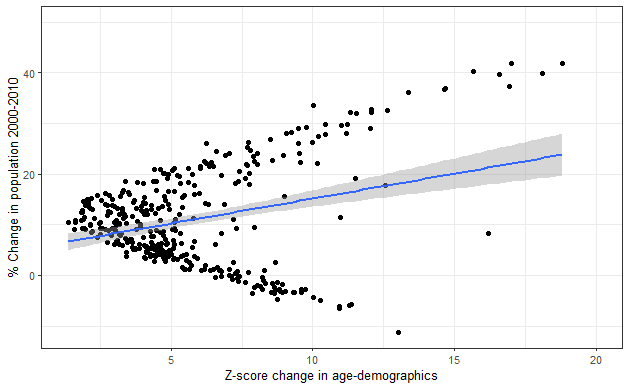
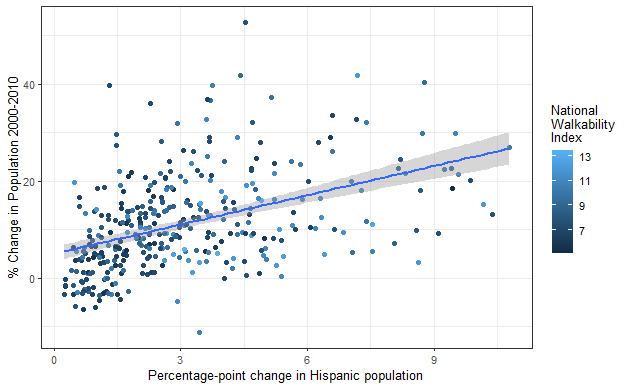
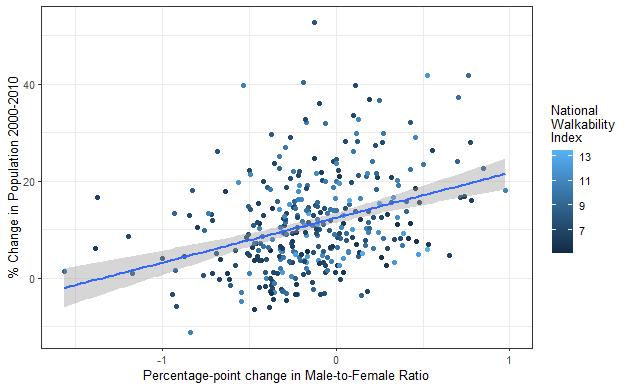
I analyzed correlations between racial demographic changes, age demographic changes, and the EPA's National Walkability Index as well as the total % change in population to see whether or not walkability played any actual role in driving demographic change.
How we built it
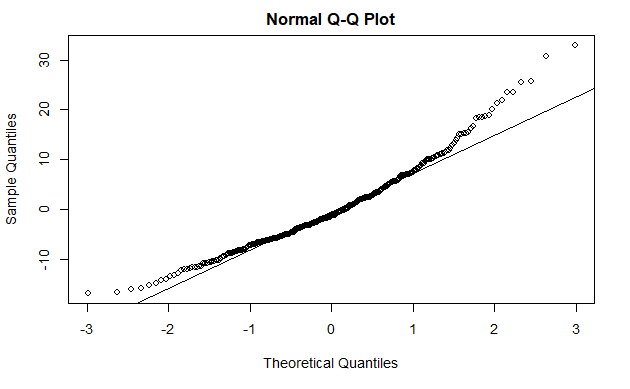
Using RMarkdown and ggplot to visualize most of the data, and some use of Prism to determine significance.
Challenges we ran into
I had work obligations that left me with very little time to complete the project, which prevented me from doing anything particularly advanced to analyze the data.
Accomplishments that we're proud of
The amount of analysis for the time provided seems to be pretty good, and I was able to come up with a good story about how walkability is related to demographic change.
What we learned
For all the hype about walkability online, it doesn't seem to be a particularly strong predictor of overall demographic change, but there are relationships between certain demographics and walkability that indicate societal problems that may need to be addressed.
What's next for Walkability and Demographic Change
Dive deeper into the causes of demographic change and how walkability may be related to these things on a smaller scale rather than a city scale. Other variables factoring into walkability, such as intersection density and job availability, could also play a role in this.
Built With
- prism
- r


Log in or sign up for Devpost to join the conversation.