

NSPIRATION
It started with a walking pad. I bought one, the steps started piling up, and I immediately wanted two things no app gave me together: a way to compete and share daily steps with my teammates, and a reason to actually look forward to tomorrow's walk.
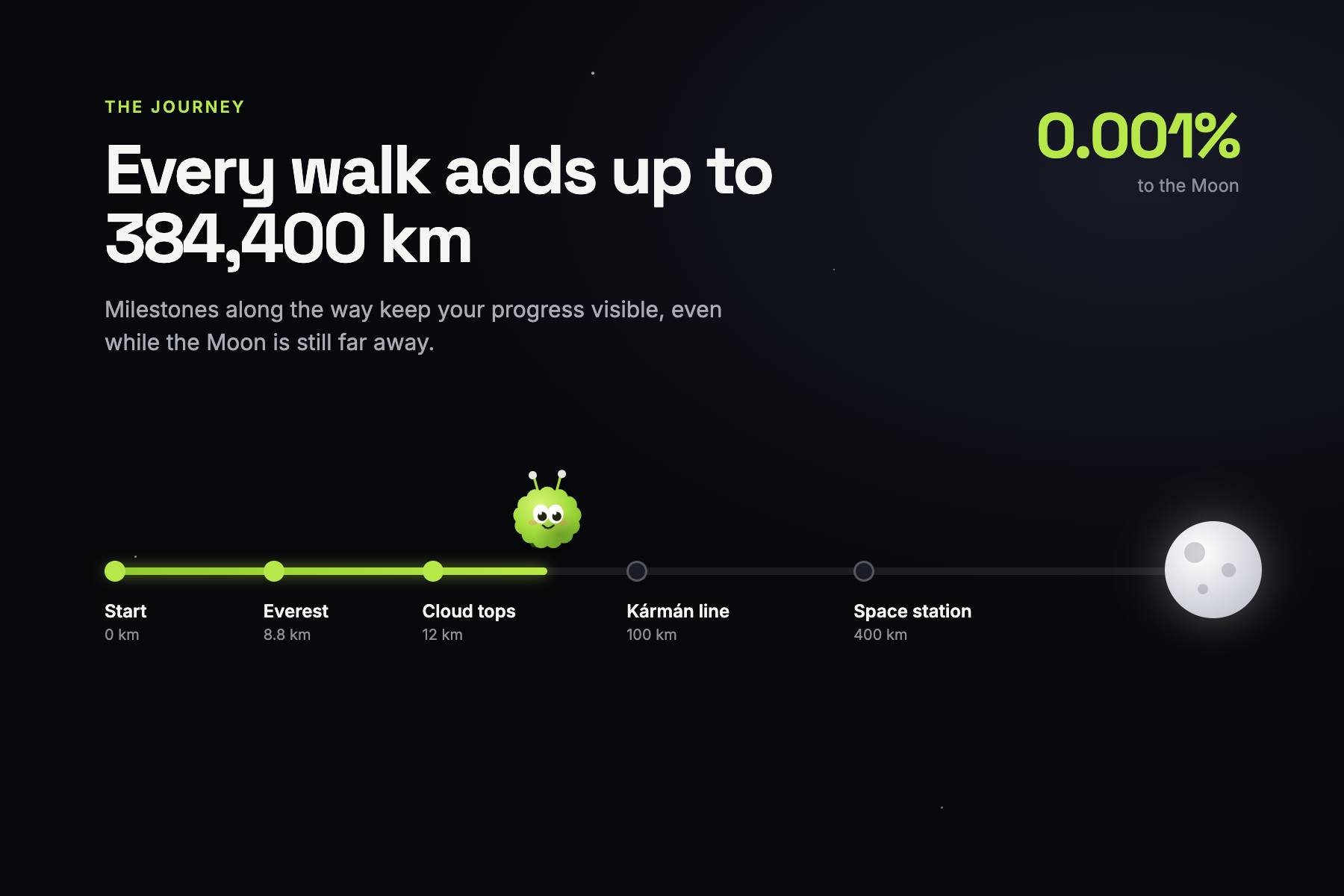
The competition part was easy to imagine: friends, crews, leaderboards, head-to-head races. The fun part arrived as an absurd number. The Moon is 384,400 km away, which works out to about 512 million steps. Half a billion. Nobody walks that alone. And instead of ruining the idea, that number became the idea: your everyday steps carry you past real places at their real distances (you've climbed the Eiffel Tower before lunch, matched Everest by the weekend, left the atmosphere eventually) and the Moon itself is reachable the only way it should be: together, with your crew pooling every step toward it.
The last piece was wanting a coach, not a counter. Something that noticed what I was actually doing and raised the bar when I'd earned it, instead of a plan that climbs on a calendar whether you showed up or not.
WHAT IT DOES
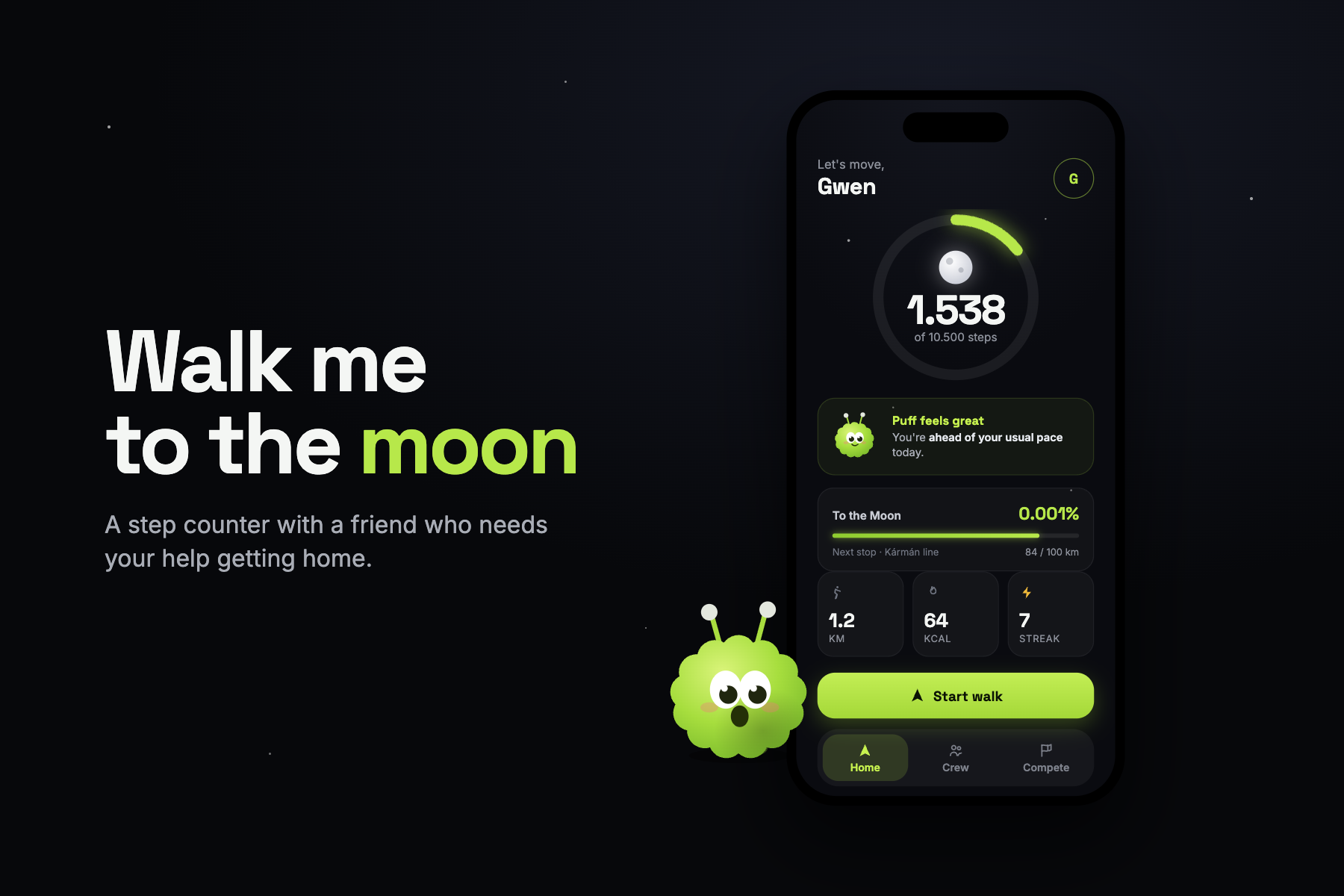
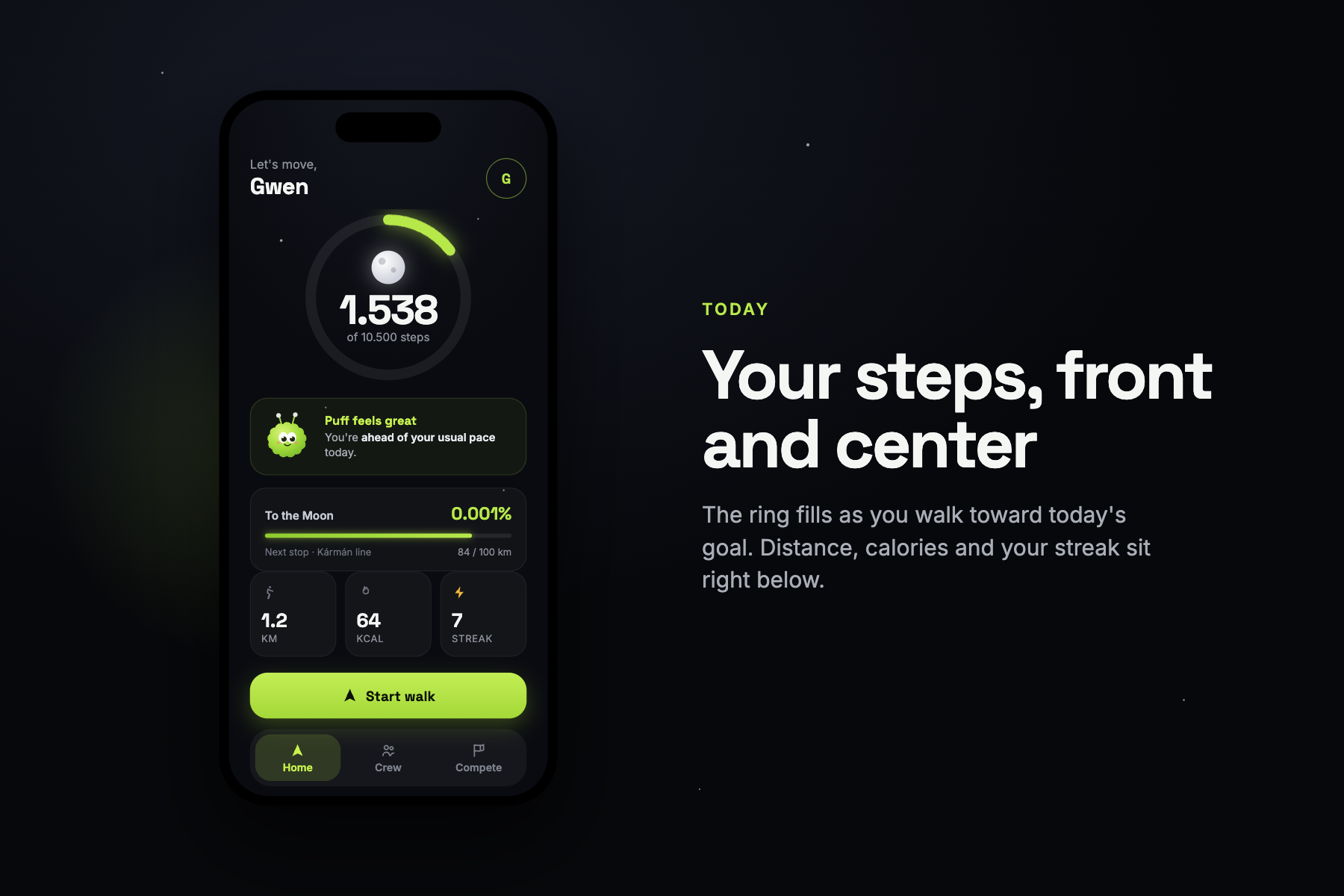
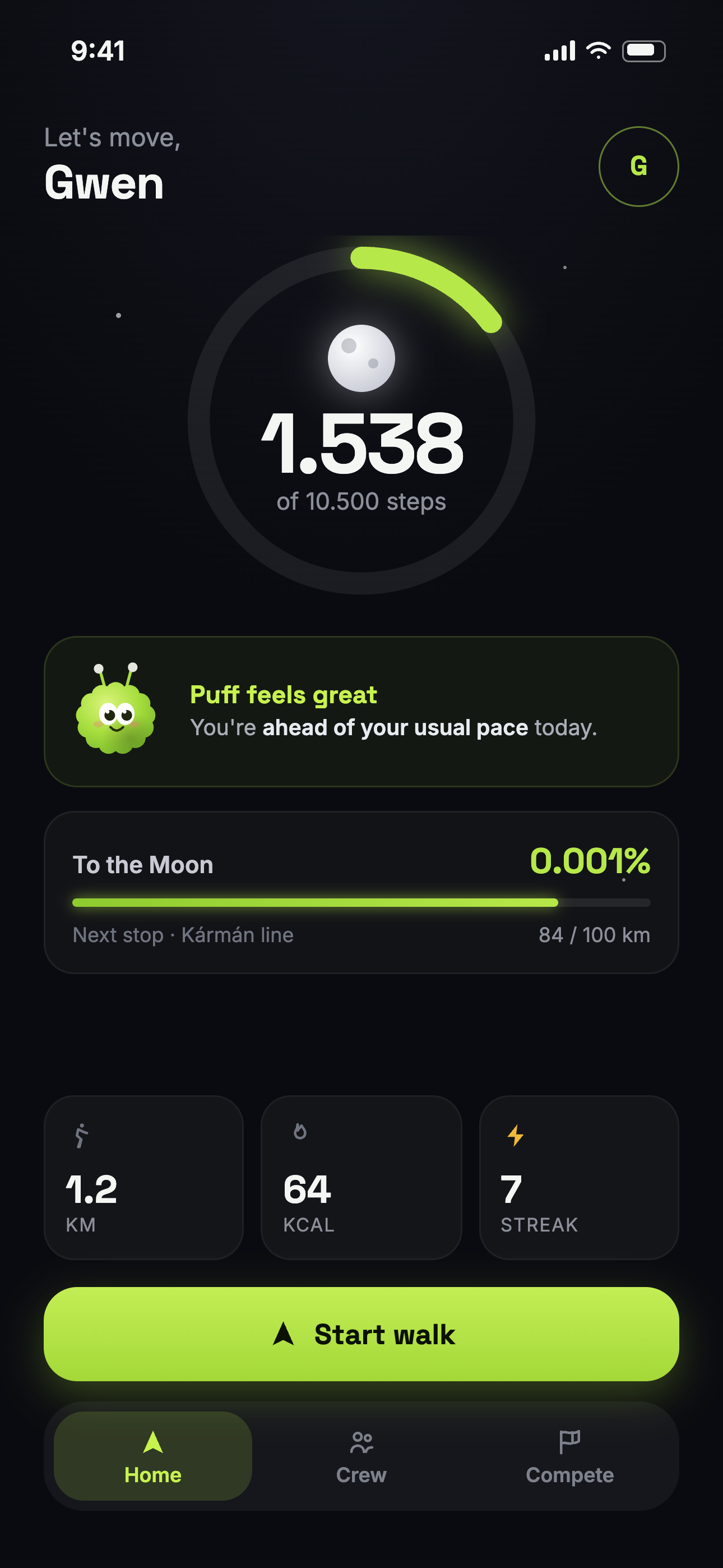
Walk Me To The Moon turns the steps you already take into one long journey through space. Nothing to log, nothing to remember: your phone counts, the path moves, the Moon gets nearer.
Along the way, almost every walk unlocks something real. Landmarks sit on the path at their true distances, and once you set your home base, the journey fills with places you actually know: the next town over, the coast, the border, the country beyond it. Each one becomes a collectible card with a metallic foil finish that shimmers as you tilt your phone, rarer the farther you walked to earn it.
Then there's everyone else. Crews pool their steps toward one shared Moon. Crews race other crews and watch the bar swing all week. Streaks respect your life: hit your own target, and a full week banks you a rest day, so one bad Tuesday can't erase a month of work.
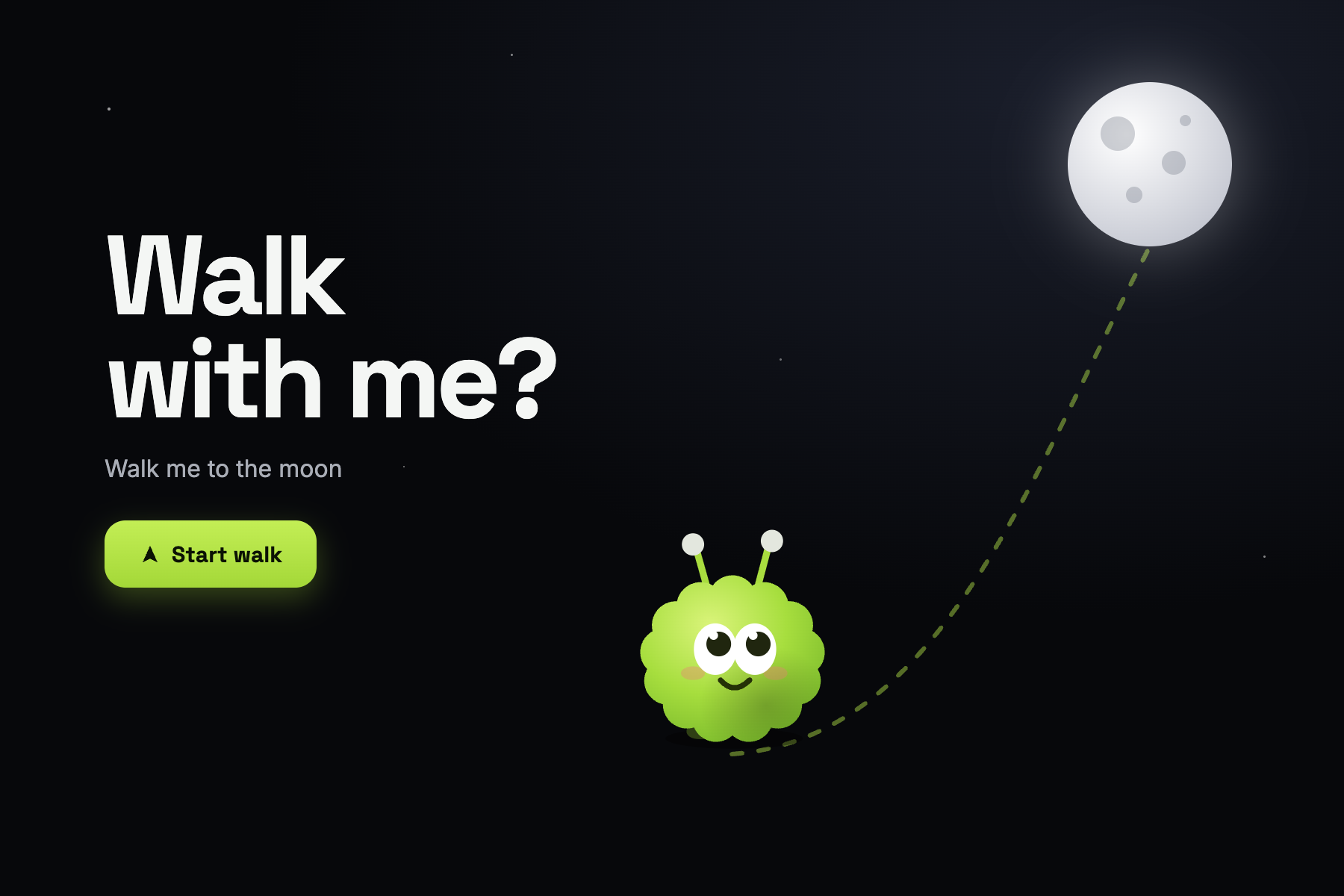
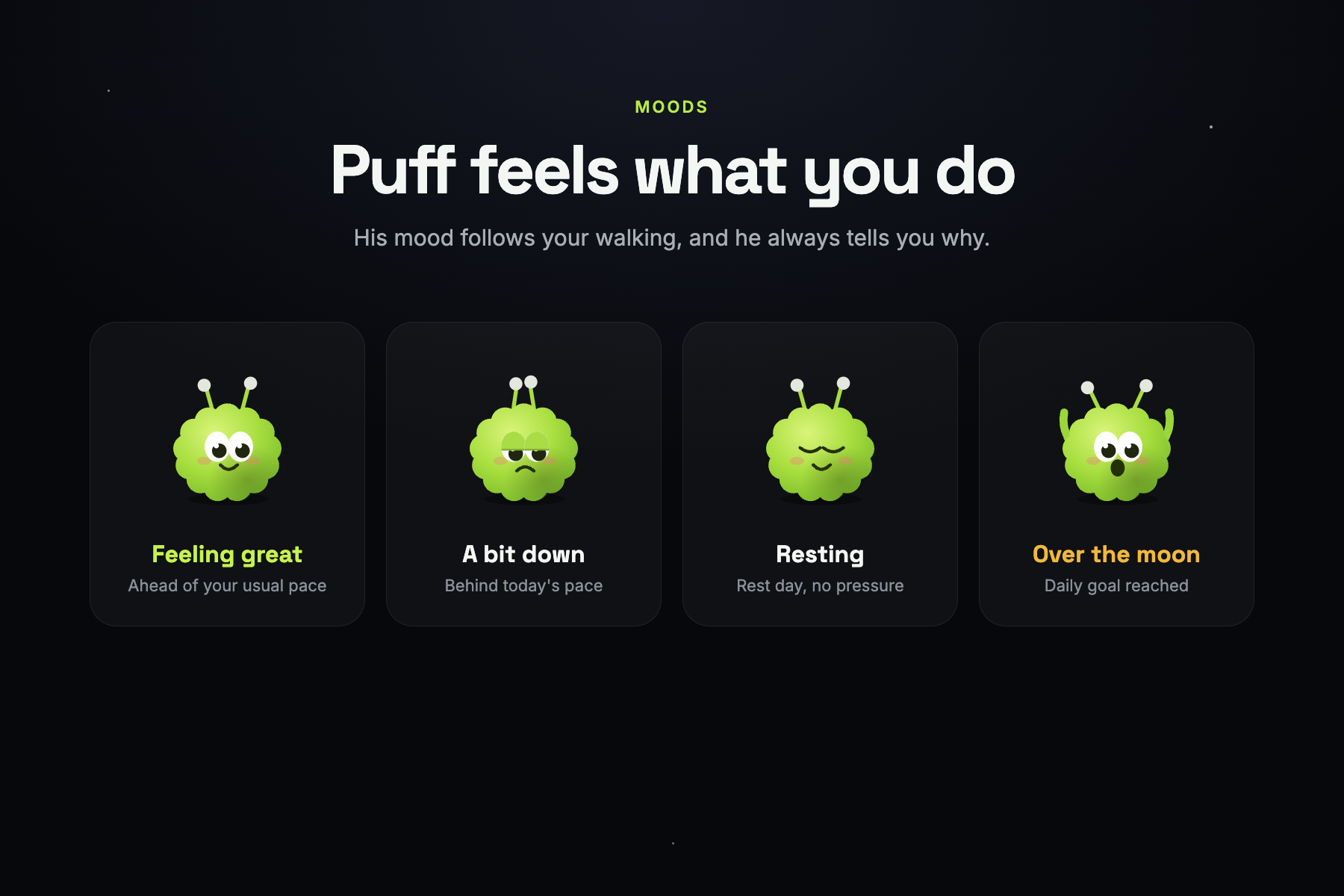
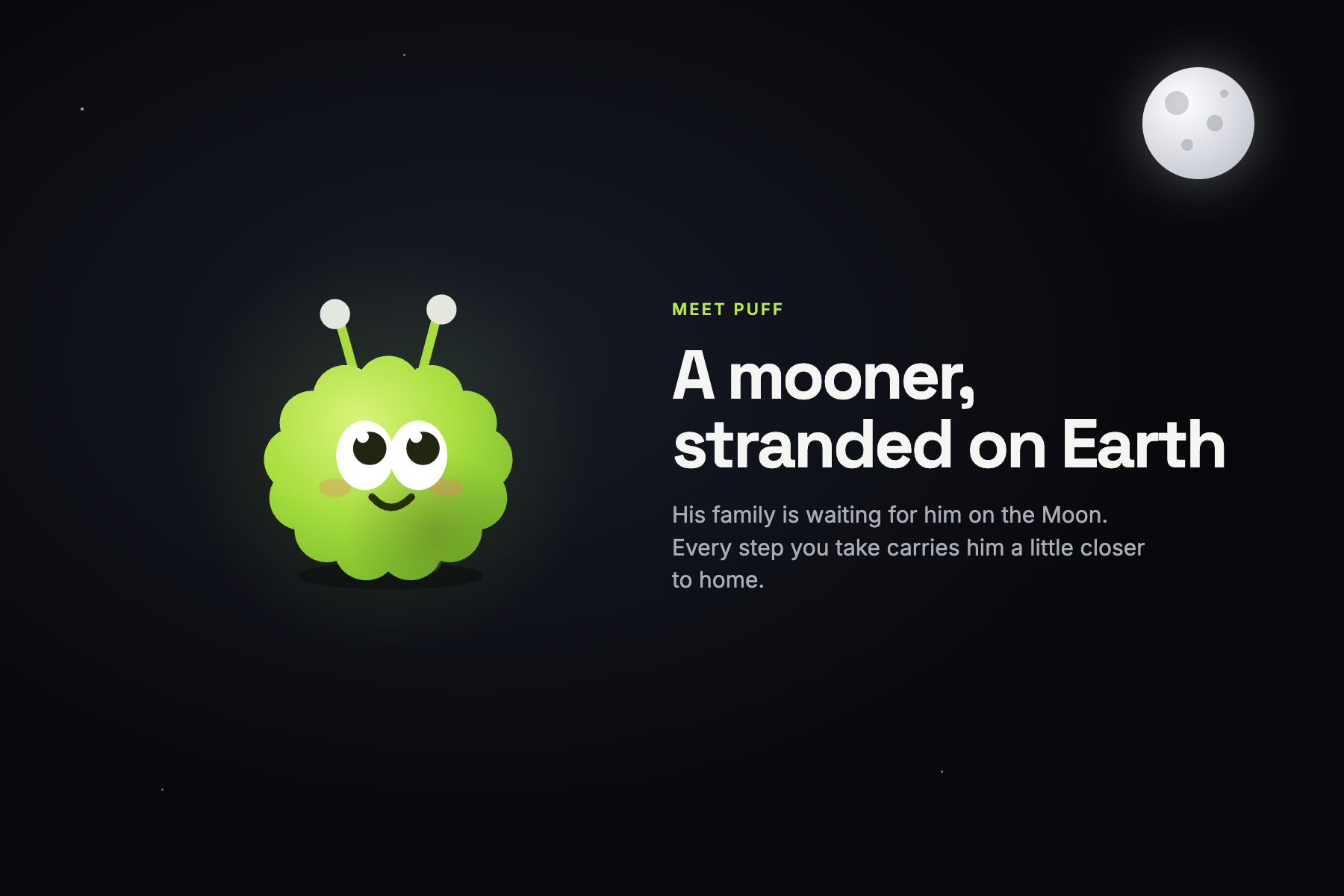
A small creature named Puff, stranded on Earth and homesick for the Moon, lives on your home screen. You're walking him home. He glows on the days you move and droops on the days you don't, and somehow that's more motivating than any notification I've ever received.
And the coach? It learns how you walk (when, how fast, how hard) and shapes each week around the real you. Tell it your knee's been sore, in your own words, and the plan eases. The free plan moves on a calendar. The coach moves on you.
HOW I BUILT IT
Everything is native iOS, built to feel like it belongs on your iPhone: the glassy look of iOS 26, a live card on your Lock Screen while you walk, widgets where Puff keeps you honest. Steps come straight from Apple Health, plus a dedicated indoor walk mode that exists purely because of the walking pad that started all this. Treadmill steps deserve full credit too.
The journey is honest geometry: your distance is a growing circle around your home, and a place unlocks the moment your circle reaches it. Measured for real, on a real map of about 31,000 cities and every country border, all stored on your phone. No faking, no rounding in your favor. When the app says you've walked to France, you've walked to France.
The cards use the same rendering tricks as console games to get that brushed-metal and holographic sheen, and they turn in 3D under your finger. The coach runs on Apple's on-device AI for understanding and explaining, but a strict rule sits underneath: the AI never sets your target. Clear, predictable rules decide the numbers; the AI just makes them human.
CHALLENGES I RAN INTO
Apple's maps had no idea what a city is. My first version filled the journey with campgrounds and marinas. "You passed a municipal park" inspires no one, so I threw out the API and shipped real open map data inside the app instead. Now it's Paris, Marrakech, Tokyo.
One number quietly poisoned everything. I assumed everyone's step is 0.75 metres. A tester's was 0.66, so every distance she saw was 14% too long, and so was her entire journey. Now the app learns your stride from your own history, and corrects itself without ever yanking your progress backwards.
Apple Health remembers everything. My phone's old history made me "7.5% of the way to the Moon" after 191 steps. Felt amazing. Completely unearned. The journey now starts the day you install: nothing you didn't walk for.
My coach was accidentally mean. It assumed steps spread evenly across the day, so anyone who walks after work got told they were "behind" all afternoon. Guilt for something they didn't do wrong. Teaching it that evening walkers exist was a bigger lesson than any crash ever taught me.
WHAT I LEARNED
Honesty is the best game mechanic I found. The app never pretends the Moon is close (it prints your real 0.005% proudly) and that's exactly what makes each landmark feel real when it lands. I learned that a tone rule only exists if a test can fail over it: the coach's copy is automatically checked so it can never shame you, because the person who most needs a coach is having the hardest time. And I learned that fixing a bug isn't enough. The fix only counts when the words the user actually reads change too.
WHAT'S NEXT
More rewards packed along the path so every single walk ends in one, launching the coach, and the Android version, so no teammate gets left off the crew.
Built With
- ios
- supabase
- swiftui


Log in or sign up for Devpost to join the conversation.