-
-
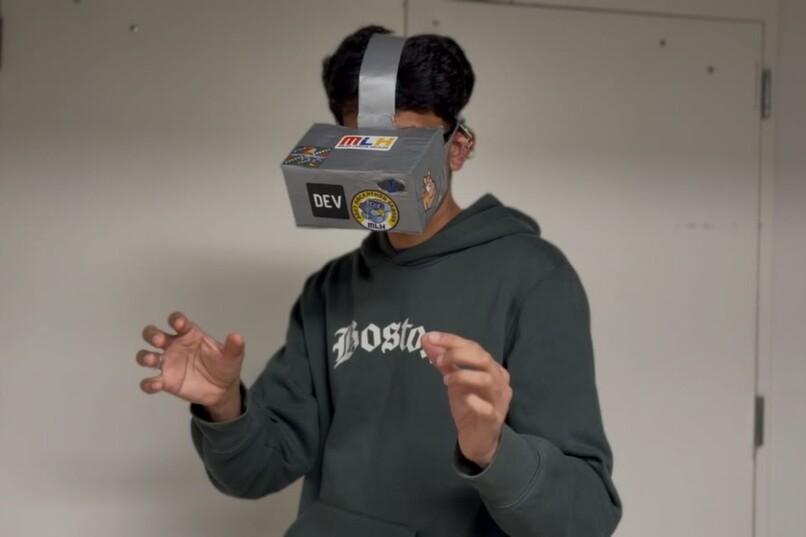
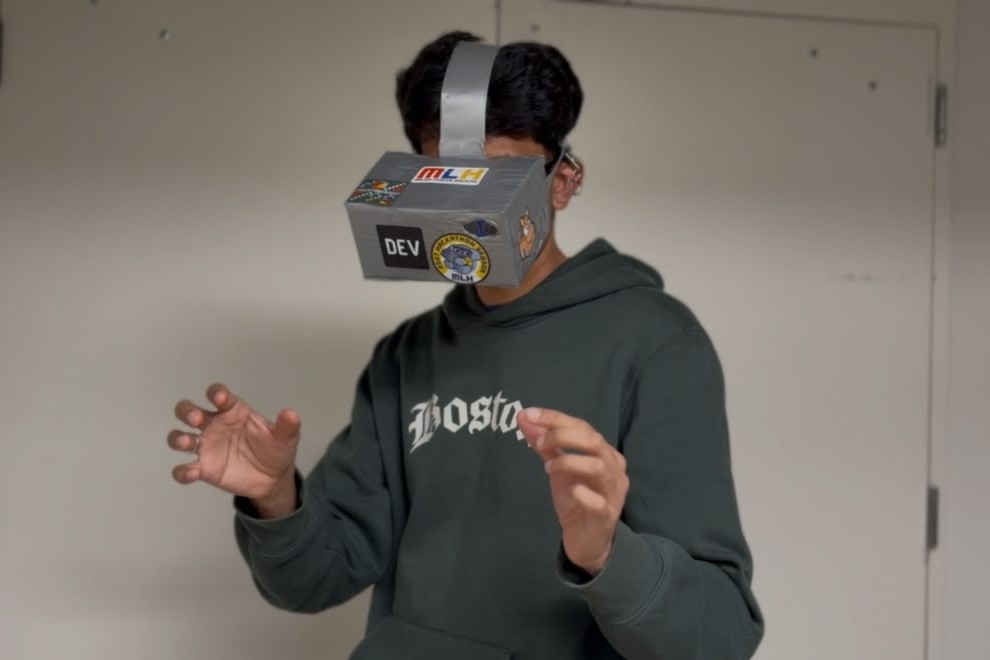
We controlling the virtual world with our phone and hands.
-
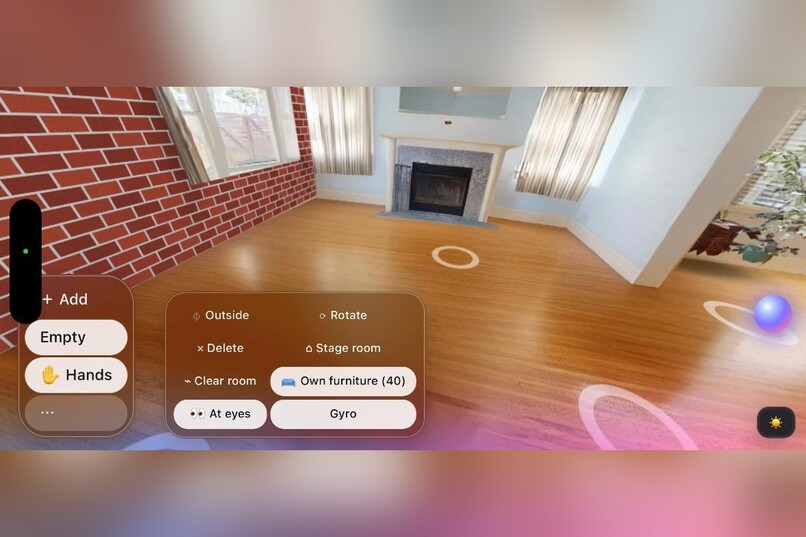
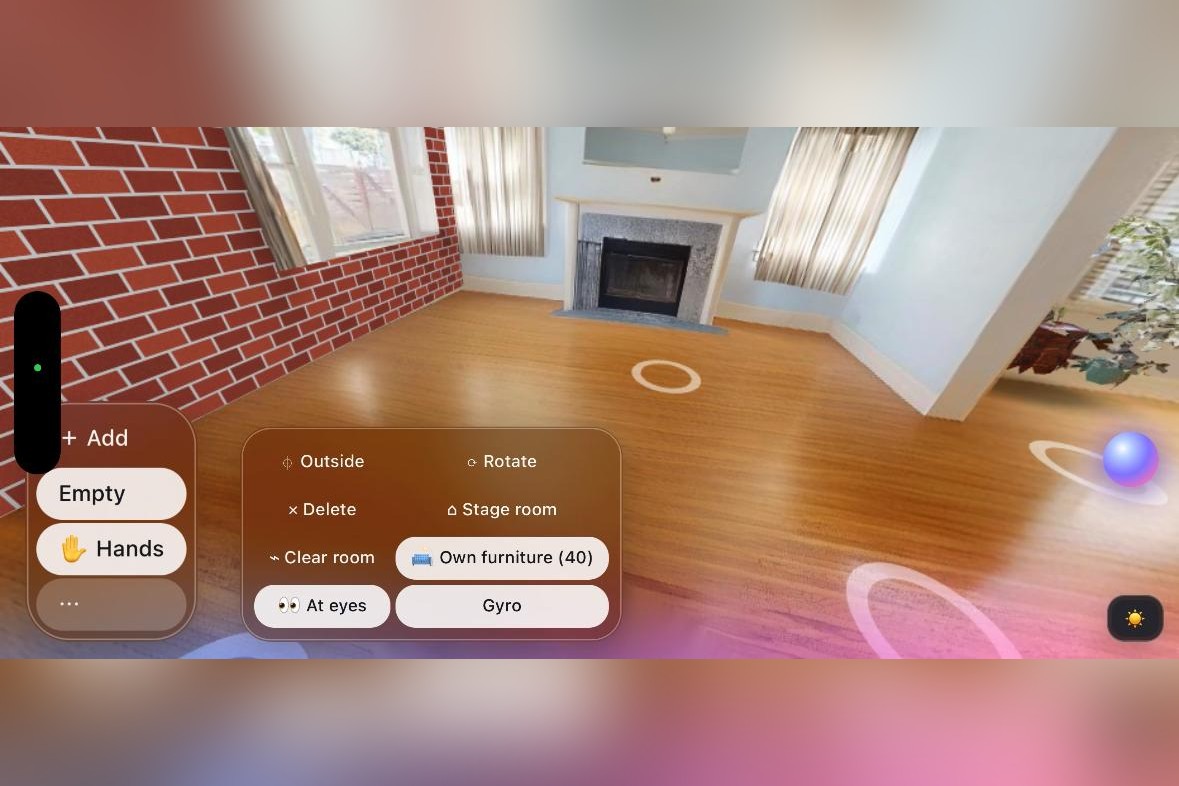
“Make this wall brick”: John lays it on the real wall, at real scale, cut around the window.
-
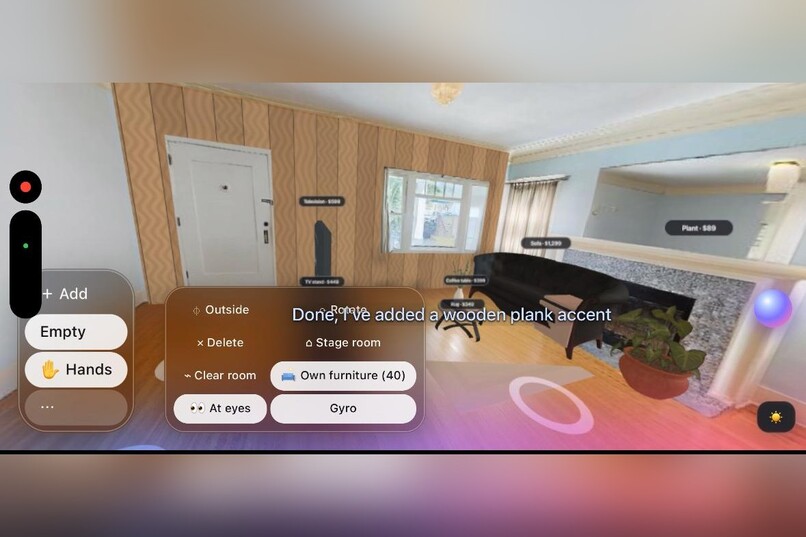
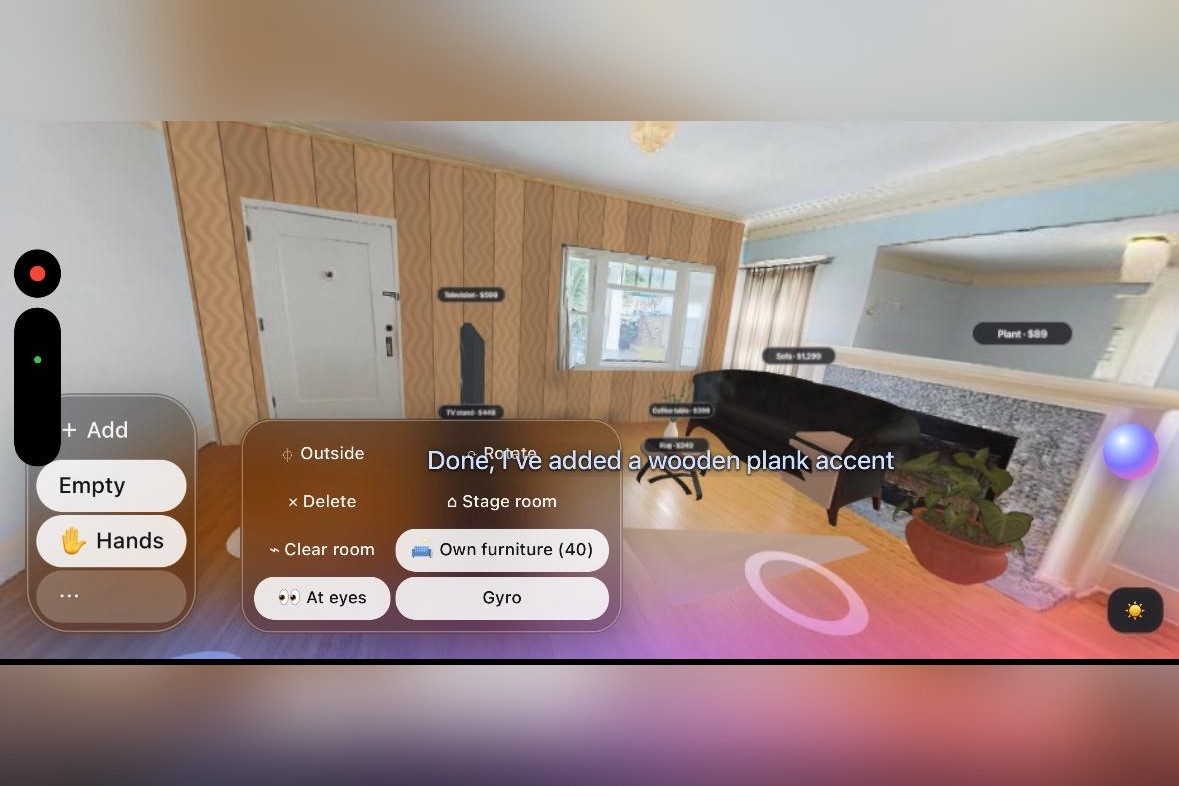
John furnishes the living room, prices every piece, and adds a wood-plank accent wall on request.
-
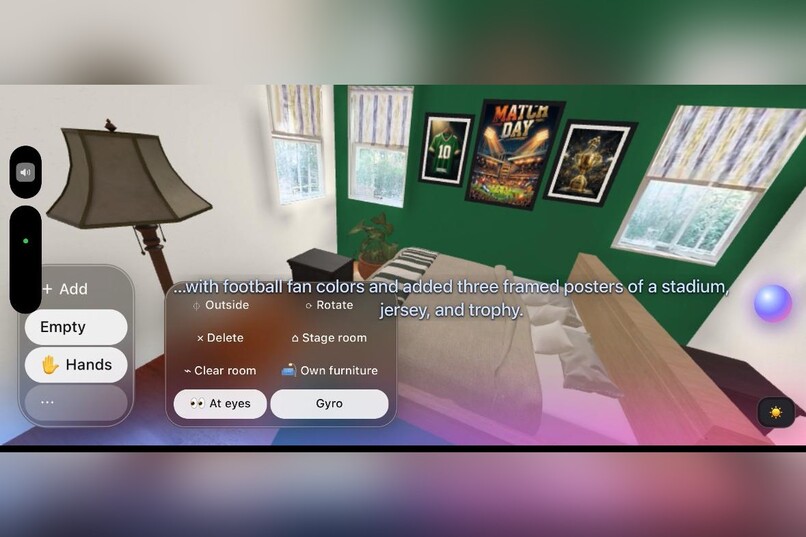
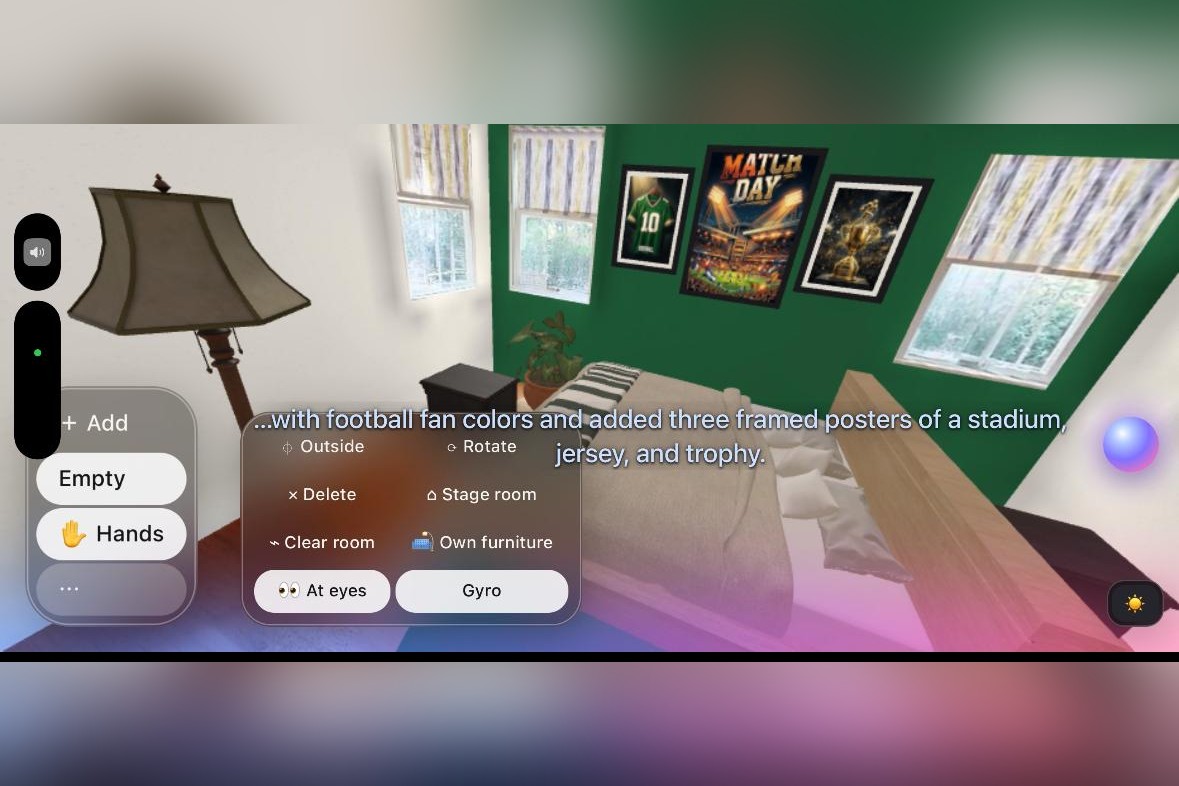
“Football fan colours”: a green accent wall and three generated posters, hung on the actual wall.
-
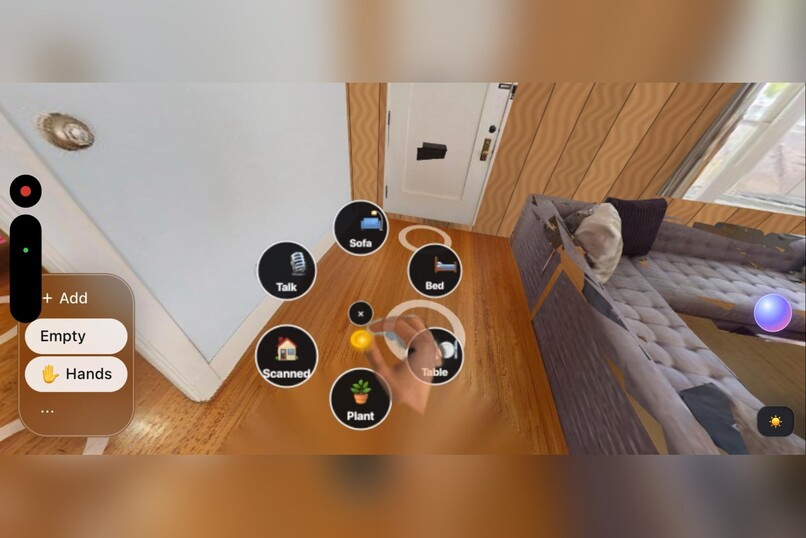
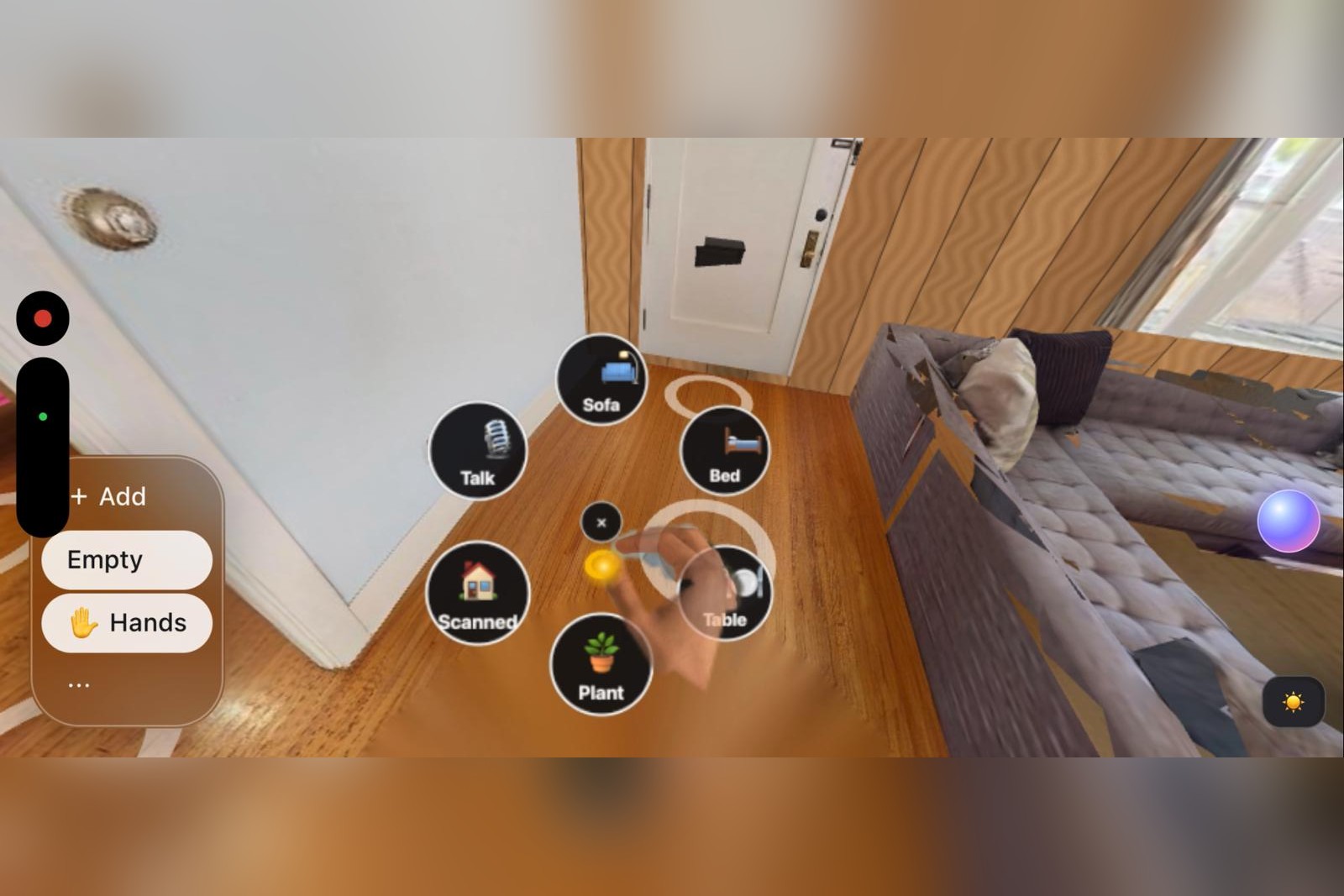
Pinch in mid-air to open the menu, grab a piece, carry it and set it down.
-
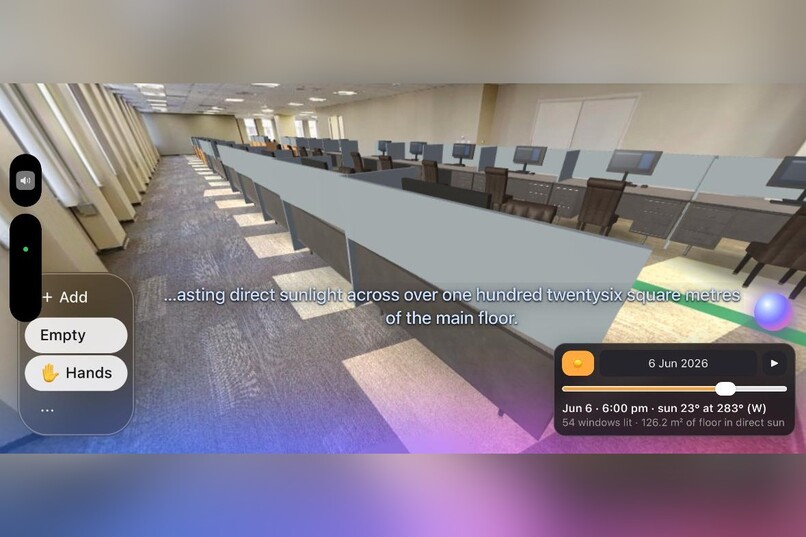
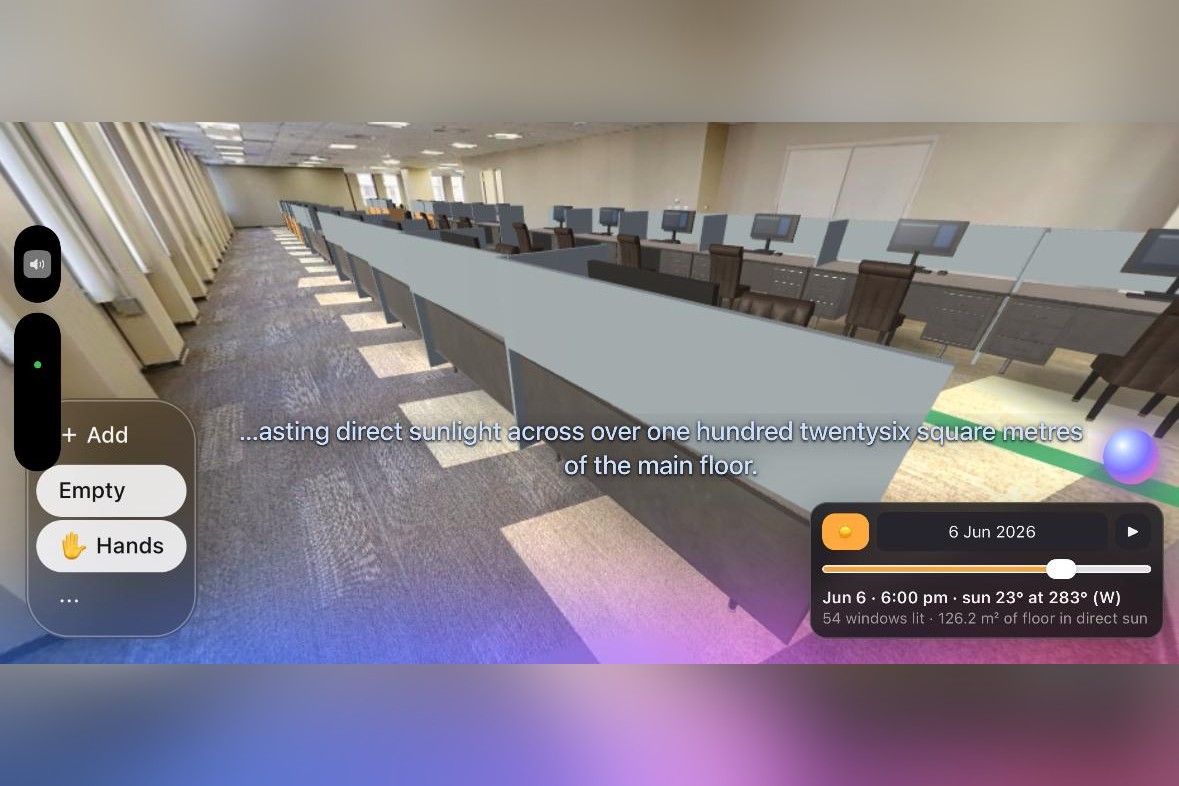
June 6, 6 pm: real sun through 54 real windows, 126 m² of floor in direct light.
-
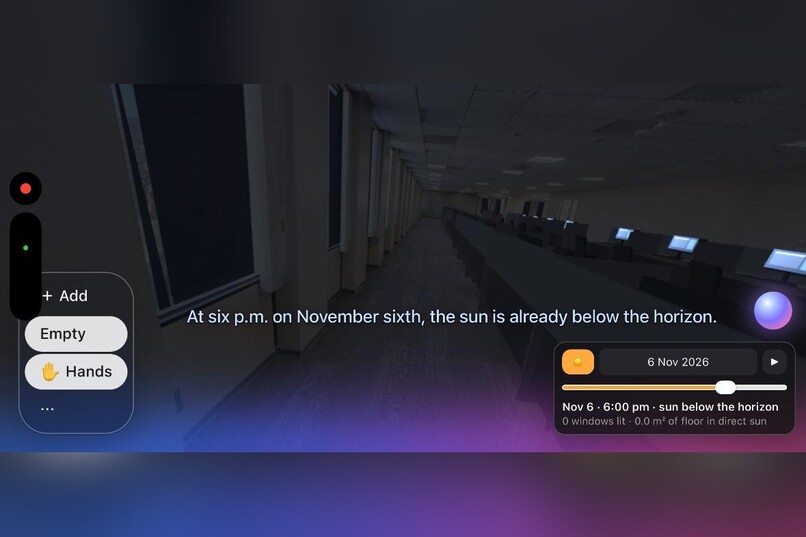
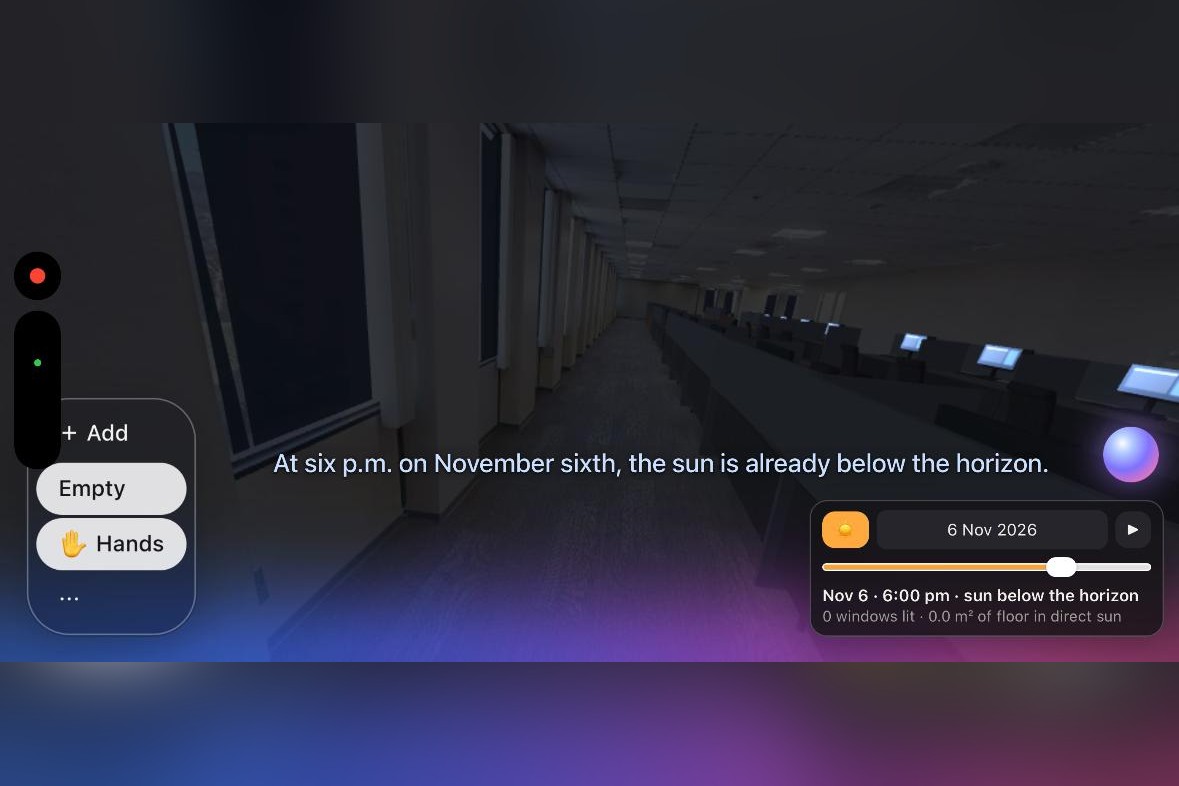
November 6, 6 pm: the sun is down, the office goes dark, the screens stay lit.
-
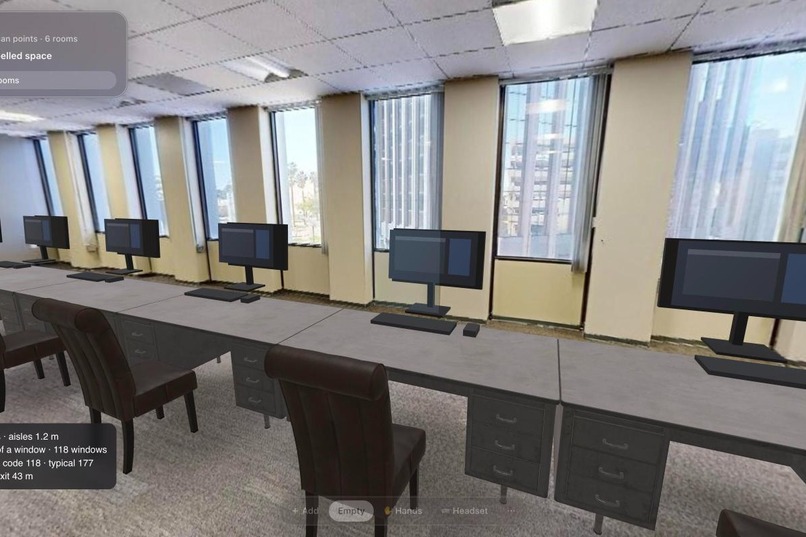
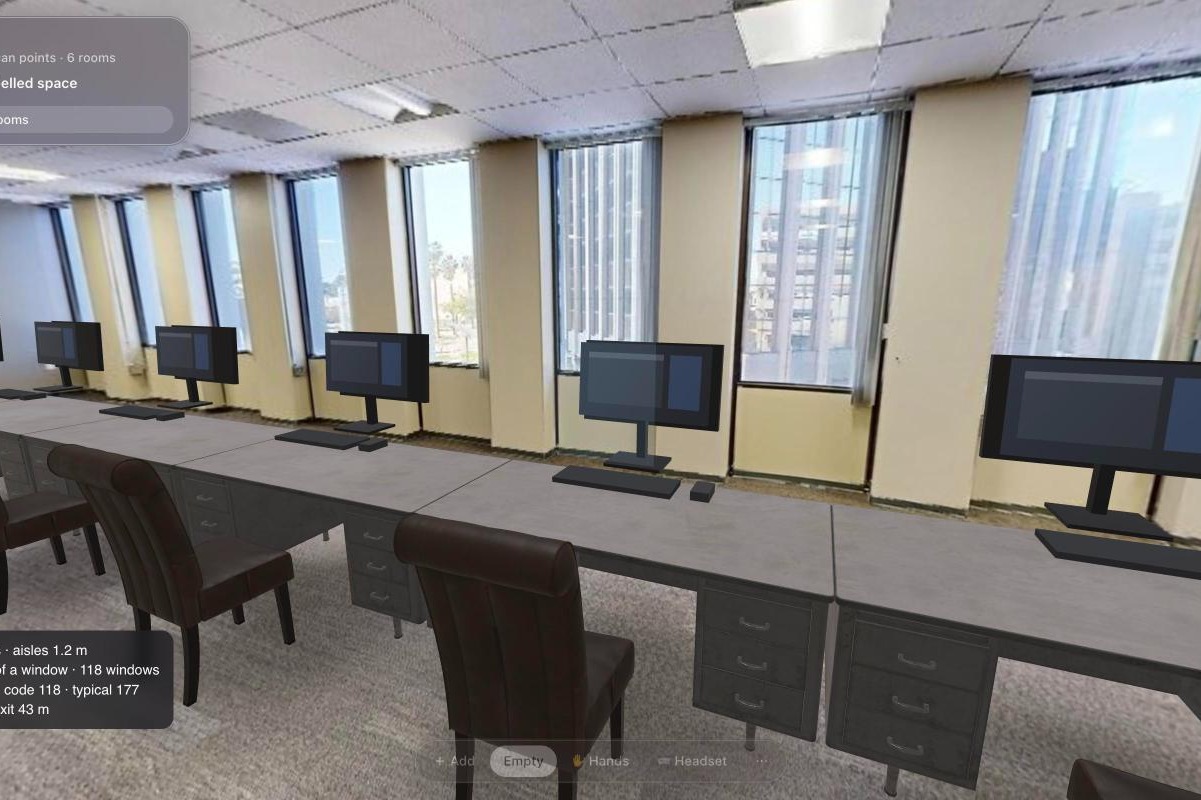
“Seat 60 with 1.2 m aisles”: every desk within 7.5 m of a window, the walk to the exit measured.
Inspiration
You don't have to be moving to want your space to be different. Most of us just live with rooms we'd change if we could see the change first.
And "seeing it first" is the whole problem. Changing a room is a creative choice, a personal one, and it goes wrong in a hundred ways that have nothing to do with measurements. The colour that looked right in the shop and wrong against your wall. The chair that's perfect on its own and clashes with everything around it. The layout that made sense on paper and feels cramped the moment you stand in it. And yes, the sofa that doesn't fit through the door. You only find out once it's in the room, and by then it's yours.
The tools for picturing a change are photo editors. They make one picture look good and the next one look wrong, because the edit has no idea where the walls are. CoStar lists "furnish an empty room consistently" as an open problem, and it is.
A Matterport scan already knows your space, every wall, door and room, to the centimetre. So we stopped painting on photos and started changing the real room, in its own coordinates, and made it something you do by standing in it and saying what you want. No menus. No forms. Walk around, say it out loud, pick things up, and watch the room become what you imagined.
What it does
Put your phone in the headset and you're standing in the house. Not looking at it: in it. Turn your head and the room turns with you. Look down and the floor is where your feet are. Walk to the next spot and you're there. And from inside, you change it. Say "make this wall a jungle" and the wall in front of you becomes one. Reach out, pinch the armchair, carry it to the window, turn it to face the light, let go. Pick up the sofa you already own and try it on the other wall. Ask for a bed, a lamp, a whole room, and watch it arrive around you while you stand there. It's your taste, your choices, made in real time, in the real space, with you inside it. It runs on a laptop and a phone too, and everything below works in all three. But the headset is the version we want you to try.
You start in the air over 5836 La Mirada Ave, a 1920 bungalow in Los Angeles, on Vexcel's aerial photo with the CoStar listing beside it. Then you walk in.
Say it, and it's there. "Make this a Moroccan riad." "Jungle mural on that wall." "Something warmer in here." John, our voice, makes it from your words and puts it on the actual wall, at real scale, cut around the real doors and windows. Whatever you can describe, you can stand in a minute later.
Reach out and move things. Pinch to pick up a chair, carry it across the room, twist it with two hands, set it down. The furniture that's already in the house is yours to move too: we lift it out of the scan, so the sofa you own becomes a real object you can slide to the other wall, turn, or take out entirely to see the room without it.
Let John furnish it, and argue with him. "What would look good in here?" He picks a style the house can carry and the pieces land one by one, each with a price tag, the room total floating overhead. "About $3,833 for the living room." "Cheaper." "Under $1,500?" He re-prices it, or drops the plant and the TV and tells you so. Don't like it? Say so. Swap the sofa, change the wall, try again. It costs nothing to be wrong here.
Know it works before it's real. Everything is checked against the actual room: the walls, the other furniture, the doorways, the space you need to walk through. Carry the sofa to the front door sideways and it stops: "The sofa is 2.10 m across the way you're holding it and that door is 1.15 m. Turn it and it goes through." A king bed doesn't fit at any angle. In this house, 19 of 22 doorways are too narrow for a sofa even turned.
See it in the light it will actually have. Drag the sun through the day and the light moves across the floor from the real windows, for the real date. Your new wall colour at 8 am, at 6 pm when it goes gold, at 9 pm when the windows are dark and the lamps are on. In the headset, you pinch the sun and drag it.
It's not just homes. Walk into Suite 300, say "seat 150 people with 1.2 m aisles", and the desks lay themselves out across the real floor, every one within 7.5 m of a window, with the walk to the exit measured. "Four meeting rooms on the back wall" and they appear.
And everything stays where you put it. Stage a room, walk to the next scan point, look back: not one of the seven pieces has moved a millimetre. It lives in the house's own space, in metres, not in a picture.
How we built it
The inside is the Matterport API: a 360 photo at every scan point, the same house emptied, the wall graph with its doors and windows, the room shapes and sizes, the meshes. The furnished mesh minus the empty one is the home's own furniture. The outside is Vexcel's aerial photo and footprint. The listing is CoStar's, joined to the scan.
The viewer is three.js. Every panorama is drawn in the model's own frame; we knew the alignment was right when the wood floor in the photo stopped exactly on the wall graph. The empty-house mesh hides anything that's behind a real wall.
The furniture is photoscanned, real pieces with real materials, fitted to real sizes and lit by an environment built from the photo of the room it's standing in. Every placement is checked against the room outline, the other furniture, the doorways and a walkway you can still use.
John runs on Gemini. Gemini Live gives him a voice you can interrupt. His tools are the app's own functions: furnish, price, paper, place, move around, set the time of day, lay out an office. One tool hands him the measured facts about the house, and when you say "this wall" he sees what you see.
Hands are MediaPipe in a background worker, reading the phone's own camera. iPhone Safari has no WebXR, so the stereo view and head tracking are ours, built on the gyroscope. The headset shell is built around Cardboard v2 lenses.
Keys stay on our server, behind rate limits, a cache and a backup model, and John says "one sec" while he thinks. Everything is bundled, so the venue Wi-Fi is not part of the demo.
Challenges we ran into
We had no VR headset. No Quest, no Vision Pro, nothing. What we had was our phones, a sheet of cardboard, two lenses and a roll of tape. So we built the headset ourselves and wrote the stereo rendering and head tracking that a real headset would have given us for free, because iPhone Safari has no WebXR at all. It turned out to be the right constraint. CoStar's customers don't own VR hardware either; they own phones. The whole experience runs on the phone already in your pocket, and the headset costs a few dollars to make. Anyone with a listing and a phone can stand inside it.
Lining photos up with geometry. Every scan point has its own rotation, and the photos, the image mapping and the model each use a different set of axes. Get one sign wrong and the furniture slides across the floor as you turn your head. This took longer than anything else.
Making a voice feel like a person. Our first John waited for you to finish, thought, then spoke. It felt like a phone menu. Gemini Live fixed that and gave us new problems: connection timeouts, the iPhone microphone, and at one point two voices answering at once.
The sides the camera never saw. A scan only has what the cameras could see, so the home's own sofa had no back and the dining table was full of holes. We cap only the genuinely missing sides, close small holes with their own rim texture, and give the unseen sides the weave of the seen ones. Nothing is invented from nothing.
Which way is north. The API gives latitude, longitude and a rotation, and nobody says which direction the quaternion means. We checked it against OpenStreetMap: three degrees apart.
Accomplishments that we're proud of
A room you can stand inside and change by talking, on a phone, with a headset we built from cardboard. The home's own furniture lifted out of the scan and made movable. A sofa that knows which doors it fits through. The sun moving across a real floor for a real date. And all of it in the house's own metres, so nothing drifts when you walk.
What we learned
The measurements are worth more than the photos. John can reason about a room because the room is measured, and that's what makes what he does believable.
Give the model the product's real actions and real numbers. It did far better with a describe_house tool than it ever did guessing.
People judge the voice first. Speed and interruptions mattered more than which model was underneath.
Being in the room changes what you ask for. On a screen people pick from a list. In the headset they look at a wall and say what they'd actually want on it. You don't need a headset to ship a headset experience. A phone and cardboard got us further than waiting for hardware would have.
What's next
Scan your own home with your phone and walk into it. Real prices from real shops, and "buy this room". Send a redesigned room as a link so the person you live with can walk through it and argue with you about the sofa.

