-
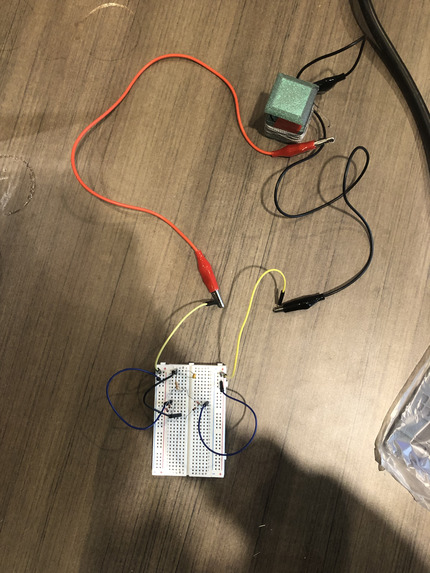
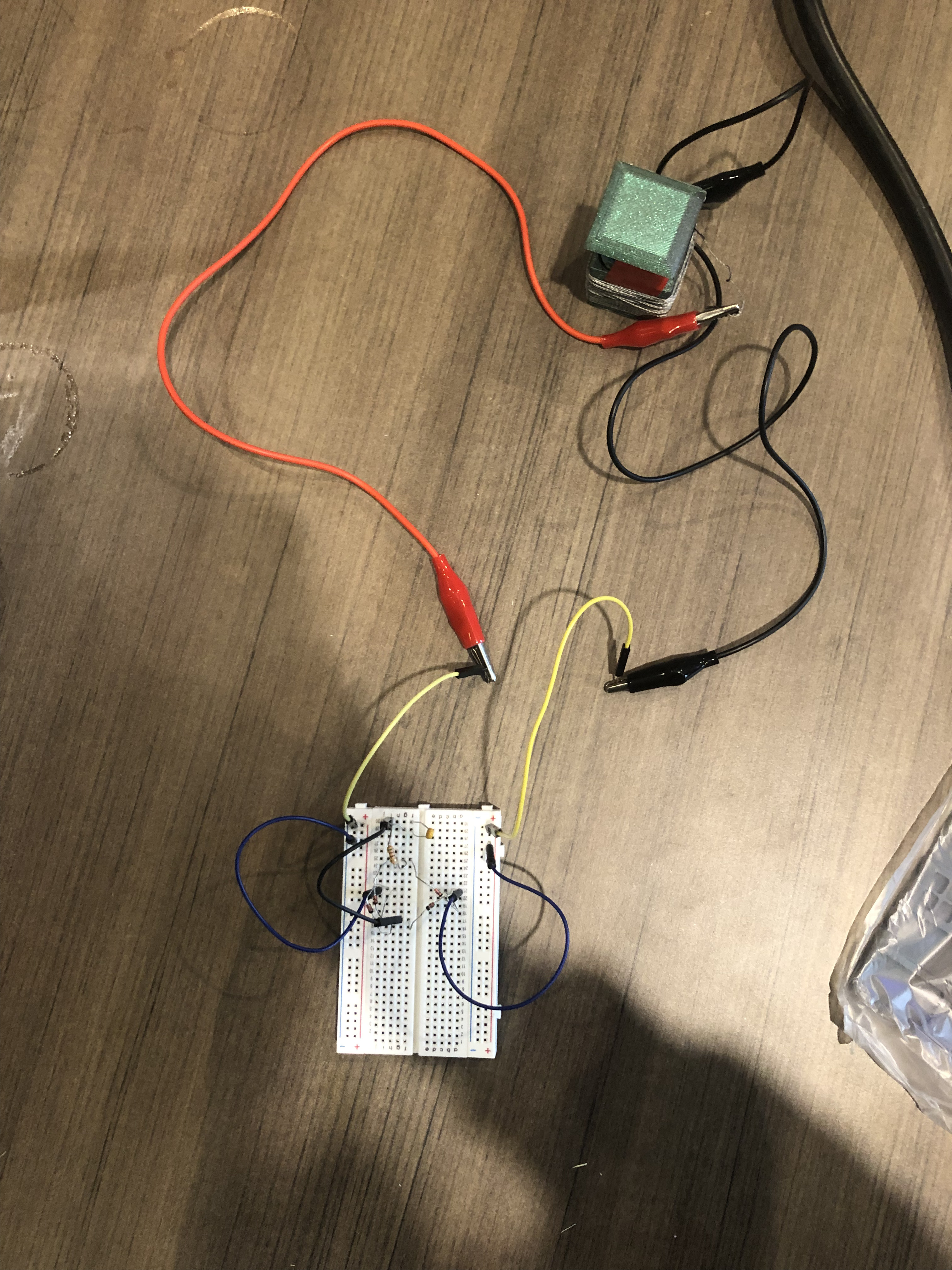
top down overview of our project with generator and full bridge rectifier to convert AC to DC
Inspiration
Initially we wanted to focus on areas of untapped energy generation that were abundant and consistent. Our immediate thought turned towards children's playgrounds, specifically turning all of the mechanical equipment into mini generators. We quickly realized this was not feasible and frankly unsafe for the children. Then, while walking down Bruin Walk we noticed the quantity and consistency of people utilizing the path. We realized there was a potential to harness additional energy through this consistency by implementing a generator within our walkways.
What it does
WALKS is a linear generator which uses a weighted piston system and induction to generate energy when pressure is applied. When the piston is pressed, a row of magnets pass through a coil of conductive thread wrapped around the casing, generating an alternating current. Springs within the casing allow the piston to return to its original position after pressure is released. The alternating current is then passed through a diode bridge rectifier to convert the current to DC and store it within a capacitor.
How we built it
We began with a proof of concept using a conductive thread wrapped around a plastic container and manually moving magnets to test whether or not a current was generated. Once successful, our team split into 2, with one half working on the electronics and the other half working on the hardware. To design the casing we used SolidWorks and after multiple iterations, settled on a final design. The design was then 3D printed and assembled. We then connected the generator to the rectifier and ran finalizing tests to determine the effectiveness of the generator, as well as the potential for scalability.
Challenges we ran into
The main challenge for the team as a whole was a lack of experience. This was our first Hackathon and many of our first times designing and building a piece of hardware. This meant we were teaching ourselves the skills necessary to work on the project while actively working on the project. In addition to this, we struggled with a lack of materials to make a larger scale version of our design. We were heavily limited by the size and strength of the magnets and the final design size was a direct result of that.
Accomplishments that we're proud of
We are all very proud that the generator is able to generate some amount of measurable power. Since this was our first time, going from an idea, to a design, to a working prototype within such a short amount of time was very exciting.
What we learned
We learned a significant amount about electronics, modeling, manufacturing, and the general design process. Most of us came into this with no engineering background so we had to learn at every step of the way.
What's next for Weight Assisted Linear Kinetic System (WALKS)
We want to scale up our model and test the feasibility of the system on a more realistic level. If we find the energy generation to be sufficient as we scale up we may pursue it further. We genuinely believe this product can be a revolutionary in the way we think about generating power.
Built With
- solidworks

Log in or sign up for Devpost to join the conversation.