

Inspiration
CDC has recently classified insufficient sleep as a public health problem. Sleepiness is the root cause of increasing the risk of accidents and other occupational errors. It can also cause health concerns such as diabetes, depression and high blood pressure.
Although most of the sleep tracking technologies are non-invasive devices such as watches and bands, they still require huge amounts of daily maintenance for hygiene and constant battery charging. The discipline of frequent charging and hygiene maintenance using the wearable device has turned a lot of people away from using them.
What it does
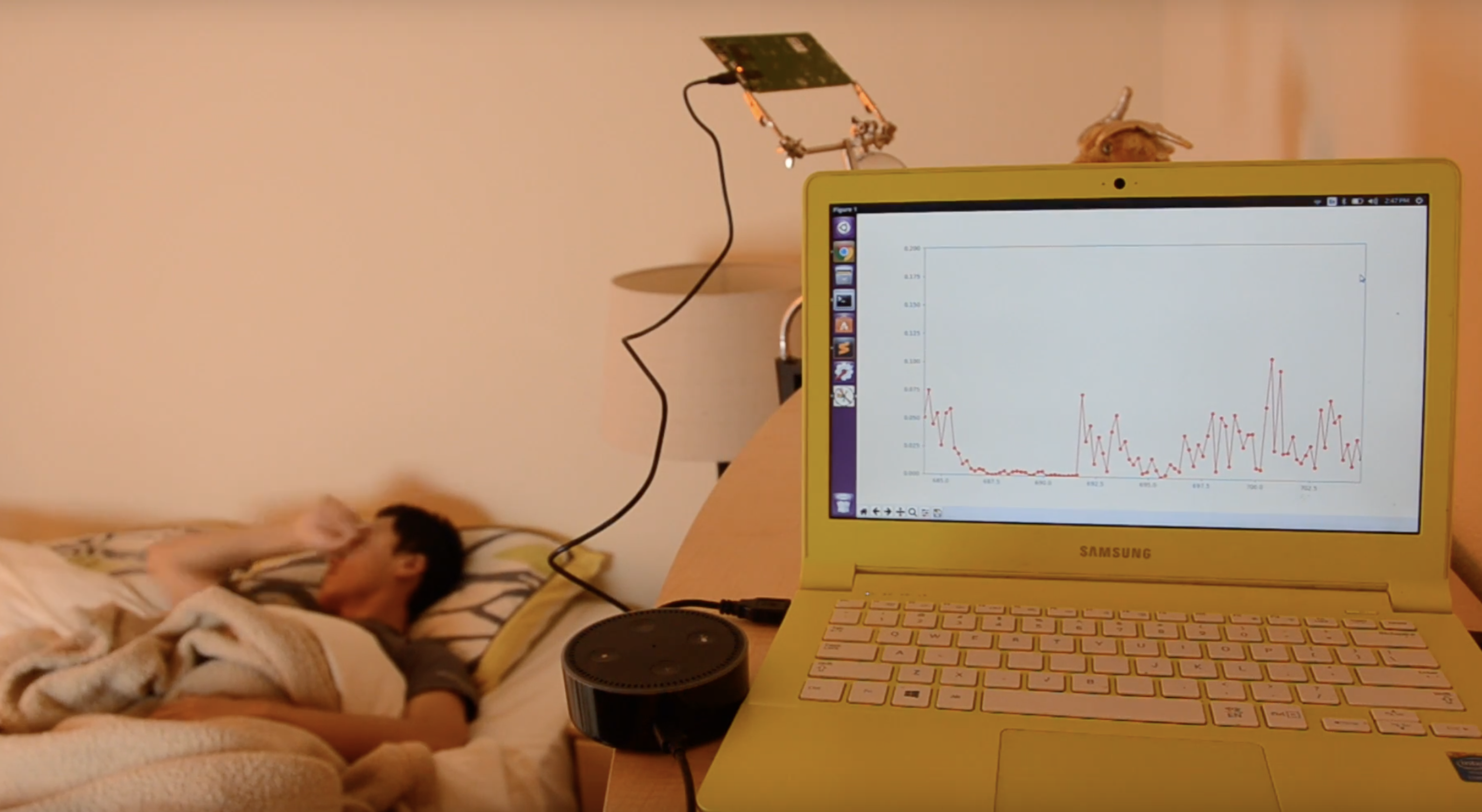
Using Walabot, we can build a non-invasive sleep tracking system that's always on. This way the User does not have to worry about charging their wearables, washing for hygiene and still be able to track a good night's sleep.
How I built it
There are three parts of the solution:
Walabot part Walabot server part Alexa part Walabot can be used on any Linux or IoT machine; in this case, we will be using a laptop as the base. We will also be implementing AI locally, as well, to identify the patterns to the user.
Walabot server will be used to store the information; this can be used to display extra information for mobile devices, IoT display devices, as well as Alexa.
Alexa is one of the many output options that we can use; in this case, it's the easiest one to implement and get a quick glimpse about how your night sleep was.
Challenges I ran into
Getting Walabot to work with Alexa
Accomplishments that I'm proud of
I was able to get it done and writing into a 4 step guide on how to rebuild the project https://www.hackster.io/71432/walabot-sleep-quality-tracker-3f168f
What I learned
Using radar to track sleep health is both efficient and safe
What's next for Walabot Sleep Quality Tracker
If we have enough demand, we can build this into a product

Log in or sign up for Devpost to join the conversation.