-
-
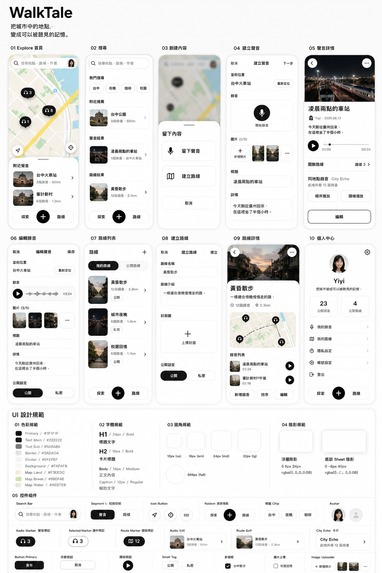
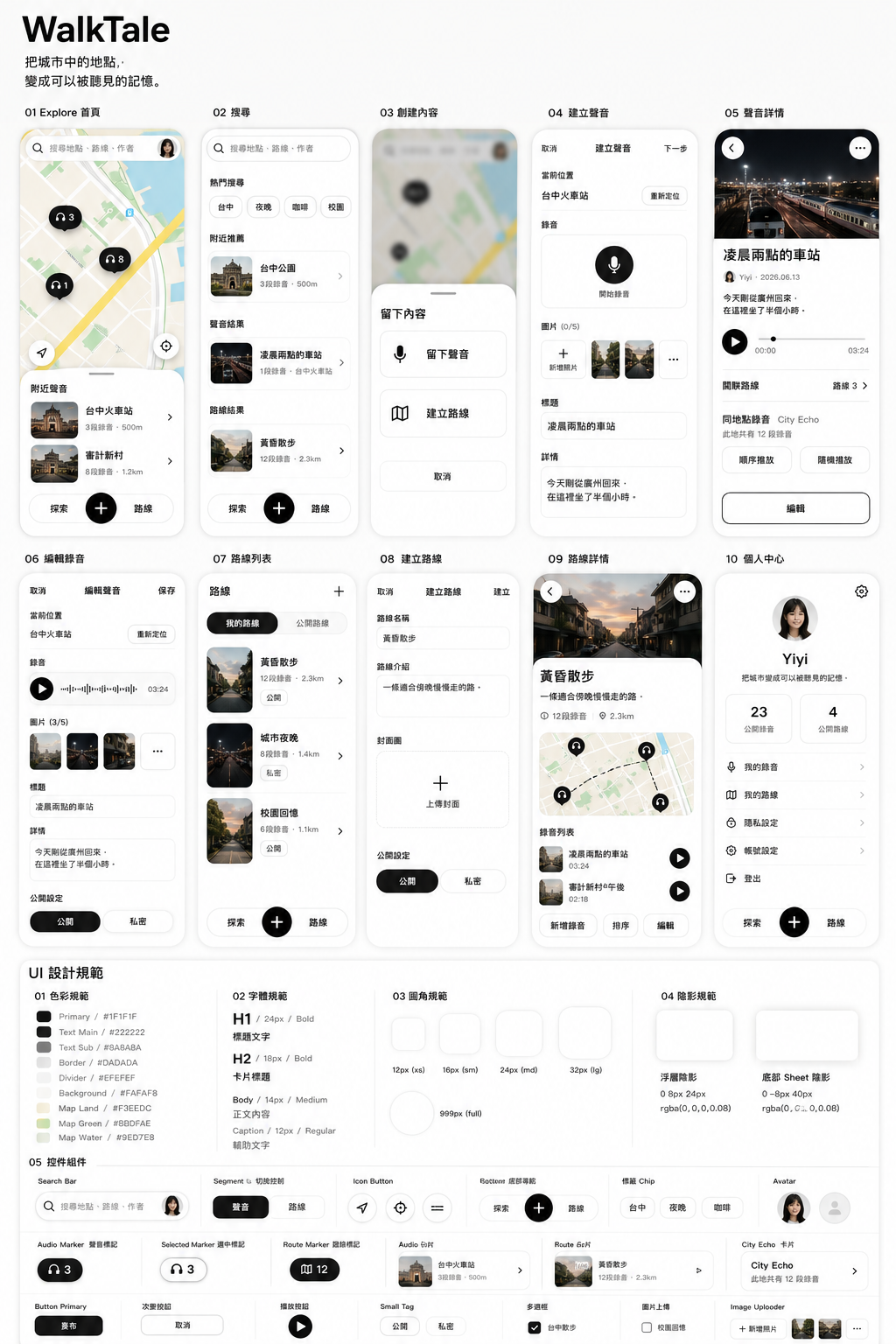
UI design
-
Icon
-
sound-curator
-
human-recorder
-

sound-traveler
-
nature-acoustician

Inspiration
WalkTale was inspired by a simple question: What if the memories of a place could be preserved through sound instead of photos? Most map applications focus on navigation, reviews, and images. However, many of our strongest memories come from sound—the ambience of a local market, the waves at the beach, the sound of rain, or a friend's voice recorded at a meaningful place. I wanted to create a platform where people could leave sounds on a map, allowing others to discover places through listening rather than simply looking.
What it does
WalkTale is a mobile-first, map-based audio storytelling platform. Users can record or upload sounds, attach them to real-world locations, and organize multiple sounds into custom routes. Other users can explore these locations on the map and experience places through audio. The application is built as a Progressive Web App (PWA), making it lightweight and easy to use directly on mobile devices without installing a native app.
How we built it
WalkTale was developed through close collaboration with ChatGPT and Codex. I first used ChatGPT to brainstorm product ideas, design user flows, create wireframes, and generate UI designs based on visual references that I collected. ChatGPT also helped refine product features, naming, interface copy, and technical planning. After defining the product requirements, I asked ChatGPT to organize them into structured development instructions for Codex. Codex then implemented the application step by step, building the frontend, interactions, and application logic. Throughout development, ChatGPT continued helping me analyze problems, explain technical concepts, and improve the overall user experience.
Challenges we ran into
The biggest challenge wasn't writing code—it was transforming an abstract idea into an intuitive product. Building a mobile-first PWA required careful consideration of user interactions, map integration, audio uploading, route creation, and the overall experience. Another challenge was learning how to collaborate effectively with AI. Writing clear prompts, refining requirements, and iterating with both ChatGPT and Codex became an important part of the development process.
Accomplishments that we're proud of
What I'm most proud of is not only building a working product, but also establishing a complete AI-assisted development workflow. From product ideation and UI design to implementation and debugging, ChatGPT and Codex supported almost every stage of development. ChatGPT was able to understand my natural language descriptions and transform abstract ideas into structured product requirements, interface designs, and implementation plans. Its image generation capabilities also made it easy to rapidly prototype UI concepts and iterate on the visual design. During development, Codex went beyond simple code generation. It could understand the existing project structure, identify issues, modify code autonomously, and help maintain consistency across the codebase. This workflow significantly simplified the development process. Instead of spending most of my time writing repetitive code, I was able to focus more on product design, user experience, and refining ideas. Most importantly, it demonstrated that natural language can become a powerful way to build software. With clear product thinking and effective collaboration with AI, I was able to transform an idea into a functional product in a remarkably short time.
What we learned
This project completely changed the way I think about software development. AI is much more than a coding assistant. It can participate in product planning, UX design, interface generation, technical discussions, debugging, documentation, and implementation. The most valuable lesson wasn't learning how to generate code—it was learning how to communicate effectively with AI and continuously refine ideas through collaboration.
What's next for WakeTale
This is only the first version of WalkTale. In the future, I plan to introduce AI-powered audio guides, smarter location recommendations, richer community features, and better tools for organizing and discovering sounds. My long-term vision is to build a platform where every place can preserve its memories through sound, allowing people to experience cities in a completely new way.
Built With
- chatgpt
- codex
- css
- html
- javascript
- mapbox
- next.js
- openai
- pwa
- react
- supabase
- tailwind
- typescript
- vercel

Log in or sign up for Devpost to join the conversation.