🏥 WaitlessOS – Your AI-Powered Healthcare Companion
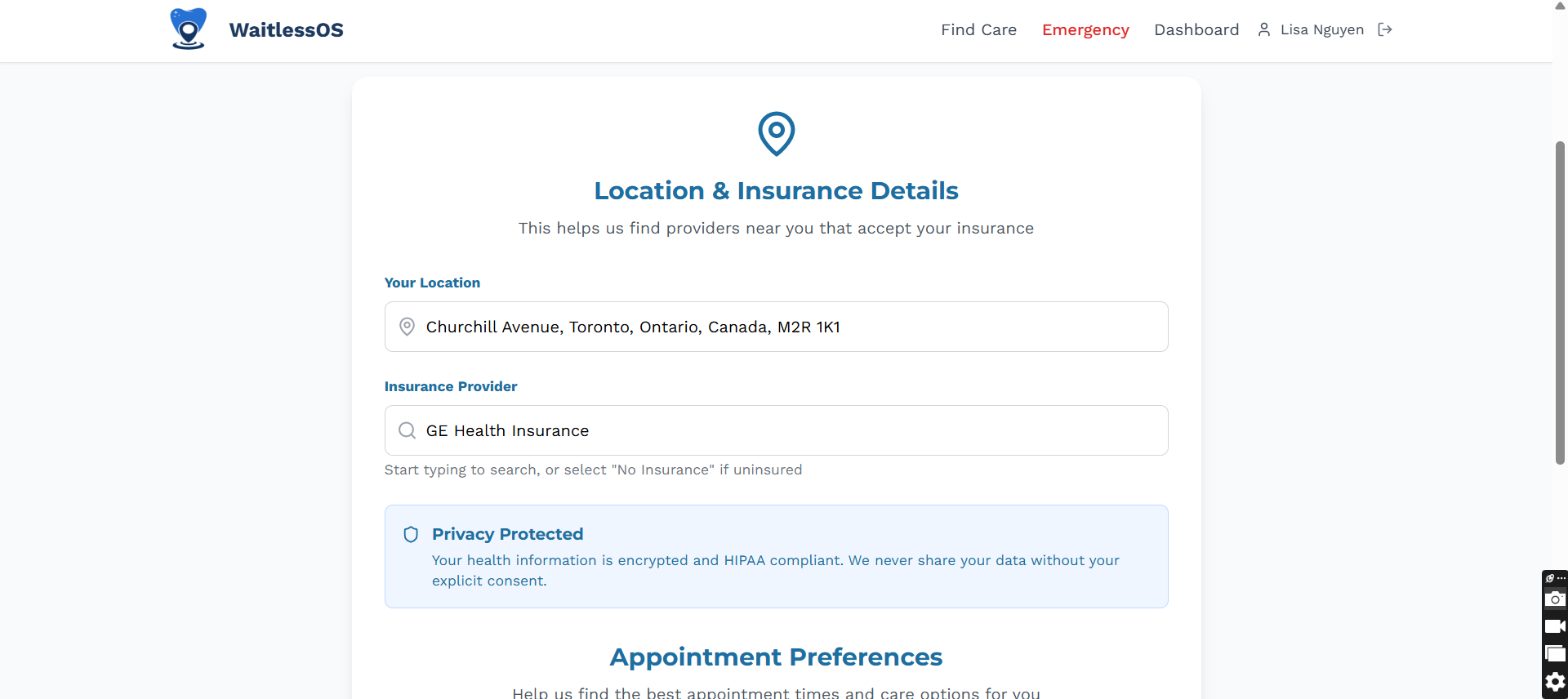
💡 Inspiration As an international students, we often hesitated to visit a clinic or hospital in Canada. Unlike permanent residents with OHIP, we have UHIP or private plans that aren’t accepted everywhere, and coverage varies greatly. we constantly asking:
“Will they accept my insurance?”
“How much will I need to pay?”
“Where is the nearest clinic that fits my situation?”
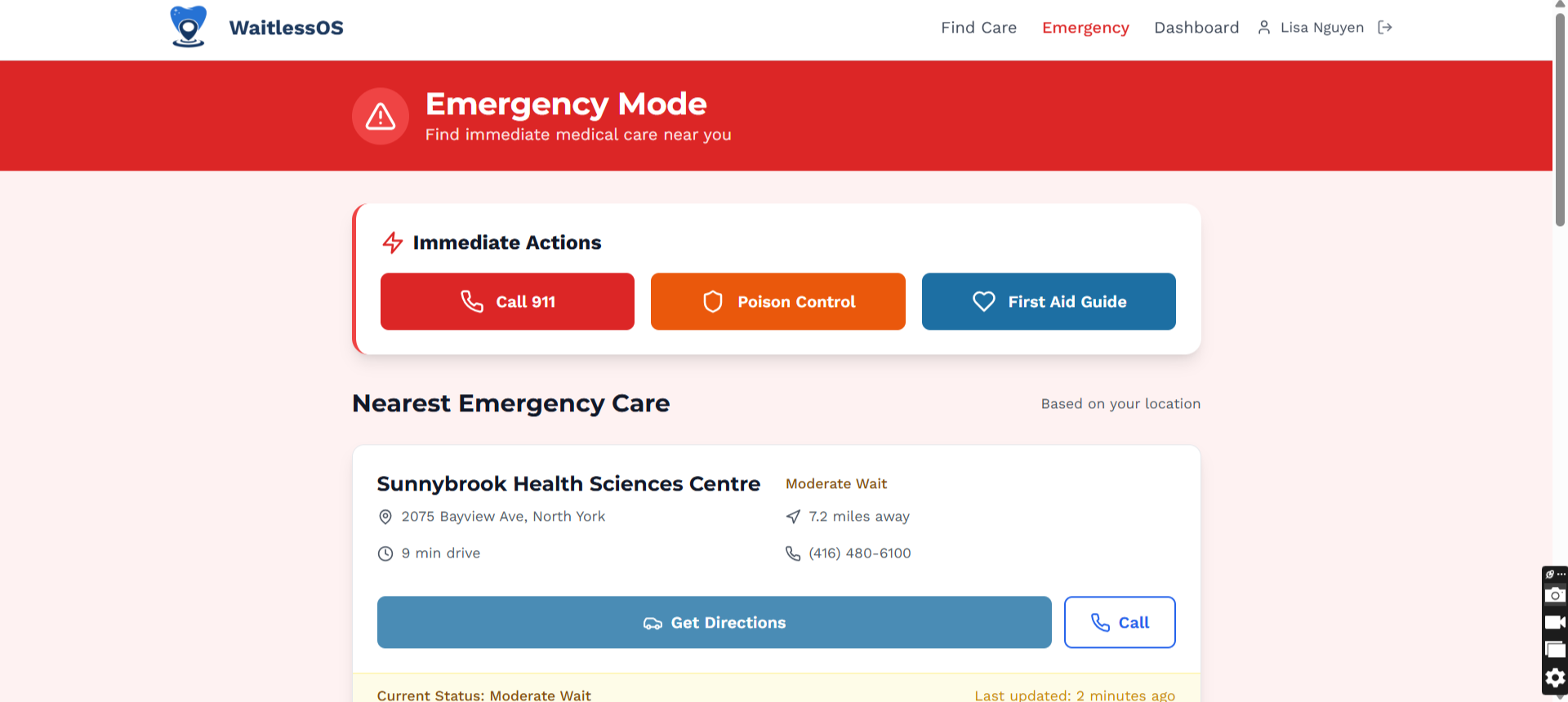
“Should I go to the ER, urgent care, or just wait?”
This overwhelming uncertainty inspired the creation of WaitlessOS — an AI-powered platform that bridges the gap between patients, healthcare providers, and insurance systems in one seamless experience.
🎯 Purpose
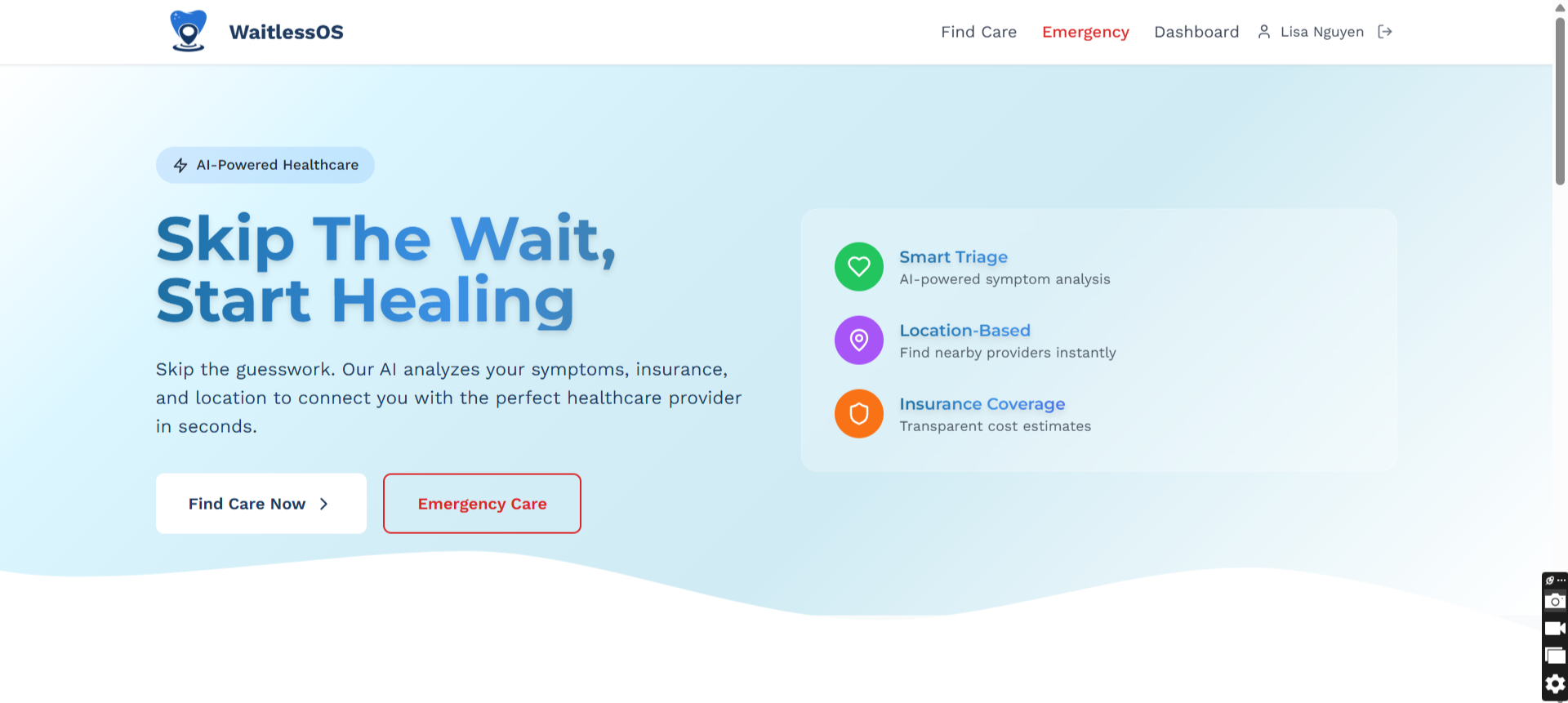
WaitlessOS helps patients — especially newcomers, students, and visitors — make informed decisions about where, when, and how to seek care by:
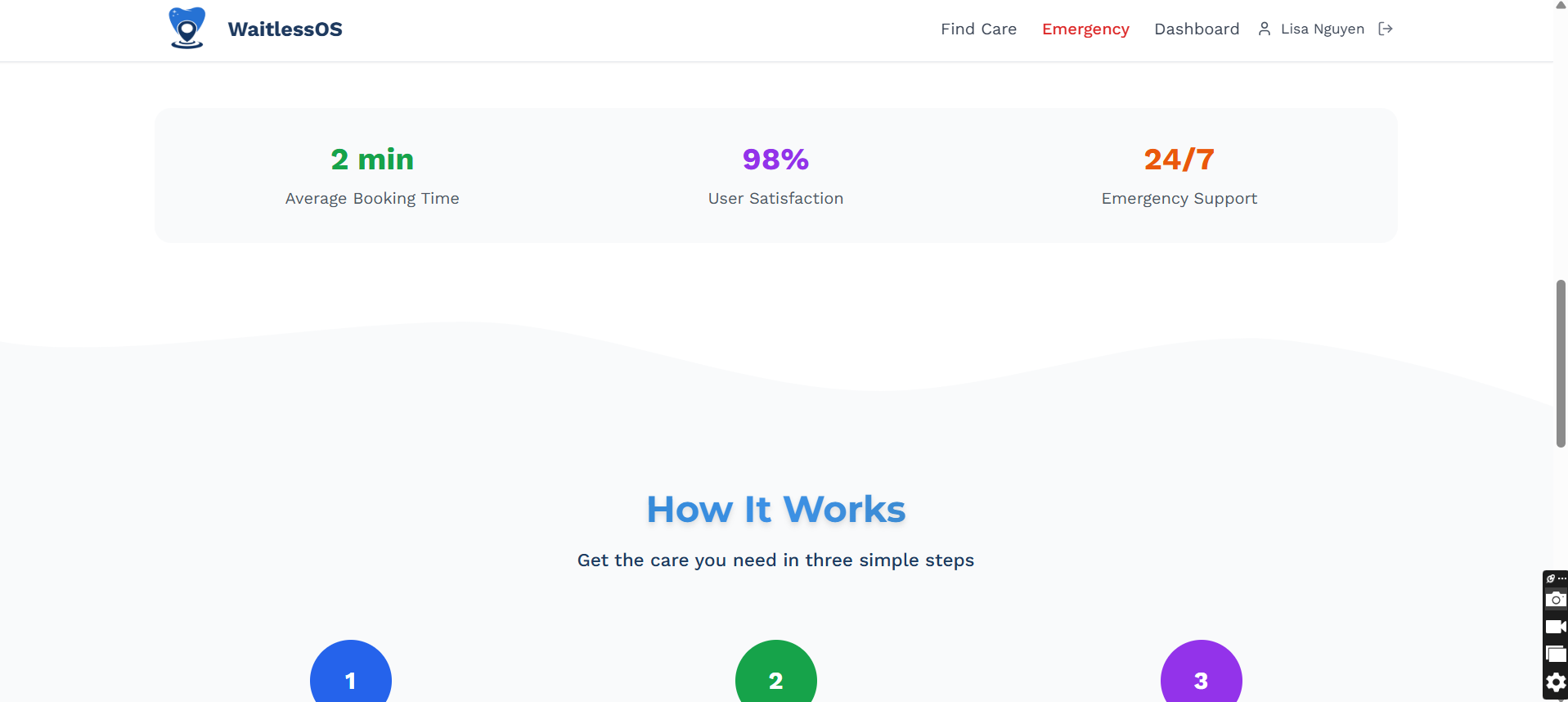
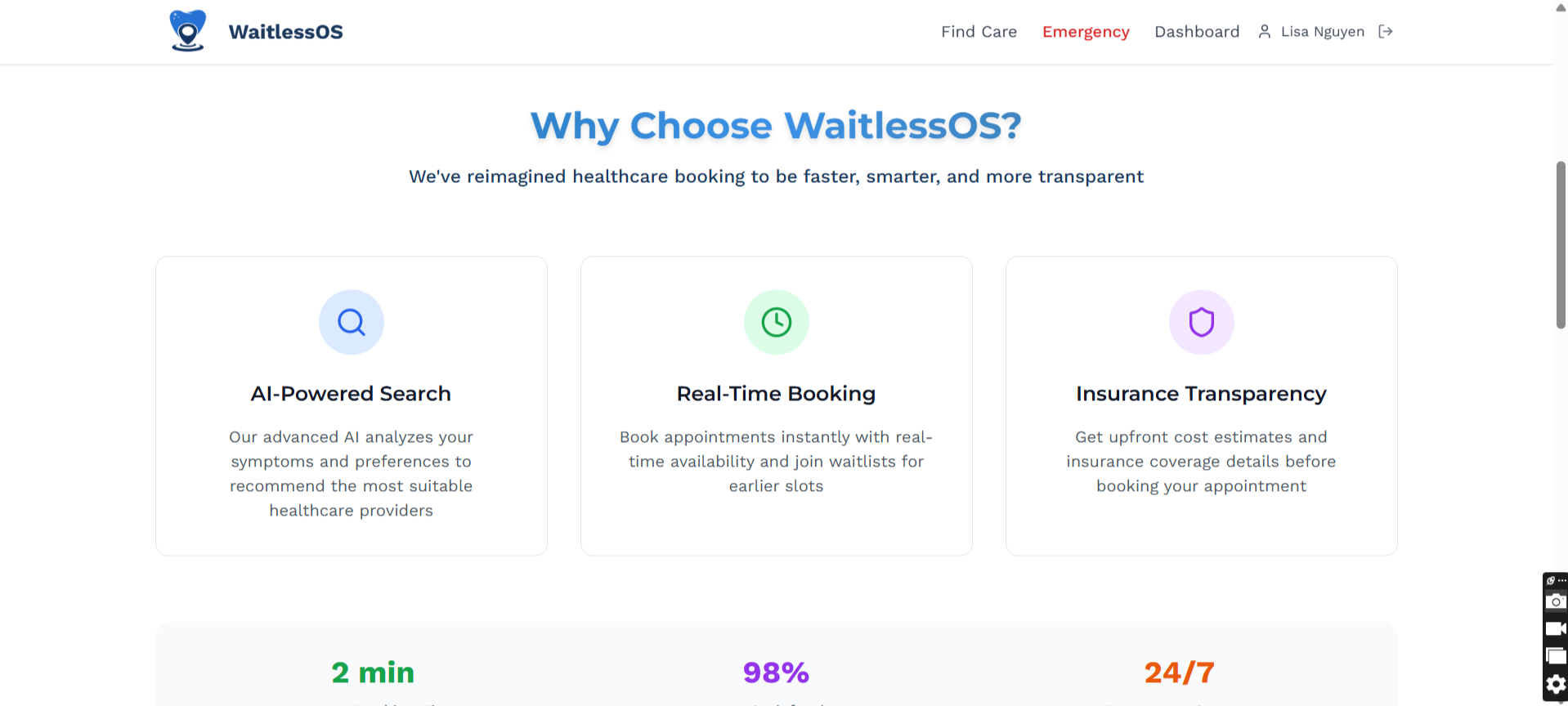
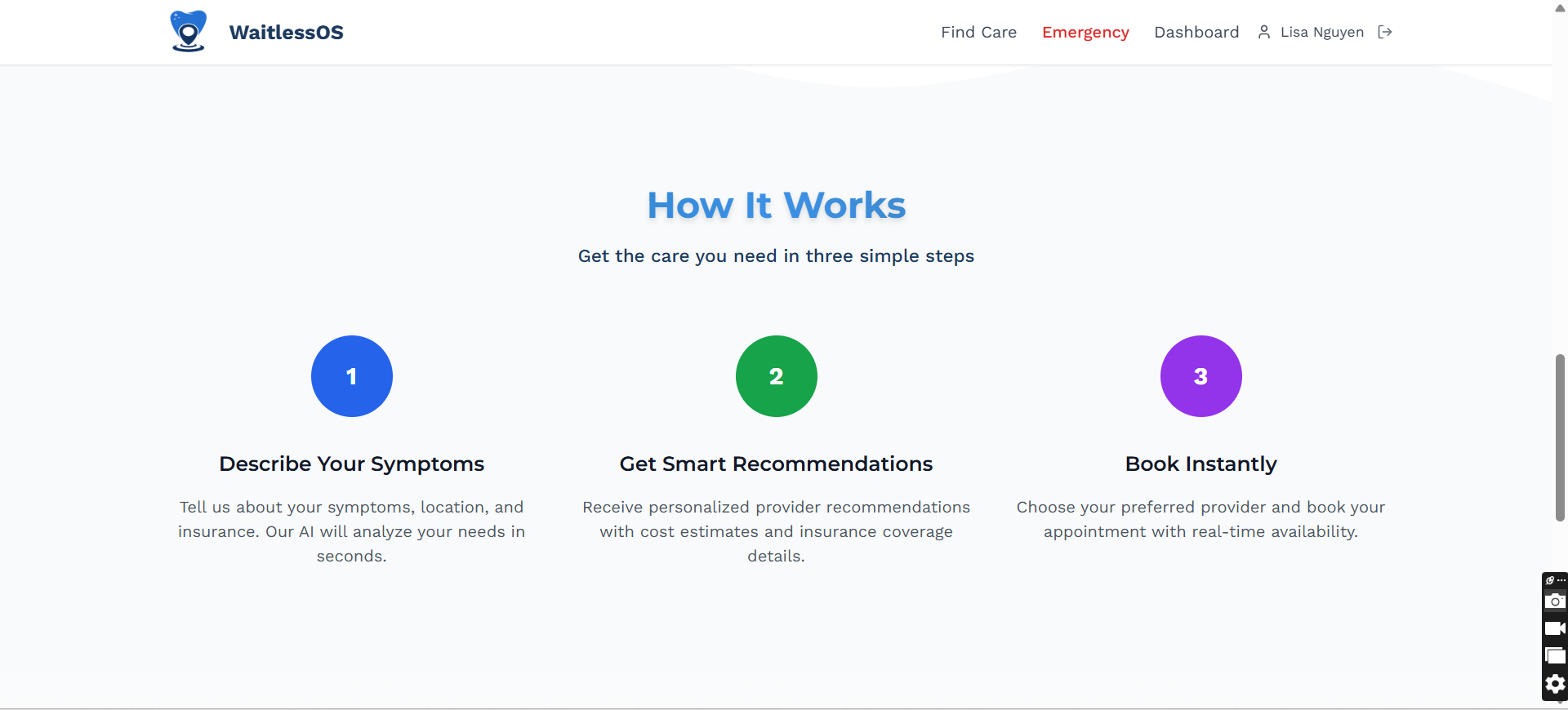
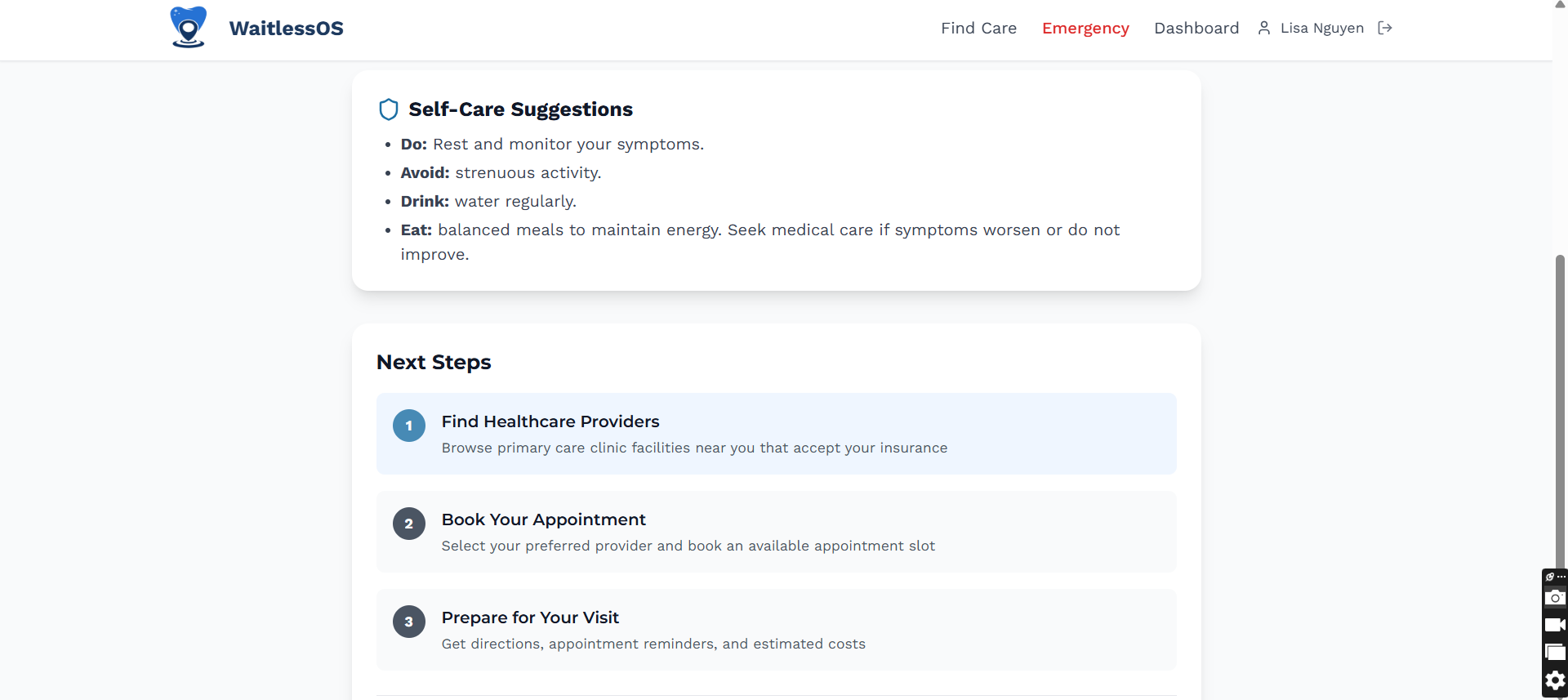
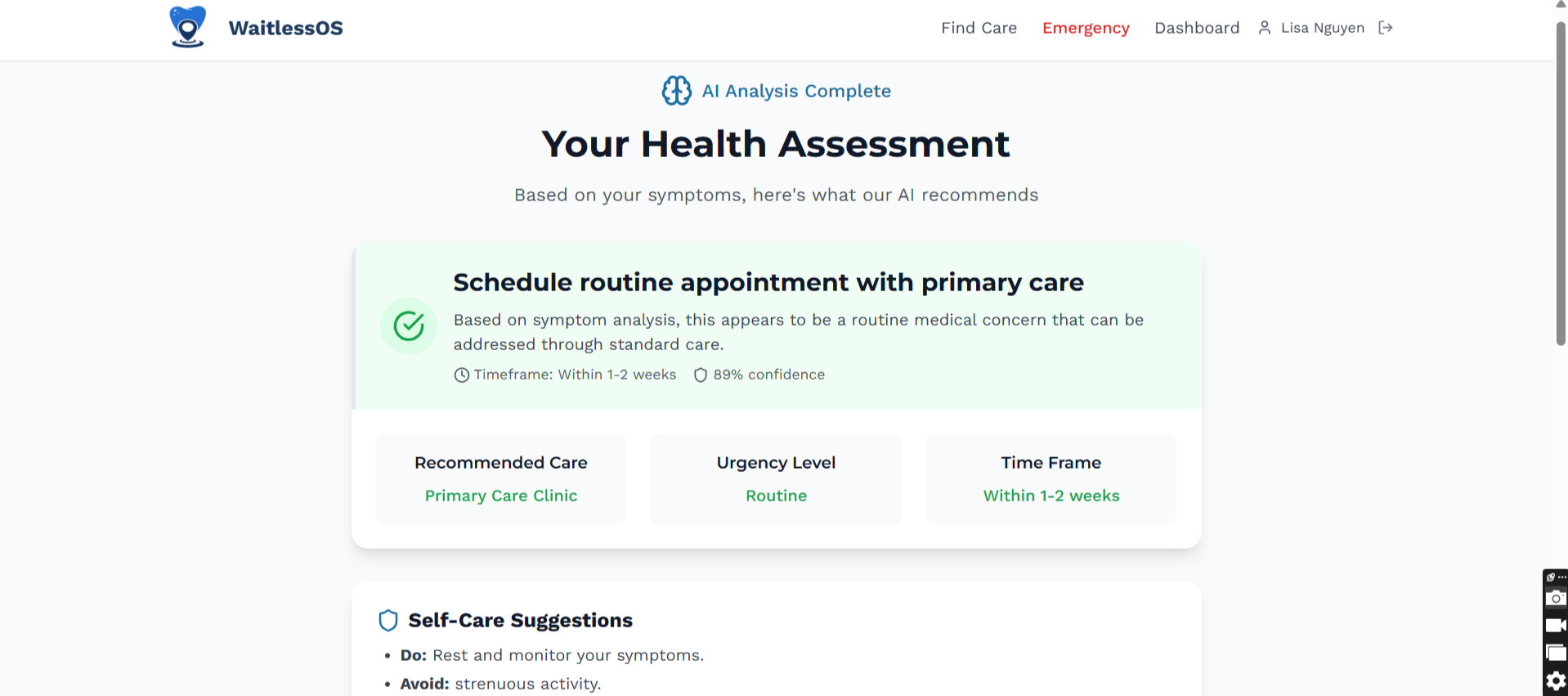
Classifying the urgency of symptoms using AI triage
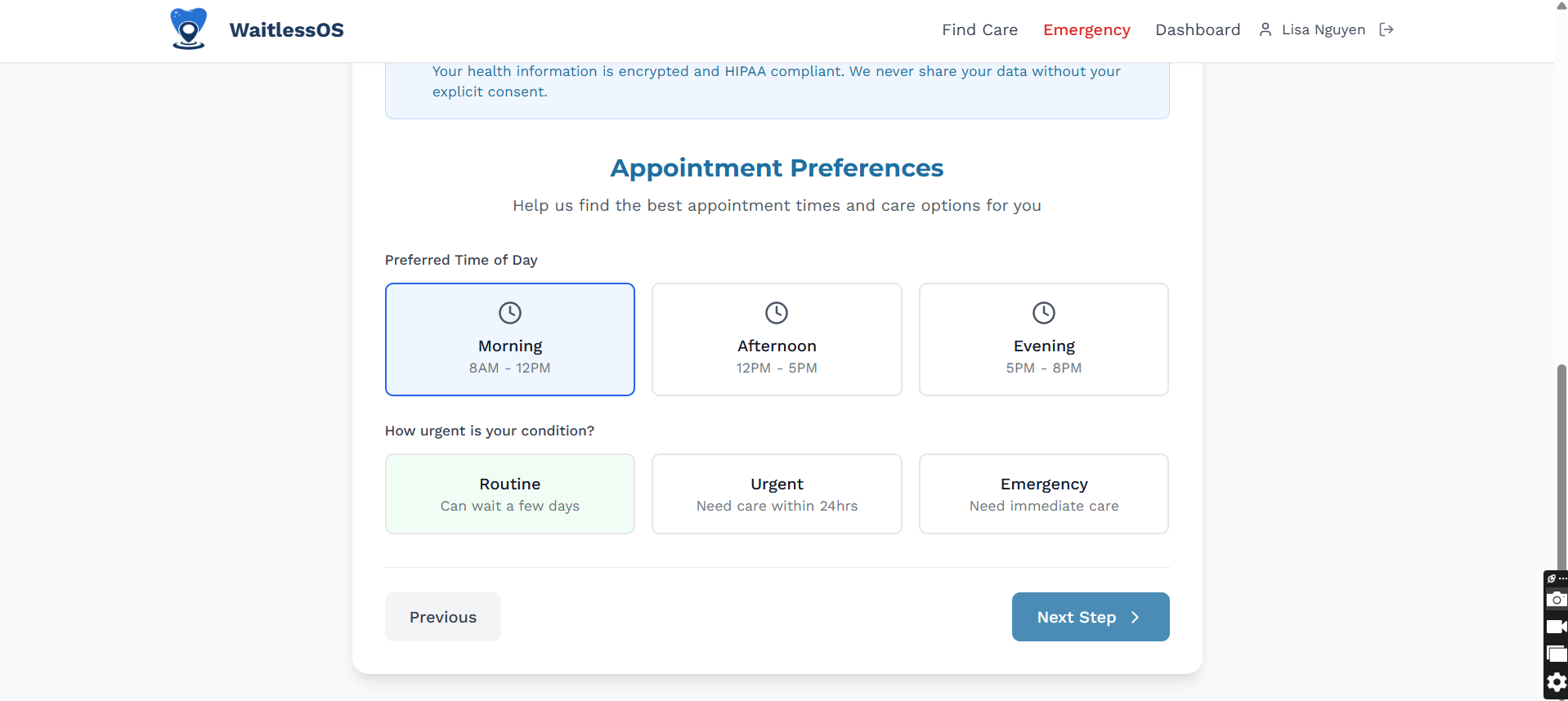
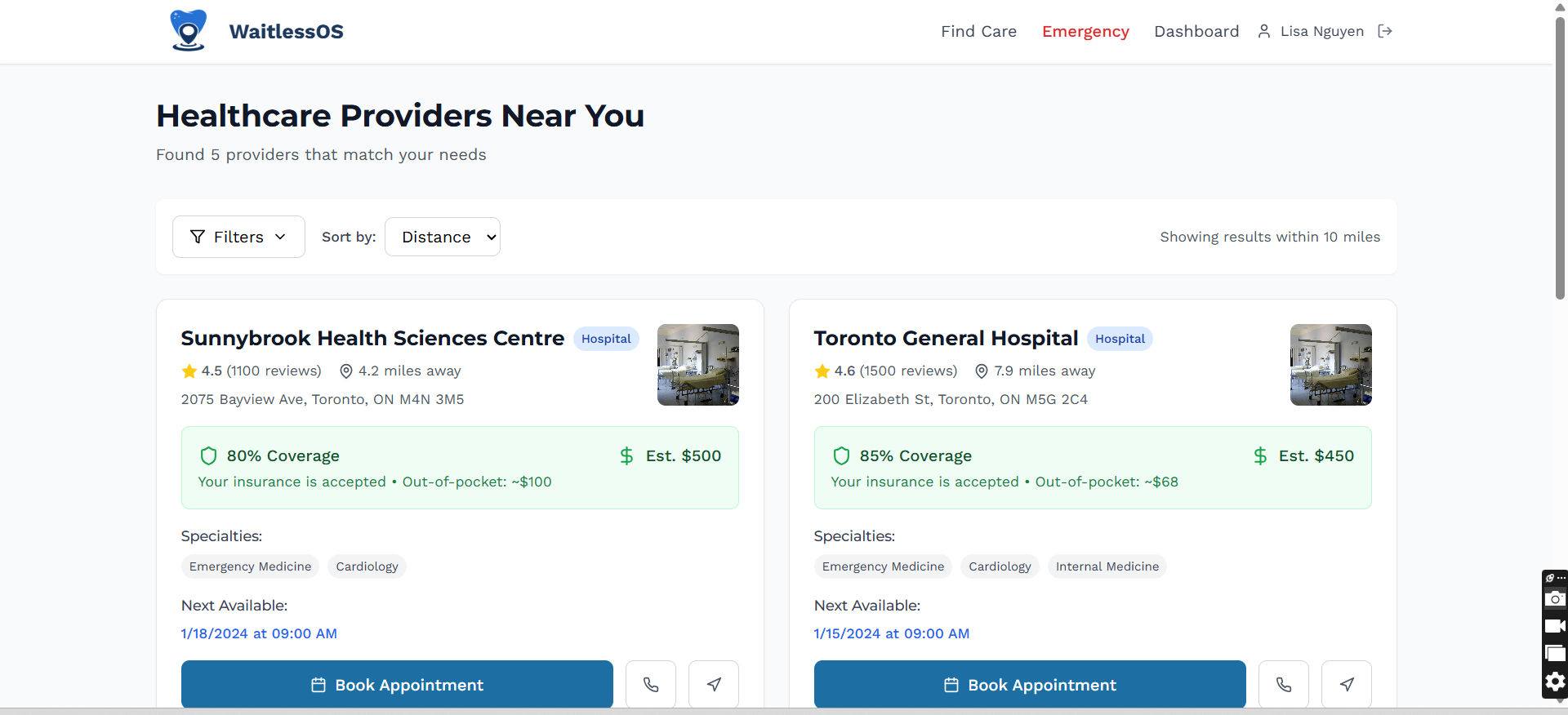
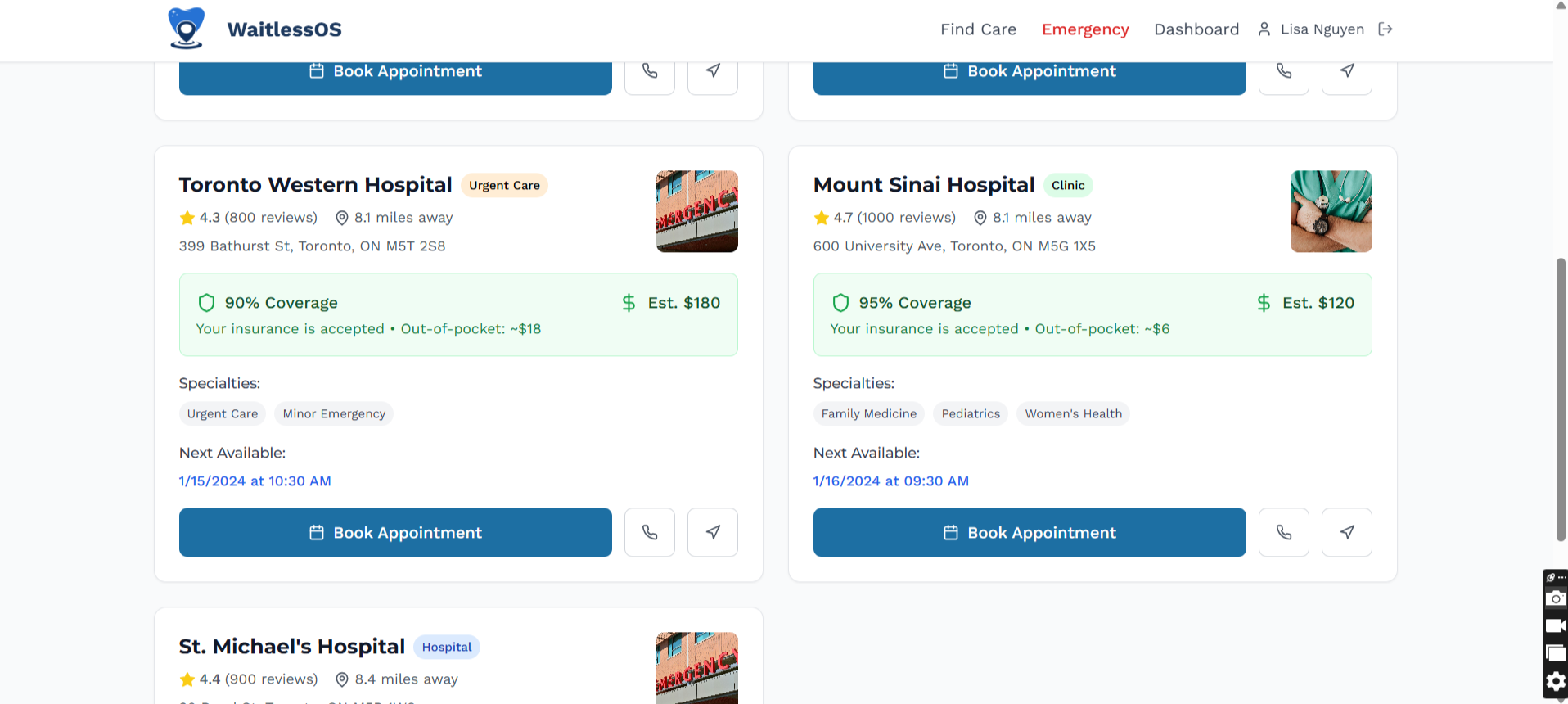
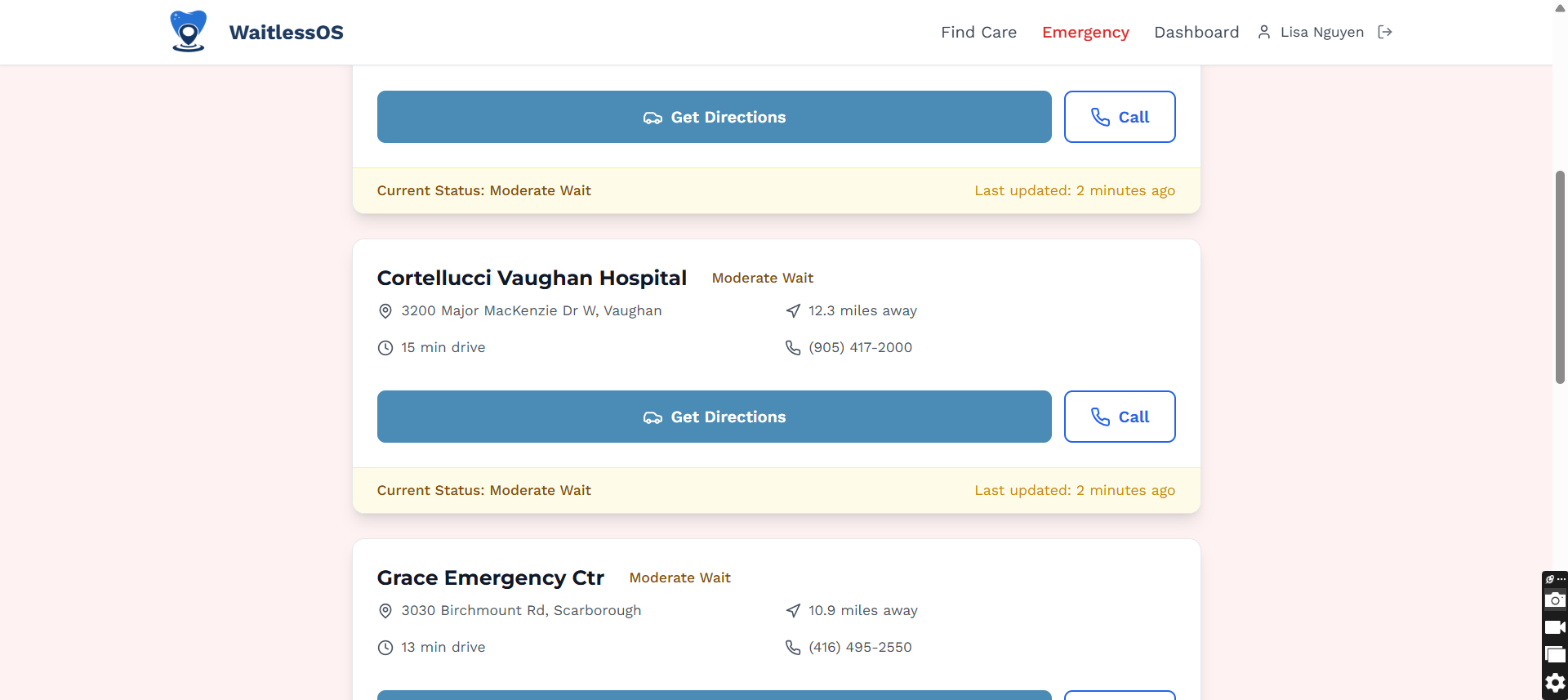
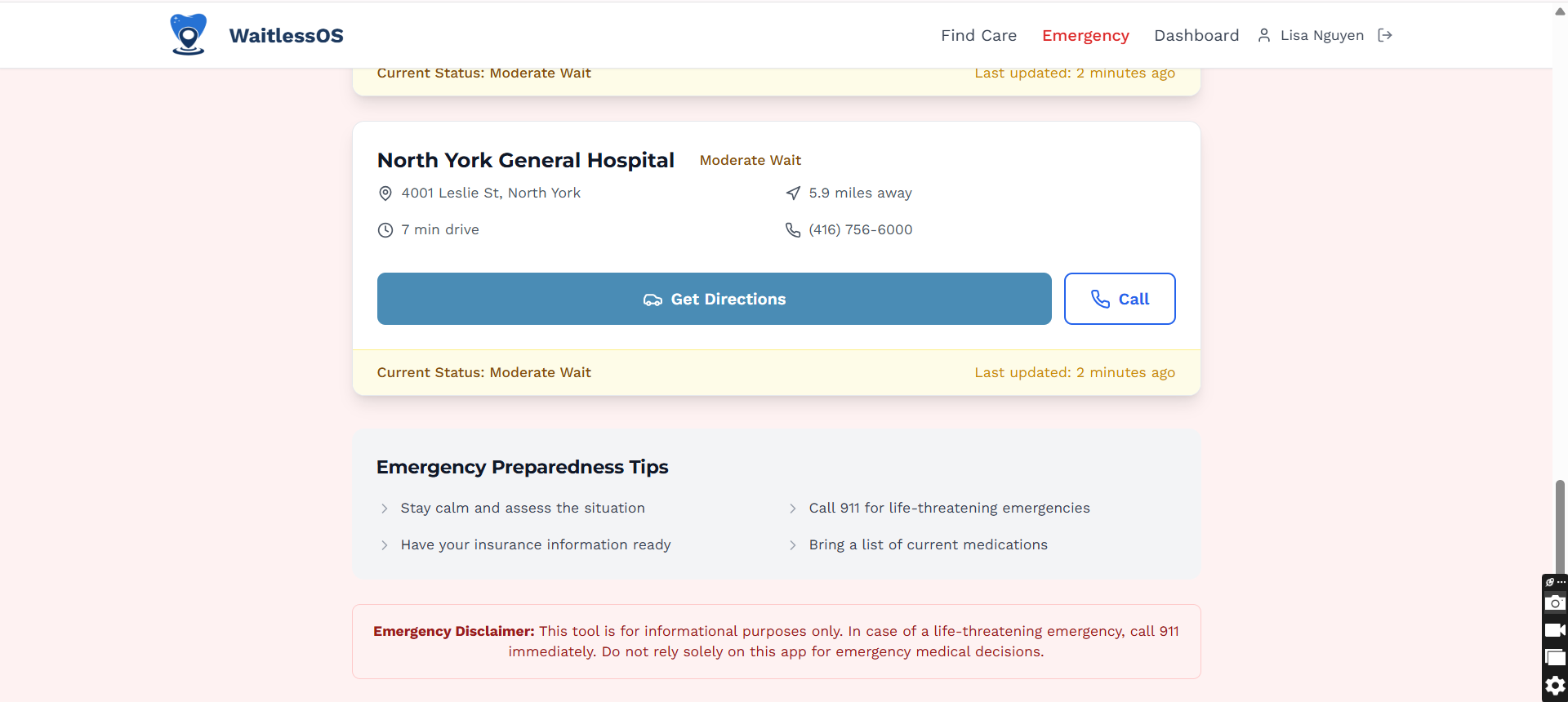
Showing the most relevant clinics/hospitals based on insurance, proximity, and availability
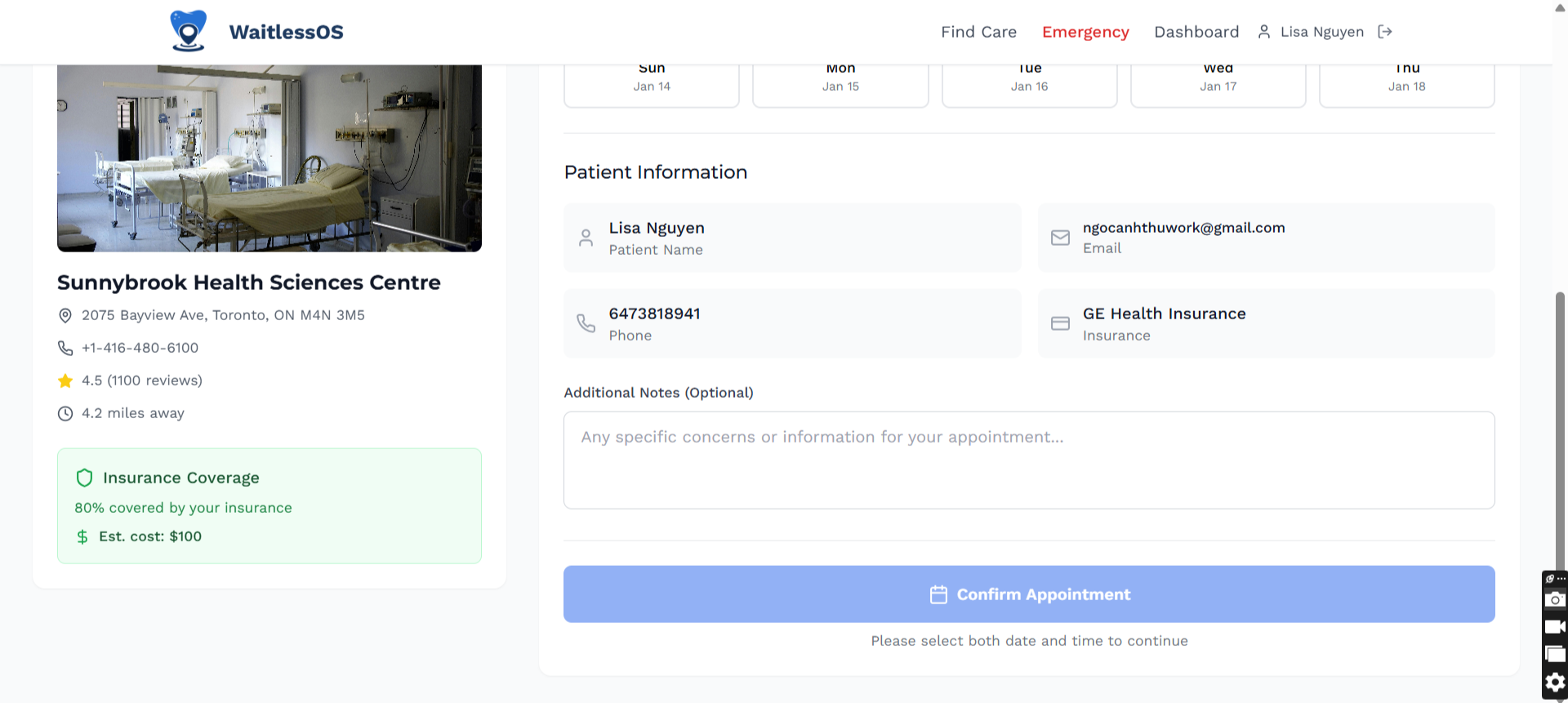
Providing cost estimates and insurance coverage breakdowns
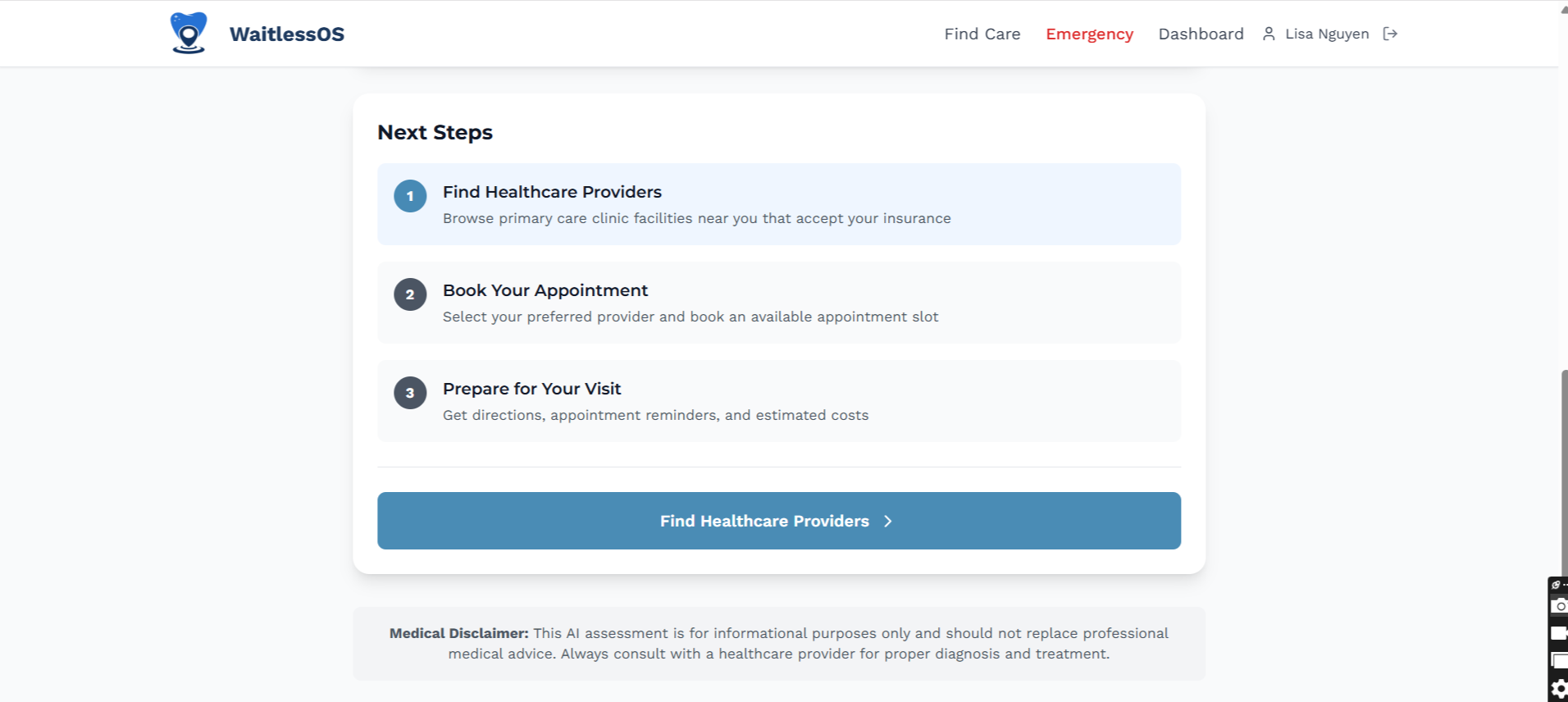
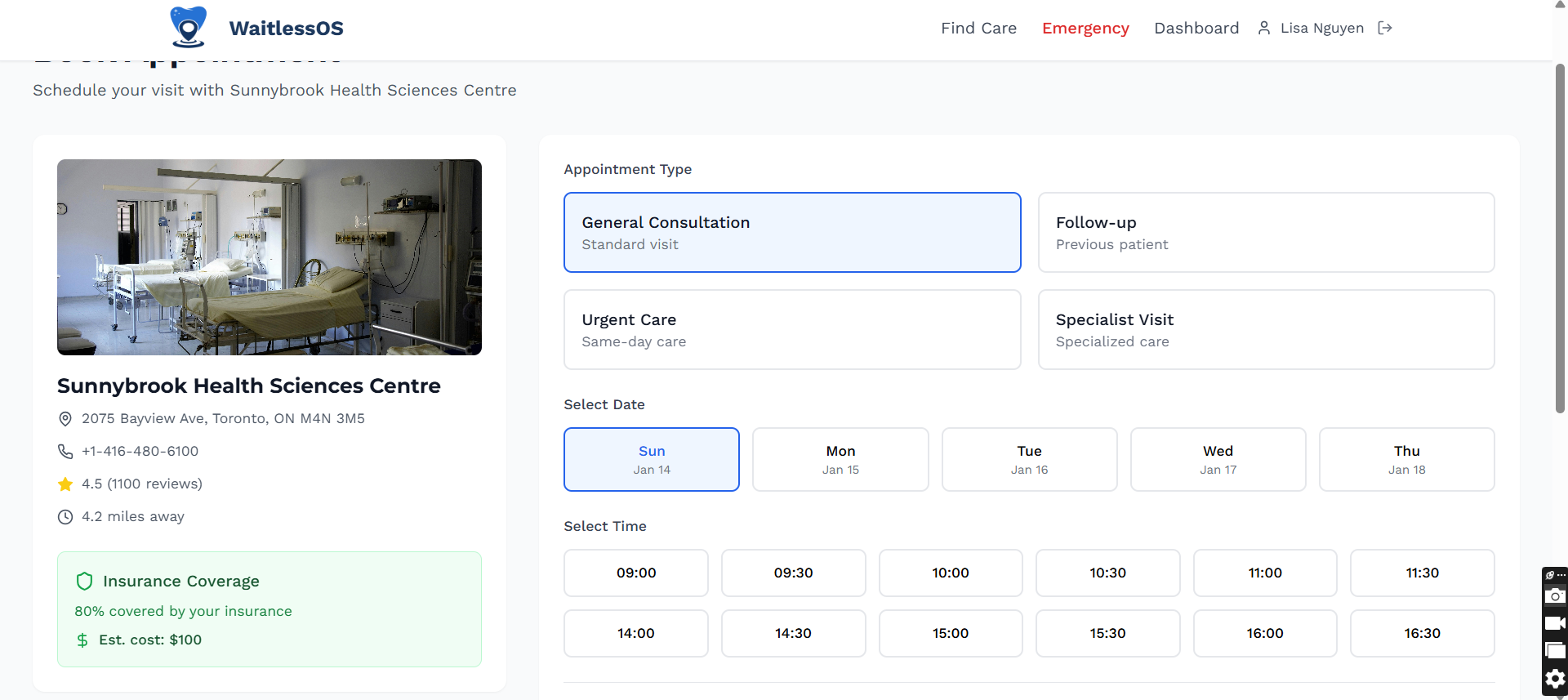
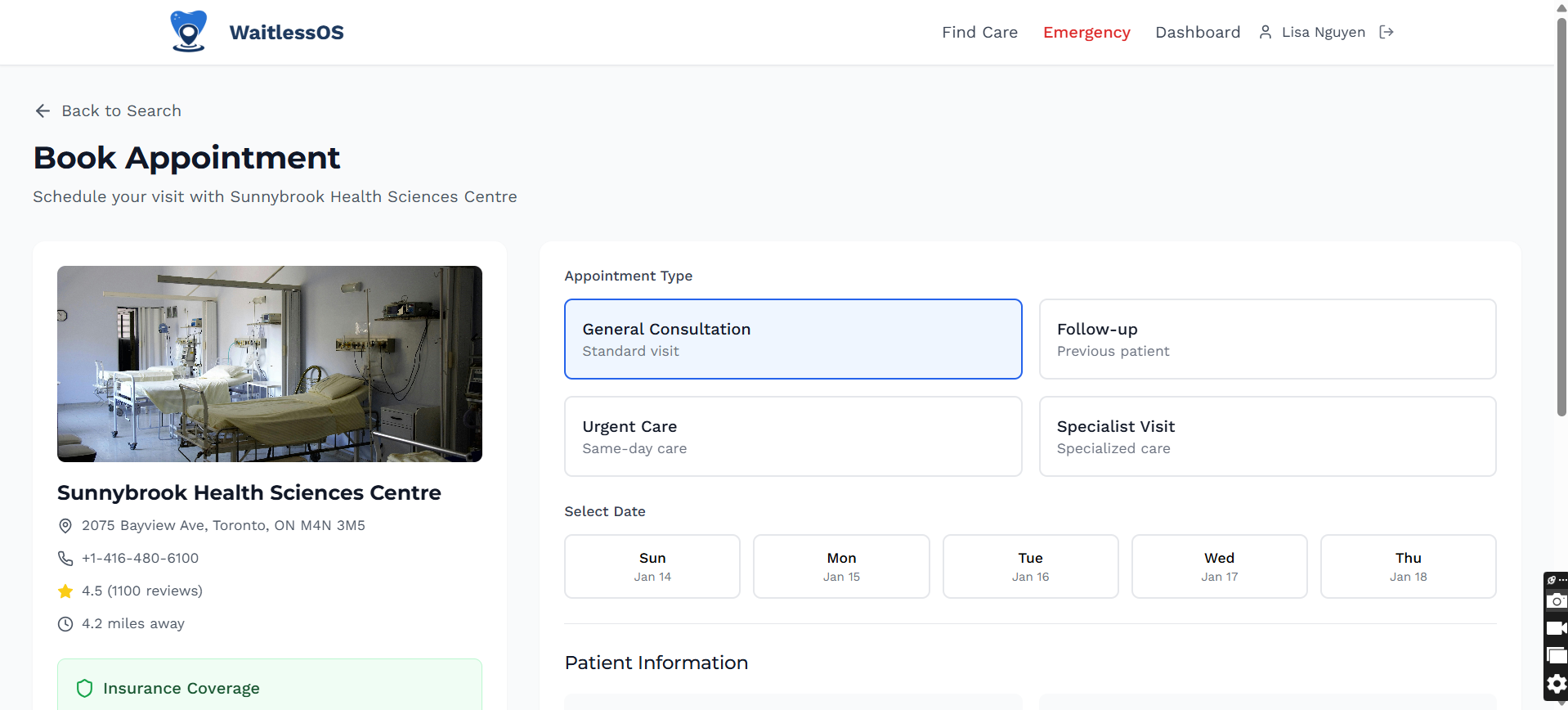
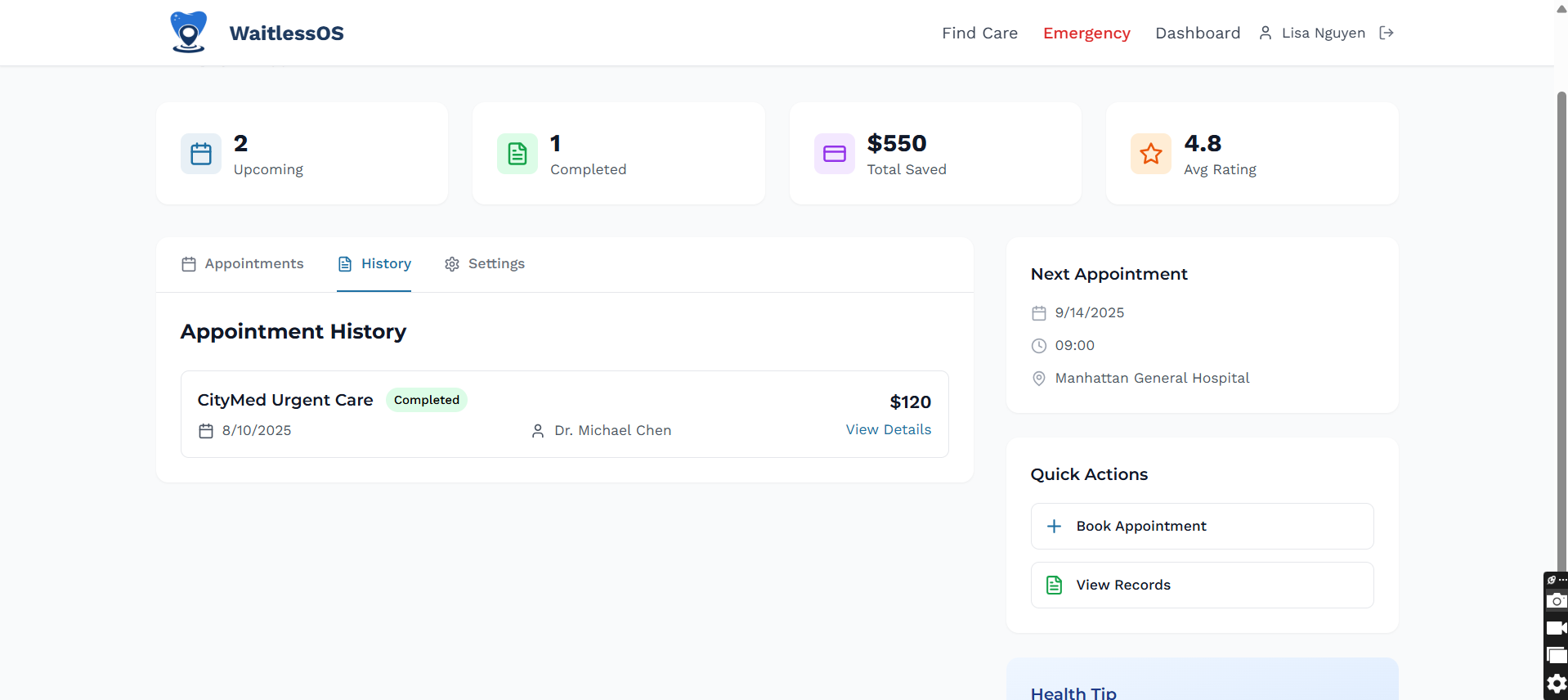
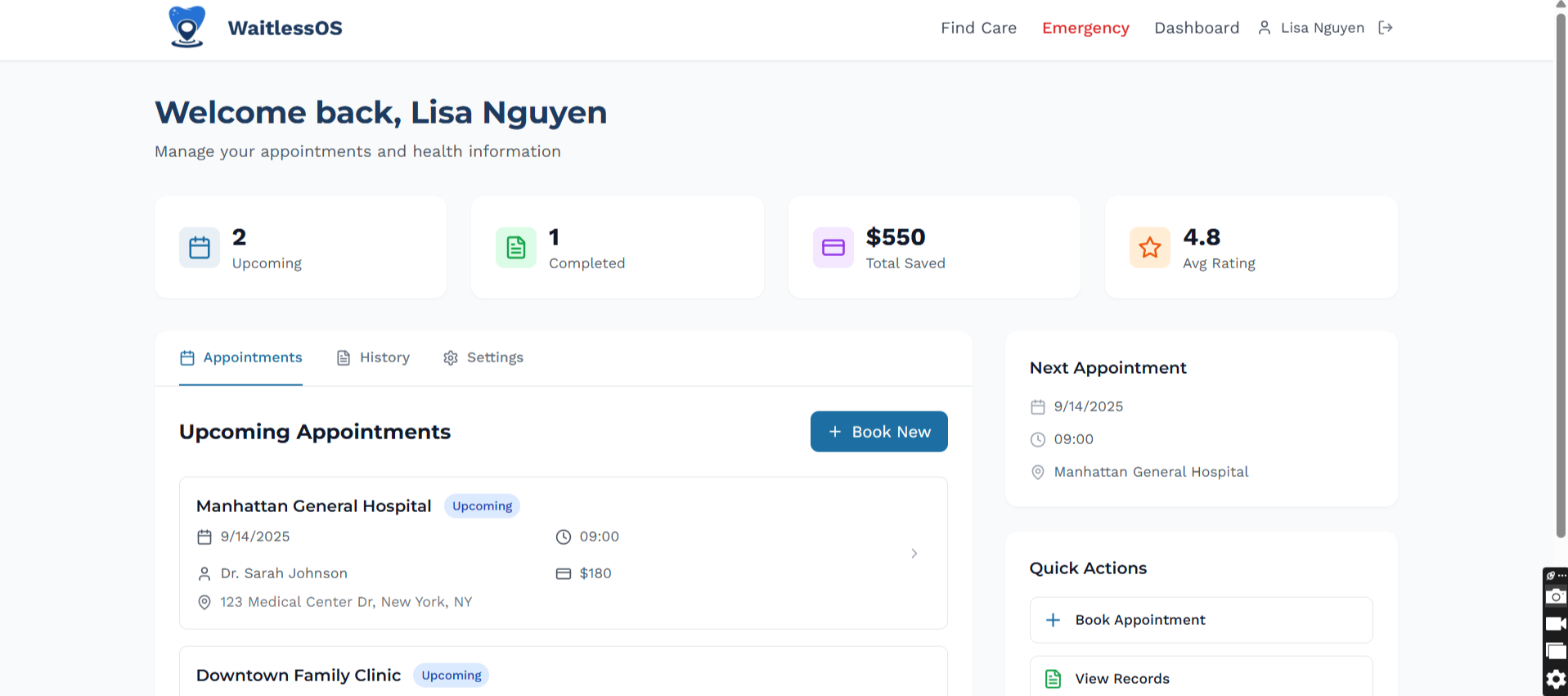
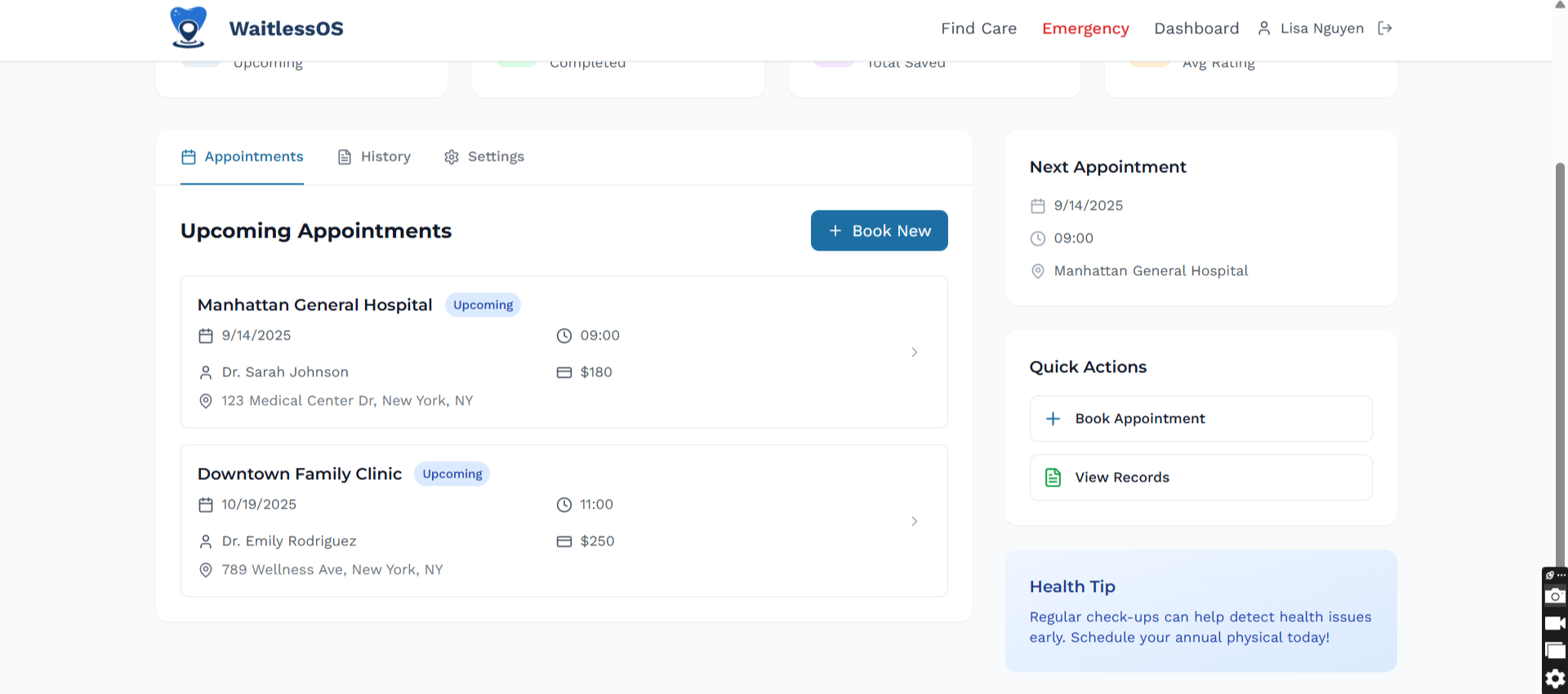
Enabling instant booking, waitlist joining, and navigation
Reducing decision friction, panic, and time wasted in emergencies
⚙️ Functionality
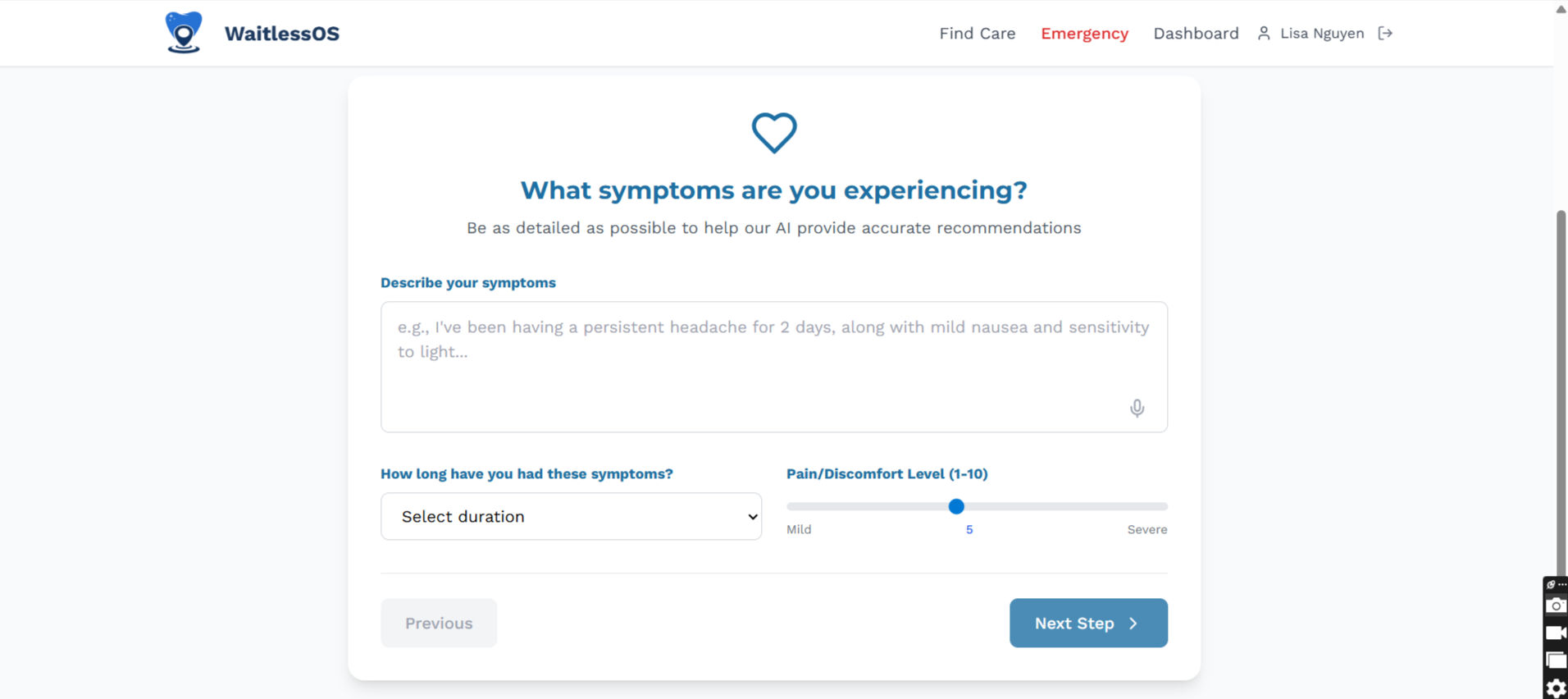
Intelligent Triage
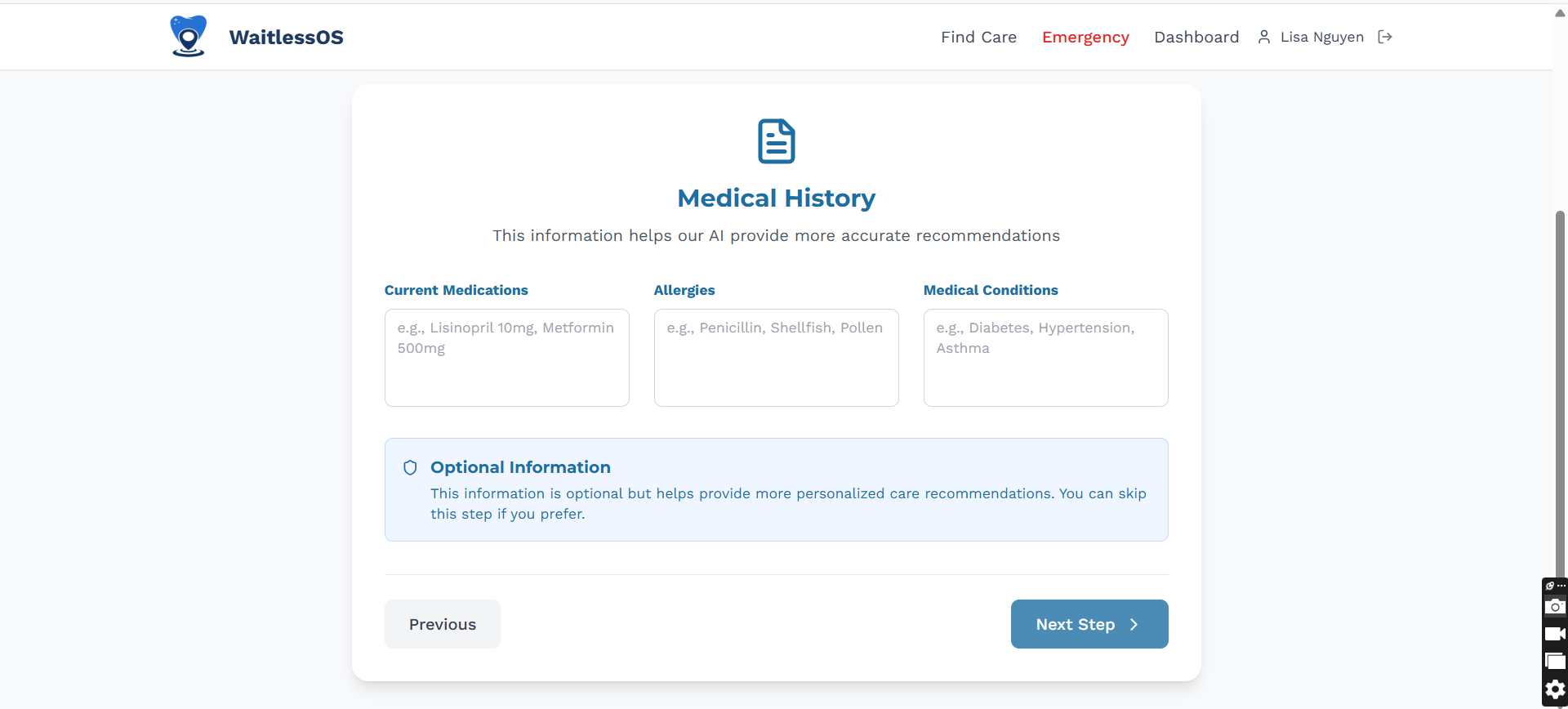
Users enter their symptoms and WaitlessOS:
Uses Gemini AI API to assess urgency
Suggests whether to go to ER, urgent care, or book a clinic
Smart Search
Filters clinics by insurance (e.g., UHIP, Blue Cross, Aetna)
Ranks based on distance, ratings, and availability
Supports real-time appointment visibility (with potential for API integration)
Coverage & Cost Estimator
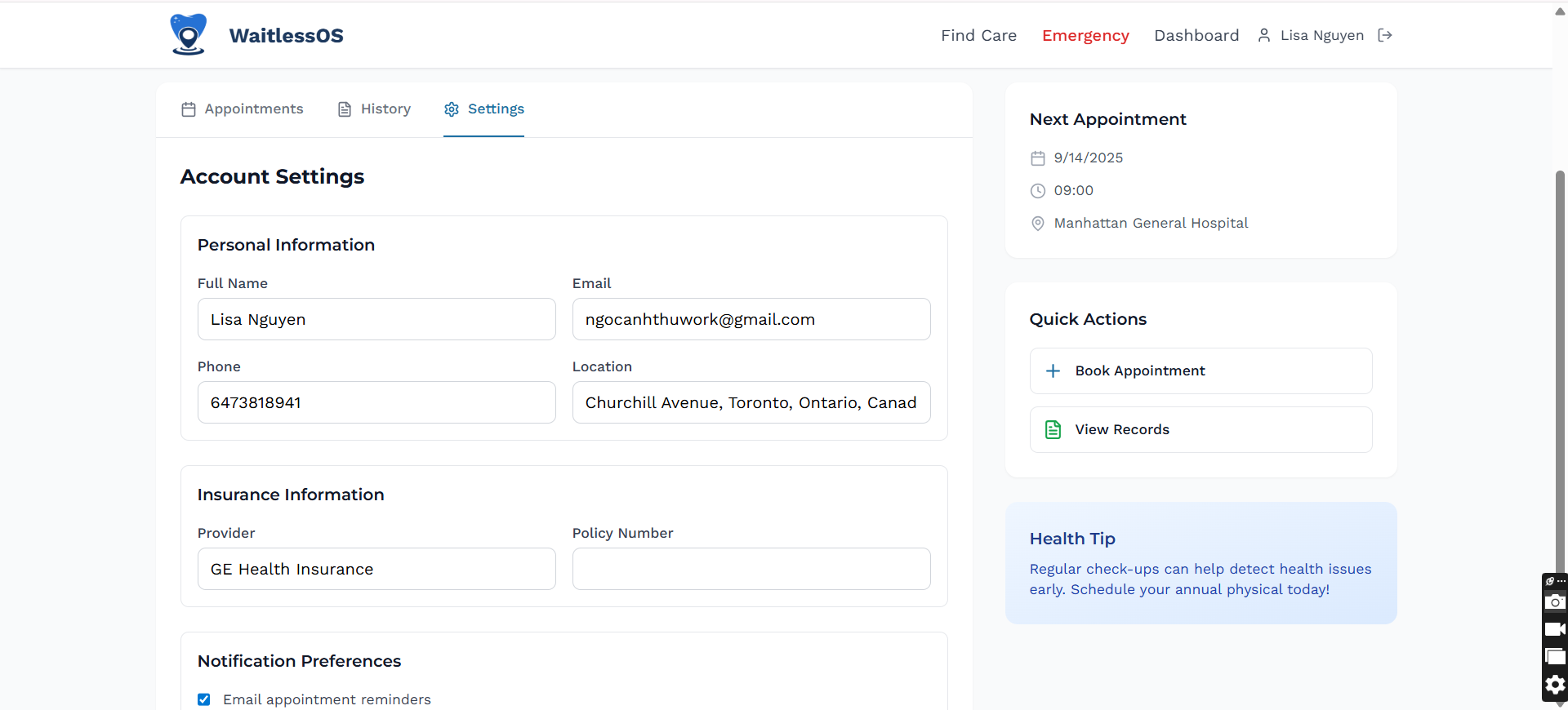
Explains what your insurance covers
Estimates out-of-pocket cost based on appointment type and plan
Seamless Booking
Book appointments or join waitlists directly in-app
Integrates with Google Maps for directions and static maps
🛠️ Tech Stack
Frontend: React, TailwindCSS, Vite
Backend: Node.js, Express, TypeScript, MongoDB, Redis
Google Maps API for geolocation and navigation
Gemini (Generative AI) for symptom triage
Authentication: JWT
📈 Impact
WaitlessOS has the potential to:
Empower patients with clarity and control over their healthcare journey
Reduce emergency room overcrowding by routing users appropriately
Improve access for underrepresented groups like international students
Streamline communication between clinics and patients
If integrated with real healthcare APIs and patient records (with HIPAA compliance), it can evolve into a full-service telehealth system.
📚 What We Learned
Technical Skills
Handling secure, environment-based config loading (dotenv, .env)
Using TypeScript for cleaner, safer backend logic
Managing asynchronous logic across multiple services (MongoDB, Redis, Gemini)
Implementing real-world rate limiting, logging, and error handling
Personal Growth
Navigating healthcare complexity
Learning how insurance systems vary across user groups
Developing a user-centric mindset for accessibility and urgency
🔥Challenges Faced
Sensitive APIs: Some healthcare APIs require real authorization (e.g., Epic, Cerner) — hard to simulate in a hackathon setting.
AI hallucination: Gemini sometimes gave vague triage results, so post-processing was needed.
Map APIs: Managing markers, distance matrix, and fallback options in case of missing API keys
Time limits: Building a full-stack app with AI integration in limited time required extreme prioritization
🤔 What Could Be Better?
Mock real-time availability by scraping or simulating real APIs
Add SMS reminders and in-app chat
Use OAuth for better insurance account verification
Provide multilingual support for immigrants
🧪 A Glimpse Into the Future
This project laid the groundwork for a smarter, more accessible healthcare ecosystem.
With more time and partnerships, I envision WaitlessOS as a real-time, trusted advisor that can:
Predict wait times
Support telehealth
Securely integrate with EHR systems
Serve vulnerable populations across the globe
Built With
- express.js
- gemini
- jwt
- map
- mongodb
- node.js
- react
- redis
- tailwindcss
- typescript
- vite


Log in or sign up for Devpost to join the conversation.