-
-
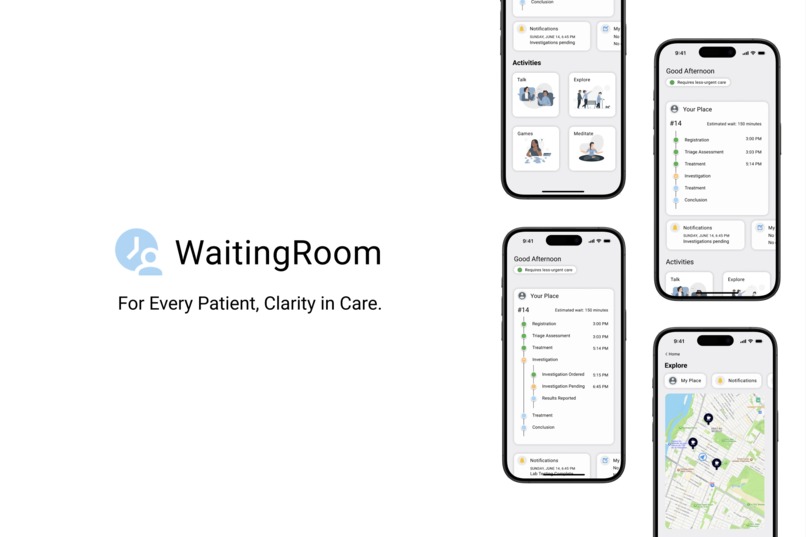
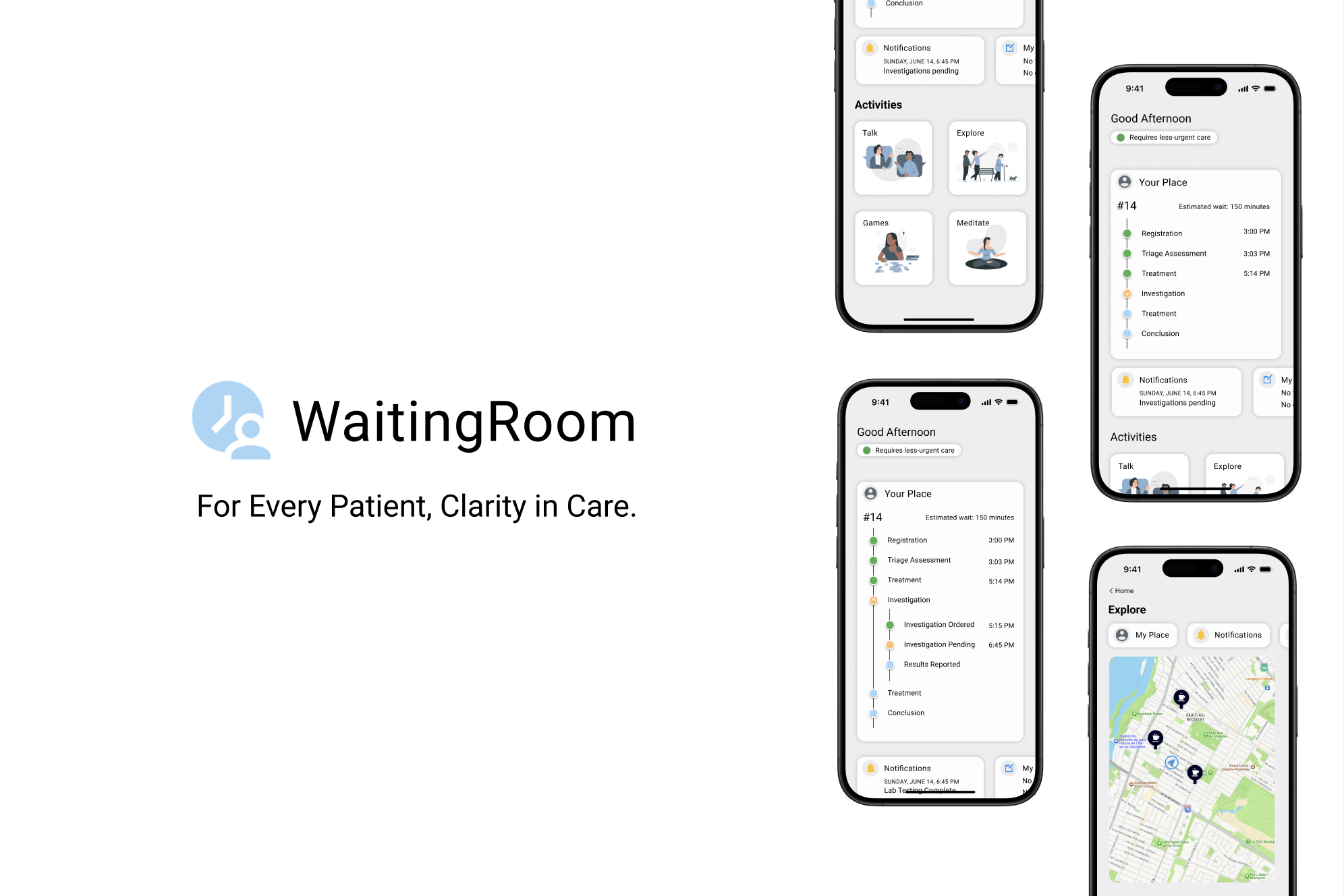
WaitingRoom: For Every Patient, Clarity in Care.
-
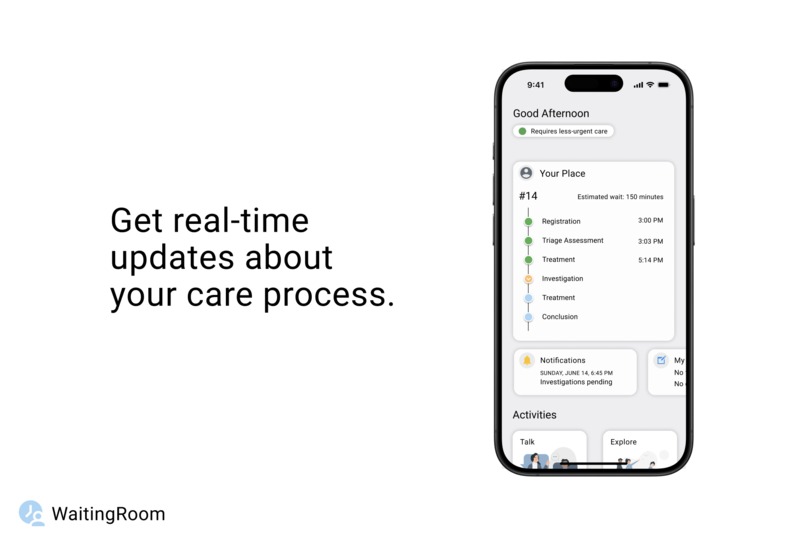
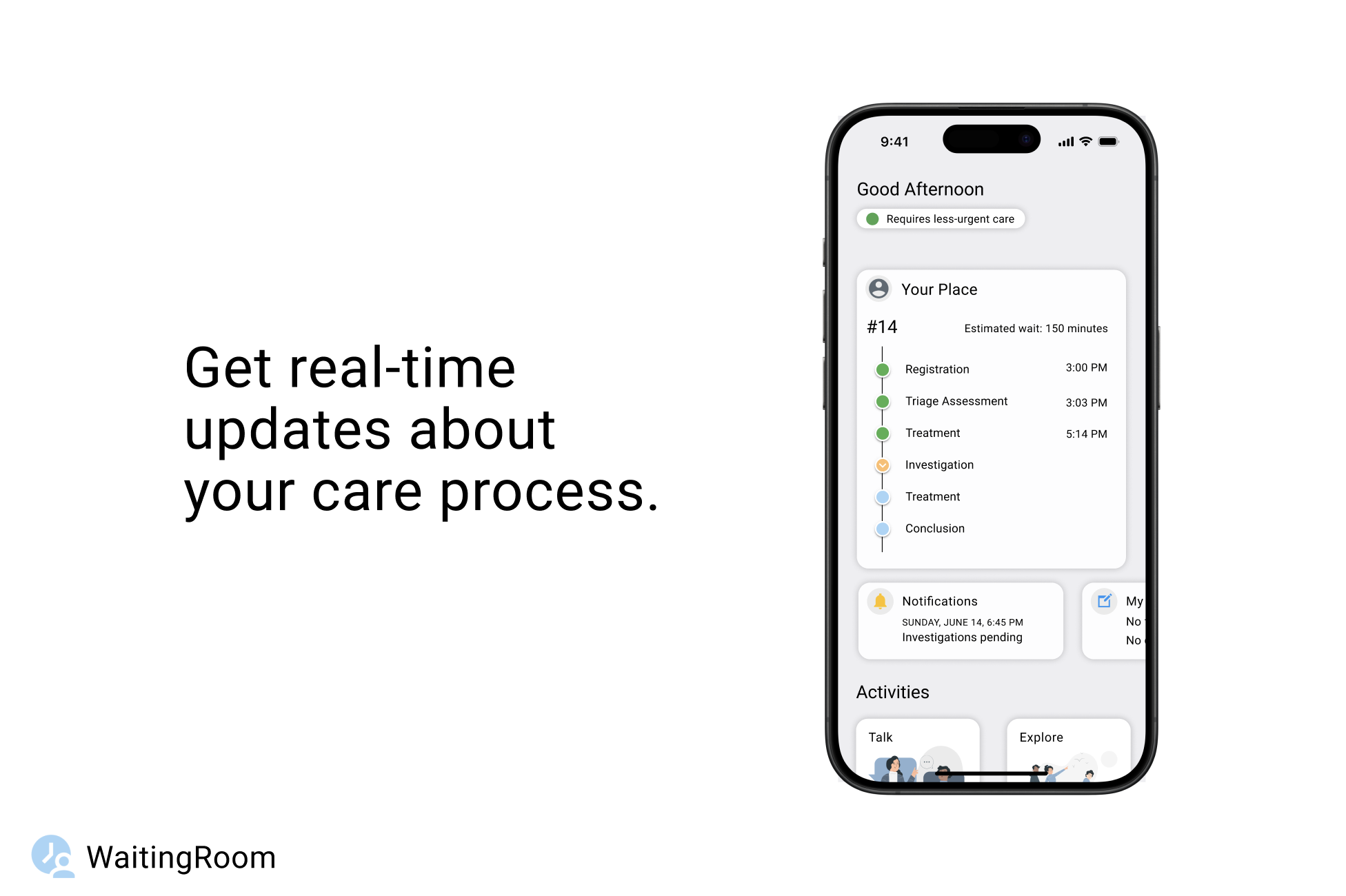
Get real-time updates about your care process.
-
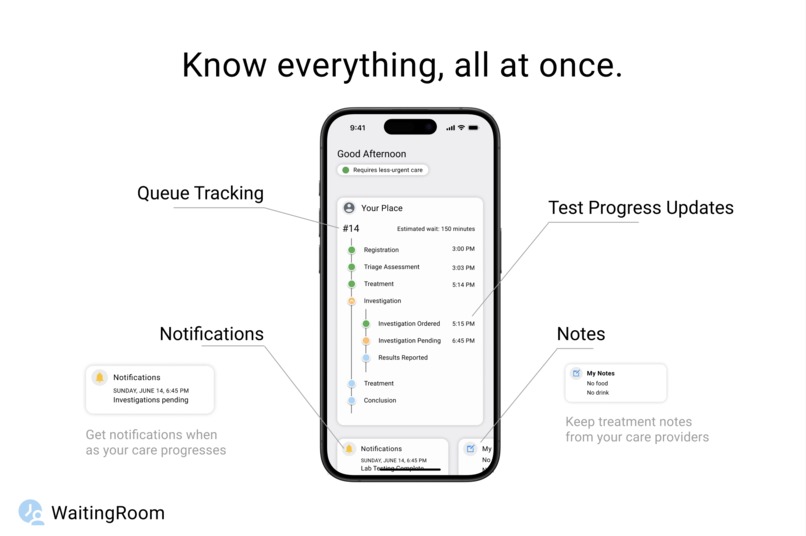
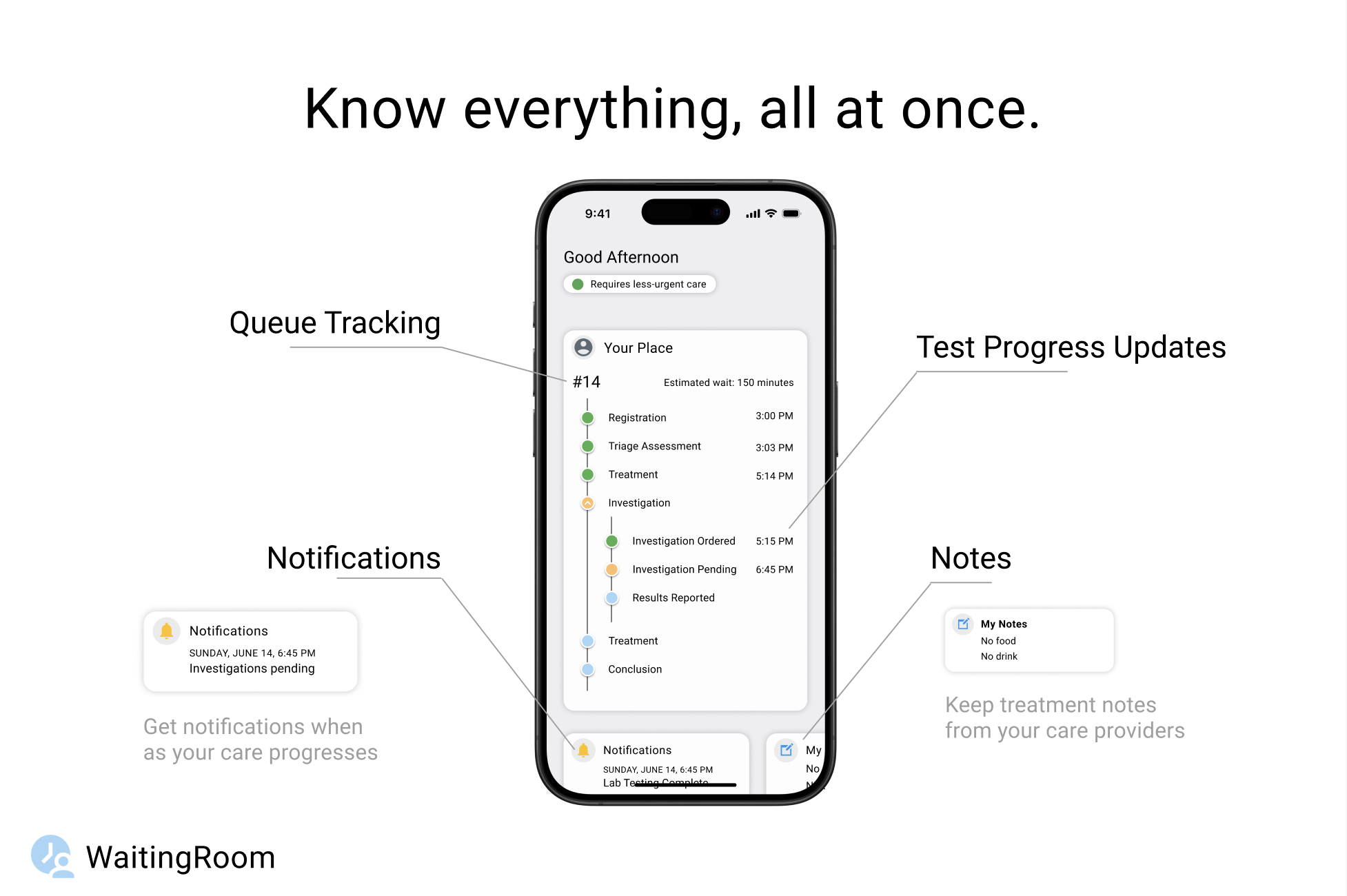
Know everything, all at once.
-
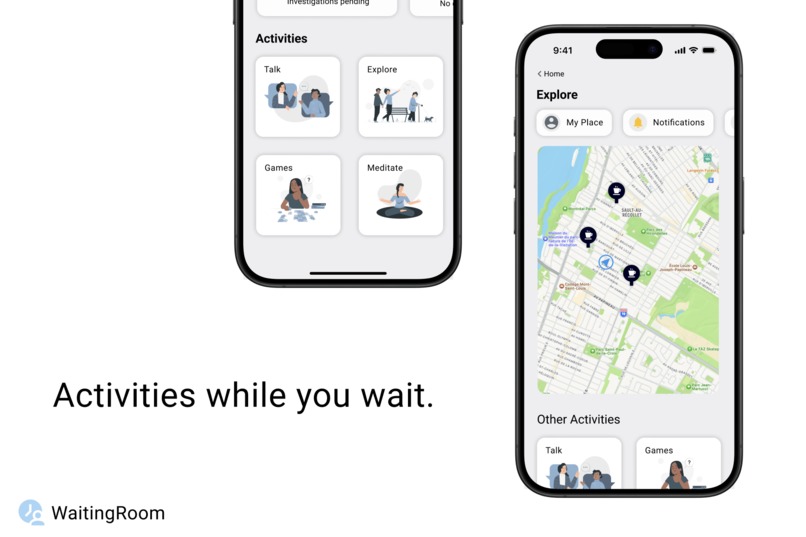
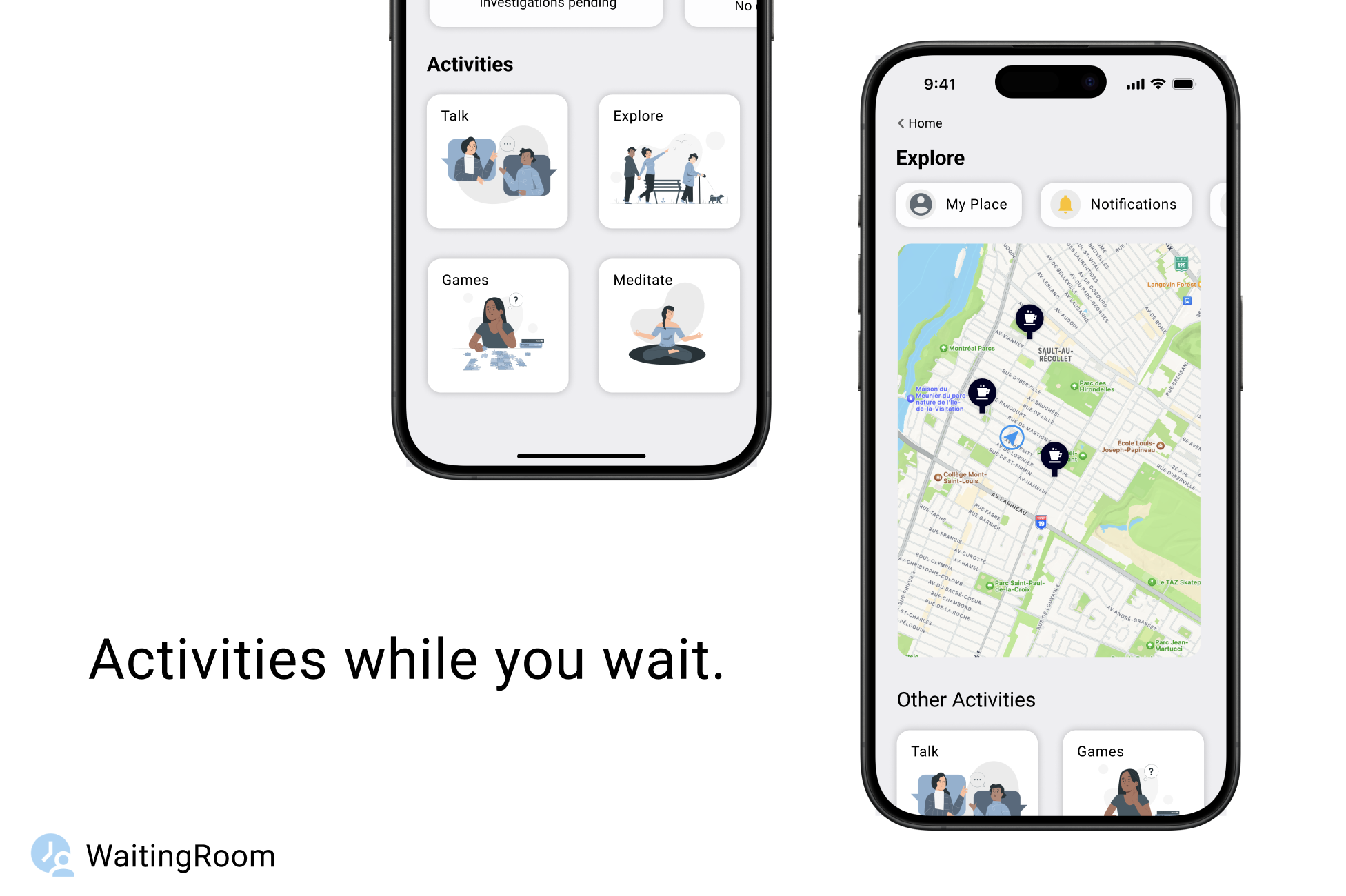
Activities while you wait.
-
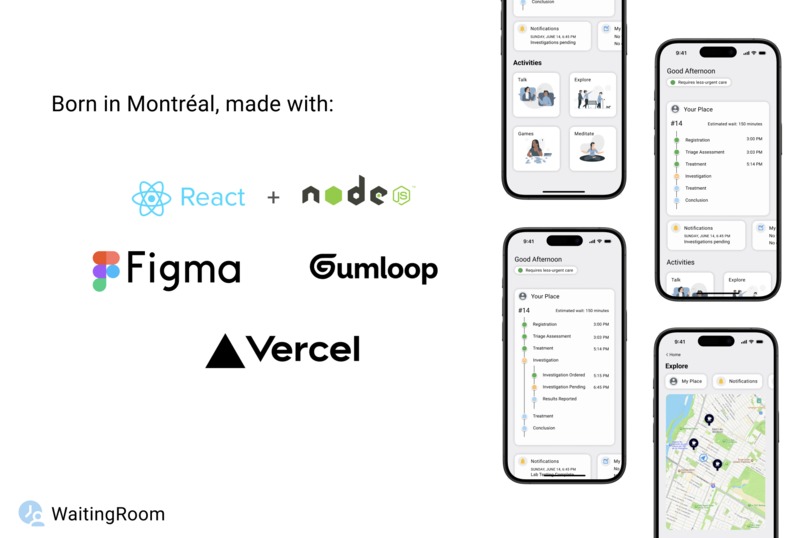
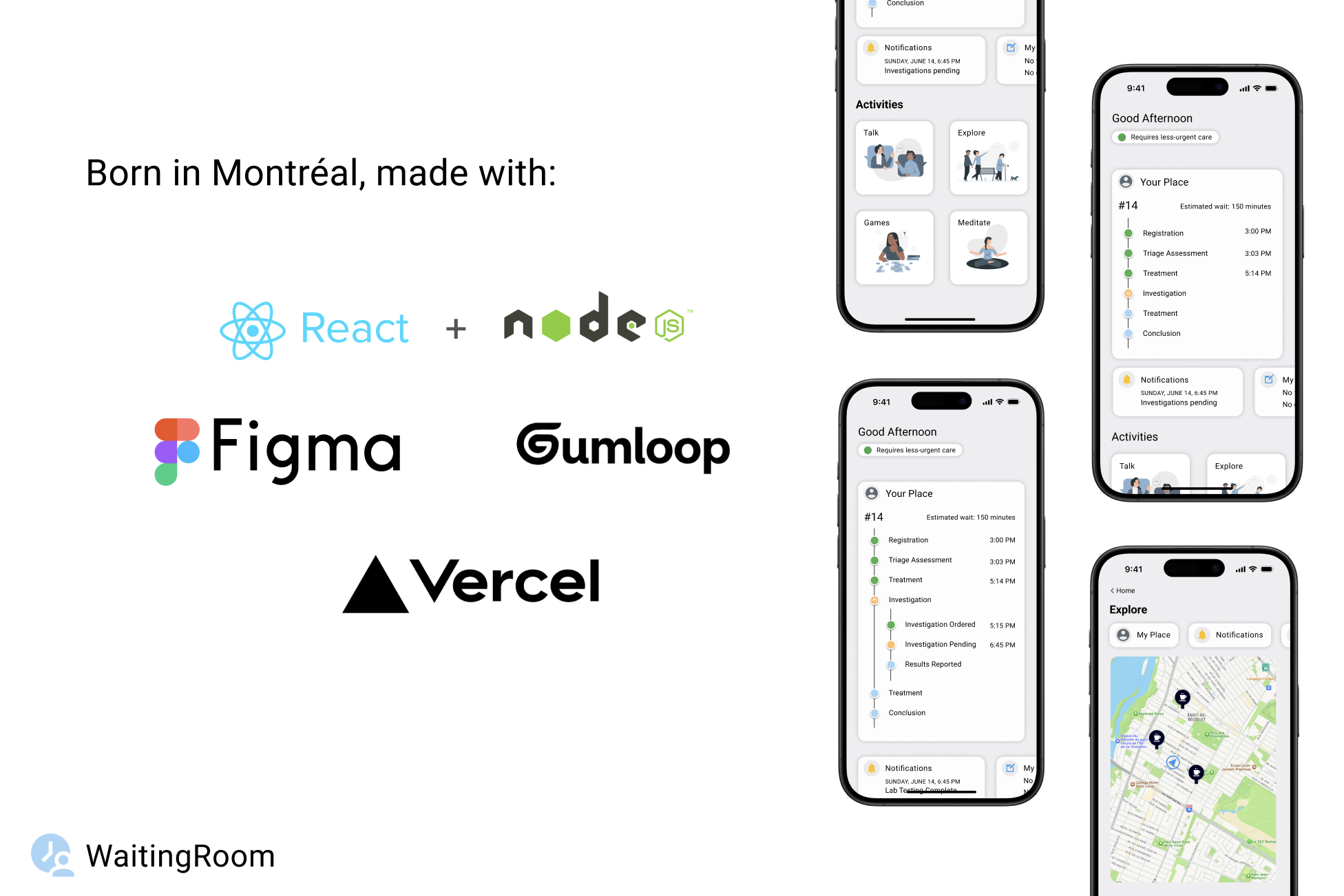
Born in Montréal, made with ❤️.
Inspiration 💭
We spend a lot of our time in the world waiting—waiting for packages, waiting for restaurant tables, or even waiting at the bus stop.
Waiting is agonizing.
That’s why we have tools to track our package deliveries, join restaurant waitlists, or check bus schedules in real-time. But what about when it matters the most?
In the emergency room, during one of the most stressful experiences of our lives, we’re left in the dark with no way to track the progress of our visit. Why, in these critical moments, is there no system to keep us informed about our journey?
What is WaitingRoom? ⏱️
Waiting Room provides real-time updates on their journey through the ER! Patients can enter their ID to access personalized information about their current phase of care, the status of requested investigations, and more. It acts as an easy accessible source of information in a extermely chaotic enviornment where uncertianty runs rampent. Beyond updates, the app offers interactive activities like hospital exploration and guided meditation to enhance the patient experience during their stay.
How we built it 💪
Material UI + NextJS web-app with gumloop workflows calling the IFEM API.
Data Handling
To retrieve and transform data from the IFEM award API we use Gumloop!
We use Gumloop to make various requests to the IFEM API to retrieve patient data and general wait time statistics. We then transform this data and create a simple JSON object with all the necessary info we need so our web app can access it through Gumloop's API.
You can find our Gumloop Webflow here!
Interface Design
We designed the interface using Figma, leveraging the Material UI (MUI) react library for a modern and intuitive user experience. This also ensured that building out the UI using software would be as straightforward as possible, so we could focus our energy on building a better product!
We built our web app using React and Next.js, leveraging Vercel for an efficient deployment.
Challenges we ran into 😵
One sections we really struggled with was the initial ideation of some of the peripheral activities. Inheriently we knew that this needed to be an informationl app, however, the role of technology in healthcare can often be scrutinazed and when our ideas started to lean towards a mental health AI chatbot, we felt we may be wandering in the wrong direction. Instead, we kept coming back to the idea that when people are in peril and paniced and anxious, there is not always a technological answer. Instead we started to brainstorm how we can facilitate positive feelings of connection in places like the ER, or at least a mutual undertanding that the dread many feel is not an individual experince. Once we priorized informational systems, we were able to move on, however this question for facilitation still sits at the top of our mind.
Finding a Solution to the Problem
The solution we designed needed to be simple and accessible. When going into a stressful situation, the last thing you want to do, is download an app, or make an account, which is why we used identifier that would already be available to the patients. Additionally, we looked to identify the feelings patients would feel at different stages of the waiting process, from registration to treatment etc. We found that anxiety was a universal experience, and made it a point to include a relevent support link on the app to address this. Additionally, the question of what paitients do during long wiating times came into question. Many feel entrapped in the space, scared to leave -- to address this, we designed a notification system that will connect the patients directly with the care team and be able to feel less axious about missing their chance for care. We designed the app to ensure that patients felt like they had things to do while they waited to avoid the static dread that often acompanies ER visits, through the activities, a feature set we hope to increase in the future.
Integration Challenges
Integrating all the tools we used presented another significant challenge. Transitioning from Figma designs to a React app, connecting the React app to the Gumloop API, and then linking Gumloop to the IFEM API involved multiple moving parts. Each integration came with its own set of bugs and compatibility issues, all of which we had to address within a tight timeframe and with limited prior experience. Despite these obstacles, persistence and teamwork helped us bring everything together successfully!
Learning New Technologies
One of the biggest hurdles was learning how to use new technologies like Gumloop, a tool we had never encountered before. The steep learning curve meant this required a lot of trial and error, but it ultimately paid off as we began to harness its potential.
Accomplishments that we're proud of
We made it! We've all come out of this experience with new skills and new bugs to look out for. While we all had some background in our respective positions, the collaboratoin between sections really allowed us to flex our founder brains and see parts of the project from all sides. This project prompt really inspired us and brought us closer. This is something our team is looking to continue working on, and are excited to have gotten a jump start on the project.
What's next for WaitingRoom
We want to further explore the Waiting Room Environement in ER rooms and dig deeper into what makes a great experience while in a difficult position. Some features on the way:
- Indoor Mapping of hospitals to help individuals find essential services, and locations, like bathrooms, food courts, admin offices etc.
- Setting up a notification flow for physiscians to easily find and contact paitients in the waiting room... before they get lost
- Export the web-app onto a custom URL
- Explore social interventions and learn more about how to better design hospital waiting rooms and tools for them.
Built With
- figma
- gumloop
- material-ui
- react


Log in or sign up for Devpost to join the conversation.