-
-

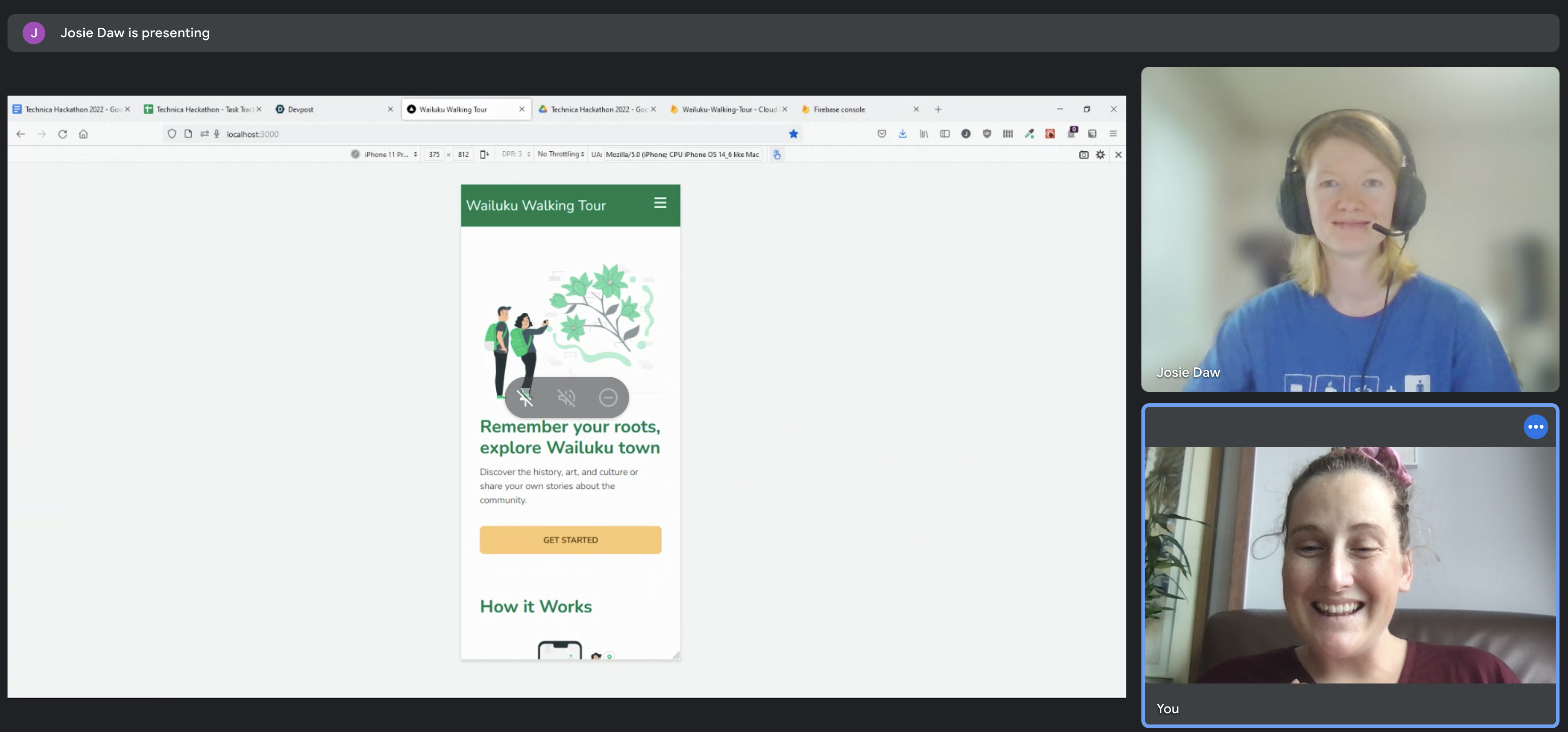
Come take a tour in Wailuku, Maui!
-
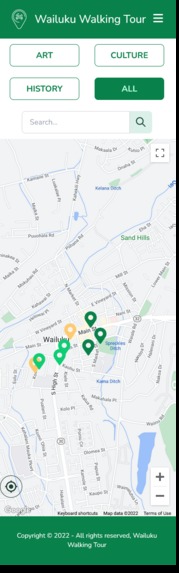
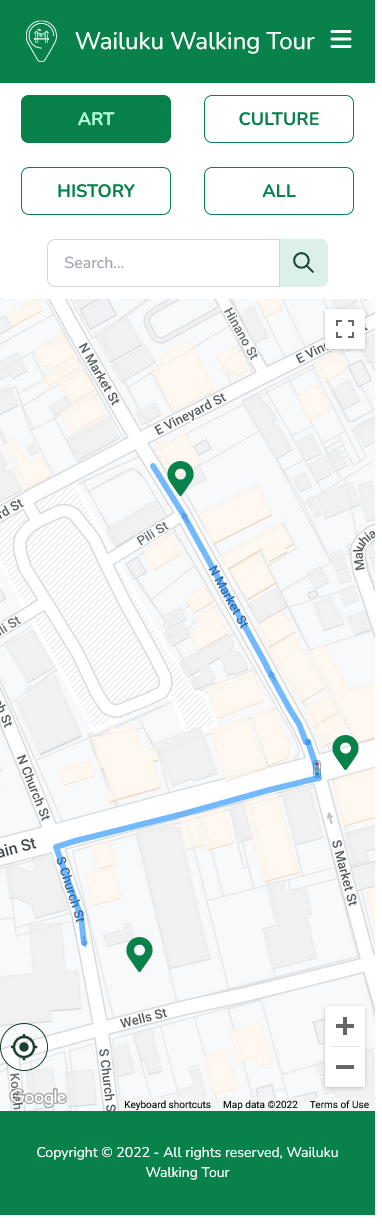
All places on the map in Wailuku
-
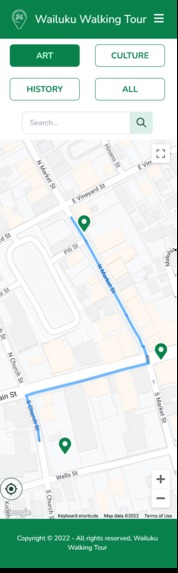
The 'Art' route and markers
-
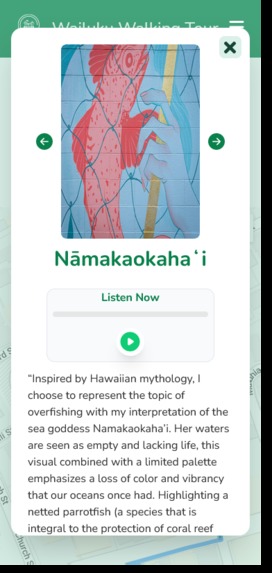
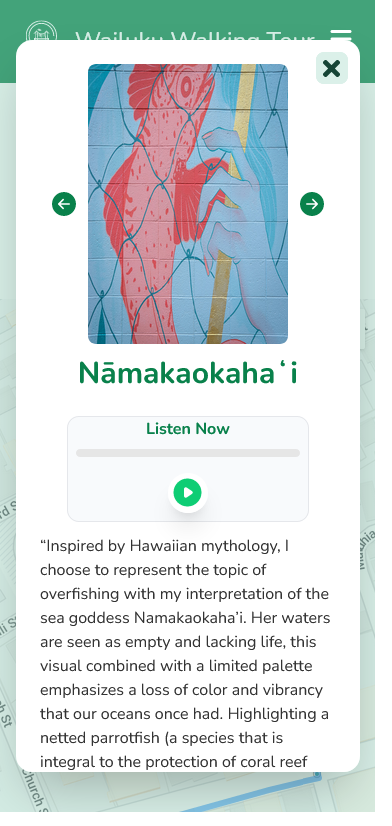
A closer view one of the places
-
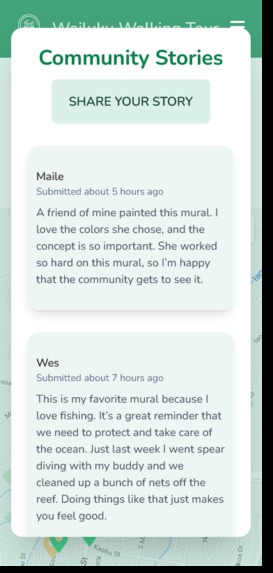
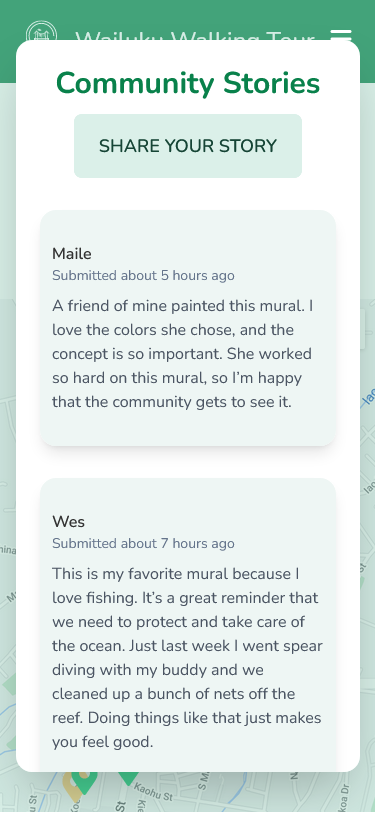
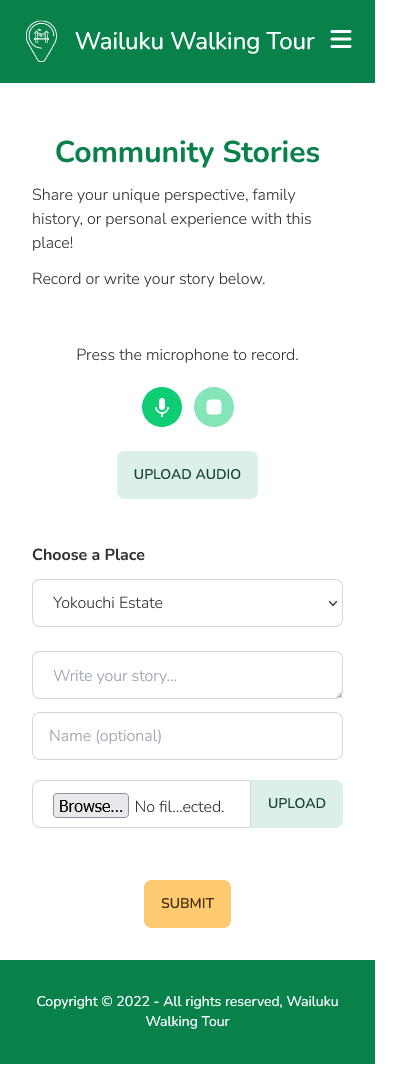
Everyone gets to share their stories!
-
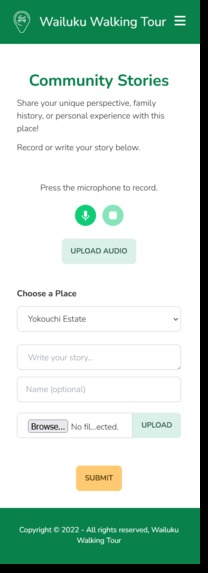
The community can add their own recordings, photos, or stories
-
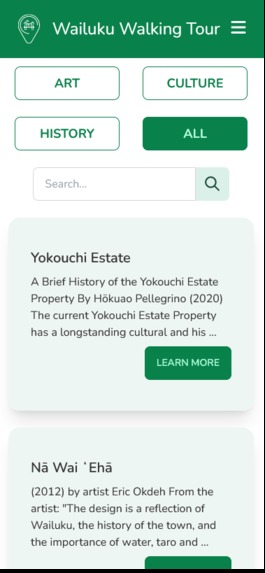
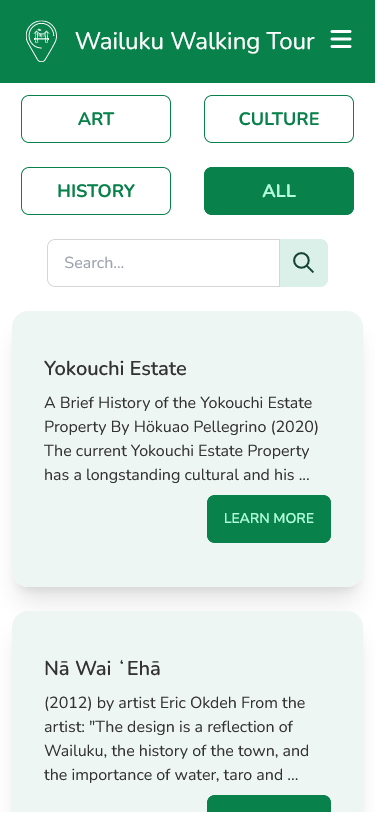
An accessible list view
-
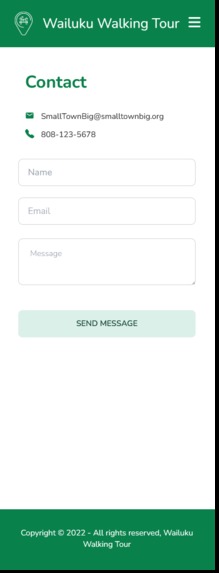
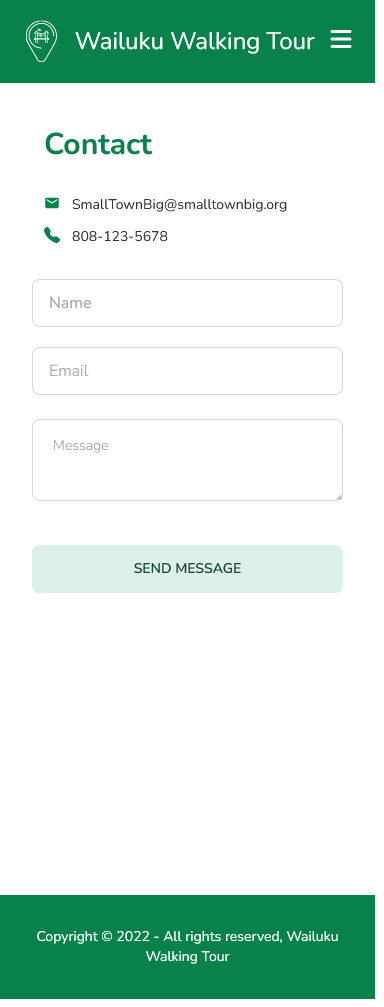
A simple contact page
-
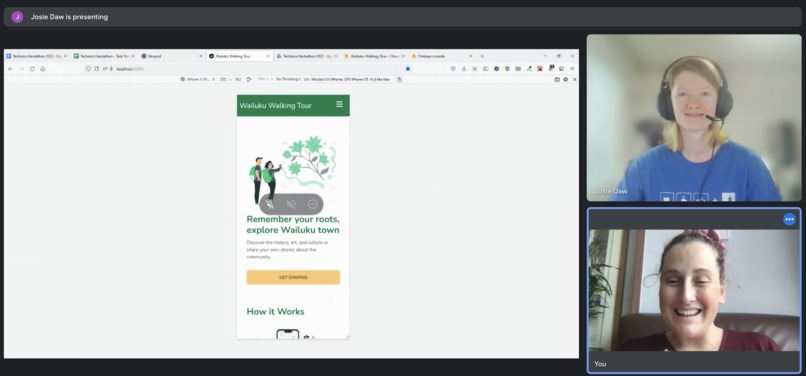
Penelope and Josie reviewing design details
-
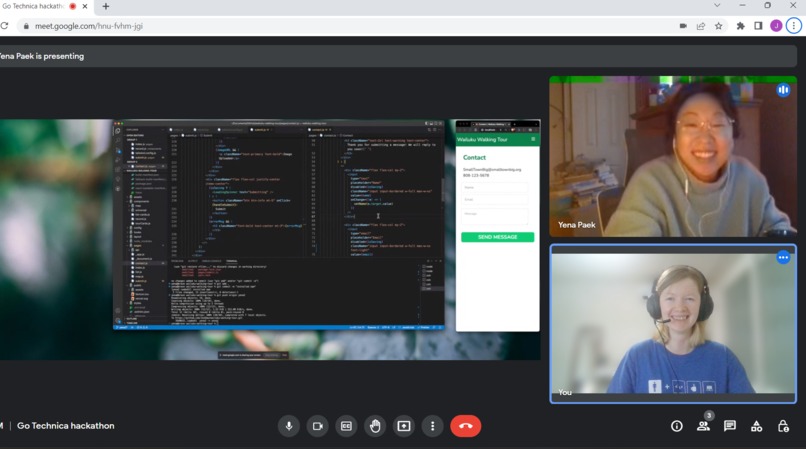
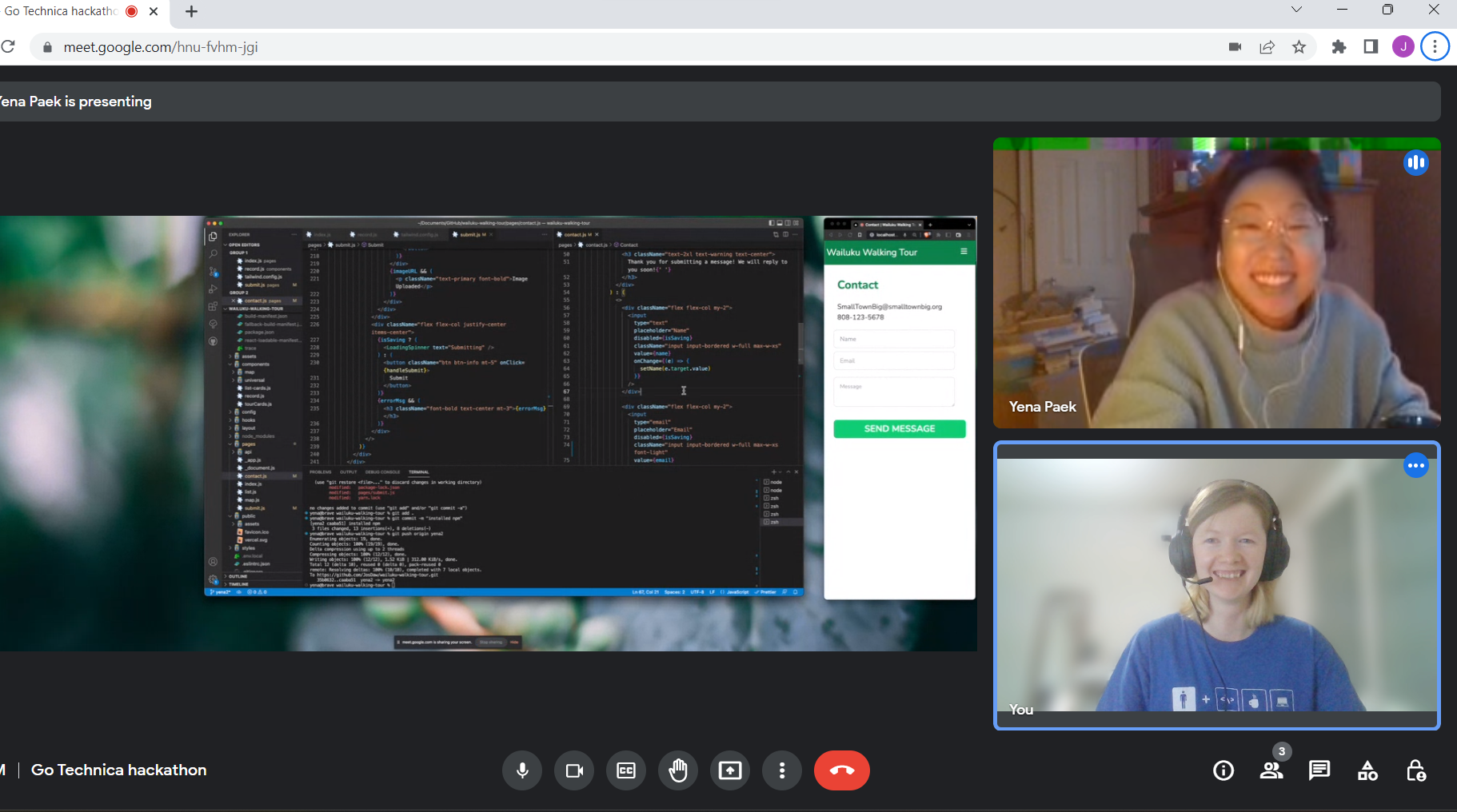
Yena and Josie reviewing some code
-
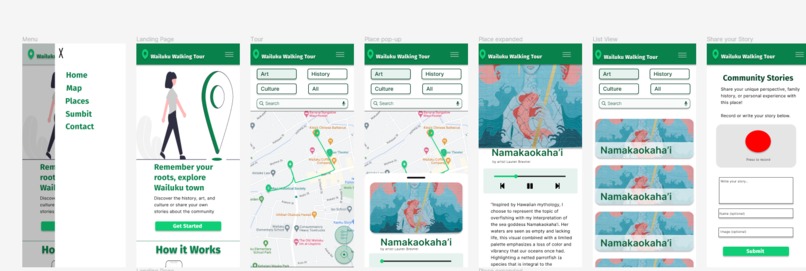
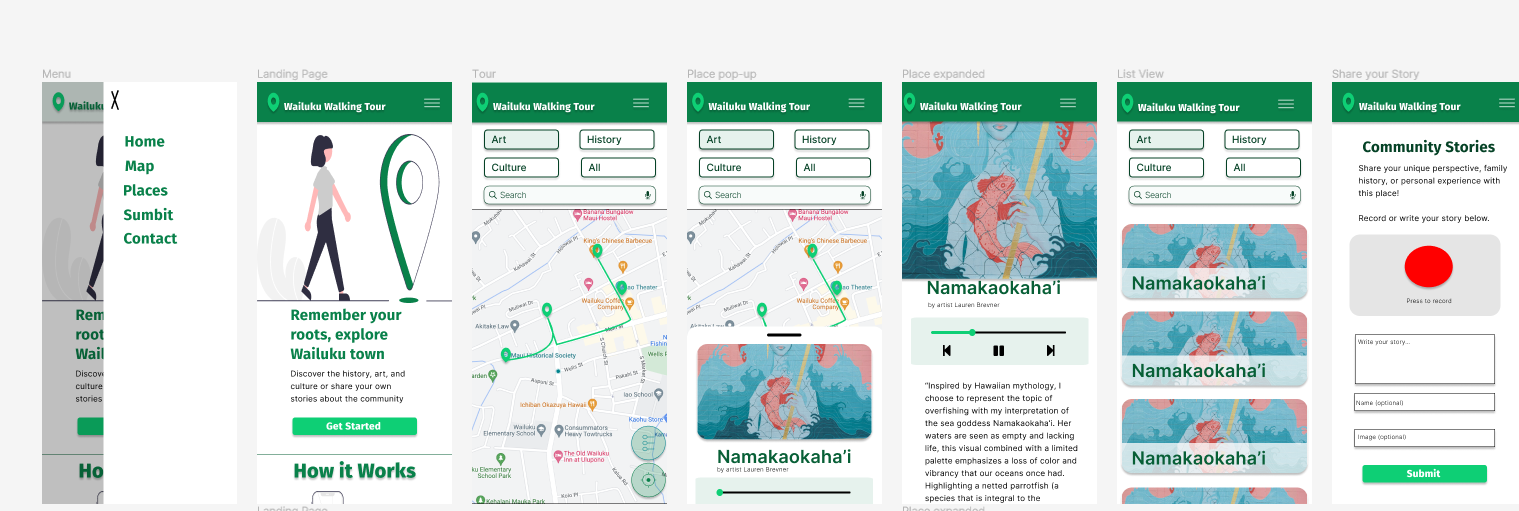
A basic wireframe


Wailuku Walking Tour App Project Details
Inspiration
By building the Wailuku Walking Tour app our team wanted to address the issues of over-tourism and support community building in Wailuku, Maui. We designed our app to complement the efforts already being made by local organizations, such as Small Town * Big Art (ST*BA), a public arts based placemaking organization, and the Maui Historical Society, a Hawaiiana led organization which aims to preserve the rich culture and history of Wailuku. Because the best community solutions are rooted in community involvement.
## Problem & Opportunity Space
OUR TOWN DOESN’T FEEL LIKE HOME ANYMORE In 2019, 72% of Maui’s residents reported that the islands are being “run for tourists at the expense of local people” (Omnitrak, 2020), and in response the Maui County Council introduced a bill which highlighted the need to move toward an economy that prioritizes the social well-being of its residents. This provides an opportunity space for travel activities that benefit the local community while simultaneously creating engaging, informative, and socially conscious experiences.
PLACEMAKING AND TRANSMEDIA STORYTELLING TECHNIQUES BUILD COMMUNITY Placemaking expert Manzini says the act of placemaking creates “intentional places co-designed by intentional communities.” Stories are essential to encouraging people to assign value to a place, thus contributing to the success of a placemaking project. Transmedia storytelling, a storytelling method that operates much like a multimedia story puzzle, can be used as a valuable tool in placemaking projects by unpacking the story of a place while giving community members an opportunity to share their own family and personal history.
WALKING TOURS REQUIRE A HEAVY COGNITIVE LOAD Exploring a place does not often occur in a clean, linear manner, rather it involves complex interactions with the community as users navigate the area. Developing a tour-based storytelling technology should include consideration of how users experience the app in various settings and at every stage of the experience. This project hopes to mitigate the cognitive load of the walking tour-based technology used in the app and aims to carefully construct experiences and information architecture that balances the cognitive load between what a user is experiencing on and off screen.
What it does
The Wailuku Walking Tour App offers three walking tours, cultural, historical, and public art. Users are able to mix and match the tours and/or do all three at once! The Wailuku Walking Tour App includes public artwork produced by Small Town * Big Art and the history and culture of Wailuku as told by the Maui Historical Society.
Users of the app are able to submit their own stories of the location through audio recordings, photos, and written submissions. This builds a collective community story of the town and gives the power to tell the story of Wailuku back to the residents. This tour aims to engage the local community with stories that resonate with them while also helping to encourage respectful, educated tourism.
Creating an accessible and relatable experience was important to our team. We wanted to ensure that those unable to walk Wailuku could still submit their own stories and experience the art, history, and culture of the town, so all places and information are accessible to users whether or not they are physically located in Wailuku Town. To mitigate cognitive load, our team kept the design simple and straightforward to use while keeping the focus on the content of the tour.
This app also aims to place users near and around locally-owned businesses and restaurants to encourage spending, which will be directly funnelled back into the community, rather than spending going to external tourism businesses and hotel chains.
Challenges we ran into
- Yena: While I have had prior experience using the React.js library, the core of my challenges were rooted in using NextJS, a React.js framework. This was my first time using NextJS, so I had the typical challenges of using a new technology. A specific challenge was adding images which required using a NextJS image component–I spent a lot of time unexpectedly trying to debug issues related to rendering images.
- Josie: I faced a lot of challenges while using NextJS to build this project, as I’m a novice in using it, and I had to quickly learn from the many differences it has compared to React or other languages. Another challenge was using Firebase for the database, which caused some unexpected difficulties compared to working with a traditional SQL database. Figuring out how to store and upload user recordings to Firebase was also a fun challenge!
- Penelope: As the UX designer on the team, I was responsible for gathering the content for the app. Creating a voice recording for each location listed was difficult, and I tried not cringe when I listened to my own voice!
Accomplishments that we’re proud of
- Yena: I’m very proud of the completed project, our team, and participating in another hackathon. In the past, I had been very nervous to participate in a hackathon, so doing my 2nd one is a big step in dealing with the imposter phenomenon I’ve experienced in the past. I’m also very proud of the values behind this project and how my team and I were excited to support and promote local artwork and community building.
- Josie: I was really proud of the overall results of the project - we picked an ambitious goal but we were able to reach most of our aims for it. I am also proud of the routing on the map, as it was my first time using directions and waypoints with the Google Maps API, so I learned a lot.
- Penelope: I’m proud of the research and wireframing I did for this project! My priority always came back to the users and what would benefit the community, so I gathered academic and user research to validate the features offered in this app.
What we learned
- Yena: I’ve learned how to use a new framework and library. Overall, this experience has taught me how to incorporate frameworks and libraries in my tool belt, moving beyond the fundamentals.
- Josie: In this Hackathon, I learned how I can use libraries such as Tailwind CSS and component libraries to quickly build the functionality for a community-focused web app.
- Penelope: I learned a lot about community building, storytelling, and travel!
What's next for "The Wailuku Walking Tour"
Future work would involve presenting what we’ve created to local stakeholders and refining the design and functionality through user testing of the app. Gamification and use of AR technology would be explored to enhance the tour experience and levels of engagement with the local sites. We would also like to build an experience that is scalable to other towns on the island.
Please Note
The Wailuku Walking Tour App was built with a mobile-first design to fit the needs of users on a walking tour and to reduce cognitive load. For testing purposes, please use a mobile device or use a responsive view on the browser.
Demo
Try the The Wailuku Walking Tour now your mobile or cellphone! https://wailuku-walking-tour.vercel.app
Built With
- firebase
- google-maps
- nextjs
- tailwind-css


Log in or sign up for Devpost to join the conversation.