-
-
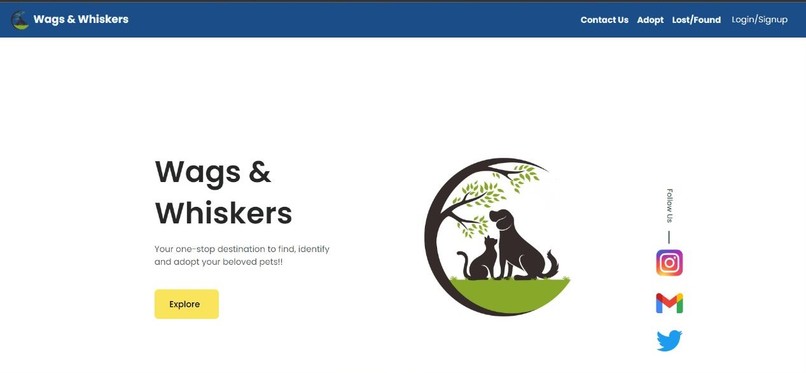
Home_page
-
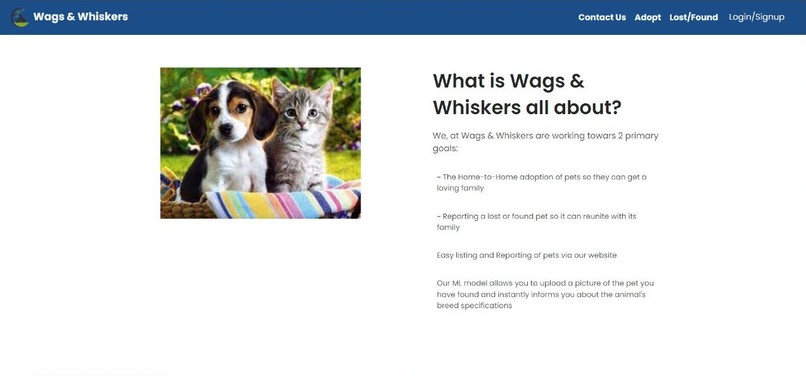
About_us
-
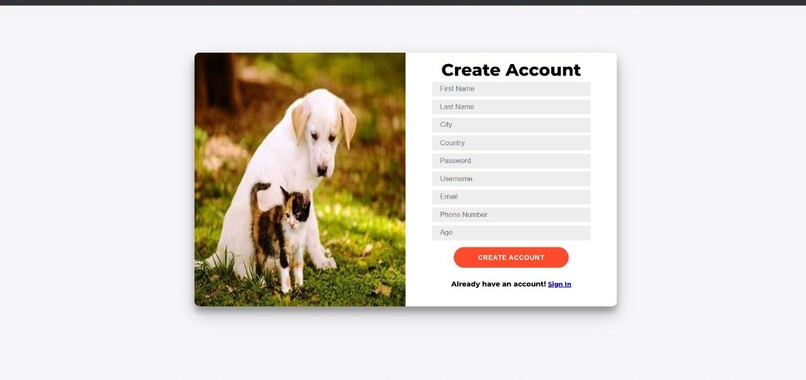
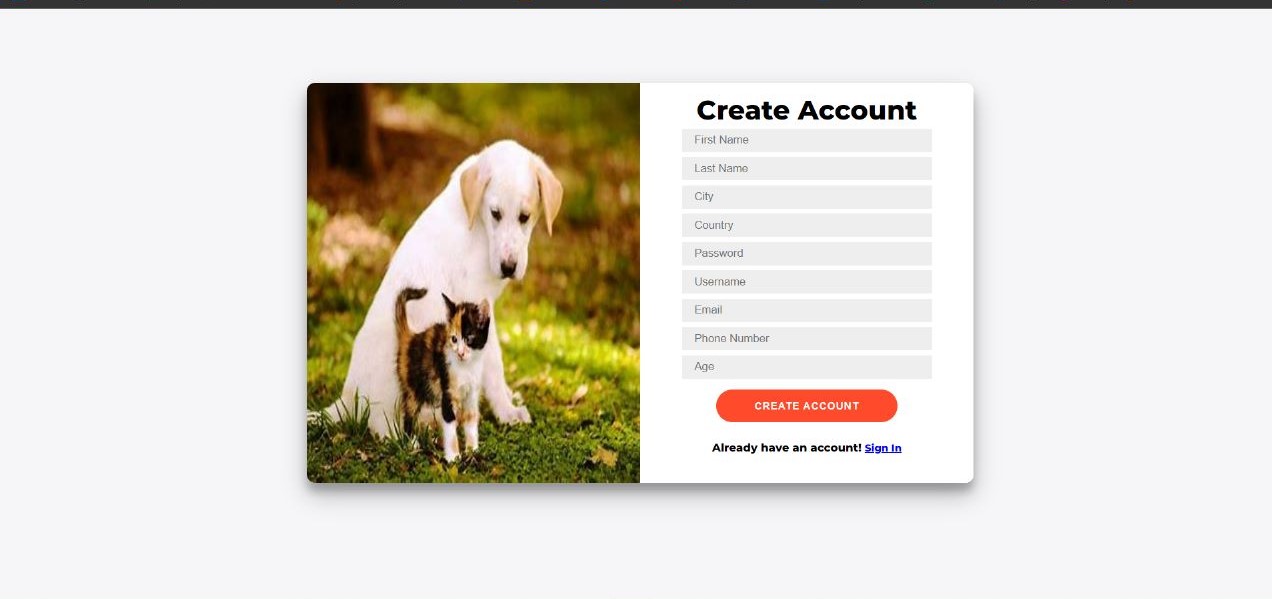
Create Account
-
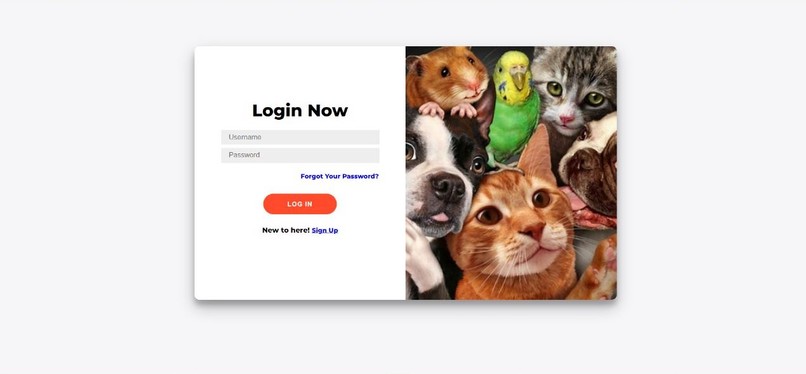
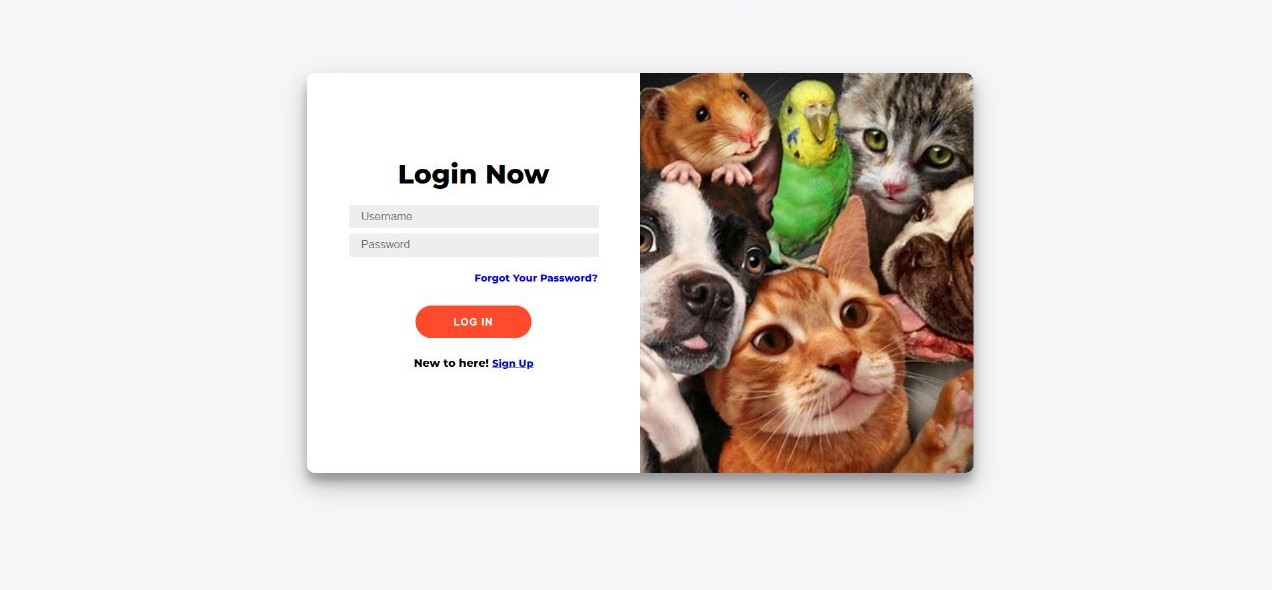
Login
-
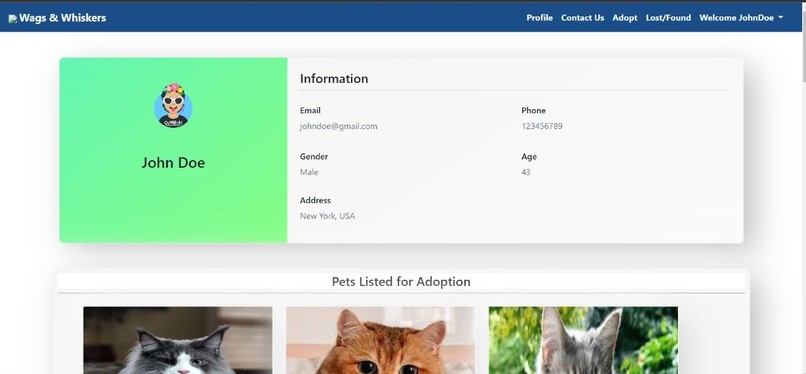
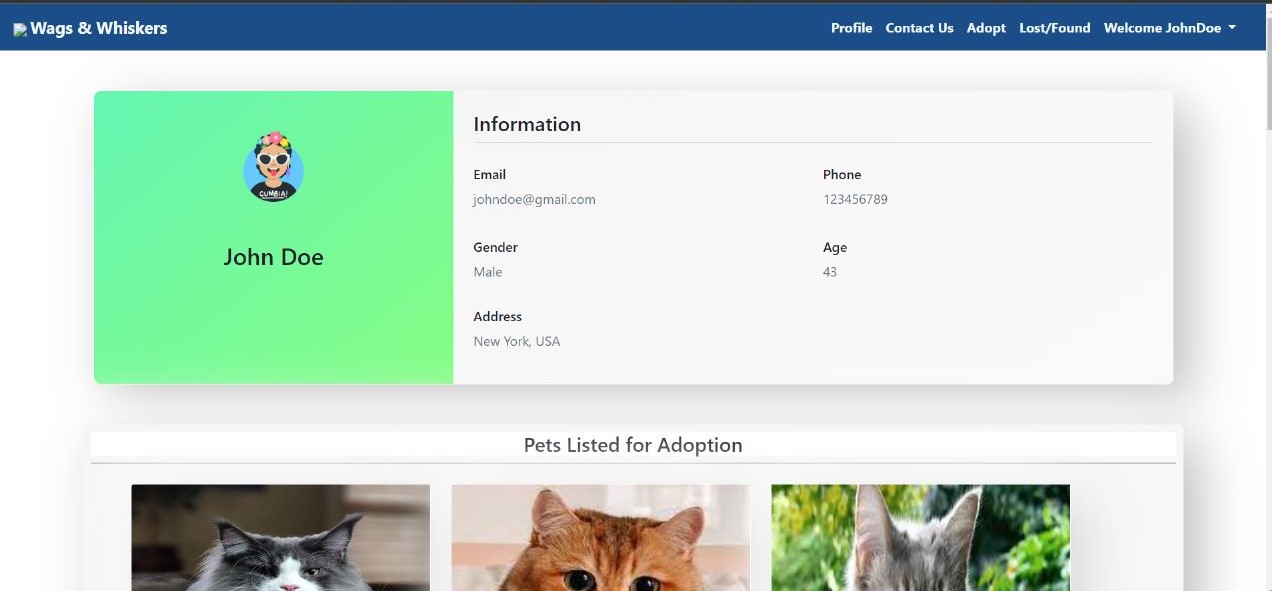
User Information
-
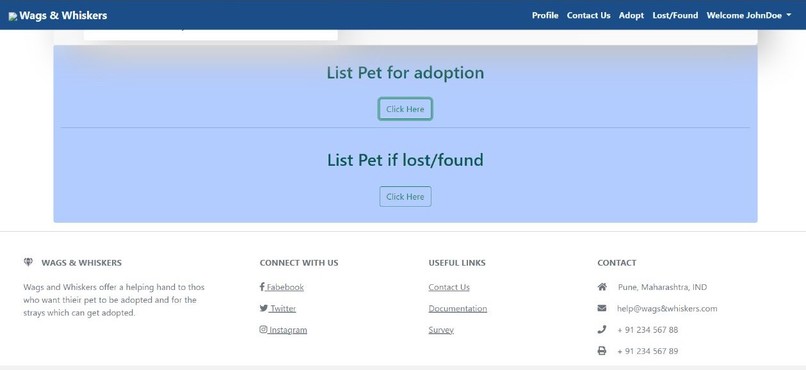
Features on the website
-
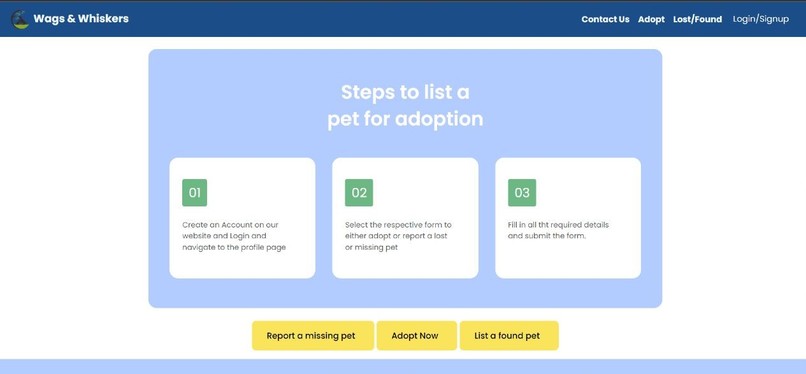
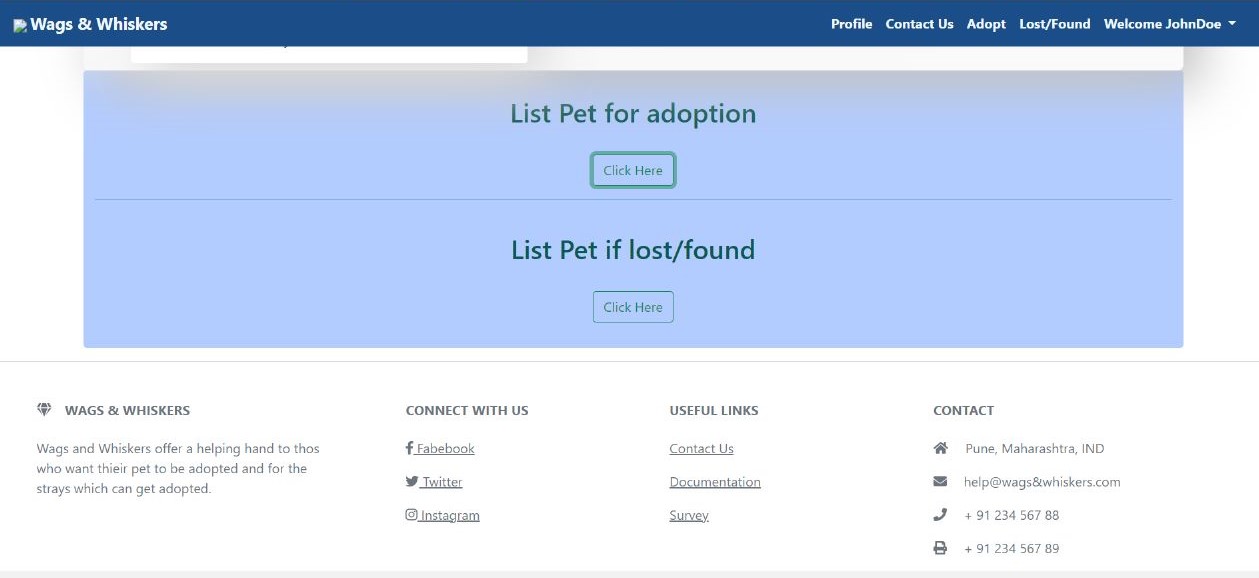
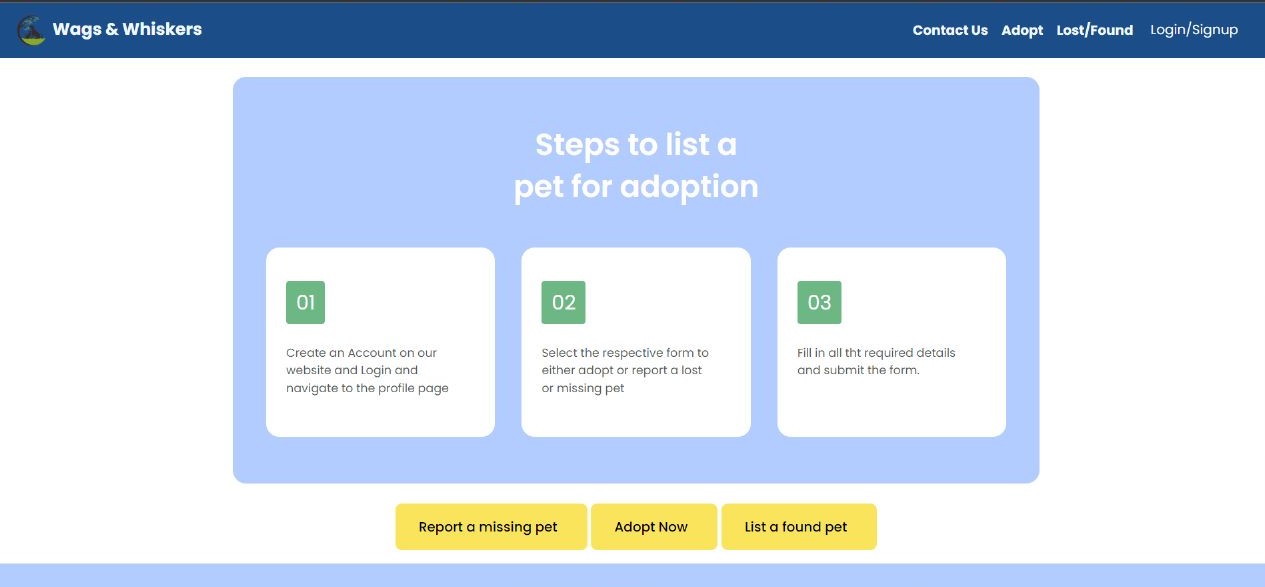
Steps to list for adoption
-
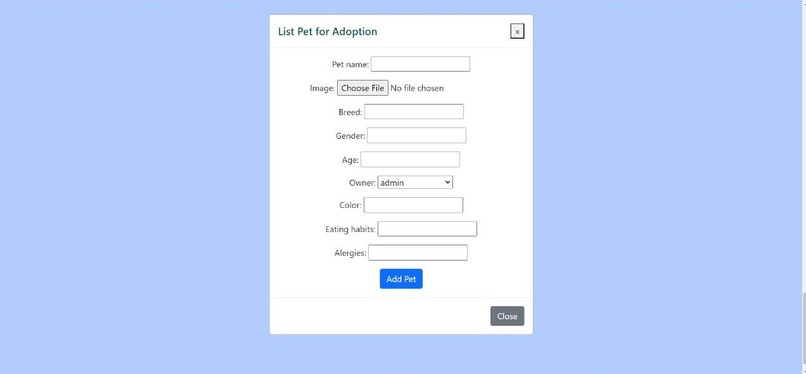
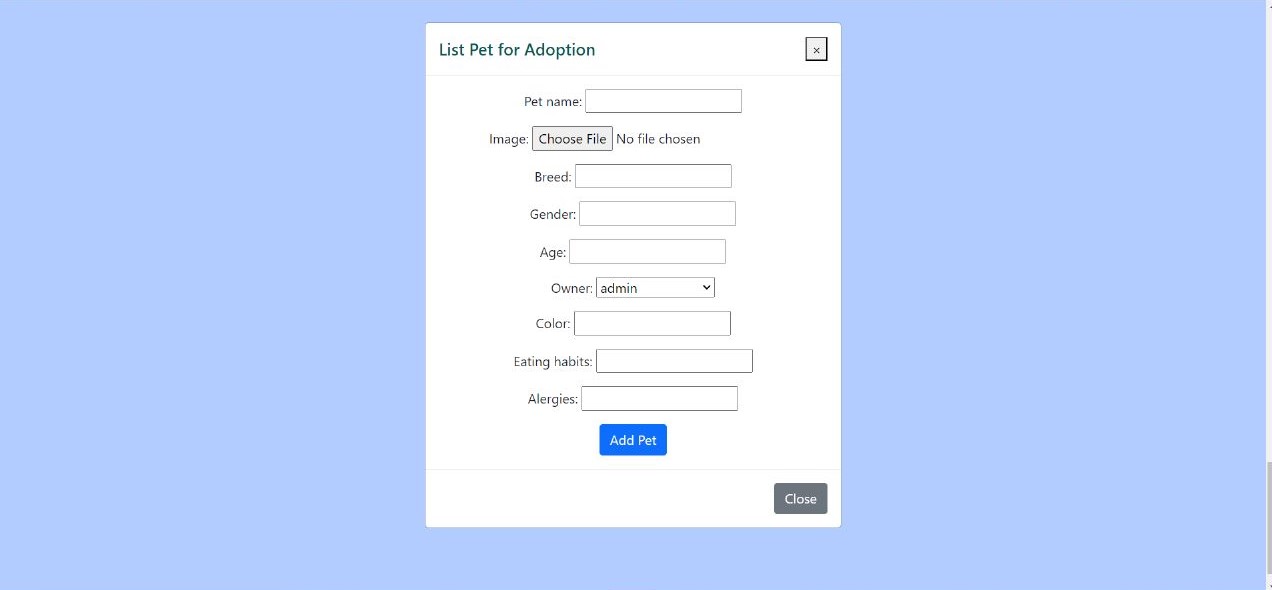
List pet for adoption
-
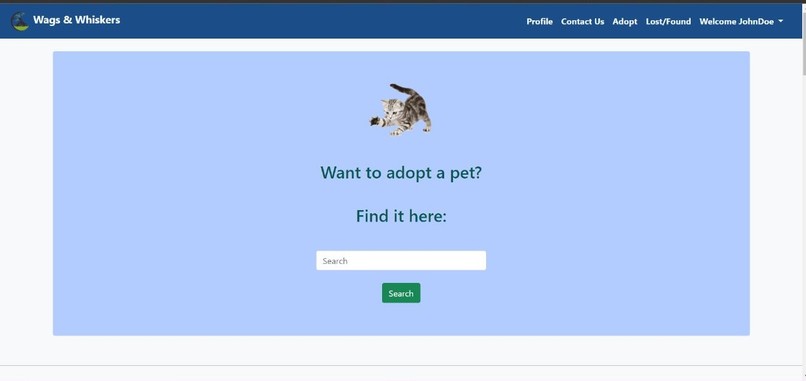
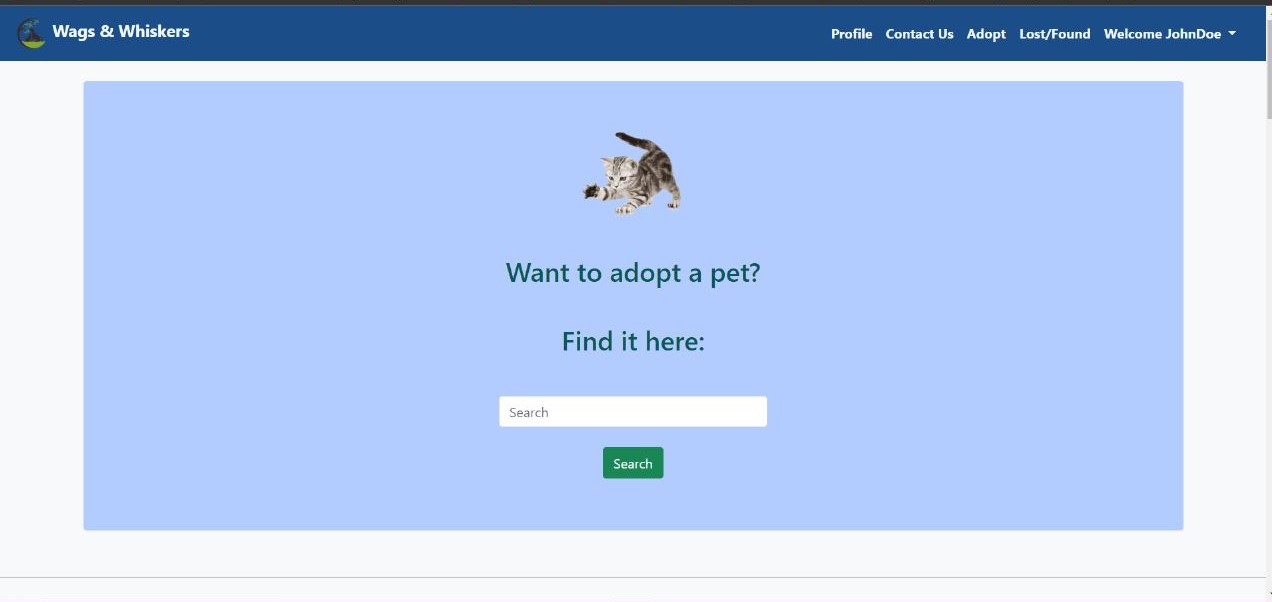
Want to adopt a pet?
-
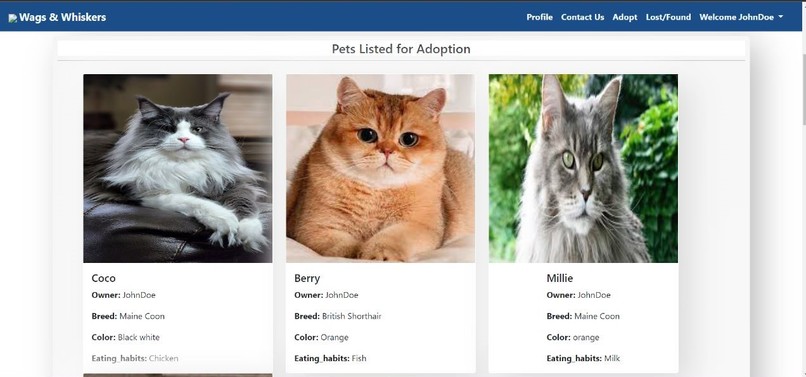
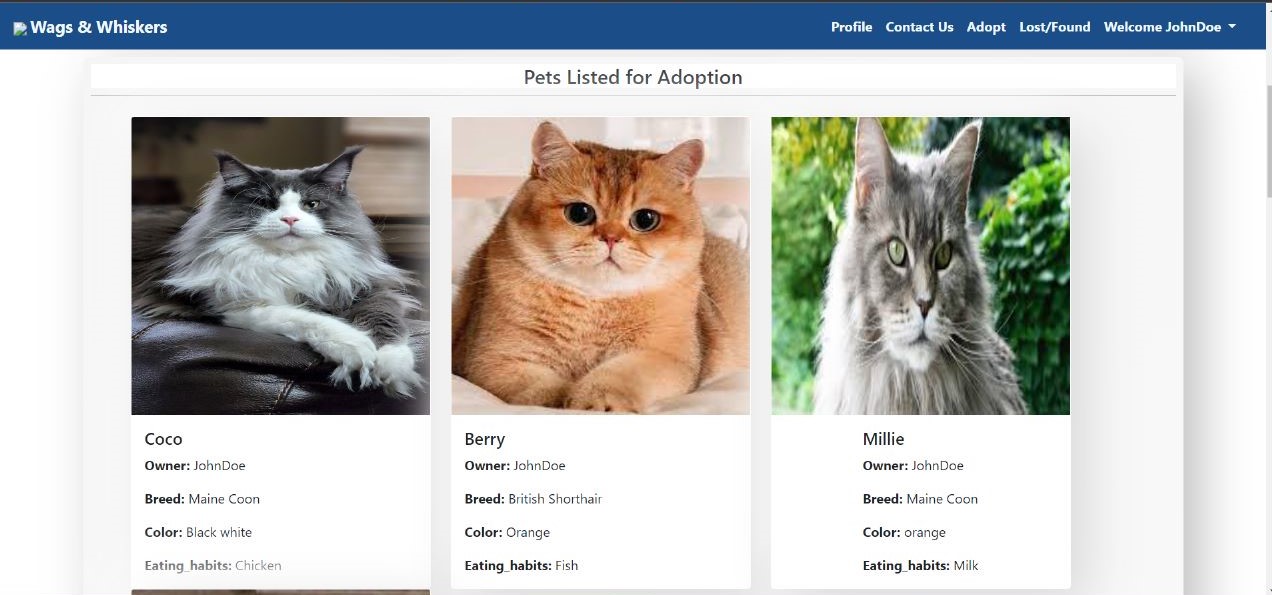
Pets listed for adoption
-
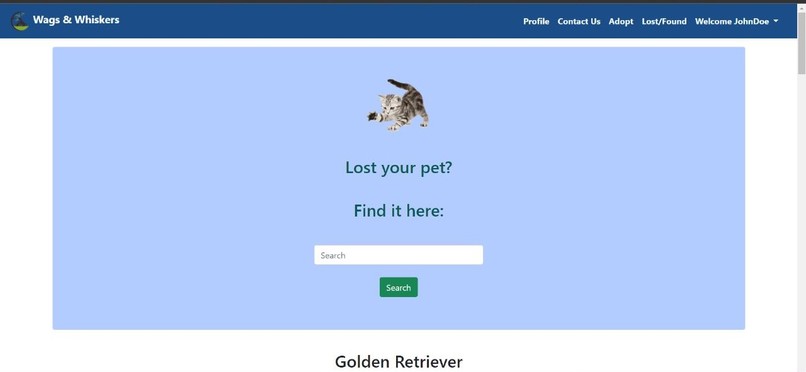
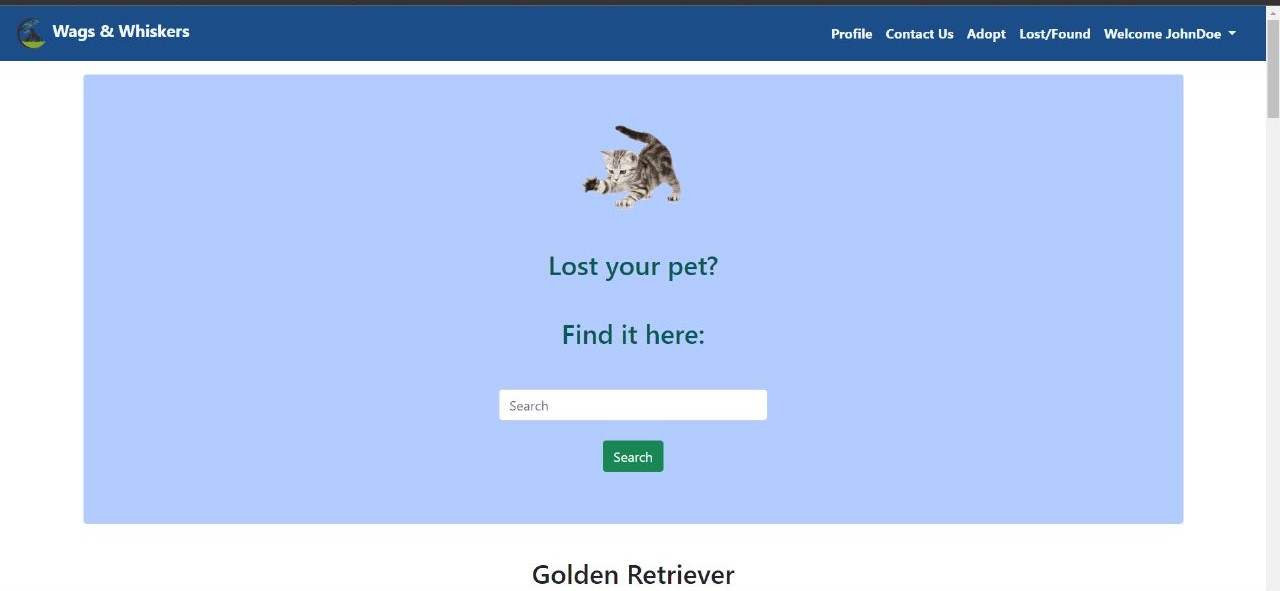
Find your lost pet
-
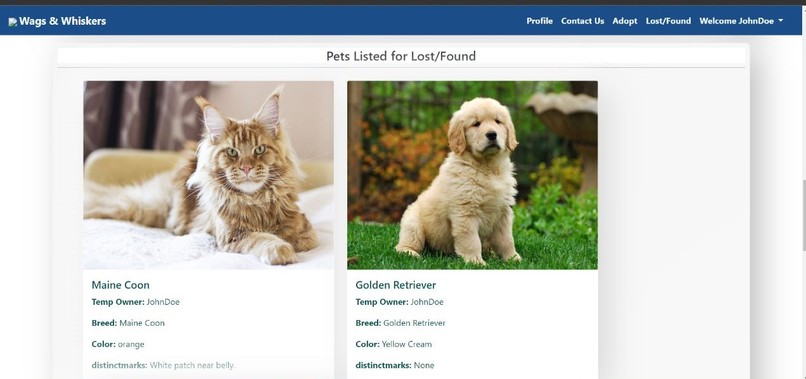
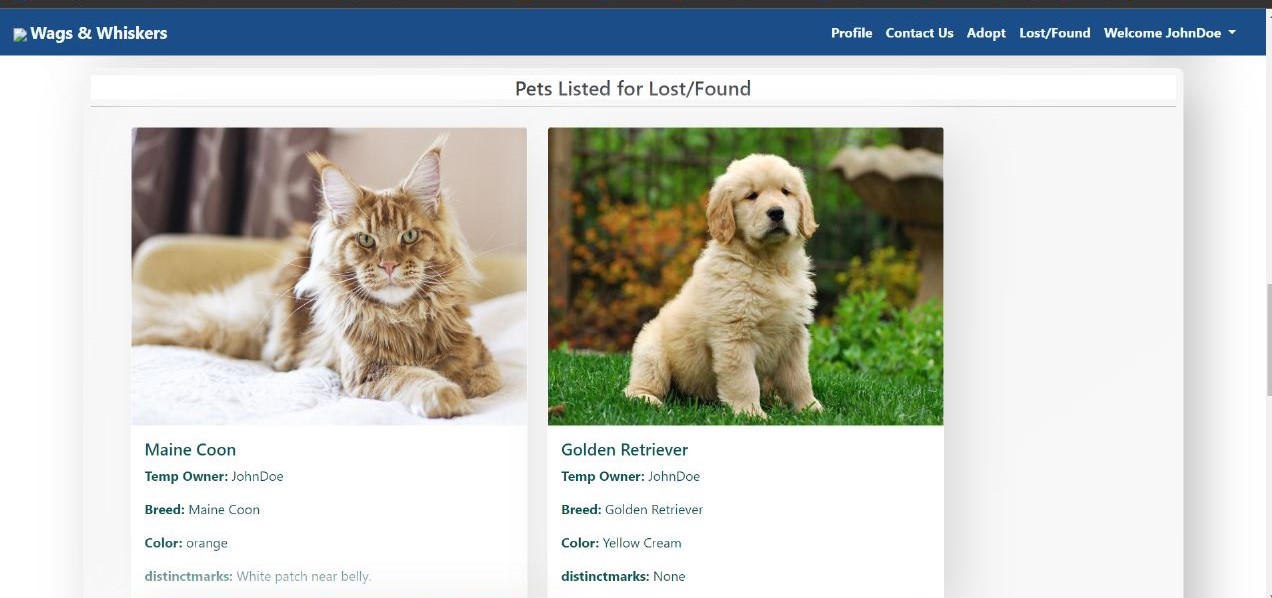
Lost pets
-
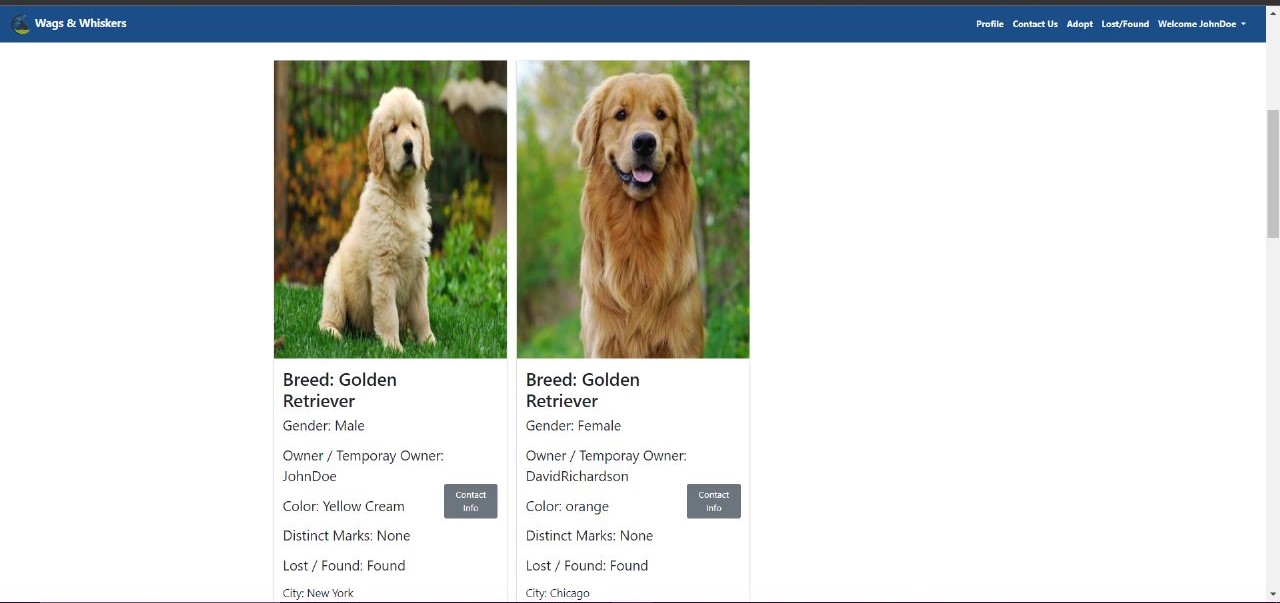
Lost pets
-
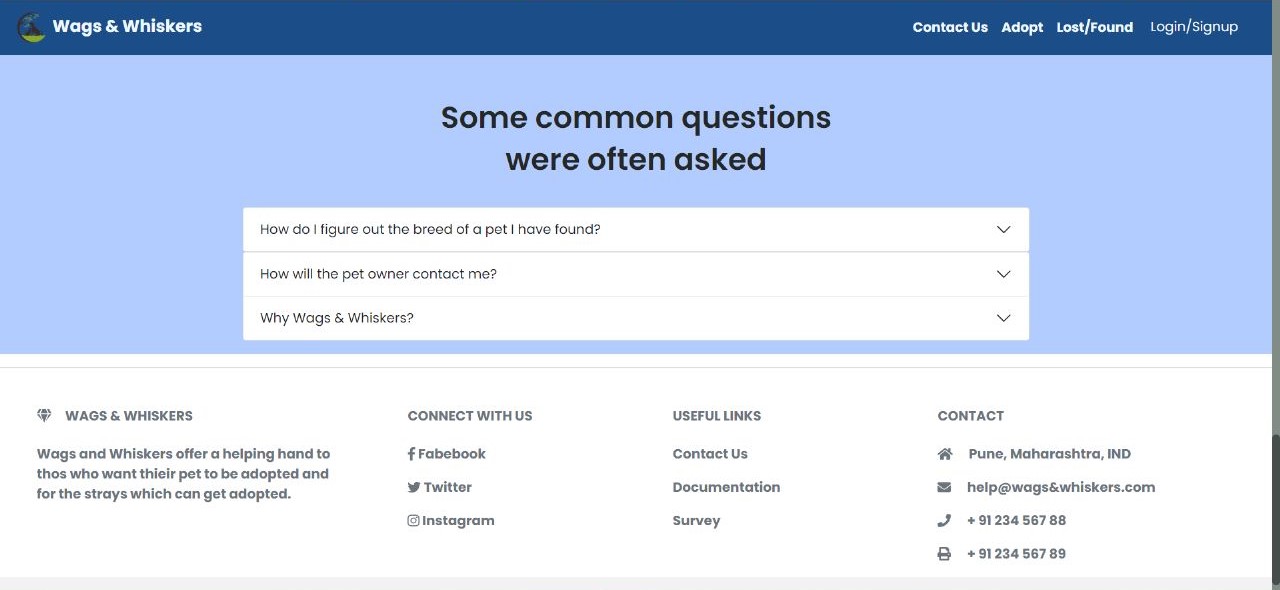
FAQs
Inspiration
One of our team members recently experienced the distress of losing her beloved cat, which went missing for several days. This emotional event sparked the idea of creating a platform to assist pet owners in finding their lost furry friends. Moreover, we have noticed an alarming increase in the number of stray animals roaming the streets in our country. These poor creatures endure hunger and lack proper shelter, making their lives extremely challenging. We feel compelled to address this issue and find caring owners who can offer these strays a chance at a happy and healthy life. Thus, our determination to work on this problem has grown even stronger.
What it does
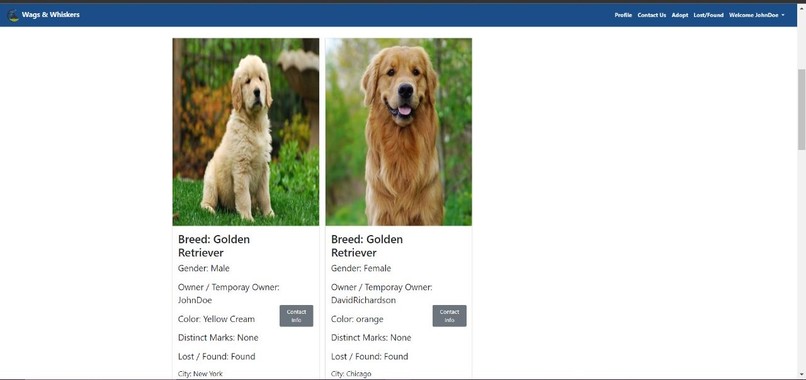
A website named “Wags and Whiskers” is with two primary functions - pet adoption and lost/found pets. For the lost and found feature, pet owners who have lost their pets can upload details about their pet such as breed, age, color, and identification marks, along with a photo of the pet to the website to alert others that their pet is missing. Additionally, if someone finds an abandoned animal, they can use the same functionality to upload details and list the animal in the lost section of the website. This will help facilitate the reunion of lost pets with their owners and aid in pet adoptions.
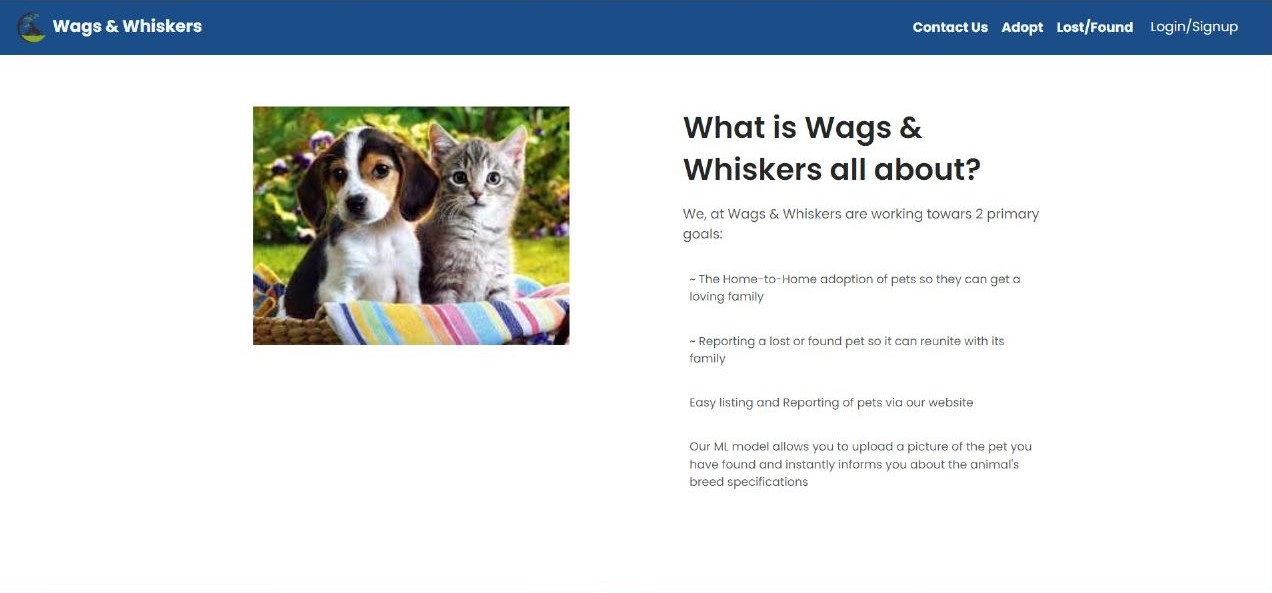
The second function of the website is the adoption section. On this page, pet owners who are looking to give away their animals can list their pets for adoption. Here, owners can specify important details such as breed, age, eating habits, color, and any other relevant information to help potential adopters find the perfect pet for their home. By providing a platform for pet adoption, we hope to encourage responsible pet ownership and reduce the number of animals in need of homes.
How we built it
Challenges we ran into
- One challenge we faced while building the code was integrating the object detection model into the website. We chose to use the MobileNet model for object detection, which required us to first train the model using TensorFlow and then convert it into a format that could be easily integrated into the website.
- The main challenge was that the MobileNet model was quite complex, and it required a lot of processing power to run. As a result, we had to optimize the code to ensure that it would run smoothly on the website without causing any significant delays or performance issues.
- To address this challenge, we decided to use a pre-trained version of the MobileNet model that had already been optimized for performance. We also used various techniques such as model quantization to reduce the size of the model without significantly impacting its accuracy.
- Another technical decision we made was to use Django as our web framework, which allowed us to easily build and deploy the website. We also used SQL to store and retrieve data from the database, HTML and CSS for the front-end design, and JavaScript for the interactive features.
- Overall, the challenge of integrating the object detection model into the website required careful consideration of the technical decisions and implementations we made. By using pre-trained models and optimizing the code, we were able to successfully overcome this challenge and build a functional and efficient website.
Accomplishments that we're proud of
We were able to complete our project within the given deadline. This is a big accomplishment for us. We were able to handle the deadline pressure and build our model in a working condition.
What we learned
Hackathon is the best way to showcase our skills and learn many new things as well. Here are a few soft skills that we all learned:
- Teamwork and Collaboration
- Time Management
- Problem-Solving
- Pitching and Presentation Skills
- Networking Opportunities
- Coding and Debugging Skills
What's next for Wags and Whiskers
There are several next steps and future developments that we can undertake to expand the reach and impact of our project. Here are some ideas:
Partner with animal shelters and rescue organizations: Collaborating with local animal shelters and rescue organizations can help us reach a larger audience and connect with individuals who are interested in adopting pets. We can work with these organizations to list their animals on our platform and create a more comprehensive database of pets available for adoption.
Google Map Integration: By integrating the Google Maps API, we can enhance the accuracy of location tracking on our website, while also including the locations of nearby veterinary clinics to provide quick and easy access to help injured or unhealthy animals.
Introduce a rating and review system: Implementing a rating and review system on our platform can help build trust and credibility among potential adopters. Adopters can rate the pets they adopt, and owners can rate the adopters, allowing us to create a more transparent and trustworthy adoption process.
Increase social media presence: Leveraging social media platforms like Facebook, Instagram, and Twitter can help us reach a larger audience and raise awareness about the importance of responsible pet ownership and animal adoption. We can also use social media to share success stories of pets that have found loving homes through our platform.
Introduce a donation system: Running a platform like this requires funding, and introducing a donation system could help us cover our costs and expand our services. We could encourage users to make donations through our platform, with the funds going towards the care and support of animals in need.
Built With
- css
- django
- html
- machine-learning
- mobilenet
- tensorflow

Log in or sign up for Devpost to join the conversation.