Inspiration
Over 600,000 high-skilled immigrant workers in the United States on H-1B visas live in a precarious state of dependency: their legal right to remain in the country is tied directly to their sponsoring employer. Under federal law (20 CFR § 655.731), employers are legally mandated to pay the certified prevailing wage and are strictly prohibited from "benching" workers without pay or deducting petition filing fees from their salaries.
Yet wage theft, uncompensated nonproductive benching, and illegal fee recoupment remain pervasive open secrets across contracting and consulting ecosystems. Immigrant workers face a heartbreaking dilemma: they are terrified that asking questions or filing a complaint will jeopardize their visa status, they cannot afford thousands of dollars in retainer fees for immigration attorneys to audit dozens of pay stubs, and standard AI tools either hallucinate legal advice or harvest their sensitive, unredacted payroll data.
We built WageShield H-1B to solve this power asymmetry. Our inspiration was to create a privacy-first, mathematically rigorous evidence auditor that gives immigrant workers the clarity, confidence, and audit-grade documentation they need to protect their livelihoods without risking their status or leaking their personal records.
What it does
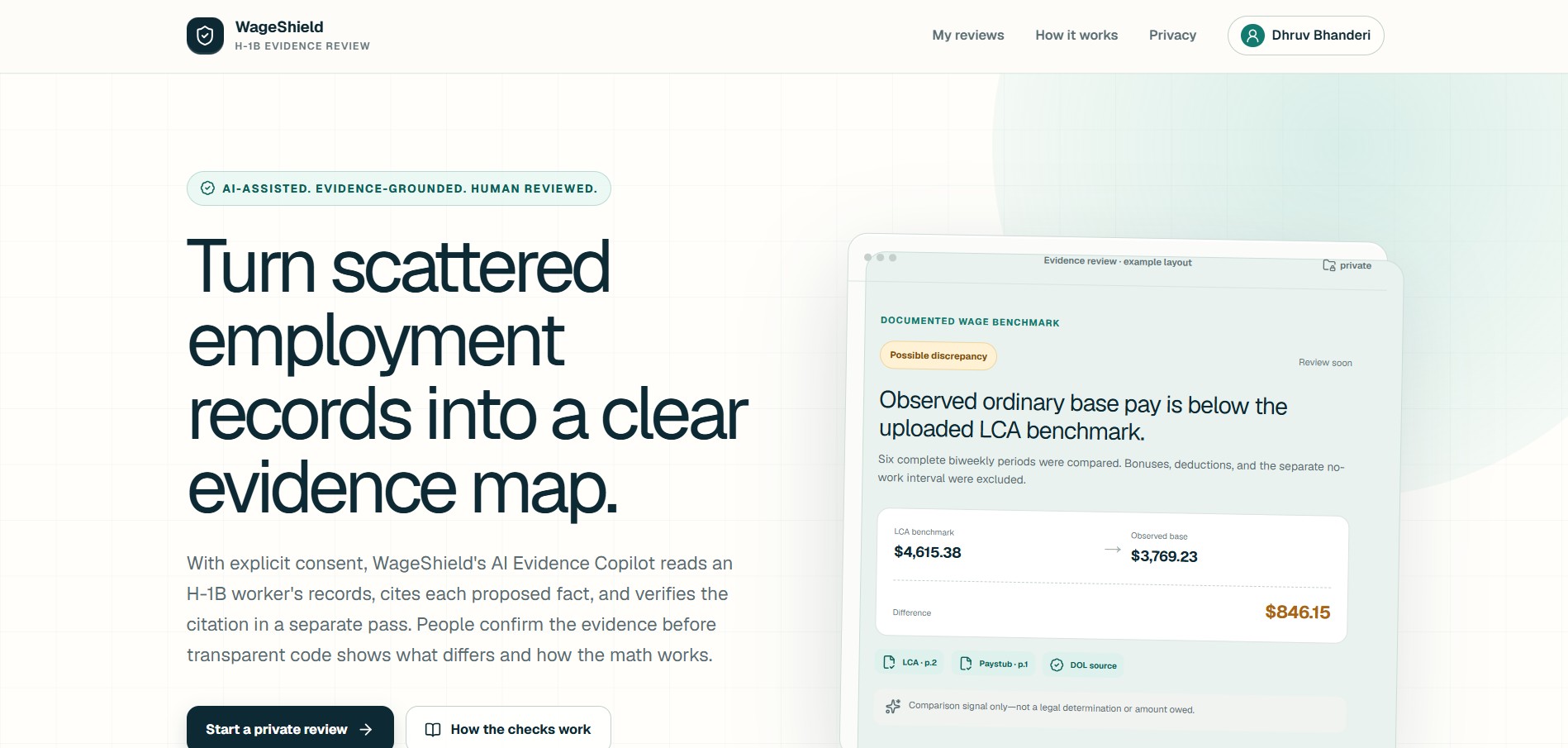
WageShield H-1B is an AI-assisted evidence auditor that analyzes employment records, pay stubs, and certified Labor Condition Applications (Form ETA-9035) to surface wage discrepancies and statutory violations:
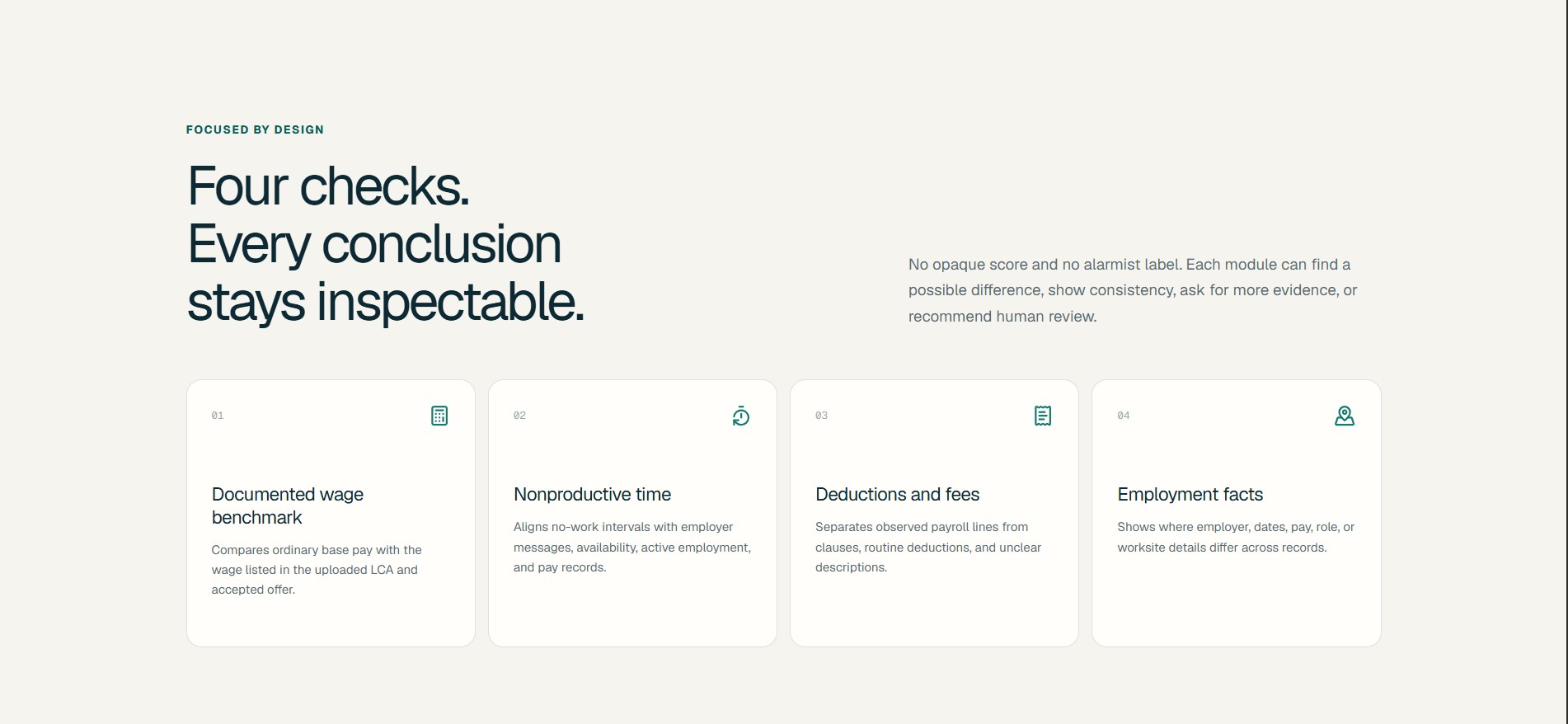
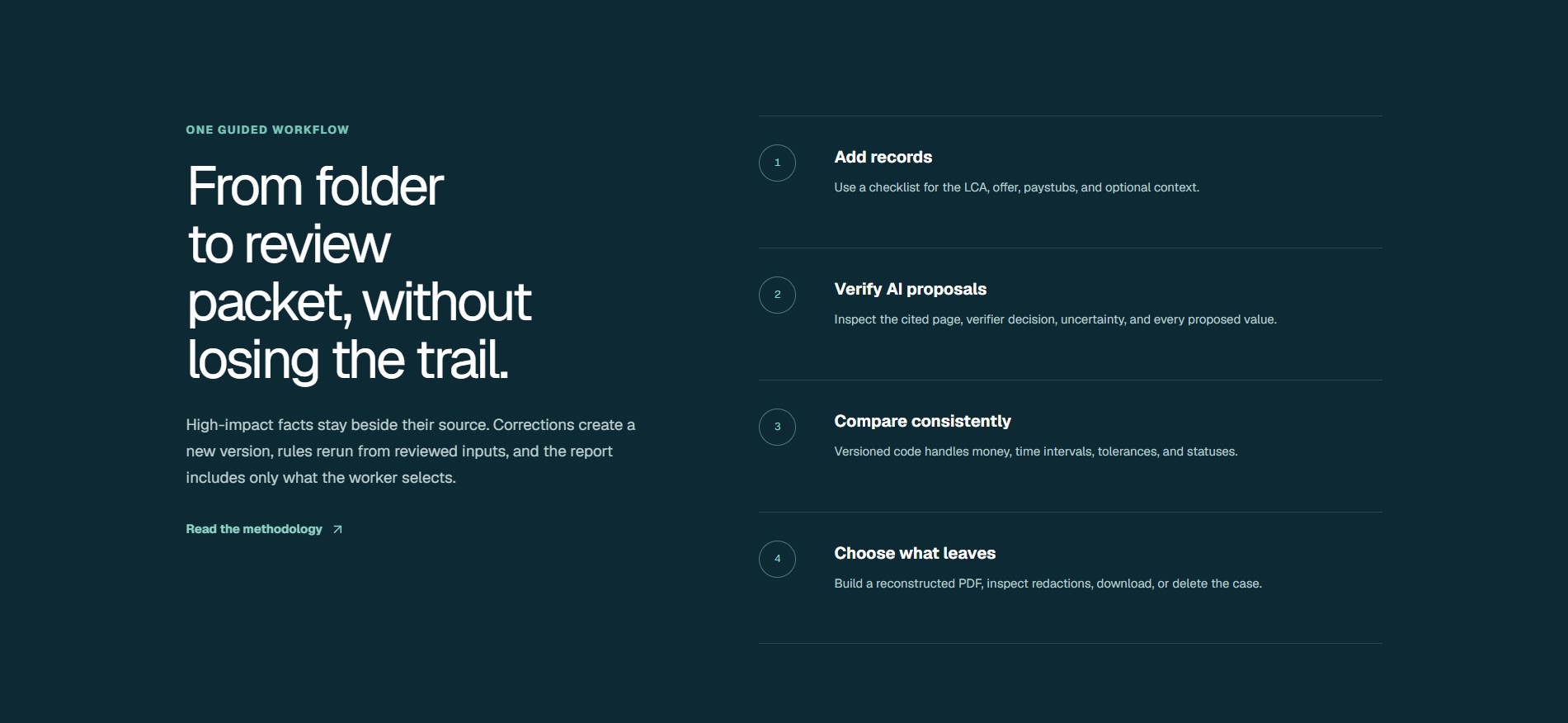
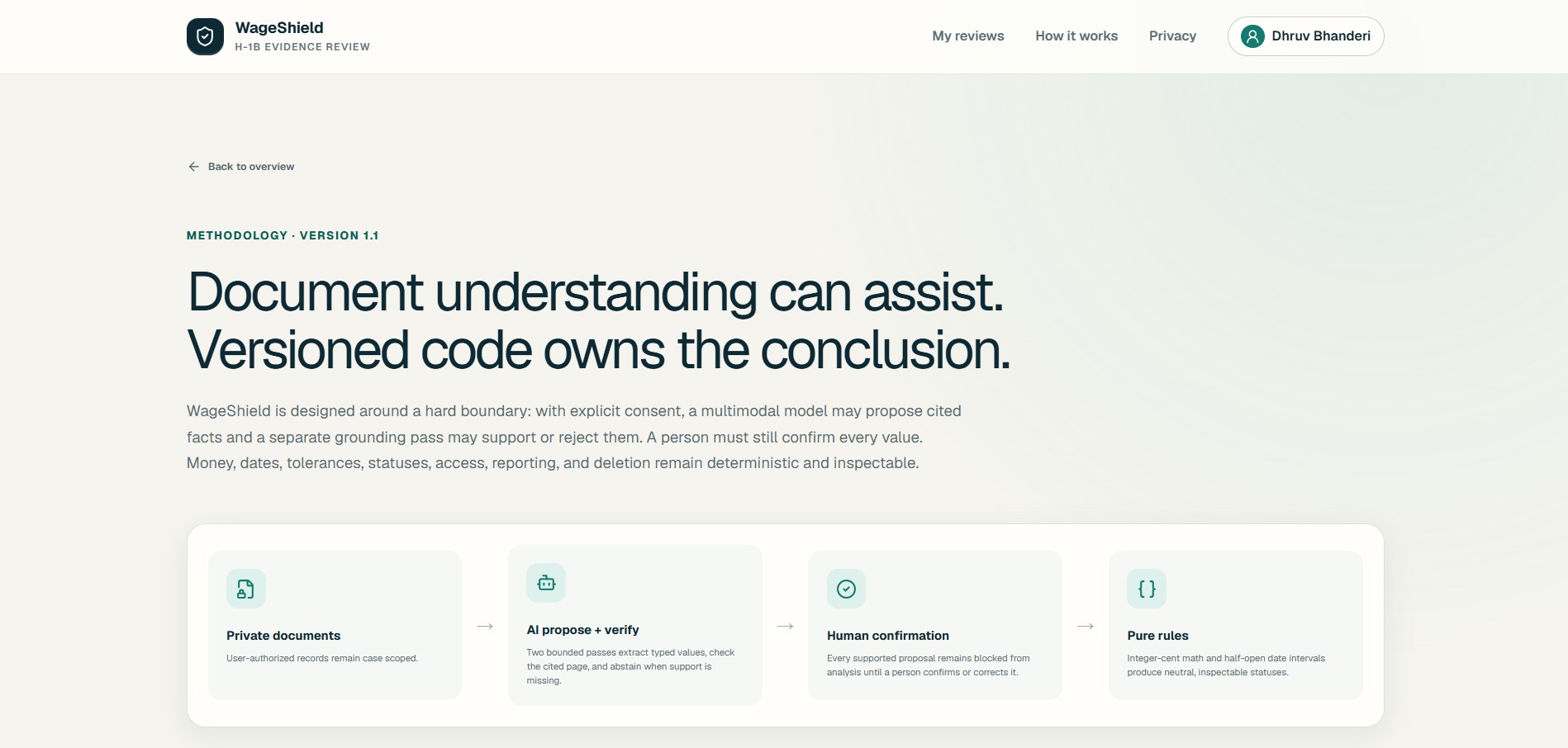
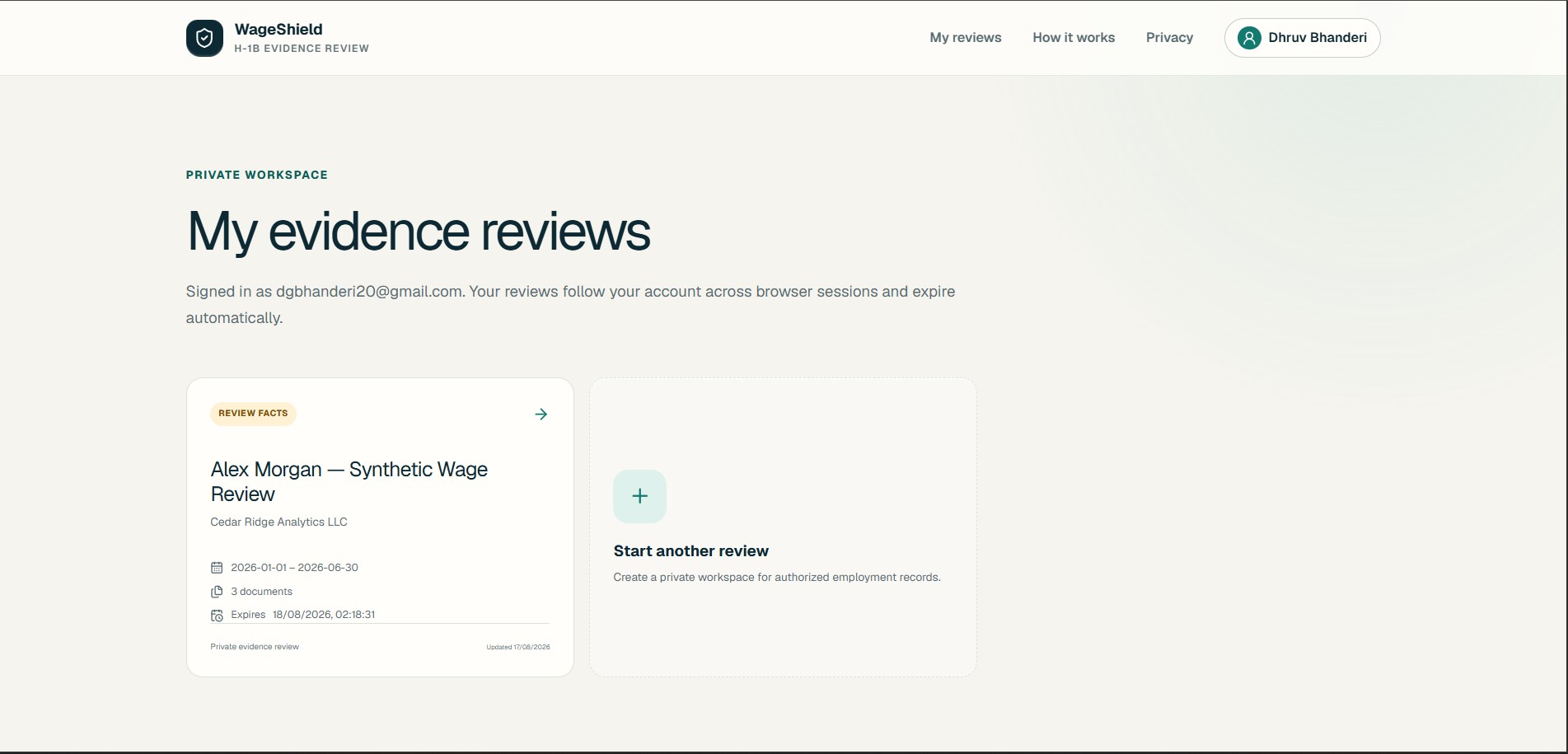
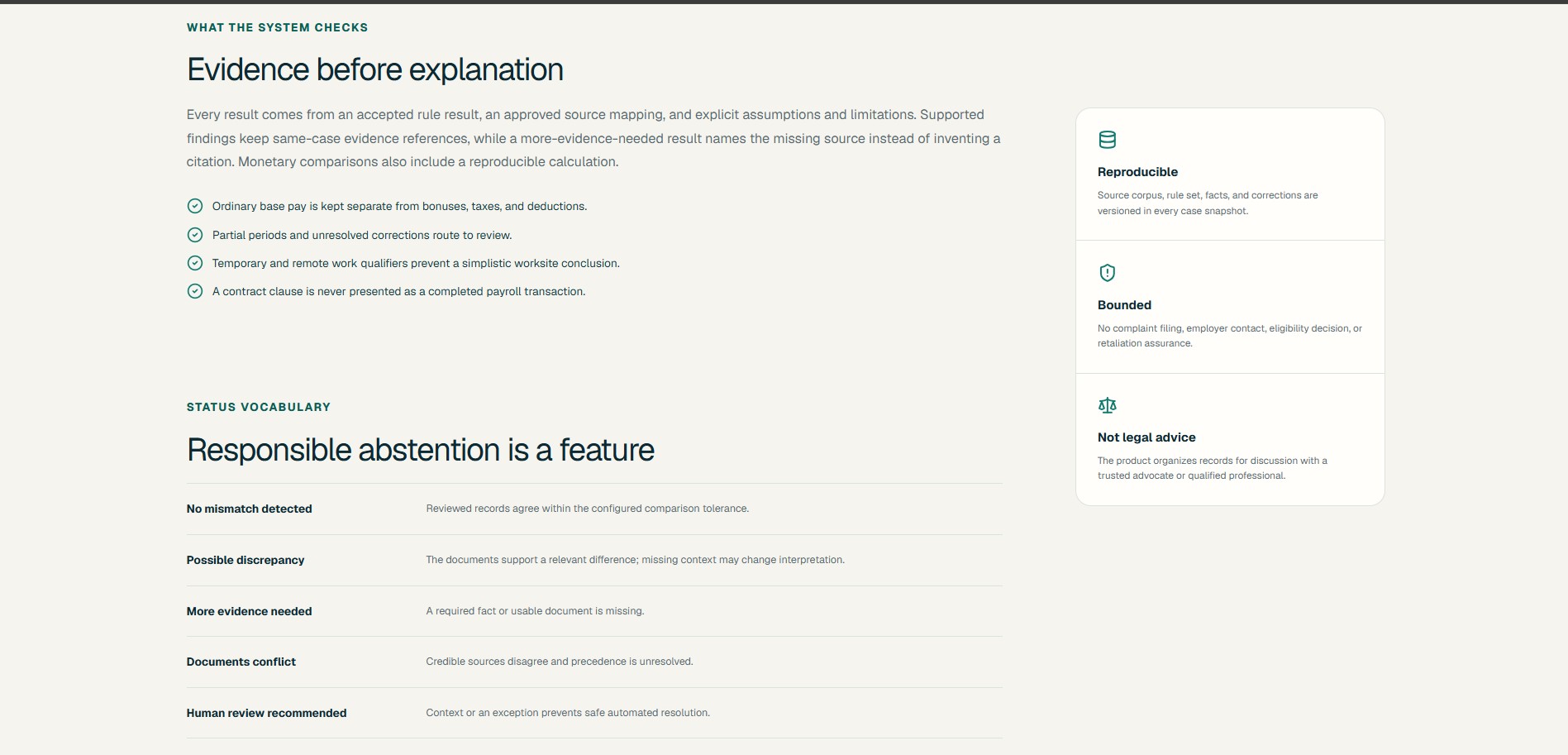
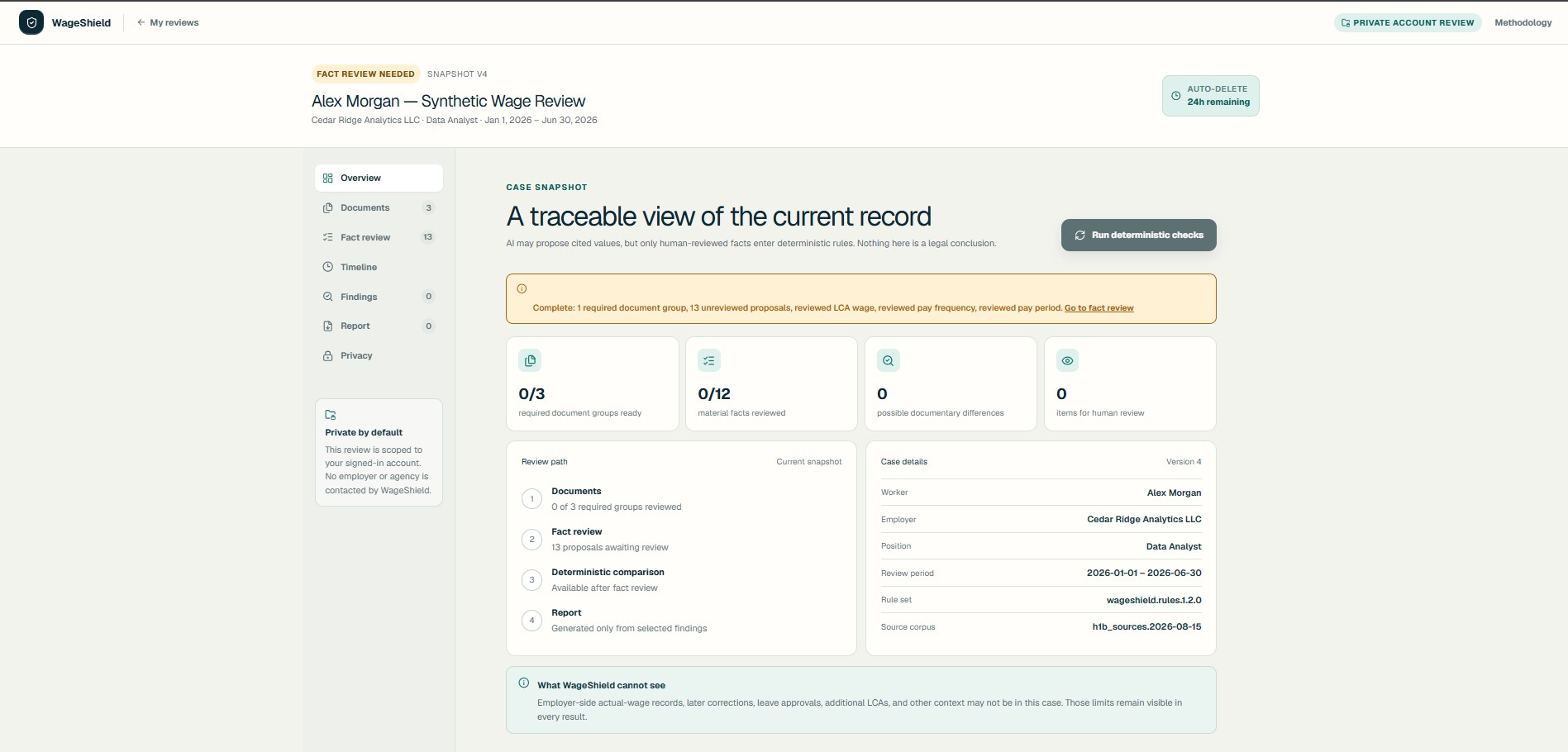
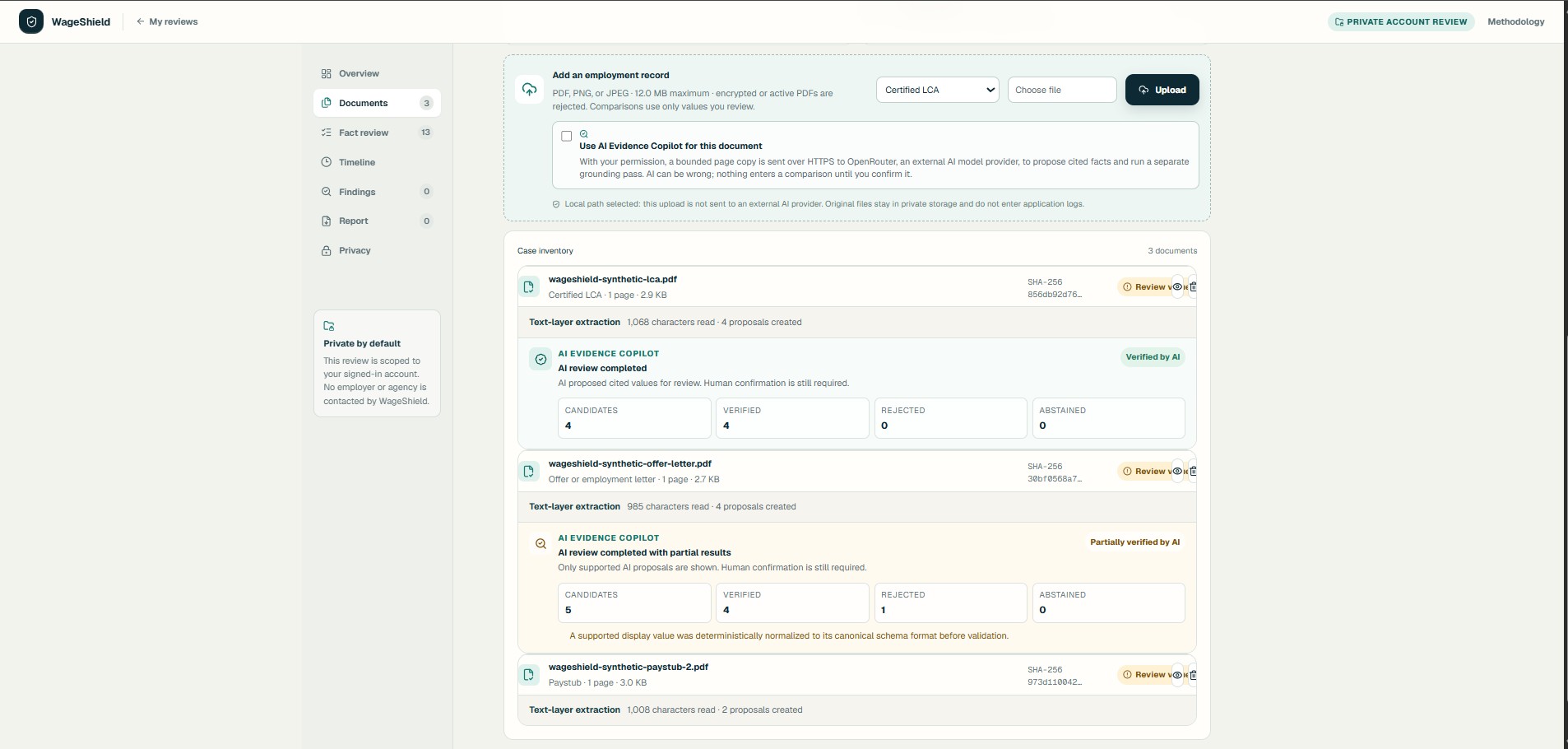
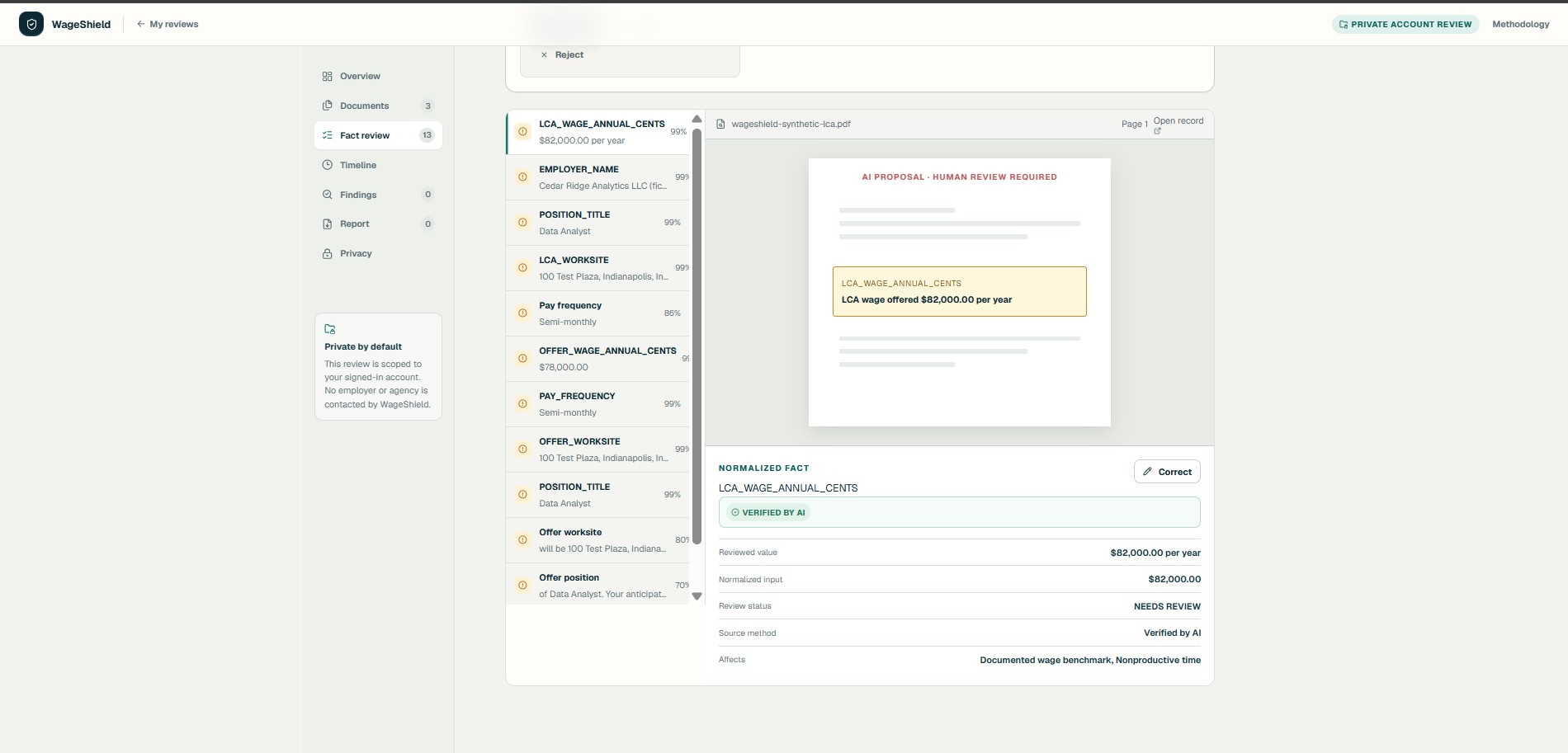
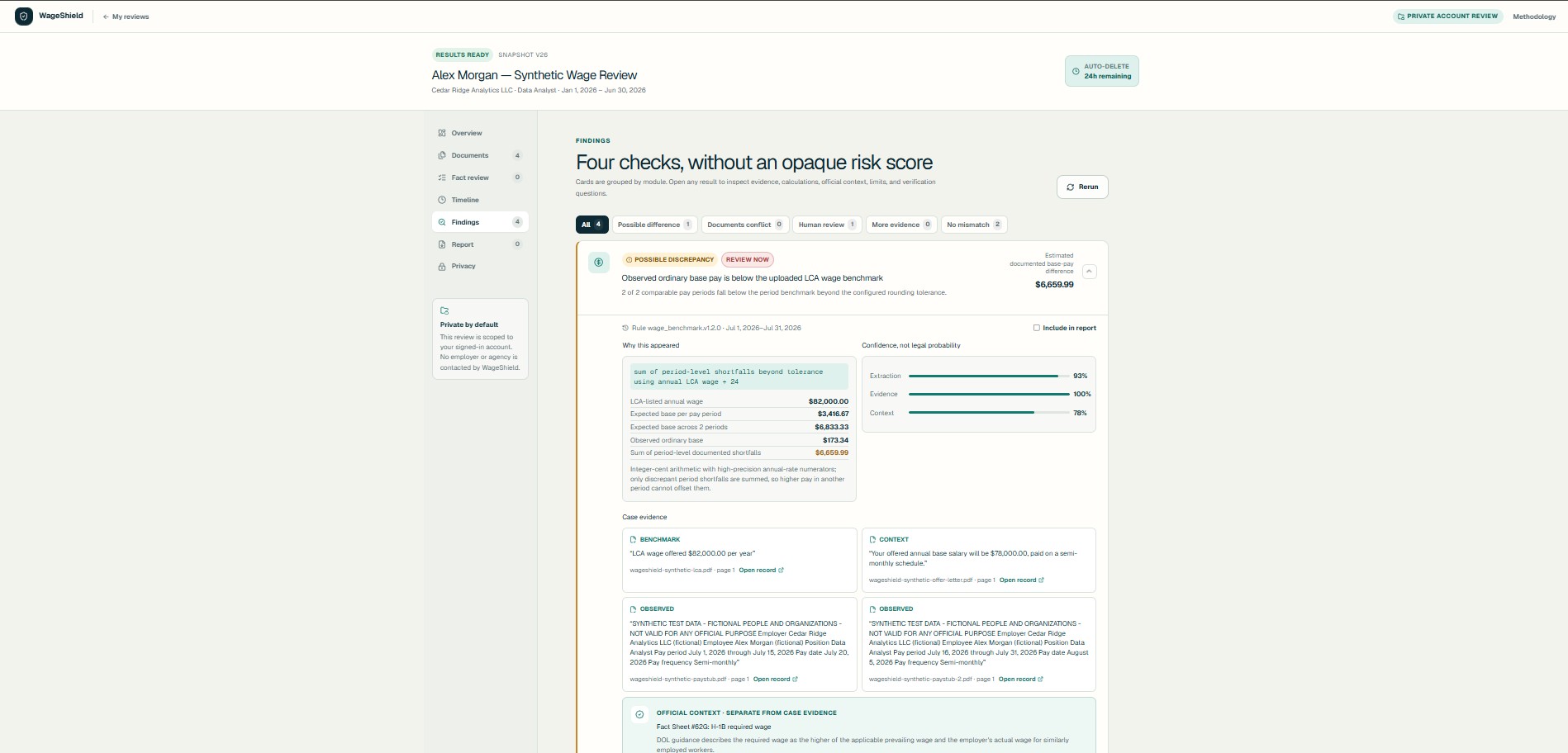
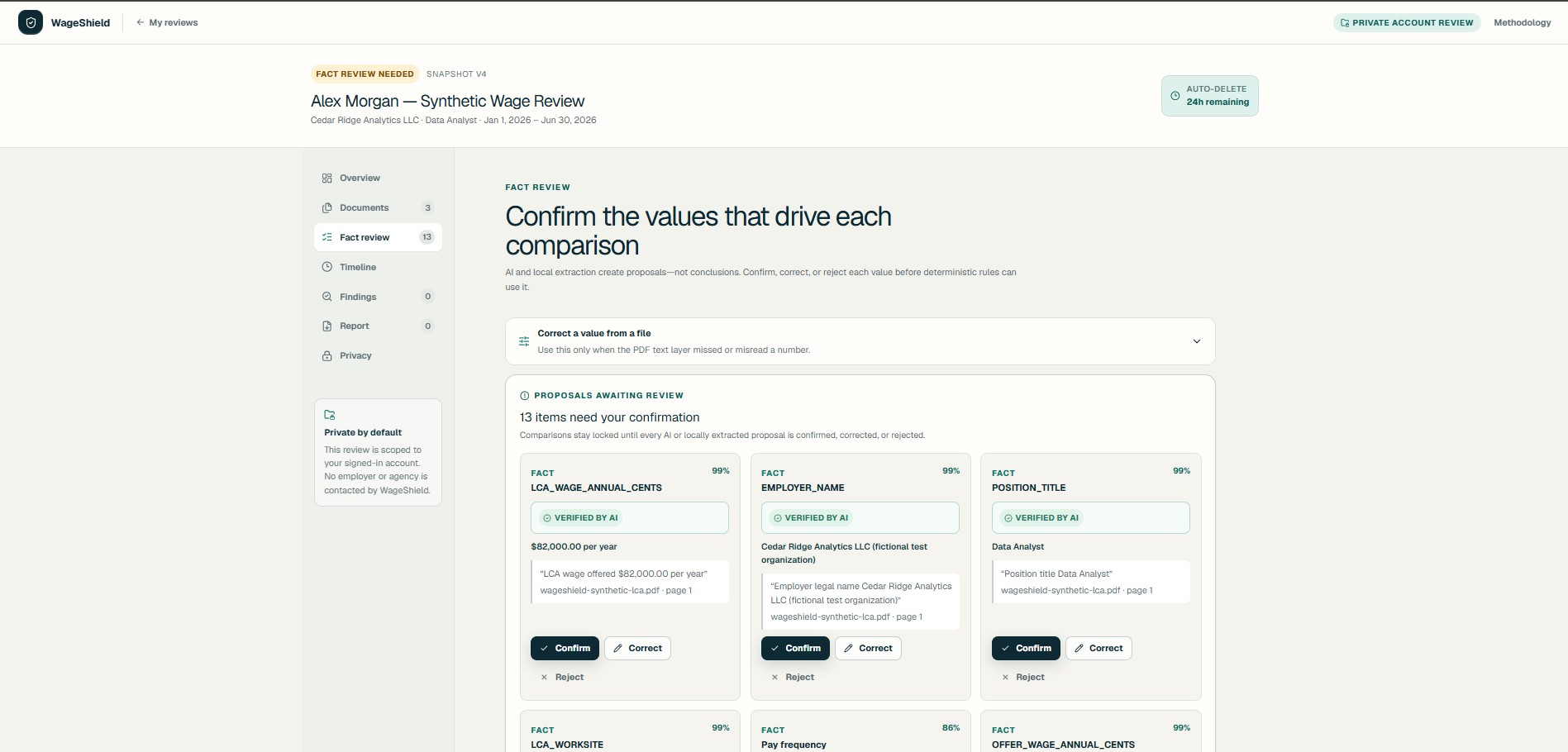
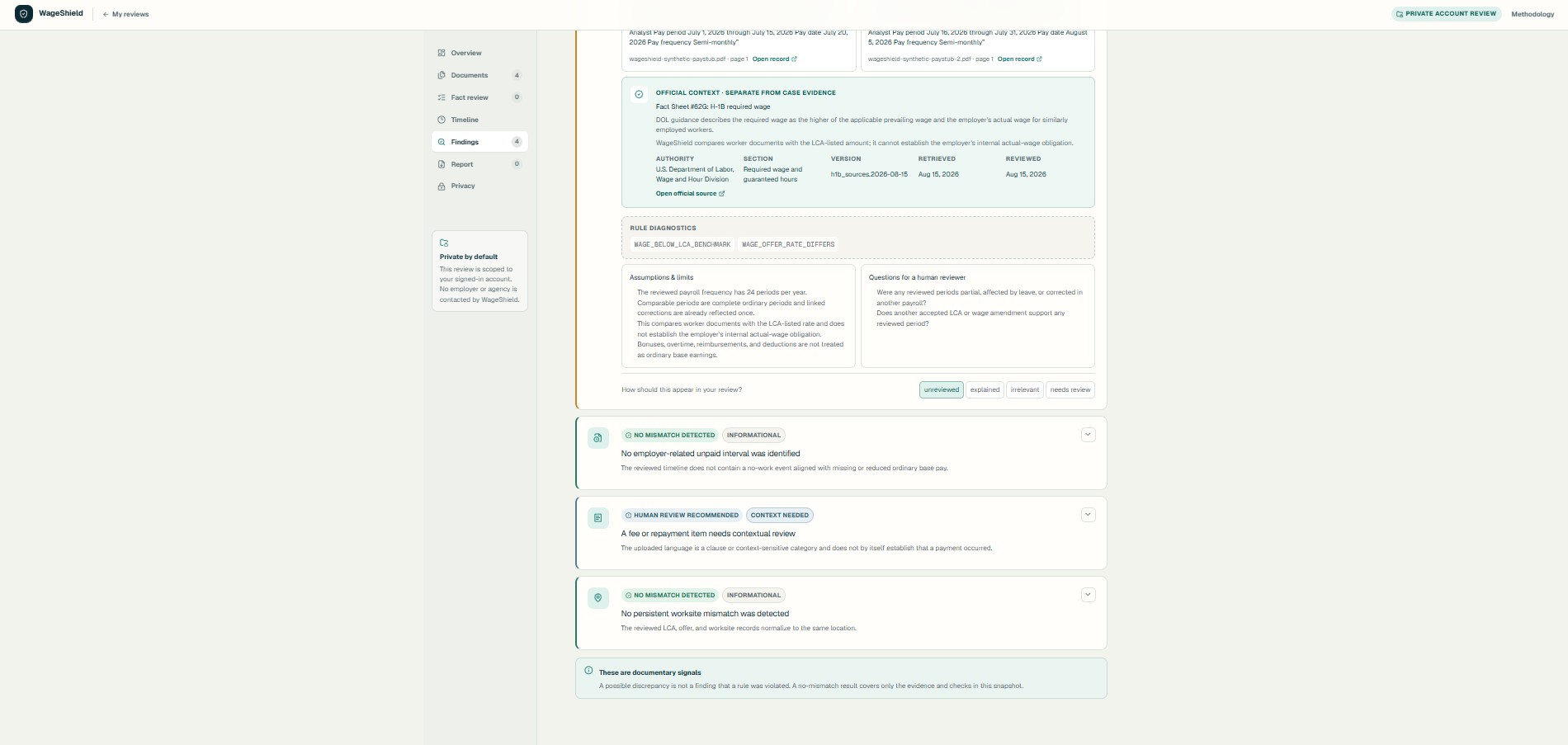
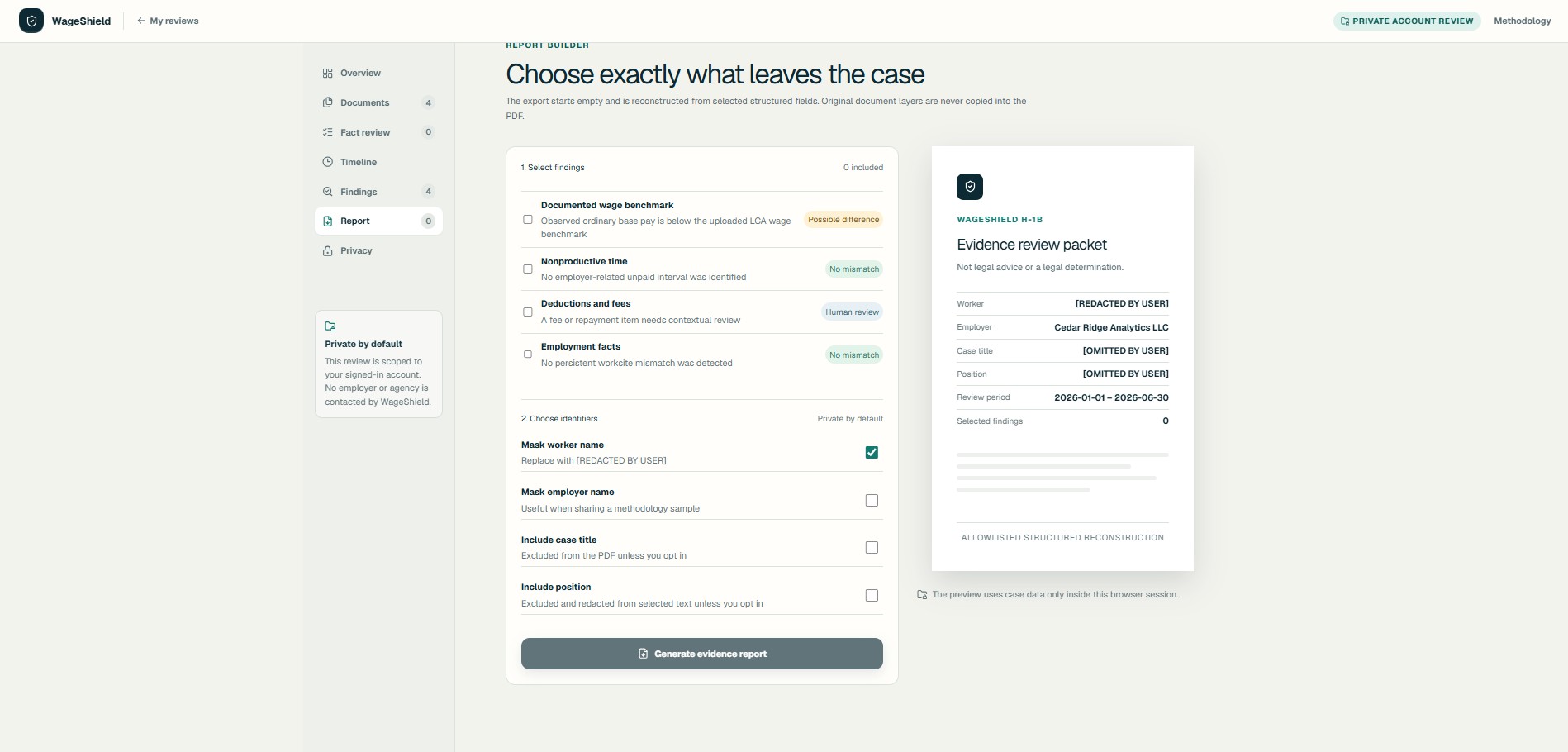
Zero-Trust Document Ingestion: Workers upload pay stubs (PDF, PNG, JPEG) and LCA forms. A hardened in-memory parser sanitizes file payloads, validates file signatures, and blocks embedded scripts or tracking metadata. Two-Pass AI Evidence Copilot: Pass 1 (Multimodal Extraction): With explicit per-upload consent, a multimodal vision model extracts structured facts (gross pay rates, pay period dates, itemized deduction codes, and SOC job titles). Pass 2 (Independent Grounded Verification): A separate verifier pass cross-references every extracted proposal against exact source-page coordinates. If evidence is contradictory or ambiguous, the AI explicitly issues an abstention code (CONFLICTING_EVIDENCE, AMBIGUOUS, MISSING) rather than guessing. Human-in-the-Loop Confirmation Gate: Every AI proposal is classified as NEEDS_REVIEW and must be visually inspected and confirmed by the user against highlighted source quotes before any rules can run. Deterministic Documentary Audit: Confirmed facts pass into a rules engine running exact integer-cent arithmetic across four statutory checks: Prevailing Wage Compliance (certified LCA rate vs. actual wages paid). Illegal Benching / Nonproductive Time (unpaid hours during petition validity). Prohibited Fee Deductions (unlawful employer legal or filing fee clawbacks). Employment Consistency (worksite location and petition period alignments). Selective Redacted PDF Packet & SHA-256 Manifest: Generates an exportable, court-ready evidence packet with configurable PII redaction and cryptographic hash verification for consultation with pro bono legal counsel or the Department of Labor. Automated Ephemeral Retention: Cases default to 24-hour retention, with background cron sweeps purging database records and document bytes every 15 minutes.
How we built it
WageShield H-1B was architected from the ground up to combine probabilistic AI extraction with deterministic financial execution and zero-trust privacy:
Frontend & UI Workspace: Built with React 19 and Next.js 16 (App Router) in TypeScript, featuring a multi-step audit workspace with responsive page inspection, interactive citation badges, and dark/light modes. Multimodal AI Engine: Integrated Qwen3-VL-8B-Instruct via Featherless.ai / OpenAI-compatible API for two-pass vision-language extraction and grounding verification with strict JSON schema enforcement. Cloud Infrastructure on Render: Deployed natively using a render.yaml Infrastructure-as-Code Blueprint: Web Service Container: Running Next.js on Node.js 22 with strict CSP headers and same-origin protections. Render PostgreSQL 18: Stores relational case state and private document bytes (BYTEA) secured with PostgreSQL transaction advisory locks, foreign-key cascade deletions, and zero public S3/Blob URL exposure. Render Scheduled Cron Job: Runs every 15 minutes (*/15 * * * *) executing automated retention sweeps to guarantee verified data destruction. Database Layer: Drizzle ORM for type-safe migrations, atomic audit trails, and idempotent state transitions. Security & Cryptography: PBKDF2 password hashing (210,000 iterations), SHA-256 session token hashing, and hardened PDF parsing using a patched PDF.js runtime with eval disabled. Synthetic Evaluation Harness: Authored a standalone evaluation suite (scripts/ai-eval-score.mjs and tests/ai-evals/gold.json) measuring exact extraction precision/recall, citation accuracy, conflict abstention, and document prompt injection resilience.
Challenges we ran into
Eliminating Tabular Pay Stub Hallucinations: Pay stubs are notoriously messy, featuring multi-column layouts where year-to-date (YTD) earnings are easily conflated with single-period earnings. Single-pass LLM prompts frequently misattributed deduction categories. We solved this by splitting the AI pipeline into two distinct phases: an initial multimodal proposal pass followed by an adversarial verifier pass that demands exact verbatim bounding text. Navigating the Unauthorized Practice of Law (UPL) Boundary: We had to ensure WageShield never crossed into legal advice. We designed the system strictly as an evidence organizer and mathematical auditor: it performs verifiable arithmetic against Department of Labor regulations, leaving legal conclusions and filings exclusively to human counsel. Zero-Leakage Private Storage: Storing immigrant payroll documents on third-party cloud storage buckets posed compliance and leakage risks. We engineered a case-scoped, transactional PostgreSQL BYTEA storage layer with strict size caps and automated 15-minute cron purges, ensuring user files never linger on public servers.
Accomplishments that we're proud of
Substantive, Responsible AI: Unlike standard hackathon wrappers that just feed documents into a chat prompt, our AI performs verifiable multimodal extraction, enforces citation grounding, and safely abstains on ambiguous inputs. 100% Citation Grounding & Prompt Injection Defense: Our synthetic gold benchmark validated 100% grounded source citations and successfully prevented adversarial prompt injections embedded inside document text layers. Production-Grade Render Architecture: Provisioned a unified, production-ready Render Blueprint (render.yaml) combining the Next.js web service, managed PostgreSQL 18, and an automated background retention cron job. Audit-Grade Privacy: Achieved an end-to-end privacy posture with fail-closed authentication, strict CSP sandboxing, zero-knowledge export packets, and verifiable data destruction.
What we learned
Probabilistic vs. Deterministic Separation: AI is extraordinary at parsing messy, unstructured documents into structured data, but financial calculations and legal thresholds must always remain 100% deterministic. Blending both creates software that is both intelligent and trustworthy. The Value of Abstention in High-Stakes AI: In social good and legal tech, teaching an AI model when to say "I don't know / This is ambiguous" is infinitely more valuable than having it guess. Empathetic Software Design: Designing for vulnerable users requires prioritizing psychological safety, clear disclaimers, and transparent control over data retention.
What's next for WageShield H-1B
Multilingual Support: Localizing extraction explanations and review interfaces into Spanish, Hindi, Telugu, Mandarin, and Tagalog. Pro Bono Legal Aid Handoffs: Partnering with immigrant defense nonprofits and legal aid clinics to enable one-click, end-to-end encrypted packet transfers. Broader Visa Coverage: Expanding statutory rule modules to protect other vulnerable visa categories, including J-1 scholars, L-1 intracompany transferees, and H-2A/H-2B seasonal workers. On-Device Local Inference: Integrating WebGPU/Wasm-based local vision models to allow 100% offline, in-browser document processing without transmitting a single byte over the internet.
Built With
- ai-agents
- cron-jobs
- cryptography
- css3
- drizzle-orm
- featherless
- html5
- javascript
- json-schema
- multimodal-ai
- next.js
- node.js
- openai
- pdf.js
- postgresql
- qwen-vl
- react
- render
- resend
- rest-api
- sha-256
- typescript
- vision-language-models
- zero-trust


Log in or sign up for Devpost to join the conversation.